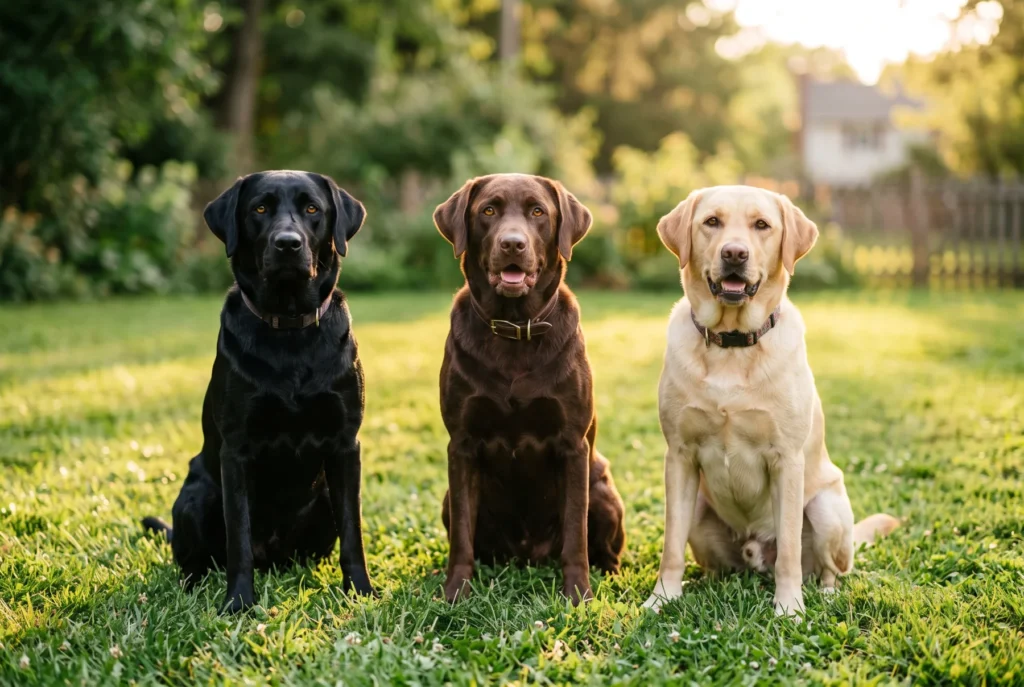
The Labrador Retriever is a friendly, energetic sporting dog. The American Kennel Club (AKC) lists adult males at 22.5 to 24.5 inches and 65 to 80 pounds, and females at 21.5 to 23.5 inches and 55 to 70 pounds. The AKC gives the breed a life expectancy of 11 to 13 years.
Labs come in black, chocolate and yellow, and they need lots of exercise every day. This guide covers size, colors, health tests and history, and links to our Labrador Retriever breeder pages for 33 states.
Labrador Retriever at a glance
- Temperament: Friendly, outgoing and high-spirited, according to the AKC. More: Golden Retriever vs Labrador: which fits your family?
- Size: Males stand 22.5 to 24.5 inches and weigh 65 to 80 pounds. Females stand 21.5 to 23.5 inches and weigh 55 to 70 pounds (AKC).
- Lifespan: The AKC gives a life expectancy of 11 to 13 years.
- Colors: The AKC registers black, chocolate and yellow. More: All Labrador Retriever pages
- Health: Responsible breeders screen for hip and elbow dysplasia, eye disease and exercise-induced collapse (AKC; Labrador Retriever Club).
- Exercise: Labs need lots of exercise every day, and a bored Lab can turn destructive (AKC). More: How much exercise does a dog need every day?
- Popularity: No. 2 on the AKC’s 2025 list, behind the French Bulldog (AKC).
Author Credentials
📝 Written by: Coral Drake
🔍 Reviewed by: Brianna York, Former Veterinary Technician
📅 Last updated: 8 October 2026
ℹ️ Transparency Notice
This guide is based on AKC and Labrador Retriever Club information, the Orthopedic Foundation for Animals (OFA) CHIC program page and one UK vet-records study. Health figures name their source. We aren’t veterinarians, and this guide isn’t veterinary advice.
How Big Does a Labrador Retriever Get?
Adult Labs are solid, athletic dogs, and the AKC gives a separate height and weight range for each sex. Males run taller and heavier. The table shows the AKC figures side by side.
| Adult Labrador Retriever | Height | Weight |
|---|---|---|
| Male | 22.5 to 24.5 inches | 65 to 80 pounds |
| Female | 21.5 to 23.5 inches | 55 to 70 pounds |
Male vs female
The two ranges overlap. A tall female and a short male can stand at nearly the same height, and a heavy female can weigh about what a light male does. So treat the table as a guide to the breed, not a promise for one puppy.
If you’re choosing between a male and a female, meet the puppy’s parents when you can. Ask the breeder what the parents weigh, and look at the dogs in person.
Planning for an adult-sized dog
A full-grown male can weigh up to 80 pounds, so think about the car, the crate and the space in your home before the puppy arrives. Our guide on how long a dog can be in a crate helps you plan the daily routine.
What Colors Do Labrador Retrievers Come In?
The AKC color list for the Lab has three entries: black, chocolate and yellow. White markings are listed separately from color. The table shows how that looks in one place.
| Color | What the AKC lists |
|---|---|
| Black | Registered color |
| Chocolate | Registered color |
| Yellow | Registered color |
The AKC color list is a registration list, not a health guide. Ask the breeder for the parents’ test results whatever the color. For more, browse our Labrador Retriever pages.
Silver, white and fox red
You will see other color names on breeder sites and in search results, including silver, white and fox red. The AKC color list doesn’t include those names. A UK study says the Kennel Club registers yellow in shades ranging from pale yellow (nearly white) to fox red.
These names raise a lot of questions, so we’re writing separate pages for them instead of squeezing them in here. Until then, ask any breeder which registry papers come with the puppy and what color name appears on them.
Living With a Labrador: Temperament, Exercise and Shedding
A Lab isn’t a quiet-weekend dog. It’s a retriever bred to work beside people.
Temperament
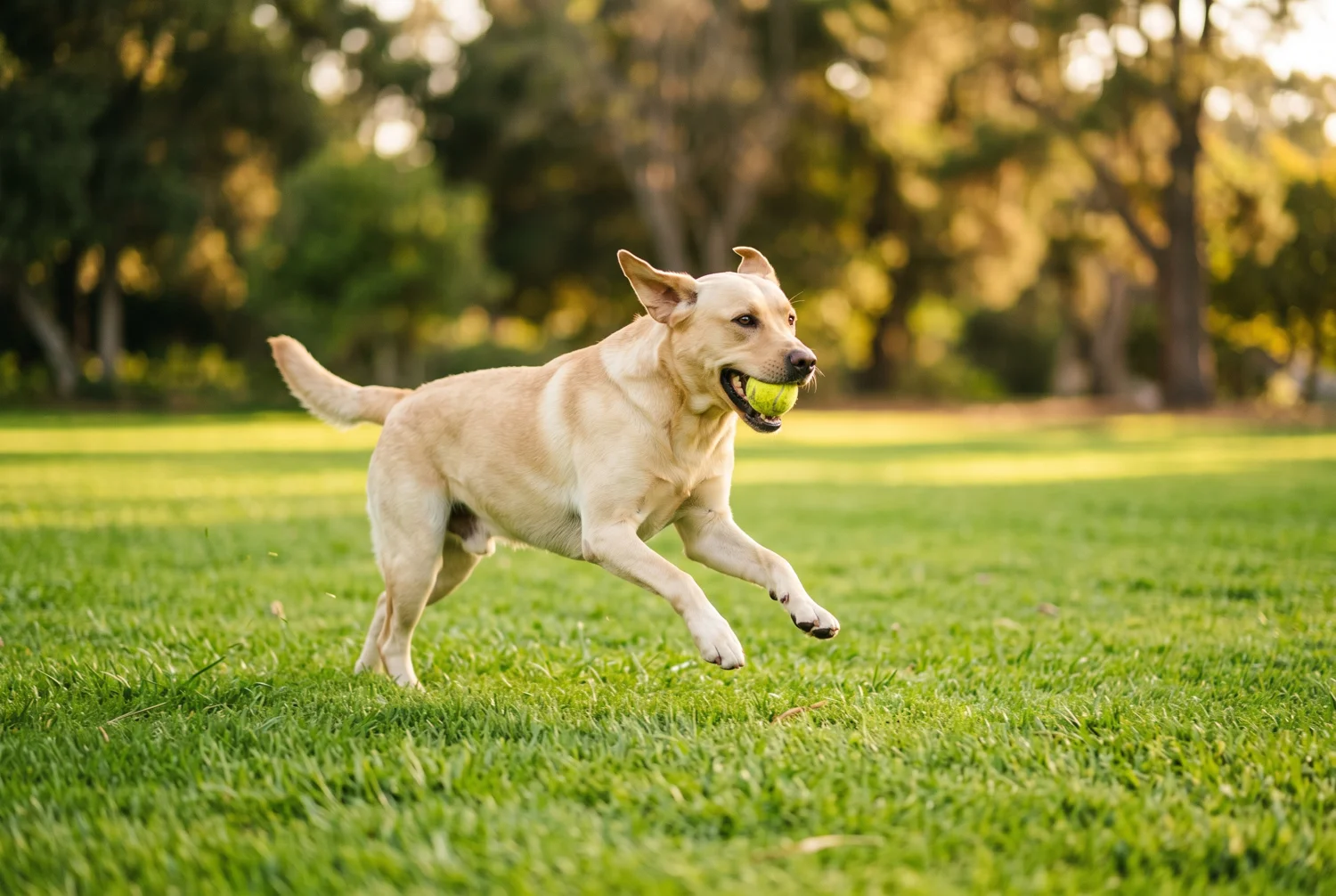
The AKC calls Labs friendly, outgoing and high-spirited companions. It also describes an enthusiastic athlete that needs lots of exercise, such as swimming and marathon games of fetch. Many Labs also work as search-and-rescue, detection, service and assistance dogs.
In practice, that means your Labrador will want to be involved. Plan for company, games and tasks, not a dog that waits quietly in a corner while you work.
Ask yourself a few plain questions before you commit. Does someone have time for exercise every single day, including wet and cold days? Can you live with dog hair on your clothes and floors? Are you ready to go to puppy classes and keep practicing at home?
If the answers are yes, a Lab can be a great fit.
Exercise and training
The AKC says a Lab needs lots of exercise every day. A Lab that doesn’t get enough is likely to engage in hyperactive or destructive behavior to burn off pent-up energy. We don’t give a minutes number here because no single source agrees on one. Our guide on how much exercise a dog needs every day covers the general picture, and how often to walk your dog breaks it down by age and breed.
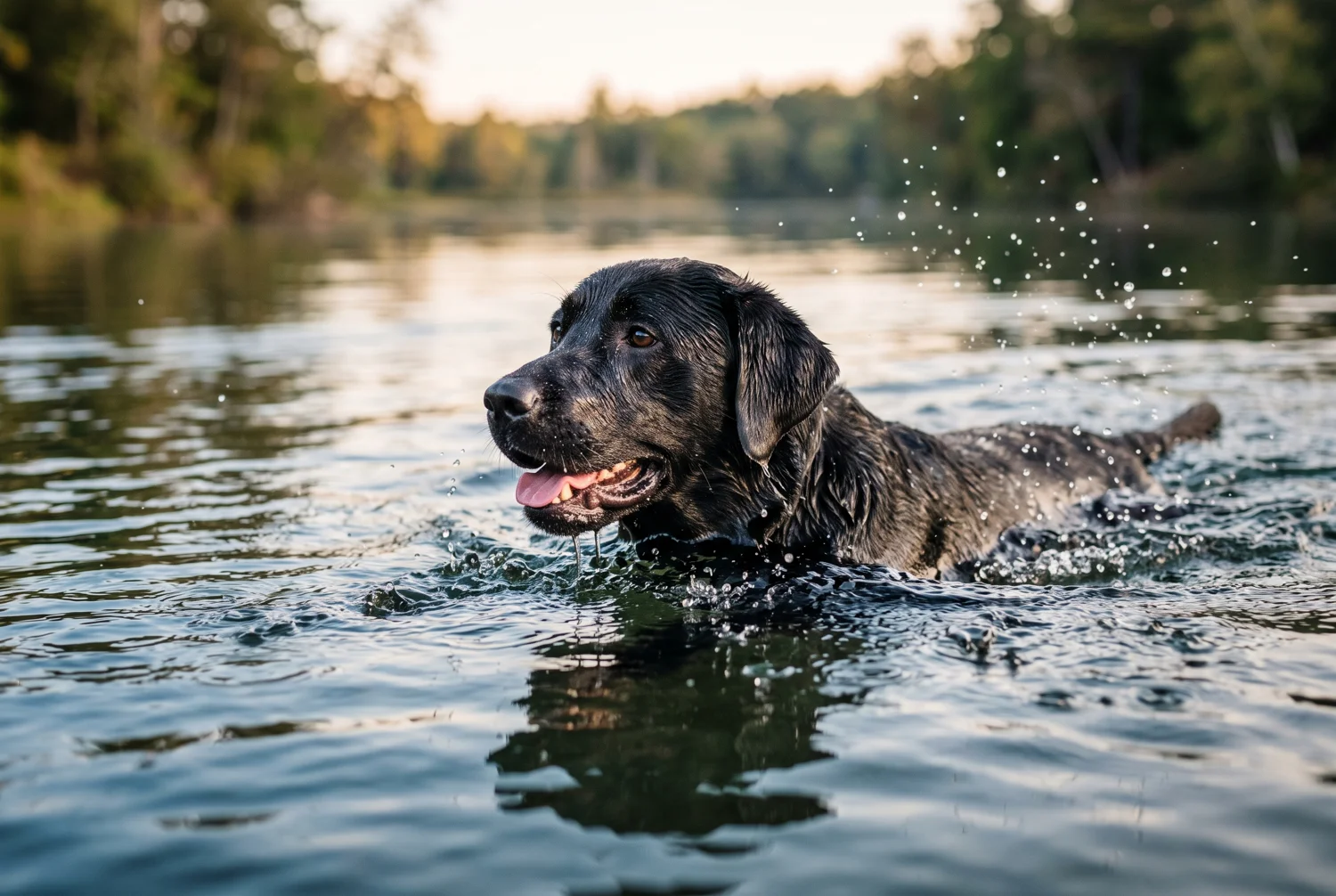
The AKC also says early socialization and puppy training classes are vital for a Lab, because of its strength and high energy. Start those habits while your puppy is small and easy to manage. Retrieving and swimming are the breed’s favorite activities, so build play like that into your week.
Ways to use that energy aren’t limited to walks. The AKC lists agility, obedience, tracking, dock diving and field trials as things Labs love, on top of retrieving and swimming.
Coat and shedding
Labs shed. The AKC’s trait chart rates the Lab high on shedding. The scale runs from “No Shedding” to “Hair Everywhere,” so regular brushing and a good vacuum come with the breed.
The AKC also notes that some Labs are prone to getting overweight, so it advises you to watch your dog’s calories and weight. Ask your veterinarian what weight is right for your Lab.
What Health Tests Should a Labrador Breeder Do?
Two sources help with health testing. The Labrador Retriever Club is the breed’s official parent club, and the AKC says it was established in 1931. It lists the minimum clearances it expects from reputable breeders. The AKC lists the tests its national breed club recommends.
The table puts both lists side by side. We list every test neutrally, and we leave the interpretation to the breeder who ran the tests.
| Test | Labrador Retriever Club (needed for a CHIC number) | AKC list of tests recommended by the breed club |
|---|---|---|
| Hip evaluation | Required (OFA evaluation) | Listed |
| Elbow evaluation | Required (OFA evaluation) | Listed |
| Eye exam by a boarded ophthalmologist | Required (results registered with OFA) | Listed |
| Exercise-induced collapse (EIC) DNA test | Required | Listed |
| D Locus (dilute) DNA test | Required | Listed |
| Permanent ID (microchip or tattoo) | Required | Not a test; not listed |
| Centronuclear myopathy (CNM) DNA test | Optional | Listed |
| prcd-PRA DNA test | Optional | Listed |
| Cardiac evaluation | Optional | Not in the AKC test list |
A few of those names need a plain-English gloss. Progressive retinal atrophy (PRA) is an inherited eye condition. Centronuclear myopathy is an inherited muscle weakness. The AKC notes that exercise-induced collapse can occur in some young adult Labs, and that a DNA test lets breeders identify carriers and plan matings to avoid producing the disease.
Hip and elbow evaluations look at the joints. The eye exam is done by a boarded ophthalmologist, which means a specialist, not a general check. The DNA tests use a sample from the dog and look for specific gene changes.
What a CHIC number does and does not mean
CHIC stands for Canine Health Information Center, a program run by the Orthopedic Foundation for Animals. A dog gets a CHIC number when its results for the breed’s required tests are entered in the database and the owner releases them publicly.
The OFA is clear about the limit. It says a CHIC number “does not imply normal test results.” It shows only that all the required breed specific tests were performed and the results made publicly available.
So a CHIC number tells you the testing was done and shared. It doesn’t tell you every result was normal, so ask to see the results themselves.
How to read the table
Read the Labrador Retriever Club column as the minimum a reputable breeder should have done, and the optional rows as extras. A breeder who also runs the optional tests is doing more than the minimum, which is a good sign. A breeder who can’t name any of these tests deserves more questions.
Be careful with promises that replace testing. Phrases like “vet checked” or “health guaranteed” don’t tell you which tests were run or what the results were. Ask for the test names and dates.
What Health Issues Are Common in Labradors?
The AKC says Labs are healthy dogs overall. It adds that a responsible breeder screens breeding stock for conditions such as elbow and hip dysplasia, heart disorders, hereditary myopathy (muscle weakness) and eye conditions, including progressive retinal atrophy. Those are the same areas the tests table covers.
The AKC adds that, like other large, deep-chested dogs, Labs can develop a life-threatening stomach condition called bloat. It tells owners to learn the symptoms ahead of time. We don’t give first-aid steps here.
How long do Labs live?
The AKC gives a life expectancy of 11 to 13 years for the breed. Other sites quote different ranges, so we use the AKC figure and name it.
In UK vet records from 2013, the median age at death was 12.0 years. The same study compared coat colors in a small group. The median age at death was 12.1 years for non-chocolate dogs (139 dogs) against 10.7 years for chocolate dogs (34 dogs). That’s one small UK sample, and it isn’t a rule for any single dog.
What a UK vet study recorded
The study is McGreevy and colleagues, Canine Genetics and Epidemiology, 2018. It used the VetCompass program, which gathers electronic patient records from UK primary-care vets. The researchers looked at 33,320 Labs under veterinary care during 2013, and pulled disorder and death data from a random sample of 2,074 of them.
In that sample, the disorders most often recorded at vet visits were ear infection (otitis externa) at 10.4%, overweight or obesity at 8.8%, and degenerative joint disease at 5.5%. Those figures describe what vets wrote down, not the share of all Labs that have a problem. They also come from UK dogs, so they may not match what US vets see.
In the same study, among the 147 deaths with a stated cause, the most common groups were musculoskeletal disorder at 24.5% and neoplasia (cancer) at 21.1%.
Talk to your vet
This isn’t veterinary advice, and our team has no veterinarian on staff. The studies and tests above are background for that conversation, not a substitute for it.
English and American Labs: Two Informal Types
One breeder quoted by Rover uses “English Lab” for show-bred lines and “American Lab” for field-bred lines. They aren’t separate breeds: the AKC publishes one breed standard.
The AKC breed page shows one breed standard for the Labrador Retriever. If a breeder uses either label, ask what the dogs are bred for. Ask what the parents have achieved, whether in the show ring, in field work or as family companions. Then ask for their health test results, as covered above.
The label alone tells you little. Two breeders can use the same word and mean different things, so judge each litter by the parents, the testing and the breeder’s answers.
Where Did the Labrador Retriever Come From?
Despite the name, the Lab didn’t come from Labrador. The AKC says it came from Newfoundland. The full story is in the AKC’s Labrador Retriever history article, and we summarize it here.
Newfoundland’s St. John’s dog
The breed’s roots are in Newfoundland, with a small water dog known as the St. John’s Dog. These dogs worked beside fishermen and hunters, helping to catch fish and retrieve game. The AKC says English nobles spotted them in the early 1800s.
The English families who shaped the breed
The Earl of Malmesbury saw the dogs at Poole and bred them at Heron Court for duck hunting. The name “Labrador Dog” became attached to the breed through that family. The St. John’s Dog became a progenitor of modern British retrievers.
A chance meeting in the 1880s between the Malmesbury, Buccleuch and Home families helped fix the modern breed. Dates and details differ between sources, so we stick to the AKC’s account.
From England to the AKC
The AKC recognized the Labrador Retriever as a breed in 1917. It belongs to the Sporting Group. In 1931 the Labrador Retriever Club, Inc. was established, and it’s now the breed’s official AKC parent club.
The AKC ranks the Lab No. 2 on its 2025 list, behind the French Bulldog. The Lab held the No. 1 spot for 31 years before the French Bulldog passed it in 2022. The AKC publishes the rankings in its 2025 breed rankings article, and we’ll refresh this line when the next list comes out.
How Does a Labrador Compare With a Golden Retriever or a Lab Mix?
Both breeds are retrievers.
Our Golden Retriever vs Labrador comparison lines them up side by side, and our Golden Retriever breed guide has the same kind of overview for the other breed.
If a mix appeals to you, read about the Golden Retriever Lab mix. If you’re also curious about doodles, start with our Goldendoodle owner’s guide. Whatever you choose, ask about the parents’ health testing before you fall for the puppies.
How Do You Find a Labrador Breeder in Your State?
Our state pages list Labrador Retriever breeders by state. Treat every listing as a starting point, not an endorsement, and do your own checking with the questions below.
Top states
These seven state pages are a good place to start.
- Labrador Retriever breeders in Massachusetts
- Labrador Retriever breeders in New York
- Labrador Retriever breeders in Texas
- Labrador Retriever breeders in Pennsylvania
- Labrador Retriever breeders in Michigan
- Labrador Retriever breeders in Ohio
- Labrador Retriever breeders in Washington
Before you contact a breeder
A little preparation makes every conversation better. Decide how much time you can give a puppy each day, and who will be home during the first weeks. Think about your yard or your walking routes, and about how you’ll handle shedding and daily exercise.
Then write down your questions.
Questions to ask any breeder
Bring this list, and write the answers down so you can compare litters later.
- Which health tests did both parents have, and can I see the results myself?
- Do the parents have CHIC numbers, and do you know what a CHIC number does and does not show?
- Can I meet the mother, and can I see where the puppies are raised?
- What happens if I can no longer keep the dog?
- Is everything in writing, including registration papers, the contract and the color name on them?
Our guide on how to find a reputable Labrador Retriever breeder goes deeper on red flags and paperwork.
A note on price
You won’t find a puppy price in this guide. We couldn’t trace a reliable, sourced figure, and we would rather leave the number out than guess. Ask each breeder what the price includes, and compare that with their health testing and paperwork.
All states
Find your state below. Each link opens that state’s Labrador Retriever breeder page.
- Alabama Labrador Retriever breeders
- Arizona Labrador Retriever breeders
- California Labrador Retriever breeders
- Colorado Labrador Retriever breeders
- Connecticut Labrador Retriever breeders
- Florida Labrador Retriever breeders
- Georgia Labrador Retriever breeders
- Illinois Labrador Retriever breeders
- Indiana Labrador Retriever breeders
- Iowa Labrador Retriever breeders
- Kansas Labrador puppies
- Kentucky Labrador Retriever breeders
- Maine Labrador Retriever breeders
- Maryland Labrador Retriever breeders
- Massachusetts Labrador Retriever breeders
- Michigan Labrador Retriever breeders
- Minnesota Labrador Retriever breeders
- Missouri Labrador Retriever breeders
- New Hampshire Labrador Retriever breeders
- New Jersey Labrador Retriever breeders
- New York Labrador Retriever breeders
- North Carolina Labrador Retriever breeders
- Ohio Labrador Retriever breeders
- Oregon Labrador Retriever breeders
- Pennsylvania Labrador Retriever breeders
- South Carolina Labrador Retriever breeders
- Tennessee Labrador Retriever breeders
- Texas Labrador Retriever breeders
- Utah Labrador Retriever breeders
- Vermont Labrador Retriever breeders
- Virginia Labrador Retriever breeders
- Washington Labrador Retriever breeders
- Wisconsin Labrador Retriever breeders
Where to Go Next
These guides cover the next questions Lab owners and buyers ask.
Pick the right type
- All Labrador Retriever pages
- Golden Retriever vs Labrador
- Golden Retriever Lab mix
- Golden Retrievers: the breed guide
- Goldendoodles: a complete owner’s guide
Raising a puppy
Living with a Lab
Finding a puppy
- How to find a reputable Labrador Retriever breeder
- Labrador Retriever breeders in all 33 states
- Golden Retriever breeders by state
- Goldendoodle breeders by state
Frequently Asked Questions About Labrador Retrievers
How big do Labrador Retrievers get?
The AKC lists adult males at 22.5 to 24.5 inches and 65 to 80 pounds, and females at 21.5 to 23.5 inches and 55 to 70 pounds.
How long do Labrador Retrievers live?
The AKC gives a life expectancy of 11 to 13 years. In UK vet records from 2013, the median age at death was 12.0 years.
What colors do Labradors come in?
The AKC color table lists black, chocolate and yellow. Names such as silver, white or fox red appear on breeder sites; we’re writing separate pages for them.
What health tests should a Labrador breeder do?
The Labrador Retriever Club’s minimum clearances are hip and elbow evaluations, an eye exam by a boarded ophthalmologist, and EIC and D Locus DNA tests. It lists others on its health page. A CHIC number shows tests were done and shared, not that results were normal.
Are Labradors good family dogs?
The AKC describes Labs as friendly, outgoing, high-spirited companions. They also need lots of exercise every day.
Where does the Labrador Retriever rank on the AKC list?
The Labrador Retriever is No. 2 on the AKC’s 2025 list, behind the French Bulldog. It held the No. 1 spot for 31 years until the French Bulldog passed it in 2022.
The Bottom Line
The Labrador Retriever is a big-hearted, high-energy sporting dog with a clear set of AKC numbers. Males run 22.5 to 24.5 inches and 65 to 80 pounds, females run 21.5 to 23.5 inches and 55 to 70 pounds, and life expectancy is 11 to 13 years. Plan for daily exercise, regular brushing and early training classes, and give your Lab plenty of time with the family.
Before you bring one home, ask the breeder for health test results and read what a CHIC number does and doesn’t show. Then find your state and start asking questions.