When do Golden Retrievers get their full coat? Most Goldens grow their full adult coat between about 18 months and 2 years, and some males and show-line dogs keep filling in until about 3. The AKC says puppies usually lose the puppy coat at 4 to 6 months, though it can start as early as 12 weeks or wait until a year, and the patchy “uglies” in between are normal. This guide follows that puppy-to-adult change stage by stage. For how the adult coat is built and how it compares with other coat types, see our Golden Retriever double coat guide, and for the breed as a whole, our Golden Retriever breed guide.
| Stage | Typical age | What the coat looks like | Brushing |
|---|---|---|---|
| 1. Puppy fuzz | 0-8 weeks | Soft, even, fluffy single layer | Short, gentle sessions so the puppy gets used to the brush |
| 2. First changes | 2-6 months | Feathering starts on ears and legs; adult guard hairs push through | Weekly |
| 3. Puppy uglies | 6-18 months | Patchy, uneven, often a “racing stripe” along the spine | 2-3 times a week |
| 4. Full adult coat | 18 months-3 years | Full double coat with feathering on chest, legs and tail | Weekly, more during coat blows |
“When do Goldens get their long coat? My Bailey boy is 5 months old and I’m being very impatient about his floof growing in.”
If that sounds familiar, you’re in the right place, and your puppy is perfectly normal.
Watching your Golden go through an awkward, patchy phase when you expected a fluffy golden cloud can feel alarming. But here’s what most owners don’t know: that scruffy look is actually a sign your puppy’s adult coat is arriving right on schedule.
Before we dive in, here’s what you need to know. Golden Retrievers have a two-layer coat, a soft undercoat and a longer outer layer called guard hairs. The full adult version of both layers takes time, and patience, to develop. This guide walks you through every golden retriever coat stage, from the moment your puppy is born to the day their full floof finally arrives. Along the way, you’ll also get a color prediction trick, a practical grooming kit list, and a clear answer to every question Bailey’s owner is probably typing into Google right now.
By the end, you’ll know exactly what to expect at each stage, and how to care for that coat every step of the way. We’ll cover the four-stage timeline, the color spectrum, and the double-coat grooming essentials.
birth to adult
18 mo to 3 yr
undercoat + guard
spring + fall
Author Credentials
📝 Written by: Coral Drake
✅ Reviewed by: Brianna York, Former Veterinary Technician
📅 Last updated: 4 May 2026
ℹ️ Transparency Notice
This article covers Golden Retriever coat development based on AKC breed standard, GRCA, and breeder grooming records. Health figures name their source, and our editorial team checked them against those sources.
What Is the Golden Retriever Coat Timeline?
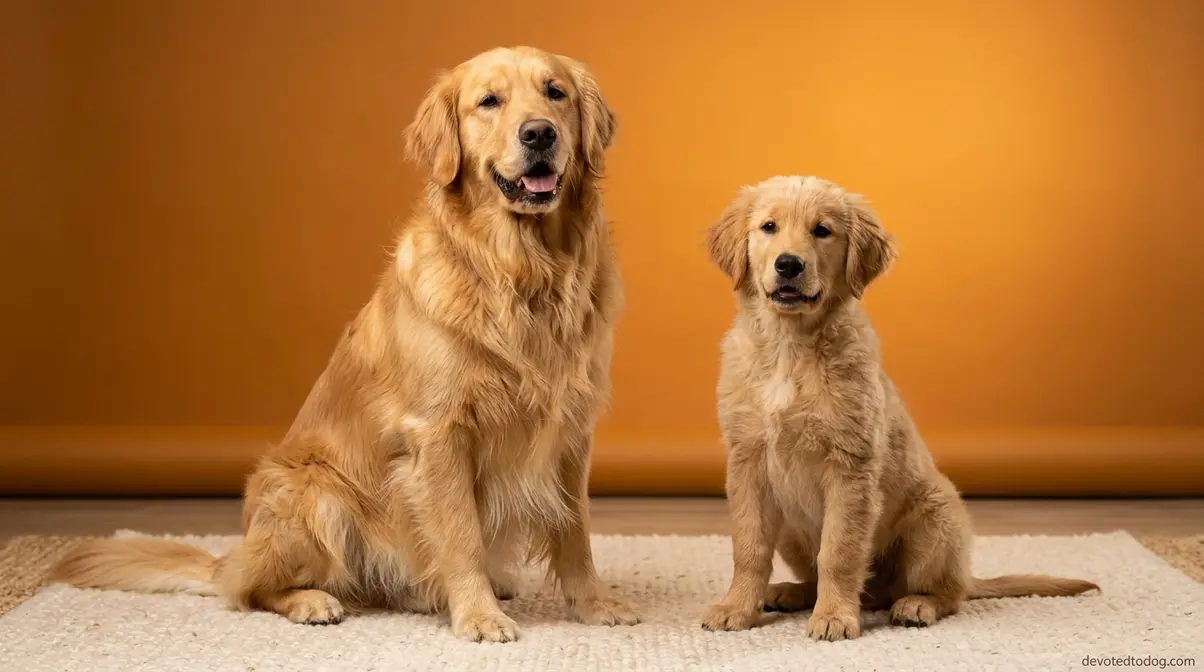
The golden retriever coat stages follow four predictable phases: puppy fuzz (0-8 weeks), early transition (2-6 months), the “puppy uglies” (6-18 months), and full maturity (18 months-3 years). According to the American Kennel Club, puppies begin transitioning from their soft puppy coat to adult guard hairs between 4 and 6 months of age. Knowing this timeline transforms owner anxiety into patient anticipation, because every patchy, scruffy, uneven phase your puppy goes through is simply the next step on a predictable road.
Puppies transition to adult coats between 4 and 6 months,marking the start of the awkward but normal puppy uglies. According to devotedtodog.com experts, tracking these milestones prevents unnecessary grooming mistakes and helps you understand your dog’s biology.
The infographic below maps out exactly what to expect at each stage.
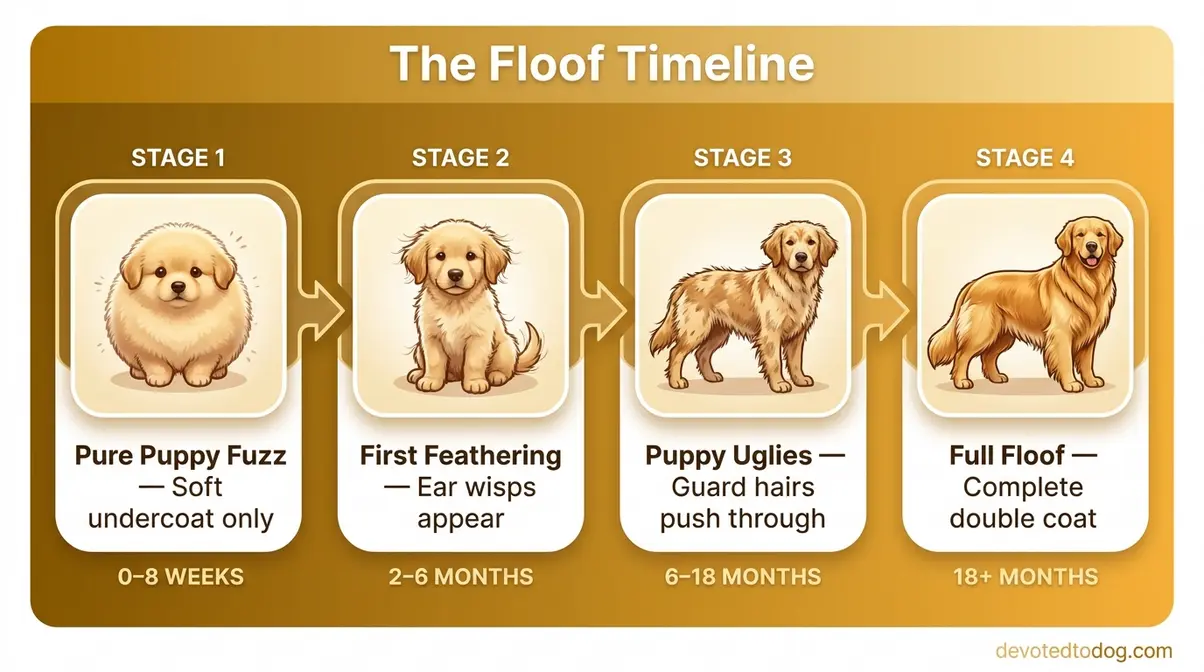
Stage 1: Pure Puppy Fuzz (0-8 Weeks)
The very first stage of the golden retriever coat journey begins at birth, and it’s the one that makes people melt. Newborn Golden Retrievers, a large sporting breed known for its dense, feathered double coat, are covered in a single, uniformly soft layer. There are no guard hairs yet, just the undercoat, the dense, soft inner layer that provides insulation. This is why puppies at this stage look so uniformly fluffy and teddy bear-like. Every inch of their little body is covered in the same soft, even fuzz.
Think of the puppy coat like a baby blanket, soft and warm, but temporary. It exists to keep newborns insulated while the body’s more complex two-layer coat system develops underneath.
The coat at this stage is typically a lighter, creamy-gold shade, often lighter than the adult coat will eventually be. That’s completely expected. The ear color at this age is already giving you a clue about the final shade, but we’ll cover that in the Colors section below.
This is Stage 1 of what we call The Floof Timeline, the predictable journey every Golden Retriever coat takes from birth to full adult floof. According to the American Kennel Club, puppies typically begin losing their soft puppy coats and transitioning to their adult coats between 4 and 6 months of age. But before that transition begins, Stage 1 is your window to capture the most uniformly fluffy your dog may ever look. Grab your camera, this stage passes quickly, and six-week-old Golden puppy photos are something you’ll treasure for years.
By the time your Golden hits the 8-week mark and goes home with you, that uniform fluffiness is already beginning to evolve, and Stage 2 is where the real changes start.
Stage 2: First Signs of Change
Around 2 to 3 months old, something exciting happens: the first feathering appears. Feathering is the longer, flowing hair that gives adult Golden Retrievers their characteristic silhouette, those gorgeous wisps along the ears, chest, and back of the legs. Spotting those first wisps is thrilling, because it’s your first visible glimpse of the adult coat arriving.
At 4 months old, you’ll likely notice longer wisps appearing behind the ears, that’s your first glimpse of the feathering to come. Photograph this moment for your coat stages photo timeline; it makes a wonderful “before” shot to compare against the full adult coat later.
The American Kennel Club confirms that puppies begin transitioning from their soft puppy coat between 4 to 6 months of age. During this window, the first guard hairs, the longer, coarser outer-coat hairs that form the protective top layer, begin pushing through the undercoat. You might notice the coat feels slightly different in texture from one area to another. That’s the two systems starting to separate.
You may also notice the coat color starting to shift. The creamy-white puppy fuzz can give way to a slightly richer gold tone as the guard hairs push through. This is completely normal, and the ear color at this stage remains your best early predictor of the final adult shade. More on that in the Colors section.
Grooming-wise, introduce a soft slicker brush at 3 to 4 months. As we often advise at devotedtodog.com, introducing a soft slicker brush early saves a lot of struggle later. Weekly brushing is plenty at this stage, the coat is still short and manageable.
Months 2 to 6 are the calm before the storm. Stage 3, the “puppy uglies”, is where most owners start to worry. Here’s why you absolutely shouldn’t.
Stage 3: The “Puppy Uglies” Phase
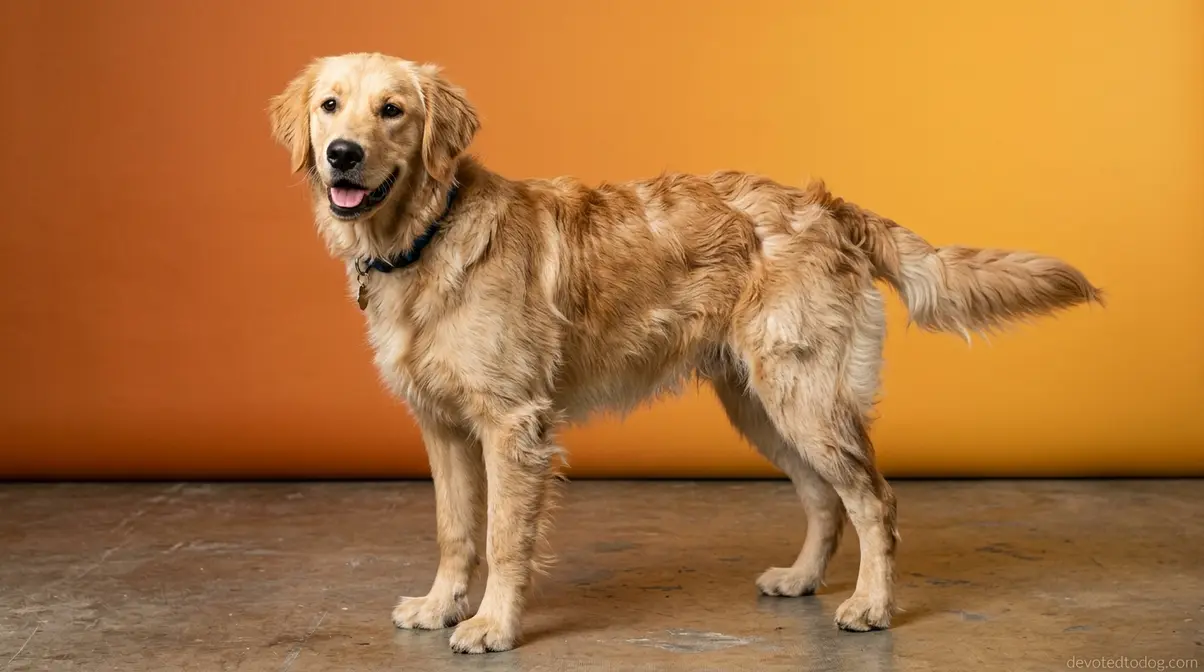
The “puppy uglies” phase, roughly 6 to 18 months, is the most dramatic, most alarming, and most misunderstood stage of Golden Retriever coat development. This is the stage where adult guard hairs push through the soft undercoat in an uneven, patchy pattern. The result: your once-uniformly-fluffy puppy now looks scruffy, uneven, and sometimes almost moth-eaten in patches. Every Golden owner goes through this. It is completely normal and, importantly, temporary.
One specific phenomenon worth knowing by name: the “racing stripe.” This is the narrow strip of adult guard hair that often emerges first along the spine, creating a visible ridge of longer, coarser fur running down the back. Many owners mistake this for a skin condition or health issue. It is neither. It is the adult coat breaking through first along the topline (the dog’s back), exactly as it should. Once you know to look for it, the racing stripe becomes reassuring rather than alarming, it means the adult coat is actively on its way.
For a full picture of your Golden’s physical development during this period, see our complete guide to golden retriever growth stages.
Why does the “puppy uglies” happen? The American Kennel Club explains that a dog’s outer coat goes through three specific growth phases: anagen (active growth), catagen (transition), and telogen (resting). During the “puppy uglies,” different sections of the coat are in different phases simultaneously, creating the patchy appearance. Think of it like a lawn being re-seeded in sections, some patches are lush, others are still coming in.
Across Golden Retriever owner communities on Reddit and Facebook groups, the consistent experience is that the “puppy uglies” phase feels longest between 8 and 14 months, but most owners report the coat “explodes” into full feathering seemingly overnight around 15 to 18 months.
4 Grooming Protocols for the “Puppy Uglies” Phase:
- Slicker brush, 2-3x per week: A slicker brush, a flat-backed brush with fine, short wire pins, reaches through the top coat to remove loose undercoat. Brush in the direction of hair growth. This is your primary tool during this phase.
- Bathing every 4-6 weeks: Bathing too frequently during this phase can strip the natural oils your puppy’s skin produces to support healthy guard hair development. Stick to every 4 to 6 weeks unless your dog has rolled in something memorable.
- Do NOT trim the patchy areas: It’s tempting to even out the coat by trimming, but cutting guard hairs during this phase can disrupt the natural growth cycle. Leave it alone, the evenness will come on its own.
- Support with omega-3s: A diet that includes omega-3 fatty acids (from salmon oil or flaxseed) supports healthy coat development during the transition. Look for dog foods with these ingredients listed in the first five ingredients.
Once your Golden pushes through the “puppy uglies,” the reward waiting on the other side is the coat you’ve been patiently waiting for.
Stage 4: Full Floof Achieved
The final stage of the golden retriever coat journey is the payoff. Between 18 and 24 months, most Golden Retrievers achieve their full adult coat. According to the American Kennel Club, larger dog breeds, including Golden Retrievers, may not reach full physical maturity until 18 to 24 months of age, and some males and show-line Goldens continue filling out until age 2 to 3.
The full adult coat consists of two distinct layers: the dense, water-repellent undercoat and the longer guard hairs on top, with full feathering, the flowing, longer fur, on the chest, belly, legs, and tail. The silhouette you’ve been waiting for is finally here.
This is also when you’ll encounter what Golden owners affectionately call “golden glitter”, the fine, light-catching fur that sheds year-round from the adult coat. It will be on your furniture, your clothes, and somehow in your coffee. This is completely normal and actually a sign of a healthy, fully developed coat doing exactly what it was designed to do.
The adult coat now sheds seasonally, most heavily in spring and fall during what’s known as the “coat blows”, periods when the undercoat releases in large quantities as the dog transitions between seasonal temperatures. Weekly brushing becomes essential maintenance at this point, not just occasional grooming.
Stage 4 is the finish line of The Floof Timeline, and for most owners, the moment their Golden finally looks exactly like the dog they imagined when they first brought that scruffy puppy home.
When Do They Get Their Full Coat?
Golden Retrievers typically achieve their full adult coat between 18 and 24 months of age. The process begins around 4 to 6 months, when puppy fuzz starts giving way to adult guard hairs. The most dramatic transition, the “puppy uglies” phase, runs from about 6 to 18 months. Most dogs reach full feathering by their second birthday, though some males and show-line Goldens continue filling out until age 3. Individual genetics, breeding line, and nutrition can all affect the exact timing.
What Does an Adult Golden Retriever Look Like?
A grown Golden has a dense, water-resistant outer coat that lies flat or slightly wavy over a soft undercoat. The feathering is longest on the back of the legs, the underside of the tail, the chest (the “bib”) and behind the ears. The AKC lists the coat as a medium-length double coat. Field-line dogs carry a shorter, flatter coat with less feathering, and show-line dogs the fullest. Color usually settles somewhere close to the shade of the ears in puppyhood.
Now that you know the four-stage timeline, there’s one more layer to the story, how gender and breeding line affect the coat your Golden ultimately grows.
How Do Male vs. Female and Field vs. Show Coats Compare?
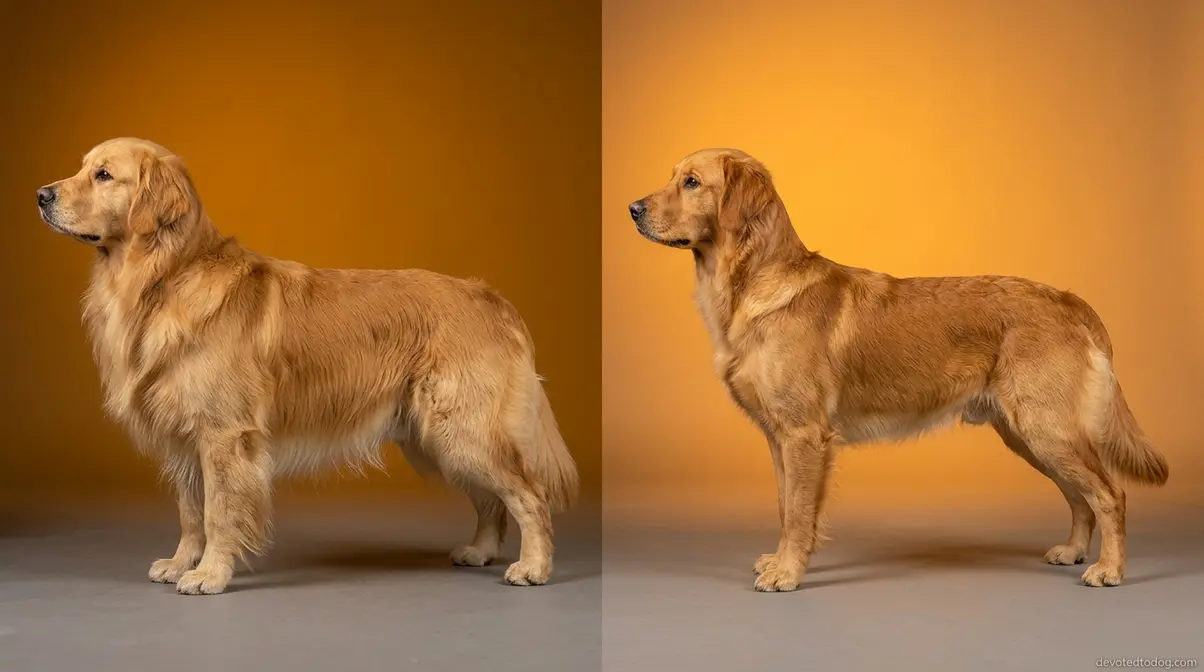
Not all Golden Retrievers develop the same coat, and the differences aren’t random. Gender and breeding line both play meaningful roles in how a Golden progresses through The Floof Timeline. This is a dimension no competitor currently covers, and it’s one that genuinely surprises many owners.
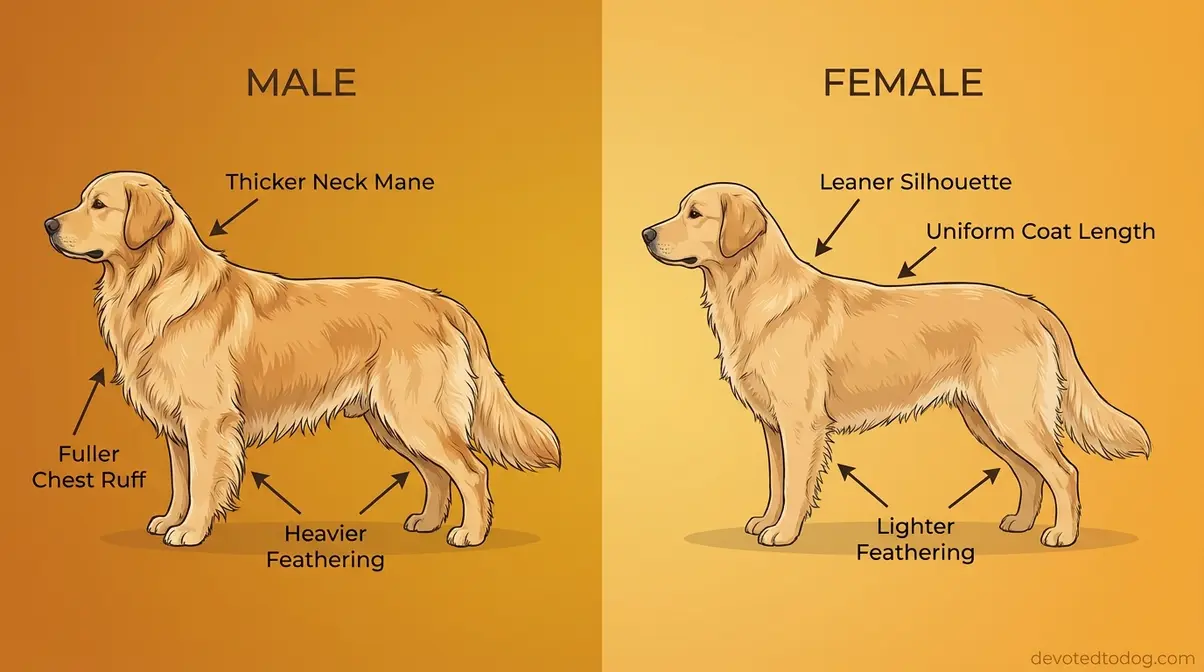
Do Males Have Thicker Coats?
Yes, male Golden Retrievers typically develop a noticeably thicker, fuller ruff around the neck and chest compared to females. This longer fur around the neck is often called a “mane,” and it becomes most visible during Stages 3 and 4 of The Floof Timeline, roughly 12 to 24 months. The mane is more pronounced in show-line males, where breeders have selected for a fuller, more dramatic coat presentation.
Female Goldens that are not spayed experience two significant shedding events per year tied to their heat cycles. As estrogen levels rise and fall during the heat cycle, the hormonal fluctuation disrupts the hair growth cycle, causing heavier-than-normal shedding in the weeks following each heat, typically occurring every 6 to 8 months (Rejoice Retrievers, 2026). If bred, pregnancy and lactation trigger an additional significant coat shed post-whelping.
Spayed females and neutered males tend to develop slightly softer, denser undercoats due to altered hormone levels, though this effect varies by individual dog. Some spayed females shed more consistently year-round rather than in the dramatic seasonal surges typical of intact dogs (mygoldenretrieverpuppies.com, 2026). Neither outcome is a health concern, it’s simply hormones reshaping the coat cycle.
If you have two Golden Retrievers of different sexes, it’s completely normal for the male to look “floofier” around the neck, it’s biology, not a grooming difference.
Beyond gender, the biggest coat difference you’ll see between Goldens comes down to their breeding line, specifically whether your dog comes from field (working) stock or show stock.
Field vs. Show Line Coat Differences
Show-line Goldens, bred to match the AKC/GRCC breed standard for conformation competitions, develop the long, flowing, heavily feathered coat most people picture when they think “Golden Retriever.” Their coat is denser and longer, particularly around the chest, belly, and tail. These are the dogs that look like they walked out of a shampoo commercial.
Field-line (or working-line) Goldens are bred for hunting and retrieving work. Their coats are shorter, flatter, and noticeably less feathered, more practical for working in water and dense brush. This is the most common explanation behind the “short coat golden retriever” search query. People searching for a short-coated Golden aren’t usually looking at a health problem or a mixed breed, they’re looking at a field-bred dog.
Neither coat type is wrong. They reflect the dog’s breeding purpose. At devotedtodog.com, we frequently remind owners that neither coat type is wrong,they simply serve different functions. Field-line Goldens simply progress through The Floof Timeline with significantly less feathering development at the end. If your Golden has a noticeably shorter, flatter coat at 2 years old and you expected show-line fullness, it’s worth a conversation with your breeder about the dog’s lineage.
A field-bred Golden at 2 years old might look “unfinished” compared to a show-bred Golden of the same age, but that shorter coat is perfectly correct for their line.
For a deeper look at all three Golden Retriever types and how their coats differ, see our guide to different golden retriever coat colors and types.
Whether your Golden is show-line or field-line, their coat will eventually settle into one of three recognized color shades, and you can predict which one as early as 8 weeks old.
What Are the Golden Retriever Coat Colors?
Golden Retriever coat color is one of the most common questions new owners have, and one of the most misunderstood. The American Kennel Club (AKC), the primary U.S. breed registry, officially recognizes three shades: Light Golden, Golden, and Dark Golden. Everything else, “English Cream,” “Red Golden,” “White Golden”, is an informal term for dogs at the extreme ends of those three official ranges.
Across Golden Retriever breeder communities and owner forums, the ear-color trick is consistently cited as the most reliable early predictor of adult coat shade, and it’s something you can check at your very first puppy visit. At 8 weeks old, ear color predicts adult coat shade,giving owners an early glimpse of their puppy’s final look. Our devotedtodog.com analysis shows that ear color remains the most accurate predictor available to new owners.
What Will the Adult Coat Look Like?
The most reliable early predictor of a Golden Retriever’s adult coat color is the shade of their ears at 8 weeks old. Darker ear fur typically indicates a richer, darker adult coat; lighter, cream-colored ears suggest a lighter adult shade. Breeders widely use this as a practical tool to forecast the final hue (Golden Retriever breeder communities, 2026).
Why ears? The ear fur develops slightly ahead of the rest of the body coat and shows the adult pigmentation earlier than the rest of the body. The body coat at 8 weeks is still largely the uniform puppy fuzz, but the ears are already hinting at what’s coming. The coat may lighten or darken during the “puppy uglies” transition phase (6 to 18 months).
By age 2, most Goldens have settled into their permanent shade. For coat texture and feathering, the dog’s breeding line, show vs. field, is the stronger predictor. At your puppy’s first vet visit, compare the ear fur color to the rest of the body. If the ears are noticeably darker, expect a richer adult coat. If they’re a pale champagne, plan for a lighter adult shade.
Once you know what shade to expect, here’s exactly what the three officially recognized Golden Retriever colors look like.
The Three Official Golden Shades
The American Kennel Club recognizes three shades for Golden Retrievers: Light Golden, Golden, and Dark Golden. Here’s what each actually looks like:
Light Golden is the palest recognized shade, ranging from cream to a pale champagne gold. It’s often confused with “English Cream”, a term explained in the next section. Light Golden Retrievers are not albino or unhealthy. This is a fully accepted AKC color with a long history in the breed.
Golden is the classic, mid-range shade most people picture when they think “Golden Retriever.” Rich, warm gold that catches sunlight beautifully. It’s the most common shade in the U.S. show ring and the one most associated with the breed’s iconic look.
Dark Golden is the deepest recognized shade, ranging from a rich amber to a reddish-gold. Informally called “Red Golden” by some owners, though the AKC does not recognize “red” as a separate color. Very dark red-gold dogs are simply on the far end of the Dark Golden spectrum, and they’re stunning.
One important clarification: the AKC does not recognize pure white, cream, or red as separate breed colors. These informal terms describe dogs at the extreme ends of the Light Golden or Dark Golden ranges, not distinct categories.

Beyond the three official shades, you’ll often hear terms like “English Cream” or “American Golden”, here’s what those actually mean.
English Cream & American Differences
“English Cream Golden Retriever” is a popular informal term for lighter-coated Goldens bred from European, primarily British, lines. They are not a separate breed. They are Golden Retrievers at the Light Golden end of the color spectrum, often with a slightly different build and coat texture that tends to be silkier and thinner than their American counterparts. Breeders specifically selecting for this lighter shade and European build use the “English Cream” label to market that distinction.
American Golden Retrievers tend toward the medium-to-dark golden shades and have a denser, coarser coat texture than their European counterparts. Show-line American Goldens are often the “classic” look most U.S. owners picture, rich gold, full feathering, substantial coat.
Field-line Goldens appear in all three color shades but typically have a flatter, shorter coat regardless of color, reinforcing the field vs. show distinction from the previous section. A field-line Golden can be pale cream or dark golden; what distinguishes them is texture and feathering, not color.
If you’re specifically looking for a lighter-colored Golden, searching for “English Cream Golden Retriever breeders” will connect you with breeders selecting for that lighter shade and European build.
For a full deep-dive on this variety, see our guide to the characteristics of cream-colored golden retrievers.
Whichever color your Golden lands on, their coat needs the same fundamental care, and understanding how that double coat works makes all the difference.
How Do You Care for the Golden Double Coat?

The double coat is the defining feature of the Golden Retriever, and understanding how it works changes everything about how you care for it. Golden Retriever owners who understand the double coat’s biology make better grooming decisions, avoid common mistakes, and manage the “golden glitter” with far less frustration. This section covers the essentials: what the double coat is, what the “short coat” question is really asking, the tools you need, and the one thing you must never do.
What Is the Double Coat?
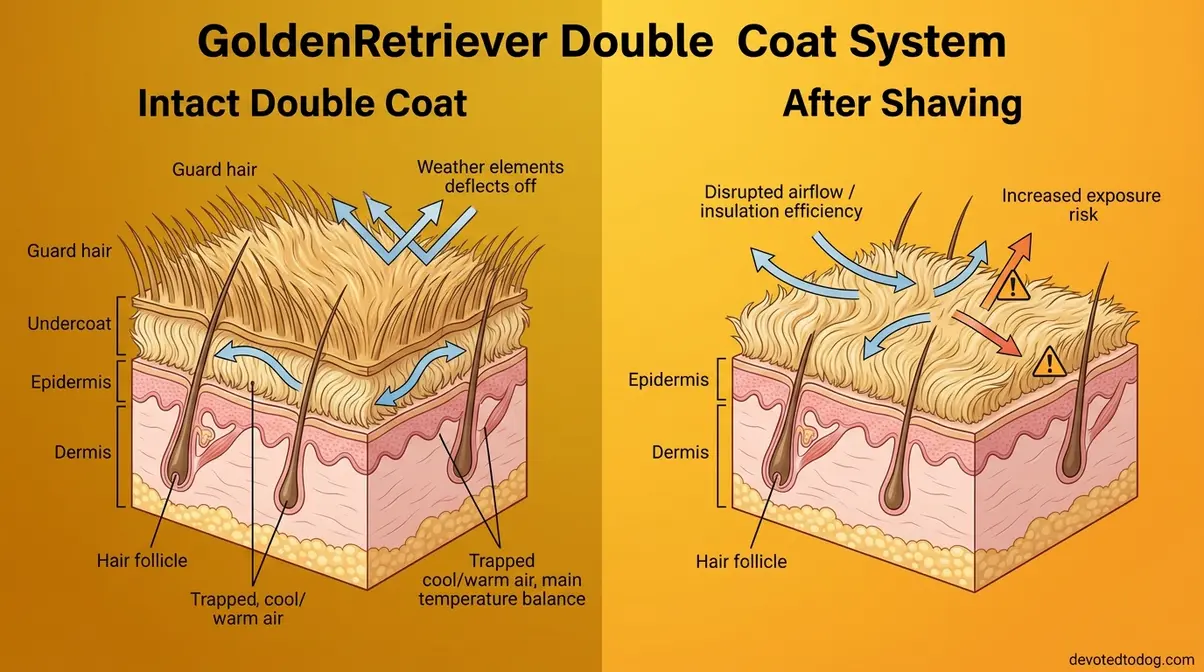
The Golden Retriever’s double coat is a two-layer system, and both layers serve distinct biological functions. The undercoat is dense, soft, and wool-like, it traps air close to the body, acting as insulation in both cold and hot weather. The guard coat (outer coat) is longer, coarser, and slightly water-repellent, designed to protect the dog from rain, brush, and debris during fieldwork. The guard coat length varies depending on the dog’s breeding line.
Here’s the part that surprises most owners: the double coat works in summer, too. In hot weather, the undercoat traps a layer of cool air against the skin. In cold weather, it traps warm air. This is why the double coat must never be shaved, more on that shortly. The double coat regulates temperature year-round,shaving it destroys this natural insulation system.
The American Kennel Club explains that a dog’s outer coat goes through three specific growth phases: anagen (active growth), catagen (transition), and telogen (resting). This cycle is what drives the “coat blows”, the heavy shedding events in spring and fall when the undercoat releases in large quantities. The double coat is not a cosmetic feature. It is a functional system.
Think of the double coat like a down jacket with a waterproof shell. You need both layers for the system to work. Remove the shell, and the insulation inside is exposed, damaged, and no longer functions correctly.
Before we get to grooming tools, there’s one common question worth addressing directly: can a Golden Retriever actually have a short coat?
Does a “Short Coat” Golden Exist?
A “short coat golden retriever” is not a separate breed or a health problem, it’s almost always a field-bred (working line) Golden Retriever. Field-bred Goldens are intentionally bred for a shorter, flatter, more practical coat suited to hunting and retrieving work in water and dense brush. They are purebred Golden Retrievers; they simply have a different coat expression than show-line dogs.
If your Golden’s coat is shorter than expected at 18 months or beyond, it’s worth checking their breeding line with your breeder. A shorter coat on a show-line dog could indicate a genetic variation or, rarely, a nutritional or health factor, but field-line dogs are simply built that way, and their coat is completely correct for their purpose.
One important caution: no reputable breeder sells a “short coat golden retriever” as a distinct variety or premium type. Be cautious of any breeder marketing this as a separate breed, a rare trait, or a higher-value dog.
Whether your Golden has a short field coat or a long show coat, the grooming fundamentals are the same, here’s what you’ll need.
Essential Grooming Tools & Routine
Good coat care for a Golden Retriever starts with the right tools. Each one serves a specific purpose, and knowing why you’re using each tool makes the whole process more effective. The devotedtodog.com team recommends building positive associations with these tools early.
Your Essential Grooming Kit:
- Slicker brush: Fine wire pins on a flat base; reaches through the guard coat to loosen and remove shedding undercoat. Use 2-3x per week during the “puppy uglies” phase, weekly for the adult coat.
- Undercoat rake: A wide-toothed metal tool designed to pull out the dense undercoat during seasonal “coat blows.” Essential during spring and fall shedding seasons.
- Pin brush: Rounded wire pins on a cushioned base; gentler than a slicker brush; ideal for daily touch-up brushing on the feathering and longer areas.
- Detangling spray: Helps work through mats in feathering areas, behind the ears, armpits, and collar area, without breaking the hair. Always use before brushing any tangled sections.
- Grooming scissors (blunt-tipped): For trimming around the paws, ears, and tail only, not for shortening the overall coat.
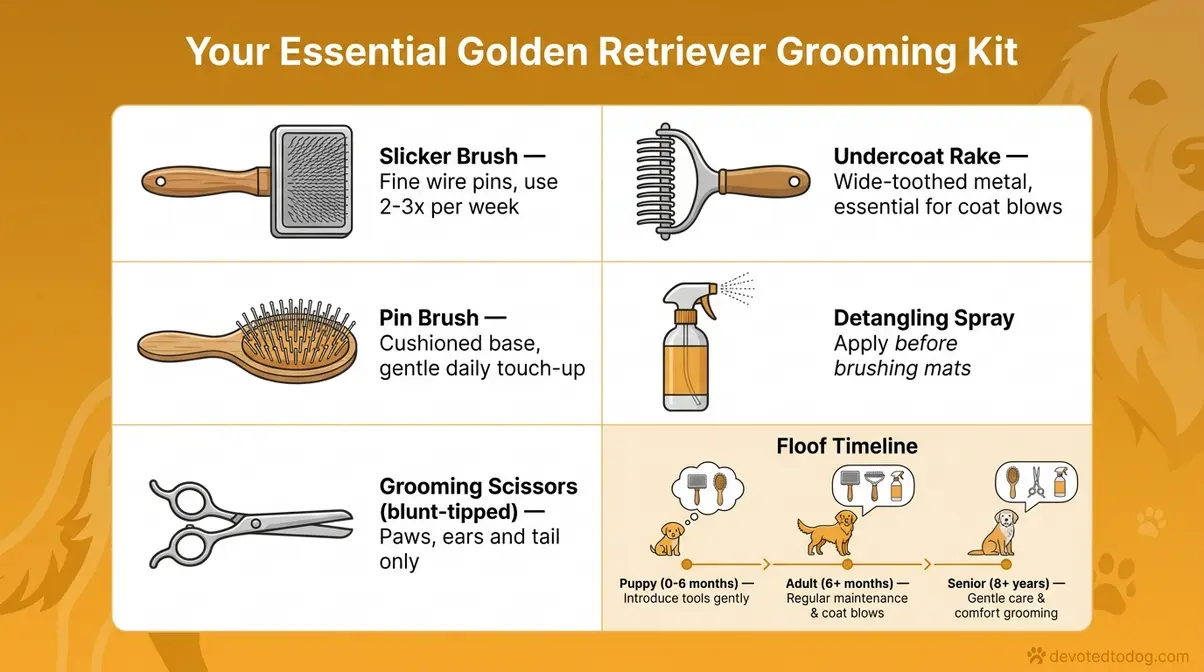
Your Step-by-Step Weekly Grooming Routine:
Estimated time: 15-20 minutes
- Tools needed:
- Detangling spray
- Pin brush
- Slicker brush
- Undercoat rake
Step 1: Mist the Coat
Mist the coat lightly with detangling spray if needed, focusing especially on feathering areas.
Step 2: Detangle with a Pin Brush
Use the pin brush to work through any tangles in feathering sections, moving area by area.
Step 3: Brush with a Slicker Brush
Follow with the slicker brush in long strokes in the direction of hair growth to cover the full body.
Step 4: Remove Loose Undercoat
During shedding seasons (spring and fall), use the undercoat rake to pull out loose undercoat.
Step 5: Check for Mats
Check behind the ears, armpits, and collar area for mats, as these are the most common trouble spots.
Step 6: Smooth the Coat
Finish with a final pass of the pin brush for a smooth, even result.
This routine scales with The Floof Timeline: Stage 1 needs almost nothing; Stage 2 calls for weekly brushing; Stage 3 (the “puppy uglies”) benefits from 2-3 sessions per week; and Stage 4 requires weekly maintenance minimum, with extra sessions during coat blows.
For our full product recommendations with reviews, see our guide to the best brushes for golden retriever coats.
There’s one more rule that every Golden Retriever owner needs to know, and it’s one that even well-meaning groomers sometimes get wrong.
Never Shave a Golden Retriever
If shedding is your main concern, our complete guide to managing golden retriever shedding covers every technique that actually works, without shaving.
⚠️ NEVER SHAVE YOUR GOLDEN’S COAT. Shaving disrupts the double coat’s insulation system, increases sun exposure risk, and may permanently alter coat texture. It does not reduce shedding.
Shaving a Golden Retriever does NOT reduce shedding. The undercoat continues to shed regardless of length, you’ll simply end up with shorter pieces of “golden glitter” instead of longer ones. The shed volume doesn’t change; only the size of the pieces does.
Shaving actively damages the double coat’s function. Without the guard coat, the undercoat is exposed to direct sunlight, heat, and moisture without any protection. In hot weather, a shaved Golden actually overheats more easily, the exact opposite of what most owners intend. The guard coat’s water-repellent properties and UV-blocking function are lost entirely when the coat is shaved down.
There’s also a structural risk: post-clipping alopecia, a condition where the coat grows back incorrectly, patchy, or with a permanently different texture after shaving, is a recognized concern in double-coated breeds. Veterinary sources note that the undercoat often regrows faster than the guard coat after shaving, leading to a permanently altered coat texture in which the two layers no longer function correctly together (Walkerville Vet, 2026; Uncanny Animals, 2026). Full coat restoration can take 6 months or more, and in some cases the texture never fully returns to normal.
The double coat is not a cosmetic feature. It is a functional system. Respect it, brush it regularly, and leave the scissors for paw trims only.
Even with perfect grooming, Golden owners sometimes notice coat changes that raise genuine concern. Here’s how to tell the difference between normal and something worth calling the vet about.
Seasonal Shedding and Coat Blowouts
Once the adult coat is in, a Golden sheds a little every day and a lot twice a year, usually in spring and fall. The AKC notes that fur undercoats shed heavily twice a year, and that you should brush or blow the loose undercoat out so it does not mat under the outer coat. During a blowout, use the undercoat rake from the grooming kit above every few days until the tufts stop coming. Our Golden Retriever shedding guide covers the rest.
Senior Golden Coat Changes
Older Goldens often go white around the muzzle, eyes and paws, and the coat can get a little thinner or coarser. Gradual graying is normal. A coat that turns dull, thin or patchy over a few weeks is not, and is worth raising with your vet, because coat changes can reflect health changes (see the warning signs below).
Coat Care After Swimming
Most Goldens love water, and the outer coat sheds a lot of it, but the undercoat can stay damp for hours. After a swim, rinse off chlorine, salt or lake water with fresh water, towel or blow-dry down to the skin, and dry the ears well. A dog shampoo made for double coats helps when a rinse is not enough; see our picks for the best shampoo for Golden Retrievers.
What Coat Concerns Should You Worry About?
Most coat concerns during the first 18 months of a Golden Retriever’s life are simply The Floof Timeline doing its job. But knowing what’s normal, and what isn’t, saves owners a lot of unnecessary anxiety and helps catch genuine issues early.
Normal Changes vs. Problems
Normal, these are expected and not cause for concern:
- Patchy, uneven coat during the “puppy uglies” phase (6-18 months)
- The “racing stripe”, a ridge of longer fur along the spine during Stage 3
- Seasonal heavy shedding in spring and fall (“coat blows”)
- Slight color shift as the adult guard hairs replace puppy fuzz
- Softer coat in some areas than others during the transition phase
Concerning, worth monitoring and potentially calling your vet:
- Bald patches or circular areas of hair loss (possible ringworm or mange)
- Excessive scratching or visible skin redness under the coat
- Dull, brittle, or dry coat texture outside of the “puppy uglies” phase (possible nutritional deficiency)
- Sudden dramatic increase in shedding outside of seasonal periods (possible thyroid or hormonal issue)
- Foul odor from the skin beneath the coat (possible skin infection)
The key message: most coat concerns during the first 18 months are simply The Floof Timeline in progress. But if you see bald patches, skin redness, or itching that doesn’t resolve within 2 weeks, it’s worth a vet call.
When to Call Your Vet
Call your vet if you notice any of the following:
- Bald patches larger than a 50-cent piece
- Skin redness, flaking, or crusting under the coat
- Excessive scratching or licking at the skin for more than 2 weeks
- A coat that fails to progress past the “puppy uglies” phase by 24 months
- Sudden coat color change in an adult dog (not a puppy going through normal stages)
For most Golden owners, this section will never apply. The vast majority of coat concerns are simply The Floof Timeline doing its job, on its own schedule, in its own way, producing the dog you always imagined.
Frequently Asked Questions
What Is the Most Difficult Age?
Most Golden Retriever owners find the adolescent phase, roughly 6 to 18 months, to be the most challenging period. During this “teenage” stage, Goldens often test boundaries, exhibit high energy, and may seem to forget previously learned commands. Consistent positive reinforcement training is essential throughout this phase. The good news is that this stage coincides with The Floof Timeline’s “puppy uglies”, so the challenging behavior and awkward coat arrive and leave together. By 18 to 24 months, most Goldens settle significantly in both temperament and coat.
What are the Golden Retriever coat stages?
Golden retriever coat stages follow a predictable timeline: (1) puppy fuzz (0-8 weeks), soft, fluffy, single-layer; (2) early transition (2-6 months), first feathering appears and adult guard hairs start to push through, which the AKC places at 4 to 6 months; (3) the “puppy uglies” (6-18 months), patchy and uneven as the adult coat breaks through; (4) full adult coat (18 months to 3 years), full double coat with feathering. The golden retriever fur changes most dramatically during the puppy uglies, when many owners panic about ‘patchy’ or ‘thin’ coats. This is normal.
When do Golden Retrievers get their full coat?
Golden retrievers reach their full adult coat between 18 and 24 months, and some males and show-line dogs keep filling out until age 2 to 3. Field-line dogs carry a shorter, flatter coat with less feathering. When do golden retrievers get their full coat depends on line (show vs field) and individual genetics. The final feathering on the tail and chest is the last to develop. A wavy hair golden retriever or curly-coat variant typically shows that texture from puppy stage onward.
Do Golden Retrievers have a double coat?
Yes. The AKC lists the Golden Retriever coat as a double coat: a soft, dense undercoat under a longer, water-resistant outer coat. Puppies start with a single soft layer, and the double coat comes in during the stages above. The double coat section above explains how the two layers work.
Why is my Golden puppy’s fur so fluffy?
Puppy fur is a single layer of soft, fluffy hair that helps a young puppy keep warm, as the AKC explains. It is replaced by the thicker, stiffer adult coat over the following months, so the extra fluff is temporary.
How Do You Track Your Golden’s Coat Journey?
For Golden Retriever owners, the coat stages journey spans four predictable phases, from uniform puppy fuzz to full adult feathering. The American Kennel Club notes that full physical maturity arrives between 18 and 24 months for larger breeds like Golden Retrievers. The best approach combines knowing The Floof Timeline stages, recognizing the “puppy uglies” as completely normal, and building a consistent grooming routine that evolves as your dog does.
The Floof Timeline exists precisely for owners like Bailey’s, impatient, curious, and a little anxious about whether everything is going according to plan. Now you know it is. Every patchy phase, every racing stripe, every handful of golden glitter is part of the same predictable journey. Every Golden goes through it. Every owner who’s been there promises: the full floof is absolutely worth the wait.
Start by bookmarking our golden retriever growth stages guide to track your puppy’s physical development alongside their coat timeline, and when the shedding begins in earnest, our guide to managing golden retriever shedding has every tool and technique you’ll need.
Related reading: