Your Golden Retriever is a sporting breed built for a full day’s work in the field — and most owners aren’t sure whether their dog is getting enough exercise, too much, or the right kind. Sound familiar? You’re not alone. Picture the Golden who chewed through a sofa cushion after a 45-minute walk, or the one who can’t settle even after an hour of fetch. That restlessness has a cause.
The stakes run in both directions. Too little exercise leads to what many owners call “Golden Retriever syndrome” — destructive behavior, anxiety, and gradual weight gain. Too much during puppyhood, however, risks lifelong joint damage before growth plates have a chance to close. Getting this balance right matters more for this breed than almost any other.
In this guide, you’ll learn exactly how much exercise Golden Retrievers need at every life stage — with recommendations, an age-by-age chart, and actionable activity ideas you can start today. We’ll cover daily requirements, age-specific guidelines, the best activities for body and mind, and the warning signs that tell you when something’s off.
Understanding exactly how much exercise golden retrievers need is crucial for their well-being. Most adult Golden Retrievers need 1–2 hours of exercise daily — but the right mix of physical activity and mental stimulation is what truly keeps them happy and healthy.
- Puppies: Follow the 5-Minute Rule — 5 minutes per month of age, twice daily, to protect developing joints
- Adults (1–7 years): Aim for 1–2 hours daily, mixing walks, play, and off-leash time
- Seniors (7+): Shift to 30–60 minutes of low-impact activity to protect aging joints
- Mental stimulation counts: Puzzle toys and scent work tire a Golden as effectively as a long run
- The Whole-Dog Workout: Physical exercise alone isn’t enough — mental enrichment prevents destructive behavior even in well-walked dogs
Daily Golden Retriever Exercise Needs
For more on this topic, see our guide on the How Fast Can Golden Retrievers Run? Speed & Safety Guide.
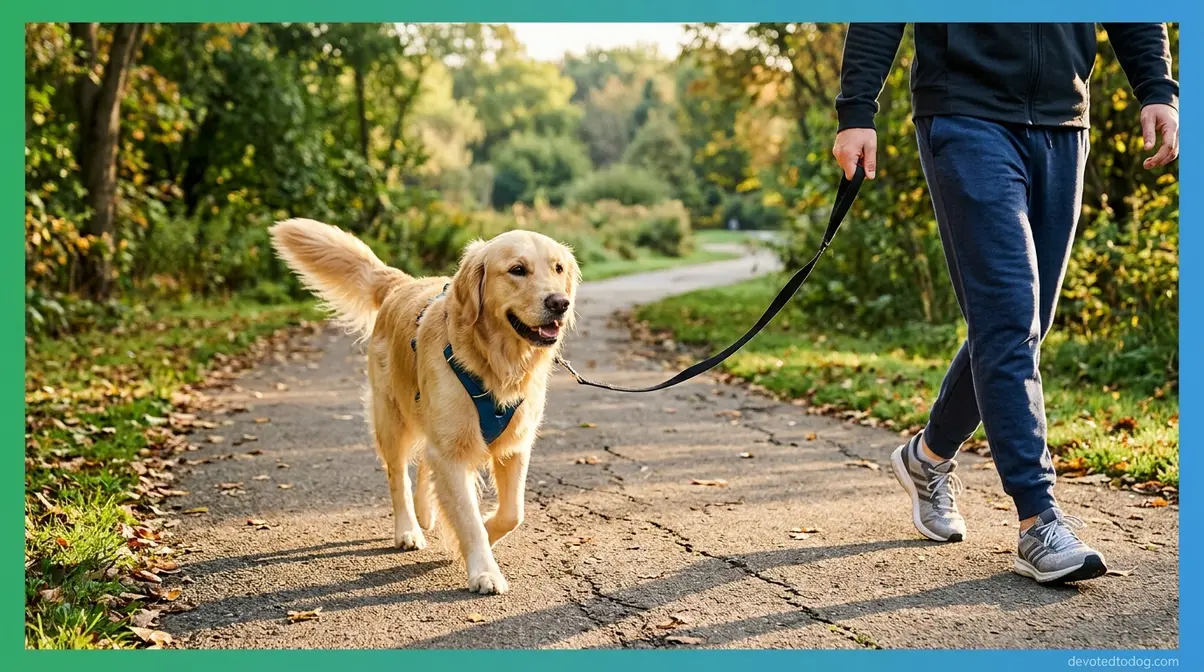
Golden Retrievers need 1–2 hours of daily exercise, according to veterinary consensus and breed expert guidelines — making them one of the higher-demand breeds in the sporting group. This isn’t just a number to hit; it reflects the breed’s biological wiring. Under-exercise a Golden and you’ll see the consequences quickly: restlessness, destructive behavior, and weight gain that compounds over time. How much exercise dogs need varies widely by breed, but for Golden Retrievers specifically, the answer sits firmly at the higher end of the spectrum.
Why Goldens Have High Exercise Needs
Golden Retrievers were developed in 19th-century Scotland to retrieve waterfowl for hunters — spending entire days working in cold fields and open water. That working heritage is baked into their physiology and temperament. Their bodies are built for sustained aerobic activity, and their minds are wired to problem-solve alongside a human partner.
As a sporting breed — classified in the AKC’s Sporting Group — Goldens have a higher baseline energy level and endurance than companion breeds. Compare them briefly to a Basset Hound, bred for slow, scent-driven tracking: a Basset can often manage with a leisurely 30-minute walk. Your Golden, by contrast, will still be pacing at the door. The Morris Animal Foundation’s Golden Retriever Lifetime Study tracks comprehensive health data, including walking gait and activity levels, to identify early risk factors for major diseases (Morris Animal Foundation, 2026).
This sporting drive doesn’t disappear when your Golden moves into a family home — it just redirects. Without adequate outlets, the same energy that made them exceptional field dogs becomes chewed baseboards, excessive barking, and a dog that simply cannot settle. For a comprehensive guide to dog exercise needs across all breeds, the contrast with Golden Retrievers is especially striking.
Quotable fact: Golden Retrievers, bred as high-endurance sporting dogs, require 1–2 hours of daily physical activity to maintain healthy weight and prevent anxiety-driven destructive behavior.
The 1–2 Hour Daily Standard
How much exercise do Golden Retrievers need daily? The standard recommendation is 1–2 hours for a healthy adult Golden (ages 1–7), ideally split across at least two sessions rather than one long block. A morning walk plus an afternoon play session is more effective — physiologically and behaviorally — than a single 90-minute marathon.
The range accounts for real individual variation. A highly active 3-year-old with field-line breeding may need closer to 2 hours to feel satisfied. A more relaxed 6-year-old show-line Golden might be content with 90 minutes. Age, health status, temperament, and even the weather all shift the target. Dogster’s guide confirms this range of 60–120 minutes depending on life stage and individual temperament.
Quality matters as much as quantity. A 30-minute off-leash run in an open field delivers more physical and mental stimulation than a 60-minute on-leash march down the same sidewalk route. This is the core principle of The Whole-Dog Workout — the idea that physical activity alone isn’t enough; mental stimulation is equally essential, and the ideal ratio between the two shifts across every life stage.
Here’s what a sample day might look like for an adult Golden:
- 45-minute brisk morning walk
- 20-minute fetch session in the yard
- 15-minute puzzle feeder at dinnertime
That’s roughly 80 minutes of high-quality exercise — well within the target range, and covering both physical and mental needs. For guidance on how often to walk your dog based on breed and lifestyle, frequency matters as much as total duration.
The Morris Animal Foundation’s ongoing research is actively tracking physical activity patterns as key variables in identifying lifestyle risk factors for major diseases in Golden Retrievers — reinforcing that exercise habits are a genuine health variable, not just a behavioral nicety (Morris Animal Foundation, 2026).
Do They Need Daily Exercise?
Yes, Golden Retrievers require daily exercise every single day. As a high-energy sporting breed, a healthy adult needs 1–2 hours of activity daily — including walks, play, and mental stimulation. Skipping exercise regularly leads to restlessness, destructive behavior, and weight gain. Unlike some lower-energy breeds that can manage on every-other-day activity, Golden Retrievers have the endurance and drive of working dogs. Their bodies and minds are wired for consistent daily outlets, and even one skipped day is often noticeable in their behavior.
What Counts as High-Quality Exercise?
High-quality exercise engages both the body and the brain simultaneously. A “sniffy walk” — where your Golden leads the pace and stops freely to investigate every lamppost and grass patch — provides more mental stimulation than a brisk, on-leash march of the same distance, even if the physical output is lower. Both matter; the best sessions deliver both.
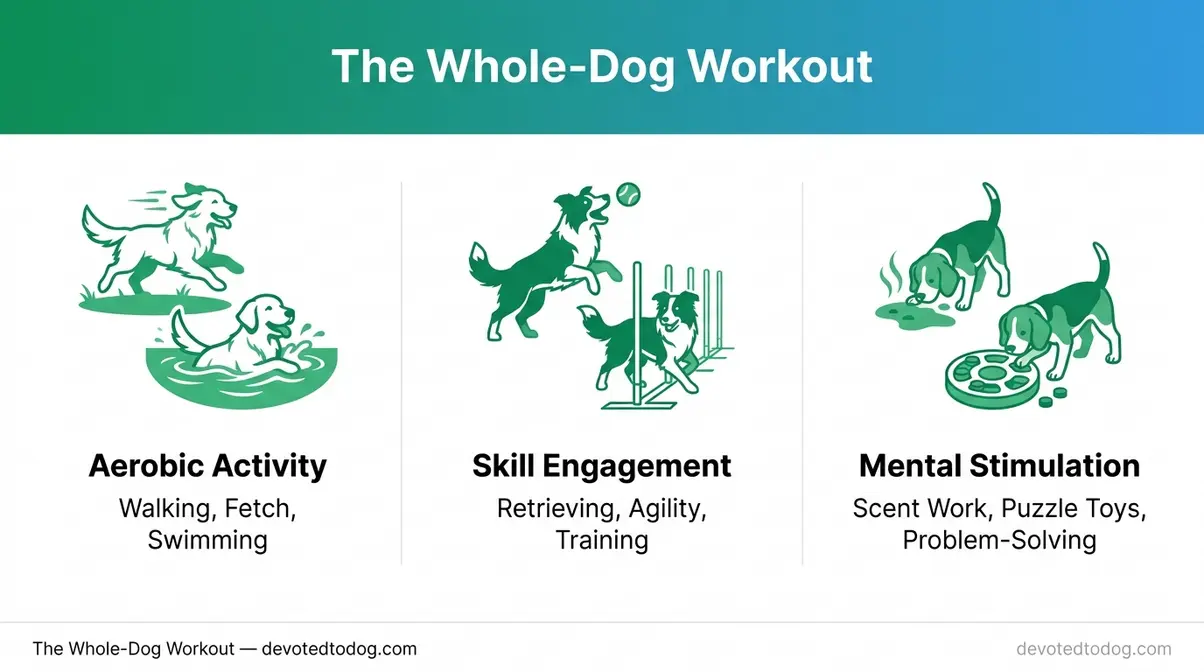
A complete exercise session has three components:
- Aerobic activity — walking, running, swimming, or fetch that elevates the heart rate and burns physical energy
- Skill engagement — retrieving, agility, or training that taps the breed’s instinct to work with a human partner
- Mental stimulation — scent work, puzzle toys, or problem-solving that satisfies the cognitive needs physical exercise can’t address alone
All three contribute to The Whole-Dog Workout. Outdoor playtime and structured exercise both count, but they’re not equivalent: a structured training session burns more mental energy per minute than passive yard time, where a Golden will often choose to rest rather than self-exercise.
A useful comparison: two 30-minute walks on the same familiar route provides adequate physical exercise. One 30-minute walk plus one 15-minute scent game delivers The Whole-Dog Workout — and your Golden will settle more readily afterward.
Adjusting for Your Individual Dog
The 1–2 hour guideline is a starting point, not a fixed prescription. Several factors push that number up or down for your specific dog:
- Joint health — A Golden diagnosed with hip dysplasia needs a modified plan. According to Cornell University College of Veterinary Medicine, canine hip dysplasia causes joint laxity that can progress to osteoarthritis, making appropriate, non-damaging exercise critical for large breeds like Golden Retrievers (Cornell University College of Veterinary Medicine).
- Temperature — Golden Retrievers have dense double coats and are prone to overheating. On days above 80°F, reduce exercise intensity and shift sessions to early morning or late evening.
- Fitness baseline — A dog returning from illness or a sedentary period needs a gradual ramp-up, not an immediate return to full duration.
Before each session, run through three quick checks:
- Is it too hot for this intensity level?
- Is my dog showing any stiffness or hesitation?
- Did they eat within the last 60–90 minutes?
Beyond physical exercise, Golden Retrievers also need significant daily attention and social interaction — we’ll cover exactly how much attention do golden retrievers need in a dedicated section later in this guide.
Exercise Needs by Age: Puppy to Senior
The amount of exercise a Golden Retriever needs changes at every life stage — from the 5-Minute Rule for puppies to 1–2 hours for adults to gentle low-impact activity for seniors. Getting this wrong in either direction carries real risks: under-exercise a puppy mentally and they’ll be a handful, but over-exercise them physically before their bones are ready and you risk lasting joint damage. Here’s exactly what your dog needs at each stage.
Puppies: The 5-Minute Rule Explained
The 5-Minute Rule is a guideline endorsed by veterinary professionals: allow 5 minutes of structured exercise per month of age, up to twice daily. In practice:
- 3 months old → 15 minutes per session, twice daily (30 minutes total)
- 4 months old → 20 minutes per session, twice daily (40 minutes total)
- 5 months old → 25 minutes per session, twice daily (50 minutes total)
- 6 months old → 30 minutes per session, twice daily (60 minutes total)
This rule applies specifically to structured exercise — leash walks and training sessions. Free play in a garden at the puppy’s own pace, where they can stop and rest whenever they choose, is generally fine beyond these limits.
“A good rule of thumb is to give them at least 5 minutes of exercise for every month they’ve been alive up to the age of one year.”
The physiological reason behind this guideline matters. Growth plates — the soft cartilage at the ends of developing bones that harden as the dog matures — don’t fully close in large breeds like Golden Retrievers until approximately 12–16 months of age (Canine Health and Rehabilitation, 2026). Repetitive impact exercise before closure can cause growth plate fractures or lasting joint deformity. This is exactly why a 2-mile walk is too much for a young puppy, regardless of how willing they seem in the moment.
Like other sporting breed puppies — including German Shorthaired Pointer puppies — Golden Retriever puppies benefit enormously from mental stimulation as a safe complement to limited physical exercise. Short training sessions, sniffing games, and gentle play tire them out without loading their developing joints. The Michigan State University College of Veterinary Medicine notes that veterinary rehabilitation for Golden Retrievers with hip dysplasia often incorporates low-impact exercises like underwater treadmill walking to maintain joint range of motion without excessive strain — a principle that applies equally to prevention in puppies.
For detailed exercise guidelines for adolescent Golden Retrievers as your puppy moves through their first year, the transition period requires its own careful approach.
Is a 2-Mile Walk Too Much for a Puppy?
For most young puppies, a 2-mile walk is too much and risks damaging developing joints. The 5-Minute Rule is a safer guide: allow 5 minutes of structured exercise per month of age, up to twice daily. A 4-month-old puppy, for example, should have no more than 20-minute walks per session. Growth plates in large breeds like Golden Retrievers don’t fully close until approximately 12–16 months of age, and repetitive impact before closure can cause growth plate injury or lasting joint deformity that affects the dog for life.
Adolescent Goldens (8–18 Months)
The adolescent phase — roughly 8 to 18 months — is the period most owners find hardest, and for good reason. Your Golden simultaneously has near-adult energy levels, is testing every boundary they’ve ever learned, and is still transitioning away from puppy exercise limits. It’s a challenging combination.
Exercise during adolescence should increase gradually toward adult targets as growth plates close:
- 8–10 months: 30–45 minutes of structured exercise per session
- 10–12 months: 45–60 minutes, with increasing variety
- 12–18 months: Gradually approaching full adult levels (60–90 minutes)
Mental stimulation is especially critical during this phase. A bored adolescent Golden doesn’t just sit quietly — they redecorate your living room. Short training sessions (5–10 minutes, 3–4 times daily) provide genuine mental exhaustion that complements physical exercise without overloading developing joints. Knowing when Golden Retrievers calm down helps set realistic expectations: most owners see a meaningful shift somewhere between 18 months and 3 years, once adult exercise levels are established and maintained consistently.
Quotable fact: The adolescent phase (8–18 months) is when Golden Retrievers combine peak boundary-testing behavior with near-adult energy levels — making consistent daily exercise the single most effective management tool.
What Is the Hardest Age?
The hardest age for Golden Retrievers is typically adolescence, between 8 and 18 months. During this phase, they have near-adult energy levels but are still testing boundaries and learning self-control. They can be impulsive, easily distracted, and seemingly inexhaustible. Consistent daily exercise — combined with short, frequent training sessions of 5–10 minutes — is the most effective management strategy. Most owners see meaningful improvement in temperament once adult exercise levels are established and maintained consistently, typically between 18 months and 3 years.
Adult Golden Retrievers (1–7 Years)
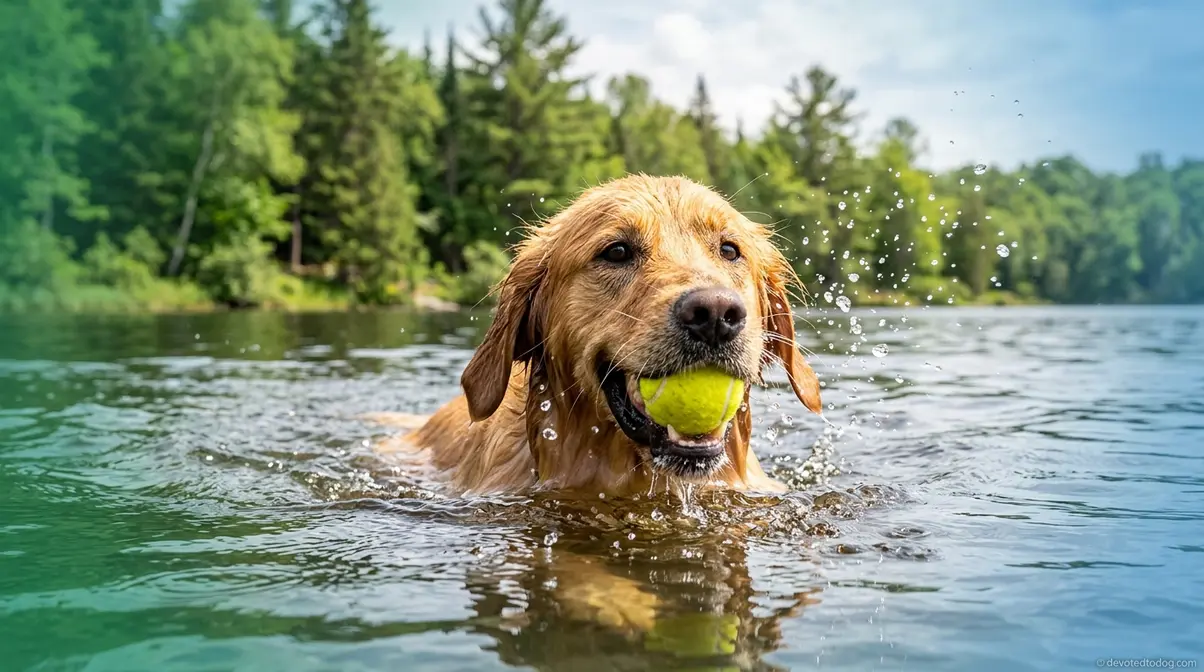
Adult Goldens — roughly 1 to 7 years — are in their peak physical phase. They can handle longer hikes, sustained swimming sessions, and vigorous fetch games that would exhaust a puppy or wear down a senior. The 1–2 hour daily target applies fully here.
Variety matters at this stage more than raw duration. Rotating activity types provides better physical conditioning and prevents the mental boredom that comes from the same route walked every day:
- 5 days of 60-minute walks or active play
- 1 day of a longer activity — a 90-minute hike or extended swimming session
- 1 lighter “recovery” day with a gentle walk and extended sniff time
Weight management is directly tied to exercise consistency at this stage. Golden Retrievers are prone to obesity, and an adult that exercises regularly maintains a healthy weight more easily — which in turn reduces hip dysplasia risk. According to Cornell University College of Veterinary Medicine, appropriate, non-damaging exercise is crucial for large breeds prone to joint issues. Every extra pound a dog carries adds measurable load to already-vulnerable hip joints.
Senior Golden Retrievers (7+ Years)
Senior Goldens — 7 years and older — typically need 30–60 minutes of lower-intensity activity daily. The goal shifts from cardiovascular peak performance to joint mobility, mental engagement, and healthy weight maintenance. This isn’t about doing less; it’s about doing the right things.
Low-impact activities become the priority. Leisurely leash walks on soft surfaces (grass, dirt trails rather than pavement), gentle swimming, and short training sessions all qualify. High-impact activities — jumping, extended running on hard surfaces, rough-and-tumble play — should be reduced or eliminated for dogs showing any signs of joint stiffness.
Mental stimulation becomes even more important in senior years. Research from the Morris Animal Foundation strongly recommends incorporating aerobic exercise and introducing new tricks during playtime to help stave off canine cognitive dysfunction as dogs age (Morris Animal Foundation). A 10-minute training session with familiar commands counts as both cognitive engagement and mild physical exercise — an efficient use of a senior dog’s energy reserves.
A practical daily template for a 9-year-old Golden: two 20-minute gentle walks plus one 10-minute training session equals 50 minutes of age-appropriate exercise that supports both body and mind.
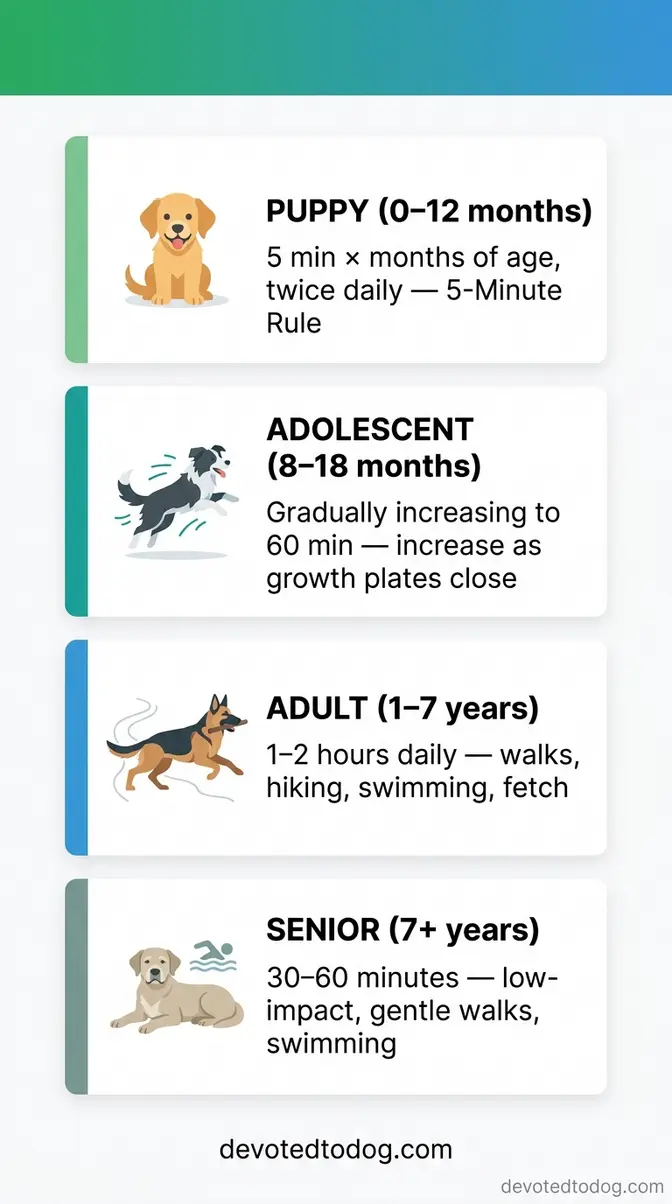
Age-by-Age Exercise Summary Table:
| Life Stage | Age | Daily Exercise | Type | Key Rule |
|---|---|---|---|---|
| Puppy | 0–12 months | 5 min × months of age (×2/day) | Gentle play, short walks, training | 5-Minute Rule — no forced repetitive exercise |
| Adolescent | 8–18 months | Gradually increasing to 60 min | Walks, play, training sessions | Increase slowly as growth plates close |
| Adult | 1–7 years | 1–2 hours | Walks, hiking, swimming, fetch | Variety + mental stimulation daily |
| Senior | 7+ years | 30–60 minutes | Gentle walks, swimming, training | Low-impact; watch for stiffness |
The Best Exercise Activities for Golden Retrievers
Golden Retrievers thrive on variety — the same route walked daily meets their physical minimum but leaves their minds chronically under-stimulated. The Whole-Dog Workout combines physical activity with mental engagement for a truly satisfied dog. Here are the best activities for both, along with guidance on building a realistic weekly schedule.
5 Proven Physical Activities
The following five activities cover the full range of Golden Retriever exercise needs — from daily foundations to weekend adventures:
- Daily Walks — The backbone of any Golden’s routine. Brisk-paced walks are more valuable than slow ambles; two sessions (morning and evening) outperform one long walk for both behavioral settling and physical conditioning. Leash training your Golden Retriever is worth investing in early — a dog that pulls makes walks less enjoyable and far less consistent. Allow occasional “sniffy” detours for mental engagement.
- Fetch and Retrieving — Perfectly aligned with the breed’s natural instinct. A 15–20 minute fetch session in a yard or park delivers intense aerobic exercise in a fraction of the time of a walk. A ball launcher extends throw distance without arm fatigue. This is outdoor playtime at its most efficient for a Golden Retriever.
- Swimming — The gold standard for low-impact cardiovascular exercise. Water buoyancy takes much of the load off the joints compared to land-based activity, making swimming ideal for dogs with joint concerns while still providing excellent conditioning. Most Goldens take to water naturally — introduce gradually with shallow entry points if yours is hesitant.
- Hiking — Excellent for adult Goldens with good joint health. Varied terrain engages more muscle groups than flat-surface walking, and the novel scents and environments provide significant mental stimulation. Keep hikes to shaded trails in warm weather, carry water for both of you, and watch for signs of fatigue on longer routes. Free-running on a long line in open fields is a hiking-adjacent option for dogs with reliable recall.
- Agility and Obstacle Play — Backyard agility (weave poles, tunnels, low jumps) combines aerobic exercise with problem-solving. Even informal obstacle play — a log to balance on, a slope to climb — counts as high-quality exercise because it engages the dog’s brain alongside their body.
According to the AKC Canine Health Foundation, owners should closely monitor their dogs for signs of fatigue or lingering soreness after exercise, as this can indicate underlying joint or mobility issues (AKC Canine Health Foundation).
Mental Stimulation: The Missing Piece
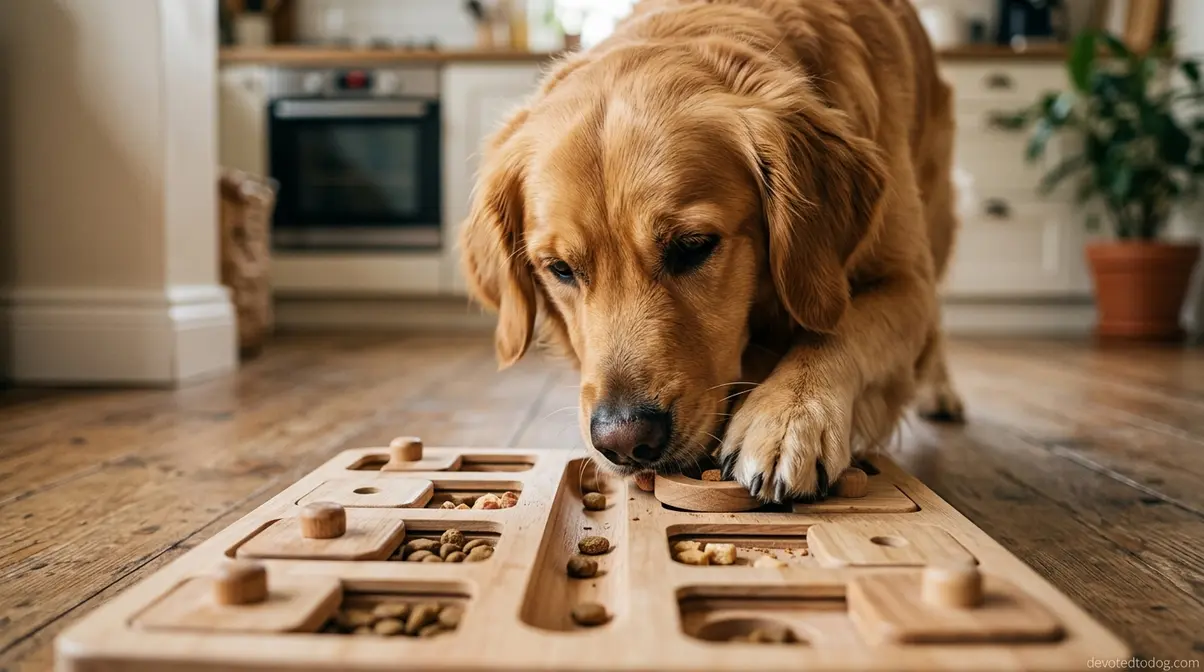
Golden Retrievers were bred not just to run, but to think — to track scent, read handler signals, and problem-solve in real time in the field. Physical exercise addresses their body. Mental stimulation addresses a cognitive need that walks alone simply cannot satisfy. A mentally under-stimulated Golden will find its own entertainment, and your furniture will usually pay the price.
A 15-minute scent work session can tire a Golden Retriever as effectively as a 30-minute walk — making mental stimulation a time-efficient complement to physical exercise.
Here are three activities that deliver genuine cognitive challenge:
- Scent Work / Nose Work — Hide treats or a specific scent target around the house or yard and let your Golden find them. Start simple (treat hidden under one of three cups) and increase complexity as they improve. A 10–15 minute session engages the same problem-solving circuits as a full day of field work. This is mental stimulation that uses the breed’s deepest instincts.
- Puzzle Feeders and Snuffle Mats — Replace the food bowl with a puzzle feeder or snuffle mat at mealtimes. This turns a 2-minute meal into a 15–20 minute mental workout. A Kong stuffed with kibble and frozen is a classic starting point. For a curated selection of best interactive dog toys for mental stimulation, options range from beginner-level snuffle mats to complex multi-step puzzle boards.
- Training Sessions — Short, positive-reinforcement training sessions (5–10 minutes, 3–4 times daily) are among the most mentally tiring activities for any dog. Teaching new tricks to an adult Golden — even something as simple as “find it” or learning the names of their toys — provides genuine cognitive challenge that physical exercise can’t replicate.
This is where “Golden Retriever syndrome” becomes relevant. This informal term describes the behavioral issues — destructive behavior, anxiety, hyperactivity indoors — that arise when a Golden’s mental needs go unmet, even when they’re receiving adequate physical exercise. Many owners who report their dog is “still wild after two walks” are dealing with mental under-stimulation, not a physical exercise deficit. The Whole-Dog Workout means alternating between physical and mental activities across the week — not treating one as optional. Research from cognitive enrichment studies confirms that mental stimulation improves problem-solving skills, reduces stress behaviors, and supports cognitive function across a dog’s lifespan (PMC, National Library of Medicine).
Low-Impact Options for Joint Health
For Goldens with hip dysplasia, arthritis, or age-related stiffness, the exercise goal shifts from cardiovascular challenge to joint maintenance. The good news: low-impact exercise still delivers real benefits — it just requires thoughtful activity selection.
Swimming and hydrotherapy top the list. Water buoyancy dramatically reduces joint load while maintaining cardiovascular conditioning. Hydrotherapy — swimming in a supervised therapeutic environment, often using an underwater treadmill — is used by veterinary rehabilitation specialists specifically for Golden Retrievers with hip dysplasia. The MSU College of Veterinary Medicine notes that underwater treadmill walking helps maintain joint range of motion without excessive strain.
Low-impact options to prioritize:
- Gentle leash walks on soft surfaces (grass or packed dirt, not pavement)
- Swimming or wading in calm water
- Short, frequent sessions (3–4 walks of 15 minutes each) rather than one long session
- Slow, flat-terrain hiking with frequent rest stops
Avoid stairs, jumping in and out of vehicles, and sudden direction changes for dogs managing joint conditions. Weight management is equally critical — every additional pound increases the load on already-compromised joints, making diet and exercise an inseparable pair for these dogs. The Cornell University College of Veterinary Medicine confirms that for dogs managing orthopedic conditions, a combination of strict weight management and controlled physical exercise is essential when surgery is not an option (Cornell University College of Veterinary Medicine).
Building a Weekly Exercise Schedule
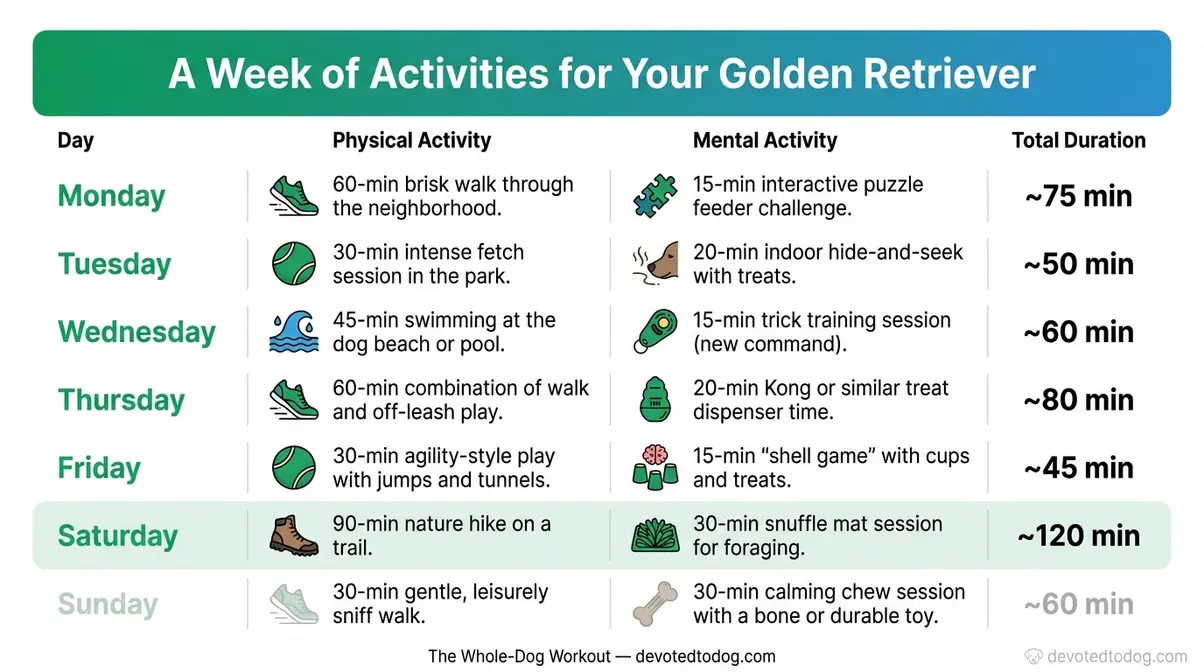
A balanced week for an adult Golden Retriever doesn’t need to be complicated. The key is consistency across all three components of The Whole-Dog Workout — aerobic activity, skill engagement, and mental stimulation — rather than occasional intense sessions.
Sample weekly structure:
| Day | Physical Activity | Mental Activity | Total Duration |
|---|---|---|---|
| Monday | 60-min brisk walk | 15-min puzzle feeder | ~75 min |
| Tuesday | 20-min fetch session | 10-min training session | ~30 min |
| Wednesday | 60-min walk (sniffy route) | 15-min scent game | ~75 min |
| Thursday | 45-min walk | 10-min training session | ~55 min |
| Friday | 60-min walk | 15-min puzzle feeder | ~75 min |
| Saturday | 90-min hike or swim | 10-min training session | ~100 min |
| Sunday | 30-min gentle walk | Extended sniff time | ~45 min |
Mental activities should appear every day — not just on shorter exercise days. A daily 10–15 minute puzzle feeder or training session costs almost no time but significantly reduces restless evening behavior. On hot days, shift physical sessions to early morning or late evening and increase indoor mental activities to compensate.
Signs Your Golden Retriever Needs More Exercise
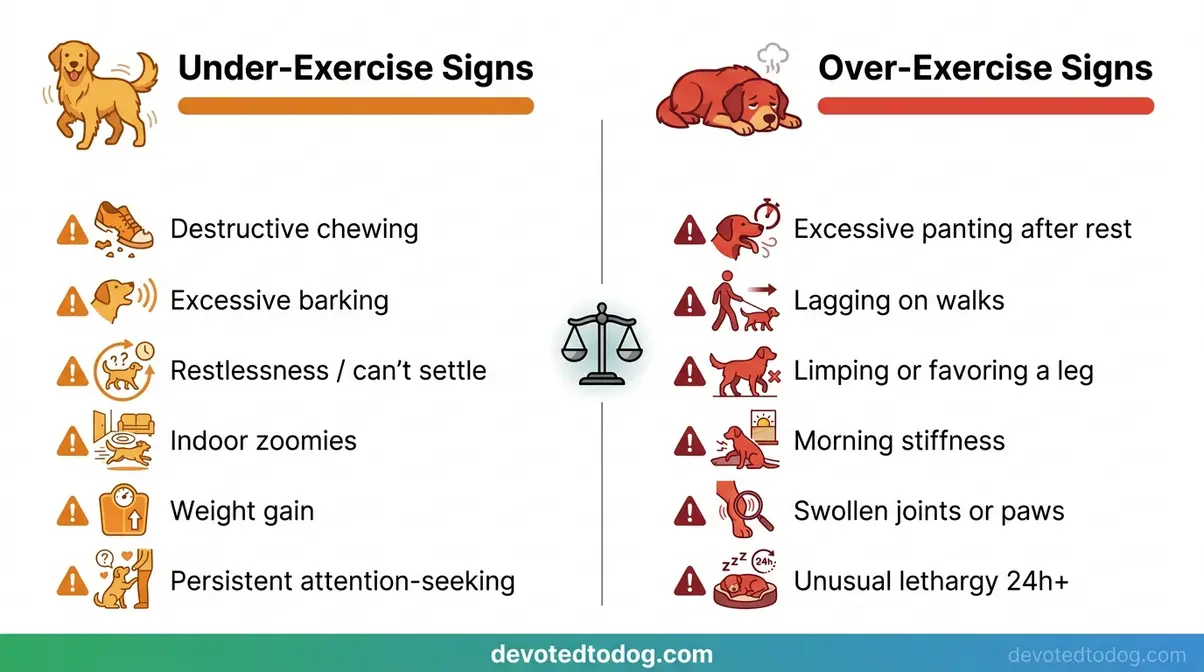
Your Golden Retriever can’t tell you they need more exercise — but their behavior absolutely will. Certain patterns are classic indicators of an under-exercised dog, while others signal you may be pushing too hard in the opposite direction. Knowing both sets of signs is what separates reactive owners from proactive ones.
Hemangiosarcoma is one of the most common cancers in Golden Retrievers — making regular veterinary monitoring just as critical as daily exercise for long-term health.
Behavioral Signs of Under-Exercise
These behaviors are often labeled “bad” — but they’re really communication. Your dog is telling you that their exercise quota isn’t being met:
- Destructive chewing (furniture, shoes, baseboards) — redirected energy with nowhere productive to go
- Excessive barking or whining — frustration vocalization from an unmet drive to be active
- Restlessness and inability to settle — the dog’s body is still physiologically “on” even when the day is winding down
- Repeated jumping up — seeking stimulation and social engagement
- Indoor zoomies that never fully stop — the body demanding a physical outlet
- Gradual weight gain — reduced calorie burn leading to slow but steady obesity
- Persistent attention-seeking — nudging, pawing, following you room to room as a petition for activity
These are the hallmarks of “Golden Retriever syndrome” — the behavioral manifestations of an under-stimulated sporting breed. Critically, these signs often indicate that The Whole-Dog Workout is incomplete: the dog may be getting adequate physical exercise but missing mental stimulation entirely. An extra 15 minutes of scent work can resolve behaviors that an extra 30 minutes of walking cannot.
Golden Retrievers also face serious health risks that make regular veterinary oversight essential alongside exercise management. According to the AKC Canine Health Foundation, Golden Retrievers have a significant lifetime risk of developing hemangiosarcoma, an aggressive cancer of the blood vessels — making regular veterinary monitoring important, particularly as dogs age past 7 years (AKC Canine Health Foundation). In the Golden Retriever Lifetime Study, 233 of 3,044 enrolled dogs (7.65%) had been diagnosed with hemangiosarcoma as of September 2022 (Hillman et al., Veterinary and Comparative Oncology, 2023).
For a deeper look at common Golden Retriever behavior problems and their root causes, many trace directly back to unmet exercise or mental stimulation needs.
Signs of Over-Exercise
Over-exercise is a genuine risk — especially for puppies, seniors, and dogs with joint conditions. Watch for these warning signs during and after exercise sessions:
- Excessive panting that doesn’t resolve within 10–15 minutes of rest
- Lagging behind on walks or refusing to continue a familiar route
- Limping or favoring one leg during or immediately after activity
- Morning stiffness the day after a longer session
- Swollen joints or paw pads visible after exercise
- Unusual lethargy lasting more than a day following activity
These signs are especially important to monitor in puppies (whose growth plates are still developing), senior dogs, and any Golden with a known orthopedic condition. If you observe limping, persistent swelling, or significant behavioral changes after exercise, stop activity and consult your veterinarian promptly. The AKC Canine Health Foundation notes that lingering soreness after exercise can indicate underlying joint or mobility issues that require professional evaluation.
Knowing when to ease up on excessive barking from boredom or unmet energy needs versus when to add more activity is a skill that comes with close observation of your individual dog.
How Much Attention Do They Need?
How much attention do Golden Retrievers need? The honest answer: quite a lot — and it’s distinct from their exercise requirement. Golden Retrievers are intensely social dogs bred to work alongside humans all day. They need not just physical activity, but genuine social interaction: playtime with their owner, inclusion in family activities, and time simply being near people they love.
Leaving a Golden alone for extended periods — more than 4–6 hours regularly — can cause separation anxiety regardless of how much exercise they received beforehand. Exercise and companionship solve different needs.
How to tell if your dog needs more attention versus more exercise:
- Needs more exercise: Destructive when you’re home, hyperactive, unable to settle after activity
- Needs more attention: Clingy when you’re present, follows you room to room, anxious when you prepare to leave, vocalizes when alone
The most efficient solution combines both — training sessions, fetch with the owner, and interactive play deliver exercise and quality connection simultaneously. Research from the Morris Animal Foundation is actively tracking social engagement patterns as potential contributors to disease risk in Golden Retrievers, suggesting that the social dimension of a dog’s life may matter for long-term health as well as daily wellbeing (Morris Animal Foundation, 2026).
When to Adjust Exercise and Consult Your Vet
“The information in this guide is intended as general educational guidance for healthy Golden Retrievers. Always consult your veterinarian before starting a new exercise program, especially for dogs with joint conditions, heart disease, obesity, or age-related health concerns. If your dog shows signs of pain, limping, or unusual fatigue during or after exercise, stop activity and seek veterinary advice.”
The guidelines in this article are a strong starting point — but certain health conditions, weather extremes, and individual circumstances require personalized veterinary guidance. Recognizing when to step beyond general advice is itself a mark of responsible ownership.
Common Exercise Mistakes to Avoid
Even well-intentioned owners fall into these four patterns:
- Starting too much, too fast — Ramping up exercise suddenly after a sedentary period (post-illness, post-winter inactivity) causes muscle strain and joint injury. Increase total weekly duration by no more than 10% per week to allow safe adaptation.
- Ignoring heat — Golden Retrievers’ dense double coats make them significantly more vulnerable to heatstroke than short-coated breeds. Exercise before 9am or after 6pm in warm weather; carry water on every outing above 65°F; shorten sessions immediately if panting becomes heavy.
- Skipping rest and recovery — Even athletic dogs need lighter days. Build 1–2 lower-intensity days into each week — the Sunday gentle walk in the sample schedule above serves this function. Consistent overtraining without recovery leads to cumulative joint wear.
- Substituting yard time for structured exercise — A Golden left unsupervised in a yard will often choose to lie in the sun rather than self-exercise. Outdoor access is valuable, but it doesn’t replace structured activity. Cornell University College of Veterinary Medicine emphasizes that controlled, purposeful exercise is what delivers orthopedic benefits — not passive outdoor access.
Adjusting Exercise for Health Conditions
Standard guidelines don’t apply unchanged when a Golden has a diagnosed health condition:
Hip Dysplasia: Reduce high-impact activities immediately. Prioritize swimming and hydrotherapy; consult a veterinary rehabilitation specialist for a tailored program. Hip dysplasia causes joint laxity that can progress to osteoarthritis without appropriate management — the right exercise slows progression, while the wrong exercise accelerates it.
Obesity: Begin with shorter, more frequent walks (10–15 minutes, 3–4 times daily) and avoid high-impact activities until weight is reduced to a healthy range. Work with your vet on a combined diet and exercise plan — exercise alone rarely resolves obesity in dogs without dietary adjustment.
Post-Surgery Recovery: Follow your surgeon’s specific guidelines exactly. Exercise restriction is often critical in the weeks following orthopedic surgery, and premature activity can compromise repair. This is one area where general guidelines must be set aside entirely in favor of professional direction.
When to seek expert help: Any diagnosed orthopedic condition, unexplained lameness lasting more than 48 hours, a significant and unexplained change in exercise tolerance, or behavioral changes that don’t resolve with exercise adjustments all warrant a veterinary consultation. A veterinary rehabilitation specialist can design exercise programs for dogs with complex conditions that go far beyond what general guidance can provide.
Frequently Asked Questions
What Is the Silent Killer?
The “silent killer” in Golden Retrievers is hemangiosarcoma, an aggressive cancer of the blood vessels. It is considered silent because it rarely shows symptoms until it has reached an advanced stage, making early detection extremely difficult. It is one of the most common cancers in the breed, so ask your vet how often your Golden should be checked as it ages.
What Is the Main Cause of Death?
Cancer is the leading cause of death in Golden Retrievers, accounting for 65% of deaths in a UC Davis study of the breed based on necropsy (Kent et al., PLoS ONE, 2018). Hemangiosarcoma and lymphoma are the most common types. The Morris Animal Foundation’s Golden Retriever Lifetime Study is actively researching lifestyle and environmental risk factors, including exercise and diet patterns, to identify what contributes to the breed’s unusually high cancer rates. Ask your vet how often your Golden should be screened, especially after age 7.
What Is the Life Expectancy?
Golden Retrievers typically live 10–12 years, though many healthy, well-cared-for dogs reach 13–14 years. Lifespan is influenced by genetics, diet, weight management, and regular veterinary care. Dogs that maintain a healthy weight through adequate daily exercise tend to fall at the higher end of the lifespan range.
Are Girls or Boys Easier?
Neither sex is inherently easier, as individual temperament varies more than gender. Female Golden Retrievers are often described as slightly more independent and maturing faster. Males tend to stay in a puppy-like playful phase longer and may need a bit more consistent training during adolescence. Both require the exact same amount of daily exercise.
What Is “I Love You” in Dog Language?
In dog language, “I love you” looks like soft eye contact, a relaxed body, and choosing to stay close to you. A Golden Retriever that brings you a toy, leans against your leg, or makes brief soft eye contact is expressing affection and trust. During exercise, a dog that regularly checks back with you on an off-leash walk is showing secure attachment.
Give Your Golden the Whole-Dog Workout
For Golden Retriever owners, getting exercise right means more than logging walk minutes — it means combining physical activity with mental stimulation at every life stage. Healthy adult Goldens need 1–2 hours of daily activity, puppies follow the 5-Minute Rule to protect developing joints, and seniors thrive on 30–60 minutes of low-impact movement. When determining exactly how much exercise golden retrievers need, remember that it means combining physical activity with mental stimulation at every life stage. The Whole-Dog Workout — physical exercise plus mental enrichment — is the framework that prevents behavioral issues and supports long-term health.
That framework matters because it addresses the anxiety most owners feel. Whether your Golden is a 4-month-old puppy learning the 5-Minute Rule or a 10-year-old senior enjoying gentle swims, the principle is the same: meet both the physical and mental needs, consistently. The Whole-Dog Workout isn’t a rigid prescription — it’s a lens for evaluating every exercise decision across your dog’s entire life, from puppyhood through their senior years.
Start this week by adding one mental stimulation activity to your existing daily routine — a 10-minute puzzle feeder at breakfast or a short scent game in the yard takes almost no time and makes a measurable difference in your dog’s evening behavior. Then use the age-by-age chart above to confirm you’re hitting the right physical exercise targets for your Golden’s life stage. Small, consistent adjustments compound into a healthier, calmer, happier dog.
Related reading:
Alliyah Strange is a CPDT-KA certified dog trainer and behaviorist. She reviews DevotedToDog training and behavior articles for accuracy and alignment with current positive-reinforcement, force-free training standards.
Related gear: see our guide to dog frisbees.