
How much do Golden Retrievers shed? A lot, all year round. A dense double coat means loose hair every day, plus two heavier “coat blows” in spring and fall that each last about 2-4 weeks. No Golden Retriever is non-shedding. Brushing with an undercoat rake a few times a week (daily in peak weeks) keeps most of it off your floor. New to the breed? Start with our Golden Retriever guide, then see the best brushes for Golden Retrievers for the tools.
If you’ve ever swept what feels like a second dog off your kitchen floor, you already know. Golden Retrievers are spectacular, joyful, and relentlessly furry. Golden retriever shedding isn’t a malfunction; it’s a feature baked into every strand of their beautiful double coat. The owners who struggle most aren’t the ones with the hairiest floors. They’re the ones who don’t understand why their dog sheds so much. Without that biology, you can’t tell the difference between a normal spring coat blow and a symptom that warrants a vet call. You either panic unnecessarily, or you miss a real signal.“Goldens shed twice a year. Six months in spring and summer, followed by six months in fall and winter.” That is the well-worn joke every Golden owner knows, delivered with the resigned humor that only dog hair can inspire.
Written by Brianna York, Former Veterinary Technician · Last updated June 2026
📌 TL;DR
- Yes, Golden Retrievers shed heavily and year-round, due to their dense double coat.
- Two seasonal “coat blows” (spring + fall) produce 2-4 weeks of peak hair loss each.
- Daily brushing with an undercoat rake catches much of the loose hair before it reaches your floor.
- No Golden Retriever is non-shedding, including English Cream and Miniature varieties.
Why Golden Retrievers Shed So Much
How a Double Coat Works
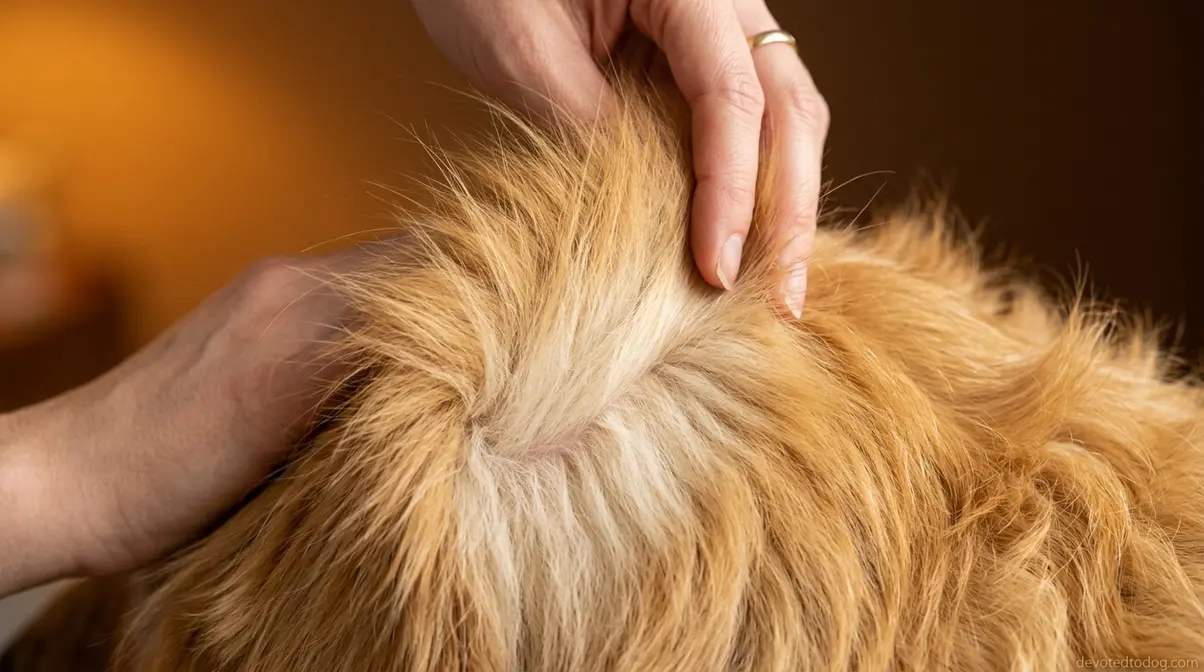
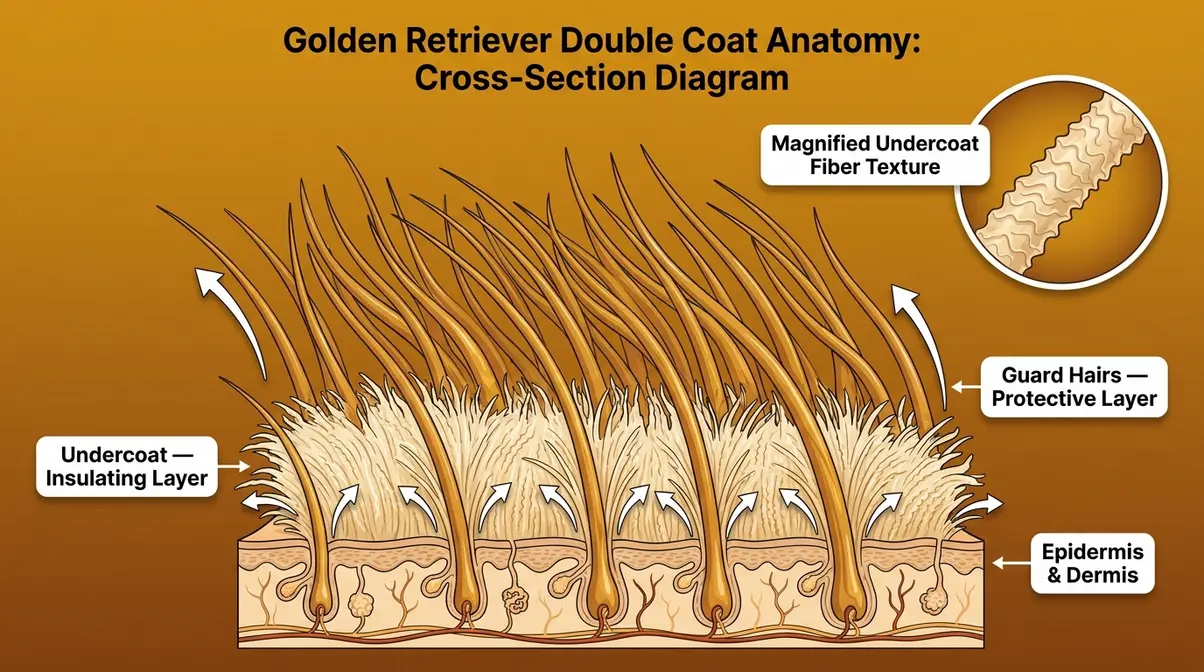
Here’s the detail most owners miss: the fluffy, short hairs covering your sofa cushions are not the long golden strands you think of when you picture the breed. They’re undercoat hairs, and the undercoat is the primary source of the hair everywhere in your home. The undercoat is a soft, dense, insulating layer that grows close to the skin. It regulates your dog’s body temperature in both heat and cold, and it sheds heavily because it’s biologically designed to be replaced seasonally. The guard hairs (or topcoat) are the longer, coarser, water-repellent outer layer. These shed too, but far more moderately, their job is protecting the dog from rain, UV rays, and debris, not thermal regulation. Think of the undercoat as the insulating lining inside a winter jacket, and the topcoat as the outer shell. You’d never remove the shell, and the lining is designed to be replaced seasonally. This analogy also explains why shaving a Golden is counterproductive: it destroys the guard hair layer and disrupts the coat’s thermoregulation, potentially leaving your dog less comfortable in both summer heat and winter cold. The golden retriever shedding level you’re dealing with is essentially a function of how aggressively that undercoat cycles, and in this breed, it cycles vigorously. Knowing what the coat does explains why it sheds, but the when is what catches most owners off guard.How Much Hair Is “Normal”?
Moderate, daily shedding year-round is completely normal for a Golden Retriever. Hair on furniture, clothes, and floors isn’t a sign of illness. It’s Tuesday. Those golden tumbleweeds rolling across your hallway? Standard operating procedure for this breed. Think of Golden Retriever hair loss on a spectrum. At one end: normal daily and seasonal shedding, predictable and manageable with the right routine. At the other end: health-triggered excessive loss with bald patches, skin changes, or clumping. This is “The Shedding Spectrum”. the organizing framework for this entire guide. Most of what your Golden does is firmly on the normal end. The goal here is to help you know exactly where your dog sits on that spectrum, so you can respond with the right action rather than the wrong worry. The reassuring truth is that the hair is manageable. Not with magic, but with a consistent routine. That’s what the five strategies below are built around. Once you know what’s normal, the next question is when to expect the worst of it, and the answer has everything to do with the seasons.Golden Retriever Shedding Seasons: The Coat Blow

Spring and Fall: Peak Shedding Periods
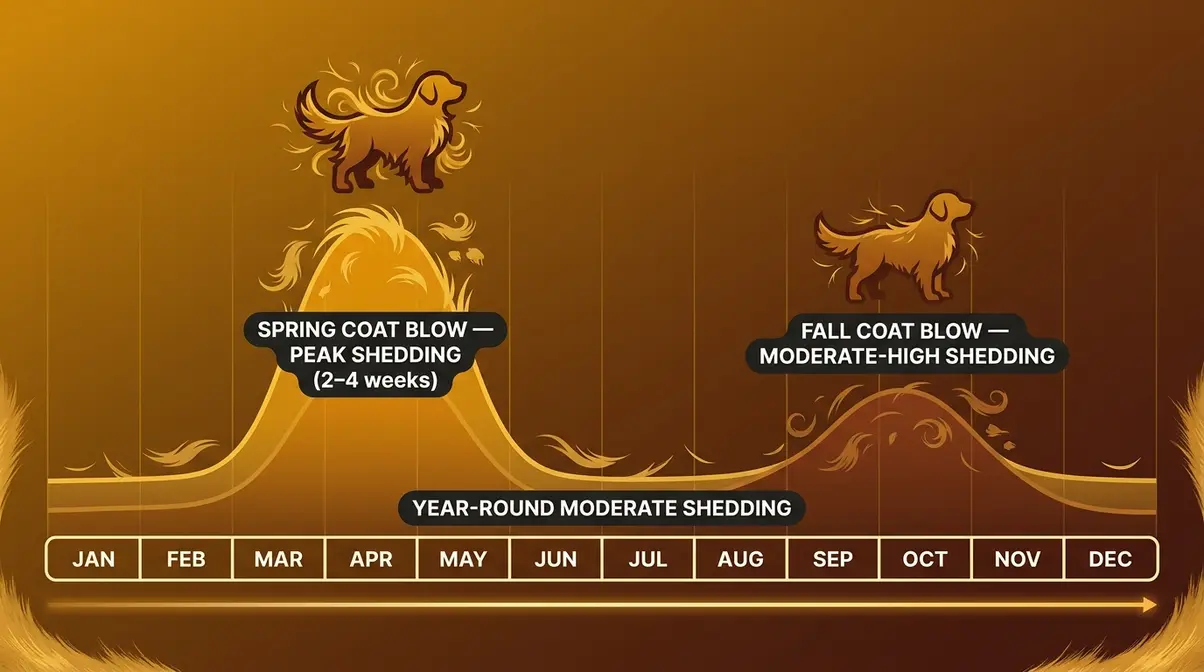
The spring coat blow (typically March through May in the Northern Hemisphere) is usually the more dramatic of the two seasonal events. Your Golden sheds the thick winter undercoat to prepare for warmer months, and during this period, you may be able to pull out large tufts of undercoat by hand. This is normal and not painful for the dog. Clumps, visible tufts pulling away, and a noticeable increase in golden tumbleweeds on every surface are all expected signs of golden retriever blowing coat. The fall coat blow (typically September through November) is lighter. The summer coat is replaced by a denser winter undercoat, so the shedding is noticeable but less dramatic than spring. Each coat blow lasts approximately 2–4 weeks of peak intensity, followed by a return to the baseline moderate shedding that defines life with this breed year-round. But what about when your Golden is shedding heavily in December or July? That’s where things get more nuanced.Shedding in Winter and Summer
The biological trigger for coat blowing is photoperiod. changing daylight hours. Not temperature. This distinction matters enormously for indoor dogs. Your Golden’s coat cycle is synchronized to sunlight, not your thermostat. Indoor dogs experience artificial lighting and climate control that blurs the natural seasonal signal. The result: house dogs often shed more continuously and unpredictably than outdoor dogs, because the environmental cues that would trigger a clean, defined coat blow are muddled. Heavy golden retriever shedding in winter, a January explosion that alarms many owners. Is frequently a consequence of this disruption, not a health problem. One-sentence reassurance: your dog shedding in December is not sick. It’s a consequence of sharing your warm, well-lit home. This is firmly on the normal end of the Shedding Spectrum. Seasonal shedding is one thing, but Golden Retriever puppies have their own special shedding milestone that surprises many first-time owners.Puppy Coat Shedding: What New Owners Should Know
Golden Retriever puppies typically begin shedding their soft puppy coat between 4 and 6 months of age, according to the AKC puppy coat transition guide. and this is a completely normal developmental transition, not a sign of illness (AKC, 2026). The fluffy, single-layer puppy coat gradually gives way to the denser, coarser adult double coat, a process that completes by 12–18 months. What does the transition look like? Patchy and uneven, often with the adult coat coming in slightly darker and coarser in texture. Many new owners notice the change at 4–5 months and assume something is wrong. Which makes this one of the most common concerns in Golden Retriever owner communities. It isn’t. Golden retriever puppy shedding during this phase is a one-time developmental event, not a position on the Shedding Spectrum at all. Here’s the practical upside: the 4–6 month window is the perfect time to introduce grooming tools. Puppies introduced to brushing at this stage accept it as normal routine, making lifelong grooming dramatically easier. Start with short 2–3 minute sessions, use gentle praise, and let the puppy sniff the brush before you begin. By the time the adult coat fully comes in, and with it, the seasonal shedding patterns that will define the next decade, your dog will already be a cooperative grooming partner.Reduce Golden Retriever Shedding: 5 Strategies
You cannot stop a Golden Retriever from shedding. It’s biologically hardwired. But you can dramatically reduce the amount of hair that ends up on your furniture, clothes, and floors. The key is a consistent routine addressing four areas: grooming, diet, bathing, and home management. These strategies work most effectively when your dog’s shedding falls within the normal range on the Shedding Spectrum. If you’ve followed this routine consistently for 4–6 weeks without improvement, the abnormal end of the spectrum may be the explanation, and the health-warning section below is where to look next.1. Daily Brushing Routine
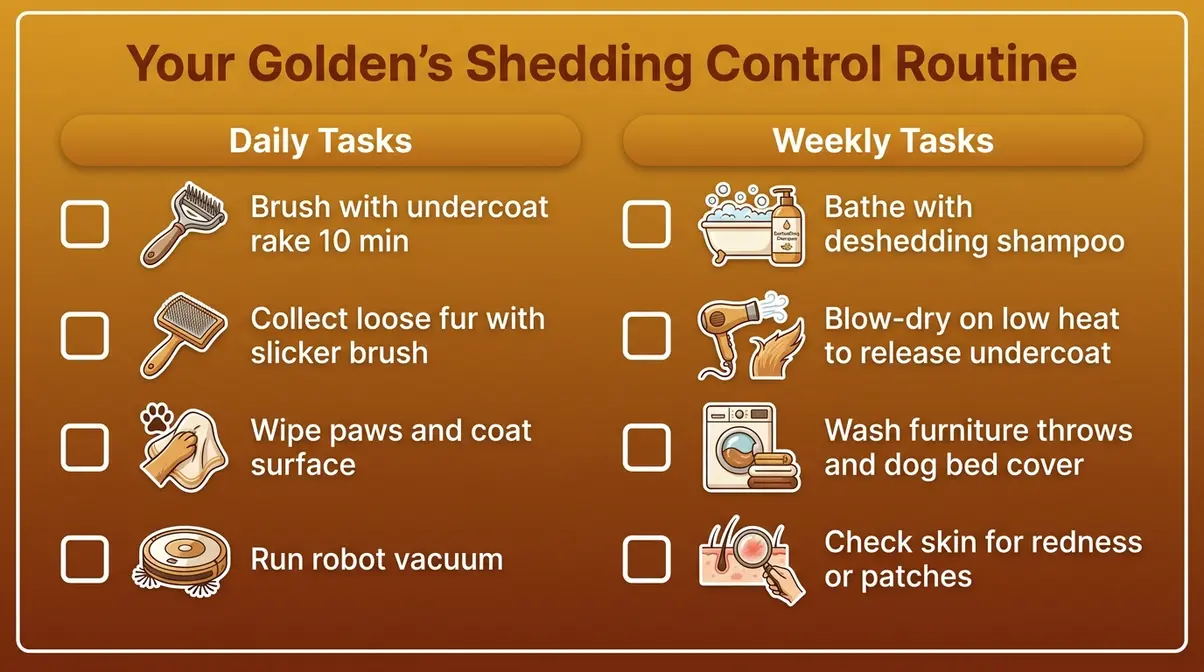
Much of the shed hair you’d otherwise see on your floor can be caught at the brush, but some comes from natural daily turnover, and no amount of brushing eliminates it. Consistency beats intensity. Ten minutes daily during coat blow season outperforms a single 2-hour weekend grooming, every time.
2. Diet and Omega-3 Supplements
This is the strategy most Golden owners overlook, and it’s worth raising with your vet. Omega-3 fatty acids (EPA and DHA, primarily from fish oil) are widely used to support skin and coat health. Ask your vet whether a fish oil supplement suits your dog and, if so, what amount. Zinc and other nutrients also matter for skin and coat, so ask your vet whether your dog’s food already covers them before you add anything. On dietary fat: a food with enough fat supplies the fatty acids that skin and coat depend on, so ask your vet what suits your dog. Look for dog foods listing a named protein (chicken, salmon or turkey) as the first ingredient. If your Golden’s coat looks dull or brittle alongside heavy shedding, diet is the first variable to examine. Before buying new grooming tools. Diet works from the inside out. Bathing addresses the loose hair that’s already ready to fall.3. Bathing with a Deshedding Shampoo
Bathing your Golden more often than every 2–3 weeks strips natural oils that keep the coat healthy and actually increases shedding. Unless your dog is genuinely dirty or smelly, less is more. For maintenance between baths, a damp microfiber cloth removes loose dander without disrupting the skin barrier.
4. Managing Hair in Your Home
No grooming routine eliminates 100% of the loose hair. Some will always make it onto your floors and furniture. A few practical investments make the difference between a manageable situation and a losing battle:- Lint rollers: Keep one in every room, one in the car, and one at the office. The barrier to use needs to be zero.
- Washable furniture covers or throws: Machine-washable, washed on a weekly cycle during coat blow season. Microfiber repels hair better than cotton.
- Robot vacuum: Set to run daily during coat blow season. Across Golden Retriever owner communities, this is consistently described as the single highest-ROI home investment, the hair doesn’t accumulate between sessions.
- Designated sleeping area: A dog bed in one location concentrates the heaviest hair deposits in one cleanable spot.
Best Grooming Tools for a Shedding Golden
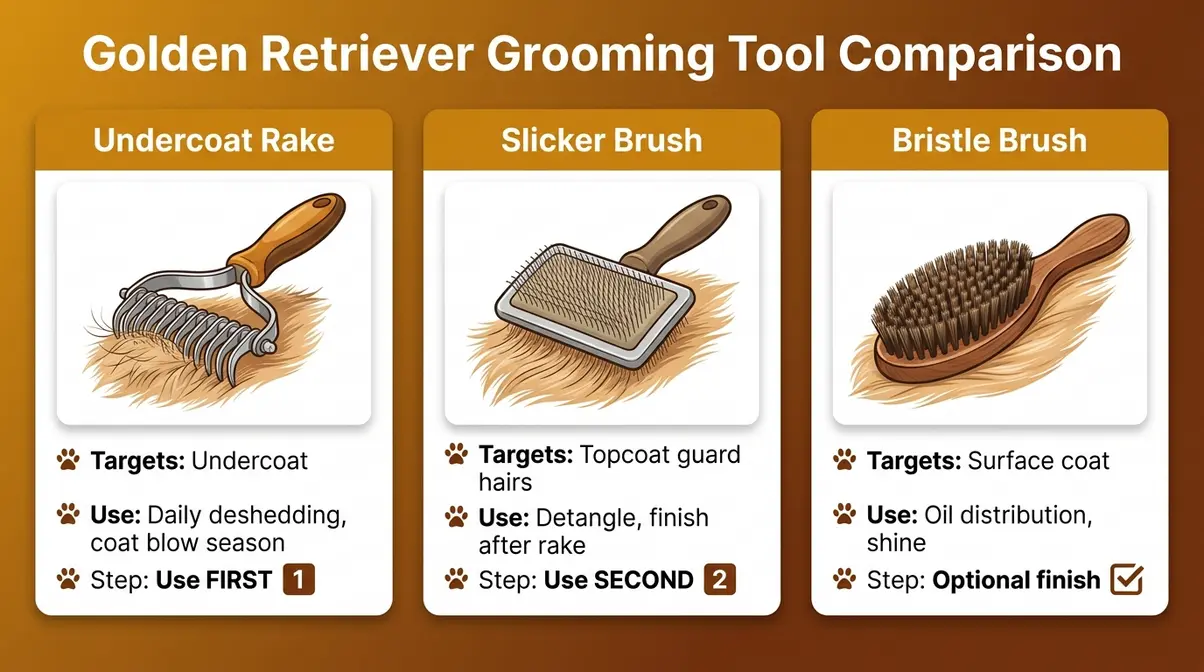
An undercoat rake is the single most effective grooming tool for reducing Golden Retriever shedding. its wide-spaced teeth reach the dense undercoat that slicker brushes miss entirely. Yet most owners reach for a slicker brush and wonder why the hair keeps coming. The AKC Golden Retriever grooming guide recommends regular brushing with appropriate tools to manage the Golden Retriever’s double coat (AKC, 2026). the key word being appropriate. Tool selection is where most owners go wrong. For a deeper dive into specific models and features, see our full guide to the best brushes for Golden Retrievers.Undercoat Rake vs. Slicker Brush
Choosing the best brush for golden retriever shedding starts with understanding what each tool is actually designed to do:| Tool | Primary Function | Best Used For | Coat Layer It Targets |
|---|---|---|---|
| Undercoat Rake | Removes loose undercoat | Daily deshedding; coat blow season | Undercoat (dense, fluffy layer) |
| Slicker Brush | Detangles and smooths | Finishing after rake; feathering on legs and tail | Topcoat (guard hairs) |
| Bristle Brush | Distributes natural oils; adds shine | Final pass; short-coated areas | Surface/topcoat only |
When Shedding Becomes a Health Warning

Signs of Abnormal Hair Loss
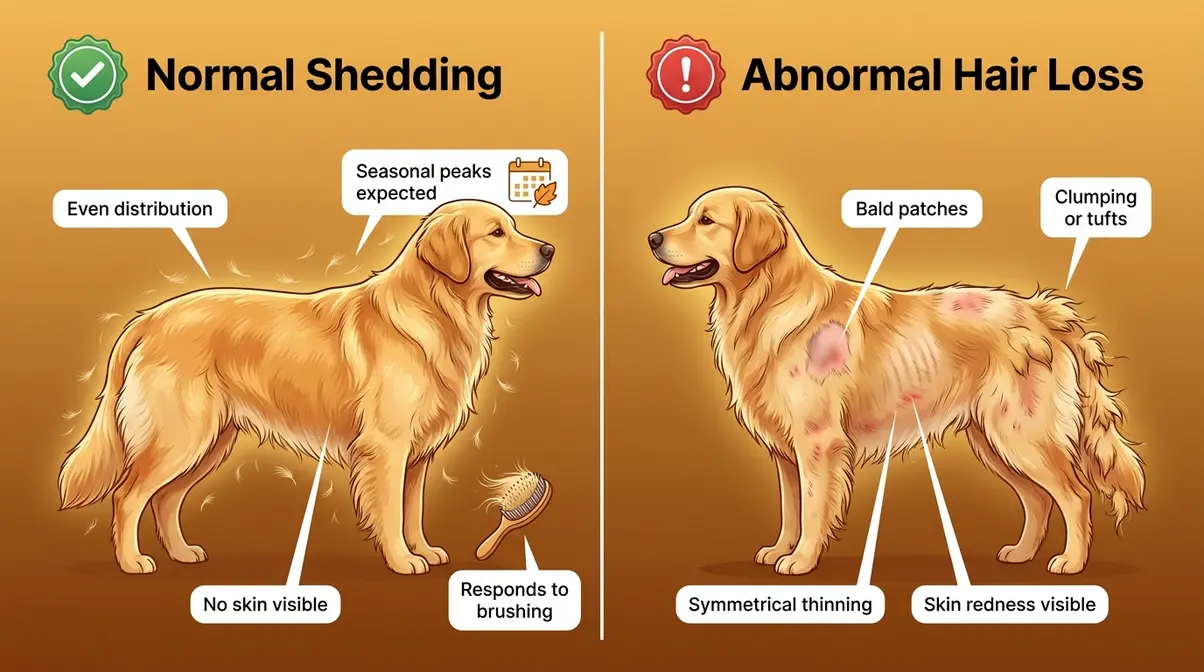
According to PetMD, a veterinary-reviewed pet health resource, excessive hair loss in clumps. Alopecia, the medical term for abnormal or excessive hair loss. Is often a symptom of an underlying medical condition rather than normal shedding (PetMD, 2026). Any one of the following signs warrants a veterinary evaluation:- Hair loss in clumps or patches (alopecia). not the diffuse, even shedding of a normal coat blow
- Bald spots where skin is visible beneath the coat
- Red, inflamed, or scaly skin beneath areas of hair loss
- Symmetrical hair loss. the same thinning pattern appearing on both sides of the body (a particularly strong indicator of an endocrine disorder)
- Hair loss concentrated on the tail or base of the tail. golden retriever losing hair on tail is a specific symptom associated with hypothyroidism and allergies
- Excessive scratching, licking, or rubbing alongside the hair loss
- Shedding that doesn’t follow seasonal patterns and doesn’t respond to 4–6 weeks of consistent grooming
⚠️ If your Golden Retriever shows any of the signs above, consult your veterinarian promptly. This article provides general information only and does not constitute medical advice.Knowing the signs is step one. Understanding the likely causes helps you have a more informed conversation with your vet.
Medical Causes of Excessive Shedding
The most common medical drivers of abnormal hair loss in Golden Retrievers include environmental or food allergies (the most frequent cause), external parasites (fleas, mites, ringworm), and hypothyroidism. an endocrine disorder in which an underactive thyroid gland reduces metabolic function. Hypothyroidism often presents with symmetrical hair loss, weight gain, and lethargy. Only your vet can tell whether it, or anything else, is behind your dog’s hair loss. Stress, anxiety, and nutritional deficiencies round out the list of common causes. Your vet will likely recommend a skin scraping, blood panel, or allergy test to identify the underlying cause. Treatment varies significantly by diagnosis. According to the AKC guide to hair loss in dogs, alopecia in dogs can result from allergies, skin infections, or endocrine diseases (AKC, 2026). Do not attempt to treat these causes with home remedies or increased brushing. They require veterinary diagnosis. For a broader picture of breed-specific health concerns, see Golden Retriever common health issues and warning signs. Most Golden Retriever shedding falls firmly in the normal range. However, a common question. Especially among prospective owners. Is whether all Golden types shed equally, and how they compare to other breeds.Shedding Across Golden Retriever Types and Breeds
How Golden Retriever Shedding Compares to Other Breeds
If you’re cross-shopping breeds, here’s how Golden Retriever shedding stacks up against other popular dogs. The difference between a double-coated breed and a single-coated one is dramatic, no amount of grooming closes the gap.
| Breed | Coat Type | Shedding Level | Major Blows / Year | Hypoallergenic? |
|---|---|---|---|---|
| Golden Retriever | Double coat (medium-long) | Heavy | 2 (spring + fall) | No |
| Labrador Retriever | Double coat (short) | Heavy | 2 | No |
| Siberian Husky | Double coat (thick) | Very heavy | 2 (extreme) | No |
| German Shepherd | Double coat | Heavy | 2 | No |
| Goldendoodle (F1) | Wavy/curly single | Variable (low to heavy) | 0 (no blow) | Often yes |
| Standard Poodle | Curly single | Very low | 0 | Yes |
| Shih Tzu | Long single coat | Low | 0 | Often yes |
| Bichon Frise | Curly single | Very low | 0 | Yes |
Bottom line: Golden Retrievers are heavy shedders, and single-coated breeds shed far less. If shedding tolerance is your top priority, a single-coated breed like a Poodle or Bichon Frise is genuinely easier. If you love the Golden temperament, plan your home around the hair, not against it.
All Golden Retriever types share the same double coat genetics. Which means shedding levels are essentially the same across the entire breed, regardless of color, country of origin, or size. This section covers the most common comparisons prospective owners research, including the widespread myth of the “non-shedding Golden.”English Cream, Mini, and Red Goldens
The short answer: no. English Cream, Red, White, and American Golden Retrievers all carry the same double coat structure, a dense undercoat beneath a longer guard hair layer. Shedding levels are essentially identical across all types. English Creams may have slightly shorter, wavier coats than American Goldens, which can make the hair appear less abundant on surfaces, but the underlying shedding biology is the same. For a detailed breakdown, see our guide to types of Golden Retrievers and their coat differences and English Cream Golden Retriever facts and characteristics. Mini Goldens. Typically a Golden Retriever crossed with a Cocker Spaniel or Poodle. Have variable shedding depending on which parent’s coat genes dominate. They are not reliably low-shedding. If a breeder tells you their English Cream Goldens shed less than American Goldens, that claim is not supported by coat genetics.Golden vs. Lab, Shepherd, & Doodles
| Breed | Shedding Volume | Hair Visibility | Notes |
|---|---|---|---|
| Golden Retriever | Heavy | High (long hair on surfaces) | Two seasonal coat blows |
| Labrador Retriever | Heavy | Medium (short hair embeds in fabric) | Similar volume, less visible |
| German Shepherd | Heavy | High | Double coat, heavy shedder |
| Goldendoodle | Low–Heavy | Variable | Depends on generation and genetics |
A Note on Limitations and When to Get Expert Help
The strategies in this guide. Brushing, dietary supplementation, bathing, and home management. Are effective tools for normal-range shedding. They will not resolve medically-caused excessive shedding. If your dog has hypothyroidism or a food allergy, no amount of brushing addresses the underlying problem; it only manages surface symptoms. Two common mistakes are worth flagging. First, over-bathing: washing your Golden more than once every 2–3 weeks strips the coat’s natural oils and can increase shedding. More frequent bathing is counterproductive. Second, shaving: it seems intuitive, but shaving a double-coated dog disrupts the coat’s thermoregulation function, in some cases permanently altering the guard hair’s ability to grow back correctly. If you’ve followed a consistent grooming and diet routine for 4–6 weeks without meaningful improvement, or if your dog shows any of the abnormal shedding signs from the checklist above, a vet appointment is the right next step. A 10-minute conversation with your veterinarian is always worth it.Frequently Asked Questions
Are Golden Retrievers shedding a lot?
Yes, Golden Retrievers are heavy, year-round shedders, shedding moderately every day and dramatically twice a year during spring and fall in a process called “coat blowing” (AKC, 2026). During these peak shedding seasons, owners commonly describe filling an entire grocery bag with loose hair from just a single brushing session. Fortunately, consistent daily brushing combined with a high-quality diet rich in Omega-3 fatty acids can reduce the visible impact significantly.How to get your Golden Retriever to stop shedding?
You cannot stop a Golden Retriever from shedding, it is a biologically hardwired trait of the breed’s double coat. However, daily brushing with an undercoat rake, regular bathing with a deshedding shampoo every 4–6 weeks, and a diet rich in Omega-3 fatty acids can dramatically reduce the amount of loose hair in your home. Most owners find that a consistent 10-minute daily brushing routine removes much of the loose hair before it falls.Why do golden retrievers shed so badly?
Golden Retrievers shed heavily because of their double coat, a dense, soft undercoat designed for insulation, topped by a longer, water-repellent outer layer. The undercoat is shed seasonally to regulate the dog’s body temperature as the climate changes, producing the large volumes of fluffy hair that owners find on every surface. This biological process is a feature of the breed’s working dog heritage, designed for outdoor conditions in varied climates, and the shedding cannot be bred out without fundamentally altering the coat’s protective function.When is golden retriever shedding season?
Golden Retrievers have two main shedding seasons, spring (typically March–May) and fall (typically September–November). During these periods, the dog “blows” its entire undercoat over 2–4 weeks to prepare for the coming season’s temperature changes (AKC, 2026). The spring shed is usually the more intense of the two, as the heavy winter undercoat is fully released. Moderate shedding occurs year-round between these peak periods, so there is no true “off season” for this breed.What dog has the worst shedding?
While Golden Retrievers are heavy shedders, breeds typically cited as the heaviest shedders include the Akita, Alaskan Malamute, Great Pyrenees, Bernese Mountain Dog, and German Shepherd. These breeds all have very thick double coats that shed year-round and experience intense seasonal coat blows similar to or greater than a Golden’s. Golden Retrievers are heavy shedders too, and their long, light-colored hair is easy to spot on furniture and clothing. If shedding is a primary concern, all of these breeds require a significant, consistent grooming commitment. Daily maintenance is the only way to keep the hair under control.Managing Golden Retriever Shedding: The Bottom Line
Golden retriever shedding is one of the most predictable, and manageable. Challenges of owning this breed. A consistent routine combining daily brushing with an undercoat rake, a diet rich in Omega-3 fatty acids and adequate zinc, and bathing every 4–6 weeks can reduce the visible impact of shedding dramatically. The key is consistency: owners who brush daily during coat blow season report significantly cleaner homes than those who brush only when the hair becomes unbearable. Diet matters too, so ask your vet which food and, if any, which supplements suit your Golden. The Shedding Spectrum is your mental model. Most of what your Golden does with its coat, the daily dusting, the spring explosion, the fall refresh. Is normal, healthy, and manageable. The signs to watch for are the ones that fall outside that normal range: clumping, bald patches, skin irritation, symmetrical hair loss, or hair loss concentrated on the tail. Those warrant a vet call, not a new brush. Start tonight: spend 10 minutes with an undercoat rake and see how much loose coat you can remove before it hits your furniture. If you need help choosing the right tools, our guide to the best brushes for Golden Retrievers walks you through every option. And if you’re seeing signs from the abnormal shedding checklist, book a vet appointment. Early diagnosis makes all the difference.This article is general information, not veterinary advice. If you are worried about your dog’s coat, skin or health, talk to your veterinarian.
Related reading:
For related background, see our guide on Dogs Similar to Golden Retrievers: 2026 Top 10 Guide.
Readers comparing options often find our piece on Short Haired Golden Retriever: Genetics, Coats Care Guide helpful for additional context.
If this topic interests you, our companion article on Golden Retrievers in Heat: 4 Stages + Care Guide covers more detail.
Readers comparing options often find our piece on Golden Retriever Coat Stages: The Complete Floof Timeline helpful for additional context.
For related background, see our guide on Do Goldendoodles Shed a Lot? The Honest Answer.
If this topic interests you, our companion article on Best Salmon Oil for Dogs: Vet-Tech Reviewed Picks 2026 covers more detail.
If this topic interests you, our companion article on How to Groom a Golden Retriever at Home: 6 Steps covers more detail.