
⚠️ Medical Disclaimer: This article is for informational purposes only and does not constitute veterinary medical advice. Always consult a licensed veterinarian for diagnosis, treatment, or guidance specific to your dog’s health.
Your Golden Retriever’s muzzle is turning white, and that’s not the only change you’ve noticed. The slowing pace on morning walks, the reluctance to climb the stairs, the longer naps stretched across the afternoon: these are the unmistakable signs that your old golden retriever has entered their most important life stage.
Most owners feel a helpless mix of love and fear when these changes appear. The internet offers vague reassurance but almost nothing backed by veterinary science, and for a health topic this important, vague simply isn’t good enough.
This guide gives you exactly what you need: the age threshold that defines “senior,” how to spot the difference between normal aging and a serious warning sign, and the daily care steps that can meaningfully extend your dog’s healthy years. We cover lifespan facts, signs of aging, the health conditions that hide until they’re dangerous, and what to do if you’re considering giving a senior rescue a second chance.
veterinary standard
GRLS 2022
$2,136-$6,379
most impactful years
Author Credentials
📝 Written by: Coral Drake
✅ Reviewed by: Brianna York, Former Veterinary Technician
📅 Last updated: 4 May 2026
ℹ️ Transparency Notice
This article covers senior Golden Retriever care based on AKC, GRCA, UC Davis, and peer-reviewed veterinary research. All medical claims have been verified by our editorial team and reviewed for accuracy.
What Age Is a Golden Retriever Considered Old?
For more on this topic, see our guide on the Golden Retriever Pregnancy: 2026 Complete Week-by-Week Guide.
For more on this topic, see our guide on the Can Golden Retrievers Have Blue Eyes? – The Truth Behind.

A Golden Retriever, a beloved family breed known for its gentle temperament and golden coat, is typically considered a senior dog at around 8 years of age. Their average lifespan is 10-12 years, according to veterinary sources, though many live well beyond this with proactive care (walkinpets.com). Understanding this threshold is the first step toward giving your dog the best possible quality of life in their later years.
For Golden Retriever lifespan and aging milestones, knowing when the senior stage begins helps you shift from reactive to proactive care, and that shift is everything.
Consult your veterinarian about your individual dog’s health status; the senior threshold can vary based on genetics, weight history, and overall health.
The 8-Year Threshold: When Senior Care Begins
Golden Retriever lifespan research consistently points to 8 years as the veterinary benchmark for senior status, but why does this particular age matter? The answer lies in biology. Large breeds like Golden Retrievers age faster than small breeds because their bodies experience more cellular wear per year. A 65-pound Golden ages biologically faster than a 10-pound Chihuahua, experiencing changes in organ function, joint health, and immune response that smaller dogs don’t encounter until much later.
According to the
At 8, many Golden Retrievers begin showing the first signs of slowing: reduced stamina on walks, slightly stiffer joints in the morning, and the beginning of the characteristic “white face.” This is normal. It is not an emergency. Think of it this way, at 8, your Golden is roughly equivalent to a 55-61-year-old human. They’re not old-old, but they need different care than they did at 4.
This is where The Golden Decade comes in. Ages 8 to 12 represent the window where the care decisions owners make have the biggest impact on how long and how well their dog lives. The Golden Decade is not a countdown. It is a call to action, a reminder that the years ahead are still full of possibility, and that the choices you make right now will shape every one of them.

How Long Do Golden Retrievers Live? Average Lifespan Explained
The average Golden Retriever lifespan is 10-12 years, but how old does a Golden Retriever actually live? That number is a starting point, not a ceiling. Some dogs live shorter lives due to cancer, while others live comfortably into their early-to-mid teens.
Can a Golden Retriever live 17 years? Yes, it is uncommon, but it happens. The most remarkable example is Augie, the oldest Golden Retriever on record, who lived to 20 years old in Tennessee. Augie’s longevity was exceptional, but it illustrates that the upper range of the breed’s lifespan extends well beyond the average when conditions align.
According to a cohort profile published in PMC (2022) from the Golden Retriever Lifetime Study, cancer-related mortality was documented at approximately 61-65% in necropsy studies of Golden Retrievers at U.S. veterinary academic hospitals, making cancer awareness a non-negotiable part of senior care.
Five key factors influence how long a Golden Retriever lives:
- Genetics and breeding quality, dogs from health-tested lines statistically live longer
- Diet and healthy weight maintenance, excess weight accelerates joint disease and strains organs
- Regular veterinary care including cancer screening, early detection changes outcomes
- Appropriate exercise throughout life, sustained muscle mass protects joints
- Dental health, often overlooked, but dental disease is linked to heart and kidney disease
How to Convert Your Dog’s Age to Human Years
The old “multiply by 7” rule is outdated and inaccurate for large breeds. A more accurate method, validated by veterinary research using DNA methylation patterns, accounts for the fact that dogs age rapidly in their first two years and more gradually afterward.
For Golden Retrievers specifically, the American Kennel Club and veterinary consensus support a tiered approach: year one equals approximately 15 human years, year two adds about 9 more (24 total), and each subsequent year adds roughly 5 human years. For large breeds like Goldens, the progression looks like this:
| Your Golden’s Age | Approximate Human Equivalent |
|---|---|
| 7 years | ~50 years |
| 8 years | ~55-61 years |
| 10 years | ~66 years |
| 12 years | ~77 years |
| 14 years | ~85+ years |
(Conversions based on large-breed veterinary guidelines; individual variation applies)
At 66 human years, your 10-year-old Golden needs the same consideration you’d give an elderly family member: gentler exercise, more frequent health checks, and a home adapted for their comfort. If your Golden is 10, they’re roughly the age of a fit 70-year-old human, still capable and full of personality, but needing thoughtful support.
Now that you understand when your Golden is considered senior and what their age means in human terms, let’s look at the specific signs that tell you aging is underway, and how to tell the difference between normal changes and red flags.
What Are the Signs Your Old Golden Retriever Is Aging?

The first time you notice the white spreading across your old golden retriever’s muzzle, it can stop you in your tracks. One owner described the experience this way:
“Expect to see signs of aging like reduced energy, graying fur, possibly slower…”
That moment of recognition, that your beloved companion has crossed a threshold, is the beginning of The Golden Decade. It is not a reason for panic. It is an invitation to pay closer attention and act with intention.
Caring for a senior Golden Retriever means understanding which changes are cosmetic and which ones matter medically. According to
Consult your veterinarian if you notice any sudden or dramatic changes, the distinction between gradual and sudden is often the most important signal of all.
Physical Signs: The White Face and Beyond
The graying muzzle, the “white face” that many Golden Retriever owners notice first, is the most visible sign of aging in an old golden retriever. It typically begins around age 7-8 and spreads gradually across the muzzle, eyebrows, and forehead. It is cosmetic and harmless, but it signals that other changes are underway internally.
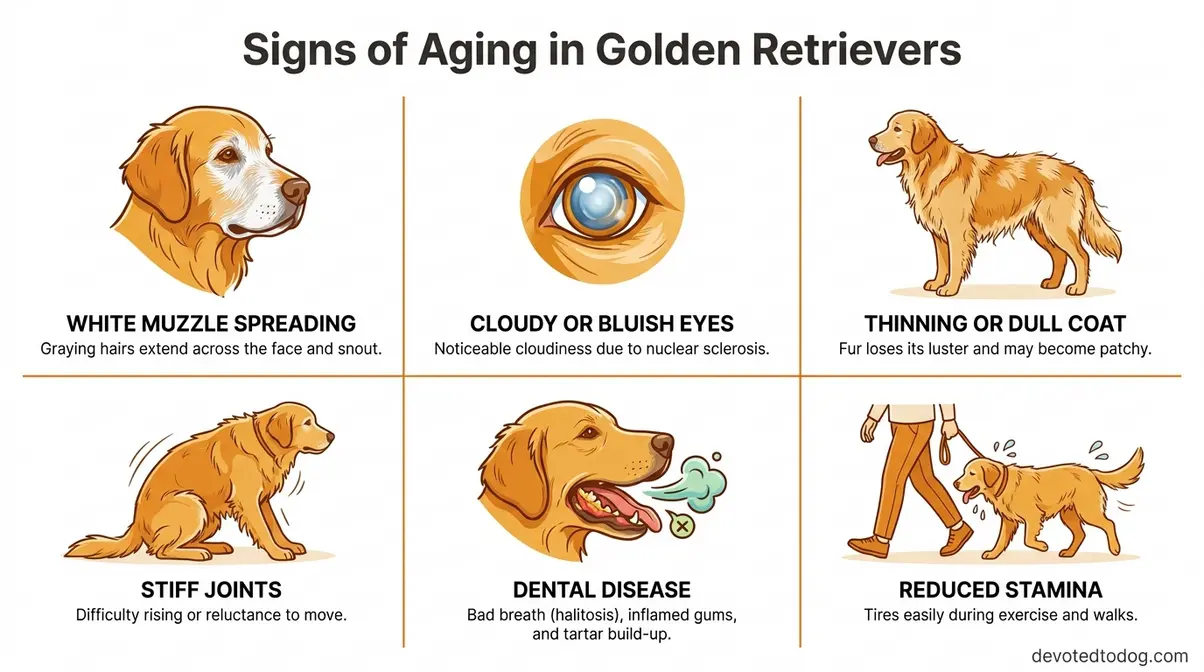
Watch for these physical signs in your aging Golden Retriever:
- Cloudy or bluish eyes, nuclear sclerosis (a normal lens change, not the same as cataracts) is extremely common; true cataracts require veterinary attention
- Thinning coat or dull fur, reduced oil production in the skin affects coat quality
- Weight gain or unexplained weight loss, both are significant; weight loss without a diet change is a red flag
- Stiff joints, especially noticeable in the morning or after long rest periods
- Dental disease, bad breath, reluctance to chew, or pawing at the mouth
- Reduced stamina during walks, if your Golden used to sprint to the door when you grabbed the leash but now trots or hesitates, that reduced energy is one of the earliest functional signs of aging
Unexplained weight loss is worth emphasizing: it is not a normal aging sign. It can indicate cancer, organ disease, or dental pain, and it should always be mentioned to your vet.
Physical changes are the easiest to spot. But the behavioral changes, the ones that happen inside your dog’s mind and personality, can be harder to recognize and just as important.
Behavioral Changes That Signal Aging
Increased sleep is one of the first behavioral shifts owners notice. Senior Golden Retrievers may sleep 16-18 hours per day, not because they are depressed, but because this is a normal physiological change in aging dogs. The body requires more rest for repair and recovery.
One of the most commonly misread signs is hearing loss. If your golden retriever old self seems to be ignoring you more than usual, it might not be stubbornness, it could be hearing loss. Hearing loss is common in older dogs and often goes entirely undiagnosed for months. A simple home test: clap your hands sharply behind your dog when they’re not looking. No reaction suggests hearing loss worth discussing with your vet.
According to the
- Getting “stuck” in corners or behind furniture
- Forgetting familiar routes in the yard
- Nighttime restlessness or confusion (a key early sign of Canine Cognitive Dysfunction, or CCD, more on this in the next section)
- Seeming “checked out” or less engaged with family interactions
Across Golden Retriever owner communities, the most commonly reported early behavioral change is a dog that used to greet visitors enthusiastically now staying in their bed, not from sadness, but from reduced energy and mild disorientation. Recognizing this distinction helps owners respond with patience rather than concern.
When to Worry: Normal Aging vs. Warning Signs
For an old golden retriever dog, distinguishing normal aging from a medical emergency is one of the most valuable skills an owner can develop. The table below makes this distinction clear:
| Normal Aging | Call Your Vet Now |
|---|---|
| White muzzle spreading gradually | Sudden, dramatic weight loss |
| Sleeping more (16-18 hrs/day) | Bloated or distended abdomen |
| Slower on walks | Collapse or extreme weakness |
| Mild morning stiffness | Difficulty breathing |
| Occasional confusion | Seizures or sudden blindness |
| Gradual hearing loss | Pale gums |
Pale gums deserve special attention, they are a medical emergency in dogs of any age. They indicate shock, severe anemia, or internal bleeding. This is especially critical for Golden Retrievers given their hemangiosarcoma risk, which is covered in the next section.
A practical rule: when in doubt, call your vet. A brief phone consultation is always worth it. Our veterinary reviewer advises that owners watch for the combination of lethargy plus abdominal changes in any senior Golden, together, these two signs warrant same-day veterinary attention.
The “call your vet now” column isn’t meant to frighten you, it’s meant to prepare you. Because the conditions in that column often have names, and the most important one in Golden Retrievers is a cancer that gives almost no warning at all.
What Are the Silent Killers in Senior Goldens?
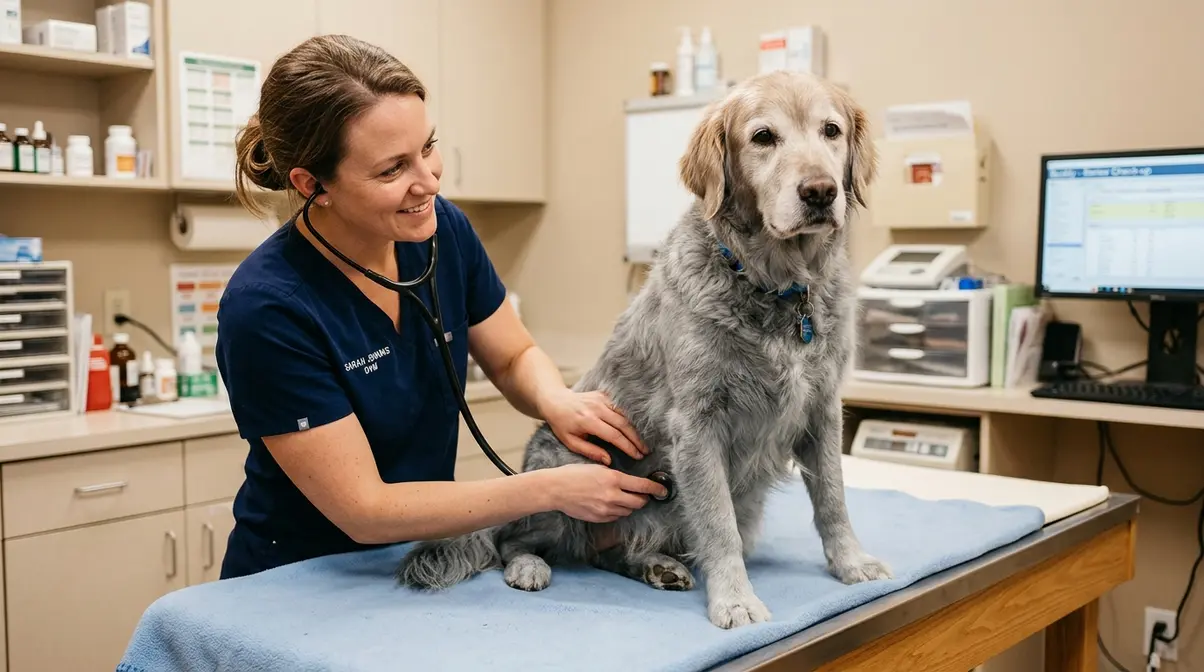
There are two health conditions every Golden Retriever owner needs to know by name: Hemangiosarcoma and Canine Cognitive Dysfunction. Both are serious. Both are common in older Golden Retrievers. And both are far more manageable when caught early, which means knowing the signs before they appear.
Common Golden Retriever health issues and warning signs include several conditions that develop gradually, which is why the proactive approach of The Golden Decade framework matters so much. Understanding these risks is exactly why The Golden Decade emphasizes proactive screening, not reactive treatment.
Consult your veterinarian about appropriate cancer screening protocols for your senior Golden, particularly abdominal ultrasound, which is the primary tool for early hemangiosarcoma detection.
Hemangiosarcoma: The Cancer That Hides in Plain Sight
Hemangiosarcoma, a cancer of blood vessel walls, is one of the most aggressive cancers in dogs and is widely considered the “silent killer” in Golden Retrievers. It typically grows in the spleen or in the heart (specifically the pericardium, the sac surrounding the heart) and can rupture without warning, causing rapid and life-threatening internal bleeding.
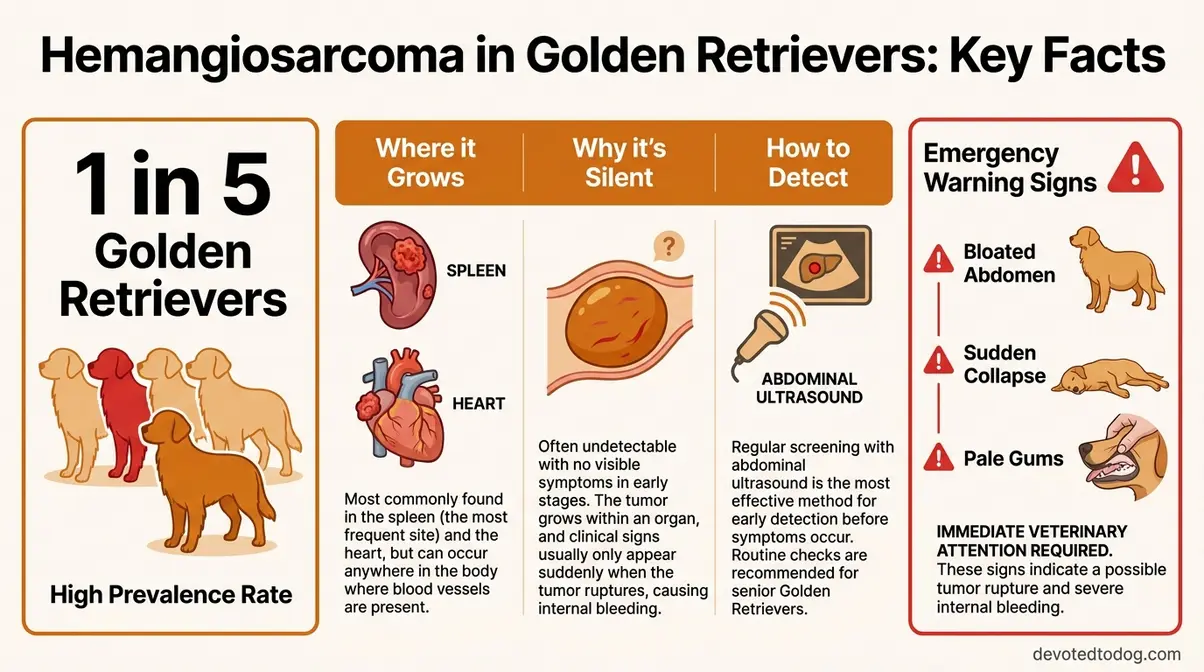
What makes it “silent” is precisely what makes it dangerous. Tumors can grow to significant size without producing any visible symptoms. A dog can appear perfectly healthy on Monday and be in a life-threatening emergency by Wednesday. There is no reliable way to detect it without veterinary imaging.
According to the
“An estimated one in five Golden Retrievers will develop hemangiosarcoma, making it one of the most prevalent cancers in the breed” (Cornell University College of Veterinary Medicine, 2021).
The most critical warning sign owners miss: a sudden, unexplained bloated or distended abdomen in a senior Golden Retriever is a potential emergency. Do not wait. Get to a vet immediately, this presentation can indicate a ruptured splenic tumor causing internal hemorrhage. The fact that this can happen with no prior symptoms is precisely why bi-annual vet check-ups with abdominal ultrasound are recommended for older Goldens.
If hemangiosarcoma is the silent threat to your Golden’s body, Canine Cognitive Dysfunction is the silent threat to their mind, and it’s far more common than most owners realize.
Canine Cognitive Dysfunction: When Your Golden Forgets
Canine Cognitive Dysfunction, or CCD, is the dog equivalent of dementia in humans. It is caused by physical changes in the brain that occur with aging, including the buildup of abnormal proteins and reduced blood flow to brain tissue. It is not simply “getting old.” It is a recognized medical condition with a name, a framework for assessment, and treatment options.
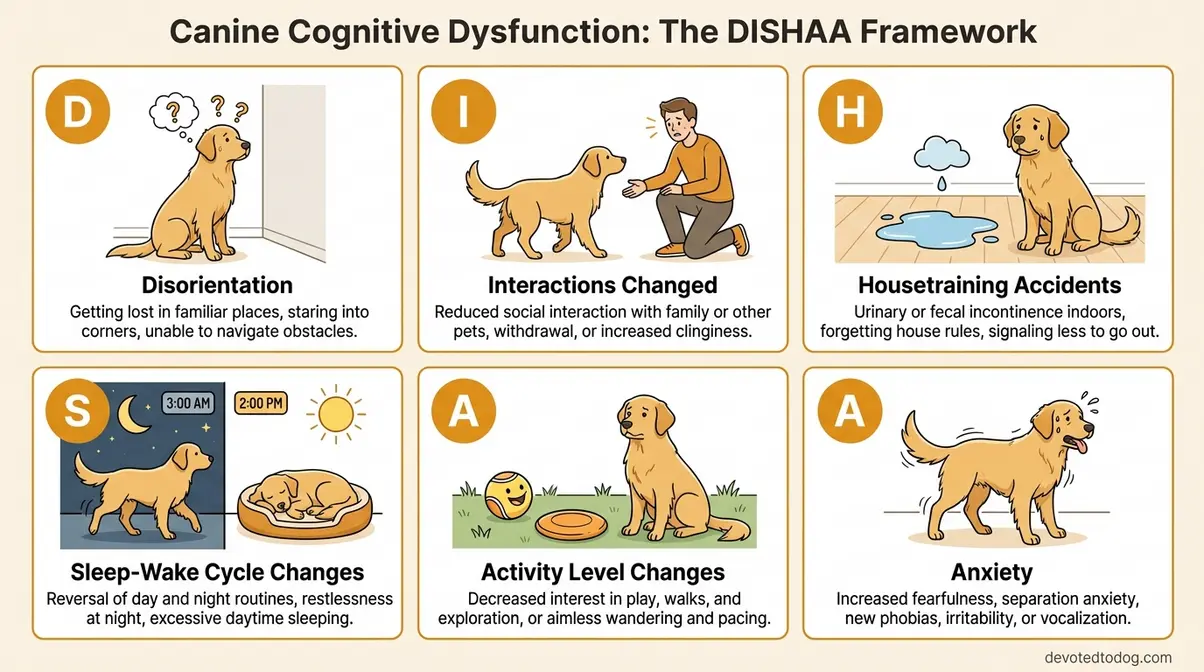
Veterinarians use the DISHAA framework to assess CCD in older dogs. Watch for these six signs in your old golden retriever dog:
- Disorientation, getting stuck in corners, staring at walls, seeming lost in familiar rooms
- Interactions changed, less interest in family members, reduced social engagement
- Sleep-wake cycle changes, restless and vocal at night, excessively sleepy during the day
- Housetraining accidents, forgetting previously learned bathroom habits without physical cause
- Activity level changes, reduced engagement with toys, walks, or games they previously loved
- Anxiety, increased clinginess, unexplained fearfulness, or pacing
According to the
CCD is manageable, not curable. Veterinary options include prescription medications such as selegiline, which can slow cognitive decline, as well as dietary supplements containing antioxidants and omega-3 fatty acids. Environmental enrichment, puzzle feeders, short positive training sessions, consistent daily routines, can also slow progression. If you notice two or more DISHAA signs in your Golden, bring them to your vet’s attention at the next visit.
Knowing these conditions exist is the first step. The second step, the one that actually protects your dog, is building a daily care routine that addresses aging proactively. Here’s what that looks like.
How Do You Care for an Old Golden Retriever Day-to-Day?
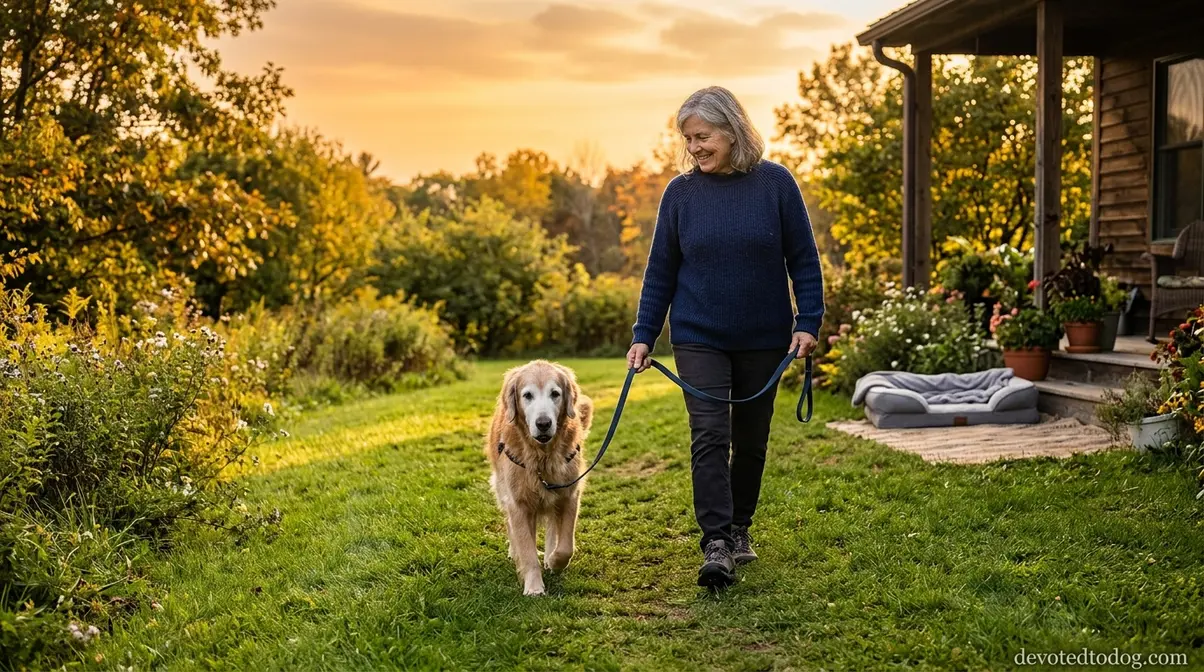
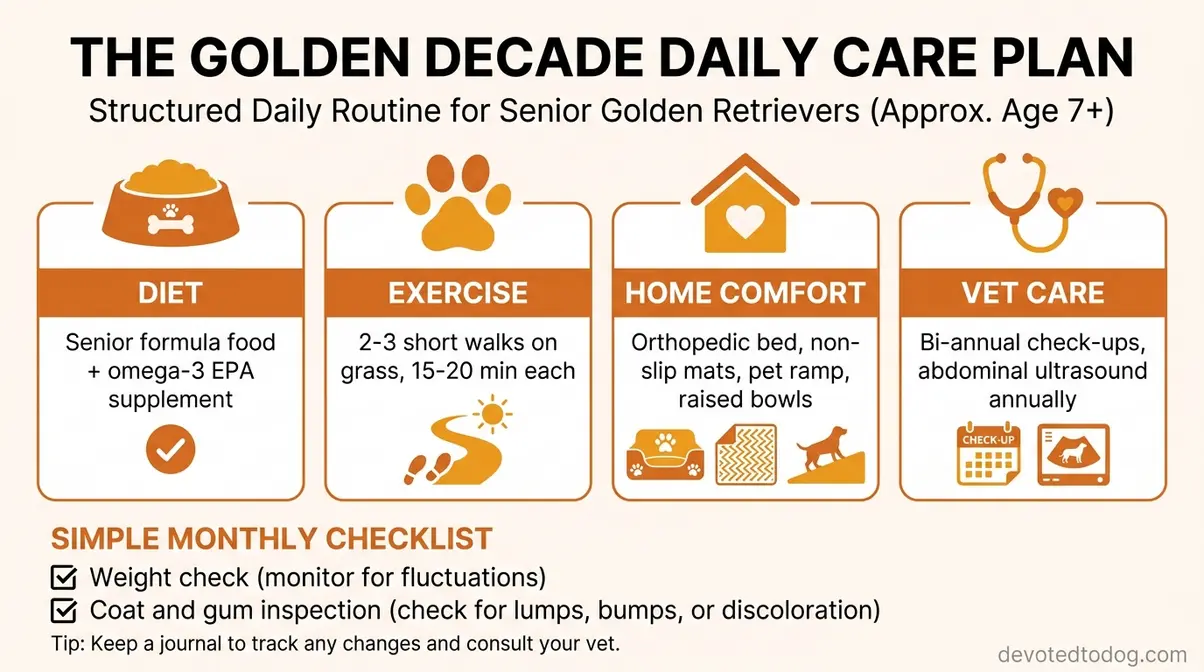
What does an old golden retriever actually need each day? Four things: the right food, the right amount of movement, a home adapted for their comfort, and a proactive relationship with their veterinarian. Together, these four pillars form what we call The Golden Decade care framework, the approach that makes the most difference in the years that matter most.
Veterinary research from both
Diet and Weight Management for Senior Goldens
Switching to a senior-formulated dog food around age 7-8 is one of the most impactful early decisions you can make for an old golden retriever. Senior formulas typically have lower calorie density, because activity naturally decreases with age, and higher protein content to help maintain muscle mass. Muscle loss is a real concern in aging dogs and accelerates joint deterioration.
Omega-3 fatty acids, specifically EPA (a type of healthy fat found in fish oil), deserve particular attention. The
Weight control is the single most impactful lifestyle factor for joint health. Even 10-15% excess body weight significantly increases strain on arthritic joints. Here is a simple at-home check: you should be able to feel your Golden’s ribs with light pressure but not see them. If you cannot feel them beneath the coat, talk to your vet about a caloric reduction plan.
Feeding your Golden well is essential, but so is keeping them moving, even when joints are stiff. Here’s how to adapt exercise for an aging dog.
Exercise and Joint Support
Shorter, more frequent walks are better than one long walk for a golden retriever old enough to have arthritic joints. Aim for 2-3 walks of 15-20 minutes rather than a single 45-minute session. Watch for signs of fatigue during exercise: lagging behind, sitting down mid-walk, limping on return.
Swimming is the gold standard low-impact exercise for dogs with arthritis. The buoyancy of water reduces joint load while maintaining cardiovascular fitness and preserving muscle mass, the combination that matters most for senior dogs. Many areas have canine hydrotherapy facilities; ask your vet for a referral.
On land, avoid hard surfaces such as concrete or tile for extended play. Soft grass or carpet is easier on aging joints. Fetch games involving sudden stops and sharp pivots should be modified or replaced with gentler retrieval activities.
As
- Avoid:
- Concrete or tile for extended exercise
- Fetch with sharp directional changes
- Jumping on or off furniture without assistance
- Recommend:
- Swimming or shallow water walking
- Grass surfaces for outdoor activity
- Short leash walks at the dog’s own pace
Adapting your Golden’s exercise routine is one part of the equation. The other is adapting your home, making small changes that have a big impact on daily comfort.
Home Comfort: Practical Modifications That Help
Small home modifications can meaningfully reduce your senior Golden’s daily discomfort. You do not need to renovate your home, you need to think like your dog.
- Orthopedic bed, An orthopedic bed, a specially designed mattress with memory foam or supportive padding, reduces pressure on arthritic joints during sleep. Place it in a low-traffic, warm area away from drafts. Cold floors and drafty corners worsen joint stiffness.
- Pet ramp or stairs, If your Golden sleeps on the bed or rides in the car, a ramp eliminates the jumping that strains hips and shoulders. This is especially important post-surgery or for dogs with hip dysplasia. Even a dog that can jump may be quietly managing pain every time they do.
- Raised food and water bowls, Raised bowls reduce neck and shoulder strain during eating, particularly for dogs with arthritis or spondylosis (spinal arthritis, a common finding in senior large breeds). They also improve digestion by reducing the angle of swallowing.
- Non-slip mats on hardwood or tile floors, Senior dogs lose grip strength over time. A fall on a slippery floor can cause serious injury to an already arthritic joint. Place mats in high-traffic areas and near food and water bowls. Even a yoga mat under the food bowl makes a meaningful difference.
For a dog that might be described as a “teddy golden retriever getting old”, the soft, gentle companion of the family’s daily life, these modifications signal to your dog that their comfort is seen and valued. That matters more than it might seem.
Diet, exercise, and home comfort form three pillars of The Golden Decade framework. The fourth, and arguably most important, is a proactive veterinary partnership.
Veterinary Care: What to Schedule and When
Bi-annual vet check-ups, every 6 months, are the standard recommendation for old golden retrievers over age 8. Annual check-ups are not sufficient. A great deal can change in 12 months for a senior dog, and conditions like hemangiosarcoma and early organ disease can progress significantly in that window.
At each bi-annual visit, the recommended screenings include:
- Complete blood count (CBC), evaluates red and white blood cell health
- Urinalysis, screens for kidney disease and urinary tract issues
- Thyroid panel, hypothyroidism is common in senior Goldens and often mimics “normal” aging
- Abdominal ultrasound, the primary tool for early detection of splenic masses associated with hemangiosarcoma
A simple care calendar to follow:
- Every 6 months: Full physical exam, comprehensive bloodwork
- Annually: Dental cleaning (if needed), abdominal ultrasound for hemangiosarcoma screening
- Monthly: Weight check, visual inspection of coat, skin, eyes, and gums
Dental cleanings under anesthesia deserve a direct word: yes, anesthesia carries elevated risks in older dogs. But untreated dental disease is linked to heart and kidney disease in dogs, conditions that can shorten life considerably. Discuss the risk-benefit balance with your vet, who can recommend pre-anesthetic bloodwork to assess safety.
All of this guidance applies to Golden Retrievers you’ve raised from puppyhood. But what if you’re considering opening your home to a Golden you’ve never met, a senior rescue dog?
Should You Adopt or Rescue a Senior Golden Retriever?
Some of the most devoted Golden Retrievers in the world are sitting in rescue kennels right now, not because something is wrong with them, but because life changed for their previous family. Adopting a senior Golden Retriever means giving a loving, gentle dog a second chance at exactly the kind of home they have always deserved.
Adopting a senior Golden means stepping into The Golden Decade together, you may only have a few years, but the bond formed with a grateful older dog is unlike any other. Before you begin the process, read what to know before adopting a rescue dog and where and how to rescue a dog for a thorough grounding in what the process involves.
Consult your veterinarian before finalizing an adoption, a pre-adoption health assessment of the rescue dog, combined with a review of their medical records, helps you understand what care commitments you are making.
Why Senior Golden Retrievers Make Wonderful Companions
Senior Golden Retrievers have already outgrown the most challenging phase of dog ownership. They are past the destructive puppy stage, the chewed furniture, the midnight accidents, the boundless energy that demands constant management. What you get instead is a dog whose personality is fully formed and whose needs are predictable.
With an old golden retriever for adoption, what you see is genuinely what you get. You will know immediately whether they are a lap dog, a gentle giant, or a quiet companion, no guessing about how their personality will develop. That predictability is a genuine gift for owners who want a calm, compatible household companion.
Many Golden Retriever owner communities describe the experience of adopting a senior rescue as “one of the most rewarding things I’ve ever done.” The bond that forms when a dog understands they have been given a second chance is reported consistently across these communities as uniquely powerful.
Here are five concrete benefits of adopting a senior Golden Retriever:
- No puppy training required, most are already house-trained
- Calmer energy level, content with moderate exercise and companionship
- Predictable adult personality, no developmental surprises
- Lower exercise demands, shorter walks, less intensive play
- Deeply bonded, grateful temperament, senior rescues attach strongly to their new families
The benefits are real, but so are the considerations. Here’s what to expect when it comes to health costs and history.
What to Expect: Health and Costs of a Senior Rescue
Senior rescues often arrive with existing health conditions. Arthritis, dental disease, and early-stage organ issues are common findings in older dogs entering rescue. This is not a reason to avoid adoption, it is a reason to go in informed.
A reputable rescue organization will always have a veterinary assessment on file for their dogs. Always ask for complete medical records, vaccination history, and any known diagnoses before committing to adoption. A rescue that cannot or will not provide this information is a red flag.
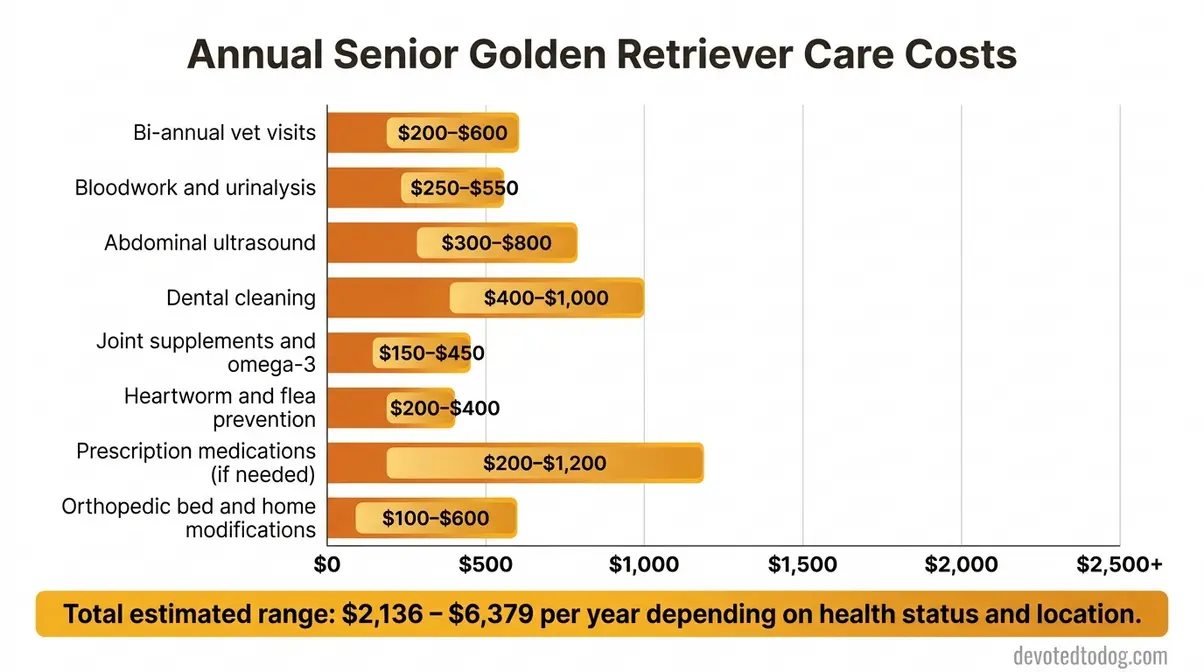
Annual care costs for a senior Golden Retriever range from approximately $2,136-$6,379 depending on health status, location, and whether any major conditions require ongoing management. Budget for bi-annual vet visits, joint supplements, heartworm and flea prevention, and potential dental work. These costs are real, but they are also predictable, which makes them manageable.
A little-known option worth knowing: the Permanent Foster Program, offered by some rescues including Golden Retriever Rescue of North Texas (GRRNT), one of the largest Golden Retriever rescue organizations in the U.S. In this program, “unadoptable” senior dogs, those with serious health conditions that make traditional adoption unlikely, are placed in foster homes. The foster provides love, companionship, and a home environment; the rescue organization covers all veterinary costs. It is a meaningful way to give a senior dog their best final chapter without taking on the financial burden of complex medical care alone.
Many adopters initially worry about cost. Consider this: a senior dog’s needs are predictable in a way a puppy’s simply are not. You are unlikely to face a surprise emergency because your dog ate something they shouldn’t have, the risks shift from unpredictable puppy chaos to manageable, plannable senior care.
Knowing what to expect financially prepares you for the commitment. The final step is knowing where to look, and how to tell a reputable rescue from one that isn’t.
How to Find a Reputable Golden Retriever Rescue
Start with breed-specific rescues. Golden Retriever rescue organizations specialize in the breed and typically provide thorough behavioral assessments, complete vet records, and foster families who can give you an accurate picture of the dog’s personality and daily needs. Search “Golden Retriever rescue + ” as your first step.
- Red flags to avoid in any rescue organization:
- Refuses to provide vet records or vaccination history
- Charges unusually low fees without explanation
- Won’t allow a home visit or meet-and-greet with the dog
- Cannot answer questions about the dog’s behavioral history
Established organizations to research include Golden Retriever Rescue Resource (GRRR), Golden Bond Rescue, and the ASPCA’s rescue directory. For a second chance golden retriever rescue in your region, the AKC’s breed club network also maintains rescue referrals by state.
The adoption process typically takes 2-6 weeks and includes: application submission, reference checks, a home visit, a meet-and-greet with the dog, and often a trial period. This thoroughness is a good sign, it means the rescue cares deeply about where their dogs end up.
Find more guidance on where and how to rescue a dog for a step-by-step overview of the full process.
Whether you’re caring for your own aging Golden or welcoming a senior rescue into your home, the next section covers the full Golden Retriever lifecycle, from puppy to senior, with links to our dedicated guides for each stage.
How Does the Full Golden Retriever Lifecycle Look?
A Golden Retriever’s life is a beautiful arc, from fluffy eight-week-old puppy to dignified senior companion. Here’s a quick overview of each stage, with links to our full guides.
Golden Retriever Puppy Development Stages
The first year of a Golden Retriever’s life moves fast. At 8 weeks (the typical “going home” age), puppies weigh approximately 10-14 lbs and are in the critical socialization window. By 6 months, they’ve grown to 40-55 lbs and entered the adolescent phase that tests even experienced owners. Understanding these growth milestones helps you set appropriate expectations and build healthy habits from day one, habits that pay dividends all the way through The Golden Decade. Explore the full Golden Retriever puppy growth chart and development stages and Golden Retriever puppy teeth growth and development in our dedicated guides.
Golden Retriever Breed Variations & Mixes
Not all Golden Retrievers look alike. The three main types, American, English Cream (sometimes called White), and Canadian/Field, differ in coat color, body structure, and temperament emphasis. Beyond purebreds, popular mixes like the Goldendoodle (Golden + Poodle), Goberian (Golden + Husky), and Golden Shepherd (Golden + German Shepherd) bring their own unique traits. Explore the different types of Golden Retrievers and the most popular Golden Retriever mixes in our complete breed guide.
Acquiring a Golden Retriever Puppy
If you’re at the beginning of the Golden Retriever journey, understanding what a puppy costs, and how to find one responsibly, is essential. Reputable breeders typically charge $1,500-$3,500, with health testing, socialization, and genetic screening factored into that price. A “$200 puppy” is a significant red flag for a puppy mill or scam operation. Learn how to choose a Golden Retriever puppy and the process of finding a reputable Golden Retriever breeder in our acquisition guide.
When Should You Call Your Vet for End-of-Life Guidance?
Some questions about your aging Golden Retriever have clear answers. Others require the one resource no guide can fully replace: a trusted veterinarian who knows your dog.
This section addresses the hardest question many owners eventually face, the signs that a dog’s quality of life is declining, and what to do when it is. Our veterinary reviewer advises that these conversations are best started before a crisis, not during one.
Signs Your Golden Retriever May Be Nearing the End of Life
Common end-of-life signs in Golden Retrievers include significant and unexplained loss of appetite, extreme lethargy or an inability to rise without assistance, incontinence (losing control of bladder or bowels), labored or irregular breathing, and withdrawal from family members they previously sought out.
Loss of interest in favorite activities is one of the most telling signs that quality of life has changed meaningfully. A dog that used to rush to the door at the sight of a leash, and no longer reacts, is communicating something important. So is a dog that stops finishing meals, stops engaging with toys, or seeks isolation.
Veterinarians use the HHHHHMM quality of life scale, developed by Dr. Alice Villalobos, a veterinary oncologist, to guide end-of-life conversations. The scale assesses: Hurt, Hunger, Hydration, Hygiene, Happiness, Mobility, and More good days than bad. Ask your veterinarian to walk you through this framework, it gives structure to an otherwise overwhelming conversation and helps owners make decisions with clarity rather than guilt.
These decisions are never easy, and they should never be made alone.
When Alternatives and Professional Help Are Needed
When your Golden’s condition changes rapidly, sudden weight loss, collapse, difficulty breathing, this is a veterinary emergency, not a situation to monitor at home. Rapid change is the signal that the body’s compensatory mechanisms have been overwhelmed. Act immediately.
Palliative care, comfort-focused care rather than curative treatment, is a legitimate, compassionate option for dogs with terminal diagnoses. Many veterinary practices offer palliative care planning, and some areas have dedicated veterinary hospice services. This path prioritizes quality of remaining life over length.
For cognitive decline specifically, a veterinary neurologist or a vet with a specialty in senior animal care can offer options beyond what general practice typically provides, including medication protocols, dietary interventions, and environmental enrichment plans tailored to the severity of decline.
No guide, however comprehensive, can replace the individualized relationship between you, your dog, and your veterinarian. When in doubt, make the call. That call is always worth making.
When does a Golden Retriever become a senior?
Golden Retrievers are considered senior dogs starting around age 7, with most veterinarians treating Goldens as geriatric by age 9-10. The exact transition depends on the individual dog’s health, weight, and activity level. Old golden retriever care priorities shift around age 7: more frequent vet checks, joint supplements, lower-calorie diet, and slower-paced exercise routines. Senior golden retrievers often develop gray muzzles, slower movement, and changes in appetite.
How can I help my old Golden Retriever live longer?
Five evidence-backed steps extend a senior Golden’s lifespan: (1) keep weight in the lean range , overweight Goldens lose 1-2 years on average; (2) screen for cancer twice yearly after age 6 with abdominal ultrasound; (3) maintain joint mobility with daily low-impact exercise and glucosamine; (4) feed a senior-appropriate diet with omega-3s; (5) maintain dental health, periodontal disease shortens dog lifespan by 1-3 years. An old golden retriever dog with these supports often reaches 13+ years.
Frequently Asked Questions
What age is considered old for a Golden Retriever?
A Golden Retriever is typically considered a senior dog at around 8 years of age. While their average lifespan is 10-12 years, many Golden Retrievers live well into their early teens with proper care. Large breeds like Golden Retrievers age faster than small breeds, which is why the senior threshold arrives earlier than it might for a smaller dog. Common early signs of aging at this stage include a graying muzzle, reduced energy, and mild morning stiffness in the joints. Results vary based on genetics, diet, and the quality of veterinary care throughout the dog’s life.
What are signs my golden is nearing the end of life?
Common end-of-life signs in Golden Retrievers include a significant loss of appetite, extreme lethargy, and withdrawal from family members. Other signs include incontinence, difficulty breathing, and loss of interest in activities they previously loved. Some dogs become restless at night or seem confused in familiar surroundings. The “HHHHHMM” quality-of-life scale, covering Hurt, Hunger, Hydration, Hygiene, Happiness, Mobility, and More good days than bad, is a practical framework vets use to guide these conversations. Always consult your veterinarian for compassionate, individualized guidance during this stage.
Can a Golden Retriever live 17 years?
Yes, it is possible for a Golden Retriever to live to 17 years or beyond, though it is uncommon. The average lifespan for the breed is 10-12 years. The oldest documented Golden Retriever was Augie, who lived to 20 years old in Tennessee, making her a remarkable outlier. Longevity in Golden Retrievers depends heavily on genetics, consistent veterinary care, healthy weight maintenance, and a balanced diet throughout their life. While 17+ years is exceptional, reaching 13-14 years is achievable for Golden Retrievers with proactive senior care.
What is the silent killer in Golden Retrievers?
Hemangiosarcoma, a cancer of blood vessel walls, is widely considered the “silent killer” in Golden Retrievers. It typically develops in the spleen or heart and can grow to significant size without producing obvious symptoms until it ruptures, causing rapid internal bleeding. An estimated 1 in 5 Golden Retrievers will develop this cancer during their lifetime (Cornell University College of Veterinary Medicine, 2021). The most important warning sign is a sudden, unexplained bloated or distended abdomen, treat this as a veterinary emergency. Regular bi-annual vet check-ups with abdominal ultrasound are the primary tool for early detection in senior Golden Retrievers.
Veterinary information reviewed: January 2026. Senior care recommendations reflect current veterinary consensus. Prices and health statistics may change, consult your veterinarian for the most current guidance.
For owners of an old golden retriever, the years between 8 and 12 are the most impactful window for proactive care. With approximately 1 in 5 Golden Retrievers developing hemangiosarcoma (Cornell University College of Veterinary Medicine, 2021) and cancer accounting for an estimated 61-65% of deaths in the breed (Golden Retriever Lifetime Study, 2022), bi-annual vet check-ups are non-negotiable. The best approach combines senior-formulated nutrition, adapted exercise, thoughtful home modifications, and a strong veterinary partnership, the four pillars that define this guide.
The Golden Decade is the framework that ties all of this together. The white face isn’t a warning sign. It’s a reminder that The Golden Decade has begun, and that every day of it, with the right care, is worth cherishing. The slowing pace and the longer naps are not reasons for grief; they are invitations to be more intentional, more attentive, and more present with the dog who has given you so much.
Start today by scheduling a bi-annual senior wellness check with your vet if your Golden is 8 or older. Ask specifically about abdominal ultrasound for hemangiosarcoma screening. Then return to this guide to work through the diet and home comfort modifications, one step at a time. Your Golden has given you their best years. The Golden Decade is your chance to return the favor.
Readers comparing options often find our piece on Short Haired Golden Retriever: Genetics, Coats Care Guide helpful for additional context.
Readers comparing options often find our piece on 5-Month-Old Goldendoodle: Growth, Behavior Care (2026) helpful for additional context.