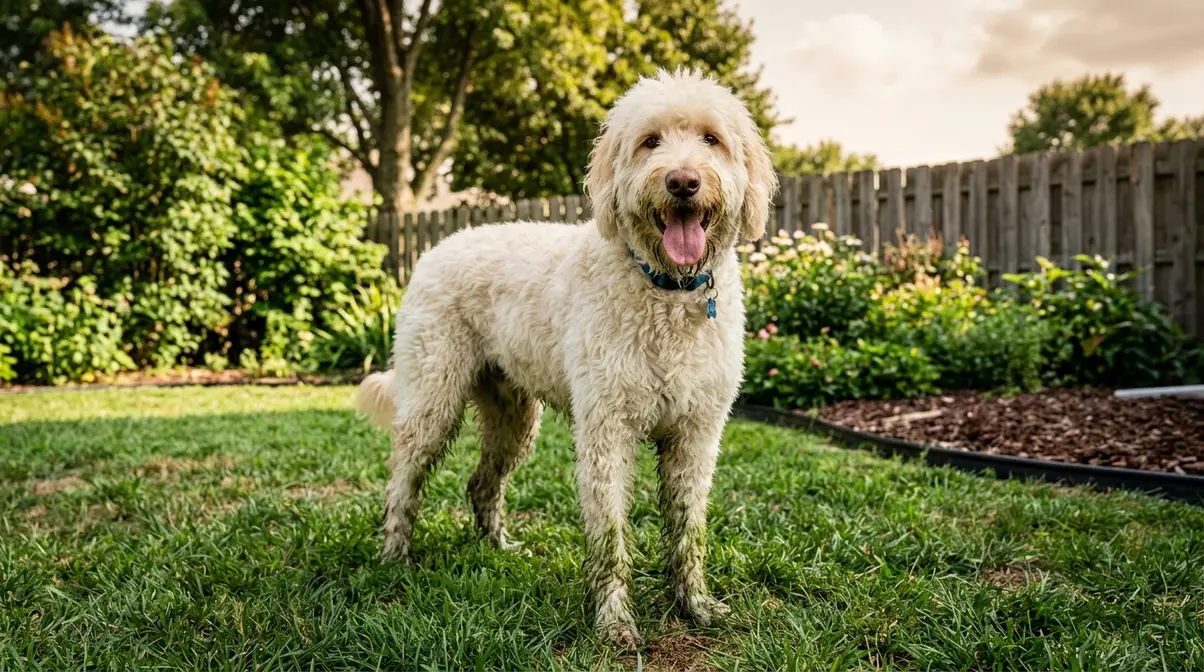
“He turns green if it rains after fresh cut grass, he turns grey in the mulch, and is atrocious when he gets out of the mud.” — White Goldendoodle owner, shared across Doodle community forumsThat’s life with a white Goldendoodle — and it’s completely worth it, once you know the system. Without the right grooming routine, that gorgeous white coat can turn yellow, stain permanently, and become painful to brush. Most guides don’t tell you this. In this guide, you’ll learn exactly what a white Goldendoodle is, how rare they are, which size fits your life, and the step-by-step care routine that keeps their coat white — not green. We cover everything from coat genetics and color patterns to 2026 pricing and how to find a reputable breeder.
Key TakeawaysWhite Goldendoodles — technically “ultra cream” or English Cream — aren’t truly rare, but a pure snow-white coat is uncommon. Expect to pay $2,500–$5,000 from a reputable breeder.
- White coats need daily brushing to prevent painful matting and yellowing
- “The White Coat Maintenance Cycle” — grass, mud, and mulch staining is predictable and manageable with a consistent routine
- Mini versions (15–35 lbs) suit apartments; standards (40–90 lbs) thrive with yards
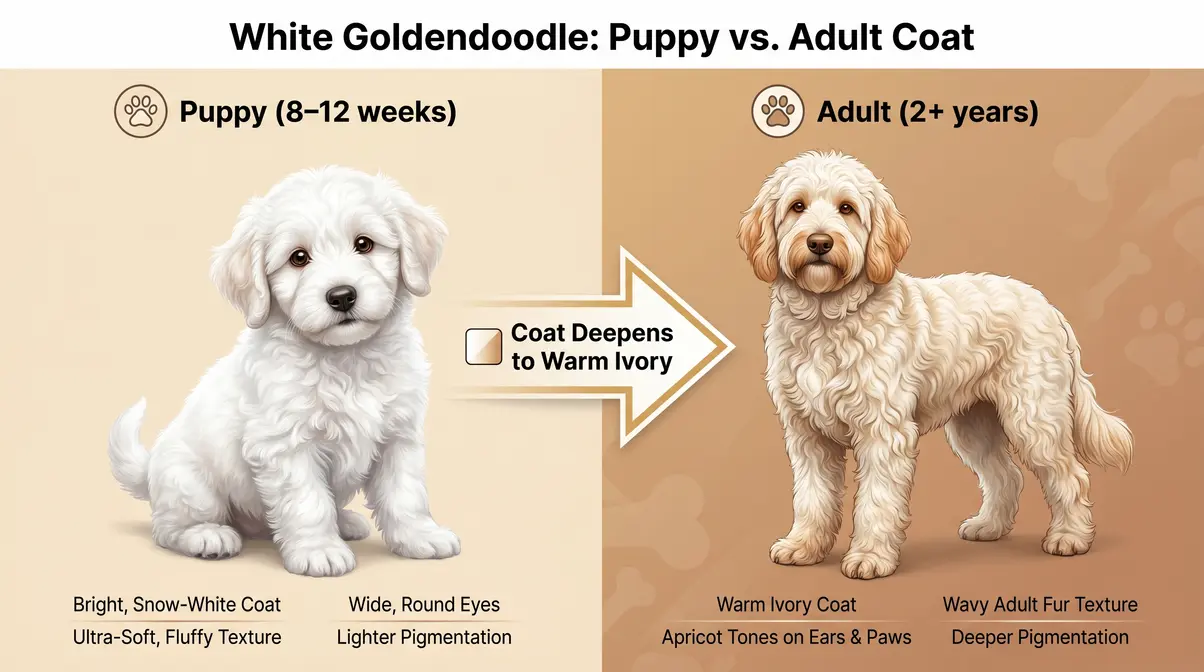
- Coat color can fade as puppies grow — this is normal genetics, not a health issue
- Tear stain prevention starts from puppyhood; early habits prevent permanent staining
What Does a White Goldendoodle Look Like?
For more on this topic, see our guide on the Top 7 Goldendoodle Rescues In Texas (TX).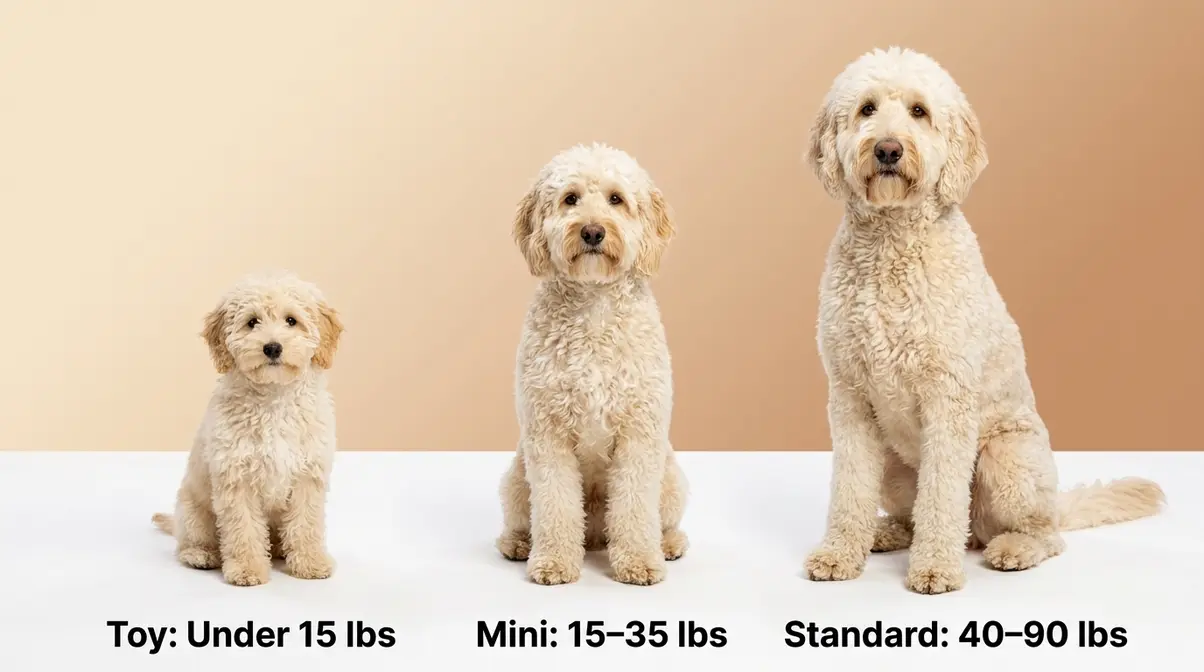
What Color Is a “White” Goldendoodle, Really?
How Rare Are White Goldendoodles?
White Goldendoodles are not rare as a category — ultra cream Goldendoodles are produced regularly by breeders who specialize in English Cream Golden Retriever lines. A true snow-white coat with zero cream shading is genuinely uncommon, however, requiring careful selective pairing across multiple generations. English Cream Golden Retriever parentage is the primary factor in producing the lightest coats. Breeders who work exclusively with English lines are far more likely to produce consistently light puppies than those using American Golden Retrievers. If a snow-white or near-white look matters to you, ask your breeder specifically about their English Cream lineage and request photos of their adult dogs — not just puppies. Rarity does affect price. Breeders may charge a premium for the lightest puppies in a litter, since demand for the ultra cream look is high. The blocky head and teddy bear aesthetic of a full grown white Goldendoodle are part of what drives that premium — this is one of the most photogenic dog looks available, and buyers know it. The photogenic quality is genuine: that broad skull, round dark eyes, and cream coat create a visual combination that reads as “stuffed animal come to life.” Whether you want a solid ultra cream or a dog with striking white markings against another color, Goldendoodles offer a surprising range of coat patterns — all of which can include white.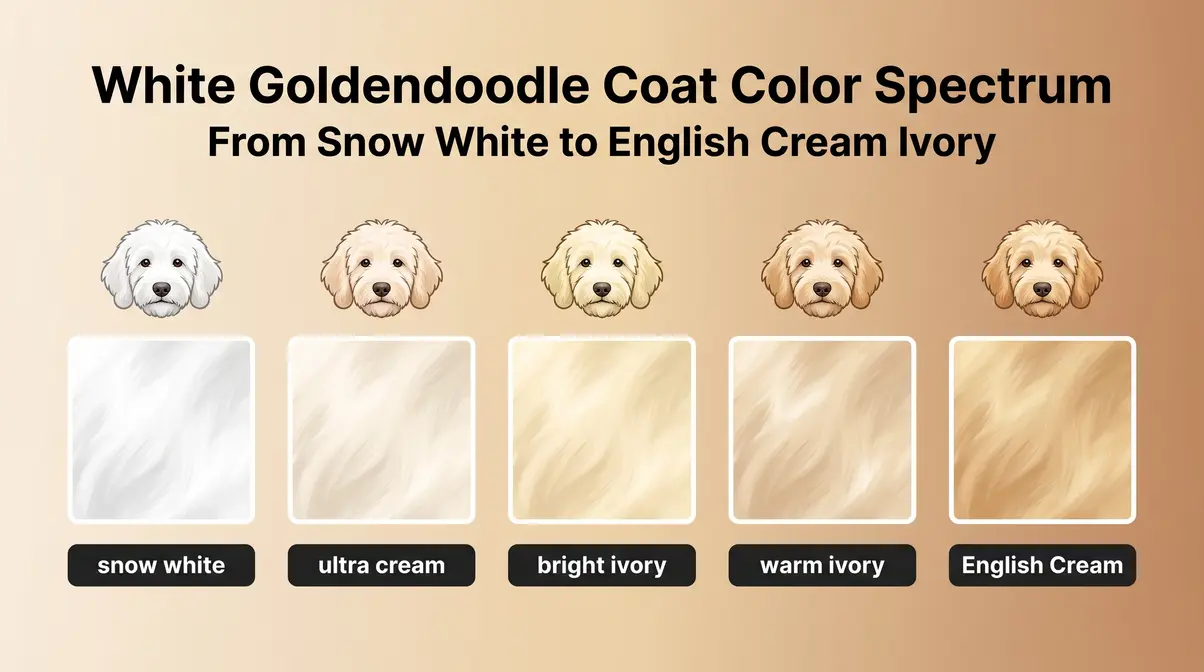
White Goldendoodle Color Patterns: Parti, Tuxedo & More
| Pattern | Definition | White Coverage |
|---|---|---|
| Parti | 50%+ white base combined with another color | Dominant white |
| Tuxedo | Dark body with white chest, paws, and face blaze | Accent white |
| Abstract | Random white patches scattered across the coat (<50%) | Minimal white |
| Phantom | Lighter tan-to-cream points on eyebrows, muzzle, chest, and legs | Not a white pattern |
Black and White Goldendoodles
Yes, Goldendoodles can absolutely be black and white. This requires the dog to inherit the dominant E allele from the Poodle side, which lets eumelanin (the pigment responsible for black and brown tones) show in the coat. Golden Retrievers carry two copies of the recessive e allele, which blocks black pigment in the coat and leaves only yellow-to-red shades (Newton et al., Mammalian Genome, 2000; UC Davis Veterinary Genetics Laboratory). Poodles come in black; Golden Retrievers don’t. So the black coloring in a black and white Goldendoodle depends on the Poodle parent, as research into the genes that control Golden Retriever coat colors confirms (Cornell University College of Veterinary Medicine). The most common black-and-white pattern is the tuxedo — a dark body with a white chest, white paws, and often a striking white blaze running up the face. The contrast is dramatic. A black Goldendoodle with white chest markings looks almost formal, which is exactly where the tuxedo name comes from. This look has become increasingly popular on social media precisely because the contrast is so striking. Explore more about Goldendoodle colors and patterns to see the full range. Black and white is the most dramatic combination — but brown, red, and apricot mixed with white create equally beautiful results.Brown, Red & Other Two-Tone Combinations
Brown and white Goldendoodles — sometimes called chocolate and white — get their brown coloring from the Poodle’s chocolate gene. A brown Goldendoodle with white spots creates a warm, earthy look that many owners find just as appealing as the cream coat. A white Goldendoodle with brown spots, where the white is dominant, is technically a parti pattern and tends to be one of the most sought-after combinations. Red and white Goldendoodles feature a deeper, richer version of apricot against the white markings — the contrast is striking and vivid. One important note: it can be tough to tell if a puppy will stay red or fade to apricot by adulthood. Red coats often soften significantly over the first two years, so asking to see photos of a breeder’s adult dogs is essential before choosing a red-and-white puppy. Grey and silver Goldendoodles with white markings are less common. The grey coloring comes from a progressive graying gene found in Poodles — some Poodle lines carry it, others don’t. If you search “grey and white goldendoodle,” you’re looking for this combination, which is rarer than brown or red pairings. All of these two-tone dogs fall into specific pattern categories — and knowing the right term will help you ask breeders for exactly what you want.Parti, Tuxedo & Abstract Patterns Explained
The three most common white-inclusive patterns each have distinct characteristics, and breeders use these terms precisely. A parti Goldendoodle (a coat pattern where more than 50% of the fur is white combined with another color) is the most striking and typically the most expensive — producing a consistent parti pattern requires selective pairing across generations. A tuxedo Goldendoodle (a dog with a dark body and white chest and paws that resembles formal wear) concentrates its white on the chest, paws, and often the face. An abstract Goldendoodle (a dog with less than 50% white markings scattered across the coat) offers a subtler look that still has the visual interest of two-tone coloring. A white parti Goldendoodle commands the highest premiums among pattern types — breeders who specialize in parti patterns invest significantly in their breeding programs. Parti Goldendoodles may carry a price premium of $500–$1,000 above standard pricing, depending on the breeder and the coat color combination. One practical point worth knowing: all patterns with white markings face the same maintenance challenges. The White Coat Maintenance Cycle applies equally to a parti coat as it does to a solid ultra cream — staining affects white areas regardless of how much white the dog carries. Learn more about parti Goldendoodles and their unique markings.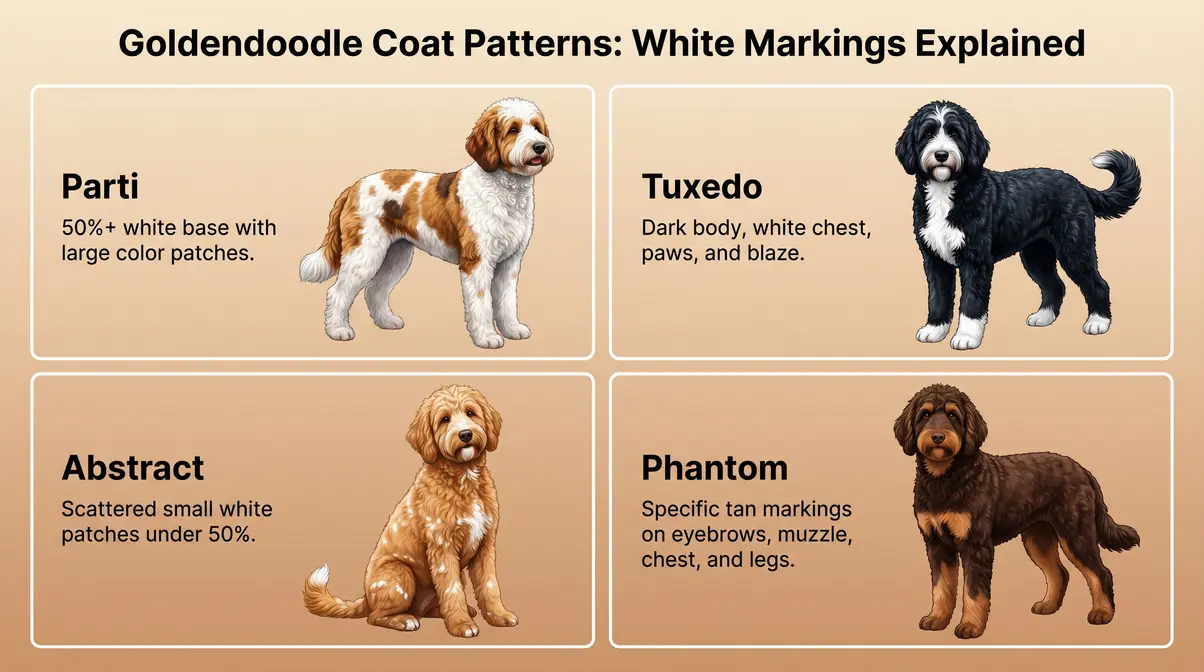
White Goldendoodle Size Guide: Mini, Standard & Toy
| Size | Weight | Height | Best For |
|---|---|---|---|
| Toy | Under 15 lbs | Under 13 in | Small apartments, elderly owners |
| Mini | 15–35 lbs | 13–20 in | Apartments, small homes, families |
| Standard | 40–90 lbs | 20–26 in | Houses with yards, active families |
Mini White Goldendoodle
Standard and Toy White Goldendoodles
The standard white Goldendoodle — typically 40–90 lbs and 20–26 inches tall — is the classic family dog: affectionate, active, and happiest with space to run. They thrive with a yard and an active household. The trade-off is grooming time. A 70 lb standard Goldendoodle has substantially more coat to manage than a 20 lb mini, and daily brushing sessions will run longer. If you’re choosing between standard and mini, think about your weekly grooming commitment — a standard’s coat takes roughly twice as long to brush as a mini’s. The toy white Goldendoodle — under 15 lbs — is the rarest of the three sizes. Toy versions are typically produced by pairing a toy Poodle with a very small mini Goldendoodle. They’re extremely portable and suited to the smallest living spaces. However, extreme miniaturization can introduce additional health considerations. Consult your veterinarian about potential health risks associated with extremely miniaturized breeds before purchasing a toy-sized dog. The low-shedding benefit applies across all three sizes — Poodle genetics reduce shedding throughout the size range. Now that you know the sizes, let’s talk about what happens when you actually bring a white Goldendoodle puppy home — and why that fluffy white coat may look very different by the time they’re two years old.White Goldendoodle Puppies: What to Expect
What should you expect when you bring home a white Goldendoodle puppy? Prepare for a fluffy, velcro-dog that wants to be wherever you are — and a coat that may look very different by the time they’re two years old. White Goldendoodle puppies are highly social, eager to please, and bond intensely with their families. That puppy-soft white fluff will transition to an adult coat, and the final color may surprise you. Coat changes are completely normal and not a health concern. Whether your dog stays white or shifts to ivory, one thing stays the same: white coats need consistent care. Here’s exactly how to expect that transition to unfold.What to Expect from a White Goldendoodle Puppy
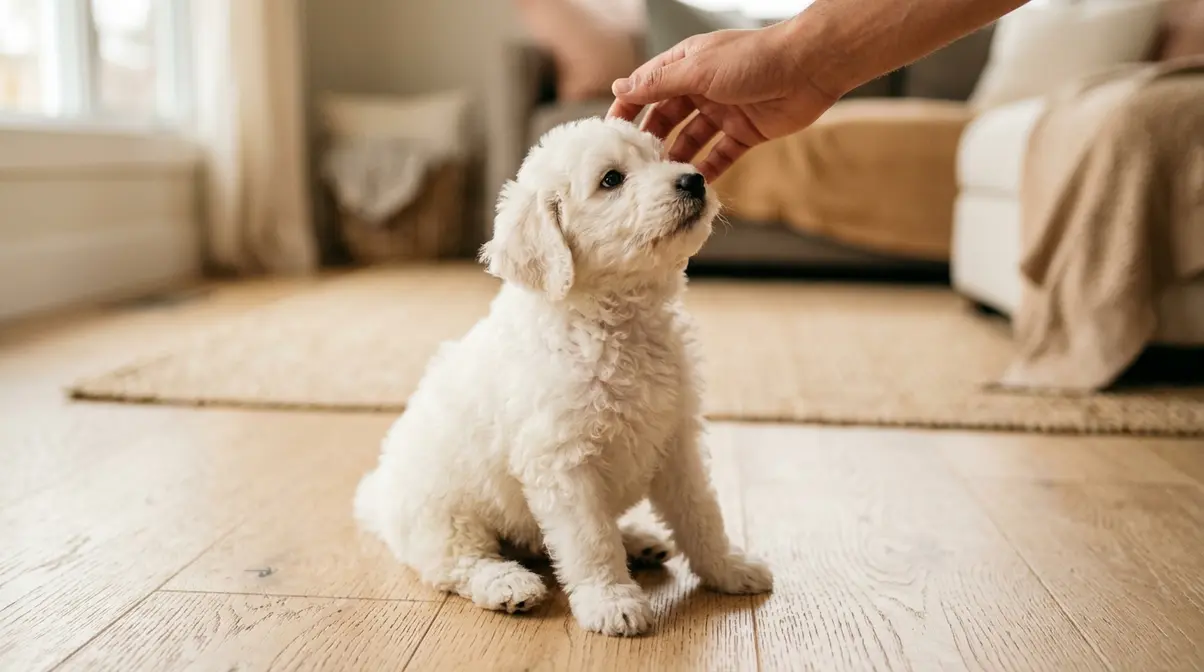
White Goldendoodle puppies are highly social animals that bond quickly and strongly — what experienced Doodle owners call “velcro dog” behavior. They follow you from room to room, lean against your legs, and make sustained eye contact. How do Goldendoodles show affection? They lean on you, follow you from room to room, and make eye contact — these are all signs of bonding, not clinginess. That said, this attachment means they’re prone to separation anxiety if left alone for long periods. Early training and gradual alone-time practice from puppyhood help significantly. The puppy coat on a white Goldendoodle is typically the softest and fluffiest phase of their life — many owners describe it as touching a cloud. Enjoy it, because the adult coat, which grows in around 6–12 months, may be wavier, curlier, or slightly darker. Research into how genes control the intensity of phaeomelanin confirms that pigment expression continues to shift as dogs mature, which explains why some puppies fade to white or shift to cream as adults (VCA Animal Hospitals). Early grooming habits matter enormously. Start brushing at 8–10 weeks, even briefly, to get the puppy comfortable with the routine. This is the foundation of The White Coat Maintenance Cycle — habits built in the first weeks of ownership shape how manageable the coat is for the dog’s entire life. Many new white Doodle owners are caught off guard when their bright white puppy develops a creamy adult coat. This is normal — and expected. The most common question from white Doodle owners is about coat color change — specifically, why their golden-tinted puppy is getting lighter.Why Is My Goldendoodle Turning White?
Your Goldendoodle is turning white because the intensity gene is gradually reducing the phaeomelanin (yellow/red pigment) in their coat as they mature. This is completely normal and is the same genetic process that makes English Cream Golden Retrievers lighter than American lines. It is not a sign of illness or poor health — it’s genetics expressing over time, and it happens in the vast majority of cream and light-colored Goldendoodles. Most fading happens between 6 months and 2 years of age. By the time a Goldendoodle reaches their second birthday, their coat color is largely stable. A red-and-white Goldendoodle puppy may fade to apricot-and-cream by age 2 — this is exactly why asking to see photos of a breeder’s adult dogs matters so much. The puppy photos on a breeder’s website may look very different from the adult dog you’ll actually bring home. Review Goldendoodle color fading over time for a full breakdown by color. It’s also worth distinguishing normal fading from health-related coat changes. Gradual lightening of a young dog’s coat is expected. If an adult dog with a previously stable dark coat suddenly develops white patches, that’s a different situation — it may indicate vitiligo (a pigmentation condition) or normal aging. If you notice sudden white patches on an adult dog with no history of fading, consult your veterinarian — this may indicate vitiligo or another condition. Now that you understand how and why white Goldendoodle coats change, let’s get into the most critical part of ownership: keeping that coat clean, white, and healthy.Grooming a White Goldendoodle: Coat Care Guide
“He turns green if it rains after fresh cut grass, he turns grey in the mulch, and is atrocious when he gets out of the mud.” — White Goldendoodle owner, Doodle community forumsThat’s every white Goldendoodle owner’s reality — and it’s completely manageable with the right system. We call it The White Coat Maintenance Cycle, and here’s how to master it.
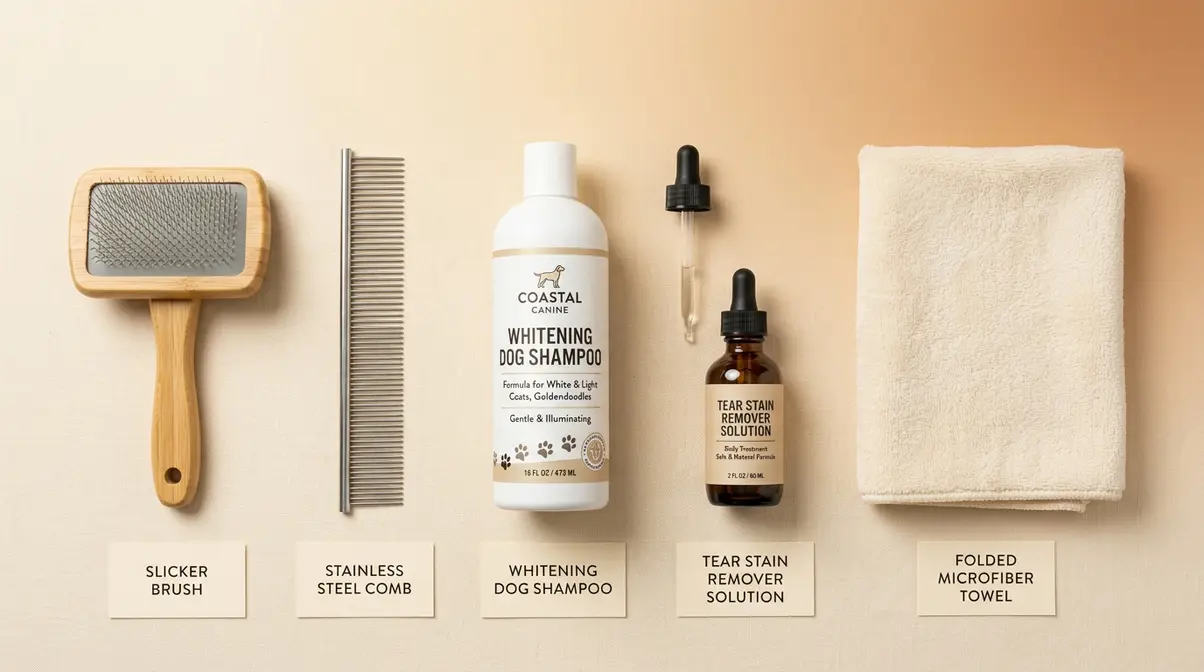
- Before You Start: What You’ll Need
- Slicker brush (short bent wire bristles — penetrates curly and wavy coats)
- Stainless steel greyhound comb (detects remaining tangles after brushing)
- Whitening or brightening dog shampoo (enzymatic formula preferred)
- Tear stain remover solution (veterinary-formulated)
- Microfiber towel for quick spot-cleaning between baths
Daily Brushing Routine for a White Coat
The AKC recommendations for dog brushes confirm that slicker brushes are essential for managing the coats of long-haired and curly breeds — and for white Goldendoodles, daily use is non-negotiable to prevent painful matting and coat yellowing (American Kennel Club). A daily 10–15 minute session using this five-step routine covers everything: Step 1: Gather your tools — slicker brush plus greyhound comb. Why this matters: using the wrong brush on a curly coat causes breakage and misses tangles entirely. Step 2: Start at the legs and paws — these areas mat fastest. Brush in short strokes, working through small sections at a time. Why: legs and paws pick up the most environmental debris and tangle first. Step 3: Work up to the body — brush in the direction of hair growth, then against it to lift the coat. Why: double-passing catches tangles the first pass misses. Step 4: Check the face and ears — use the greyhound comb gently around the eyes and ears. Why: tear stains start here; daily combing removes porphyrin-stained fur before it sets into the coat. Step 5: Finish with a full comb-through — run the greyhound comb from root to tip across the entire coat. If the comb snags, the coat isn’t fully brushed. Why: the comb test catches any hidden mats before they tighten against the skin. A note on coat types: a white Goldendoodle with straight hair needs slightly less brushing frequency than a curly coat, but daily is still the recommendation for white coats specifically. Environmental stains embed faster in straight hair because it lies flat against the skin, trapping debris close to the surface. Refer to Goldendoodle coat types and grooming needs for a deeper look at how coat type affects your routine. Always consult your veterinarian or a certified groomer if you notice skin irritation during brushing. Brushing prevents matting — but white coats have a second challenge that no amount of brushing alone can fix: tear stains.How to Remove Tear Stains from a White Goldendoodle
Tear stains are the reddish-brown marks below the eyes caused by porphyrin, an iron-containing pigment found in dog tears. On white and cream coats, porphyrin is visible almost immediately — on darker coats, it hides. For white Goldendoodles, this is one of the most consistent grooming challenges owners face, and it starts young. Step 1: Dampen a cotton ball with a veterinary-formulated tear stain remover solution. Why: water alone doesn’t break down porphyrin — you need a formula specifically designed to oxidize and lift it. Step 2: Wipe gently from the inner corner outward — never toward the eye. Why: wiping inward can push bacteria toward the tear duct, worsening the underlying cause. Step 3: Use a fine-toothed comb to gently separate any stained fur. Why: stained fur clumps together and traps additional moisture, accelerating new staining. Step 4: Allow the area to dry completely before your dog goes outside. Why: moisture in the eye area encourages bacterial growth and deepens discoloration. Step 5: Repeat daily until staining fades, then maintain three times per week. Why: consistency prevents new porphyrin from setting and avoids the buildup that makes stains permanent. Prevention matters as much as removal. Keep the fur around the eyes trimmed short — ask your groomer for an “eye trim” at each appointment, which also happens to be one of the most popular white Goldendoodle haircuts for managing this area. Filtered water is commonly reported by white Doodle owners as reducing tear staining over time, though this is owner consensus rather than a guaranteed outcome. If tear staining is severe or accompanied by eye discharge, consult your veterinarian — it may indicate a blocked tear duct or infection. Find the best brush for a Goldendoodle to pair with your tear stain routine for a complete daily grooming kit. Tear stains are one part of the challenge. The bigger battle for white Goldendoodle owners is environmental staining — the green, grey, and muddy discoloration that comes from everyday life.Preventing Coat Yellowing and Environmental Staining
White Goldendoodle owners face a predictable, repeating cycle: grass stains the coat green, mulch turns it grey, mud makes it brown, and natural coat oils gradually yellow it over weeks. This is The White Coat Maintenance Cycle — and every white Doodle owner needs a system to manage it. The good news: the cycle is predictable, which means it’s preventable with the right habits. Step 1: Spot-clean after every outdoor session with a damp microfiber towel. Don’t wait for bath day. Why: grass and mud stains set within hours on white fur — catching them immediately takes 30 seconds rather than 30 minutes. Step 2: Bathe every 3–4 weeks with a whitening or brightening dog shampoo. Look for enzymatic formulas that break down organic stains from the inside out. Why: regular bathing removes accumulated porphyrin and the natural coat oils that cause gradual yellowing. Step 3: Use a coat brightener or bluing rinse after shampooing to counteract yellow tones. Why: these products neutralize yellow pigment the same way purple shampoo works for blonde human hair — they don’t bleach, they color-correct. Step 4: Keep the coat trimmed — shorter coats pick up less debris and are far easier to spot-clean after outdoor adventures. Why: a longer coat traps more grass, mud, and mulch in its fibers. Popular white Goldendoodle haircuts include the “teddy bear cut” (a rounded face shape with medium-length body coat) and the “puppy cut” (a uniform short length across the whole dog). Both minimize environmental staining compared to a full-length coat and are the most commonly requested styles for white Doodles at professional groomers.White Goldendoodle Price & Breeder Guide
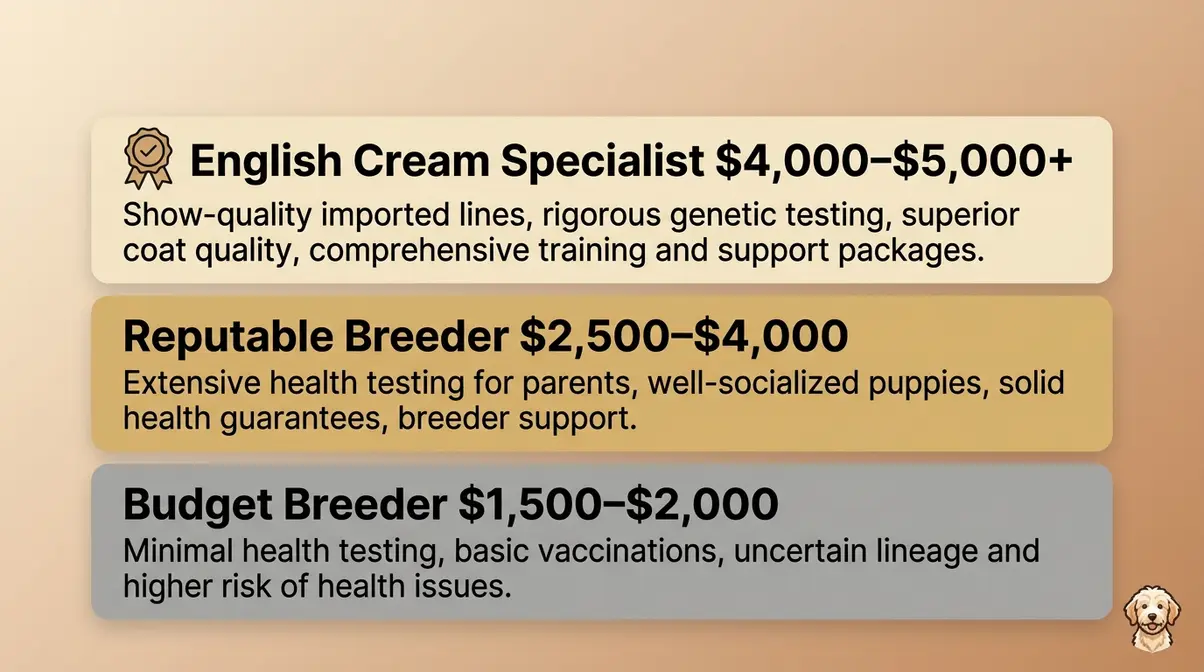
White Goldendoodles for sale from reputable breeders typically cost between $2,500 and $5,000 in 2026, with some English Cream specialists pricing above that range (Dogster, 2026; Jennaleedoodles.com, 2026). The wide range reflects differences in breeder reputation, location, size, and coat color — with ultra cream and parti patterns from English Cream lines commanding the highest prices. Here’s what drives the cost and how to find a trustworthy breeder. These prices are estimates as of 2026 and can vary significantly by breeder, region, and availability. Always verify current pricing directly with the breeder.https://www.youtube.com/watch?v=o8JGcxxrihA
How Much Does a White Goldendoodle Cost?
White Goldendoodle puppies for sale span a wide price range depending on the breeder’s program quality, health testing investment, and the puppy’s lineage. Here’s how the tiers break down in 2026:| Tier | Price Range | What You Get |
|---|---|---|
| Budget/backyard breeder | $1,500–$2,000 | Limited health testing, unknown lineage |
| Reputable breeder | $2,500–$4,000 | Health-tested parents, genetic documentation |
| Show-line/English Cream specialist | $4,000–$5,000+ | Ultra cream lineage, OFA-certified parents |
How to Find a Reputable White Goldendoodle Breeder
The difference between a reputable breeder and a puppy mill isn’t always obvious from a website. Here’s what to look for — and what to run from.- Green Flags (Reputable Breeder Checklist):
- Health tests both parent dogs — OFA hip and elbow certifications, PennHIP, cardiac clearance, and eye certifications
- Provides a written health guarantee of at least two years
- Allows you to visit the puppies in person and meet at least one parent dog
- Asks YOU questions about your lifestyle, home, and experience with dogs
- Doesn’t always have puppies immediately available — responsible breeders plan litters carefully and often have waitlists
- Provides full documentation of the puppy’s vaccinations, deworming schedule, and veterinary check
- Red Flags (Puppy Mill Warning Signs):
- Price significantly below $1,500 with no explanation for the discount
- Won’t allow in-person visits or video calls showing the puppies’ environment
- Multiple breeds always available with no waitlist
- Puppies available “immediately” with no deposit or screening process
White Goldendoodle Gifts & Merchandise
If you’re shopping for a white Goldendoodle owner — or treating yourself — there’s a genuinely charming market built around this dog’s look. The cream, teddy bear aesthetic translates beautifully into physical products, and the options have grown significantly. A white Goldendoodle stuffed animal is one of the most popular gifts for children who love the breed but aren’t ready for the real thing — or for owners who want a plush version for their home. The cream coloring and blocky head make white Doodles especially well-suited as stuffed animal subjects; the plush versions often look remarkably accurate to the real dog. Custom ornaments are a favorite among Goldendoodle owners, particularly around the holidays. White and cream Goldendoodle ornaments are widely available through Etsy artists who specialize in pet portraiture — many can be customized with the dog’s name and markings. For digital projects like invitations, party decorations, or social media graphics, Goldendoodle clipart in black and white is a popular search for owners putting together puppy announcements or birthday parties. Keep in mind that the most meaningful gifts for white Goldendoodle owners are often the practical ones — quality grooming tools, a whitening shampoo kit, or a subscription to a professional grooming service go a long way toward making The White Coat Maintenance Cycle easier.Common Challenges of Owning a White Goldendoodle
Every dog comes with trade-offs. White Goldendoodles are exceptional companions — but going in without realistic expectations leads to frustration for both owner and dog. Here’s what to plan for honestly.Common Challenges to Plan For
Coat staining is constant and visible. You let your white Doodle run in the backyard after rain. Within minutes, the coat turns green from grass contact. What goes wrong if you ignore it: the stain sets within hours, requiring a full bath rather than a quick wipe. How to avoid it: spot-clean with a damp microfiber towel immediately after every outdoor session. The White Coat Maintenance Cycle is manageable, but only if you’re consistent — skipping it compounds quickly. Matting happens fast if brushing slips. Even one or two missed days can create painful mats in a curly coat. What goes wrong: mats tighten against the skin, causing genuine pain and sometimes requiring sedation at a groomer or vet to remove safely. The fix — daily 10–15 minute brush sessions — is genuinely quick once it’s a habit. Tear stains become permanent if ignored. Porphyrin stains left untreated for several weeks become extremely difficult to remove, sometimes requiring professional treatment. Starting the tear stain routine from the very first week of ownership prevents this entirely. Always consult a veterinarian for any grooming-related skin irritation or persistent eye discharge.When a White Goldendoodle Isn’t the Right Fit
White Goldendoodles are wonderful dogs — but they’re not the right dog for every lifestyle. Two specific situations warrant honest reflection. If you travel frequently or have a schedule that makes consistent daily grooming difficult, the white coat will suffer visibly. The coat doesn’t forgive skipped routines the way a darker, shorter-haired dog might. A lower-maintenance breed — a Labrador Retriever, a Beagle, or even a standard Poodle with a shorter cut — may be a more realistic fit. If you or a family member has severe dog allergies, know that Goldendoodles are low-shedding but not hypoallergenic. No dog is truly hypoallergenic — but a purebred Poodle produces less dander and is a better choice for people with documented allergic reactions. For the white teddy-bear look with significantly less coat maintenance, a Bichon Frise or Maltipoo offers a similar aesthetic with a much simpler grooming demand.Frequently Asked Questions
How Rare Is a White Goldendoodle?
White Goldendoodles are not technically rare, but a pure snow-white coat is uncommon. Most dogs described as “white” are technically ultra cream or English Cream — a warm ivory shade with subtle cream tones, especially around the ears and paws. Their light color comes from an English Cream Golden Retriever parent who carries the intensity gene variant at a high frequency. A truly snow-white coat requires both parents to carry the lightest possible color genetics, which is less common. Results vary meaningfully by breeding pair and program.What Foods Are Toxic to Goldendoodles?
Goldendoodles should never eat chocolate, grapes, raisins, onions, garlic, or macadamia nuts — all of which are toxic to dogs and can cause serious organ damage. Xylitol, an artificial sweetener found in sugar-free gum and some peanut butters, is particularly dangerous and can cause rapid liver failure even in small amounts. Alcohol, caffeine, and cooked bones — which can splinter and perforate the digestive tract — are also serious hazards. Even a small amount of these foods can require emergency veterinary care. This information is for educational purposes only. Always consult your veterinarian before changing your dog’s diet or if you suspect your dog has ingested a toxic substance.What Is the Best Brush for a Goldendoodle?
The best brush for a Goldendoodle is a slicker brush — a tool with short, fine bent wire bristles that penetrate curly and wavy coats to remove loose fur and prevent tangles before they tighten. Pair it with a stainless steel greyhound comb to check for any mats the slicker brush may have missed — if the comb snags, keep brushing. Using both tools together in a consistent daily routine is the most effective approach for keeping a Goldendoodle’s coat healthy and pain-free. For white-coated Goldendoodles, daily brushing is especially important because stains and developing tangles are immediately visible. Brush sessions of 10–15 minutes daily are sufficient for most coats.How Much Does a White Goldendoodle Cost?
A white Goldendoodle from a reputable breeder typically costs $2,500 to $5,000 in 2026, with English Cream specialists sometimes pricing above that range (Dogster, 2026). Price varies based on the breeder’s health testing program, location, the puppy’s lineage, and whether you’re choosing a mini or standard size. Ultra cream and English Cream lineage dogs often command the highest prices within that range. Prices significantly below $1,500 may indicate a puppy mill or backyard breeder with limited health testing and no genetic documentation. Always request documentation of parental health certifications — OFA, PennHIP, eye, and cardiac clearances — before purchasing.Should I Brush My Goldendoodle Daily?
Yes — daily brushing is strongly recommended for all Goldendoodles, and it’s especially important for white-coated dogs. Their curly or wavy coats are highly prone to matting, which can become painful and lead to skin infections if tangles are left to tighten against the skin. A daily routine using a slicker brush followed by a greyhound comb prevents tangles from forming in the first place. For white Goldendoodles specifically, daily brushing also removes environmental stains — grass, mud, mulch — before they set permanently into the coat fibers. A 10-minute session each day is far easier to manage than addressing a matted coat at the groomer.Wrapping Up: Is a White Goldendoodle Right for You?
For families and individuals seeking a gentle, intelligent, and visually stunning companion, white Goldendoodles deliver on every promise — as long as you go in with realistic expectations. Most are ultra cream rather than snow-white, cost $2,500–$5,000 from reputable breeders in 2026 (Dogster, 2026), and require daily brushing to maintain their beautiful coat. The best approach combines consistent daily brushing, a proactive tear stain routine, and a monthly whitening shampoo bath. The White Coat Maintenance Cycle — grass, mud, mulch, and natural oil buildup — is predictable and manageable with a system. Every white Doodle owner faces it. The owners who thrive are the ones who build the routine before the dog comes home, not after the first muddy adventure. Ready to take the next step? Start by reading our complete guide to finding a reputable Goldendoodle breeder before you contact anyone. If you already have a white Doodle and are focused on coat care, bookmark our Goldendoodle coat types and grooming needs guide — it goes deeper on wavy versus curly coat management and helps you tailor your routine to exactly what your dog’s coat requires.The Parti Goldendoodle extends the white-coat genetic line by adding a secondary color over the white base, creating the signature two-tone pattern.