Golden Retriever puppies are joyful, chaotic, and occasionally overwhelming. And if you’ve just brought one home, you’re probably already feeling all three. The good news: there’s a clear, week-by-week path through the chaos. Golden retriever puppy socialization doesn’t have to feel like guesswork.
Socialization runs alongside early training during the critical window. Our age-by-age Golden Retriever training guide shows how the two reinforce each other.
As one owner put it in a public post to a Golden Retriever owners’ group on Facebook:
“4-month-old Golden Retriever, so smart, but driving us crazy! We haven’t had a puppy in 37 years and starting to regret it. Last 2 dogs were Goldens and we loved them but they were 1–2 years old when adopted. Any tips for puppies and keeping your sanity?”
That feeling is real and common. What most guides skip: the socialization window closes faster than owners realize, and missing it follows a dog for life.
In this guide, you’ll get a week-by-week golden retriever puppy socialization plan, a 50+ item checklist, and the fear-period knowledge that most resources skip. From understanding the full picture of Golden Retriever ownership to building a genuinely confident adult dog, this is the structured framework you need, called The Confidence Ladder.
Golden retriever puppy socialization is most effective between 8 and 16 weeks. That is the window when new experiences shape behavior for life.
- Start at home: Build confidence with household sounds, surfaces, and family members before venturing outside.
- Safety before shots: Introduce only vaccinated, known dogs in private settings until your vet clears full vaccination.
- Follow The Confidence Ladder: Progress from home → controlled settings → public spaces in deliberate weekly steps.
- Fear periods are normal: Two fear-imprint periods (8–11 weeks and 6–14 months) require gentler exposure, not avoidance.
- Use the checklist: 50+ specific experiences across sounds, surfaces, people, and animals, track progress weekly.
Why Golden Retriever Puppy Socialization Is Non-Negotiable

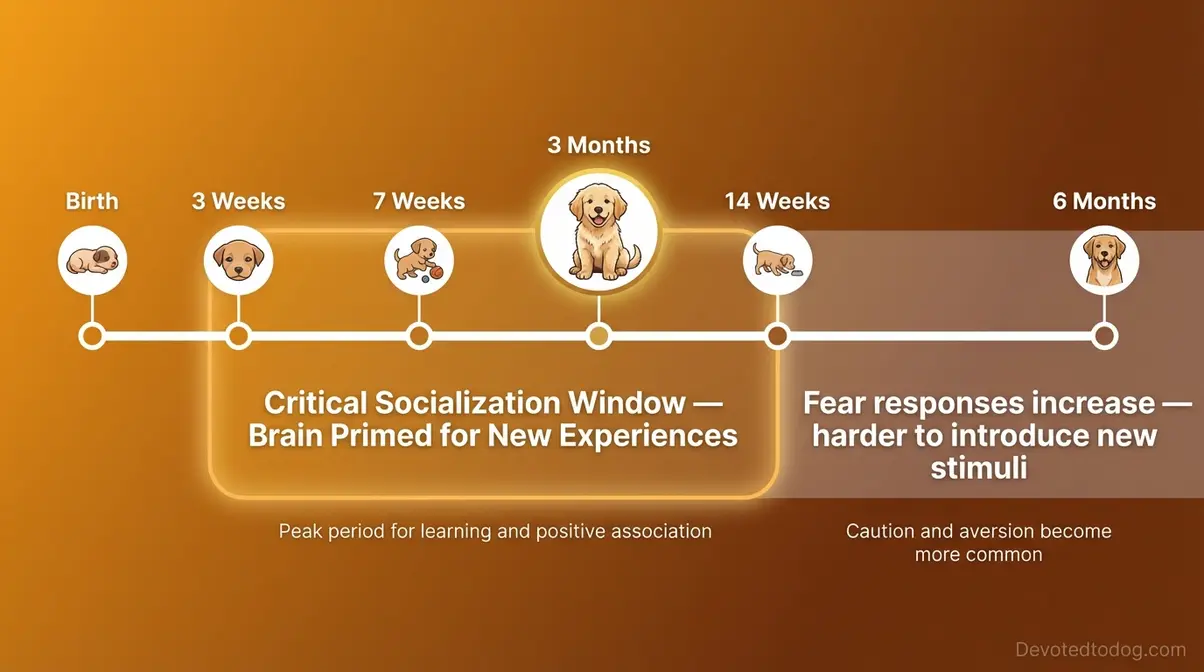
The socialization window for Golden Retriever puppies runs from roughly 3 weeks to 16 weeks of age. Experiences during this period shape your dog’s emotional responses for life. According to the AVSAB Position Statement on puppy socialization, fear and aggression from missed socialization are a bigger risk than controlled disease exposure during this window (American Veterinary Society of Animal Behavior, 2014).
That’s a counterintuitive claim worth sitting with: the greater threat to your puppy’s long-term wellbeing isn’t the pathogens at the dog park. It’s a life spent anxious, reactive, and unprepared for the world.
The Critical Socialization Window (8–16 Weeks)
The socialization window technically opens at 3 weeks, when breeders begin handling puppies and introducing them to mild stimuli. By the time your puppy arrives home at 8 weeks, roughly half that window has already passed. This isn’t cause for panic, it’s cause for urgency.
During this growth stage, new stimuli are processed by the puppy’s brain as “normal” rather than “threatening.” UC Davis Veterinary Medicine explains why: step-by-step exposure in this window builds the brain pathways behind calm, confident adult behavior. After the window closes, the same unfamiliar stimuli trigger a more cautious, fear-based response, one that becomes steadily harder to override.
Think of it this way: if your puppy came home at 8 weeks, you have about 6–8 weeks of peak socialization time remaining, roughly the length of a school term. The AKC recommends beginning socialization “as soon as you bring your puppy home,” specifically because waiting even a few weeks compounds the missed-opportunity cost.
One detail worth confirming with your breeder: responsible breeders begin early neurological stimulation and handling in weeks 3–8, before the puppy leaves the litter. Ask whether your breeder socialized the litter. It matters more than most owners realize, and it’s a genuine differentiator in how much runway you start with.
What Happens If You Miss the Socialization Window?
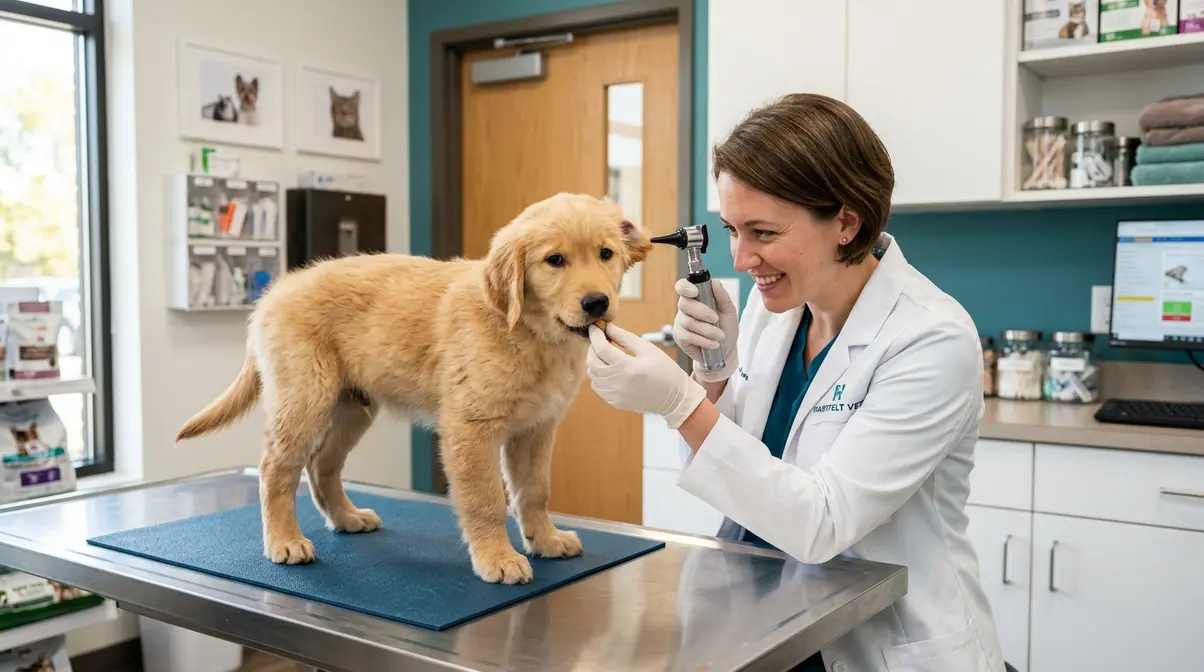
Under-socialized dogs are far more likely to develop fear-based behaviors: excessive barking, reactivity toward strangers, and aggression toward unfamiliar dogs. These are the behaviors that lead to rehoming or, in severe cases, euthanasia. The AVSAB reports that behavior problems are the leading cause of death in dogs under three years old (American Veterinary Medical Association, 2008). They kill more young dogs than infectious disease does. That finding is cited across veterinary behavior literature.
Golden Retrievers are bred for sociability. Their temperament expects positive early exposure. A Golden that misses the window doesn’t necessarily become vicious (the “vicious Golden Retriever” is rare), but it can become anxious, reactive, and difficult to manage in public spaces. Consider a realistic scenario: a Golden never exposed to children as a puppy may become nervous and reactive around them as an adult. Not aggressive by nature, but unprepared by experience.
The evidence suggests that temperament is a starting point, not a guarantee. A naturally friendly breed still needs the experiences that teach it what “friendly” looks like across a wide range of contexts.
Now that you understand what’s at stake, let’s cover the two things you need to know before you start: vaccination safety and how to read your puppy’s stress signals.
Before You Begin: Prerequisites for Safe Socialization
Safe golden retriever puppy socialization doesn’t require waiting for the full vaccine series, it requires managing risk intelligently. The OSU College of Veterinary Medicine recommends that puppy socialization begin before the full vaccine series is complete, using controlled, low-risk settings to balance behavioral development with disease prevention. That guidance gives owners a practical framework: not zero exposure, but smart exposure.
Before diving into the week-by-week plan, spend an hour on puppy-proofing your home and choosing the right food for your Golden Retriever puppy. Both lay the groundwork for a safe, stable environment that supports socialization.
Vaccination Timing and Safe Pre-Vaccine Socialization
Standard puppy vaccine schedules typically follow this pattern: first DHPP vaccine at 6–8 weeks (often administered by the breeder), a booster at 10–12 weeks, and a final booster at 14–16 weeks. Full protection isn’t achieved until 1–2 weeks after the final booster. Always confirm your specific puppy’s schedule with your vet, do not rely on general timelines for medical decisions.
The AVSAB recommends that puppy socialization classes begin as early as 7–8 weeks of age, at least 7 days after the first set of vaccines, well before the full series is complete (AVSAB Position Statement, 2014). The key is choosing settings with known, controlled disease risk.
Safe activities before full vaccination:
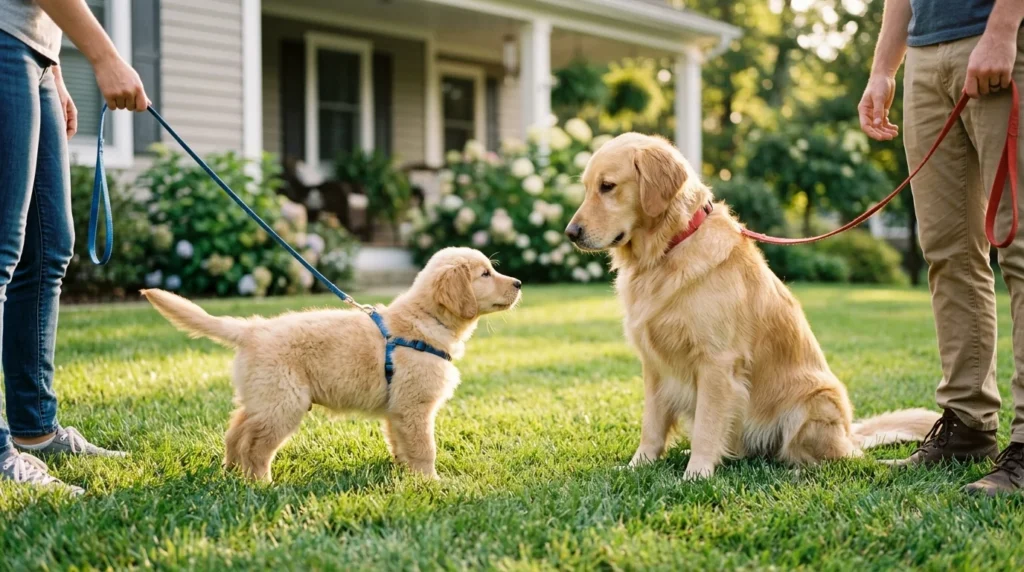
- Invite vaccinated, friendly adult dogs to your yard for calm, supervised introductions
- Enroll in a puppy class that requires proof of vaccination from all attendees. Many vets approve these after the first booster
- Carry your puppy in a sling or bag to expose them to street sounds, people, and settings without ground contact
- Visit friends’ clean, dog-safe homes
- Drive to new locations and observe from the car or your arms
What to avoid: public dog parks, pet store floors, areas with high unknown-dog traffic, and standing water. These carry the highest risk of disease exposure from unvaccinated animals.
How to Read Your Puppy’s Body Language
The Confidence Ladder only works if your puppy is emotionally ready for each rung. Body language is how you know. The chart below summarizes the key signals to watch for during every socialization session.
| Relaxed Signals (Green Light) | Stress Signals (Red Light) |
|---|---|
| Loose, wiggly body posture | Tail tucked under body |
| Soft, blinking eyes | Ears pinned flat against head |
| Tail wagging at mid-height | Yawning or lip-licking outside of hunger |
| Sniffing with curiosity | Whale eye (whites of eyes visible) |
| Voluntarily approaching new things | Freezing in place |
| Relaxed, open mouth | Hiding behind owner’s legs |
| Normal panting in warm conditions | Excessive panting in a cool environment |
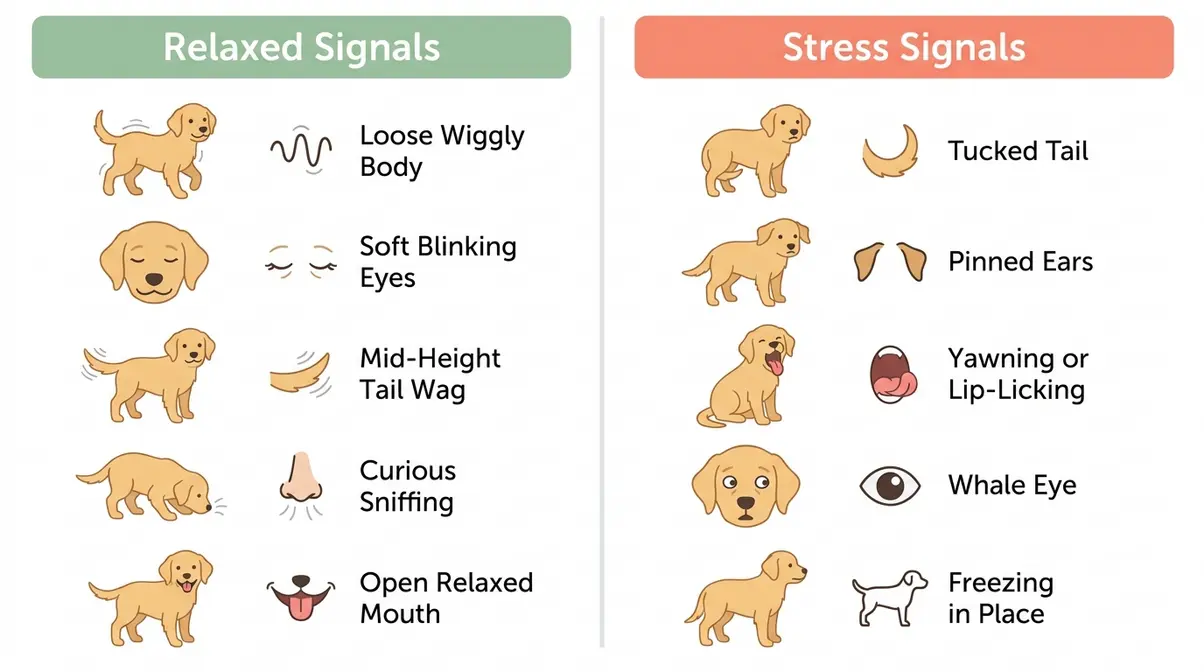
A practical tool for every session: the three-second rule. If your puppy hasn’t voluntarily approached a new stimulus within three seconds of being introduced to it at a safe distance, don’t force the interaction. Back up, increase the distance, and try again another day.
If your puppy freezes on the pavement during your first outdoor walk, that’s a stress signal. Not stubbornness. Carry them back to a comfortable distance, let them observe from safety, and try again tomorrow.
With vaccination safety and body language basics covered, you’re ready to follow The Confidence Ladder. A week-by-week plan that takes your puppy from home to the wider world.
The Week-by-Week Golden Retriever Puppy Socialization Plan (Weeks 8–16)
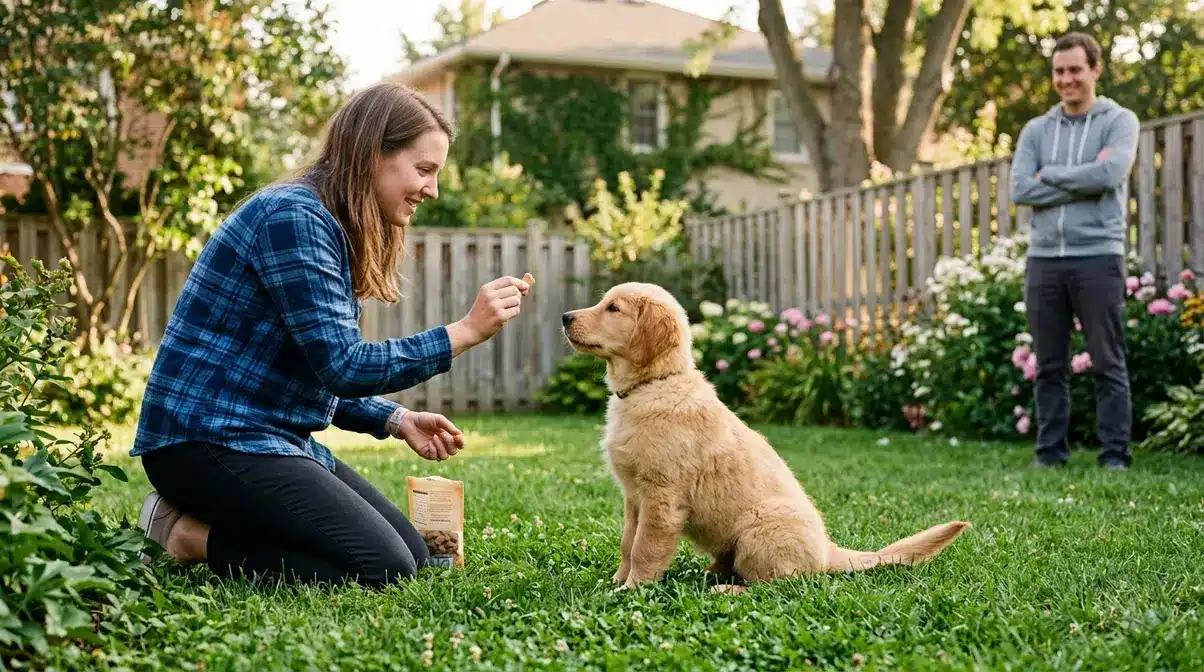
The week-by-week plan below follows The Confidence Ladder framework: start with the safest, most familiar settings and expand gradually as your puppy’s vaccination status and confidence grow. Each block includes 5–7 specific experiences, concrete enough to check off, flexible enough to adapt to your puppy’s pace.
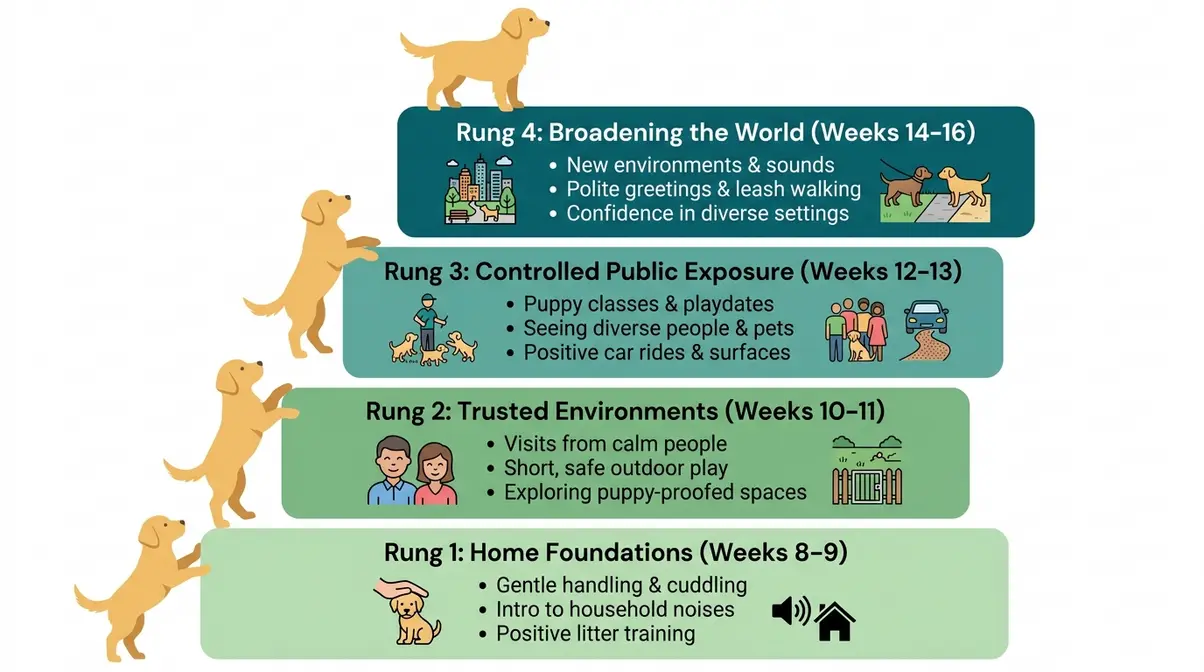
Weeks 8–9: Building Confidence at Home (Rung 1)
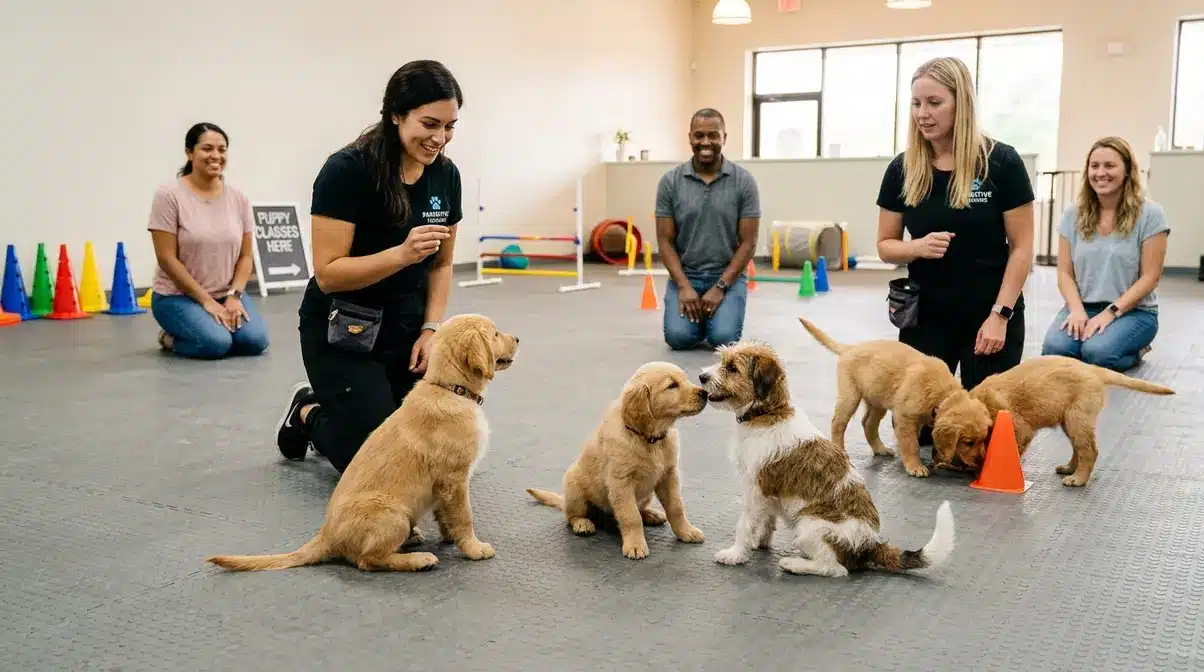
This is the most sensitive period in your puppy’s development: they’re in their first fear-imprint window (more on this in the Fear Periods section). Keep experiences positive, brief, and low-intensity. This isn’t the time for big adventures; it’s the time for solid foundations.
Most puppies arrive home at 8 weeks. This is what the industry calls “breeder release.” Ask your breeder whether the litter received early neurological stimulation and handling in weeks 3–8. A well-socialized litter gives you a head start; an under-handled one means you’ll need to move more slowly through Rung 1.
- Household sounds: Introduce the vacuum cleaner at a distance, then gradually closer over several days. Add the doorbell, washing machine, TV, and children’s voices, always starting at low volume or low intensity.
- Surfaces: Let your puppy voluntarily explore carpet, hardwood, tile, grass, and pavement. Don’t force movement. Let curiosity lead.
- Handling: Gently touch paws, ears, mouth, and tail daily. This directly prepares your puppy for grooming appointments and veterinary exams, start now, while it’s easy.
- Family members: Every household member, including children, should interact calmly and positively. Consistency across people is as important as frequency.
- Crate introduction: Begin positive crate association with treats and meals, never use the crate as punishment. See choosing the right crate for your puppy for sizing guidance.
- Bite inhibition: Bite inhibition is the process of learning how much pressure is too much when mouthing. When your puppy mouths too hard, say “ouch” in a neutral tone and redirect to a chew toy. This is how they learn social cues from humans, it’s a communication skill, not just a behavior problem.
- Car introduction: Start with short, positive experiences, even just sitting in a parked car with treats. The goal is a neutral-to-positive association before the first real drive.
What to watch for: Any freezing, tucked tail, or hiding means back off and try again at lower intensity. Don’t push through stress signals during this window.
By the end of week 9, your puppy should be comfortable with the sights and sounds of home. Weeks 10–11 are when you begin expanding their circle, carefully.
Weeks 10–11: Expanding to Trusted Environments (Rung 2)
Your puppy has likely had their second booster by now. Confirm with your vet before any outings involving other dogs. Pre-vaccine safety protocols still apply for unknown dogs and public spaces. The goal this fortnight is expanding the circle, not the crowd.
- Vaccinated, friendly dogs: Invite a known, vaccinated adult dog to your yard for a calm, supervised introduction. This is not a dog park visit, control the environment completely.
- New people: Invite friends and family who don’t live with you. Ask them to crouch down and let the puppy approach first, rather than reaching over the puppy’s head.
- Car rides: Progress to short drives to new locations, park nearby, let your puppy observe from your arms or the car window, then return home. For puppies already showing car anxiety, see managing car anxiety in Golden Retrievers before this gets entrenched.
- Puppy class enrollment: Many puppy classes accept puppies after their first booster. Enroll now for a Weeks 12–13 start, good classes fill quickly.
- New sounds outside: Sit on the porch or driveway and let your puppy observe traffic, birds, and neighborhood sounds from a safe distance. No pressure to approach.
- Handling by visitors: Ask guests to gently handle paws and ears. This generalizes the handling tolerance built at home so it doesn’t become person-specific.
- Doggy daycare research: If you plan to use doggy daycare, research facilities now. Most require full vaccination before entry, so research and waitlists take time. Structured playtime with vaccinated dogs through a reputable facility is one of the best tools for building social cues.
What to watch for: Car anxiety is common at this stage, keep rides short, positive, and treat-heavy. Never force a stressed puppy into a vehicle.
Weeks 12–13 mark a turning point: with vet clearance, your puppy is ready for their first real-world experiences outside the home.
Weeks 12–13: First Controlled Public Exposures (Rung 3)
By week 12, most puppies have completed their second booster and are approaching full vaccination. Confirm with your vet before any outings on shared public ground. This is when The Confidence Ladder reaches its middle rungs. The experiences here directly shape how your dog navigates the world as an adult.
- Puppy class: A structured class with vaccinated puppies is the gold standard for this stage. Supervised play teaches social cues, bite inhibition, and confidence simultaneously, in ways that home exposure simply cannot replicate.
- Pet-friendly stores: Carry your puppy into a pet supply store. Expose them to shopping carts, tile floors, strangers, and other animals in a controlled setting where you can leave right away if needed.
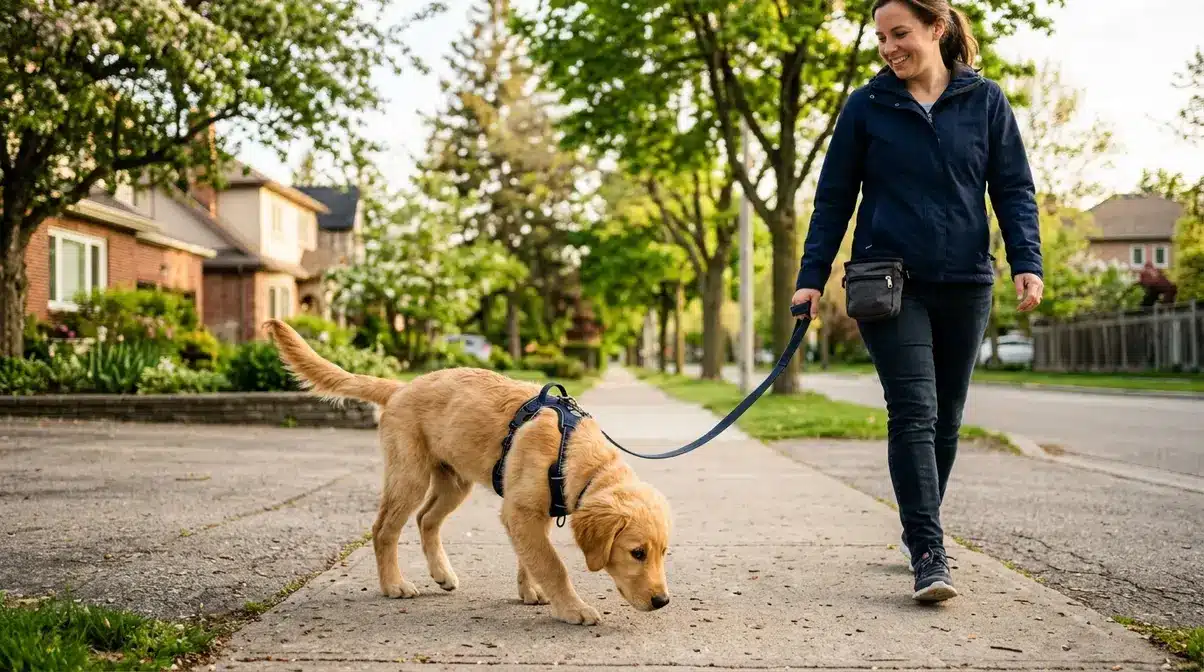
- Harness and leash introduction: Begin leash walking in low-traffic areas. Use choosing the right harness for your Golden Retriever puppy as a guide. The fit matters more than most owners realize. Introduce the harness positively with treats before attaching a leash.
- Children: If you don’t have children at home, arrange supervised visits with calm, dog-savvy children. Teach children to approach from the side, crouch down, and avoid direct eye contact initially.
- Different surfaces outdoors: Gravel, mulch, metal grates, wet grass, let your puppy investigate each voluntarily. Never drag or carry them onto a surface they’re refusing.
- Grooming introduction: First brush, touching one nail (not trimming yet), and ear check. Keep sessions under two minutes and end on a positive note with high-value treats.
- Sit for greetings: Begin teaching “sit” before greetings to prevent jumping. This habit is dramatically easier to build now than to correct at 9 months. Use basic fetch training to channel puppy energy as a complementary outlet.
What to watch for: Overwhelm signs in busy settings. If your puppy shuts down (stops moving, stops taking treats, won’t make eye contact), leave right away and try a quieter version next time.
The final stretch, weeks 14–16, is where your puppy’s world expands to include the full range of experiences they’ll encounter as an adult dog.
Weeks 14–16: Broadening the World (Rung 4)
With full vaccination confirmed by your vet, the world is open. The goal in weeks 14–16 is breadth, as many positive new experiences as possible before the socialization window closes. Think variety over repetition.
- Public parks and streets: Walk on different surfaces, in different neighborhoods, at different times of day. Novel settings are the point.
- Crowds and events: Outdoor markets, busy streets, sports events observed from a comfortable distance, expose your puppy to crowd noise and movement without requiring direct interaction.
- Large animals: If accessible, a calm introduction to horses or livestock from a safe distance is well worth it. Golden Retrievers in rural and suburban settings regularly encounter large animals, and a puppy that has seen a horse calmly at 14 weeks is far better prepared than one encountering it for the first time at 2 years.
- Children in groups: Playgrounds and school pickup areas observed from a distance help generalize the child-interaction skills built in weeks 12–13 to groups, not just individuals.
- Other dog breeds: Introduce your puppy to dogs of different sizes, shapes, and energy levels. Not just other Golden Retrievers. A puppy that has only met large, gentle dogs may be startled by a small, fast-moving terrier.
- Happy vet visits: Schedule a visit that involves only treats and praise, no procedures. This builds a positive vet association before your puppy connects the clinic with needles and nail trims.
- Alone time introduction: Begin brief, positive separations of 5–10 minutes. This is the foundation of independence and directly helps prevent separation anxiety. How your Golden interacts with children and strangers matters, but so does their ability to be calm when alone.
What to watch for: Moments of regression are normal at this stage. A puppy that was confident at week 12 may seem suddenly fearful at week 15. This is the second fear period beginning. It’s not a setback; it’s a developmental phase. More on this shortly.
Now that you have the week-by-week plan, use the checklist below to make sure you haven’t missed any critical exposure categories.
The Golden Retriever Puppy Socialization Checklist (50+ Experiences)
Use this checklist alongside the week-by-week plan above. The goal isn’t just exposure, it’s positive exposure. For each item, pair the new experience with high-value treats, calm praise, or play. A puppy that encounters a vacuum cleaner and gets a treat is building confidence; a puppy that encounters one and gets nothing is just surviving it.
UC Davis Veterinary Medicine identifies socialization as the process of exposing puppies to a wide variety of people, animals, settings, and stimuli in a positive, controlled way during the critical developmental window. The word “positive” carries as much weight as “variety.”
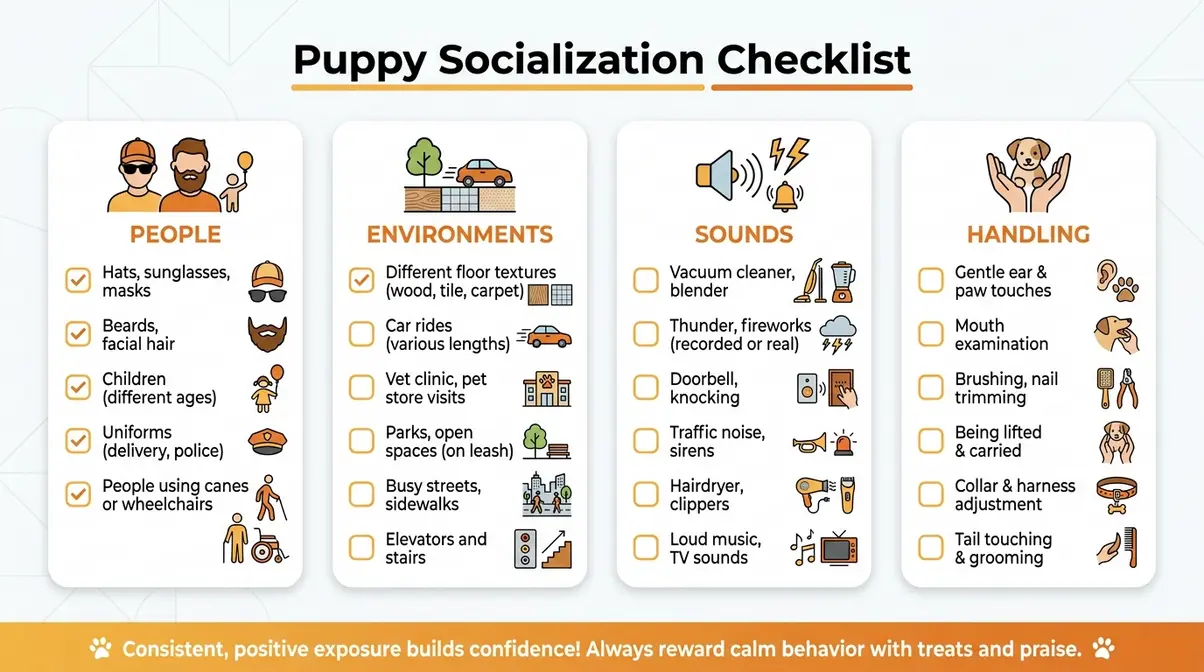
Sounds and Sights
Golden Retrievers are sensitive to sudden sounds. Early exposure prevents the startle-to-fear pattern that can become a lasting reactivity trigger.
- [ ] Vacuum cleaner (start at a distance, move closer over days)
- [ ] Doorbell (recorded and live)
- [ ] Washing machine and dryer
- [ ] Thunderstorm recording (start at low volume)
- [ ] Fireworks recording (start at low volume)
- [ ] Children crying or laughing
- [ ] Loud music and bass
- [ ] Television and radio at varying volumes
- [ ] Motorcycles and trucks (from a distance)
- [ ] Sirens
- [ ] Power tools, drill, lawnmower, leaf blower
- [ ] Umbrellas opening suddenly (a surprisingly common fear trigger)
- [ ] Hats, sunglasses, and hoods on people
- [ ] Bicycles and skateboards passing by
- [ ] Construction sounds
Surfaces and Textures
Puppies that only walk on carpet at home often freeze on tile, metal grates, or wet grass. Early surface variety prevents this from becoming an adult-dog problem.
- [ ] Carpet
- [ ] Hardwood or laminate
- [ ] Tile
- [ ] Grass (dry and wet)
- [ ] Pavement and concrete
- [ ] Gravel
- [ ] Mulch and wood chips
- [ ] Sand
- [ ] Metal grates (storm drains, elevator floors)
- [ ] Stairs, both directions, both with and without carpet
- [ ] Slippery surfaces (wet tile, polished floors)
- [ ] Uneven terrain (rocks, roots, slopes)
People and Handling
Golden Retrievers need to generalize their comfort with humans. A puppy that only meets young adults at home may develop fearful responses to children, elderly people, or men with beards. Variety across human types is the goal, not just volume of interactions. Good social cues are learned through diverse, positive human contact.
- [ ] Men with beards and hats
- [ ] Women of varying ages
- [ ] Children, toddlers, school-age, teenagers
- [ ] Elderly people
- [ ] People in uniforms (delivery drivers, mail carriers, police officers)
- [ ] People using mobility aids, wheelchairs, walkers, crutches
- [ ] People wearing backpacks or carrying large bags
- [ ] Gentle paw handling (daily)
- [ ] Ear examination
- [ ] Mouth and teeth inspection
- [ ] Nail touching (progress to trimming over weeks)
- [ ] Being lifted and held
- [ ] Brief, positive hugging
- [ ] Strangers offering treats (teaches that strangers = good things)
For more on building positive human interactions, see how Golden Retrievers interact with children.
Note: Teach “sit” for greetings from week 12 onward. This prevents jumping from becoming a habit that’s far harder to correct later.
Animals and Other Dogs
Introduce other animals gradually and always under supervision. Positive first impressions matter more than frequency of exposure.
- [ ] Vaccinated, friendly adult dogs (known to you)
- [ ] Puppies of similar age (puppy class)
- [ ] Dogs of different sizes, small breeds, large breeds
- [ ] Cats (controlled introduction, allow cat to set the pace)
- [ ] Horses or livestock (from a safe distance, valuable for rural and suburban dogs)
- [ ] Backyard birds
- [ ] Small animals, rabbits, guinea pigs (observe only, no chasing)
- [ ] Livestock sounds and smells (farm visits if accessible)
Note: Dog parks are not appropriate until full vaccination is confirmed and your puppy has reliable recall, typically not before 16 weeks, and often later.
Even with the best plan, there are two periods in your puppy’s development that can temporarily undo your progress. And most guides don’t warn you about them.
Understanding Fear Periods in Golden Retriever Puppies
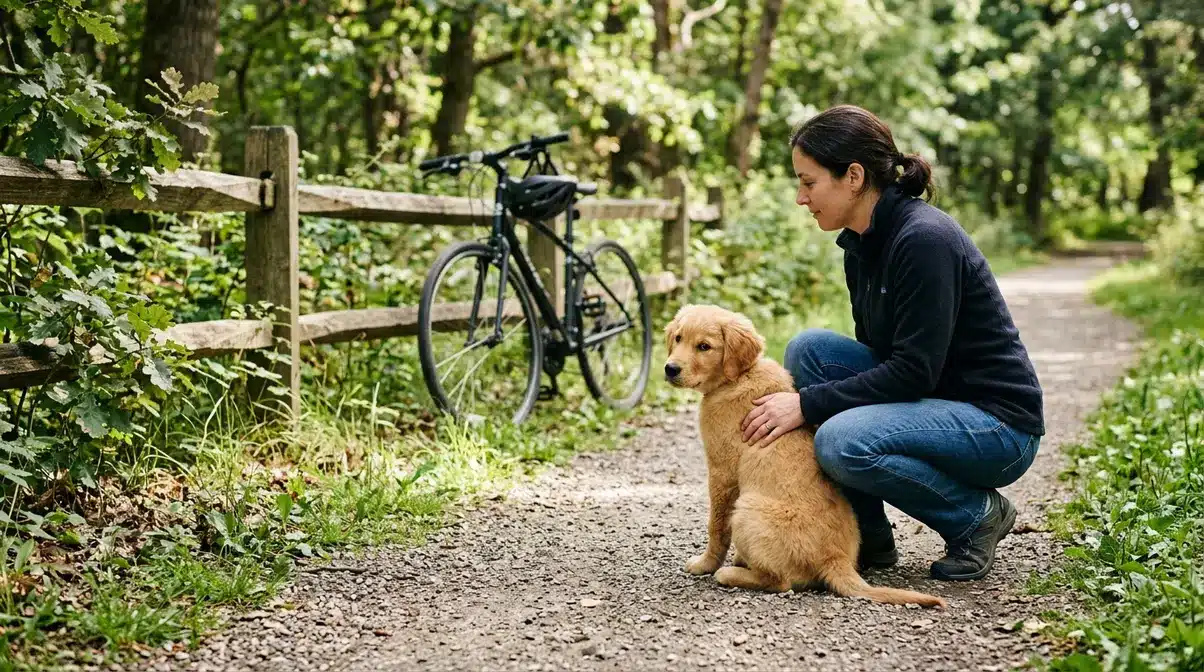
A fear period, also called a fear imprint period, is a developmental phase during which a puppy is neurologically primed to form strong negative associations from frightening experiences. Golden Retriever puppies typically go through two fear periods: one between 8–11 weeks and a second between 6–14 months. Both are normal. And both require a gentler approach to socialization, not a pause.
During a fear imprint period, a single frightening experience carries disproportionate weight compared to the same experience outside the window. This is why the week 8–9 plan above emphasizes low-intensity, familiar settings, you’re not being cautious for caution’s sake; you’re protecting against impressions that are much harder to overwrite later.
The First Fear Period (8–11 Weeks)
The first fear period overlaps almost exactly with your puppy’s first weeks at home, which is why the Rung 1 plan above is deliberately low-intensity. During this window, a single frightening event can create a lasting negative association that takes weeks of careful counter-conditioning to address.
Behavioral signs to recognize: sudden fearfulness of previously neutral things. Freezing in front of familiar objects. Hiding behind your legs. Refusing to approach people or items your puppy engaged with the day before. This is not regression and it is not a training failure, it’s a developmental phase.
Management during the first fear period means reducing the intensity and novelty of experiences, not eliminating socialization. Focus on reinforcing positive associations with already-familiar things. Avoid scheduling vet procedures, grooming, or high-stress events during this window if you can help it. Never force interaction.
If your 9-week-old puppy suddenly seems frightened of the vacuum cleaner they previously ignored, don’t push the exposure. Put the vacuum away, let the puppy calm down, and reintroduce it at a greater distance with treats in a few days. The Confidence Ladder still applies, you’ve just temporarily stepped back to a lower rung.
Stop today’s session if your puppy (1) stops taking treats, (2) freezes or tries to hide, or (3) won’t re-engage after a short break. These are the same red-light signals from the body-language table above. One skipped day is never the problem: socialization is cumulative, and a calm day at home beats a stressful outing every time.
The second fear period is less discussed but equally important. And it catches many owners off guard because their puppy seemed fully socialized.
The Second Fear Period (6–14 Months)
The second fear period typically occurs between 6–14 months, during adolescence. It can appear suddenly. A dog that was confident at 5 months may become reactive or fearful at 8 months. These are the moments of regression that experienced Golden Retriever owners describe, and they’re normal.
Behavioral signs include sudden reactivity toward other dogs or unfamiliar people, reluctance to enter previously familiar spaces, an increased startle response, and general boundary-testing that’s part of adolescence more broadly.
A Golden that happily greeted strangers at 4 months may suddenly bark at unfamiliar men at 9 months. This is the second fear period. Not a personality change. Consistent, positive exposure and continued training will resolve it. Don’t stop socialization; reduce intensity. Avoid flooding (forcing the dog to face fears at full intensity, more on this in the next section). Consider enrolling in a basic obedience class for structure and confidence-building. Reputable doggy daycare can also help maintain social skills during this phase, provided the facility uses positive reinforcement methods and maintains appropriate supervision ratios.
Structured training activities offer a practical outlet for the energy and focus that adolescent Goldens need.
Most Golden Retrievers move through both fear periods without lasting effects when owners respond with patience rather than force. Fear periods are unavoidable. The mistakes in the next section are not.
This article is general information, not veterinary advice. If your dog shows any of the signs above, or you have questions about your puppy’s vaccinations or health, talk to your veterinarian.
Common Golden Retriever Puppy Socialization Mistakes to Avoid
New owners make a handful of predictable errors. Not from carelessness but from well-meaning instincts that happen to backfire. Each mistake below comes with a specific alternative, because knowing what not to do is only useful when you also know what to do instead. The Golden Meadows Retrievers socialization guide identifies several of these patterns from a breeder’s perspective, especially around over-correction and forced exposure.
Flooding vs. Gradual Exposure: Why Forcing It Backfires
Flooding means exposing a puppy to a feared stimulus at full intensity and keeping them there until they stop reacting. It feels like it works because the puppy eventually goes quiet. But that quiet is often learned helplessness, not confidence. The dog hasn’t overcome the fear; they’ve simply stopped expressing it because expressing it produced no relief.
According to positive reinforcement training principles endorsed by the AVSAB, flooding can worsen fear responses, damage the human-animal bond, and create lasting negative associations, especially during fear periods when the puppy’s nervous system is most impressionable.
The alternative is systematic desensitization: start at a distance where the puppy notices the stimulus but doesn’t react. Pair the presence of the stimulus with high-value treats. Gradually decrease the distance over multiple sessions. This is The Confidence Ladder in action. Each rung is only climbed when the previous one is stable.
If your puppy is frightened of the vacuum, don’t turn it on in the same room and wait for them to calm down. Instead, leave it unplugged in the corner for a day, then run it in another room, then gradually move it closer over a week. Same destination. Completely different journey.
Flooding is an active mistake. But waiting too long to start is a passive one that’s just as damaging.
Waiting Until Fully Vaccinated to Begin Socialization
Many new owners are told “wait until all shots are done” and interpret this as “no socialization until 16 weeks.” By then, the socialization window is closed or closing. And a puppy that has spent those weeks at home has missed experiences that cannot be fully recovered.
The AVSAB Position Statement is direct on this point: the risk of behavioral problems from under-socialization outweighs the risk of disease from controlled, managed early exposure (AVSAB, 2014). The correct approach is managed risk, not zero risk. Use the pre-vaccine protocols from the Prerequisites section, private yards, carry-in-arms outings, puppy classes after the first booster.
A puppy that stays home until 16 weeks may be physically healthy but behaviorally unprepared for the world. And that gap is much harder to close than it is to prevent.
Skipping Bite Inhibition and Social Cues Training
Bite inhibition is the skill of learning how much mouth pressure is too much. It is a social skill, not just a behavior problem to suppress. Puppies learn it first from their littermates: a playmate that yelps and stops playing teaches the biting puppy exactly where the line is. After breeder release, that feedback comes from humans.
The mistake is treating mouthing as purely a discipline issue. Puppies that are punished for mouthing without being taught the alternative often become hand-shy, or they escalate because the feedback they’re receiving is confusing rather than instructive. If one family member allows rough mouthing and another punishes it, the puppy receives contradictory social cues. And confusion makes the behavior worse, not better.
The correct approach: when your puppy mouths too hard, say “ouch” in a neutral tone, withdraw attention for 10–15 seconds, then redirect to a chew toy. Consistency across every family member is essential. For broader home preparation, preparing your home for a Golden Retriever puppy covers the environmental setup that makes these training moments easier to manage.
With the plan, the checklist, and the common mistakes covered, let’s address the questions new Golden Retriever owners ask most often.
Frequently Asked Questions About Golden Retriever Puppy Socialization
Start golden retriever puppy socialization as early as possible, ideally the day your puppy comes home at 8 weeks. The critical socialization window runs from about 3 to 16 weeks of age. Breeders handle the earliest weeks. Your job begins at 8 weeks. Every positive experience during this window shapes your dog’s emotional responses for life. Don’t wait for full vaccination to begin.
Before full vaccination, focus on controlled, low-risk settings: invite vaccinated, friendly dogs to your yard. Carry your puppy in arms to expose them to street sounds and people without ground contact. Enroll in a puppy class that requires proof of vaccination from all attendees. Avoid public dog parks, pet store floors, and areas with unknown dog traffic until your vet confirms full protection.
What are the most important things to expose my puppy to?
Prioritize four categories: sounds (vacuum, doorbell, traffic, children), surfaces (grass, tile, gravel, metal grates), people (men with hats, children, elderly people, people in uniforms), and handling (paws, ears, mouth, being lifted). These directly prepare your puppy for grooming, vet visits, and daily life. Pair every new experience with high-value treats to build positive associations, not just tolerance.
The most common mistakes are: flooding (forcing a puppy to face a feared stimulus at full intensity), waiting until full vaccination to begin (the window closes before 16 weeks), and skipping bite inhibition training. Also avoid overwhelming your puppy with too many new experiences in one session, balance outings with quiet recovery time at home. Quality of exposure matters more than quantity.
What not to do with a Golden Retriever?
Avoid leaving a Golden Retriever alone for extended periods. They are highly social dogs that can develop separation anxiety without gradual independence training. Don’t skip early socialization; don’t use punishment-based training methods, which can damage trust in a sensitive breed; and don’t allow unsupervised access to hazards, as Goldens are enthusiastic chewers. Consistent positive reinforcement and structured routines are the foundation of a well-adjusted Golden.
At what age do Golden Retrievers calm down?
Most Golden Retrievers begin to settle noticeably between 2 and 3 years of age, though individual variation is significant. The adolescent phase (6–18 months) is typically the most energetic and challenging, coinciding with the second fear period. Well-socialized, well-exercised Goldens tend to mature more smoothly. Daily mental stimulation, training sessions, fetch, puzzle feeders, helps manage energy during the high-energy puppy and adolescent phases.
What are the hardest months with a Golden Retriever?
The hardest months are typically 8–16 weeks (the biting, chewing, and sleep-disruption phase) and 6–12 months (adolescence, selective hearing, increased energy, and the second fear period). Many owners describe the 4–6 month window as especially demanding. Consistent routines, adequate exercise, and positive reinforcement training make these phases manageable. The effort invested now pays off in a calmer, more confident adult dog.
Should a puppy sleep in a crate?
A crate is widely recommended for puppy sleep. It provides a safe, den-like space that supports house training and prevents nighttime accidents or destructive behavior. Introduce the crate positively with treats and meals before expecting your puppy to sleep in it. Most puppies adjust within 1–2 weeks. For sizing and setup guidance, see choosing the right crate for your Golden Retriever puppy.
Where should a puppy sleep on their first night?
On the first night, place the crate in your bedroom, close enough that your puppy can hear and smell you. This reduces separation anxiety during the transition from the litter. A worn T-shirt with your scent placed inside the crate can help significantly. Expect some whimpering. Respond calmly without reinforcing distress. Most puppies adjust to their sleeping space within a few nights.
Can I leave my 12-week-old puppy for 3 hours?
A 12-week-old puppy can typically manage 2–3 hours alone, but this approaches the upper limit of their bladder capacity and emotional tolerance. A commonly used guideline is one hour per month of age, plus one, at 3 months, that’s about 4 hours maximum. Younger puppies do better with shorter separations. Always provide a safe, confined space and a recent bathroom break before leaving.
What is the silent killer in Golden Retrievers?
Cancer is often called the silent killer in Golden Retrievers. The breed has a disproportionately high cancer rate compared to most other breeds. The Morris Animal Foundation’s Golden Retriever Lifetime Study, which enrolled 3,000 Golden Retrievers to investigate health and longevity, is generating ongoing data on cancer prevalence, genetics, and risk factors in the breed. For current findings, the Golden Retriever Club of America maintains updated health and research resources. Early detection through regular veterinary checkups remains the best defense.
Start Socializing Your Golden Retriever Puppy This Week
For Golden Retriever owners, the 8–16 week socialization window is the single most important growth stage your puppy will move through. A foundational finding from the AVSAB identifies behavioral problems, not infectious diseases, as the leading cause of death in dogs under three years of age, making socialization a health issue, not merely a training preference. The most effective approach follows The Confidence Ladder: household experiences first, controlled settings second, public spaces third, with fear periods and vaccination timing guiding the pace at every rung.
The puppy phase is hard. The community voice at the top of this article captures it honestly, and “driving us crazy” is a fair description of weeks 8–12. But the chaos of those weeks is also the window of greatest opportunity. Every positive experience you create now is an investment in the calm, confident adult dog you’re raising. The Confidence Ladder doesn’t promise a perfect puppy. It promises a structured path through an imperfect process.
Print the 50+ item checklist above and check off one new experience this week. If your puppy is between 8–12 weeks, start with the household sounds and surfaces list. If they’re 12–16 weeks, move to the public exposure section. One new positive experience per day is enough, consistency beats intensity every time. For broader context on the breed you’ve chosen, comparing Golden Retrievers with other retriever breeds and keeping your Golden Retriever at a healthy weight as they grow are worth bookmarking as next steps. And when travel comes up, airline-approved crates for traveling with your puppy will make those outings smoother.