
“How do you know if your dog is a little bit chonky or just ‘big boned’?”That’s the question Golden Retriever owners ask more than any other. And honestly? It’s one of the hardest to answer, because your dog’s glorious, fluffy coat is working against you. We call this The Floof Bias, the tendency to mistake your Golden’s thick double coat for extra padding, or worse, to miss real weight gain hiding underneath it entirely. Research suggests that roughly 62.7% of Golden Retrievers are overweight or obese (Association for Pet Obesity Prevention). That’s not bad luck. It’s partly biology, partly breed behavior, and partly the fact that a fat golden retriever can look absolutely magnificent right up until the vet delivers the news. By the end of this guide, you’ll know exactly how to assess your Golden’s body condition at home and have a clear, safe plan to help them reach a healthier weight. You’ll work through the 3-step Body Condition Score check, a four-part action plan, and a clear guide on when to loop in your vet.
⚕️ Disclaimer: This article is for informational purposes only. Always consult your veterinarian before making changes to your dog’s diet or exercise routine. Weight changes can have underlying medical causes that require professional diagnosis.
Key Takeaways
An overweight Golden Retriever is harder to spot than you think, their famously fluffy coats hide weight gain from view. About 62.7% of Golden Retrievers are overweight or obese (Association for Pet Obesity Prevention). The Floof Bias is real: always use the 3-step physical BCS check, never rely on visual assessment alone.
- Healthy weight: 55–65 lbs for females; 65–75 lbs for males (AKC breed standard)
- Safe loss rate: 1–2% of body weight per week, faster is dangerous
- The 90/10 Rule: Treats must stay under 10% of daily calories
- When to call your vet: No weight loss after 4–6 weeks of consistent changes, thyroid disease may be the cause
Is Your Golden Retriever Overweight?

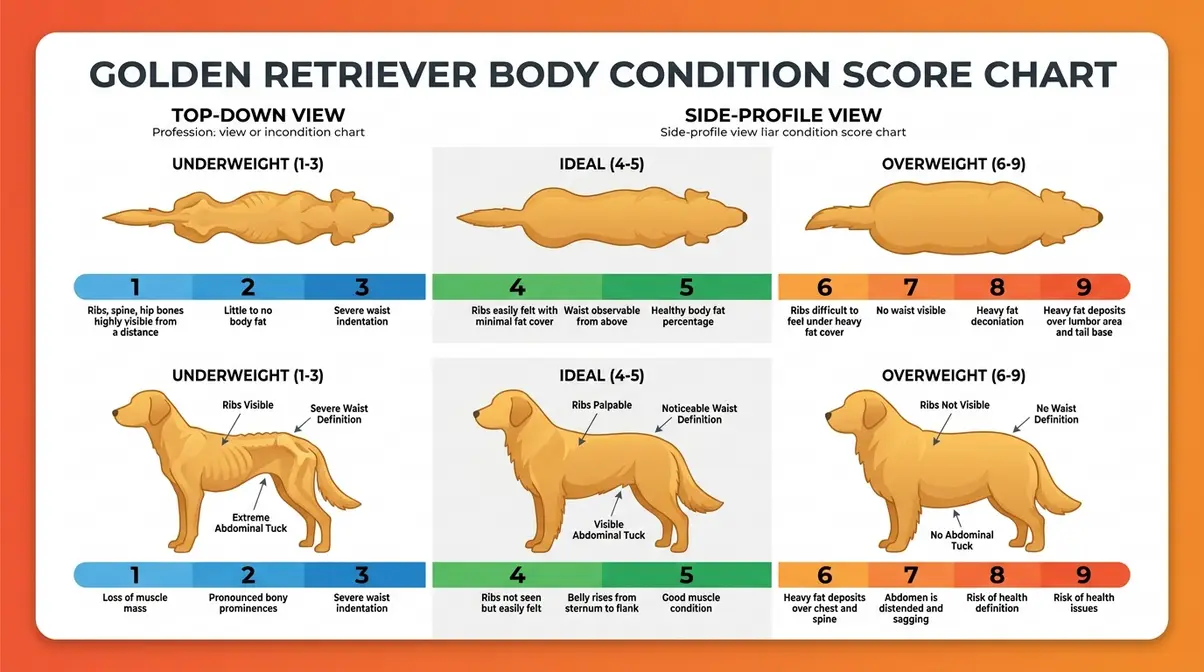
The 3-Step At-Home Body Condition Check
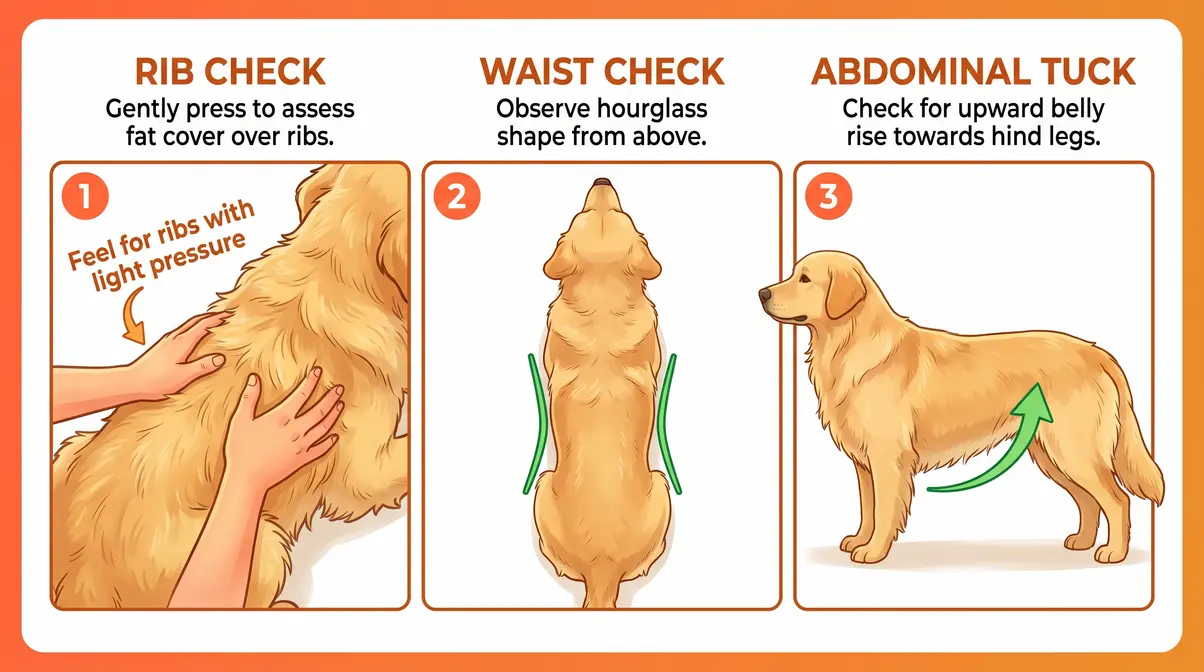
These three steps take about two minutes. Do them on a flat surface with your dog standing still. Each step targets a different area of the body, and together they give you a reliable picture that no amount of floof can hide. Step 1, The Rib Check Place both thumbs on your dog’s spine and spread your fingers across the ribcage. Press gently, about the same pressure you’d use on the back of your hand. You should be able to feel individual ribs without pressing hard.- Can feel ribs easily with light pressure: Healthy weight range
- Have to press firmly before feeling anything: Likely overweight
- Ribs immediately prominent with no pressure at all: May be underweight
- Visible waist from above: Healthy
- No visible narrowing, or a straight “sausage” shape from above: Likely overweight
- Clear upward tuck visible: Healthy
- Belly flat or drooping: Likely overweight
Healthy Weight Ranges for Golden Retrievers

| Sex | Breed Line | Healthy Weight Range | Notes |
|---|---|---|---|
| Female | American Golden | 55–65 lbs | AKC breed standard |
| Male | American Golden | 65–75 lbs | AKC breed standard |
| Female | English Cream Golden | 55–70 lbs | Stockier build; slightly heavier frame acceptable |
| Male | English Cream Golden | 65–80 lbs | Heavier bone density; still not immune to obesity |
Why Do Golden Retrievers Gain Weight So Easily?
About 62.7% of Golden Retrievers are overweight or obese (Association for Pet Obesity Prevention). That’s not a coincidence, it’s a perfect storm of breed biology, human behavior, and a whole lot of floof. Several factors stack against this breed specifically, and understanding them helps you stop blaming yourself and start solving the actual problem. Golden Retrievers are highly food-motivated, which makes training easy but portion control hard. They rarely self-regulate. Additionally, a PubMed study on Golden Retriever obesity found that gonadectomy (spaying or neutering) at any age is a significant risk factor for developing overweight or obesity in Goldens (National Library of Medicine, 2019). As they age, many Goldens also become less active, the “lazy golden” phase, while their owners continue feeding the same portion sizes they ate as energetic young dogs. The Floof Bias doesn’t just affect how we see our dogs, it affects how quickly we act. Owners who miss early weight gain often don’t intervene until the problem is significant. For more on the common health issues related to Golden Retriever weight, including joint problems linked to obesity, see our full health overview.The Health Risks of a Fat Golden Retriever
How Do You Build a Safe Weight-Loss Plan for Your Golden?
Helping a fat Golden Retriever lose weight safely comes down to four changes: fewer calories, structured meals, smarter treats, and more movement. None of them require expensive food or a gym membership, just consistency. This plan targets the fastest safe rate of weight loss for dogs. A PubMed diet restriction study confirmed that a 25% restriction in food intake extended the median lifespan of dogs and delayed onset of chronic diseases (National Library of Medicine). The goal here is steady, sustainable progress, not a crash diet.Step 1, Calculate Your Dog’s Daily Calorie Needs
The foundation of any weight-loss plan is knowing your target number. Vets use a formula called the Resting Energy Requirement (RER), the calories your dog needs just to exist at rest. For weight loss, the feeding target is set below this number. The formula: RER = 70 × (body weight in kg)^0.75 That sounds complicated, but here’s a worked example:- A 75-lb male Golden = approximately 34 kg
- RER = 70 × (34)^0.75 ≈ 70 × 12.9 ≈ ~900 calories/day at rest
- For weight loss: 80% of 900 = ~720 calories/day
| Activity Level | Calorie Multiplier |
|---|---|
| Inactive / mostly sedentary | × 1.2 of RER |
| Moderately active | × 1.4–1.6 of RER |
| Very active | × 1.8–2.0 of RER |
| Weight loss target | × 0.8 of RER |
Step 2, Switch to Measured Meal Feeding
Free-feeding, leaving food out all day, is the single most common cause of gradual weight gain in Goldens. When food is always available, neither you nor your dog tracks total intake. The fix is straightforward.- Switch to two meals per day, morning and evening, same times each day. Consistent timing also reduces begging behavior, because your dog learns when food is coming.
- Measure every portion using a kitchen measuring cup or, better yet, a food scale. Never eyeball it, a heaping cup versus a level cup can mean 20% more calories per meal.
- Divide your daily calorie target by two to get each meal’s portion.
- Remove the bowl after 20 minutes whether your dog finishes or not. This prevents grazing and helps establish a clear feeding routine.
Step 3, Apply the 90/10 Treat Rule
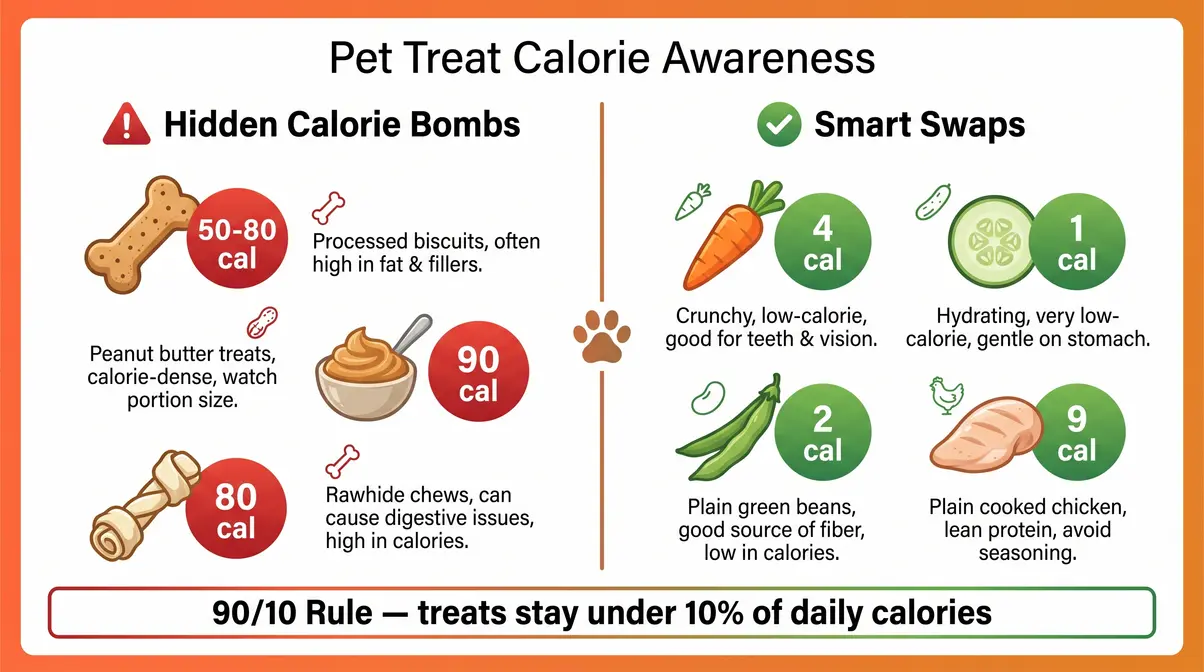
The 90/10 Rule, where treats account for no more than 10% of your dog’s daily calorie intake, is a simple guardrail that most owners have never heard of, let alone applied. Here’s what it looks like in practice: A Golden on a 720-calorie weight-loss diet has a maximum treat budget of 72 calories per day. A single standard commercial dog biscuit can contain 50–80 calories. Most owners are giving three to five of these per day, which can blow the entire calorie target before dinner. The Floof Bias makes it easy to over-treat. When your dog looks plush and round, a few extra biscuits feel harmless. They’re not. Low-calorie treat swaps that actually work:- Baby carrots: ~4 calories each, crunchy, satisfying, most Goldens love them
- Plain cucumber slices: ~1 calorie each, hydrating and gentle on digestion
- Plain green beans (fresh or canned, no salt): ~2 calories per bean, the basis of the Green Bean Diet
- Plain cooked chicken breast: ~9 calories per small piece, high reward value, low calorie cost
Step 4, Build a Safe Exercise Routine
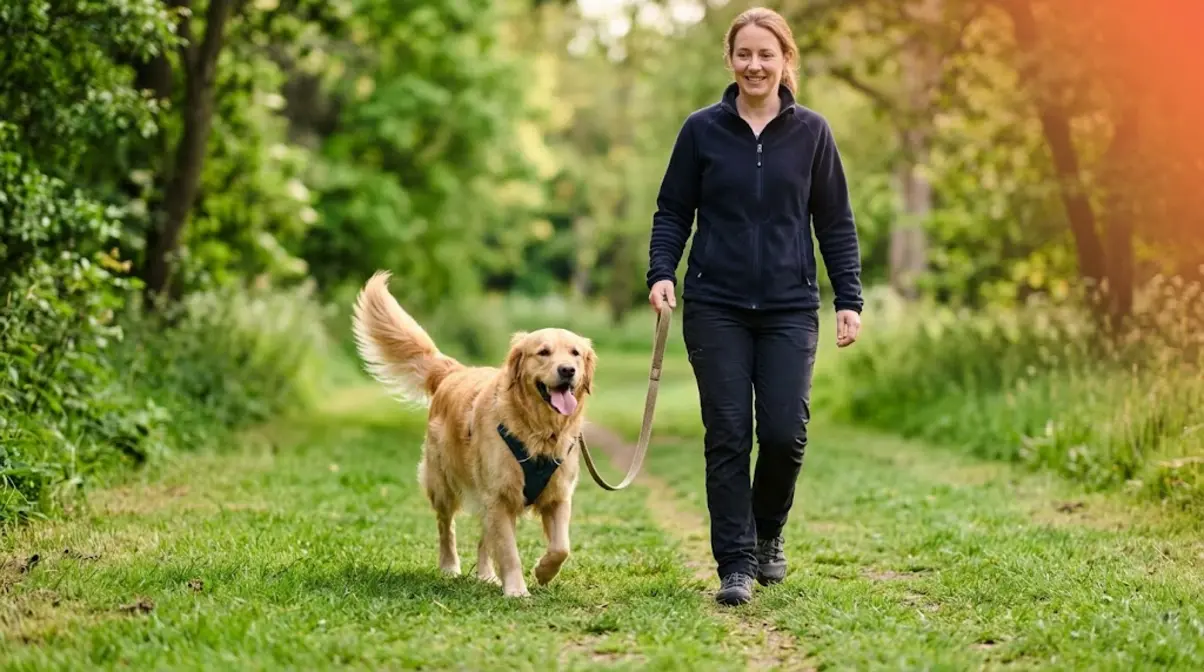
An overweight Golden already carries extra stress on their hips and elbows. Jumping straight into long runs or intense fetch sessions can cause injury, especially in a dog who may already be showing early signs of dysplasia. The goal is gradual, progressive, low-impact activity. The progressive plan:- Weeks 1–2: 20-minute leash walk × 2 per day on flat surfaces at a comfortable pace
- Weeks 3–4: 30 minutes × 2 per day; introduce gentle hills or slight incline
- Weeks 5–8: Build toward 45–60 minutes of total daily activity
- Month 3 onward: Target 60–90 minutes of daily low-impact activity
- Leash walking, most accessible, joint-friendly, easy to control pace
- Swimming, zero joint impact; ideal for dogs already showing signs of dysplasia
- Gentle fetch on grass, avoid concrete and hard surfaces
- Sniff walks, letting your dog lead and sniff provides mental enrichment alongside physical activity
What to Expect: The Realistic Timeline
Safe weight loss in dogs is 1–2% of body weight per week. For a 75-lb Golden Retriever, that’s roughly 0.75–1.5 lbs per week, or approximately 3–6 lbs per month. A Golden who needs to lose 15 lbs should reach their goal in approximately 3–5 months with consistent diet and exercise changes. Check weight every four weeks using the same scale and the same method. If your dog is losing more than 2% of body weight per week, increase food slightly, losing too fast is as problematic as not losing at all. If weight isn’t moving after four weeks, reduce daily calories by 5% and reassess. Goldens didn’t gain the weight overnight, and they won’t lose it overnight either. Slow and steady protects their joints and keeps the weight off long-term. If you’ve been following this plan for 4–6 weeks and your Golden isn’t losing weight, that’s a signal, not a failure. It’s time to call your vet.When Should You Call Your Vet About Your Golden’s Weight?
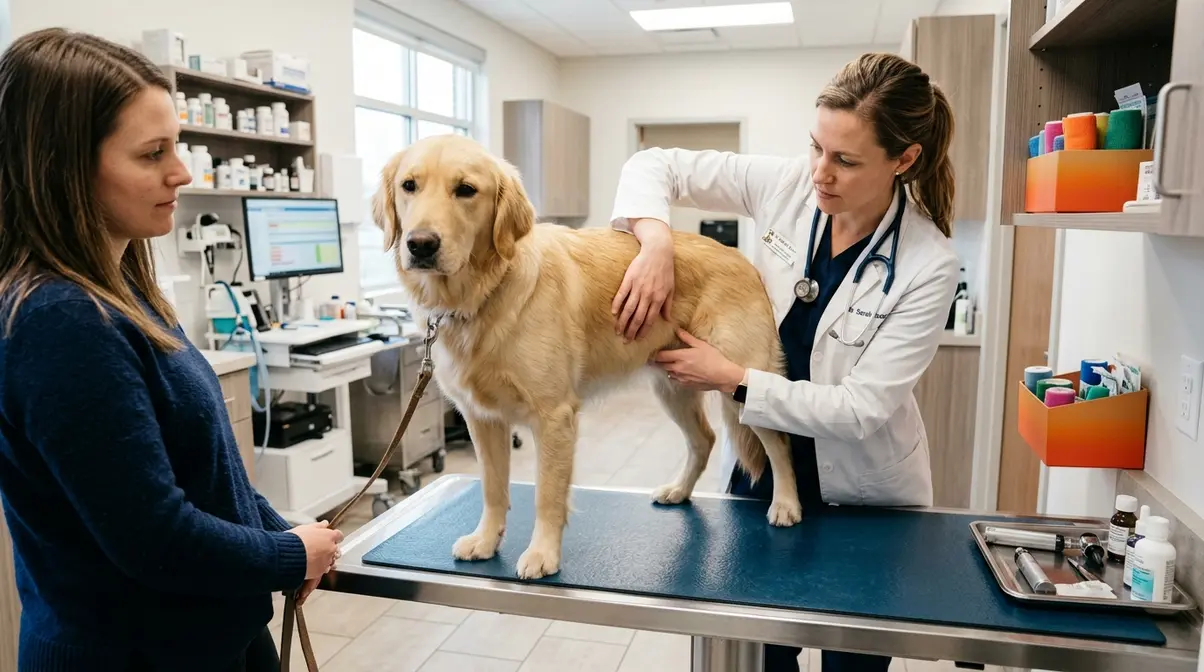
- No measurable weight loss after 4–6 weeks of consistent diet and exercise changes
- Unexplained lethargy or a noticeable drop in energy
- Changes in coat quality, dull, thinning, or increased shedding
- Increased thirst or urination (a potential signal of diabetes)
Frequently Asked Questions
What is an overweight Golden Retriever?
An overweight Golden Retriever is a dog whose body weight exceeds the AKC breed standard, 65–75 lbs for males and 55–65 lbs for females, and who shows a Body Condition Score (BCS) of 6 or higher on the 1–9 veterinary scale. You can identify this at home by performing the 3-step BCS check: feeling for ribs under light pressure, looking for a visible waist from above, and checking for an upward abdominal tuck from the side. A dog failing two or more of these checks is likely carrying excess weight, regardless of what the scale says. Consult your veterinarian for a definitive assessment, especially if your Golden has a particularly thick or dense coat.Can a Golden Retriever be 90 pounds?
A 90-pound Golden Retriever is well above the AKC breed standard of 65–75 lbs for males and 55–65 lbs for females, and in most cases indicates the dog is significantly overweight. While English Cream Goldens have a heavier bone structure and may weigh slightly more than American Goldens, 90 lbs still exceeds healthy ranges for all breed lines. Body condition always matters more than a number on the scale, use the rib and waist check to assess actual fat coverage. A fat Golden Retriever at 90 lbs who fails the BCS check should see a veterinarian to rule out medical causes and develop a safe weight-loss plan.What’s the best food for weight loss in dogs?
The best food for Golden Retriever weight loss is high in protein and fiber, lower in calories and fat, and portioned precisely to your dog’s daily calorie target, not just labeled “light.” Low-calorie whole foods like plain green beans, carrots, and cucumber can replace up to 10% of kibble volume to add bulk and reduce hunger without adding significant calories. Your veterinarian may recommend a prescription weight-management diet such as Hill’s Prescription Diet r/d or Royal Canin Satiety Support for dogs who don’t respond to standard food adjustments. Always confirm your dog’s specific daily calorie target with your vet before switching foods.What is the fastest way for a dog to lose weight?
The fastest safe way for a dog to lose weight is combining a precisely measured calorie-reduced diet with daily low-impact exercise, targeting 1–2% of body weight loss per week. Switching from free-feeding to two measured meals per day, cutting treats to under 10% of daily calories, and building daily walks to 60–90 minutes delivers the most consistent results. Crash diets or sudden calorie cuts of more than 25% can cause dangerous metabolic complications in dogs. If your dog isn’t losing weight after 4–6 weeks of consistent changes, schedule a veterinary appointment to rule out thyroid disease.What is the silent killer in Golden Retrievers?
The most commonly cited silent killer in Golden Retrievers is hemangiosarcoma, an aggressive cancer of blood vessels and internal organs that often shows no symptoms until it is in advanced stages. It accounts for a significant portion of Golden Retriever deaths and frequently goes undetected until a tumor ruptures, causing sudden internal bleeding. Golden Retrievers are disproportionately affected by this cancer compared to other breeds, which is why annual veterinary check-ups, including abdominal palpation and imaging, are especially important for this breed. Maintaining a healthy weight does not prevent hemangiosarcoma, but regular vet visits improve the chance of early detection.Is my Golden Retriever puppy too fat?
Golden Retriever puppies naturally carry “puppy fat” in their first 4–6 months, which is normal and not a cause for concern as long as they are growing on a consistent growth curve. A puppy becomes a concern when they are significantly above the expected weight for their age or when ribs are difficult to feel under light pressure. Overfeeding in puppyhood, especially rapid weight gain, can stress developing joints and increase the risk of hip dysplasia later in life. Use a Golden Retriever puppy growth chart to track monthly milestones, and ask your vet to assess body condition at every vaccination appointment.Your Golden Deserves a Body That Keeps Up With Them
For Golden Retriever owners worried about their dog’s weight, the 3-step Body Condition Score check gives you a reliable answer that the scale alone can’t. About 62.7% of Golden Retrievers are overweight or obese (Association for Pet Obesity Prevention), and their iconic coat, the floof that makes them irresistible, is often the reason it goes unnoticed for so long. The safe path forward combines precise calorie measurement, structured meal feeding, the 90/10 Treat Rule, and gradual low-impact exercise. Research confirms that even a 25% reduction in calorie intake extended median dog lifespan by 1.8 years (National Library of Medicine, PubMed 11991408). The Floof Bias is real, but now you have the tools to see past it. A Golden who feels loved doesn’t need extra treats. They need a body that lets them run, swim, retrieve, and greet you at the door for as many years as possible. Addressing their weight is one of the most loving things you can do for them. Start with the 3-step BCS check today. If your Golden fails two or more steps, book a vet appointment this week to get a baseline weight and rule out thyroid issues. Then return to the action plan above and give yourself 90 days to see real change, because your Golden is worth every measured cup of kibble.For related background, see our guide on Golden Retriever Puppy Teeth: Growth Development Guide.
If this topic interests you, our companion article on Best Slow Feeder Dog Bowls: Top 10 Picks for 2026 covers more detail.
For senior Goldens managing joint pain, compare vet-tech-reviewed options in our guide to the best joint supplements for Golden Retrievers.
To protect aging or recovering hips from jump impact, see our picks for the best dog ramps and stairs for cars and SUVs.
Reviewed by Brianna York, Former Veterinary Technician
Brianna York is a former veterinary technician with hands-on clinical experience in canine health. She contributes medical accuracy review to DevotedToDog health articles and validates clinical claims against current AVMA, AAHA, and OFA standards.