

⚠️ Medical Disclaimer: This article is for informational purposes only and does not constitute veterinary medical advice. Always consult a licensed veterinarian for the diagnosis and treatment of your pet’s health concerns.
By Coral Drake
Your Golden shuffles stiffly to their feet after a long nap, swings both back legs together when hopping up the stairs, and you file it away as “just how they move.” That moment, the one most owners dismiss, is often the first signal that something structural is developing. The concern isn’t just the symptom you can see. It’s the conditions quietly building underneath.
It’s the question owners keep asking in communities like r/goldenretrievers, as one put it in a public thread:
“Trying to work out if there are any common health complaints with goldens :)”
That question, asked by owners every day, deserves a real answer. Most Golden owners don’t learn about hemangiosarcoma or GDV until they’re already sitting in an emergency clinic. The dogs that fare best have owners who knew what to watch for, years before a crisis hit. This guide covers the most important golden retriever common health problems, from cancer and hip dysplasia to bloat and heart disease, and gives you a concrete framework for protecting your dog at every life stage. You’ll find seven core conditions, a proactive screening timeline called The Three-Stage Shield, and direct answers to the questions Golden owners ask most.
Golden Retrievers face a higher cancer risk than almost any other breed: cancer accounts for roughly 61.4% of deaths in the breed (Journal of Veterinary Internal Medicine, 2011; accessed 2026).
- Cancer is the #1 killer: Hemangiosarcoma and lymphoma are the most common types; knowing the difference between them changes what you watch for.
- Bone and joint issues like hip dysplasia affect a significant share of Goldens; early OFA screening matters far more than waiting for the bunny-hop gait to appear.
- Bloat (GDV) is a life-threatening emergency that can kill within hours; unproductive retching plus a hard, distended belly means go to the emergency vet now, not in the morning.
- The Three-Stage Shield framework organizes proactive care into Puppy, Adult, and Senior checkpoints so no critical screening falls through the cracks.
- Average lifespan is 10–12 years, but proactive owners can meaningfully influence both quality and length of life.
Cancer: The Leading Cause of Death in Golden Retrievers
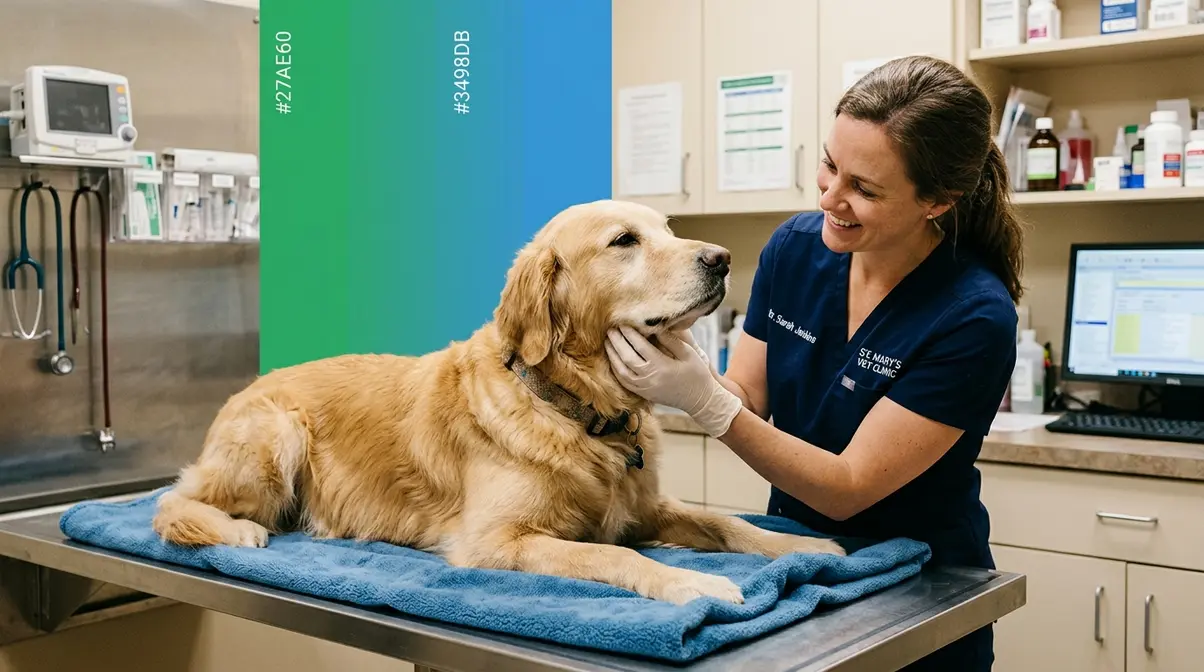
Golden Retrievers face an exceptionally high cancer risk compared to other breeds. A large-scale study on Golden Retriever causes of death found that 61.4% of deaths in the breed were attributed to cancer (Journal of Veterinary Internal Medicine, 2011), a figure that remains the most-cited benchmark in veterinary discussions of the breed’s health, even as ongoing research refines the picture. Knowing the two most dangerous types, hemangiosarcoma and lymphoma, is the first step in proactive care. For understanding the average Golden Retriever lifespan, this cancer context is essential background.
The Golden Retriever Lifetime Study findings from the Morris Animal Foundation, a long-term research project tracking more than 3,000 dogs, identifies hemangiosarcoma, lymphoma, osteosarcoma, and high-grade mast cell tumors as the most common cancers in the cohort (Morris Animal Foundation, 2024). That data gives owners and veterinarians a ranked list of threats, not just a vague warning about “cancer risk.”
The prevalence of cancer in dogs is sobering across all breeds: the AVMA states about 1 in 4 dogs will develop cancer at some point, and nearly 50% of dogs over age 10 die of the disease. In Golden Retrievers, that baseline risk is amplified by genetic predisposition, which is exactly why the proactive screening timeline later in this guide addresses when to screen for cancer at each life stage.
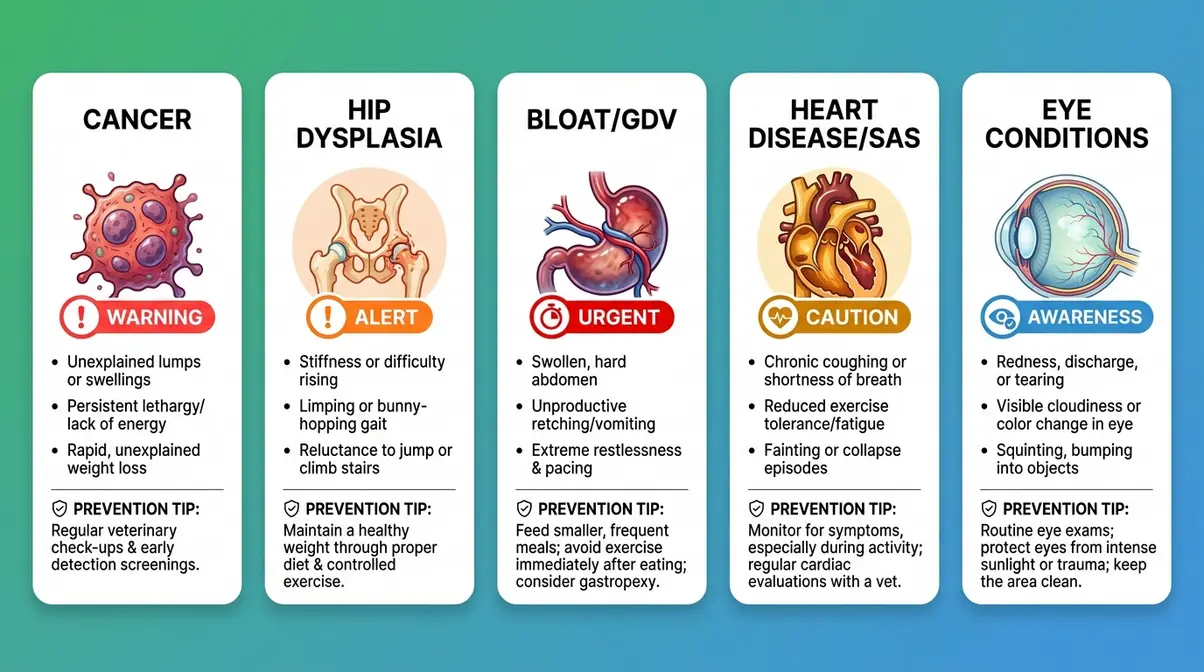
The infographic below summarizes the top five risks at a glance.
Hemangiosarcoma: Why Golden Retrievers Are So Vulnerable
Hemangiosarcoma is an aggressive cancer of the blood vessel walls. It most commonly develops in the spleen or heart. And that anatomical location is precisely what makes it so dangerous. You can find a lump on the skin. You cannot feel a mass growing inside your dog’s spleen at home. No amount of careful daily observation closes that gap.
The AKC Canine Health Foundation identifies hemangiosarcoma as often asymptomatic until tumor rupture (AKC CHF, 2023), which explains why the condition earns the name “silent killer.” The disease follows a two-phase pattern: months of no visible symptoms, followed by sudden tumor rupture and rapid internal hemorrhage. By the time the second phase begins, the window for intervention is extremely narrow.
Watch for these late-stage warning signs. Each one is an emergency signal, not a “monitor at home” situation:
- Sudden extreme lethargy, a dog that was fine at breakfast and won’t stand by dinner
- Pale or white gums, check by lifting the upper lip; gums should be pink and moist
- Distended abdomen, visible swelling or a belly that feels tight and full
- Collapse or inability to rise
If your Golden shows sudden collapse or pale gums, treat it as a veterinary emergency; do not wait. Any two of these signs appearing together warrants an immediate call to your emergency vet, not a scheduled appointment.
For a visual overview of hemangiosarcoma warning signs, see this veterinary explainer video.
Lymphoma, by contrast, offers owners more visible warning signs, and earlier detection dramatically improves outcomes.
Lymphoma and Other Common Cancers in Goldens
Lymphoma, a cancer of the immune system’s white blood cells, is more detectable than hemangiosarcoma because it produces physical changes owners can feel. Swollen lymph nodes appear under the jaw (submandibular nodes), in front of the shoulders (prescapular nodes), and behind the knees (popliteal nodes). A 60-second monthly check during grooming, running your fingertips firmly along these areas, can catch swelling before it becomes advanced. Note any new firmness or enlargement and report it to your vet promptly.
The Golden Retriever Lifetime Study identifies lymphoma, osteosarcoma, and mast cell tumors among the most common cancers in the 3,000-dog cohort (Morris Animal Foundation, 2024). Osteosarcoma (bone cancer) is most common in large breeds and presents as lameness or localized swelling on a limb that doesn’t improve with rest. The key differentiator from joint problems: osteosarcoma pain tends to be more acute, localized to one spot on the bone, and often progresses rapidly rather than gradually.
Mast cell tumors can appear as skin lumps of any size or shape. Any new lump on a Golden should be evaluated by a vet within two to four weeks; do not assume it is benign. The monthly lymph node check takes 60 seconds and can be done during your regular grooming session: run your fingertips under the jaw and behind the knees, note any new firmness or swelling, and flag it at your next vet visit.
Consult your veterinarian if you notice any new lumps, persistent swelling, or unexplained lameness. These conditions rarely resolve on their own, and early diagnosis consistently improves outcomes across all cancer types.
While cancer dominates the statistics, bone and joint problems are the conditions most Golden owners will manage day-to-day, often starting as early as age one.
Bone and Joint Problems: Hip Dysplasia, Elbow Dysplasia, and Arthritis

Hip dysplasia is a malformation of the hip’s ball-and-socket joint: not an injury, but a structural abnormality that develops as a dog grows. Cornell University’s College of Veterinary Medicine explains that hip dysplasia in large breeds leads to joint laxity, pain, and degenerative arthritis over time. The one-sentence mechanical picture: the ball of the femur doesn’t fit the socket tightly, so it wobbles with every step, generating friction that gradually destroys cartilage. For a deeper look, see our complete guide to hip dysplasia in Golden Retrievers. The proactive screening timeline in this guide covers when to request OFA-certified parents and when to begin joint supplements.
Hip Dysplasia: The Bunny-Hop Warning Sign
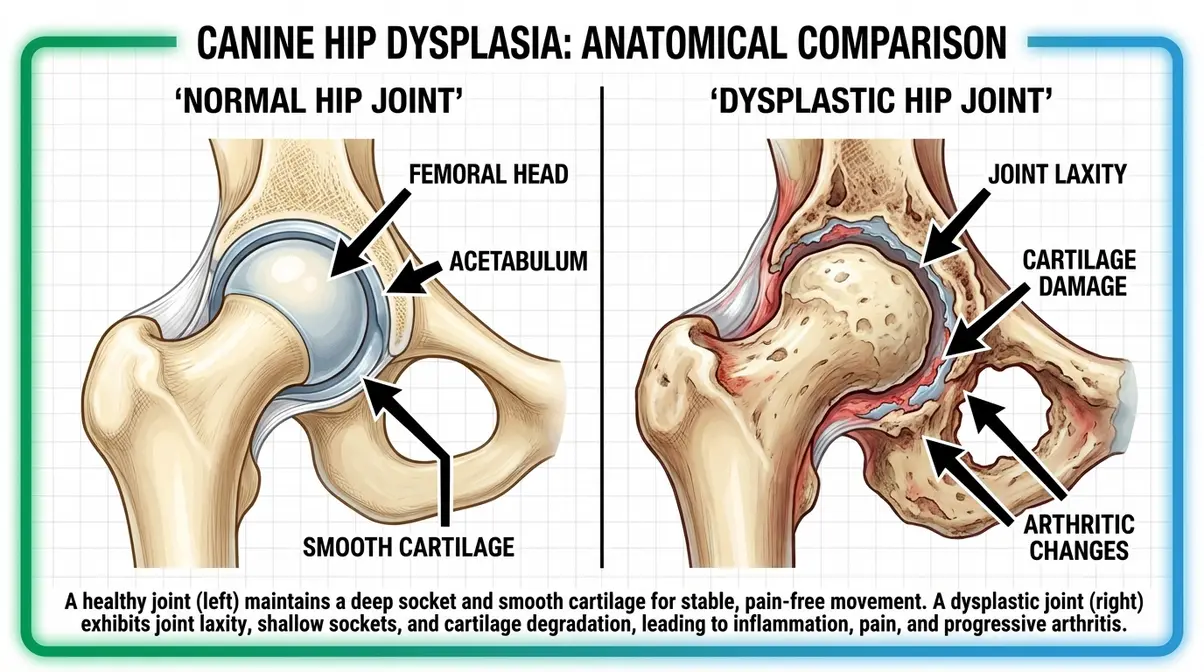
Hip dysplasia, a malformation of the hip’s ball-and-socket joint, leads to joint laxity, chronic pain, and degenerative arthritis in affected Golden Retrievers (Cornell University College of Veterinary Medicine). The mechanical explanation matters here: when the femoral head doesn’t seat properly in the acetabulum, the resulting wobble creates micro-damage with every movement. Over months and years, that micro-damage accumulates into significant arthritis.
The diagram below shows how a healthy hip socket compares to a dysplastic one.
The most recognizable early sign is the bunny-hopping gait: when a dog swings both rear legs together rather than alternating them during running or stair-climbing. It’s distinctive once you know what to look for. Other signs that point toward hip dysplasia include:
- Stiffness for the first few minutes after lying down
- Reluctance to jump into the car or onto furniture
- Decreased enthusiasm for walks or play
- Visible muscle wasting in the hindquarters over time
These signs can appear as early as 12–18 months in affected dogs, well before the condition becomes debilitating. If your Golden bunny-hops up the stairs or seems stiff after a nap, schedule a hip evaluation. X-rays can confirm dysplasia before it causes serious pain, and early management makes a meaningful difference. Consult your veterinarian for a hip evaluation if any of these signs appear.
Elbow dysplasia follows a similar pattern. And in some Goldens, both joints are affected simultaneously, compounding the mobility impact.
Elbow Dysplasia, Arthritis, and the Role of Weight
Elbow dysplasia is a similar developmental abnormality in the elbow joint: the same concept as hip dysplasia, applied to the front legs. Signs include front-leg lameness, a tendency to turn the elbow outward when walking, and reluctance to fully extend the leg. Like hip dysplasia, it’s a structural issue present from birth and influenced by genetics.
Arthritis develops gradually in both dysplastic hip and elbow joints. It’s manageable: joint supplements (glucosamine, chondroitin, omega-3 fatty acids), veterinary-prescribed NSAIDs, weight control, and physiotherapy all help. But it is not reversible. Managing chronic conditions like dysplasia and arthritis requires consistency over years, not a one-time fix.
Weight is the single most modifiable risk factor owners control directly. Every extra kilogram of body weight places disproportionate load on joints that are already structurally compromised. How maintaining a healthy weight reduces joint stress is one of the most practical things an owner can do, and one of the most frequently overlooked. Consult your veterinarian about appropriate weight targets and joint supplement protocols for your specific dog.
Bone and joint conditions develop slowly. But the skin problems that affect many Goldens can flare up seemingly overnight.
Skin Conditions and Allergies: Hot Spots, Ear Infections, and More
Golden retriever health issues extend well beyond internal conditions. Skin problems are the most frequent day-to-day concern for owners. And understanding why they keep recurring is what separates owners who manage them effectively from those stuck in a cycle of treatments that never quite stick. UC Davis Veterinary Medicine notes Golden Retrievers are predisposed to skin conditions and allergies as part of the breed’s common health profile.
The critical insight most resources miss: hot spots in Golden Retrievers are secondary infections. The underlying trigger (allergy, moisture, boredom scratching) must be addressed to prevent recurrence. Treating the hot spot without addressing the cause is like mopping the floor while the tap is still running.
Hot Spots: Why They Spread So Fast in Goldens
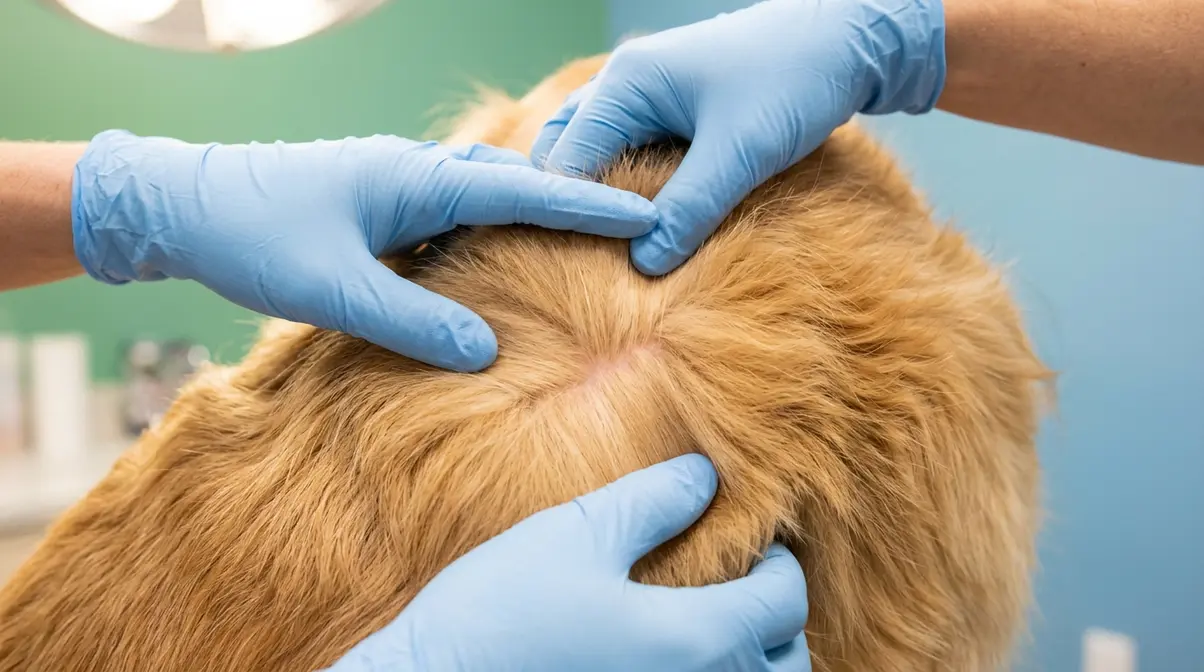
Hot spots, medically known as acute moist dermatitis, are painful, rapidly spreading skin lesions that appear suddenly, often overnight. They present as red, oozing, circular patches, and the dog will lick or chew at them obsessively, which accelerates their spread. A spot the size of a quarter can triple in size within 12 hours if the dog continues to lick it. The cone of shame is your first line of defense.
Goldens are especially vulnerable because their dense double coat traps moisture against the skin after swimming, rainy walks, or even heavy panting. That warm, damp layer creates ideal conditions for bacterial overgrowth. Warning signs like obsessive licking or sudden patches of fur loss are often the first visible sign.
Immediate response when you spot one:
- Carefully trim the fur around the affected area to allow airflow
- Clean with a mild antiseptic solution
- Apply an e-collar (cone) to prevent further licking
See a vet if the spot is larger than your palm, if it doesn’t improve within 24–48 hours, or if your dog seems to be in significant pain. Prescription antibiotics or medicated sprays are sometimes necessary for larger infections.
Ear infections often develop alongside hot spots. Both are frequently driven by the same underlying allergy trigger.
Ear Infections and Allergies: The Root-Cause Connection
Golden Retrievers’ floppy ears cover the ear canal, limiting airflow and trapping moisture, especially after swimming. That warm, enclosed environment breeds yeast and bacteria efficiently. Signs of an ear infection include persistent head shaking, scratching at the ear, brown or black discharge, a foul odor, and redness inside the ear flap. Catching an infection early means simple treatment; ignoring it risks potential hearing damage and chronic pain.
The allergy connection is where many owners get stuck. Excessive scratching can have behavioral components; golden retriever behavior problems sometimes manifest as compulsive licking or scratching. But recurring skin and ear issues are more often driven by environmental allergens (grass pollen, dust mites, mold) or food sensitivities. If your Golden has had three ear infections in one year, ask your vet about allergy testing. Treating symptoms while the underlying cause goes unaddressed guarantees recurrence.
Consult your veterinarian about allergy testing if skin and ear problems keep coming back despite treatment. Identifying the root cause, environmental or dietary, is the only way to break the cycle.
The conditions covered so far develop gradually. But two of the most dangerous golden retriever health problems can kill within hours, with almost no warning.
Heart Disease and Bloat: The Sudden-Death Risks You Need to Know
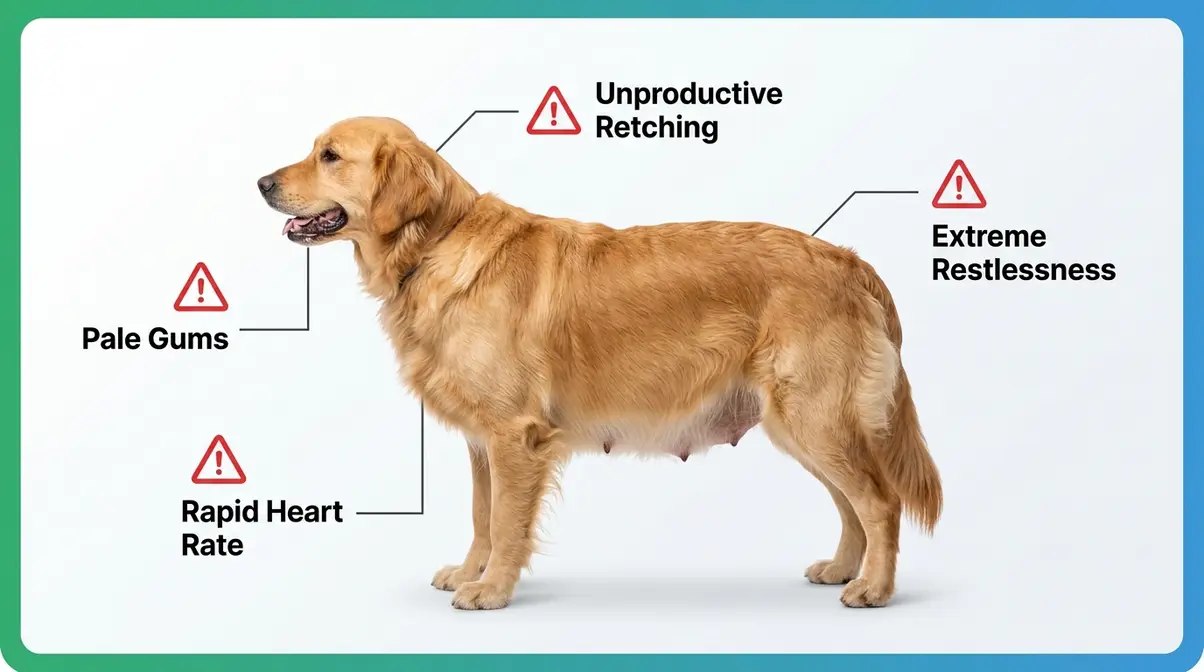
Two conditions in Golden Retrievers sit in a different category from everything else in this guide. Hip dysplasia and hot spots are serious, but they give you time. Subvalvular Aortic Stenosis (SAS) and Gastric Dilatation-Volvulus (GDV) do not. Understanding these emergencies isn’t about creating anxiety; it’s about knowing exactly what to do in the minutes that matter. UC Davis Veterinary Medicine identifies heart conditions including subvalvular aortic stenosis as a known health issue in Golden Retrievers, and the Golden Retriever Club of America’s health research resources provide breed-specific guidance on both conditions.
Subvalvular Aortic Stenosis (SAS): The Congenital Heart Risk
Subvalvular Aortic Stenosis (SAS) is a congenital narrowing of the aorta, present at birth, and the most common heart defect in Golden Retrievers. The narrowing sits just below the aortic valve, forcing the heart to work harder to push blood through a restricted opening. Over time, that extra workload can lead to heart failure or sudden cardiac death, sometimes in dogs as young as two to three years old who appeared entirely healthy.
Detection starts with a stethoscope. A veterinarian can often identify SAS through a heart murmur during a routine physical exam. Not every murmur means SAS; murmurs are graded on a scale of 1 to 6, and a Grade 3 or higher warrants an echocardiogram for definitive diagnosis. At your dog’s annual wellness visit, if your vet mentions a murmur they haven’t noted before, ask specifically about SAS and whether a cardiac ultrasound is appropriate.
Reputable breeders screen parent dogs for SAS and can provide cardiac clearance certificates. Asking for those certificates when sourcing a puppy is a concrete step toward reducing inherited risk. Consult your veterinarian about cardiac monitoring if your Golden has ever been noted to have a murmur. This golden retriever medical problem is manageable when caught before the heart sustains significant damage.
If SAS is a slow-developing threat, bloat is its opposite: a sudden, violent emergency that gives owners almost no time to react.
Bloat (GDV): A Life-Threatening Emergency
Gastric Dilatation-Volvulus (GDV), commonly called bloat, is a life-threatening condition where the stomach fills rapidly with gas and then rotates on its own axis. That rotation traps the gas inside, cuts off blood supply to the stomach and spleen, and sends the dog into shock. Bloat (GDV) can kill a healthy Golden Retriever within 2–6 hours of onset; immediate emergency veterinary care is the only treatment.
Treat these signs as a go-to-the-emergency-vet-now situation, not a wait-and-see:
- Distended, visibly hard abdomen, the belly looks swollen and feels tight
- Unproductive retching or dry heaving, your dog is trying to vomit but nothing comes up
- Extreme restlessness, inability to get comfortable, pacing, whining
- Pale gums, check by lifting the upper lip; should be pink
- Rapid heart rate, heart racing even at rest
If two or more of these signs appear together, call the emergency vet while you are getting your dog into the car. Unproductive retching combined with a visibly bloated belly is a go-to-the-emergency-vet-now situation, not a wait-and-see.
Prevention considerations worth discussing with your veterinarian include feeding two smaller meals instead of one large meal daily, and avoiding intense exercise for one to two hours before and after eating. Elevated feeders were once recommended for deep-chested breeds, but the evidence is mixed, current veterinary consensus does not strongly support them, and some research suggests they may increase risk. Ask your vet for guidance specific to your dog’s size and feeding habits.
Beyond the life-threatening conditions, Golden Retrievers are also prone to several eye problems that can quietly steal their vision, often without obvious pain.
Eye Conditions: Cataracts, Pigmentary Uveitis, and Progressive Retinal Atrophy
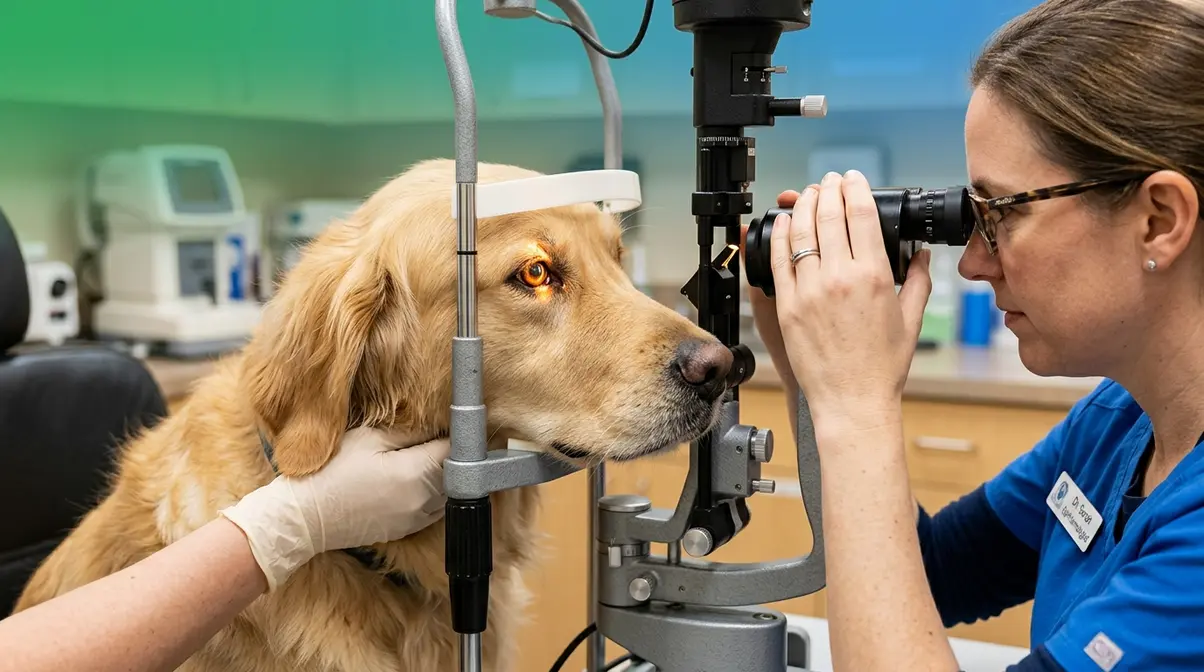
Three eye conditions are especially relevant to the breed: Golden Retriever Pigmentary Uveitis (GRPU), Progressive Retinal Atrophy (PRA), and hereditary cataracts. UC Davis Veterinary Medicine identifies eye conditions including pigmentary uveitis as a breed-specific concern for Golden Retrievers. And GRPU in particular is something most owners have never heard of until their dog is diagnosed.
Golden Retriever Pigmentary Uveitis (GRPU) is a breed-specific eye condition that can progress to glaucoma and blindness; annual eye exams by a veterinary ophthalmologist are the primary prevention strategy.
Pigmentary Uveitis, Cataracts, and PRA: What to Watch For
Golden Retriever Pigmentary Uveitis (GRPU) is a breed-specific inflammatory eye condition unique to Golden Retrievers. It causes chronic inflammation inside the eye that, left untreated, progresses to glaucoma and permanent blindness. Signs include squinting, redness, cloudiness of the eye, and sensitivity to bright light. Because GRPU develops gradually and isn’t always painful in early stages, many owners miss it without a formal eye exam.
Progressive Retinal Atrophy (PRA) is a genetic condition causing gradual deterioration of the retina. It typically begins with loss of night vision (your dog may hesitate before entering a dark room or seem reluctant on evening walks) before progressing to complete vision loss. There is no cure, but progression is slow enough that most dogs adapt well with environmental modifications. Early detection allows owners and veterinarians to plan ahead.
Cataracts cause cloudiness of the lens and are more common in older Goldens. Some are hereditary. Surgical removal is effective, and outcomes are generally good when the procedure is performed before secondary complications develop.
The single most important action for all three conditions: request a CAER (Companion Animal Eye Registry) exam referral at your dog’s annual vet visit. The exam takes about 20 minutes and can catch GRPU before it becomes glaucoma. Ask specifically. These referrals are not always offered automatically. Consult your veterinarian about annual ophthalmology exams starting at age one.
Knowing what conditions to watch for is essential. But the owners who protect their Goldens most effectively don’t just react to symptoms. They follow a proactive screening schedule from day one.
The Three-Stage Shield: A Proactive Care Timeline for Golden Retrievers
The golden retriever common health problems covered in this guide (cancer, dysplasia, bloat, heart disease, eye conditions) share one characteristic: they respond better to early detection than late intervention. The Three-Stage Shield is a proactive health management framework for Golden Retriever owners that organizes breed-specific screenings, vet visits, and at-home checks into three life stages: Puppy (0–2 years), Adult (2–8 years), and Senior (8+ years), so nothing falls through the cracks.
This framework doesn’t require memorizing every condition in this article. It requires showing up for three scheduled phases and knowing the emergency signs. That’s the whole system. The Morris Animal Foundation’s ongoing Golden Retriever Lifetime Study provides the data backbone for why these specific screenings matter at each stage.
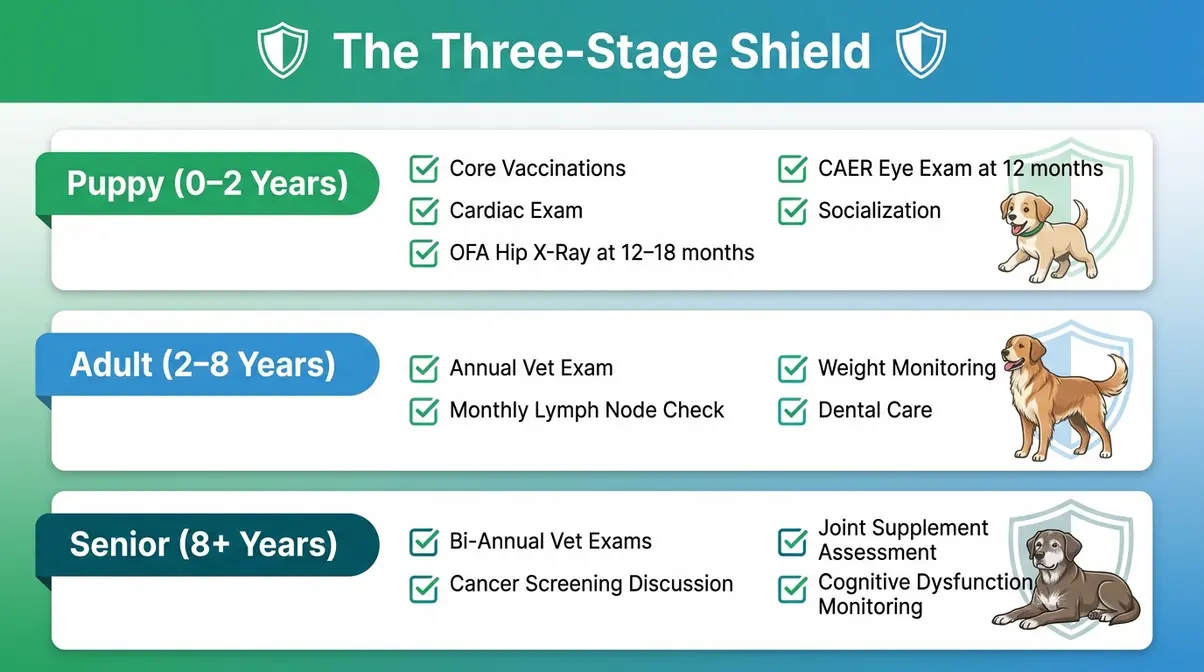
Stage 1, Puppy (0–2 Years): Building the Foundation
Golden retriever health issues can have roots in the first two years of life, which makes the puppy stage the most important window for structural screening. The goal here isn’t treating problems; it’s establishing baselines and catching genetic predispositions before they cause damage.
Puppy Stage Checklist:
- Core vaccinations and parasite prevention, standard; confirm schedule with your vet at the first visit
- Cardiac exam at every puppy visit, ask your vet to specifically auscultate for a murmur and note any grade changes
- OFA preliminary hip X-ray at 12–18 months, identifies early dysplasia before pain develops; influences breeding decisions and management planning
- CAER eye exam referral at 12 months, baseline for GRPU and PRA; not always offered automatically, so ask specifically
- Socialization and behavioral health, early, positive socialization reduces anxiety-driven issues later; if you notice early signs of anxiety, explore common Golden Retriever behavior problems and consider whether issues like separation anxiety warrant early intervention
At your 12-month wellness visit, specifically request an OFA preliminary hip evaluation and a CAER eye exam referral. These are not always offered automatically. Consult your veterinarian about the full puppy screening schedule for your specific dog’s needs.
Once your Golden reaches adulthood, the screening focus shifts from structural development to long-term cancer and joint monitoring.
Stage 2, Adult (2–8 Years): Monitoring and Maintenance
The adult years are the window for establishing consistent habits (annual screenings, monthly at-home checks, and weight monitoring) before age-related conditions accelerate.
Adult Stage Checklist:
- Annual vet exam, physical assessment, baseline bloodwork, cardiac auscultation, CAER eye exam
- Monthly at-home lymph node check, 30–60 seconds during grooming; run fingers under the jaw, in front of the shoulders, and behind the knees; note any new firmness or swelling and report it at your next visit
- Weight monitoring, weigh monthly; a 10–15% increase above ideal weight noticeably amplifies joint stress in dysplastic joints
- Dental care, often overlooked, but dental disease has documented links to heart and kidney health; professional cleanings as your vet recommends
Set a monthly phone reminder labeled “lymph node check”; run your fingers under the jaw, in front of the shoulders, and behind the knees while brushing. Note any new firmness. This one habit is the most practical cancer-detection action available to owners between vet visits. Consult your veterinarian about appropriate bloodwork frequency and whether any additional screenings are warranted based on your dog’s individual history.
Senior Goldens need more frequent check-ins. The conditions covered in this guide become more likely after age 8, and the screening cadence changes accordingly.
Stage 3, Senior (8+ Years): More Frequent, More Targeted
After age eight, the risk profile for every condition in this guide increases. The screening cadence changes to match.
Senior Stage Checklist:
- Bi-annual vet exams, every six months instead of annually; conditions progress faster in senior dogs and earlier detection at this stage meaningfully changes outcomes
- Cancer screening discussion, ask your vet about abdominal ultrasound (splenic check for hemangiosarcoma) and chest X-rays; these are not universally recommended but are worth discussing given the breed’s cancer risk
- Joint supplement assessment, glucosamine, chondroitin, and omega-3 fatty acids are commonly used; discuss appropriate dosing and formulation with your vet
- Cognitive Dysfunction Syndrome monitoring, watch for disorientation, altered sleep-wake cycles, house training regression, or staring at walls; these can signal canine cognitive dysfunction (dog dementia)
For comprehensive guidance on supporting an aging Golden, see our complete guide to caring for a senior Golden Retriever. Consult your veterinarian about a senior wellness plan tailored to your dog’s specific conditions and history.
No matter how proactive you are, every Golden owner should understand when a symptom crosses the line from “monitor at home” to “go to the vet now.”
When to Worry: Limitations of Home Monitoring and Red-Flag Symptoms
Red-Flag Symptoms That Require Immediate Veterinary Attention
This guide helps you ask better questions and spot patterns earlier. It does not replace a physical exam, bloodwork, or imaging. Some symptoms require same-day or emergency veterinary care, not a wait-and-see approach.
Seek emergency or same-day veterinary care if you observe any of the following:
- Pale or white gums → Why urgent: indicates shock, internal bleeding, or severe anemia; check by lifting the upper lip; gums should be pink and moist → Action: emergency vet right away
- Unproductive retching with a hard, distended abdomen → Why urgent: classic GDV presentation; can be fatal within hours → Action: emergency vet while driving there
- Sudden collapse or inability to rise → Why urgent: may indicate ruptured hemangiosarcoma, cardiac event, or severe pain → Action: emergency vet right away
- Any new lump that grows visibly within days → Why urgent: rapidly growing masses are more likely to be malignant → Action: same-day or next-day vet appointment
- Sudden lameness in a young dog → Why urgent: may indicate osteosarcoma or acute joint injury, not just soreness → Action: same-day vet visit if severe
- Persistent coughing or exercise intolerance → Why urgent: can signal cardiac disease, including SAS progression → Action: schedule a vet visit within 48 hours; same-day if severe or worsening rapidly
- Squinting, eye redness, or sudden cloudiness → Why urgent: may indicate acute glaucoma, including GRPU progression → Action: same-day vet or veterinary ophthalmologist
When Home Monitoring Is Appropriate (and When It’s Not)
Mild stiffness after a long hike, a small scratch that’s healing, or a single sneeze: these are reasonable candidates for home observation over 24–48 hours. What this guide cannot do is diagnose your dog. It can help you recognize patterns, name what you’re seeing, and have a more informed conversation with your veterinarian.
When in doubt, call your vet. A phone triage call is always appropriate before deciding whether to wait. Most veterinary practices will advise you on urgency within minutes, and that call costs nothing. Frame it as empowering: you now know enough about Golden Retriever health to ask the right questions. Use that knowledge to act earlier, not to second-guess a professional examination.
Age-Based Health Screening for Golden Retrievers
(Screening timeline consolidated from our Golden Retriever health-issues guide.)
Age-Based Screening Timelines
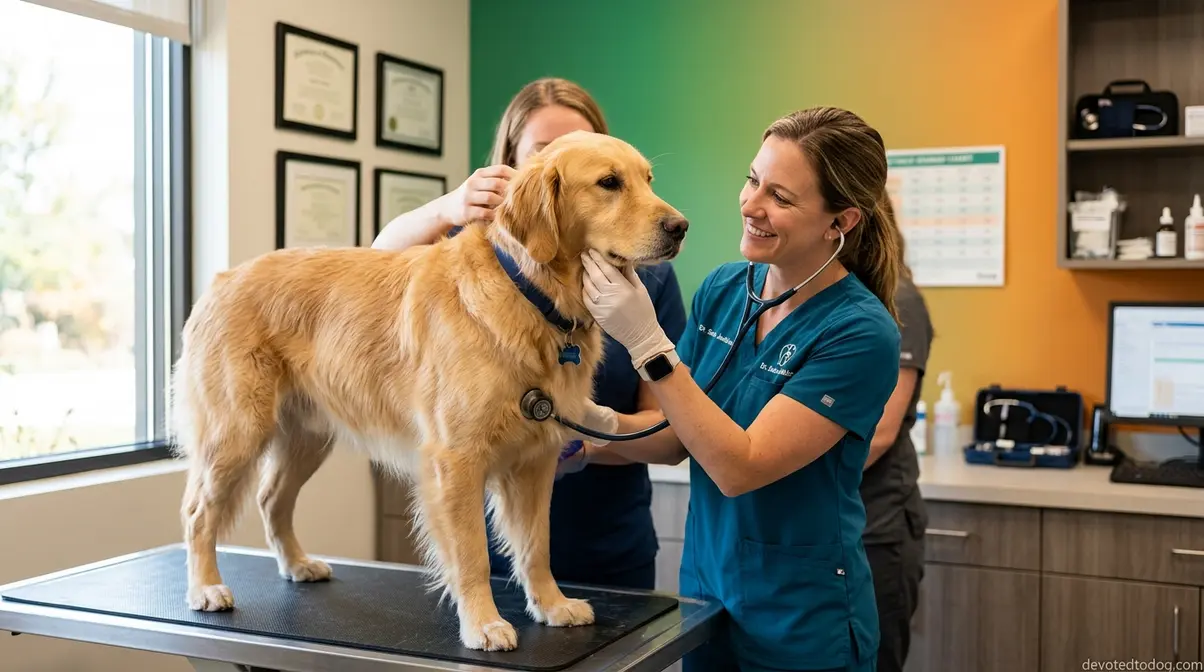
Golden Retriever health screening isn’t one-size-fits-all , it’s age-dependent. The conditions most likely to threaten your dog shift significantly from puppyhood through the senior years. Here is the screening timeline every Golden owner should follow.
“For Golden Retrievers, biannual veterinary exams , not annual , are the standard of care recommended by the Golden Retriever Club of America, starting from age 2.”
Puppy to Age 2: Foundation Screenings
These early screenings establish the baseline that makes future comparisons meaningful , don’t skip them even if your puppy seems perfectly healthy.
- 8–16 weeks: Full puppy wellness series, core vaccinations, fecal parasite check, and initial physical exam.
- 6 months: Discuss spay/neuter timing with your vet. Given GRLS data on hormonal effects on joint and cancer risk, timing is a conversation worth having early.
- 12 months: Baseline bloodwork , including a thyroid panel and complete blood count (CBC) , to establish your dog’s individual normal values.
- 24 months: OFA hip and elbow evaluation eligibility. Per GRCA guidelines, dogs must be 24 months old for official OFA diagnostic hip certification , this is the most important orthopedic milestone in the first two years.
Once the foundation is set, the middle years call for proactive monitoring , not reactive treatment.
Ages 2–6: Proactive Monitoring Phase
The middle years are when early intervention yields the greatest return. Annual exams feel sufficient during this period, but building in additional checkpoints pays dividends later.
- Annually: Full physical exam, comprehensive bloodwork, urinalysis, and heartworm test.
- Age 4: Begin discussing cancer screening options with your vet. Nu.Q and OncoK9 tests are available and can detect cancer biomarkers before symptoms appear , starting this conversation at age 4 gives you a two-year head start before peak risk.
- Ongoing: Monitor for bunny-hopping, unexplained weight changes (a hypothyroidism indicator), and any new lumps or bumps. Biopsy any lump larger than 1 cm that persists beyond four weeks.
- Eye exams: Annual CAER eye examination is recommended by the GRCA for breeding dogs and encouraged for all Goldens from this age onward.
The senior years are when vigilance becomes most critical , and when the 60% Threshold becomes most real.
Ages 7+: Senior Vigilance
This is the age range where most Golden Retriever cancer diagnoses occur. Escalating your monitoring schedule during these years is one of the most concrete actions you can take.
- Biannual exams: Switch from annual to twice-yearly vet visits , Goldens age faster than a once-a-year exam calendar assumes.
- Cancer screening priority: Discuss Nu.Q or OncoK9 testing annually if not already started. For spayed females over age 8, have a specific hemangiosarcoma risk conversation with your vet.
- Abdominal ultrasound: Many veterinary oncologists recommend annual abdominal ultrasound for senior Goldens to detect splenic masses early , before rupture, when intervention is still possible.
- Quality-of-life monitoring: Track mobility, appetite, and behavior changes monthly. Ask your vet for a structured quality-of-life checklist at your next biannual visit.
Screening is reactive by nature. The most powerful tool you have is prevention , starting with what your Golden eats and how you shape their behavioral development from day one.
Frequently Asked Questions
What is the silent killer in Golden Retrievers?
Hemangiosarcoma, an aggressive cancer of the blood vessel walls, is called the “silent killer” in Golden Retrievers. It most often develops in the spleen or heart, where tumors grow internally without producing visible symptoms. Owners typically notice nothing until a tumor ruptures, causing acute internal bleeding and rapid deterioration. Signs of rupture include sudden extreme lethargy, pale gums, and a distended abdomen. If your Golden shows these symptoms, this is a veterinary emergency; seek care right away.
Are Golden Retrievers high risk for cancer?
Yes, Golden Retrievers are at noticeably higher cancer risk than most other breeds, and cancer is the breed’s leading cause of death. Common types include hemangiosarcoma, lymphoma, osteosarcoma, and mast cell tumors. The breed’s genetic predisposition means Goldens develop cancer at higher rates than the general dog population. Research tracking thousands of Golden Retrievers through the Morris Animal Foundation’s Lifetime Study has identified hemangiosarcoma and lymphoma as the most frequently diagnosed cancers in the cohort. Regular veterinary exams and monthly at-home lymph node checks are the most practical early-detection strategies available to owners.
What is the most common cause of death in Golden Retrievers?
Cancer is the most common cause of death in Golden Retrievers, accounting for a noticeably higher proportion of deaths in this breed than in the general dog population. Hemangiosarcoma and lymphoma are the most frequently cited types. The breed’s genetic makeup creates a predisposition that researchers at the Morris Animal Foundation are actively studying through a long-term cohort of more than 3,000 dogs. A large-scale veterinary mortality study found cancer responsible for 61.4% of Golden Retriever deaths analyzed (Journal of Veterinary Internal Medicine, 2011; accessed 2026). This risk underscores the importance of regular veterinary check-ups, early screening discussions, and owner awareness of warning signs.
What is the life expectancy of a Golden Retriever?
The average life expectancy of a Golden Retriever is 10 to 12 years. While Goldens are generally healthy and active dogs, their lifespan is influenced by genetic predispositions to cancer, heart disease, and joint problems. Dogs from health-tested breeding lines with consistent, proactive veterinary care often live toward the upper end of this range. Regular bi-annual vet exams in the senior years (8+) can help detect and manage age-related conditions earlier. Maintaining a healthy weight, keeping current with screenings, and addressing symptoms promptly are the most evidence-supported strategies for supporting longevity.
What causes sudden death in Golden Retrievers?
Sudden death in Golden Retrievers is most commonly caused by Gastric Dilatation-Volvulus (GDV/bloat), a ruptured hemangiosarcoma tumor, or an acute cardiac event related to Subvalvular Aortic Stenosis (SAS). GDV occurs when the stomach fills with gas and twists, cutting off blood supply. It can be fatal within hours without emergency surgery. A ruptured hemangiosarcoma causes rapid internal hemorrhage with almost no prior warning in most cases. SAS, a congenital heart defect, can cause sudden cardiac death in younger Goldens, sometimes with no prior symptoms. Knowing the emergency signs of GDV (unproductive retching, a hard distended belly, extreme restlessness) and acting right away is often the difference between survival and loss.
Conclusion
For Golden Retriever owners, understanding the breed’s health landscape means confronting a sobering reality: cancer accounts for roughly 61.4% of deaths in the breed (Journal of Veterinary Internal Medicine, 2011), and conditions like bloat and SAS can turn life-threatening within hours. The best approach combines early screening through The Three-Stage Shield framework, consistent at-home monitoring (monthly lymph node checks, weight tracking, gum color awareness), and a clear mental protocol for the symptoms that demand an emergency response.
The Three-Stage Shield removes the guesswork. You don’t need to memorize every statistic in this guide. You need to show up for three scheduled phases of your dog’s life, know the five emergency signs of GDV, and keep the lymph node check as a monthly habit. That framework addresses the anxiety that brought you here: instead of scanning for problems reactively, you have a proactive structure that covers the conditions Golden Retrievers actually face.
Schedule a wellness visit in the next 30 days and ask your vet specifically about OFA hip screening, a CAER eye exam referral, and a cardiac auscultation. Those three questions address the most common golden retriever health problems before symptoms appear. Your vet will likely appreciate the specificity.
➤ The single most powerful thing you can do for your Golden’s health is to schedule that proactive vet visit before a problem finds you.
Related gear: see our guide to joint supplements.
Learn more about managing common Golden Retriever allergies and preventing recurring ear infections.
For diet-related digestive issues, review sensitive stomach food options by symptom.