
Written by Coral Drake · Last updated July 2026
Your Golden has been scratching since midnight. Her paws are raw, there’s a hot spot forming near her tail, and you’ve already switched her food twice without seeing any improvement.
If that sounds like your dog, you’re not alone — and you’re not out of options. Most owners waste months randomly switching foods or buying generic shampoos, which is the wrong fix when you don’t know which of the three allergy categories your Golden actually has.
In this guide, you’ll learn how to identify your Golden’s allergy type, apply the 3-Day Symptom Escalation Rule to decide when home care is enough versus when to call your vet, and build a practical management plan that actually works. We’ll cover symptoms, causes, diagnosis, treatment, diet, and grooming — everything you need to go from anxious to confident.
Medical Disclaimer: This article is for informational purposes only and does not constitute veterinary advice. Always consult a licensed veterinarian before starting any treatment, elimination diet, or supplement protocol for your dog.
Golden retriever allergies affect an estimated 10–15% of the breed with canine atopic dermatitis alone — but most cases are manageable once you identify the type.
- Three categories exist: Food, environmental atopy, and contact allergies — each needs a different fix.
- Chicken is a top culprit: Despite being a staple ingredient in most commercial dog foods, chicken protein is among the most frequent food allergens in Goldens.
- The 3-Day Symptom Escalation Rule: If symptoms don’t improve within 3 days of home care, escalate — don’t wait and hope.
- Natural options work best early: Omega-3 fatty acids and quercetin can reduce inflammation before symptoms become severe, but always consult your vet first.
- Not hypoallergenic: Golden Retrievers shed heavily year-round — see our full guide on whether Golden Retrievers are hypoallergenic for human allergy management strategies.
Why Golden Retrievers Are Prone to Allergies

Golden Retrievers are one of the dog breeds most prone to allergies because of a specific genetic quirk in their immune system. Their bodies produce an overabundance of IgE antibodies — immune proteins that trigger allergic reactions — in response to harmless substances like pollen or dust mites. This condition is called canine atopic dermatitis (CAD), the most common form of environmental allergy in dogs, and Golden Retrievers are consistently listed among the breeds with the highest predisposition (Merck Veterinary Manual, 2022).
Think of it like this: a healthy immune system ignores pollen the same way a security guard waves through familiar employees. In a Golden with CAD, that security guard tackles everyone — including harmless visitors. The result is chronic inflammation, itching, and skin irritation that has nothing to do with anything you did wrong.
Veterinary estimates suggest canine atopic dermatitis affects approximately 10–15% of the general dog population, with Golden Retrievers appearing among the top five breeds most likely to develop the condition (More Waggin Less Barkin, 2026). Critically, CAD typically emerges between 6 months and 3 years of age — so if your Golden is under one year old and itching, it may be something other than atopy, which the next section will help you sort out.
The breed’s dense double coat compounds the problem. Thick fur traps allergens — pollen, mold spores, dust mite particles — directly against the skin, prolonging exposure and intensifying the immune response. It’s one reason Goldens often show worse symptoms after outdoor play even when the trigger is airborne.
Knowing this is genetic means you can stop blaming yourself for your dog’s itching — and start focusing on management instead. Understanding the difference between CAD, food allergies, and flea allergy dermatitis (FAD) is the first step. For a broader look at breed health, see our guide to common Golden Retriever health issues including skin conditions and ear infections.
Later in this guide, you’ll find the 3-Day Symptom Escalation Rule — a simple decision framework for knowing when home care is enough. Before that, let’s look at the symptoms, because the pattern of where and how your dog scratches is one of the best clues to which type you’re dealing with.
Recognizing Golden Retriever Allergy Symptoms
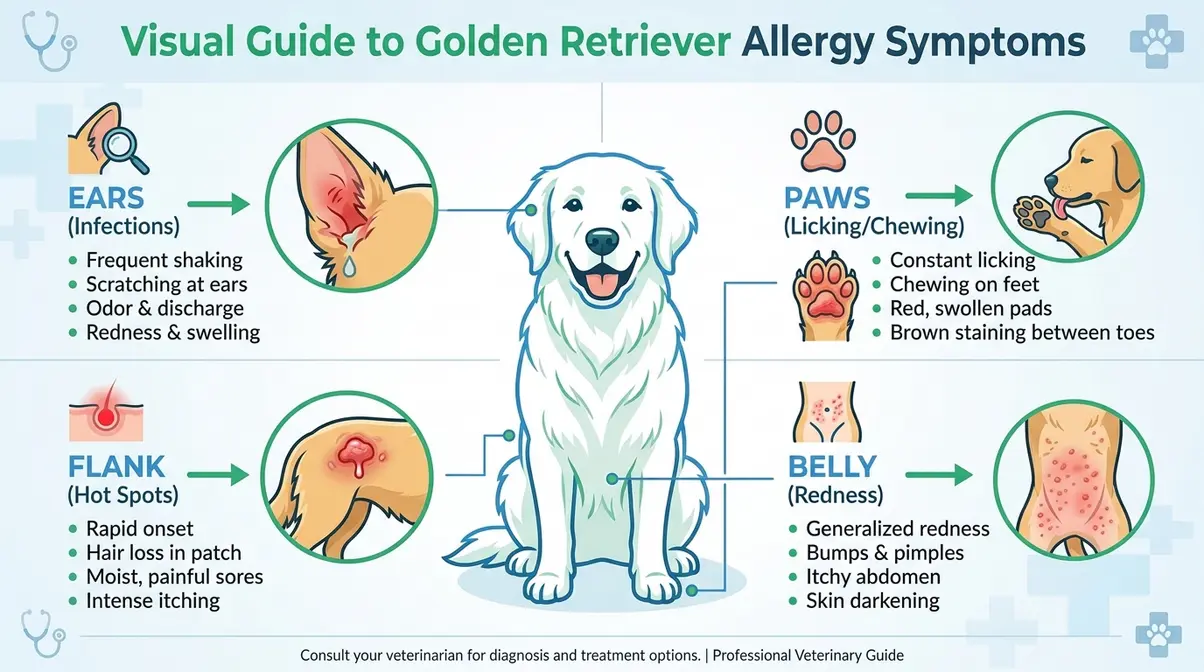
Golden retriever allergy symptoms follow recognizable patterns — and knowing what to look for makes diagnosis far faster. The eight most common signs are: constant scratching or chewing, hot spots, scabs and hair loss, recurring ear infections, paw licking or chewing, gastrointestinal upset, dandruff or flaky skin, and watery eye discharge. Any of these symptoms that worsen over 72 hours should trigger the 3-Day Symptom Escalation Rule — covered in the treatment section below.
Skin Symptoms: Itching and Hot Spots
Golden retriever skin allergies most commonly appear as repetitive, focused scratching that breaks the skin — very different from the occasional scratch a healthy dog does. The most common itch zones are the belly, armpits, groin, and base of the tail. If your dog is scratching the same spot multiple times per hour, that’s an allergy signal, not normal behavior.
Hot spots — moist, inflamed patches of skin that form when your dog scratches or licks one area repeatedly — are one of the most recognizable signs. You’ll feel a warm, wet patch under the fur, often the size of a coin to a palm, with red, inflamed skin underneath. They can grow surprisingly fast. If you part your Golden’s fur near the base of the tail and find a wet, red patch, that’s a hot spot that needs attention within 24 hours.
Scabs and hair loss typically appear as secondary effects of scratching — the allergy causes the itch, the scratching causes the wound. Dandruff or flaky skin signals a damaged, irritated skin barrier. These surface signs are often the first thing owners notice, but the more telling clues are often hidden in the ears and paws.
Skin symptoms are the most obvious — but many owners miss the early warning signs hidden in the ears, paws, and eyes.
Ear, Paw, and Eye Allergy Signs
Recurring ear infections — especially with dark discharge and a yeasty odor — are one of the most reliable early warning signs of environmental allergies in Golden Retrievers (Killarney Animal Hospital, veterinary consensus). The infection itself isn’t the primary problem; it’s a secondary overgrowth of yeast (Malassezia) or bacteria that thrive in the warm, inflamed ear canal that allergies create. If your Golden’s ears smell like bread or vinegar, that’s yeast triggered by allergies — not a random infection.
Paw licking is often the first sign of golden retriever allergies eyes and skin — specifically environmental atopy. Look between the toes for rusty-brown discoloration of the fur, caused by porphyrin, a compound in saliva. If your dog is constantly licking the same paws, environmental allergens picked up outdoors are the likely culprit.
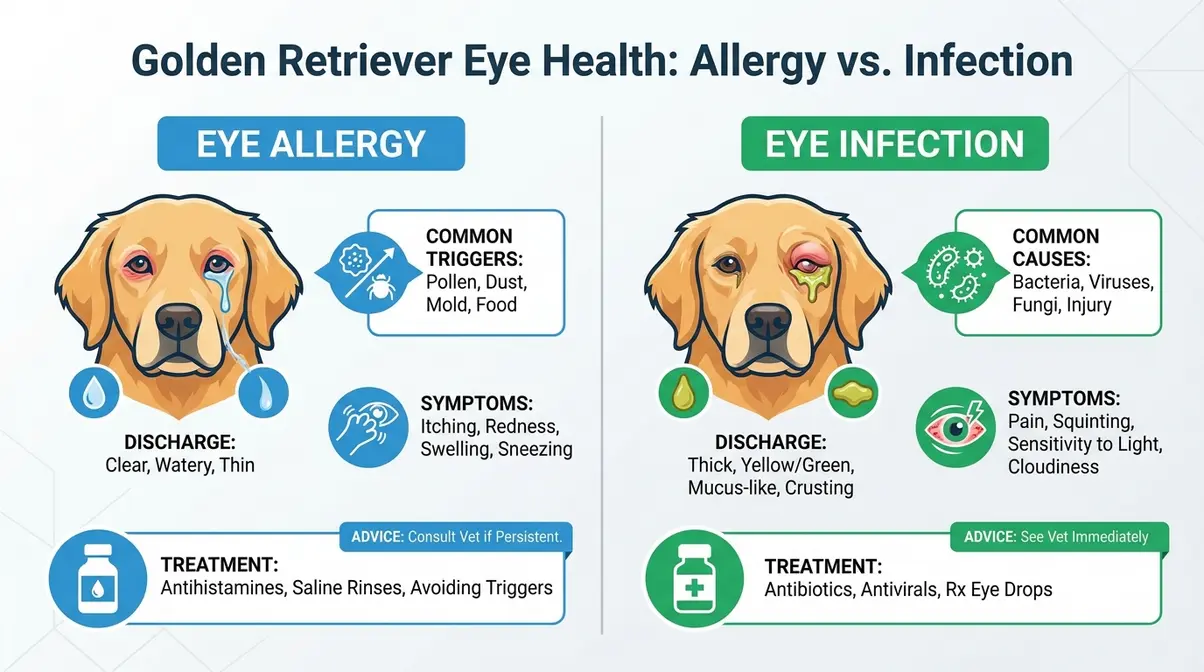
Eye discharge from allergies is clear and watery — like a human’s teary eyes during hay fever. This distinguishes it from an eye infection, which produces thick yellow or green discharge. Pawing at the face alongside clear eye discharge is a strong allergy indicator.
Once you’ve spotted these symptoms, the next step is figuring out which allergy type is causing them — because food allergies and environmental allergies look similar but need very different fixes.
Is It Allergies or Something Else?
Not every itchy, scaly Golden has allergies. Ichthyosis — a genetic skin condition in Golden Retrievers that causes scaling and is sometimes mistaken for allergies — produces dry, flaky, fish-scale-like skin rather than the red, inflamed, moist presentation of true allergies. According to the UC Davis genetic testing for Golden Retriever ichthyosis, it is an autosomal recessive genetic disorder causing mild to severe generalized scaling on the body (UC Davis Veterinary Genetics Laboratory). If your vet has treated the allergies but the skin still looks scaly and dry rather than inflamed, ask specifically about ichthyosis genetic testing.
Secondary bacterial skin infections — called pyoderma — are another common mimic. These often appear on top of allergy symptoms: the scratching introduces bacteria, which create pustules or crusty patches requiring antibiotic treatment. Pyoderma looks similar to a hot spot but typically presents with small pus-filled bumps rather than a moist open lesion. The clinical presentation of cutaneous scaling disorders notes that Golden Retriever puppies with ichthyosis may exhibit rough haircoats and hyperpigmentation that don’t become obvious until adulthood (University of Illinois College of Veterinary Medicine).
Now that you can identify the symptoms, let’s look at what’s causing them — because the treatment path depends entirely on which of the three allergy types your Golden has.
3 Types of Golden Retriever Allergies
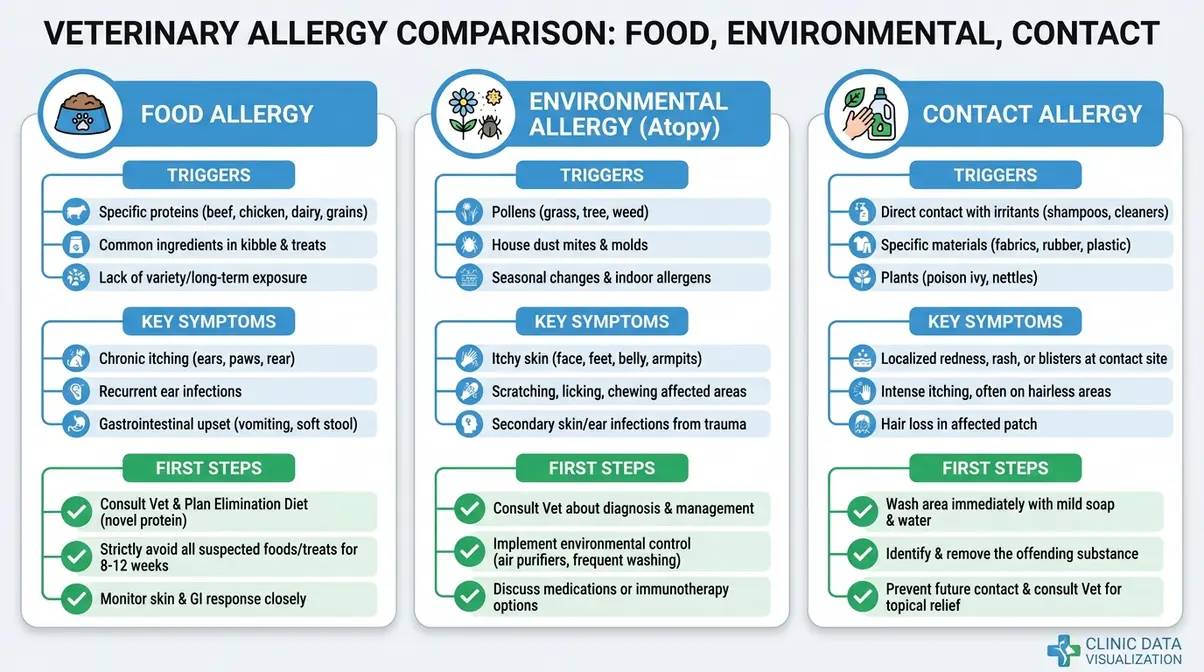
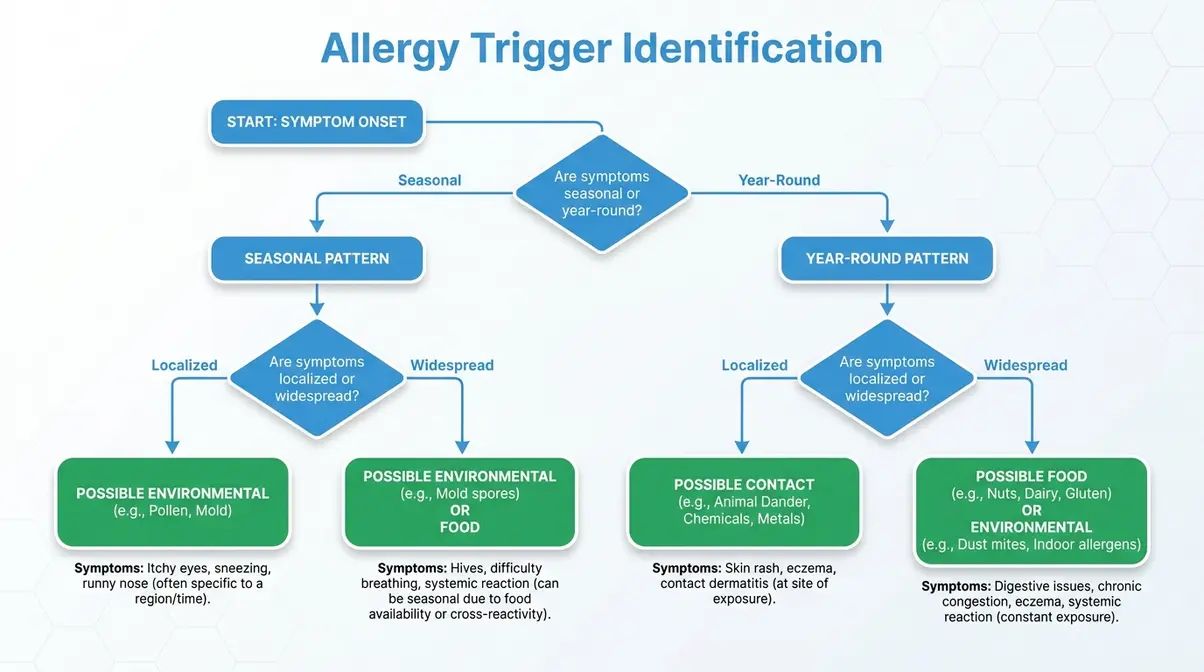
Common golden retriever allergies fall into three distinct categories — food allergies, environmental atopy (CAD), and contact allergies. Each has different triggers, different symptoms, and a different treatment path. Knowing which type your dog has is the most important step you can take before trying any treatment.
| Type | Common Triggers | Key Symptoms | First Step |
|---|---|---|---|
| Food | Chicken, beef, dairy, wheat, eggs | Itching, hot spots, GI upset, ear infections | 8-week elimination diet |
| Environmental (CAD) | Pollen, dust mites, mold, grass, fleas | Seasonal itching, paw licking, eye discharge | Identify season/trigger; vet consult |
| Contact | Fabric softeners, shampoos, lawn chemicals | Localized rash where contact occurs | Remove suspected irritant; oatmeal rinse |
The type of allergy your dog has will determine which step of the 3-Day Symptom Escalation Rule applies — more on that in the treatment section.
Food Allergies: Chicken as a Culprit
Golden retriever food allergies are almost always triggered by protein — not grain, despite what many marketing labels suggest. The immune system misidentifies the protein as a threat and launches an allergic response, causing itching, hot spots, ear infections, and often gastrointestinal upset like soft stools or vomiting after meals.
Chicken protein is among the most common food allergens in Goldens — which surprises most owners, because chicken is the most common protein in commercial dog food. That’s precisely the problem: the more exposure a dog has to a protein over time, the higher the chance of sensitization. Many owners are feeding chicken daily for years before the immune system tips into reaction. The top five food allergens in Golden Retrievers are chicken, beef, dairy products, wheat, and eggs.
If your Golden’s itching is year-round (not seasonal) and she also has occasional soft stools, food allergy is the more likely culprit than environmental triggers. This year-round, non-seasonal pattern is the key differentiator. A novel protein diet — using a protein your dog has never eaten before, like venison, duck, or rabbit — reduces sensitization risk because the immune system has no prior exposure to react to. Golden retriever common food allergies are also one of the easier allergy types to confirm, through the elimination diet protocol covered in the next section. Always consult your veterinarian before starting an elimination diet to ensure nutritional completeness.
Environmental allergies work differently — and they’re often seasonal, which is the first clue that helps you tell them apart.
Environmental Atopy: Seasonal Triggers
Environmental atopy — the medical term is canine atopic dermatitis (CAD) — is the most common allergy type in Golden Retrievers. If your dog’s itching gets dramatically worse every October, when mold spores and ragweed peak, that’s a strong signal for golden retriever seasonal allergies caused by environmental atopy.
Seasonal triggers include pollen (peaking in spring and fall), grass (summer), and outdoor mold (wet seasons). Year-round triggers are trickier: dust mites live in bedding, carpets, and upholstered furniture, causing persistent, non-seasonal itching that owners frequently misattribute to food. Indoor mold is another year-round culprit that’s easy to overlook. For a Golden Retriever and Labrador Retriever allergy potential breakdown, both breeds share similar atopic dermatitis predispositions.
Flea allergy dermatitis (FAD) — an allergic reaction to flea saliva, not the flea itself — deserves special mention. A dog sensitized to flea saliva can have a severe, widespread reaction from a single bite. You may never see the flea. Monthly flea prevention is the only reliable management strategy for FAD. Intradermal skin testing (covered in the diagnosis section) is the gold standard for identifying which environmental triggers your specific dog reacts to — worth knowing if symptoms are severe or year-round.
The third allergy type — contact allergies — is the one most owners never consider, even though the trigger might be sitting in their laundry room.
Contact Allergies: Hidden Home Triggers
Contact allergies — more precisely, contact dermatitis — occur when an allergen directly touches the skin, producing a localized reaction exactly where contact happened. Unlike food or environmental allergies, which cause widespread itching, contact allergy rashes appear in specific, predictable locations: the belly after lying on a freshly treated lawn, the neck where a collar sits, or the paws after walking on synthetic carpet.
Common household triggers include scented fabric softeners and dryer sheets (transferred via bedding), scented dog shampoos, lawn pesticides and herbicides, synthetic carpet fibers, and rubber or latex toys. These are easy to miss because they seem so ordinary.
The identification method is straightforward: if the rash is localized to one body area that consistently contacts a specific surface, think contact allergy first. If the rash appears only on your Golden’s belly and you recently started treating your lawn, contact allergy is the most likely explanation — stop the lawn chemical and watch for improvement over 5–7 days. Contact allergies are also the easiest to treat: remove the trigger, and the reaction typically resolves.
Now that you can identify the type, it’s time for the most important section: what to actually do about it — starting with the 3-Day Symptom Escalation Rule.
Diagnosing and Treating Your Golden’s Allergies

Veterinary research tells a more nuanced story about golden retriever allergies treatment than most owners expect. Antihistamines — the first thing most people reach for — have surprisingly limited effectiveness for established canine atopic dermatitis. Understanding the full treatment hierarchy, and having a clear decision framework for when to escalate, makes the difference between months of frustration and a workable management plan.
Step 1 – 8-Week Elimination Diet
An elimination diet is the gold standard for diagnosing food allergies — but it only works if done correctly and for long enough. The immune system takes 6–8 weeks to clear existing allergens from the body, which is why anything shorter produces unreliable results. Work with your veterinarian to select the right novel protein and to rule out other conditions before starting. Always work with your veterinarian before starting an elimination diet to ensure nutritional completeness.
The 5-step protocol:
- Choose a novel protein your dog has never eaten — venison, rabbit, duck, or kangaroo are common choices. If your Golden currently eats chicken-based kibble, duck or venison is the right starting point.
- Choose a novel carbohydrate — sweet potato, pea, or lentil work well alongside the novel protein.
- Feed only this food for 8–12 weeks — no treats, no table scraps, no flavored medications. One “cheat” treat can invalidate weeks of work, so all household members must comply.
- If symptoms improve significantly by weeks 6–8, food allergy is confirmed.
- Reintroduce the original food: if symptoms return within 2 weeks, you’ve identified the trigger protein.
Note that switching to “grain-free” is not an elimination diet. The issue is almost always protein, not grain. If a novel protein food isn’t available, ask your vet about hydrolyzed protein diets — foods where the protein is broken into pieces too small for the immune system to recognize as an allergen.
While you’re running the elimination diet, you still need a way to manage symptoms day-to-day. That’s where the 3-Day Symptom Escalation Rule comes in.
Step 2 – 3-Day Symptom Escalation Rule

The 3-Day Symptom Escalation Rule
- Day 1–3: Start with home care — oatmeal bath, paw wiping after outdoor walks, remove suspected contact trigger, clean any hot spot with diluted chlorhexidine.
- Day 4–6: If no improvement → add an OTC antihistamine (cetirizine or diphenhydramine). Consult your vet for the correct dose based on your dog’s weight before giving either.
- Day 7+: If still no improvement → schedule a vet appointment.
- Any time: Symptoms are worsening, spreading rapidly, or your dog is visibly in distress → go to the vet immediately. Do not wait for Day 3.
Why 3 days? Many mild allergic reactions resolve with basic home care — removing the trigger, soothing the skin, and letting the immune response calm down. Waiting 3 days avoids unnecessary vet visits for minor flare-ups while ensuring serious cases get prompt attention.
Hot spot exception: Hot spots can worsen rapidly. If a hot spot is larger than a silver dollar, or your dog cannot stop licking it despite distraction, escalate immediately regardless of what day it is.
A practical example: After a weekend camping trip, your Golden starts licking her paws. Day 1: rinse paws thoroughly, apply the 3-Day Rule. By Day 4, still licking: try cetirizine (ask your vet for dose). By Day 7, no change: call the vet.
For cases that don’t resolve with home care, veterinary treatments range from simple antihistamines to advanced immunotherapy — here’s how the hierarchy works.
Step 3 – Veterinary Treatments
Golden retriever allergies treatment follows a clear hierarchy, and understanding each level helps you have a more informed conversation with your vet.
Antihistamines (cetirizine, diphenhydramine) work best for mild, early symptoms only. According to the University of Illinois update on canine atopic dermatitis treatments, antihistamines generally have low efficacy for treating canine allergic diseases, working best only for mild signs when combined with other therapies (University of Illinois College of Veterinary Medicine, 2021). The Cornell University guide to atopic dermatitis in dogs confirms that antihistamines can prevent mild itchiness but are significantly less effective once excessive itching has already begun (Cornell University Riney Canine Health Center). Per the ACVD task force consensus on antihistamines for dogs, individual dogs respond differently — your vet may suggest trialing 3–4 different antihistamines for 7–14 days each (American College of Veterinary Dermatology, 2001). Consult your veterinarian before giving any antihistamine.
Apoquel (oclacitinib) is a prescription JAK inhibitor — a medication that blocks the specific nerve signals causing itch — that provides relief within 4 hours. It’s appropriate for moderate-to-severe cases and requires an ongoing prescription. Discuss long-term use with your vet, as it requires periodic monitoring.
Cytopoint (lokivetmab) is a monthly monoclonal antibody injection that targets IL-31, the specific itch-signaling protein responsible for atopic itch. It’s a good option for dogs who don’t respond well to Apoquel or have concerns about daily oral medication. Both Apoquel and Cytopoint require veterinary prescription and supervision.
Immunotherapy — allergy shots or sublingual drops — is the only treatment that addresses the root cause rather than managing symptoms. It requires intradermal allergy testing first, takes 6–12 months to show results, and carries the highest long-term success rate. Many owners use Apoquel for immediate relief while pursuing immunotherapy as the long-term solution — a two-track approach commonly recommended by veterinary dermatologists. Your vet may also prescribe medicated shampoos containing chlorhexidine or ketoconazole to manage secondary infections alongside oral treatments. Consult your veterinarian about all medication options before starting any treatment.
Prescription treatments manage symptoms — but natural supplements can reduce the frequency and severity of flare-ups when used consistently as part of a broader plan.
Natural Remedies and Supplements
For owners searching for a golden retriever itchy skin home remedy, evidence-informed supplements can support — though not replace — veterinary care.
Omega-3 fatty acids from fish oil reduce skin inflammation at the cellular level and support skin barrier function. Multiple studies support their use as adjunct therapy for canine atopic dermatitis. Consult your vet for the appropriate dose based on your dog’s weight — a typical protocol for a 60-lb Golden might involve a fish oil capsule added to meals daily.
Quercetin — a natural flavonoid found in apples and berries with antihistamine-like properties in dogs — is sometimes called “nature’s Benadryl” in pet health communities. Research in dogs remains limited, and effectiveness varies by individual. Use only under veterinary guidance.
Probiotics support the gut microbiome, and emerging evidence suggests gut health influences skin allergy severity in dogs. The research is still developing, but veterinary consensus increasingly supports their use as a low-risk adjunct. Always consult your veterinarian before starting any supplement — this ensures the correct product, dose, and compatibility with any existing medications.
Supplements work best as part of a complete management plan — which includes what your Golden eats and how often you bathe her.
Diet and Grooming for Allergic Golden Retrievers

Diet and grooming are the two most controllable levers for managing Golden Retriever allergies at home. Bathing, specifically, is the fastest home care step in Day 1 of the 3-Day Symptom Escalation Rule — and the science behind its effectiveness is more specific than most owners realize.
Choosing Allergy-Friendly Dog Food
The best dog food for Golden Retrievers with allergies isn’t necessarily the most expensive — it’s the one that avoids your dog’s specific trigger proteins. Three food strategies work for allergic Goldens:
- Limited Ingredient Diet (LID): A food with fewer ingredients to minimize exposure to potential allergens. Fewer ingredients means fewer chances to hit a trigger.
- Novel Protein Diet: A food built around a protein your dog has never eaten — duck, venison, rabbit, or kangaroo. Less prior exposure means lower sensitization risk.
- Hydrolyzed Protein Diet: A food where the protein is broken into pieces too small for the immune system to recognize as an allergen. Think of it as pre-digested protein that flies under the immune system’s radar.
- Label checklist for allergy-friendly dog food:
- ☐ Single protein source listed first
- ☐ No chicken or beef (if these are suspected allergens)
- ☐ No “meat meal” or “poultry by-product” (too vague to confirm the protein source)
- ☐ No artificial colors or preservatives
- ☐ Novel protein (duck, venison, rabbit) or hydrolyzed protein
Avoid “grain-free” as a shortcut — it’s a marketing term, not an allergy solution. The issue is usually protein, not grain. A vet or veterinary nutritionist should approve any major diet change. For specific brand recommendations vetted by our team, see our guide to the best dog food for Golden Retrievers with allergies and sensitive skin.
What you feed your Golden is half the equation — how often you bathe her is the other half.
Bathing Protocol and Shampoos
The best shampoo for Golden Retrievers with skin allergies matters — but frequency matters just as much. A clinical study on washing dogs to reduce allergens found that a dog must be washed at least twice a week to maintain a significant reduction in recoverable Can f 1 allergen from hair and dander (PubMed, 1999). For maintenance during mild or seasonal symptoms, once weekly is acceptable — but twice weekly is the evidence-based standard for active allergies.
- Shampoo types by situation:
- Oatmeal-based: Soothing, reduces surface inflammation and itch — best for mild reactions and regular maintenance bathing
- Chlorhexidine-based: Antifungal and antibacterial — use when secondary yeast or bacterial infection is present, which is common in allergic dogs
- Medicated (vet-prescribed): For severe skin conditions requiring prescription-strength active ingredients
Paw wiping protocol: Wipe paws with a damp cloth after every outdoor walk to remove environmental allergens — pollen, grass, lawn chemicals — before your dog licks them off. This single step can meaningfully reduce environmental allergen exposure.
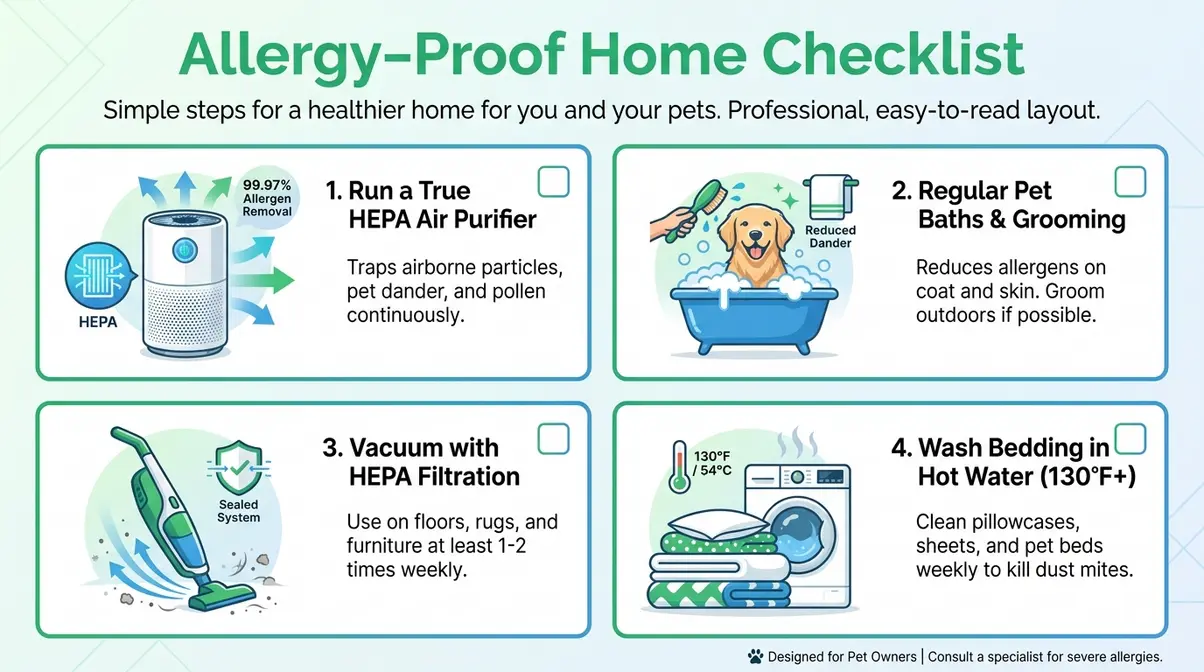
For active allergies: bathe twice weekly with an oatmeal shampoo, wipe paws after every walk, and launder bedding weekly in fragrance-free detergent. Two warnings: don’t bathe daily — it strips the natural oils that protect the skin barrier, making allergies worse. And always use lukewarm water, not hot — heat dilates blood vessels and can intensify inflammation.
For specific product recommendations, see our guide to shampoos for Golden Retriever allergy relief and hot spots.
One question many Golden Retriever owners have — especially those with their own allergies — is whether Goldens are safe for allergy-sensitive households.
Are Golden Retrievers Hypoallergenic?
Golden Retrievers are not hypoallergenic. Their thick double coat sheds heavily year-round, releasing dander, saliva proteins, and urine proteins into the air and onto surfaces. The real culprit isn’t the fur itself — it’s Can f 1, a protein found in dander, saliva, and urine. According to the NIEHS facts on pet allergens and dander, dog allergens are found in dander, saliva, urine, and blood, meaning all breeds — including so-called hypoallergenic ones — can trigger human allergies (National Institute of Environmental Health Sciences).
The most effective home management strategies for human allergy sufferers are True HEPA air purification and twice-weekly bathing of the dog. The PubMed washing study cited above confirms that twice-weekly baths significantly reduce recoverable Can f 1 from the coat. Emerging research on airborne dog allergen neutralization found that TiO2 photocatalyst use in the home can effectively degrade airborne dog dander, abolishing allergen binding to human IgE by over 100% (PubMed, 2023) — a promising development for sensitive households.
English Cream Golden Retrievers have the same allergen profile as standard Goldens. Coat color does not affect dander production, so the lighter coloring offers no allergy advantage.
For our complete guide on whether Golden Retrievers are hypoallergenic and how to manage human allergies to them, see understanding human allergies to Golden Retrievers and hypoallergenic facts. English Cream Golden Retrievers have the same allergy potential — learn more in our guide to allergy considerations for English Cream Golden Retrievers.
Is a Golden Retriever bad for allergies?
Golden Retrievers are not recommended for people with dog allergies. They are not hypoallergenic — their thick double coat sheds heavily year-round, releasing dander, saliva proteins, and urine proteins into the environment. The primary trigger is Can f 1, a protein found in dander and saliva rather than the fur itself. Regular twice-weekly bathing and HEPA air filtration can reduce — but not eliminate — exposure for sensitive individuals. If allergies are severe, consult an allergist before bringing a Golden home.
What neutralizes dog dander?
A True HEPA air purifier is the most effective tool for capturing airborne dog dander. Combine it with weekly washing of your dog’s bedding in hot water, daily vacuuming with a HEPA-filter vacuum, and wiping down surfaces where your dog rests. Bathing your Golden at least twice weekly significantly reduces the Can f 1 allergen on their coat, per PubMed clinical evidence. Recent research also shows TiO2 photocatalyst devices can degrade airborne dander effectively (PubMed, 2023). These steps reduce exposure meaningfully but cannot eliminate dander entirely.
When Allergies Become a Bigger Problem
Home management works well for many Goldens — but there are clear signs that it’s no longer enough. Recognizing these escalation points early prevents months of unnecessary suffering and worsening secondary infections.
- When to call your regular vet:
- A hot spot grows beyond 2 inches, appears infected (green or yellow discharge), or your dog cannot stop licking it despite wearing an e-collar
- An ear infection doesn’t improve within 5–7 days of regular cleaning
- Allergy symptoms return within 2 weeks of stopping medication
- When to ask for a veterinary dermatologist referral — a veterinarian who specializes in skin conditions, essentially the skin specialist for dogs:
- Chronic, year-round symptoms that don’t respond to Apoquel or Cytopoint
- Multiple failed elimination diets with no identified food trigger
- Suspected need for intradermal allergy testing (required before immunotherapy can begin)
- Recurring bacterial skin infections (pyoderma) that keep returning despite antibiotic treatment
- Hot spot emergency care — numbered steps:
- Clip the fur around the hot spot to allow airflow and prevent further matting
- Clean gently with diluted chlorhexidine solution — do not use hydrogen peroxide, which damages tissue
- Apply OTC hydrocortisone spray to reduce inflammation
- Fit an e-collar (cone) immediately to prevent further licking
- If the hot spot is not improving within 24 hours, or is spreading → go to the vet immediately
Secondary bacterial skin infections (pyoderma) require antibiotic treatment — allergy management alone won’t clear them. Your vet may prescribe both an antibiotic and a topical treatment simultaneously. Consult your veterinarian before treating any skin infection at home.
These are the most common questions Golden Retriever owners ask about allergies — answered directly.
Golden Retriever Allergy FAQs
Most Common Golden Retriever Food Allergy
Chicken protein is among the most common food allergens in Golden Retrievers, followed by beef, dairy, wheat, and eggs. Despite being a staple ingredient in most commercial dog foods, chicken’s high prevalence in the diet increases the chance of sensitization over time. Food allergies typically cause year-round itching, hot spots, and ear infections rather than seasonal symptoms — that pattern helps distinguish them from environmental atopy. An 8-week elimination diet with a novel protein is the most reliable way to confirm a food allergy.
Natural Antihistamines for Dogs
Quercetin, a natural flavonoid found in apples and berries, has antihistamine-like and anti-inflammatory properties in dogs and is sometimes called “nature’s Benadryl.” Omega-3 fatty acids from fish oil reduce skin inflammation and support the skin barrier as an adjunct therapy. Oatmeal baths can soothe surface-level itch during a flare-up. Research in dogs remains limited and effectiveness varies by individual — always consult your veterinarian before starting any supplement to confirm the correct dose for your dog’s weight and to check for interactions.
The 3-Day Rule for Allergies
The 3-Day Symptom Escalation Rule is a home management framework: if your Golden’s allergy symptoms — itching, paw licking, hot spots — do not improve within 3 days of basic home care, escalate to an OTC antihistamine (consult your vet for dosing). If there’s no improvement after 3 more days, schedule a vet appointment. Any worsening of symptoms at any point — spreading hot spots, visible pain, or distress — means skipping the countdown and going to the vet immediately, without waiting.
When to See a Vet Dermatologist
See a veterinary dermatologist — a specialist in animal skin conditions — when your Golden has chronic, year-round symptoms that don’t respond to Apoquel or Cytopoint, when multiple elimination diets have failed to identify a food trigger, or when recurring bacterial skin infections (pyoderma) keep returning despite treatment. Dermatologists perform intradermal allergy testing, the gold standard for identifying specific environmental allergens, and can prescribe allergen-specific immunotherapy — the only treatment that targets the root cause rather than managing symptoms.
Your Action Plan for a More Comfortable Golden
For Golden Retriever owners dealing with allergies, the path forward starts with identifying the type — food, environmental, or contact — because each requires a different fix. Veterinary estimates suggest 10–15% of Goldens develop canine atopic dermatitis, but most cases are manageable with the right protocol (Merck Veterinary Manual, 2022). The most effective approach combines a targeted elimination diet or environmental trigger reduction, a consistent twice-weekly bathing schedule, and veterinary-guided treatment when home care reaches its limits.
The 3-Day Symptom Escalation Rule exists to remove the guesswork from one of the most stressful parts of being a Golden owner: not knowing whether to wait or act. Day 1–3: home care. Day 4–6: OTC antihistamine (vet-approved dose). Day 7+: call the vet. Worsening at any point: go immediately. That’s the whole framework — and it works whether youre dealing with a food allergy flare-up, a seasonal atopy spike, or a contact reaction from a new fabric softener.
Start today by checking your Golden’s current food label for chicken or beef protein — the two most common triggers. If you suspect food allergies, talk to your vet about starting an 8-week elimination diet. For product support, our team’s picks for best dog food for Golden Retrievers with allergies and sensitive skin and top shampoos for Golden Retrievers with skin allergies are a good place to start.
➤ Your Golden doesn’t have to live in constant discomfort — with the right allergy type identified and the 3-Day Symptom Escalation Rule in hand, you have everything you need to start making her life better today.
Related gear: see our guide to allergy-friendly food.
Ready to pick a food? Compare the best sensitive stomach dog food for each symptom.