Medical Disclaimer: This article is for informational purposes only and is not a substitute for professional veterinary advice, diagnosis, or treatment. Always consult your veterinarian before starting any new health routine for your dog.
Written by Coral Drake
Your Golden keeps scratching at their ears. The smell is back. You just finished another round of antibiotics, and you are already wondering when the next infection will show up. Before you book yet another vet appointment, it helps to understand what is actually driving the cycle.
You are not alone. Golden Retrievers are among the breeds most vulnerable to recurring ear problems, and treating each infection without addressing the root cause is like mopping a wet floor without turning off the tap. Golden retriever ear infection prevention is not just about cleaning — it requires understanding why the infections keep starting in the first place. By the end of this guide, you will know exactly why your Golden keeps getting ear infections and have a step-by-step prevention routine to stop the cycle. This article covers the root causes, a safe cleaning method, safe over-the-counter options, and clear signs that a vet visit is the right call.
Golden Retriever ear infection prevention works best when you address both trapped moisture and underlying allergies — the two root causes driving the Moisture-Allergy Loop in this breed.
- Floppy ears trap warmth and moisture, creating ideal conditions for yeast and bacteria to multiply
- Allergies (food and environmental) are the most common hidden trigger for recurring flare-ups
- Regular cleaning with a vet-approved, alcohol-free solution is your first line of defense
- Diet changes including an 8-week elimination trial can break the allergy side of the cycle
- Drying ears after every swim or bath is non-negotiable for Goldens who love the water
Why Are Golden Retrievers So Prone to Ear Infections?
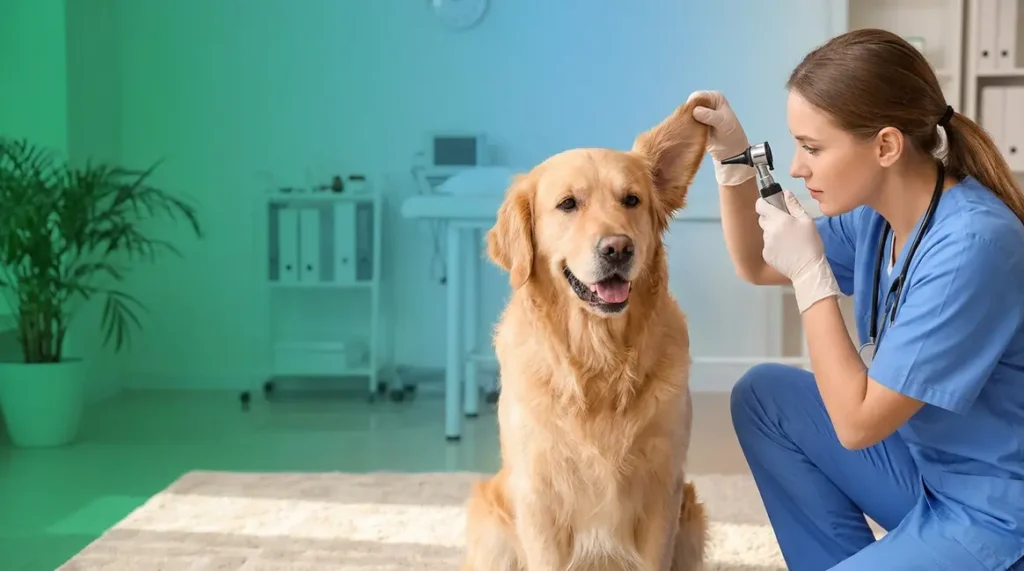
Golden Retrievers get ear infections more often than most other breeds, and the reason comes down to two factors working against each other at the same time. Their anatomy creates a moisture trap, and their immune systems are often wired toward allergic reactions — a combination that veterinary researchers have confirmed puts Retrievers at significantly elevated risk of otitis externa (the clinical term for outer ear canal infection). According to NIH research (2024), Retrievers and dogs with allergies have a significantly increased risk of otitis externa compared to other breeds.
In researching this guide, Coral Drake consulted peer-reviewed veterinary literature and had the content reviewed by Brianna York, Former Vet Tech, at devotedtodog.com.
The Anatomy Problem: Why Floppy Ears Are a Trap
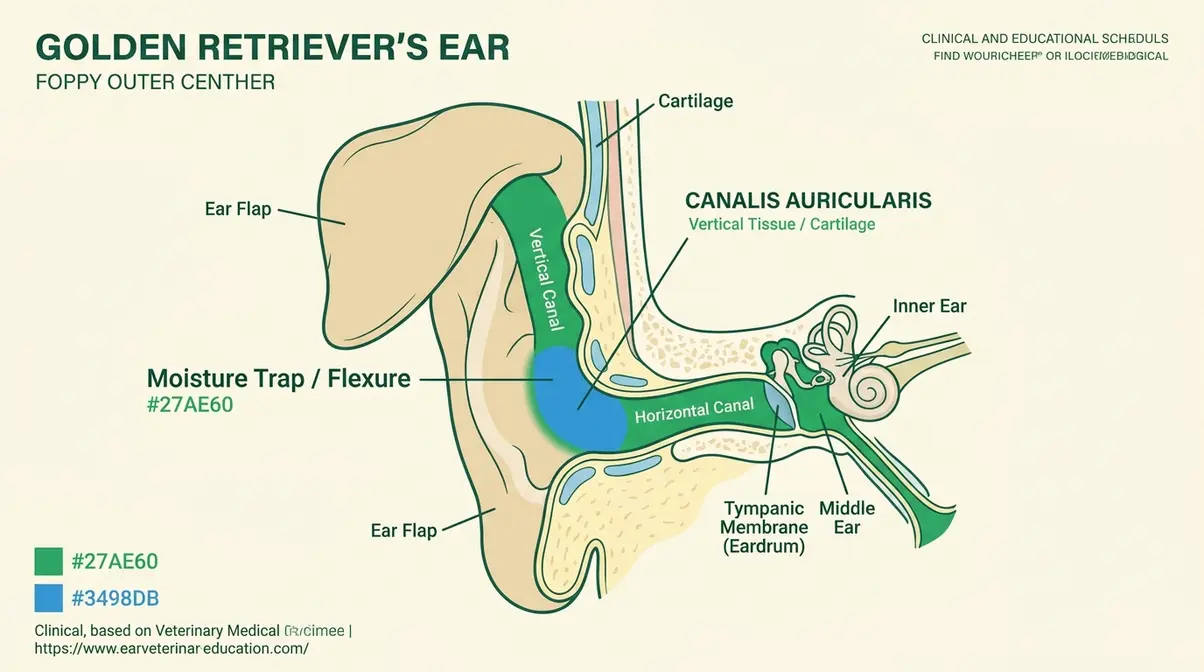
Golden Retrievers have “drop ears” — ears that hang down and cover the canal opening. Cornell University College of Veterinary Medicine specifically notes that drop-eared breeds like Golden Retrievers and Labradors face higher risk because the ear flap seals warm, moist air inside the canal. There is no natural airflow to dry things out between swims or baths.
The dog’s ear canal is also L-shaped — it runs horizontally first, then turns vertically downward. Water that gets in during swimming does not drain out easily. It pools at the bend of that L and just sits there, creating the warm, damp environment that bacteria and yeast need to grow.
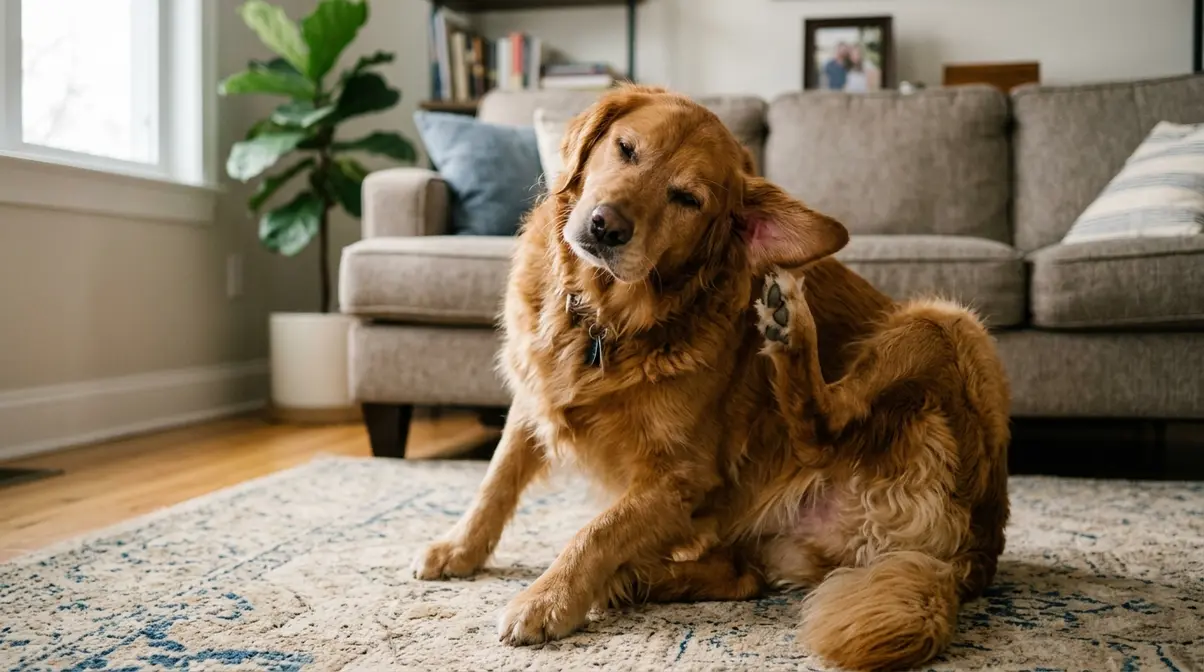
This is why chronic ear infections develop in Goldens even in dogs that are otherwise healthy. You will often see the signs before you smell them: dark brown discharge in the canal, foul odors, your dog shaking their head repeatedly, or pawing at one ear. These are all signals that moisture and microbes have taken hold.
You can read more about common Golden Retriever health issues to understand how ear health fits into the breed’s broader health picture.
This anatomy creates the perfect physical setup — but anatomy alone does not explain why some Goldens get infections every month while others rarely do. The other half of the answer is what is happening inside their immune system.
The Allergy Connection: The Hidden Driver of Recurring Flare-Ups
Allergies — both food allergies and environmental ones like pollen or dust mites — cause the immune system to inflame the lining of the ear canal. That swollen tissue runs warmer, produces more wax, and is harder to keep dry. All of those conditions feed yeast and bacteria. The result is an ear canal that is primed for infection even when you are doing everything else right.
This is where Malassezia (the yeast organism responsible for most canine yeast ear infections) becomes a serious problem. Malassezia thrives in warm, moist, waxy environments — exactly what an inflamed, allergic ear canal provides. Yeast ear infections typically produce a dark, waxy discharge and a distinctive musty or sweet odor.
Purdue University Small Animal Hospital notes that food allergies can be the underlying cause of recurrent ear infections, and an 8-week elimination diet trial is the standard diagnostic tool. If your Golden’s infections keep coming back despite correct cleaning and drying, allergies — especially food allergies — are the most likely reason.
This is what we call the Moisture-Allergy Loop: allergies inflame the canal, moisture gets trapped, infection follows, antibiotics clear it temporarily, but the allergy remains and the cycle restarts. Breaking it requires addressing both sides.
Key finding: Retrievers and dogs with allergies have a significantly elevated risk of otitis externa compared to other breeds. For Golden Retrievers, food allergy trials lasting a minimum of eight weeks are the standard diagnostic step when ear infections recur despite proper cleaning. Source: National Institutes of Health, PMC, 2024; Purdue University Small Animal Hospital, 2026.
Now that you understand why the loop forms, here is how to break it — starting with the most important daily habit you can build.
How Do You Clean a Golden Retriever’s Ears Properly?
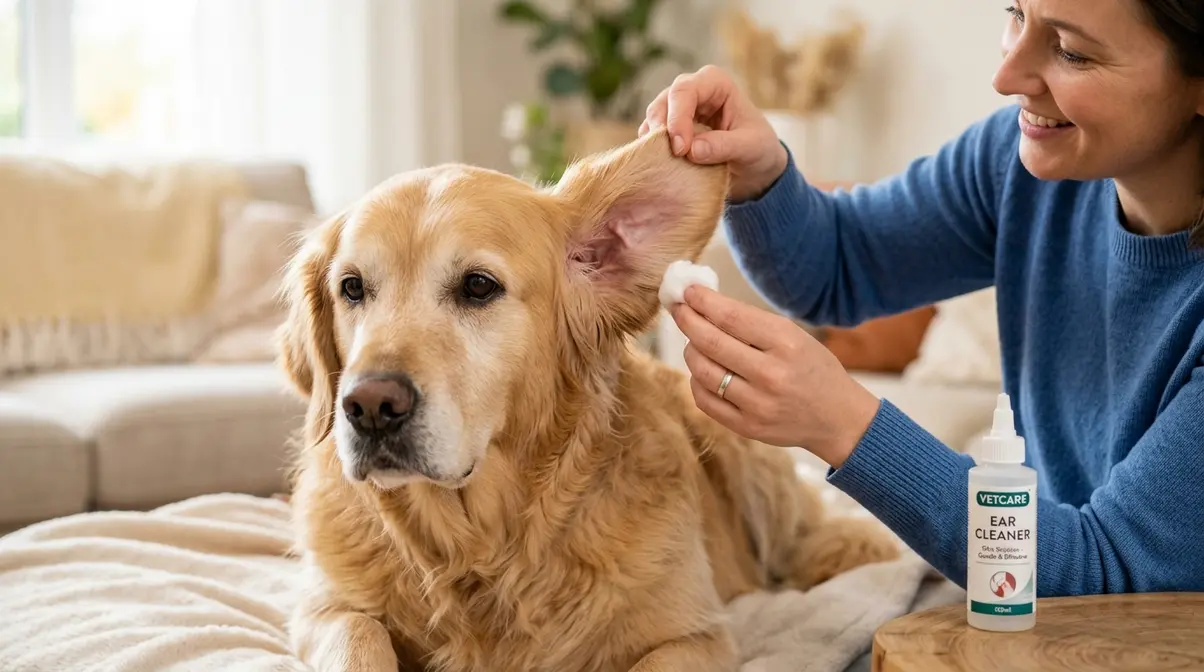
Cleaning your Golden Retriever’s ears correctly is the single most effective step in golden retriever ear infection prevention. Cornell University College of Veterinary Medicine recommends using a liquid ear cleaner that flushes out debris rather than pushing it deeper, and avoiding cotton swabs entirely. Here is the full routine, reviewed by Brianna York, Former Vet Tech.
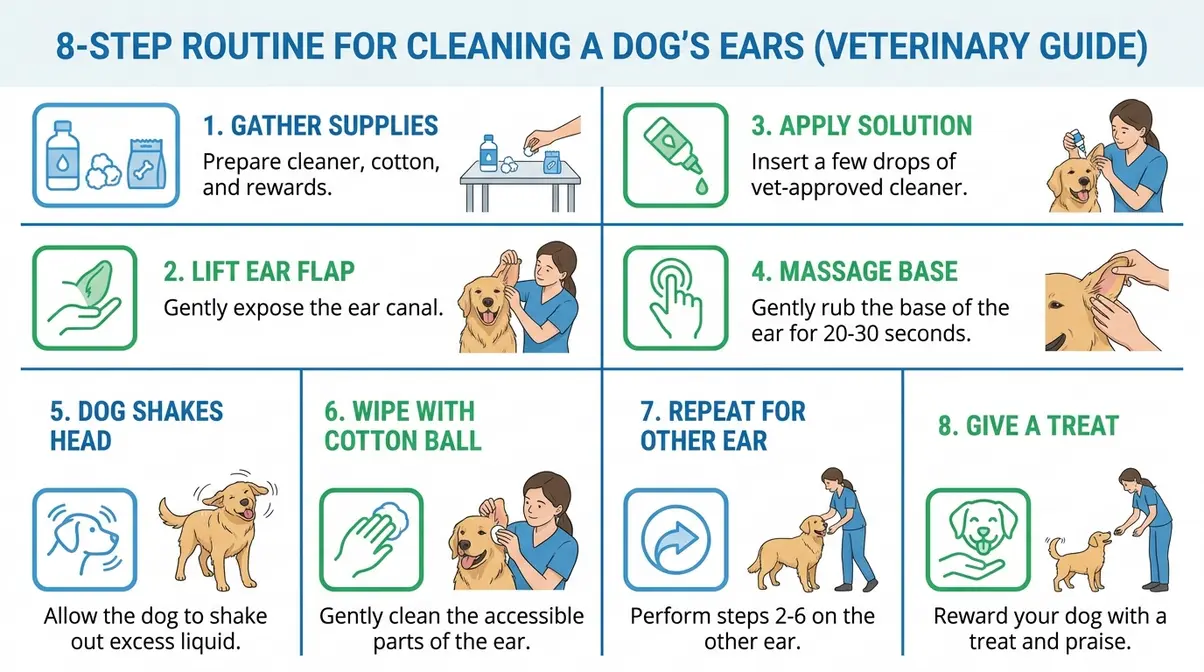
Step-by-Step: The 8-Step Ear Cleaning Routine
This routine targets the moisture side of the Moisture-Allergy Loop directly. Consistent cleaning and drying is how you interrupt the cycle before it restarts.
- Gather your supplies. You need a vet-approved, alcohol-free ear cleaning solution, cotton balls or gauze pads (NOT cotton swabs), and a treat for your dog. Alcohol-based solutions dry out the ear canal lining and cause irritation that makes future infections more likely.
- Let your Golden sniff the bottle. Spend 30 seconds letting them get comfortable before you start. A calm dog makes the process safer and far less stressful for both of you.
- Gently lift the ear flap. Hold it up to expose the canal opening. This improves your angle and allows the solution to reach the horizontal section of the L-shaped canal where moisture pools.
- Fill the ear canal with solution. Squeeze the bottle until the canal is visibly full. Do NOT insert the tip more than one knuckle deep. The one-knuckle rule protects the eardrum from accidental damage.
- Massage the base of the ear for 20 to 30 seconds. You should hear a squishing sound. This loosens debris and wax that has stuck to the canal walls.
- Let your dog shake their head. Step back and let it happen. The head shake naturally expels loosened debris and excess solution — this is the cleaning doing its job.
- Wipe the outer ear with a cotton ball. Always wipe outward, never inward. Wiping inward pushes debris back toward the eardrum, undoing the work you just did.
- Reward your dog immediately. End every session with a treat and praise. Positive association makes future cleanings easier and keeps your dog cooperative over the long term.
Frequency guidance: Most Golden Retrievers benefit from weekly ear cleaning. After every swim or bath, do a quick dry (see the next section) even if you skip the full routine that day.
Cleaning removes what is already there. The next step is making sure moisture does not build up again between cleanings — especially after swimming.
Drying After Swims: The Step Most Owners Skip
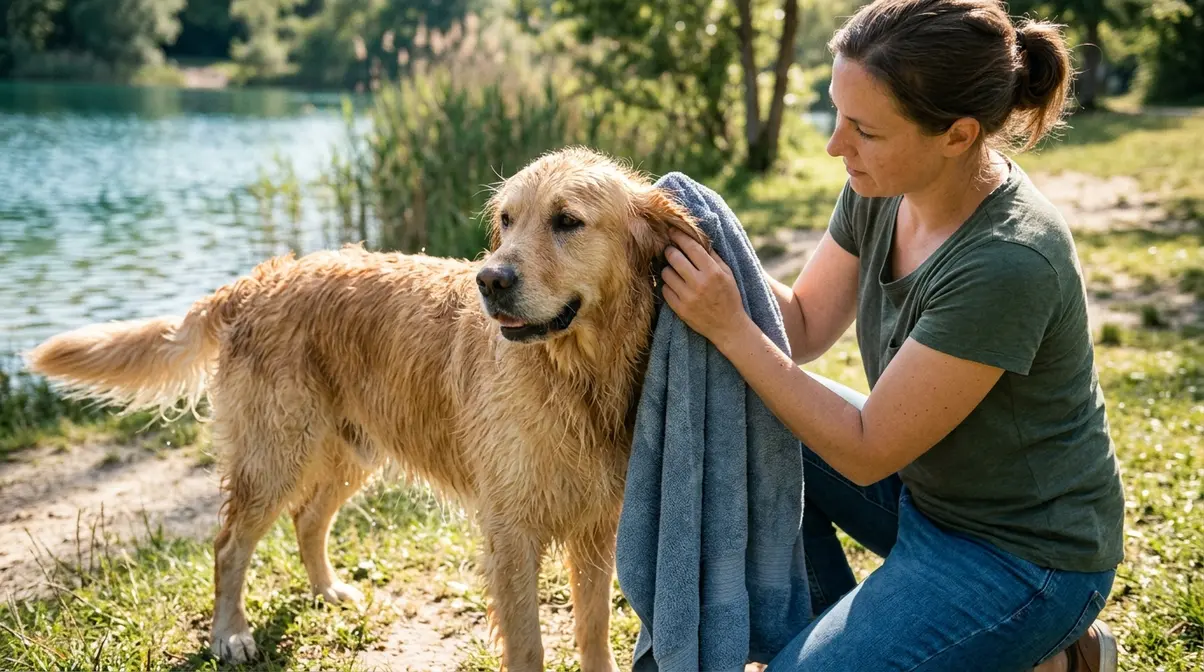
After every swim or bath, use a dry cotton ball to gently absorb visible moisture from the outer ear. Do NOT insert it deeply — just the visible part of the canal entrance. This simple step takes under a minute and removes the moisture that would otherwise sit in that L-shaped bend for hours.
For dogs especially prone to moisture buildup, there is a vet-documented option called the sock trick. Washington State University Veterinary Teaching Hospital documented that airflow can be improved by placing a stretchy tubular fabric — like a sock with holes cut for the ear canals — over the dog’s head. This holds the floppy ear flap away from the canal opening and allows air to circulate and dry the canal naturally. Use it for 10 to 20 minutes after swims, not overnight.
The sock trick is a preventive tool, not a treatment for an active infection. If your Golden already has an infection underway, the sock will not help — that situation needs a vet. For dogs who swim regularly, consider limiting swim sessions during active flare-up periods and always dry immediately afterward.
Cleaning and drying address the moisture side of the loop. If your Golden still gets infections despite a consistent routine, the allergy side needs attention — and some over-the-counter products can help manage mild flare-ups while you investigate dietary triggers.
What Over-the-Counter Products Can Help With Golden Retriever Ear Infections?
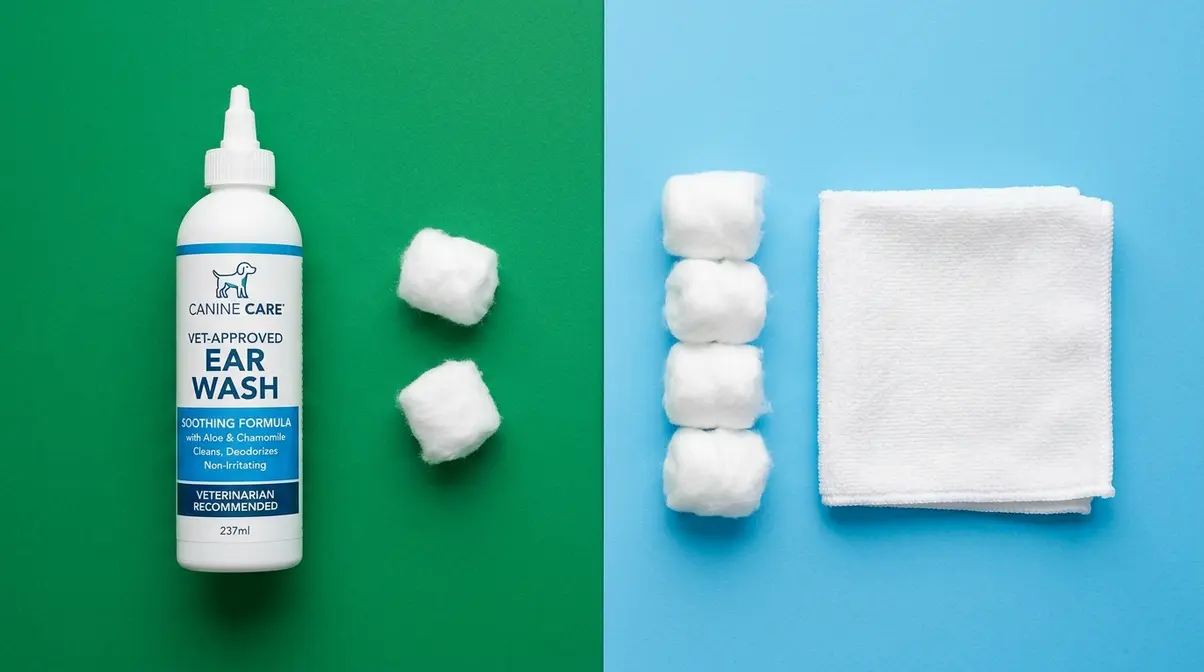
If your Golden’s ears look red or irritated but you are not sure whether to call the vet right away, some over-the-counter ear drops for dogs can help manage mild discomfort. However, OTC products are preventive tools and mild-irritation aids — they do not treat active bacterial or yeast infections, which require a prescription from your veterinarian.
What to Look for in OTC Ear Products
When choosing OTC products, focus on what the label says rather than the brand name. Here is what matters:
- For routine cleaning and prevention, look for:
- Alcohol-free formula (alcohol irritates the canal lining)
- Drying agents such as salicylic acid or boric acid
- No artificial fragrances or harsh preservatives
For mild OTC drops, use them only when there is very mild redness with no discharge, no strong odor, and no visible swelling. If any of those signs are present, stop and call your vet. OTC drops are not appropriate for infections that have already taken hold.
Ear packs are sometimes mentioned in online forums as a home option. An ear pack is a medicated gel placed directly in the ear canal for sustained drug release — but this is a prescription product administered at the vet clinic, not something you can buy or apply at home.
Home remedies to avoid: Diluted apple cider vinegar, hydrogen peroxide, and olive oil are commonly suggested online as homeopathic remedy options. None of these are recommended for use inside the ear canal, especially if the skin is irritated or broken. They can worsen inflammation rather than reduce it.
For yeast-specific infections, University of Illinois College of Veterinary Medicine recommends topical antifungals such as miconazole or clotrimazole as first-line therapy — but these are typically prescription formulations that your vet will prescribe after confirming the infection type.
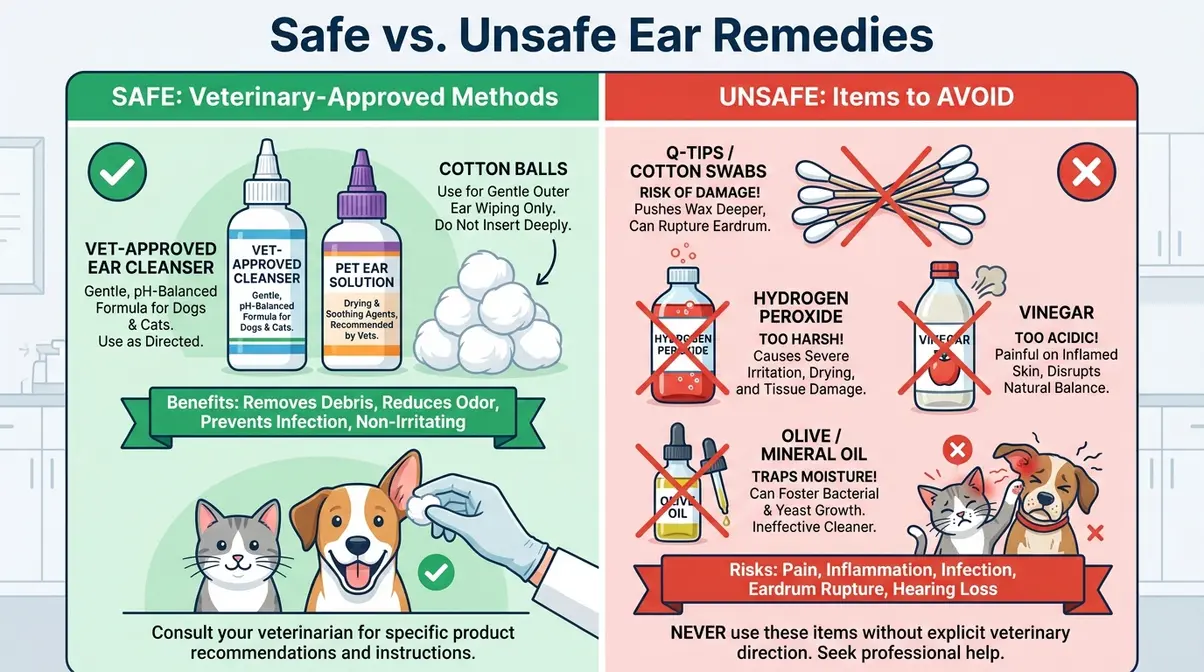
OTC products have real limits. Some situations require professional diagnosis and prescription treatment — and knowing when to make that call protects your dog from a minor irritation becoming a serious problem.
When Should You Call the Vet Instead of Treating at Home?
Home cleaning and OTC products work well for prevention and mild irritation. But some symptoms mean the infection has progressed beyond what you can safely manage at home. Stop home treatment and call your vet the same day if you notice any of the following:
- Strong, foul odor coming from the ear canal
- Dark brown, yellow, or bloody discharge
- The ear canal looks swollen or the skin inside appears raw
- Your dog is in obvious pain when you touch the ear
- Head tilting to one side, loss of balance, or walking in circles — these suggest the infection may have reached the middle or inner ear, which is a more serious situation
- Symptoms that have not improved after 3 to 5 days of proper cleaning
- A second infection within 2 months — this meets the clinical definition of chronic otitis externa, meaning a persistent or recurrent outer ear infection lasting 3 months or longer, per NIH/PMC research on canine otitis
Cost context: Treating an ear infection at a veterinary clinic typically costs $160 to $500 or more, depending on severity and whether prescription medication is needed. Prevention, by comparison, costs only the price of a bottle of ear cleaner and a few minutes each week.
This is not a substitute for veterinary diagnosis — if you are uncertain whether what you are seeing is mild irritation or an active infection, call your vet. When in doubt, it is always safer to get a professional opinion.
Frequently Asked Questions
Are Goldens more prone to ear infections?
Yes, Golden Retrievers are significantly more prone to ear infections than most breeds. Their floppy ears cover the ear canal opening, trapping warmth and moisture that allows bacteria and yeast to thrive. Combined with the breed’s tendency toward food and environmental allergies, this creates ideal conditions for recurring infections. Regular cleaning and drying after water exposure reduces the risk substantially. Consult your veterinarian if infections recur despite a consistent prevention routine.
Do golden retrievers get ear infections?
Yes, ear infections are one of the most common health issues in Golden Retrievers. Their ear structure traps moisture, and their love of swimming accelerates the problem. Many chronic cases are also linked to food or environmental allergies that inflame the ear canal and trigger secondary bacterial or yeast infections. Establishing a weekly cleaning routine and drying ears after every swim significantly reduces how often infections develop. See your vet if infections keep returning despite consistent care.
What is the silent killer in Golden Retrievers?
The “silent killer” in Golden Retrievers most often refers to hemangiosarcoma, an aggressive cancer of the blood vessels. It typically develops on the spleen, heart, or liver and produces no obvious symptoms until it has advanced significantly. This can lead to sudden internal bleeding and collapse with little warning. Golden Retrievers carry a notably elevated lifetime risk for this cancer compared to most other breeds. Regular veterinary check-ups are the most important tool for early detection and the best protection you can offer.
What is the leading cause of death for Golden Retrievers?
Cancer is the leading cause of death in Golden Retrievers, affecting a higher percentage of this breed than most other dogs. The most common types include hemangiosarcoma (blood vessel cancer), lymphoma, mast cell tumors, and osteosarcoma (bone cancer). This high prevalence is an active area of veterinary research. Responsible owners should schedule regular wellness exams and report any unusual lumps, unexplained weight changes, or behavioral shifts to their vet promptly. Early detection significantly improves outcomes for most of these cancers.
Start Your Golden’s Ear Health Routine This Week
Golden retriever ear infection prevention works best when you address both anatomy and allergies together. Research from NIH (2024) confirms that Retrievers face a significantly elevated risk of otitis externa, but consistent weekly cleaning, post-swim drying, and — when needed — an 8-week food allergy trial can dramatically reduce how often infections occur. Studies show that up to 20% of dogs will experience an ear infection at some point (Pet Resource Center of Kansas City, 2023), making proactive care far more effective than reactive treatment.
The Moisture-Allergy Loop is the reason so many Golden owners feel stuck. Treating each infection without addressing the moisture buildup and the allergy trigger just resets the cycle. The routine in this guide targets both sides at once — the 8-step cleaning protocol handles the moisture, and the diet and allergy guidance addresses the immune system trigger that keeps the loop running.
Start with the 8-step cleaning routine this week. If your Golden has had two or more ear infections in the past year, book a vet appointment to discuss an allergy evaluation. You do not have to keep living in the loop — a consistent ear health routine and early allergy testing are within reach for any Golden owner who is ready to be proactive.
➤ A consistent cleaning routine and early allergy testing are the two most powerful tools you have to protect your Golden’s ears for life.
Related gear: see our guide to a gentle dog shampoo.
If this topic interests you, our companion article on Best Ear Cleaners for Golden Retrievers (2026) covers more detail.