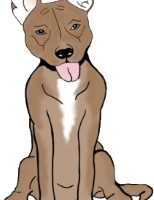

A black Lab is a Labrador Retriever with a solid black coat. The American Kennel Club (AKC) breed standard says “Blacks are all black” and lists black, yellow and chocolate as the Lab’s only coat colors. Per the AKC standard, a black Lab has a black nose, brown eyes and black eye rims.
Black is one of three colors of one breed. Our Labrador Retriever guide covers the size, life expectancy and health tests you’ll want to know for the whole breed.
Black Lab at a glance
- Color: Solid black. The AKC standard says “Blacks are all black,” and the AKC registration code for black is 007. More: Labrador Retriever guide
- Nose, eyes, rims: Black nose, brown eyes and black eye rims (AKC standard).
- Markings: A small white spot on the chest is permissible. In the show ring, brindle or tan markings on a black are a disqualification (AKC standard).
- Coat: “Short, straight and very dense,” with a weather-resistant undercoat (AKC standard).
- Size and lifespan: The AKC gives one range for the breed. Males are 22.5 to 24.5 inches and 65 to 80 pounds, and females are 21.5 to 23.5 inches and 55 to 70 pounds. Life expectancy is 11 to 13 years. More: Labrador Retriever guide
- How common: In UK vet records for 2013, 44.6% of Labs with a recorded color were black (McGreevy and colleagues, 2018).
Author Credentials
📝 Written by: Coral Drake
🔍 Reviewed by: Brianna York, Former Veterinary Technician
📅 Last updated: 10 October 2026
ℹ️ Transparency Notice
This guide is based on the AKC breed standard and breed page, UC Davis and the Labrador Retriever Club. It also uses the UK vet-records study (McGreevy) and one US shelter study. Figures name their source. Our team has no veterinarian on staff, and this guide isn’t veterinary advice.
Sources opened 8 October 2026.
What Does the AKC Standard Say About a Black Lab’s Looks?
Nose, eyes and eye rims
The AKC standard says: “The nose should be black on black or yellow dogs, and brown on chocolates.” “Eye color should be brown in black and yellow Labradors, and brown or hazel in chocolates.” “Eye rims are black in black and yellow Labradors; and brown in chocolates.”
It also says: “Nose color fading to a lighter shade is not a fault.”
Markings, white hairs and chest spots
For black, the standard says: “A black with brindle markings or a black with tan markings is a disqualification.” It calls a small white chest spot “permissible, but not desirable,” and says “White hairs from aging or scarring are not to be misinterpreted as brindling.”
How Does a Lab Get a Black Coat?
According to the UC Davis School of Veterinary Medicine, two genes decide whether a Lab is black, chocolate or yellow. The TYRP1 gene sets black or chocolate. The MC1R gene decides whether that color shows in the hair or the coat comes out yellow. A third locus, the D locus, appears on the Labrador Retriever Club’s test list as “D Locus (Dilute).”
Black is dominant
UC Davis explains that “black coat color (B) is dominant to the chocolate (b).” So a black Lab can be BB or Bb. A Bb Lab looks black and carries chocolate. In UC Davis’s words, “a Bb puppy would carry chocolate and could therefore produce chocolate puppies.”
Some black Labs also carry a yellow gene. UC Davis says: “Some black (BbEe or BBEe) and chocolate (bbEe) Labradors carry one copy of the yellow-causing allele (e).”
Can two black Labs have yellow or chocolate puppies?
Yes. UC Davis says “a puppy will only be chocolate if each parent contributes a chocolate allele (bb).” For yellow, “there is a chance that some puppies will get a copy of e from each parent and have yellow hair.”
The table shows the gene letters a black Lab may carry, according to UC Davis. These are possibilities, not odds.
| Gene letters on a black Lab | What it means |
|---|---|
| BB (TYRP1) | No chocolate allele |
| Bb (TYRP1) | One chocolate allele. Two Bb parents can have chocolate puppies. |
| EE (MC1R) | No yellow allele |
| Ee (MC1R) | One yellow allele (e). Two such parents can have yellow puppies. |
Do Black Labs Shed?
Yes, the AKC says Labs shed. Its breed page says, “The Lab has a thick, water-repellant double coat that sheds.” The AKC breed standard describes the coat as “short, straight and very dense,” with “a soft, weather-resistant undercoat.” The AKC’s trait chart scores the Lab 4 out of 5 on shedding.
We found no source that compares shedding by color, so we can’t say whether black Labs shed more or less than yellow or chocolate Labs.
Are Black Labs Different From Yellow and Chocolate Labs?
The table sets the AKC standard’s nose, eye and eye rim colors beside each color’s share in the McGreevy paper.
| Color | Nose | Eyes | Eye rims | AKC code | UK share, 2013 |
|---|---|---|---|---|---|
| Black | Black | Brown | Black | 007 | 44.6% |
| Yellow | Black | Brown | Black | 232 | 27.8% |
| Chocolate | Brown | Brown or hazel | Brown | 071 | 23.8% |
We found no US figures, so we can’t say how common black is in the United States.
Yellow, fox red, silver and white
The AKC registers three colors: black, chocolate and yellow. The standard says “Yellows may range in color from fox-red to light cream, with variations in shading on the ears, back, and underparts of the dog.”
That makes fox red a shade of yellow in the AKC standard. Our Labrador Retriever guide notes that silver, white and fox red appear as color names on breeder sites and that the AKC color list doesn’t include those names. We’re writing separate pages on yellow, silver, white and fox red Labs.
What do studies say about color and temperament?
Our chocolate Lab page covers the owner-survey studies on temperament by coat color and their limits.
What Health Tests Should a Black Lab’s Parents Have?
The Labrador Retriever Club lists the minimum clearances for a CHIC number. They are hip and elbow evaluations, an eye exam by a boarded ophthalmologist, an EIC DNA test, a D Locus (dilute) DNA test and a permanent ID. The club lists these for the breed as a whole. Our Labrador Retriever guide has the full table, including the optional tests.
What does the UK color study say about black Labs?
The McGreevy and colleagues paper behind the color shares used VetCompass, which gathers records from UK primary-care vets. In its random sample of 2,074 Labs, ear infections (otitis externa) were recorded in 12.8% of black, 17.0% of yellow and 23.4% of chocolate Labs. Pyo-traumatic dermatitis, a skin condition, was recorded in 1.1%, 1.6% and 4.0%.
The McGreevy figures for ear infections and skin disease compare the colors with each other inside one UK sample. The authors note that some of their results rest on small samples, and our chocolate Lab page goes through the limits. This isn’t veterinary advice. Ask your veterinarian about your own dog’s health.
Is Black Dog Syndrome Real for Black Labs?
We found no Lab-specific study. One study of two Pacific Northwest shelters (Svoboda and Hoffman, Animal Welfare, 2015, abstract) found black dogs’ average length of availability for adoption was not significantly longer than other colors’. It covered all dogs, not just Labs.
Black dog syndrome is the idea that black dogs wait longer for adoption than dogs of other colors. The researchers analyzed four years of intake and outcome data, and the rate of euthanasia of black dogs was not “significantly higher than average,” either.
It covered two shelters in one region, so it can’t settle the question for other shelters or for black Lab rescues.
Choosing a Black Lab Puppy
Questions to ask a breeder
- Which health tests did both parents have, and can I see the results myself?
- A black coat doesn’t show what a dog carries. Do the parents carry chocolate (Bb) or yellow (Ee), and how do you know?
- Is black the color on the registration papers?
Our guide on how to find a reputable Labrador Retriever breeder goes deeper on red flags and paperwork.
Labrador Retriever breeders by state
- Labrador Retriever breeders in Massachusetts
- Labrador Retriever breeders in New York
- Labrador Retriever breeders in Texas
- Labrador Retriever breeders in Pennsylvania
- Labrador Retriever breeders in Michigan
- Labrador Retriever breeders in Ohio
- Labrador Retriever breeders in Washington
All states
Our guide lists Labrador Retriever breeders in all 33 states.
Where to Go Next
Pick the right type
Raising a puppy
Living with a Lab
Frequently Asked Questions About Black Labs
What colors do Labradors come in?
The AKC standard lists black, yellow and chocolate. Any other color or a combination of colors is a disqualification.
Are most Labs black?
No. In the UK vet-records study, black was the most common color at 44.6% of dogs with a recorded color, which is under half. Yellow was 27.8% and chocolate 23.8%; other colors made up the rest.
Can two black Labs have yellow or chocolate puppies?
Yes. Two black Labs that both carry chocolate (Bb) can have chocolate puppies, and two that each carry one yellow gene (Ee) can have yellow puppies, according to UC Davis.
What color are a black Lab’s nose and eyes?
The AKC standard says a black nose, brown eyes and black eye rims.
Do black Labs shed?
Yes, the AKC says Labs shed, and its trait chart scores the Lab 4 out of 5. We found no source that compares shedding by color.
Do black Labs live as long as other Labs?
The AKC gives 11 to 13 years for the breed. In the McGreevy paper, 173 recorded deaths had a color. The median age at death was 12.1 years for Labs of all other recorded colors together (139 dogs) and 10.7 years for chocolate Labs (34 dogs). We found no figure for black Labs alone.
Are black dogs adopted less often?
One study of two US shelters found black dogs’ length of availability for adoption was not significantly longer than other colors’. It covered all dogs, not Labs.
The Bottom Line
The Labrador Retriever Club’s health-test list is written for the breed as a whole, so ask for both parents’ results whatever the color. In the McGreevy paper, ear infections were recorded in 12.8% of black, 17.0% of yellow and 23.4% of chocolate Labs in its sample. The median age at death was 12.1 years for the other recorded colors together and 10.7 years for chocolate, from a small sample, with no figure for black alone.
The AKC says Labs shed, and we found no color comparison. Weighing black against chocolate? Our chocolate Lab page covers its color studies. Still choosing a breed? See Golden Retriever vs Labrador.