
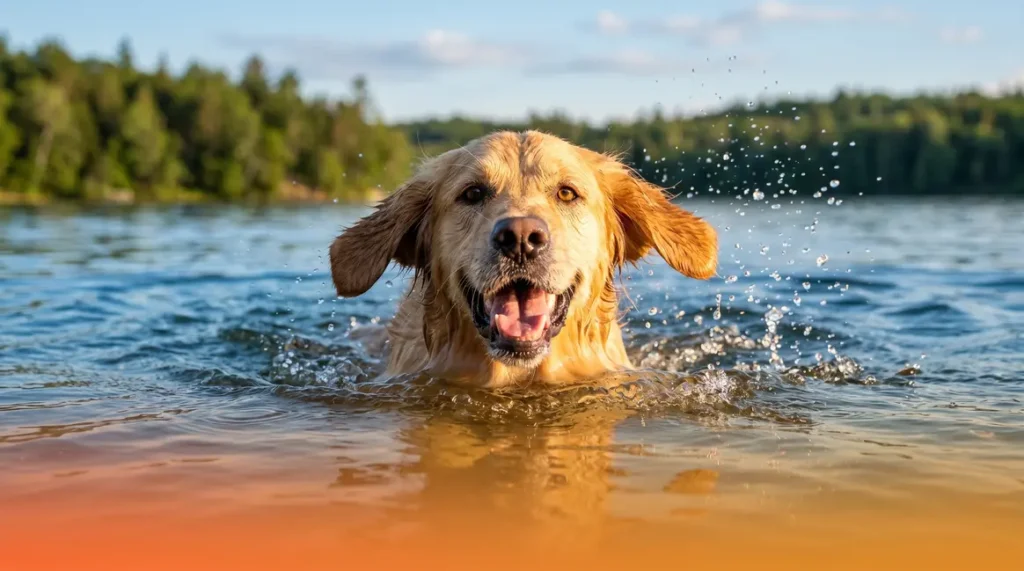
“My one year-old golden is the biggest chicken. He won’t go in the pool and he is motivated, but he won’t go in.”
Sound familiar? You are not alone. This is one of the most common concerns Golden Retriever owners share in online communities, and it makes complete sense to wonder: Do Golden Retrievers like water, or did you somehow end up with the one Golden who missed the memo?
Here is the reassuring truth. The breed is famous for loving water, but not every dog walks up to a lake and leaps in on day one. That hesitance is completely normal, and it does not mean your dog is broken. In this guide, you will learn exactly why most Golden Retrievers are drawn to water, what to do if yours is hesitant, and how to keep every swim safe.
- Yes, most Goldens love water: If you are wondering, do golden retrievers like water, their double coat, webbed paws, and otter-like tail make them natural swimmers.
- Not every Golden dives right in: Individual personality and early experiences shape water confidence (The Water-Shy Myth)
- You can build water love: Positive, gradual introduction using shallow water and high-value treats works even for hesitant dogs
- Safety matters after every swim: Drying your Golden’s ears after swimming prevents painful ear infections
Why Do Golden Retrievers Like Water So Much?

Golden Retrievers like water because they were bred to work in it. The breed descends from a deliberate cross made in 1860s Scotland, combining a yellow wavy-coated retriever with the Tweed Water Spaniel, a now-extinct water retriever that gave the Golden its instinctive pull toward water (American Kennel Club). That aquatic heritage runs so deep in the breed’s DNA that your Golden’s excitement near a lake is not a trained behavior. It is instinct.
- 1860s: breed origin in Scottish Highlands as waterfowl retrievers
- 3 physical adaptations for swimming: webbed paws, water-resistant double coat, muscular otter tail
- 4th: Golden Retriever rank in Stanley Coren’s working-intelligence study of 138 breeds
- 3 to 12 weeks: critical socialization window when water exposure has the strongest lifelong effect (OSU VMC)
- 10 to 15 minutes: recommended cap on water-fetch sessions before a dry-land break (AKC water safety)
- 3-step post-swim ear-drying protocol that prevents most cases of otitis externa (Cornell)
Golden Retrievers were originally crossed with the now-extinct Tweed Water Spaniel in 1860s Scotland, giving them an instinctive pull toward water that runs deeper than training (American Kennel Club).
Explore the Golden Retriever’s natural love for water through the lens of the breed’s full history and temperament profile.
History Behind Their Love of Water
Picture the Scottish Highlands in the 1850s. Hunters needed a dog capable of retrieving shot waterfowl from cold, rough lochs and rivers, terrain that defeated most breeds of the era. Existing retrievers handled land or water well, rarely both.
Dudley Marjoribanks, the Scottish nobleman credited with developing the breed (later known as Lord Tweedmouth), solved this by crossing a yellow wavy-coated retriever with the Tweed Water Spaniel, a breed now extinct. That pairing is the direct ancestor of every Golden Retriever alive today. According to AKC historical breed records, the Golden Retriever’s lineage includes the now-extinct Tweed Water Spaniel, a cross that gave the breed its instinctive water affinity.
The UC Davis genetic history of Golden Retrievers confirms the modern Golden Retriever originated around 1850 in Scotland, specifically bred by Dudley Marjoribanks to retrieve waterfowl in rugged, wet terrain. You can learn more about the working origins of Golden Retrievers and how different lines developed over time.
When your Golden spots a lake, that ancestral pull is still firing. That history is still written in your Golden’s body, specifically in three physical features that make them surprisingly well-equipped for water.
Physical Traits of Natural Swimmers
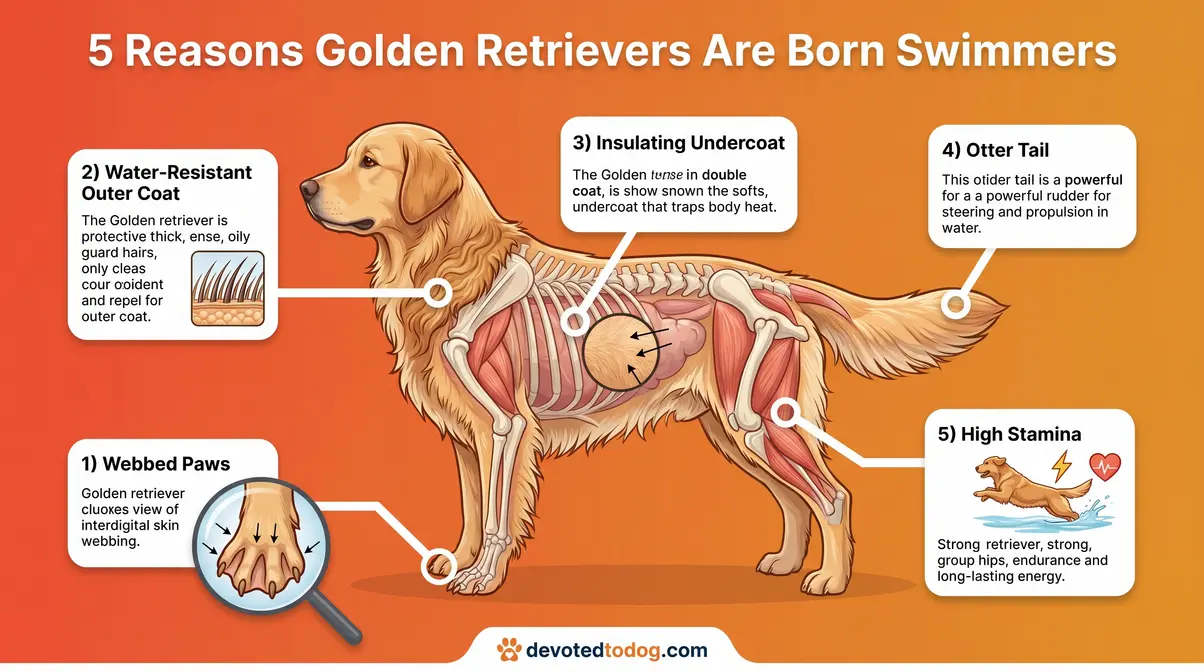
As a true water dog, the Golden Retriever’s body is built for exactly that purpose. Three physical traits work together to make them naturally capable swimmers.
Webbed paws. Golden Retrievers have webbed paws (feet with skin between the toes, like a duck’s foot). This webbing acts like a paddle, giving them more surface area to push through water with each stroke. For beginners, this is the most visually compelling fact: your dog’s feet are literally designed to swim.
Double coat. Their double coat (a two-layer fur system consisting of a dense, water-resistant outer layer and a warm, insulating undercoat) works like a built-in wetsuit. The outer layer repels water like a raincoat. The undercoat traps body heat, keeping them comfortable even in cold water. This is why Goldens shake and are mostly dry within seconds of leaving the water.
Otter tail. Their thick, muscular tail acts as a rudder, steering them through water with precision. Breeders affectionately call it an “otter tail,” and it is one of the breed’s most distinctive physical features.
The UC Davis genetic history of Golden Retrievers confirms that the Golden Retriever’s physical traits, including its water-resistant coat and webbed feet, were selected through deliberate breeding for waterfowl retrieval in Scotland. Put these three traits together and you have a dog that was literally engineered to swim.
So yes, your Golden comes factory-equipped for the water. But that does not mean every dog will walk up to a lake and leap in on day one.
Does Every Golden Retriever Love the Water?
No, not every Golden Retriever loves water right away, and that is completely normal. Many Goldens are hesitant at first, especially without early exposure or if they had a startling experience near water. Their hesitance does not mean they will never enjoy swimming. It means they need a patient, positive introduction.
If your Golden is scared of the water, you are not alone, and your dog is not defective. When owners ask, do golden retrievers like water, they often worry if their dog hesitates. Across Golden Retriever owner communities, the consistent feedback is that many Goldens are initially hesitant near pools or lakes, especially as puppies or adolescents. Most warm up with the right approach.
The Water-Shy Myth, defined. The false belief that a Golden Retriever who hesitates at water has lost its breed instinct. The pull is genetic; the confidence is environmental. At Devoted to Dog, our reading of owner-community feedback is consistent: most water-shy Goldens become enthusiastic swimmers within 3 to 5 patient introduction sessions, never one cold-plunge moment.
We call this The Water-Shy Myth: the false belief that a Golden who hesitates near water is somehow broken. The reality is that individual personality and early experiences shape each dog’s comfort level, and those things can change with the right guidance. Most water-hesitant Golden Retrievers can learn to love swimming with consistent, positive, force-free introduction. The key is never forcing them in (California Waterfowl Association).
Introducing a Water-Shy Golden
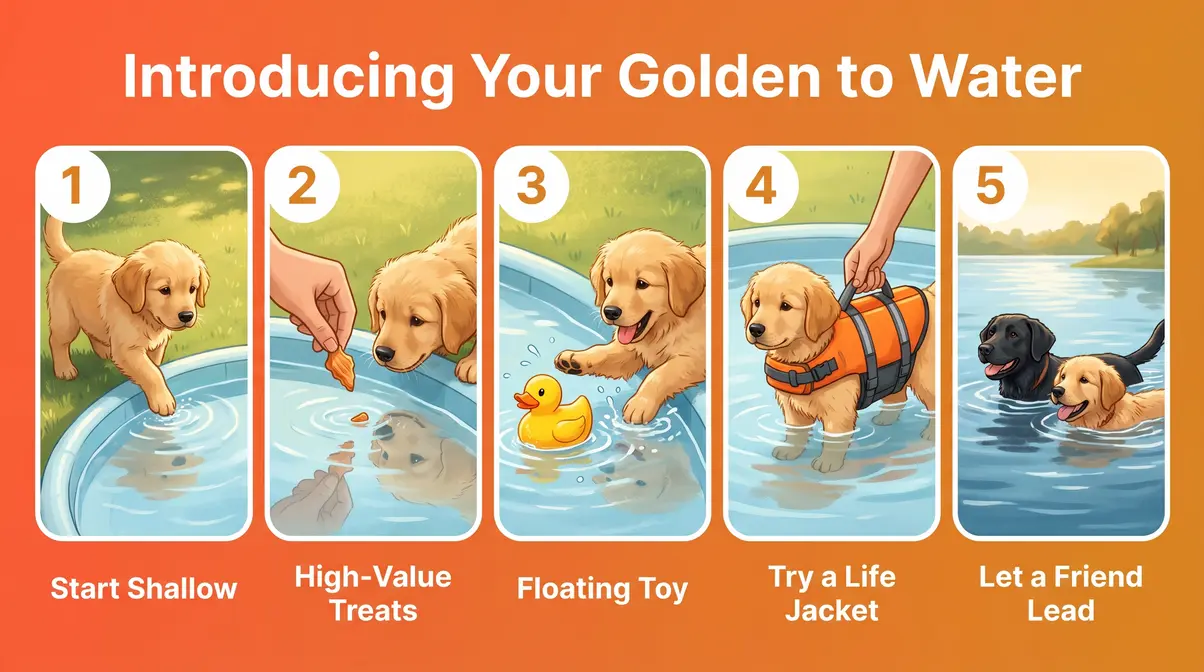
If your Golden is hesitant about swimming, this five-step protocol will help you build their confidence gradually and safely. Work through these steps at your Golden’s pace, not yours.
Step 1: Start with shallow, calm water
A kiddie pool in the backyard or a calm, sandy lake shore works perfectly. No rushing rivers, no deep pools. The goal at this stage is “paws wet,” not “fully submerged.” Shallow water lets your Golden maintain footing and feel in control, which is everything for a nervous dog.
Step 2: Bring high-value treats
Use something your Golden cannot resist, such as small pieces of chicken, cheese, or their favorite training treat. Drop treats near the water’s edge, then gradually move them closer to the waterline. Let the food do the motivating work so your Golden associates water with good things.
Step 3: Use a floating toy
Toss a favorite toy just past the waterline. Many Goldens forget their hesitation the moment their retriever instinct kicks in. That natural drive to fetch can override the anxiety faster than any amount of coaxing.
Step 4: Try a doggy life jacket
A doggy life jacket (a flotation device designed for dogs) gives hesitant swimmers buoyancy and confidence. The handle on top also lets you support your Golden gently without forcing them. Consult your vet or a knowledgeable pet store associate for proper sizing and fit.
Step 5: Let a water-confident dog lead
If a trusted dog friend loves the water, invite them along. Goldens are social learners. Watching another calm, happy dog swim can flip the switch faster than any treat or toy.
One rule applies to every step: never force your Golden into the water. Forcing creates a negative association that can make the hesitance permanent. Patience wins every time.
Once your Golden is comfortable in the water, you may be surprised at just how capable a swimmer they turn out to be.
Are Golden Retrievers Good Swimmers?
Yes, Golden Retrievers are excellent swimmers. Their physical traits (covered in the section above), combined with high stamina and a deep retrieving instinct, give them natural ability in the water. The only real variable between a confident Golden and a hesitant one is confidence, not capability.
Golden Retrievers are built for swimming. Their webbed paws, water-resistant coat, and retriever instinct make them naturally capable in water, even if individual confidence varies.
Here is what makes them stand out once they find their water legs.
Stamina. Golden Retrievers are working dogs bred for long days in the field alongside hunters. That endurance translates directly to the water. A healthy, conditioned Golden can swim for extended periods without tiring quickly, which makes them ideal companions for kayaking, dock diving, or a long afternoon at the lake.
Swimming as exercise. Swimming is a low-impact activity that reduces joint strain, a meaningful benefit for a breed prone to hip dysplasia (a common joint condition in the breed). Veterinary consensus supports swimming as an excellent rehabilitation and fitness activity for Goldens, particularly older dogs or those recovering from joint surgery. Many physical therapists who specialize in canine rehabilitation recommend it specifically for this reason. You can read more about common Golden Retriever behaviors that are connected to their energy levels and exercise needs.
Intelligence. Golden Retrievers rank 4th in Stanley Coren’s dog intelligence rankings, placing them in the “Brightest Dogs” category. That high intelligence (explore the intelligence and emotional traits of Golden Retrievers for more) means they are highly responsive to water commands and quick to learn safe swimming behaviors. They pick up cues like “out” or “this way” remarkably fast once they are comfortable in the water.
Remember, a Golden who has not yet discovered their love of water is not a poor swimmer. They are just a confident swimmer in progress. The Water-Shy Myth does not define their ceiling; it simply describes where they are starting.
What Do Golden Retrievers Love the Most?
Golden Retrievers love two things above all: their people and having a job to do. As a sporting breed with centuries of retrieving instinct, they thrive on activities like fetch, carrying objects, and swimming, all of which tap into their original working purpose. They are also deeply social dogs who seek physical affection and dislike being left alone for long periods. Activities that combine exercise with time alongside you are the sweet spot for a happy, well-adjusted Golden.
How Do Golden Retrievers Compare to Other Water-Loving Breeds?
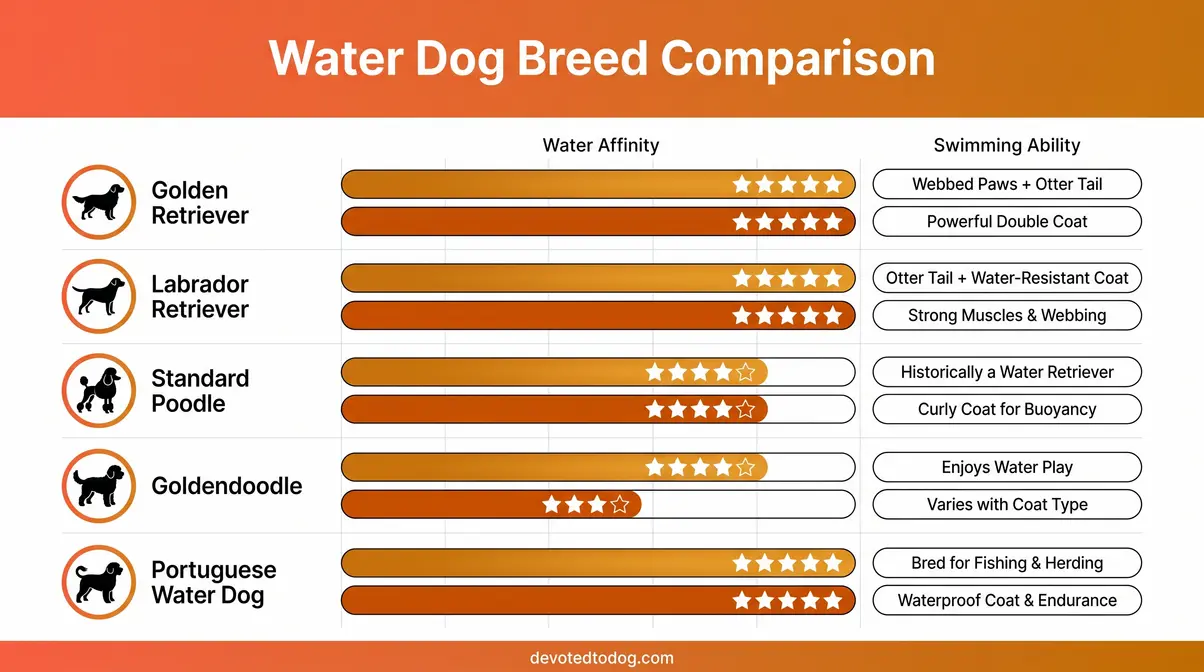
Your Golden is not the only water-obsessed breed out there. Several other breeds share that love, and a quick comparison helps show just how the Golden stacks up against its closest aquatic rivals.
Like Golden Retrievers, other retriever breeds including Labradors were originally bred to work with fishermen and hunters in water, giving them naturally strong swimming instincts (AKC guide to water-loving retriever breeds).
| Breed | Water Affinity | Swimming Ability | Key Water Trait |
|---|---|---|---|
| Golden Retriever | Very High | Excellent | Webbed paws + otter tail |
| Labrador Retriever | Very High | Excellent | Dense, water-resistant coat |
| Standard Poodle | High | Strong | Originally a water retriever |
| Goldendoodle | High | Good | Inherits traits from both parent breeds |
| Portuguese Water Dog | Very High | Excellent | Bred to work with fishermen at sea |
Other water-friendly breeds include Cockapoos and Toy Poodles, though their smaller frames usually mean shorter, calmer swim sessions.
All six retriever breeds share water-loving instincts, but Golden Retrievers stand out for combining swimming ability with a gentle, family-friendly temperament (American Kennel Club).
The Golden Retriever earns its place at the top of any water-dog list. What sets it apart from the Labrador Retriever (the Golden’s closest retriever cousin and perennial rival in the water) or the Portuguese Water Dog (a breed developed to assist fishermen) is temperament. Goldens combine strong swimming ability with the gentle, patient personality that makes them ideal family water companions.
For a detailed side-by-side, see our Golden Retriever vs. Labrador Retriever comparison or explore the full profile of the water-loving Labrador Retriever.
How Do You Keep Your Golden Retriever Safe Around Water?
Swimming is one of the best things you can do with your Golden Retriever. It burns energy, strengthens muscles, and gives you both a great afternoon together. But two preventable risks are worth knowing before you head to the lake: water intoxication and ear infections.
Veterinarians recommend drying your Golden Retriever’s ears thoroughly after every swim to prevent otitis externa, the most common post-swim health issue in floppy-eared breeds (Cornell University College of Veterinary Medicine).
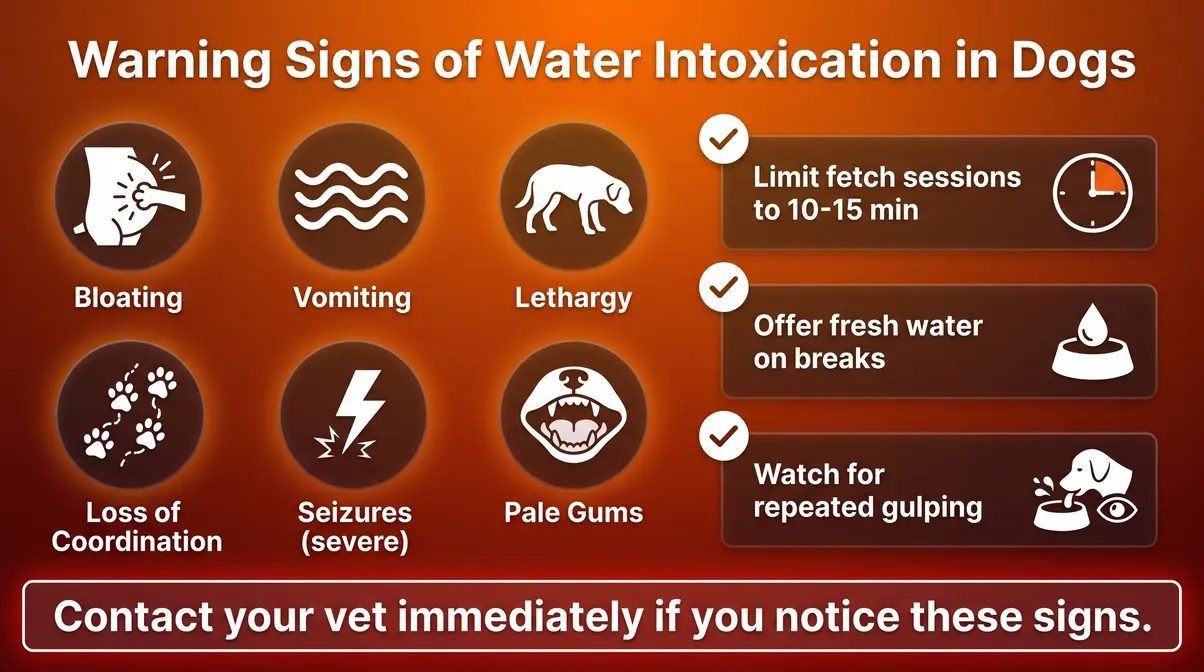
Water intoxication (also called hyponatremia) happens when a dog swallows large amounts of water while swimming or playing fetch in a pool or lake. The excess water dilutes sodium in the bloodstream, which can cause swelling in the brain and other tissues. According to the AKC, this condition is rare but serious and can progress quickly. Signs to watch for include bloating, vomiting, lethargy, loss of coordination, and in severe cases, seizures. Prevent it with three simple steps:
- Limit water-fetch sessions to 10 to 15 minutes at a time, then take a dry-land break.
- Offer fresh drinking water during breaks. Counterintuitively, a hydrated dog is less likely to gulp lake or pool water.
- Watch for repeated gulping during swim sessions and redirect your Golden to a toy on dry land.
Always supervise your Golden Retriever near water. Contact your veterinarian immediately if you notice any of the above signs after swimming.
Protecting Ears After Every Swim
Golden Retrievers’ floppy ears create a warm, dark, moist environment after swimming, which is exactly the kind of environment that ear infections love. The inner ear canal is especially vulnerable. Otitis externa (a common ear infection caused by trapped moisture) is one of the most frequently reported post-swim health issues in floppy-eared breeds. A specific culprit is Malassezia (a yeast that thrives in warm, moist ear canals), which can take hold quickly after water exposure.
According to Cornell University veterinary guidelines for ear cleaning, veterinarians recommend routine ear cleaning for dogs immediately after swimming to prevent moisture buildup that leads to ear infections. Research on the clinical management of canine ear infections confirms that thoroughly drying a dog’s ears after swimming is a critical strategy to prevent chronic otitis externa (PubMed). Additionally, veterinary research on swimming-induced otitis externa shows that excessive moisture in the ear canal from frequent swimming causes tissue breakdown that directly predisposes dogs to Malassezia otitis externa (Cornell University eCommons).
Follow this three-step ear-drying protocol after every swim:
- Use a clean, dry towel to gently wipe the visible part of the ear flap immediately after your Golden exits the water.
- Use a cotton ball (never a cotton swab, which can push debris deeper) to absorb moisture from the outer ear canal opening.
- Ask your vet about a vet-approved ear-drying solution if your Golden swims frequently. Brianna York, Vet Tech, recommends discussing this with your veterinarian at your next visit, especially for dogs who swim multiple times per week.
The 60-second post-swim ear routine. 1) Wipe outer ear flap with a clean towel within 30 seconds of leaving the water. 2) Gently absorb the outer canal with cotton balls (never swabs). 3) Use a vet-approved drying solution if your Golden swims more than twice per week. The total time investment is under one minute, and it is the single highest-leverage step you can take to prevent recurring otitis externa, the most common post-swim health issue in floppy-eared breeds (Cornell).
Warning signs of an ear infection include head shaking, scratching at the ear, redness, unusual odor, or discharge. If you notice any of these signs, see your vet promptly. Do not attempt home treatment beyond gentle cleaning.

With the right post-swim routine, your Golden can enjoy the water regularly without any health consequences. Now, here are the questions Golden Retriever owners ask most often about water.
Frequently Asked Questions
Do All Golden Retrievers Like Water?
No, not all Golden Retrievers automatically love water, even though the breed has a strong natural affinity for it. Individual personality and early experiences shape each dog’s comfort level. A Golden who grew up without water exposure may be hesitant at first, especially around pools or open water. Across owner communities, many Goldens initially resist water but warm up quickly with patient, positive introduction. Patience is key during this learning phase. If your Golden is hesitant, that is not a sign of a problem, but rather a sign they need a gentle, confident guide.
How to Safely Introduce Water?
Start in calm, shallow water and use high-value treats to create a positive association. Let your Golden explore at their own pace, and never force them in, as this creates lasting negative associations with water. A doggy life jacket adds buoyancy and confidence, and having a water-confident dog present can accelerate the process noticeably. Most Golden Retrievers respond within a few sessions when introduced with patience and positive reinforcement.
Are Golden Retrievers Good Swimmers?
Yes, Golden Retrievers are excellent swimmers with physical traits specifically suited for water. Their webbed paws, water-resistant double coat, and muscular otter tail steer them through water with ease. They also have the stamina of a working breed, allowing them to swim for extended periods without tiring quickly.
Downsides of Owning a Golden?
Golden Retrievers are wonderful companions, but they come with real challenges you should plan for. They shed heavily year-round, especially during seasonal coat blows, and require significant daily exercise to prevent boredom-driven behavior. The breed is also prone to health issues including hip dysplasia and certain cancers. Their friendly, exuberant nature can lead to jumping on guests if training is not started early. Budgeting time for grooming, regular exercise, and proactive vet care is essential for a happy, healthy Golden.
Do Golden Retrievers Like to Cuddle?
Yes, Golden Retrievers are incredibly affectionate dogs that typically love to cuddle with their owners. Because they were bred to work closely alongside humans, they form strong social bonds and thrive on physical contact. Snuggling on the couch after a long day of swimming or playing is a favorite activity for most Goldens.
Your Golden Is Built for the Water
So, do golden retrievers like water? For Golden Retriever owners wondering whether their dog’s water hesitance is normal, the answer is yes, and it does not last forever. Most Goldens are born with the instincts and physical tools for swimming. What varies is confidence, not capability. The best approach combines patient, shallow-water introductions, high-value rewards, and a doggy life jacket for nervous first-timers. At Devoted to Dog, our team consistently finds that Goldens introduced to water using positive, force-free methods become enthusiastic swimmers within weeks.
The Water-Shy Myth is exactly that: a myth. Your Golden is not broken because they will not jump into the pool. They are simply waiting for the right conditions, the right encouragement, and a little patience from you. The “biggest chicken” today can become the most avid swimmer in the neighborhood with the right start.
Ready to learn more about your Golden? Explore our full Golden Retriever breed guide for everything you need to raise a happy, healthy, water-loving companion.
Brianna York is a former veterinary technician with hands-on clinical experience in canine health. She contributes medical accuracy review to DevotedToDog health articles and validates clinical claims against current AVMA, AAHA, and OFA standards.
Related gear: see our guide to the best dog toys.
If this topic interests you, our companion article on Best Dog Life Jackets for Water-Loving Breeds 2026 covers more detail.