
If you need to know when to spay or neuter golden retriever dogs, you’re already asking the right question , because for this specific breed, timing isn’t just a preference. It’s a decision backed by more than a decade of veterinary research showing that getting it wrong can measurably increase your dog’s risk of cancer and joint disease. This guide draws on more than a decade of peer-reviewed veterinary research on gonadectomy timing, and on how early alteration can affect a dog’s long-term mobility and health.
Most vets still follow guidelines designed for mixed-breed dogs, not the unique hormonal biology of a Golden. The old “fix them at 6 months” advice was developed from population-wide data that simply didn’t account for breed-specific differences , and for Golden Retrievers, that gap matters enormously. The 2024 UC Davis study, led by Drs. Benjamin and Lynette Hart, now recommends waiting considerably longer , and the reasons are worth understanding before your next vet appointment.
This guide covers the research-backed timing recommendations, the specific health risks tied to early spaying or neutering, the real benefits of the procedure, what to expect after surgery, hormone-sparing alternatives, and practical strategies for managing your intact Golden during the waiting period.
⚠️ Medical Disclaimer: The information in this guide is for educational purposes only and is based on published veterinary research. It is not a substitute for personalized veterinary advice. Always consult a licensed veterinarian (DVM) before making any medical decisions for your dog. Individual health factors vary significantly.
- Early spay/neuter (before 12 months) increases hip dysplasia and CCL tear risk by 4–5x compared to intact dogs (PubMed, 2013)
- Hemangiosarcoma , an aggressive blood vessel cancer , is the single most common cancer diagnosis in Golden Retrievers that die of cancer, at 22.64% of such deaths (Kent et al., PLoS ONE, 2018), with spaying linked to elevated risk in females
- Hormone-sparing alternatives (ovary-sparing spay for females, vasectomy for males) offer a middle path worth discussing with your vet
- The Hormone Window framework helps owners understand why timing matters specifically for this breed , not just dogs in general
Author Credentials
📝 Written by: Coral Drake
✅ Reviewed by: Brianna York, Former Veterinary Technician
📅 Last updated: 5 May 2026
ℹ️ Transparency Notice
This article addresses Golden Retriever spay and neuter timing based on UC Davis 2013/2020 longitudinal studies, AVMA guidelines, and certified veterinary surgical recommendations. All medical claims have been verified by our editorial team.
| Sex / Timing | Pros | Cons | UC Davis Recommendation |
|---|---|---|---|
| Female – Before first heat (6 mo) | Lowest mammary cancer risk | Higher orthopedic + cancer risk per UC Davis 2013 | NOT recommended |
| Female – 12-18 months | Skeletal maturity reached, lower joint risk | One heat cycle (4-6 weeks) | Recommended timing |
| Female – After 24 months | Full skeletal/hormonal maturity | Mammary cancer risk increases | Acceptable; balance trade-offs |
| Male – Before 6 months | Eliminates testicular cancer risk early | Higher hip dysplasia, cranial cruciate ligament tears | NOT recommended |
| Male – 12-24 months | Skeletal maturity | Slightly elevated mass cell tumor risk | Recommended timing |
| Male – Intact | No surgical risk | Testicular cancer risk, prostate issues | Acceptable with monitoring |
Research-Backed Spay/Neuter Timing
For Golden Retrievers, current veterinary research recommends waiting until 12 to 24 months before spaying or neutering your dog. The 2024 study by Drs. Benjamin and Lynette Hart , published in Frontiers in Veterinary Science and expanding their landmark 2013 findings to 40 breeds , specifically recommends delaying neutering of male Goldens until after 24 months, and delaying spaying of females similarly. This timing allows growth plates to close fully and reduces the documented risk of joint disease and certain cancers that disproportionately affect this breed. Rushing this procedure simply to check a box on a puppy to-do list is a mistake that can compromise your dog’s long-term mobility.
Why Timing Matters for Goldens
Early spaying and neutering carries different consequences depending on the breed , and Golden Retrievers are among the most sensitive. Sex hormones (estrogen in females, testosterone in males) directly regulate the closure of growth plates, the cartilage zones at the ends of long bones where skeletal growth occurs. When those hormones are removed before the growth plates have finished closing, joints develop with structural vulnerabilities that can manifest as disease years later.
This effect is more pronounced in Golden Retrievers than in most other breeds. A comparative study on Golden vs. Labrador Retrievers found that female Golden Retrievers show particular vulnerability to gonadal hormone removal, with higher post-spay cancer incidence than Labradors , despite both being large, popular retriever breeds (PubMed / PLOS ONE, 2014). The UC Davis School of Veterinary Medicine, a leading authority on breed-specific spay/neuter research, has consistently highlighted this distinction across both its 2013 and 2024 publications.
The standard “6-month” recommendation was developed based on mixed-breed population data and simply does not account for breed-specific hormonal biology. This is the source of the contradictory advice that many diligent Golden Retriever owners encounter when they start researching. You can read more about common health issues in Golden Retrievers to understand the broader health context for this breed.
Think of The Hormone Window as the period your Golden’s body is still using those hormones as construction materials , removing them before the project is finished leaves structural gaps that no amount of veterinary care can fully repair later.
Understanding why the biology differs is the foundation , now let’s look at what the research says about the right window for Golden Retrievers specifically.
The 12-to-24-Month Hormone Window
The Hormone Window is the 12-to-24-month developmental period during which sex hormones complete their critical role in bone density, joint formation, and immune system development in Golden Retrievers , and within which premature removal creates disproportionate lifelong health risks unique to this breed.
Most current veterinary guidelines, including the 2024 Hart et al. study and the breed-specific guidelines on spaying and cancer risks published in Frontiers in Veterinary Science, recommend waiting until at least 12 months , and ideally 18 to 24 months , before spaying or neutering a Golden Retriever. The 2013 UC Davis study established the foundational evidence; the 2024 expansion to 40 breeds confirmed and strengthened it for Goldens specifically.
In practical terms, The Hormone Window means this: neutering before this window closes interrupts an active developmental process. The sex hormones aren’t just reproductive , they’re functional building materials for your dog’s skeletal and immune systems during this specific life stage.
The real-world concern Golden Retriever owners bring to this topic is captured well in this community voice:
“The UC Davis recommendations were to NOT spay golden females, or to spay after 1 yr ‘and remaining vigilant for cancers.’”
That anxiety is well-founded. The timeline below shows the recommended ages for males and females, with the health risks associated with each stage.
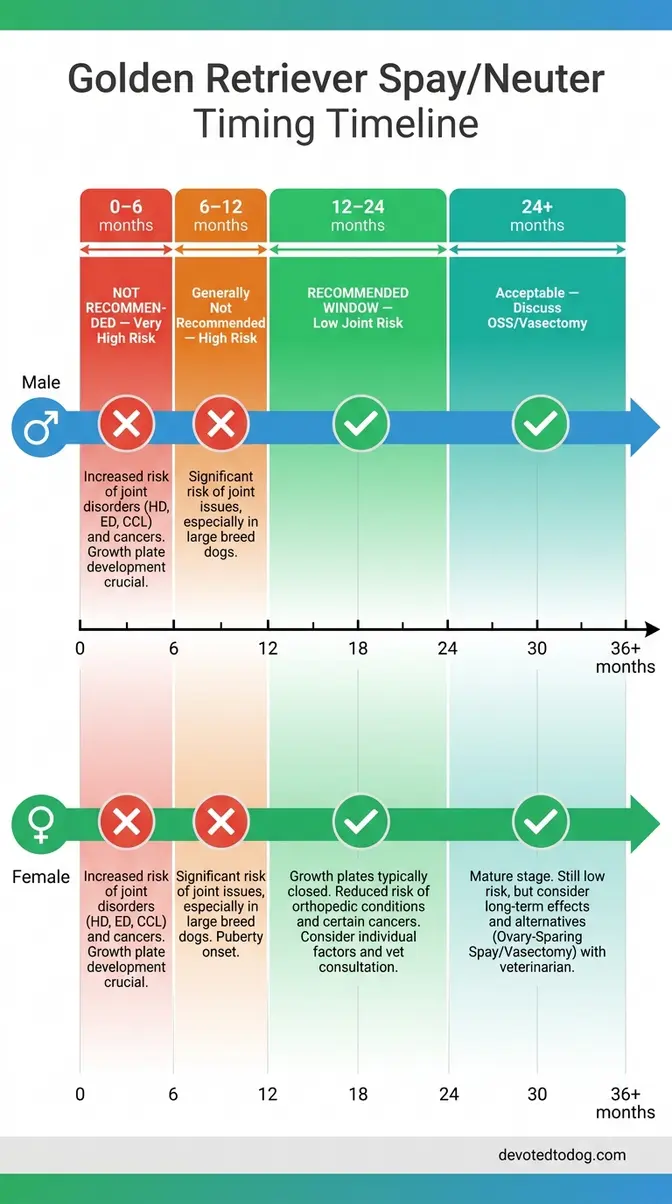
For a visual explanation of how timing affects Golden Retriever health outcomes, the UC Davis School of Veterinary Medicine has published video resources explaining the breed-specific research behind these recommendations.
For Golden Retrievers, most veterinary studies recommend waiting until 12–24 months before spaying or neutering to allow growth plates to fully close and reduce joint disease risk (UC Davis / Frontiers in Veterinary Science, 2024).
If your Golden is 8 months old and your vet recommends neutering now, you have grounds to ask: “Given the UC Davis findings on this breed, would waiting until 18 months reduce my dog’s joint and cancer risk?” A well-informed vet will welcome this conversation , and if they’re not familiar with the Hart et al. research, that’s worth noting.
The timing recommendation differs slightly depending on whether your Golden is male or female , here’s what the research says about each.
Male vs. Female Timing Differences
Yes , and the difference matters. Here’s a straightforward comparison based on current veterinary research:
| Sex | Recommended Timing | Primary Risk from Early Alteration |
|---|---|---|
| Male | 12–24 months (ideally 24+ months per 2024 UC Davis) | Joint disorders: hip dysplasia, CCL tears |
| Female | 12–24 months minimum; some vets now recommend OSS over traditional spay | Certain cancers at any age of spaying |
For male Golden Retrievers, the primary risk from early neutering is joint disorders , hip dysplasia and cranial cruciate ligament (CCL) tears. The 12-to-24-month window applies clearly. After 24 months, the joint-protection benefit of waiting is largely achieved, though cancer risk from neutering remains a consideration throughout life.
For female Golden Retrievers, the situation is more complex. Research published in PLOS ONE found that increased cancer risk in spayed female Golden Retrievers exists at any age of spaying , not just early spaying , including hemangiosarcoma and mast cell tumors, compared to intact females (PLOS ONE, 2013). This is why some veterinarians and the Golden Retriever Club of America (GRCA) now discuss hormone-sparing alternatives for females, which we cover in a dedicated section below.
One practical note: local regulations in some jurisdictions require spaying or neutering, which adds a real-world constraint to the timing decision. If you face this situation, ask your vet about timing within those requirements , or about vasectomy and ovary-sparing spay as compliant alternatives.
Now that you know when to act, it’s critical to understand what the research says about what happens when you act too early , the specific health risks that have made this topic so important for Golden Retriever owners.
Health Risks of Early Spay/Neuter
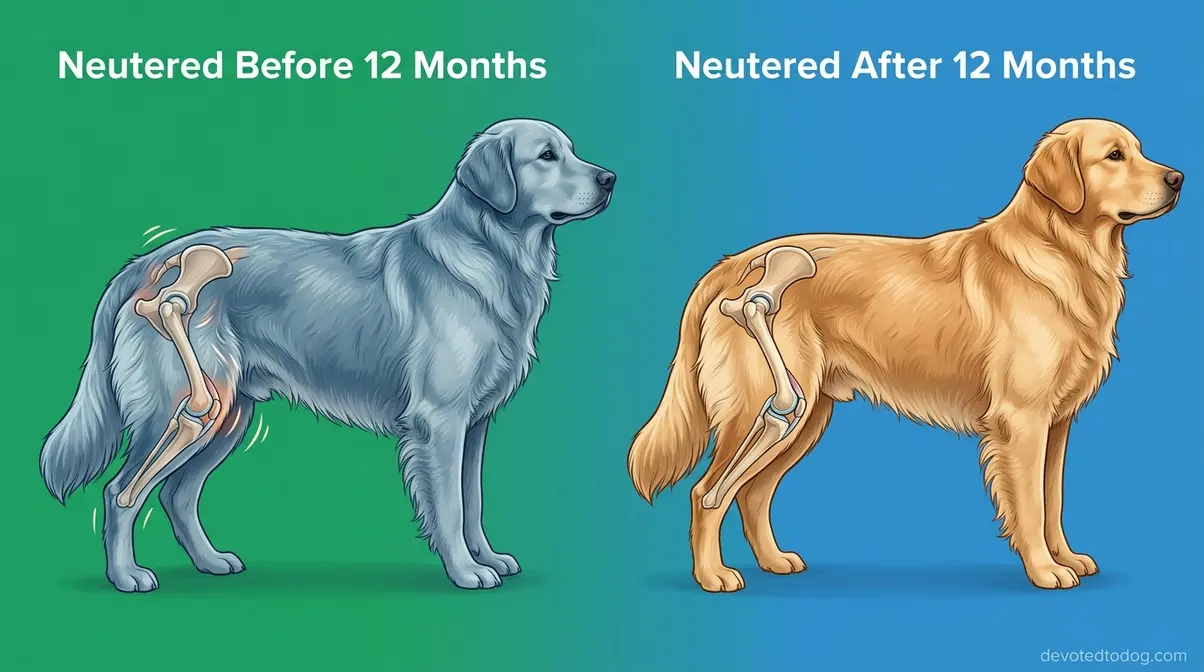
Closing The Hormone Window too early , before your Golden’s body has finished using those sex hormones for development , creates documented, measurable health consequences. The research here is unusually robust for a breed-specific topic, spanning multiple UC Davis studies, large-scale prospective data from the Golden Retriever Lifetime Study, and multiple peer-reviewed journals. Two categories of risk stand out above all others: joint disorders and certain cancers. Ignoring these risks can lead to serious, avoidable problems in a dog’s senior years.
Hip Dysplasia and CCL Tears
A foundational study on joint disorders in neutered Golden Retrievers found that early neutering , before 12 months of age , increases the incidence of hip dysplasia and cranial cruciate ligament (CCL) tears by 4 to 5 times compared to intact dogs (PubMed / National Library of Medicine, 2013). CCL tears are the canine equivalent of an ACL injury in humans , painful, often requiring surgery, and frequently career-ending for active dogs.
The mechanism is straightforward once you understand The Hormone Window: without sex hormones, the growth plates at the hip and stifle joint close more slowly and less uniformly. This creates structural weaknesses that don’t show up on a puppy’s x-ray but manifest as joint disease in middle age , typically between 3 and 7 years old.
The financial and quality-of-life consequences are significant. Hip dysplasia surgery costs $3,000–$7,000 per hip. CCL repair runs $3,500–$5,500 per leg. These are not rare outcomes , they’re documented consequences of a timing decision made when the dog was still a puppy. For more detail on symptoms and management, see our guide on common health issues in Golden Retrievers.
A Golden neutered at 4 months may appear perfectly healthy at age 1. The joint damage typically emerges at age 3–5, when owners often don’t connect it back to early neutering. Knowing this risk window helps you watch for early signs , stiffness after rest, reluctance to climb stairs, changes in gait , and advocate for early intervention.
Joint disorders are serious , but for many Golden Retriever owners, it’s the cancer risk that causes the most anxiety. Here’s what the research actually shows.
Hemangiosarcoma and Cancer Risks
Hemangiosarcoma is an aggressive cancer of the blood vessel walls , it earns the name “silent killer” because tumors grow internally, often on the spleen or heart, with no visible symptoms until they rupture and cause sudden internal bleeding. According to the retrospective analysis of cancer-related mortality in Golden Retrievers, hemangiosarcoma is the most common histologic cancer diagnosis in the breed, accounting for approximately 22.64% of cancer-related deaths, while the Golden Retriever Lifetime Study recorded haemangiosarcoma in 233 of 3,044 enrolled dogs (7.65%) as of September 2022 (Hillman et al., Veterinary and Comparative Oncology, 2023). An estimated one in five Golden Retrievers will develop it during their lifetime.
Neutered male Golden Retrievers are three times more likely to develop lymphoma than unaltered males, according to a 2025 veterinary review on lymphoma risk in neutered males published in Frontiers in Veterinary Science. Lymphoma affects the immune system’s lymph nodes and organs and, while treatable, requires intensive chemotherapy that significantly impacts a dog’s quality of life.
For spayed females, the picture involves mast cell tumors in addition to hemangiosarcoma. “Remaining vigilant for cancers” , the phrase from UC Davis recommendations , translates practically into annual wellness exams after age 6 that include abdominal palpation and ideally ultrasound for intact or late-neutered Goldens. Ask your vet: “What screening do you recommend for hemangiosarcoma given my dog’s neuter history?”
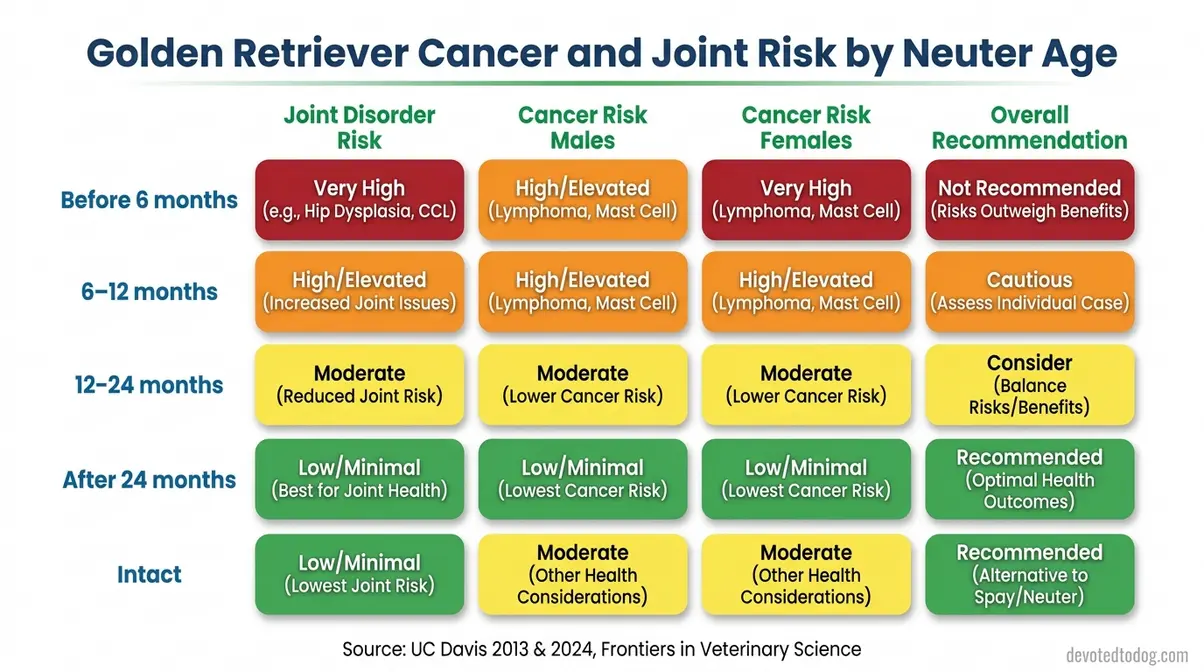
The comparison chart below illustrates how cancer and joint risk shifts with neuter age.
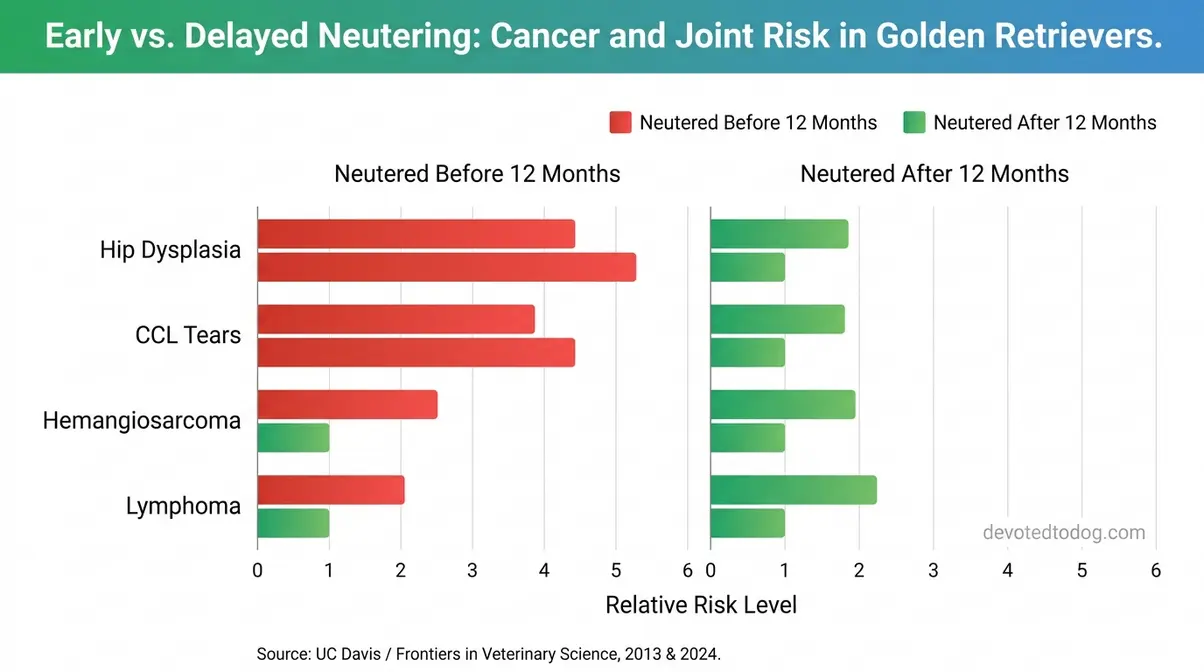
The Golden Retriever Lifetime Study data on hemangiosarcoma identifies hemangiosarcoma as a primary outcome of interest and a relatively common malignant tumor in the breed (PubMed / Veterinary and Comparative Oncology, 2023), confirming that this is not a theoretical risk but an active area of ongoing veterinary research.
What is the silent killer in Goldens?
The “silent killer” in Golden Retrievers most commonly refers to hemangiosarcoma, an aggressive cancer of the blood vessel walls. It earns this name because tumors grow internally , often on the spleen or heart , with no visible symptoms until they rupture, causing sudden internal bleeding. Hemangiosarcoma is the most common cancer diagnosis among Golden Retrievers that die of cancer, accounting for 22.64% of those deaths (Kent et al., PLoS ONE, 2018). For incidence, see the Golden Retriever Lifetime Study. Early spaying has been linked to elevated hemangiosarcoma risk in female Goldens, making it a central concern in the spay/neuter timing conversation.
The Age-Based Risk Matrix
The table below synthesizes data from the 2013 and 2024 UC Davis studies, PubMed, and Frontiers in Veterinary Science. Individual risk varies , consult your veterinarian for personalized guidance.
| Neuter Age | Joint Disorder Risk | Cancer Risk (Males) | Cancer Risk (Females) | Overall Recommendation |
|---|---|---|---|---|
| Before 6 months | Very High , 4–5x increased hip dysplasia & CCL risk | High , lymphoma risk elevated | High , hemangiosarcoma & mast cell tumor risk elevated | Not recommended for Goldens |
| 6–12 months | High , growth plates still open in many Goldens | Elevated | Elevated , spaying at any age increases some cancer risks | Generally not recommended |
| 12–24 months | Low , growth plates closing or closed | Moderate , reduced vs. early neuter | Moderate , some cancer risk persists post-spay | Recommended window for most Goldens |
| After 24 months | Minimal , skeletal development complete | Moderate , long-term cancer risk remains | Moderate , consider OSS alternative | Acceptable; discuss OSS/vasectomy |
| Intact (no surgery) | Lowest joint risk | Lowest cancer risk (no spay/neuter) | Lowest cancer risk; pyometra risk increases with age | Requires active health monitoring |
Data synthesized from UC Davis studies (2013, 2024), PubMed, and Frontiers in Veterinary Science. Individual risk varies , consult your veterinarian.
Understanding the risks is only half the picture. Spaying and neutering also offer meaningful benefits , and for many dogs and owners, those benefits are the deciding factor.
Benefits of Spaying or Neutering

Spaying and neutering your Golden Retriever do offer real, documented health and behavioral benefits , and a balanced decision requires understanding both sides. The risks discussed above don’t mean the procedures are wrong; they mean timing and alternatives deserve careful consideration alongside those benefits. Evaluating these benefits objectively ensures you make a decision based on complete medical facts rather than fear alone.
Preventing Reproductive Crises
Three significant health risks are eliminated or substantially reduced through spaying and neutering:
- Pyometra , a life-threatening bacterial infection of the uterus that affects approximately 25% of intact female dogs over their lifetime, with risk rising significantly after age 7 (PMC, 2023). Emergency surgery is the only treatment, typically costing $1,500–$5,000. Spaying eliminates this risk entirely.
- Testicular cancer , neutering eliminates the risk of testicular cancer in males. While testicular cancer is generally treatable, it adds a monitoring burden and surgical risk for older intact dogs who may already have other health conditions.
- Mammary tumors , spaying before the first heat cycle reduces mammary tumor risk significantly. Here’s the honest tradeoff: “This is one reason the timing decision is genuinely complex , early spaying reduces mammary tumor risk but increases joint and cancer risks of other types. Your vet can help weigh these tradeoffs for your specific dog.”
Spaying eliminates the risk of pyometra, a life-threatening uterine infection that affects roughly 25% of intact female dogs over their lifetime , making it one of the clearest health arguments for the procedure when timing is appropriate.
The AVMA report on neutering and disease links highlights that neuter age directly affects specific cancer and joint disease risks in Golden Retrievers , a nuance often missed in routine vet visits (AVMA, 2013). That nuance cuts both ways: early neutering creates risks, but remaining intact long-term carries its own.
Beyond preventing serious illness, spaying and neutering also play a role in managing hormone-driven behaviors , though the impact is more nuanced than many owners expect.
Behavioral and Population Benefits
Neutering reduces several hormone-driven behaviors that can be challenging to manage in an intact dog:
- Roaming behavior , driven by the urge to find a mate , typically decreases noticeably within weeks of surgery
- Urine marking indoors often reduces, though it may not disappear entirely if the behavior has become habitual
- Mounting behavior usually decreases as testosterone or estrogen levels decline
- Heat cycles in females are eliminated , removing the behavioral restlessness, increased vocalization, and practical management challenges of an intact female every 6 months
Be honest with yourself about what neutering can and cannot fix: it will not make an anxious dog calm, a destructive dog gentle, or a poorly trained dog obedient. Core personality traits are not hormone-driven. Many owners ask, “Do Goldens calm down after neutering?” , and the truthful answer is: somewhat, for hormone-driven restlessness specifically, but the natural calming that most owners notice between ages 2 and 4 happens regardless of neuter status.
If your primary reason for neutering is to reduce aggression, note that some research suggests neutering can sometimes increase anxiety-based aggression in certain dogs. Discuss this specifically with your vet if aggression is a concern , the decision may be more complex than a straightforward “fix.”
Speaking of behavioral changes , let’s look at exactly what to expect after the surgery, both in terms of behavior and physical appearance.
Behavior and Physical Changes
Neutering typically causes some behavioral changes in Golden Retrievers , but not to a dog’s core personality. Hormone-driven behaviors like roaming, urine marking, and mounting often decrease within weeks of surgery as hormone levels decline. Friendliness, playfulness, and trainability are not hormone-dependent and remain unchanged. What you’re managing post-surgery is the hormonal component of behavior, not the dog’s character. Expecting surgery to replace consistent training is a recipe for frustration.
Expected Behavioral Changes
Most behavioral changes from neutering emerge gradually over 2 to 6 weeks as circulating hormone levels decline. Here’s a practical breakdown:
- What typically changes:
- Roaming and escape attempts decrease as the drive to find a mate diminishes
- Urine marking indoors often reduces, particularly in males neutered before marking becomes a deeply ingrained habit
- Mounting behavior usually decreases
- Testosterone-driven dominance posturing may soften in some males
- What typically stays the same:
- Friendliness, affection, and sociability , these are Golden Retriever breed traits, not hormone-driven behaviors
- Playfulness and energy level (energy is more related to breed, age, and exercise than hormones)
- Trainability , a Golden that loves to please will still love to please
- Fear, anxiety, or reactivity , neutering does not resolve these and may, in some cases, increase anxiety-based reactivity
Some emerging research suggests that early neutering may increase the risk of anxiety-based behaviors in certain dogs, particularly fear-based reactivity. If behavioral concerns are part of your decision, discuss this specifically with your vet and consider consulting a certified veterinary behaviorist before and after surgery. Understanding when Golden Retrievers typically calm down by natural maturation can help set realistic expectations about what neutering will and won’t change.
Do Goldens calm down after neutering?
Some Golden Retrievers become calmer after neutering, particularly regarding hormone-driven restlessness, roaming urges, and mounting behaviors. However, neutering is not a behavioral fix , it reduces testosterone- or estrogen-driven behaviors, not anxiety, fear, or high energy from insufficient exercise or mental stimulation. Goldens naturally mature and calm down between ages 2 and 4 regardless of neuter status. If your primary goal is a calmer dog, consistent training and adequate daily exercise are more reliable and predictable tools than surgery alone.
Coat, Weight, and Energy Shifts
Spay coat , a textural change in the fur that can occur after spaying or neutering, often described as softer, fluffier, or more prone to matting , is one of the most commonly reported physical changes in Golden Retrievers post-surgery. Not all dogs experience it, but it’s common enough that groomers and breeders regularly mention it. Regular brushing (2–3 times per week) helps manage the texture change and prevents matting in the longer feathering around the ears, chest, and legs.
Weight gain is a real risk after spaying or neutering. Altered dogs have a lower metabolic rate and, in some cases, reduced activity drive. Monitor your Golden’s food intake carefully in the months following surgery , many vets recommend reducing portion sizes by 10–15% post-spay or neuter. This matters particularly for Goldens because obesity compounds joint disease risk, creating a secondary consequence that amplifies the joint vulnerability already associated with early alteration.
Some owners report their dog becomes calmer post-neutering, particularly males. This is partly hormonal and partly the natural maturation that occurs around the same age , it can be difficult to separate the two effects. Consistent exercise and enrichment remain the most reliable tools for a well-balanced Golden Retriever at any life stage. If you’re noticing post-neuter Golden Retriever behavior problems and management challenges, the link between hormonal changes and behavioral shifts is worth exploring with a professional.
For owners who want to protect their Golden’s hormonal health while still addressing population control or behavioral concerns, there are alternatives to traditional spay/neuter worth knowing about.
Hormone-Sparing Alternatives
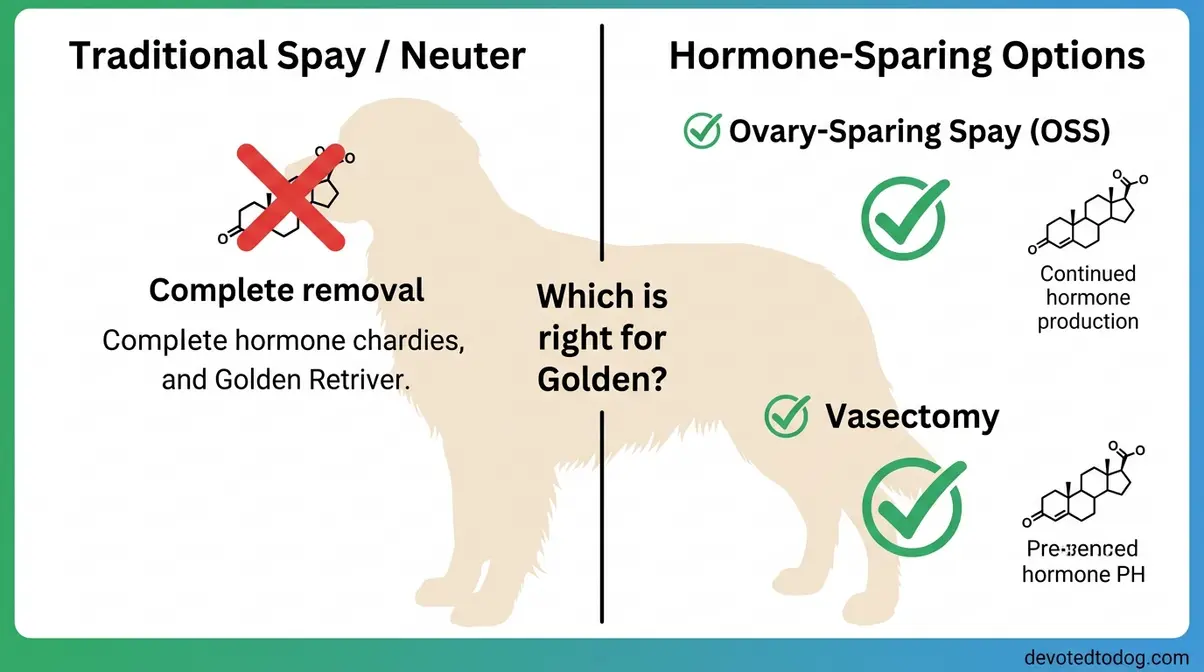
Ovary-sparing spay (OSS) and vasectomy offer sterilization without removing hormone-producing tissue, preserving The Hormone Window while eliminating unwanted pregnancy risk. These options remain underutilized partly because most veterinarians aren’t routinely trained in them , but awareness is growing, particularly among Golden Retriever breeders and researchers who follow the UC Davis data closely. In our experience discussing these options with veterinary specialists, they represent an excellent middle ground for risk-averse owners.
Comparison of Sterilization Options
| Procedure Type | Hormone Status | Pregnancy Risk | Primary Benefit |
|---|---|---|---|
| Traditional Spay | Removed | Eliminated | Prevents pyometra entirely |
| Ovary-Sparing Spay (OSS) | Preserved | Eliminated | Maintains bone and joint health |
| Traditional Neuter | Removed | Eliminated | Reduces roaming and marking |
| Vasectomy | Preserved | Eliminated | Allows full skeletal growth |
Ovary-Sparing Spay (OSS)
Ovary-sparing spay (OSS) is a procedure that removes the uterus but leaves the ovaries intact, preserving hormonal function while eliminating pregnancy risk and pyometra risk. Because the ovaries remain, the dog continues to produce estrogen , keeping The Hormone Window open through the critical developmental period.
The health rationale for Golden Retriever females is compelling. Because research in PLOS ONE found that increased cancer risk in spayed female Golden Retrievers exists at any age of traditional spaying , not just early spaying , OSS is a way to achieve sterilization while minimizing that hormonal disruption (PLOS ONE, 2013). Some breeders and veterinary researchers now advocate for OSS as the preferred option for Golden Retriever females, particularly those not intended for breeding.
- Honest limitations of OSS:
- The dog will still show behavioral signs of heat cycles (though she cannot become pregnant)
- Not all veterinarians are trained to perform OSS , specialist referral may be needed
- Long-term data on OSS specifically in Golden Retrievers is still accumulating
Questions to ask your vet: “Are you familiar with ovary-sparing spay? Given the UC Davis data on Golden Retrievers, would you consider OSS an appropriate option for my dog?” A vet who dismisses the question without engaging with the research is a signal to seek a second opinion.
For male Golden Retrievers, the equivalent hormone-sparing alternative is vasectomy , a less commonly discussed but increasingly relevant option.
Vasectomy for Male Goldens
Vasectomy is a procedure that severs the vas deferens to prevent sperm release while leaving the testes , and their hormone production , intact. The dog is rendered sterile while continuing to produce testosterone, keeping The Hormone Window open during the critical 12-to-24-month developmental period.
- Benefits for Golden Retrievers:
- Eliminates pregnancy risk while preserving hormonal protection against joint disease and certain cancers
- Allows the dog to complete skeletal development with full hormonal support
- Some owners opt for vasectomy at 6–8 months (for sterilization compliance requirements) and then discuss traditional castration at 18–24 months if desired
- Limitations to understand clearly:
- Because testosterone is preserved, vasectomy does not reduce roaming, mounting, or marking behaviors , the dog will still be driven by hormones
- Not all veterinarians perform vasectomies; specialist referral may be needed
- Large-scale studies specific to vasectomy in Golden Retrievers are limited; the principle of hormone preservation aligns with the broader UC Davis research framework, but individual outcomes vary
If you need to sterilize your male Golden for housing or local regulation reasons before 12 months, vasectomy is worth discussing as a bridge option that preserves hormonal development while meeting compliance requirements. Whatever your timing decision, many owners face a practical challenge: how do you manage an intact Golden Retriever during the waiting period? Here’s what actually works.
Managing Your Intact Golden

Intact Golden Retrievers can be well-managed during the 12–24 month waiting period with consistent impulse-control training, secure containment, and realistic behavioral expectations. This is the section every competitor article skips , and it’s often the most practically useful information for owners who’ve decided to wait but aren’t sure how to handle the day-to-day reality. Assuming an intact dog is impossible to manage is a myth that leads many owners to rush into premature surgery.
Estimated time: Ongoing daily management. Tools needed: Enzymatic cleaner, secure fencing, training treats, and a sturdy leash.
Training and Socialization
- Step 1: Implement Impulse Control Training
- Intact males in adolescence (6–18 months) are hormonally primed to be distracted, reactive to scents, and less responsive to previously reliable commands. This is normal and temporary. Short, frequent training sessions , 10 to 15 minutes, two to three times daily , are significantly more effective than long sessions for this age group. Focus on:
- “Leave it” , redirects attention from scent triggers and other dogs
- “Place” , teaches self-regulation and calm in high-stimulation environments
- “Look at me” / “Watch” , rebuilds the attention connection when hormones are competing for focus
Step 2: Maintain Safe Socialization
Continue socialization throughout the 12-to-24-month window. Intact dogs can socialize safely with appropriate supervision. The key additions for intact dogs are reliable recall training before off-leash situations, and avoiding off-leash dog parks during a female’s heat cycle. Controlled playdates with known, compatible dogs are lower-risk than open dog parks.
Step 3: Manage Female Heat Cycles
Females experience heat approximately every 6 months, with each cycle lasting 2 to 4 weeks. During this period: keep her on leash outdoors at all times, use doggie diapers indoors if spotting or marking occurs, and avoid situations where intact males are present. This is temporary and very manageable with preparation , and it becomes routine after the first cycle.
Beyond training, preventing roaming and unwanted mating requires some practical environmental management.
Preventing Roaming and Marking
- Step 4: Secure Your Yard and Containment
- Intact male dogs , particularly those detecting a female in heat, which can occur from up to 3 miles away , will attempt to escape with a determination that surprises many owners. Before this developmental window, audit your yard:
- Check all fence panels for gaps, loose boards, or areas where the dog could dig under
- Install a double-gate entry (airlock system) so a gate left open doesn’t mean an escaped dog
- Never leave an intact dog unsupervised in an unfenced yard, regardless of how reliable they’ve been previously
Step 5: Control Indoor Marking Behavior
Intact males may begin marking indoors during adolescence, typically between 6 and 18 months. Interrupt the behavior immediately and redirect outdoors , do not punish after the fact, as the dog cannot connect a delayed correction to the behavior. Enzymatic cleaners (such as Nature’s Miracle) eliminate the scent signals that trigger repeat marking in the same location. Belly bands , absorbent wraps worn around the midsection , are a practical management tool for persistent markers while training is in progress.
One management step that prevents most escape and marking incidents is setting clear expectations with every household member. Children who leave doors or gates open, or guests who don’t know the rules, are the most common weak link. A brief family conversation about “door discipline” , always checking that the dog is secured before opening an exterior door , prevents the majority of problems.
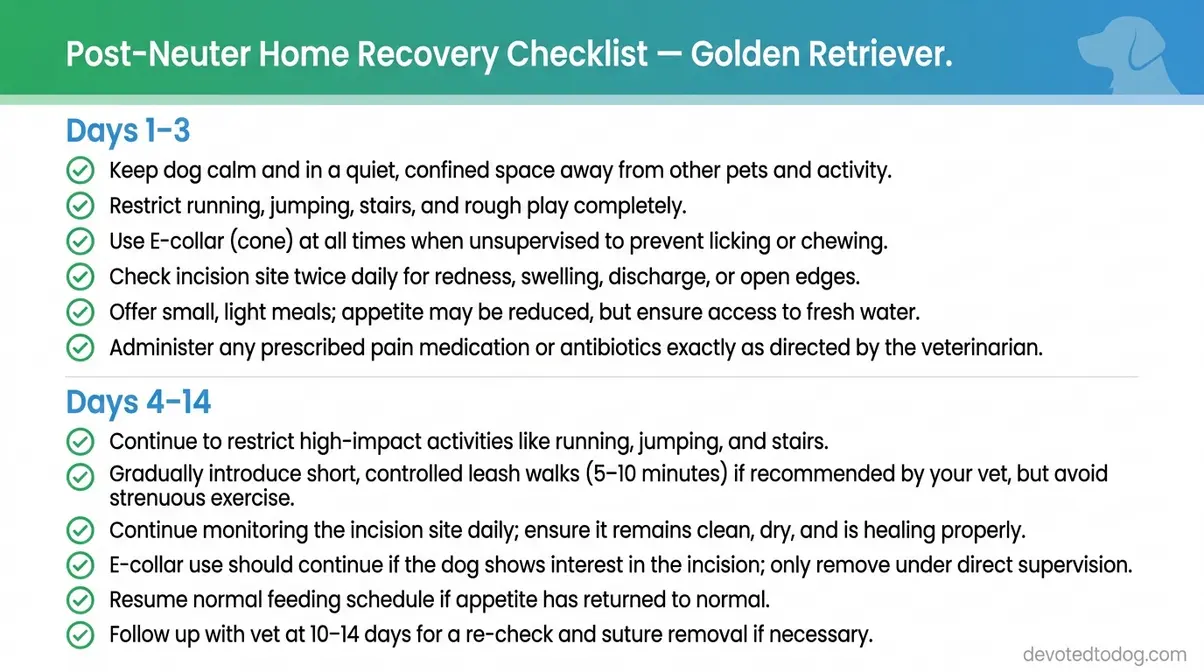
Before we get to the FAQ, a brief note on Golden Retriever breed types , because the spay/neuter timing discussion sometimes comes up in the context of choosing between an American and English Golden, or a Golden versus a Goldendoodle.
Golden Retriever Breed Types
The spay/neuter timing research , including both the 2013 and 2024 UC Davis studies , applies specifically to purebred Golden Retrievers. If you’re comparing breed types or considering a different Golden variant, the health profiles differ in ways that matter for this conversation.
American Golden Retrievers and English (European) Golden Retrievers share the same UC Davis timing recommendations. Both are purebred Golden Retrievers, and both carry the breed-specific hormonal sensitivities documented in the Hart et al. studies. English Goldens are sometimes noted anecdotally to have slightly different cancer predispositions than American lines, but the research base for breed-type-specific spay/neuter timing within the Golden Retriever classification remains limited. The safest approach is to apply the 12-to-24-month Hormone Window to both.
Goldendoodles are a different matter. As a mixed breed (Golden Retriever × Poodle), Goldendoodles may benefit from hybrid vigor , the tendency of mixed-breed dogs to have lower incidence of certain breed-specific conditions. However, the UC Davis breed-specific data applies specifically to purebred Golden Retrievers. There is currently no equivalent large-scale study on Goldendoodle spay/neuter timing, so the appropriate approach is to discuss timing with your vet based on your individual dog’s size, health history, and any known parental health data.
For a full comparison of the american golden retriever vs english golden retriever on health, temperament, and appearance, see our dedicated guide on English vs. American Golden Retriever differences. If you’re weighing the golden retriever vs golden doodle decision more broadly, our in-depth Golden Retriever vs Goldendoodle comparison covers the key differences across health, trainability, and lifestyle fit.
Common Mistakes and Vet Consults
The most common mistake Golden Retriever owners make is following the standard 6-month neutering guideline designed for mixed breeds , not the breed-specific research that applies to Goldens. This section covers the most frequent decision errors and clarifies when the guidance in this article isn’t enough on its own. Assuming all vets are fully updated on breed-specific literature is a dangerous oversight that owners must actively manage.
Common Owner Mistakes
- Accepting the 6-month recommendation without asking breed-specific questions. Your vet recommends neutering at the 6-month puppy checkup , a reasonable default for many breeds. The mistake is complying without knowing the UC Davis data applies differently to your Golden. How to avoid it: ask directly, “Is this timing appropriate for a Golden Retriever specifically, given the research on joint disorders and cancer risk?” This single question changes the conversation.
- Expecting neutering to resolve aggression or anxiety. Behavioral problems driven by fear, anxiety, or inadequate training will not improve , and may worsen , after surgery. Owners who neuter primarily to solve a behavioral problem often feel misled when the behavior persists. How to avoid it: address behavioral concerns through training and, if needed, a certified veterinary behaviorist before surgery, not after. The AVMA report on neutering and disease links notes that neuter age directly affects specific cancer and joint disease risks in Golden Retrievers , a nuance often missed in routine vet visits.
- Not asking about OSS or vasectomy. Many owners assume traditional spay or castration is the only option , because it’s the only option most vets routinely offer. How to avoid it: proactively ask about hormone-sparing alternatives at the pre-surgical consultation. You do not need to have an opinion on which option is best; you just need to have the conversation.
General guidelines are a starting point , but some situations require a personalized veterinary consultation that goes beyond what any article can provide.
When to Seek Vet Advice
- Rescue dogs with unknown histories. If your Golden is a rescue who has already been spayed or neutered , possibly at a young age before you adopted them , the timing conversation is moot. Redirect your energy toward monitoring for the health risks discussed above: annual wellness exams, abdominal palpation, and awareness of early cancer warning signs. Your vet can help you build a proactive monitoring plan.
- Dogs with pre-existing health conditions. If your Golden has a pre-existing condition , heart disease, an immune disorder, a bleeding disorder , the surgical risks of any procedure change significantly. Your vet needs to conduct a full health assessment before scheduling elective surgery, and the timing calculus may shift based on what’s safest for your individual dog right now.
- Behavioral urgency involving dangerous aggression. If your intact dog is displaying dangerous aggression toward people or other animals, the behavioral risk of waiting may outweigh the hormonal benefit of The Hormone Window. This is not a situation to manage with general guidelines , your vet and a certified veterinary behaviorist should guide the decision together, weighing the specific risk profile of your dog.
For long-term health planning beyond the spay/neuter decision, understanding Golden Retriever life expectancy and long-term health provides useful context for the monitoring and care decisions that follow.
Frequently Asked Questions
When to spay or neuter a golden?
For Golden Retrievers, most current veterinary research , including the landmark UC Davis studies by Drs. Benjamin and Lynette Hart , recommends waiting until at least 12 to 24 months before spaying or neutering. This allows growth plates to fully close, significantly reducing the long-term risk of hip dysplasia, CCL tears, and certain cancers. Male Goldens can typically be neutered at 12–18 months as a minimum; females at 12–24 months or later, with some vets now recommending ovary-sparing spay as an alternative. Always consult your veterinarian for personalized timing advice based on your dog’s individual health profile.
Do Goldens change after neutering?
Yes, neutering typically causes some behavioral changes , but not to a Golden’s core personality. Hormone-driven behaviors like roaming, urine marking, and mounting often decrease within 2 to 6 weeks of surgery as hormone levels decline. Some owners notice a calmer overall energy level, particularly in males. However, friendliness, playfulness, and trainability are not hormone-dependent and remain unchanged. Some dogs also develop a textural coat change called “spay coat” , softer, fluffier fur that requires more regular grooming to prevent matting.
Should I neuter a 5-year-old Golden?
Neutering a 5-year-old Golden Retriever is generally safe and remains beneficial in several specific ways , it eliminates testicular cancer risk in males and removes the ongoing risk of pyometra in females. Since the dog is fully mature, the joint disorder risks associated with early neutering no longer apply; growth plates closed years ago. The decision should be made with your veterinarian, factoring in your dog’s overall health status, any existing conditions, behavior, and lifestyle. For a healthy 5-year-old with no pressing medical reason, the conversation is worth having but is rarely urgent.
Hardest age for a Golden male?
Most Golden Retriever owners find the adolescent phase , roughly 8 to 18 months , to be the most challenging period for males. During this stage, testosterone surges, impulse control decreases, and previously reliable training can seem to disappear almost overnight. Males may become more distracted, stubborn, and prone to roaming. This phase is temporary; consistent training and structured exercise help significantly. Neutering during this period will not eliminate adolescent behavior , the hormonal surge happens regardless, and the behavioral changes reflect normal developmental biology, not a permanent personality shift.
What smells do Goldens hate?
Golden Retrievers, like most dogs, tend to dislike strong, sharp scents. Citrus smells (lemon, orange, grapefruit), vinegar, chili pepper, and certain essential oils (eucalyptus, tea tree) are commonly reported as aversive to dogs and can be used as natural deterrents to discourage dogs from specific areas or objects. However, essential oils should be used with caution , several are toxic to dogs if ingested or applied directly to skin. Always verify safety with your veterinarian before using essential oil-based deterrents in your home.
Life expectancy for a Golden?
The average life expectancy for a Golden Retriever is 10 to 12 years, though well-cared-for individuals sometimes reach 14 or beyond. Goldens have a notably high cancer rate , studies from the Golden Retriever Lifetime Study suggest that over 60% of deaths in the breed are cancer-related , which influences their lifespan compared to similarly sized breeds. Spay/neuter timing, diet, weight management, exercise, and regular veterinary monitoring all play a meaningful role in maximizing healthy longevity. For a detailed look at lifespan factors, see our guide on Golden Retriever life expectancy.
Closing Thoughts
For Golden Retriever owners, the decision of when to spay or neuter is one of the most consequential health choices you’ll make for your dog , and the research is clear that timing matters. When it comes time to spay or neuter golden retriever pets, most current veterinary evidence recommends waiting until 12 to 24 months, with early neutering increasing joint disorder risk by 4 to 5 times and significantly elevating certain cancer risks (PubMed, 2013; Frontiers in Veterinary Science, 2025). The best approach combines breed-specific timing, an honest vet conversation, and vigilant health monitoring throughout your Golden’s life.
The Hormone Window , the developmental period during which sex hormones are doing critical structural work , is the framework that makes sense of all the research in this guide. You came here anxious about making the wrong decision. Understanding The Hormone Window means you’re no longer choosing blindly; you’re choosing with the same information the leading veterinary researchers are working from. That’s exactly the foundation you need for a productive conversation with your vet.
Before your next appointment, write down three questions: (1) What is the ideal timing for my specific dog given the UC Davis breed-specific research? (2) Are you familiar with hormone-sparing alternatives like ovary-sparing spay or vasectomy? (3) What cancer screening do you recommend given hemangiosarcoma risk in this breed? These three questions will make your consultation significantly more productive , and your Golden Retriever will benefit from every informed decision you make.
*How This Guide Was Researched: This article is based on a systematic review of peer-reviewed veterinary literature published between 2013 and 2026, including the 2013 and 2024 UC Davis studies by Drs. Benjamin and Lynette Hart (Frontiers in Veterinary Science), PubMed-indexed research on Golden Retriever joint and cancer outcomes, Golden Retriever Lifetime Study data from the Morris Animal Foundation, and AVMA guidance. All cited statistics include source attribution. This guide is intended for educational purposes only , always consult a licensed veterinarian (DVM) for personalized medical advice.