
All prices in this guide are estimates based on 2026 market data and may vary significantly by location, breeder reputation, and current market conditions.
📊 The Numbers That Matter
$2K-$3.5K
reputable puppy
2026 baseline
$22K-$60K
lifetime cost
AVMA 2026
$2.8K-$5.9K
annual ongoing
food + vet + grooming
$100-$500
rescue adoption fee
vs $2K+ breeder
How Much Does a Golden Retriever Puppy Cost from a Breeder?
For more on this topic, see our guide on the Golden Retriever Pregnancy: 2026 Complete Week-by-Week Guide.
For more on this topic, see our guide on the Can Golden Retrievers Have Blue Eyes? – The Truth Behind.
A Golden Retriever puppy from a reputable, health-tested breeder costs between $2,000 and $3,500 in the United States in 2026, with show-quality or imported European bloodlines pushing that figure to $5,000 or higher (Insurify, 2026; Rover, 2026). Prices vary based on the breeder’s health testing investment, the puppy’s lineage, and where you live. This section breaks down exactly what drives that number, so you know whether the price you’ve been quoted is fair.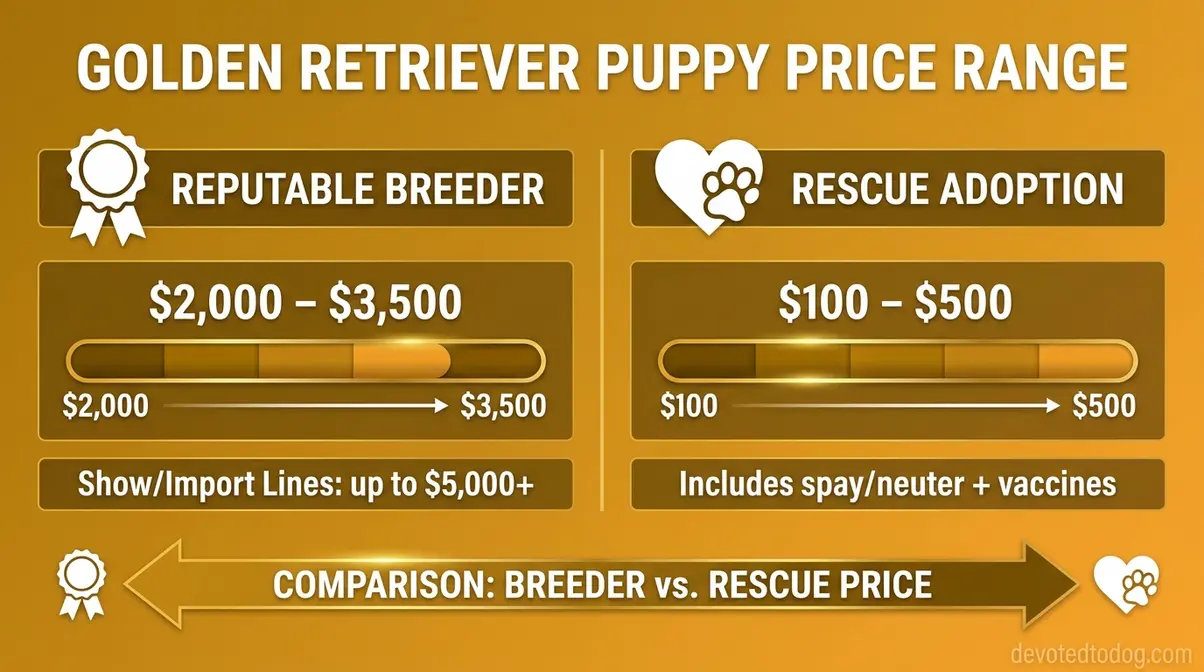
The Price Range You Can Expect
Golden Retriever prices typically fall into two tiers. Pet-quality puppies from reputable breeders, dogs bred for temperament and health but not show competition, run $2,000-$2,500. Show-quality puppies from high-demand breeders with champion bloodlines (dogs descended from parents who have won AKC conformation shows) or imported European lines cost $3,000-$5,000+ (Insurify, 2026). Prices have risen significantly since 2020. The COVID-19 adoption surge drove demand through the roof, and pet care inflation has kept costs elevated since. That community quote above? It’s not an outlier. Across Golden Retriever owner communities on Reddit and Facebook, $3,000-$3,500 is now widely reported as the new normal for a well-bred puppy.“The same breeder is now charging $3,200. Is this the new going rate? I know our pups are priceless, but I was surprised to see the price had tripled 🙁” , Real Golden Retriever owner, r/goldenretrieversOne thing reputable breeders have in common: a wait list. A wait list, a queue of approved buyers waiting for the next available litter, typically 6-12 months, is actually a green flag. It means the breeder isn’t mass-producing puppies to meet demand. If a breeder always has puppies “available immediately,” that’s worth questioning. So what explains that price? The answer is in what a responsible breeder does long before any puppies are born.
Why are Goldens so expensive?
Reputable breeders invest heavily in the parent dogs before a single puppy arrives. Health clearances for both parents require OFA testing, the Orthopedic Foundation for Animals, or OFA, the body that certifies joint and heart health in breeding dogs. For Golden Retrievers, the required tests cover four areas:- Hips: X-rays evaluated for dysplasia (abnormal joint development). Radiographs plus OFA submission run $250-$400 total (Goosetown Goldens, 2026).
- Elbows: Evaluated alongside hips; often done in the same imaging session.
- Heart (cardiac exam): Performed by a board-certified cardiologist. This matters because Golden Retrievers carry a genetic risk for subvalvular aortic stenosis, a heart condition.
- Eyes (CAER exam): Annual evaluation by a veterinary ophthalmologist for hereditary eye diseases.
First-Year Supply Costs to Budget
Before your puppy arrives, you’ll want to have the essentials in place. The cost of a Golden Retriever puppy is only one line item in your first-year budget. Here’s a realistic breakdown:| Item | Estimated Cost |
|---|---|
| Crate (wire or plastic) | $50-$150 |
| Food and water bowls | $15-$40 |
| Collar, leash, and ID tag | $20-$50 |
| First bag of puppy food | $50-$80 |
| Toys, chews, and puppy pads | $50-$90 |
| First vet wellness exam | $90-$170 |
| Puppy vaccination series (3 visits) | $195-$470 |
| Microchipping | $40-$50 |
| Flea/tick and heartworm prevention | $100-$200 |
| First-Year Supply Total | $610-$1,300 |
What Are the Ongoing and Lifetime Costs?
The cost of owning a Golden Retriever extends far beyond the purchase price. According to the AVMA (the American Veterinary Medical Association, or AVMA, the leading authority on veterinary medicine in the United States), total lifetime dog ownership costs range from $22,125 to $60,602, and for Golden Retrievers, the higher end is more likely due to breed-specific health vulnerabilities (AVMA, 2026). Annual expenses run $2,860-$5,950, meaning $240-$495 per month after the puppy comes home.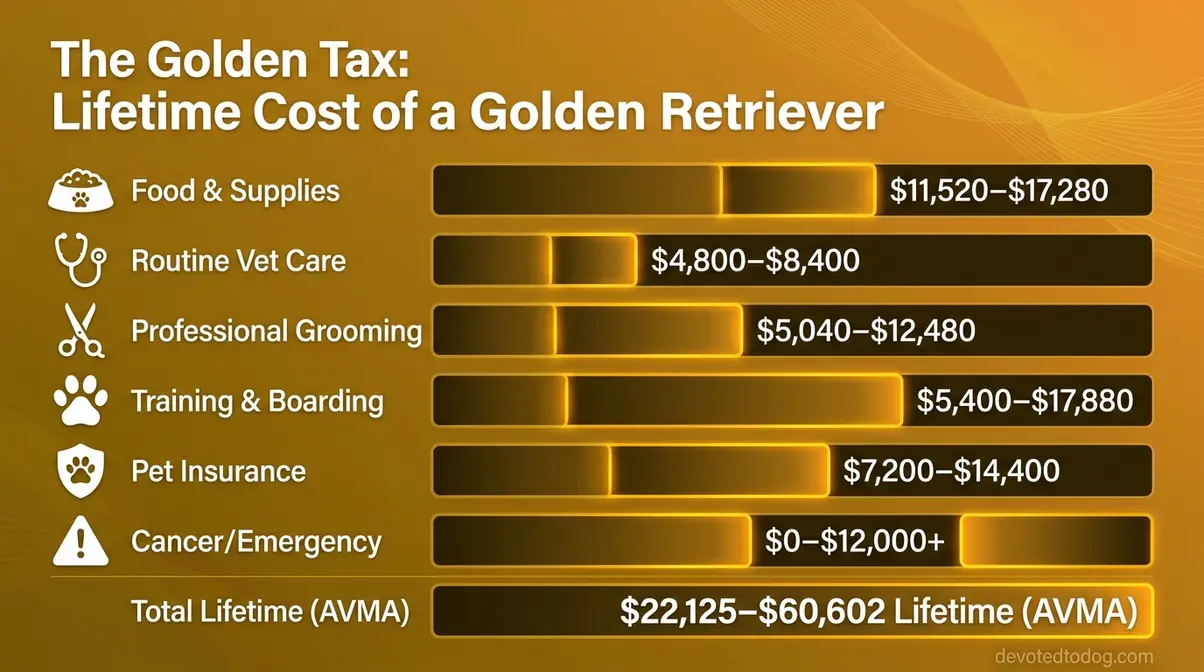
Golden Retriever Cost Per Month?
How much does a Golden Retriever cost per month just for food and basics? More than most first-time owners expect. An adult Golden typically weighs 65-75 pounds and eats accordingly. Quality dry dog food for a large breed runs $60-$80 per month ($720-$960/year). Think of it like this: feeding cheap food to save $20/month often leads to digestive issues and coat problems that cost far more to treat. Beyond food, toys, treats, beds, and replacement supplies add $200-$400 per year. Goldens are notorious chewers, especially under age two. Budget for destroyed squeaky toys, replacement leashes, and the occasional chewed shoe. This isn’t a minor footnote; owner communities consistently report property destruction as one of the most underestimated ongoing costs of Golden ownership. Monthly budget for food and supplies alone: roughly $80-$120/month, or $960-$1,440 per year. Food and toys are predictable. The bigger financial variable, the one most new owners aren’t prepared for, is veterinary care.Veterinary Costs and the Cancer Risk
Think of routine vet visits like annual physicals for your dog, they catch problems before they become expensive. Routine annual veterinary costs for a Golden include a wellness exam ($90-$170), core vaccines ($85-$150), heartworm testing and prevention ($100-$200/year), and flea/tick prevention ($100-$200/year). Total routine annual vet cost: $400-$700. Dog owners spent an average annual veterinary spending for dogs of $598 in 2026 (AVMA, 2026). Then there’s the Silent Killer. Golden Retrievers are one of the dog breeds most likely to develop cancer, with approximately 60% developing the disease during their lifetime, 61.4% of US Golden deaths are attributed to cancer, compared to 38.8% in Europe (Colorado State University cancer research on Golden Retriever risks). Cancer is sometimes called the “silent killer” in Goldens because it often shows no symptoms until it’s advanced. Breeds like Goldens are particularly prone to hemangiosarcoma (a fast-moving cancer of blood vessel walls) and osteosarcoma (bone cancer). Cancer treatment costs are where The Golden Tax hits hardest. Veterinary cancer surgery ranges from $2,000 to $3,000, according to Texas A&M veterinary cancer costs for treatment (Texas A&M, 2026). The CHOP chemotherapy protocol, the standard multi-drug treatment for lymphoma, requires weekly vet trips over five months and costs $7,000-$12,000, per University of Minnesota chemotherapy costs. A single cancer diagnosis, which statistically isn’t unlikely for a Golden, can cost more than the puppy itself. This is the core of what we call The Golden Tax: the predictable but often-ignored financial reality of owning a breed with elevated health risks. Pet insurance ($50-$100/month for a Golden) is one of the most practical tools available. It won’t eliminate the cost, but it converts an unpredictable $10,000 bill into manageable monthly premiums. One more consideration: the cost of spaying or neutering a Golden Retriever is a one-time expense ($200-$500) most owners face in the first year, factor this into your initial budget. Alongside vet costs, grooming is a recurring expense that’s easy to underestimate, especially with a breed as coat-intensive as a Golden.Professional Grooming for Goldens
Golden retriever grooming cost is higher than most large breeds because of the double coat, two layers of fur, a soft insulating undercoat and a longer water-repellent outer coat, that sheds heavily twice a year. Professional grooming for a Golden runs $70-$130 per session based on 2026 market data (Animalo, 2026; Thumbtack, 2026). Most owners book professional grooming every 6-8 weeks, meaning 6-8 sessions per year and an annual grooming bill of $420-$1,040. At-home brushing two to three times per week reduces professional grooming frequency and cost. A quality slicker brush and deshedding tool run $30-$60 upfront, a smart investment that pays for itself in reduced grooming appointments. Beyond grooming, there are several other recurring annual expenses that new owners consistently underestimate.Training, Boarding, and Pet Insurance
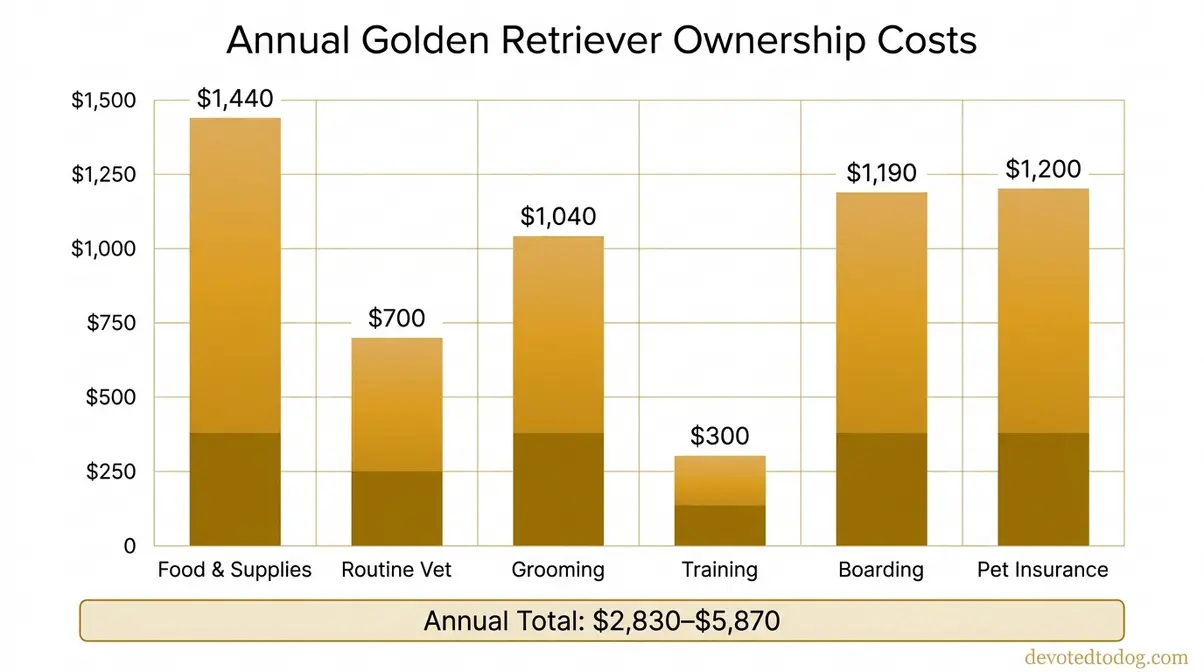
Puppy training classes cost $100-$300 for a standard 6-week group obedience course. Goldens are highly trainable, they’re eager to please and respond well to positive reinforcement, but they need consistent guidance in their first year. Skipping training often leads to behavioral issues that require more expensive private sessions ($100-$200/hour) later. Boarding or pet-sitting runs $25-$85/night depending on your location. If you travel two weeks per year, budget $350-$1,190 annually for boarding. Dog walking services add $15-$30 per walk if your schedule requires it. Here’s the full annual picture:| Annual Cost Category | Low Estimate | High Estimate |
|---|---|---|
| Food and supplies | $960 | $1,440 |
| Routine veterinary care | $400 | $700 |
| Professional grooming | $420 | $1,040 |
| Training (Year 1) | $100 | $300 |
| Boarding/pet sitting | $350 | $1,190 |
| Pet insurance | $600 | $1,200 |
| Annual Total | $2,830 | $5,870 |
How Does Golden Retriever Type Affect Pricing?
Not all Golden Retrievers are priced the same. The type you choose, standard purebred, English Cream, miniature, or AKC-registered, can shift the price by $500 to $2,000 or more. Here’s what each label actually means and whether the premium is genuinely justified.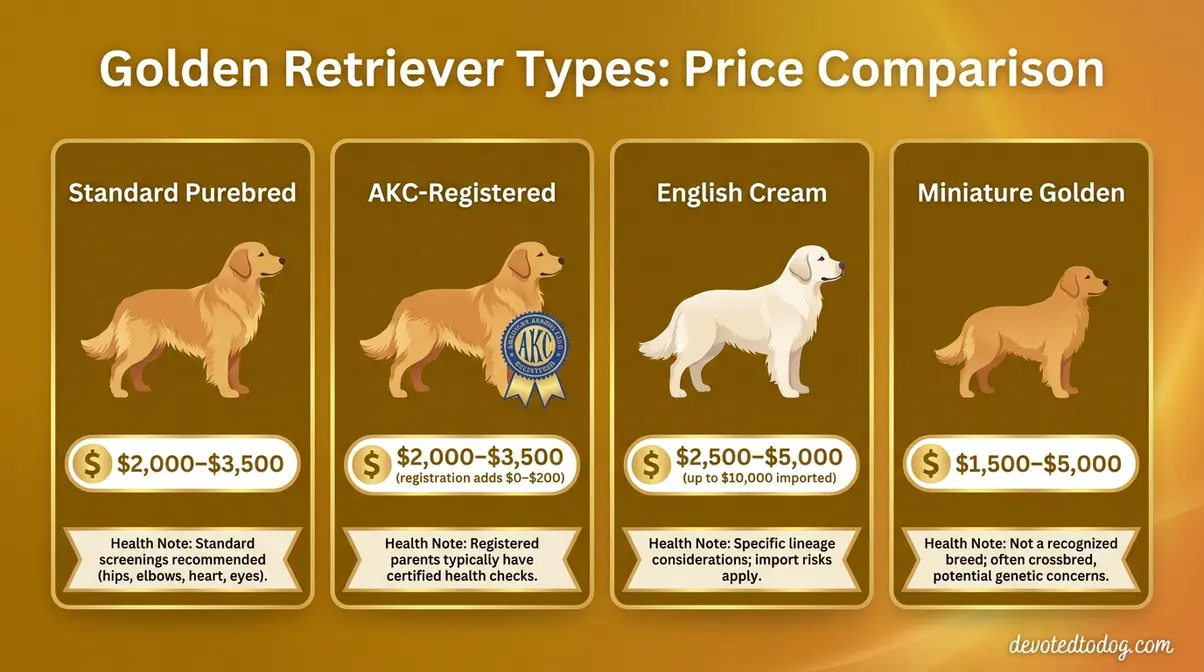
Standard Purebred and AKC Goldens
An AKC-registered golden retriever cost typically falls in the $2,000-$3,500 range from a reputable breeder. AKC registration, a certificate confirming the dog’s parents are recorded in the AKC registry, is included by most reputable breeders at no extra charge, or adds $0-$200 to the price at most. Here’s the critical thing to understand: AKC registration confirms purebred lineage but says nothing about health testing. A dog can be AKC-registered and still come from parents with untested hips, elbows, or hearts. Registration is a pedigree document, not a health guarantee. Always ask for OFA health clearances separately, they’re what actually protect your wallet. To explore the different golden retriever types and their cost, the differences run deeper than coat color or paperwork. The biggest price premium in the Golden Retriever world is attached to the “English Cream” label, and it’s worth understanding what you’re actually paying for.English Cream Golden Retrievers
Miniature Golden Retriever Costs
The mini golden retriever cost typically runs $1,500-$5,000, but here’s what that label actually means. “Miniature Golden Retrievers” are not an AKC-recognized purebred. They are typically crosses between a Golden Retriever and a Cocker Spaniel or Poodle, selectively bred for smaller size. Despite being mixed breeds, they often command high prices due to strong demand. Health considerations differ from purebred Goldens, they may inherit health issues from both parent breeds. If you’re considering one, ask for OFA health clearances on both parent dogs, not just the Golden parent. Before we discuss where to buy, let’s look at the most budget-friendly option: adopting a Golden Retriever from a rescue.How Can You Adopt a Golden Retriever Affordably?
Adopting a Golden Retriever from a rescue typically costs $100-$500, a fraction of the breeder price, and the fee usually includes spay/neuter surgery, core vaccinations, and microchipping, services that would cost $300-$600 if purchased separately (Rover, 2026). This section explains what adoption actually involves and helps you decide whether it’s the right path for your situation.Golden Retriever Adoption Costs
Golden retriever adoption cost ranges from $100-$500 depending on the rescue organization, the dog’s age, and your location. Puppies in rescue are rare and typically cost more than adult Goldens. Adult Goldens aged 1-5 years are most common. What’s usually included in the adoption fee: spay/neuter surgery, core vaccinations (rabies, distemper, parvovirus), microchip, heartworm test, and flea/tick treatment. That package would run $300-$600 if purchased separately, making the adoption fee an exceptional value. One misconception worth addressing directly: a rescue dog doesn’t mean a problem dog. Owner communities consistently report that most Golden Retrievers in rescue were surrendered due to owner life changes, divorce, relocation, new baby, financial hardship, not behavioral problems. Many are well-trained, affectionate adults who simply need a second chance. Where to find Golden Retriever rescues: the GRCA Rescue Network (the official Golden Retriever rescue program of the Golden Retriever Club of America, accessible at grca.org), Golden Retriever Rescue of the Rockies, and breed-specific rescues in most states. Expect a wait, Goldens are popular and adoption spots fill quickly. For a thorough look at what to expect, read up on considerations before adopting a rescue dog. To help you decide which path is right for your situation, here’s a direct comparison.Breeder vs. Adoption Comparison
| Comparison Factor | Buying From a Reputable Breeder | Adopting Through a Rescue |
|---|---|---|
| Upfront cost | $2,000-$3,500+ | $100-$500 |
| Puppy availability | High (with wait list) | Low, puppies are rare |
| Age of dog | Puppy (8 weeks) | Varies (often 1-5 years) |
| Health clearances | Yes (OFA-tested parents) | Rescue vet check included |
| Spay/neuter included | No (additional $200-$500) | Usually yes |
| Vaccines included | Partial | Usually yes |
| Known history | Yes (breeder provides) | Limited |
| Breeder/rescue support | Yes, reputable breeders stay involved | Varies by organization |
| Best for | Families wanting a puppy with known lineage | Budget-conscious owners open to adult dogs |
Why Are Cheap Golden Retrievers Financial Traps?
A Golden Retriever puppy advertised for $200-$500 is almost certainly from a puppy mill or backyard breeder, and the genetic health problems that follow can cost $5,000-$20,000 in veterinary bills within the first three years. This section explains why, and gives you the specific red flags to watch for.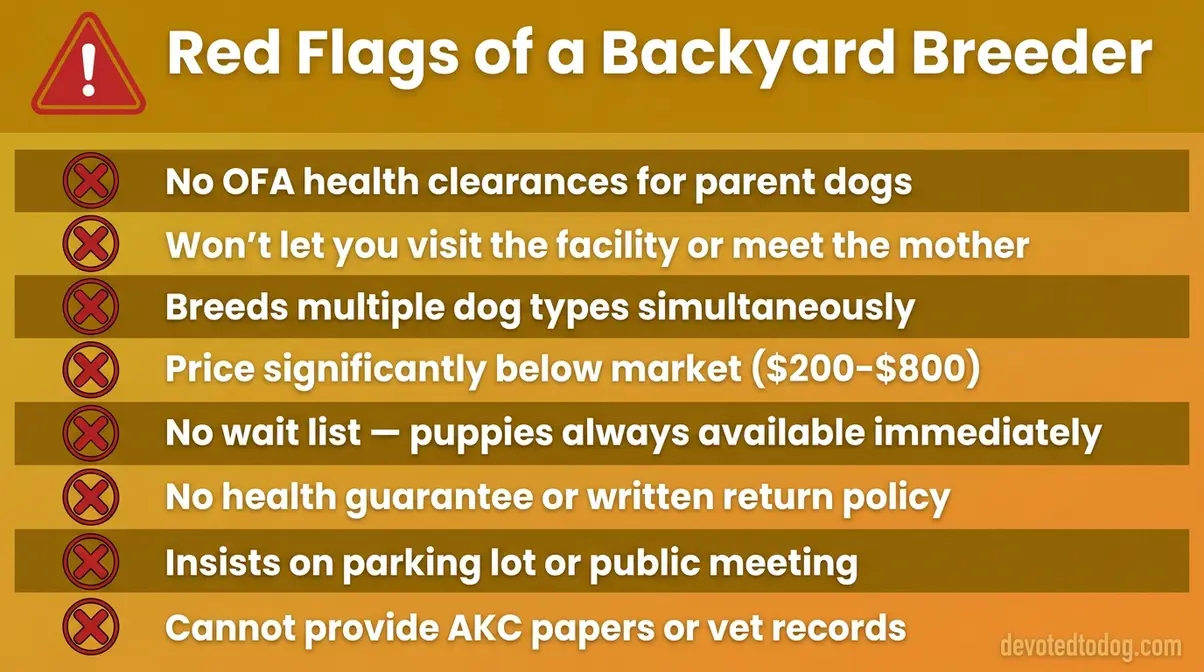
Puppy Mill and Breeder Red Flags
If you’ve searched “golden retriever puppies for sale near me” and found listings under $1,000, here’s what to check before you respond. First, understand the two seller types to avoid: A puppy mill is a commercial breeding operation that prioritizes profit over the health and welfare of the dogs, often housing dozens of breeding dogs in poor conditions with no health testing. A backyard breeder is a casual seller who breeds dogs without health testing or proper veterinary oversight, often motivated by the desire to have “one litter” or make quick money. Here are the first 4 red flags that signal you’re dealing with an unethical seller:- No OFA health clearances for the parent dogs, a responsible breeder will show you these certificates voluntarily.
- Won’t let you visit the breeding facility or meet the mother dog in person.
- Breeds multiple dog types simultaneously (“Golden Retrievers AND French Bulldogs AND Huskies available!”).
- Prices significantly below market rate ($200-$800 for what they claim is a purebred Golden).
- No wait list, puppies are always “available immediately” with no vetting of buyers.
- No health guarantee or written return policy if the dog develops genetic problems.
- Pushes you to meet in a parking lot or public place rather than at their home or facility.
- Cannot provide AKC papers, pedigree documentation, or vet records for the puppy.
The Real Cost of a $500 Puppy
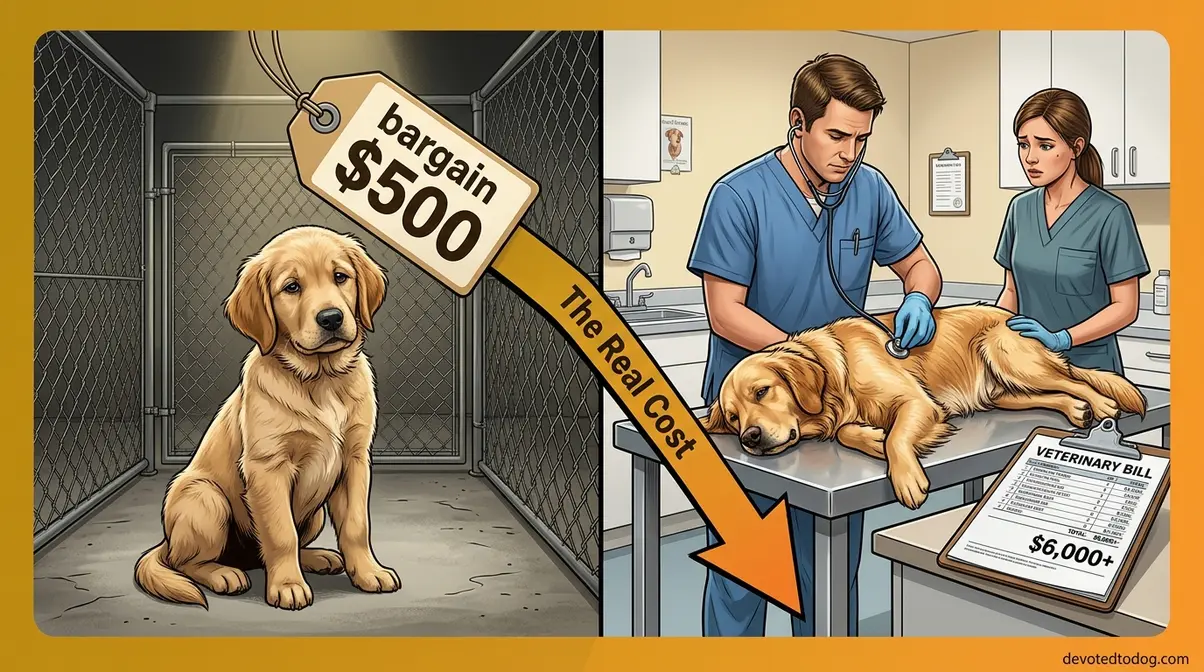
Golden retriever puppies for sale at $200-$500 carry a hidden price tag that shows up at the vet. Here’s the honest math. Common health conditions in poorly-bred Goldens include hip dysplasia (surgery costs $3,500-$7,000 per hip), elbow dysplasia ($1,500-$4,000 per elbow), and hereditary heart disease. These conditions are largely preventable when breeders perform proper OFA health testing on parent dogs before breeding. Without that testing, the genetic dice are rolled, and you pay the outcome. Behavioral issues from inadequate socialization are another cost. Anxiety, excessive fearfulness, and aggression often require private training sessions ($100-$200/session) or behavioral medication. Budget $500-$2,000+ in behavioral support in the first year alone. The math is stark: a $500 puppy plus $6,000 in hip surgery plus $1,500 in behavioral training equals $8,000+ before year three. Compare that to a $3,000 health-tested puppy from a reputable breeder who carries a genetic health guarantee. The Golden Tax on a poorly-bred dog is far higher than on a health-tested one. One more factor affects the price you’ll pay: where you live.How Do Golden Retriever Prices Vary by Region?
Golden Retriever puppy prices in the United States vary by up to $1,500 depending on your region, with West Coast and Northeast markets typically running $500-$1,000 higher than Midwest prices. Just like a haircut costs more in New York City than in rural Kansas, breeders in high cost-of-living areas face higher operating costs, food, vet care, facility expenses, and price accordingly.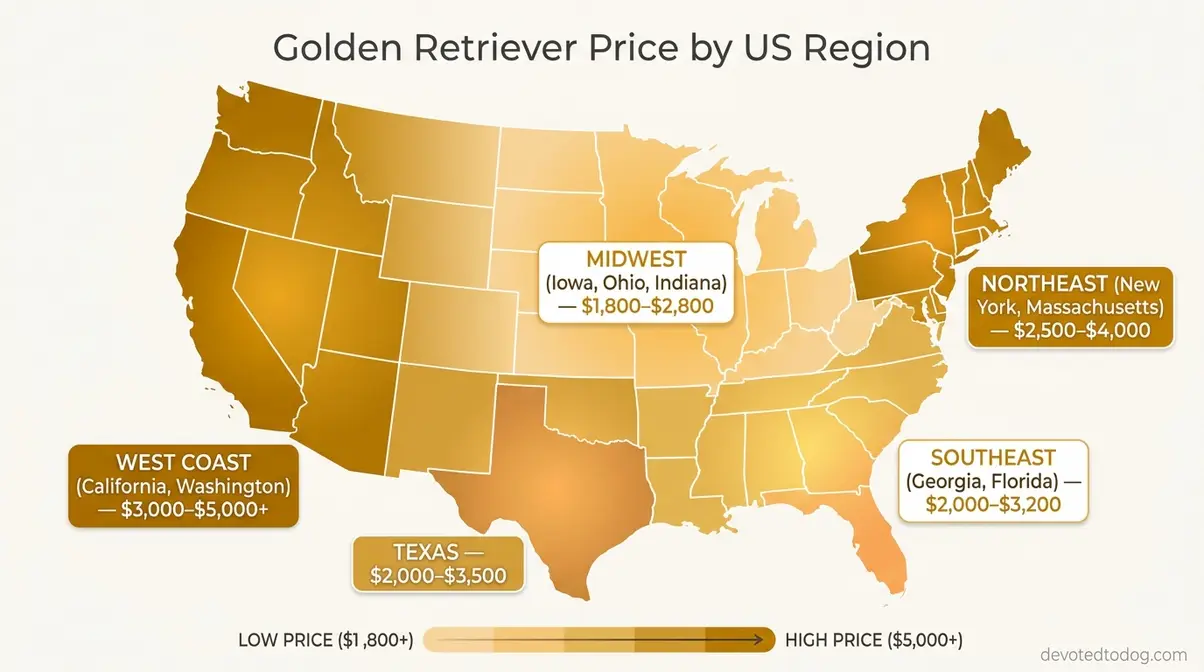
How Location Affects US Prices
Here’s how golden retriever price in the USA breaks down by region, based on current breeder listings and community-reported data:| US Region | Typical Price Range |
|---|---|
| Midwest (Iowa, Ohio, Indiana) | $1,800-$2,800 |
| Southeast (Georgia, Florida) | $2,000-$3,200 |
| Texas | $2,000-$3,500 |
| Northeast (New York, Massachusetts) | $2,500-$4,000 |
| West Coast (California, Washington) | $3,000-$5,000+ |
Prices in the UK, Canada, and India
International buyers face a wide range depending on their country’s cost of living and breeding community:- UK: £800-£2,000 (approximately $1,000-$2,500 USD), with pedigree Kennel Club-registered puppies averaging around £1,272 (Pets4Homes, 2026). Post-COVID demand pushed UK prices up significantly.
- Canada: CAD $2,000-$4,000 (approximately $1,500-$2,900 USD), broadly similar to US Midwest pricing.
- India: ₹15,000-₹50,000 (approximately $180-$600 USD), significantly lower due to cost-of-living differences.
What Are the Costs of Popular Golden Retriever Mixes?
Designer Golden Retriever mixes like the Goldendoodle typically cost $1,500-$4,000, comparable to or exceeding the price of a purebred Golden Retriever from a reputable breeder. High demand and “designer” marketing have pushed mix prices into the same territory as purebreds, even though mixes are not AKC-recognized.Prices for Popular Golden Mixes
The golden retriever poodle mix cost, better known as the Goldendoodle, is the most searched and most expensive of the popular Golden mixes. Here’s how the three most common mixes compare:| Mix Breed | Parent Breeds | Typical Price Range |
|---|---|---|
| Goldendoodle | Golden + Poodle | $1,500-$4,000 |
| Goberian | Golden + Husky | $1,000-$2,500 |
| Golden Cocker Retriever | Golden + Cocker Spaniel | $800-$2,500 |
| Mini Golden Retriever | Golden + Poodle or Cocker | $1,500-$5,000 |