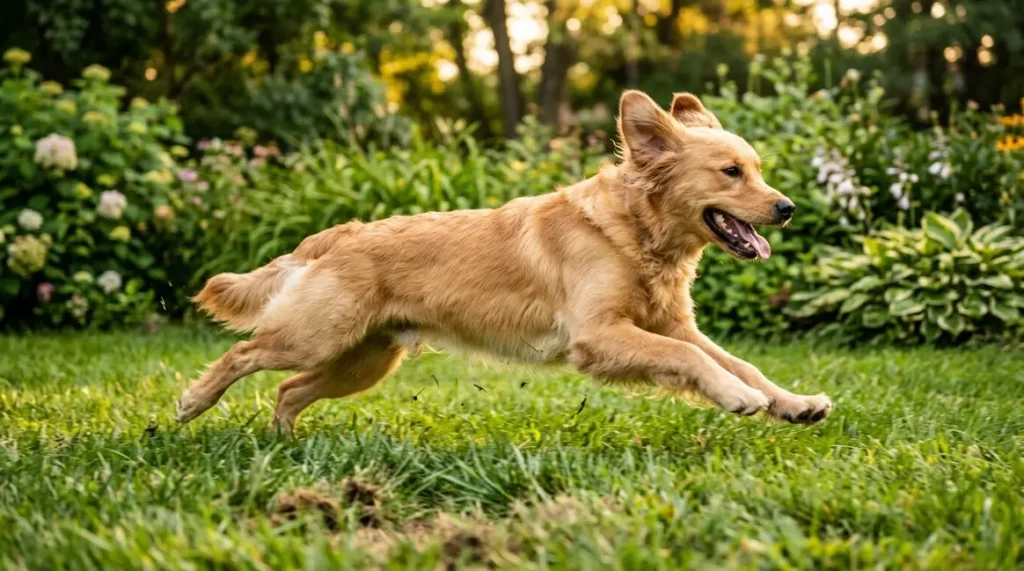
One moment your puppy is trotting happily around the living room. The next, they’re doing frantic laps, biting your ankles, and completely ignoring every command you know. If that sounds familiar, you’re not alone.
As many first-time owners describe it:
“I have a 3.5-month-old golden retriever puppy, my first ever puppy, who seems to get overwhelmed on walks.”
This is one of the most commonly reported experiences across Golden Retriever owner communities. And it captures exactly why golden retriever zoomies and overstimulation are so confusing. Sometimes the frantic running looks like pure joy. Other times it looks like distress. Often, it’s both. And that ambiguity makes it hard to know whether to intervene or let it run its course.
By the end of this guide, you’ll understand exactly what’s driving your Golden Retriever’s zoomies and overstimulation, and get a three-step protocol to calm them down. You’ll learn to recognize the early warning signs, interrupt the cycle before it escalates, and build a daily routine that reduces chaos from the ground up.
Golden retriever zoomies and overstimulation are connected: most frantic episodes are your puppy’s way of discharging built-up arousal they can’t self-regulate yet.
- Zoomies ≠ always happy: They’re often a stress-release valve, not pure joy, context and body language together tell the real story.
- The Arousal Spiral is real: Overstimulation triggers zoomies, which trigger more stimulation, making calming progressively harder.
- Three steps work: Remove the trigger → redirect to a calming activity → enforce rest.
- Age matters: A 3-month-old and a 9-month-old need different management strategies.
- Prevention beats correction: A structured daily routine reduces zoomie frequency more than any in-the-moment fix.
What You’ll Need
Before starting the three-step calming protocol, gather these tools:
- Lick mat
- Frozen Kong (stuffed and frozen the night before)
- Long-lasting chew (bully stick or yak chew)
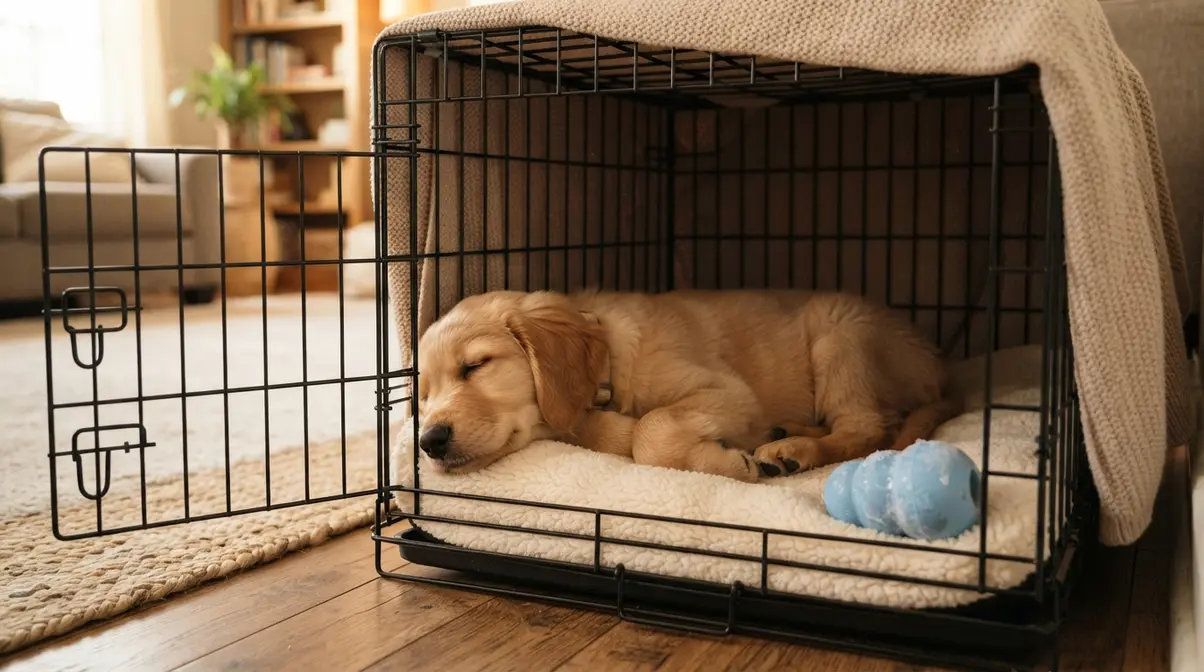
- Crate with a blanket for covering
- Snuffle mat (optional, for outdoor scatter feeding)
Estimated time: 5–10 minutes per calming session; 1–2 weeks of consistent application to see routine results.
Written by Coral Drake · Reviewed by Brianna York, Former Veterinary Technician · Last updated July 29, 2026 · Sources accessed July 2026
What Are Golden Retriever Zoomies, and Why Do They Happen?
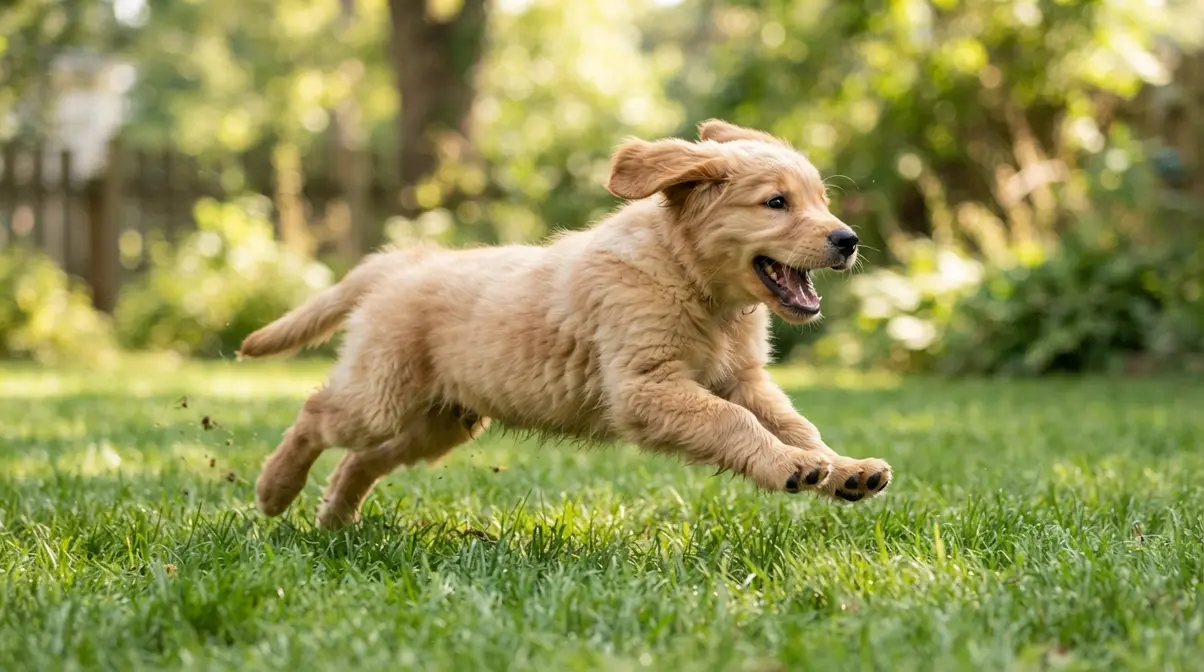
Zoomies, formally called Frenetic Random Activity Periods (FRAPs), are sudden bursts of frantic, circular running that most dogs experience. In Golden Retrievers, they’re especially common because the breed combines high social sensitivity with working-dog energy levels. FRAPs are normal, but when they happen frequently or with unusual intensity, overstimulation is almost always the trigger.
For more on understanding the core Golden Retriever personality, the breed’s working heritage explains why arousal thresholds are lower than many companion breeds, and why this breed hits its limit faster and harder than most.
Understanding why zoomies happen is the first step toward managing them. And for Golden Retrievers, the explanation is more nuanced than “too much energy.”
The Science Behind FRAPs, What Triggers Zoomies in Golden Retrievers
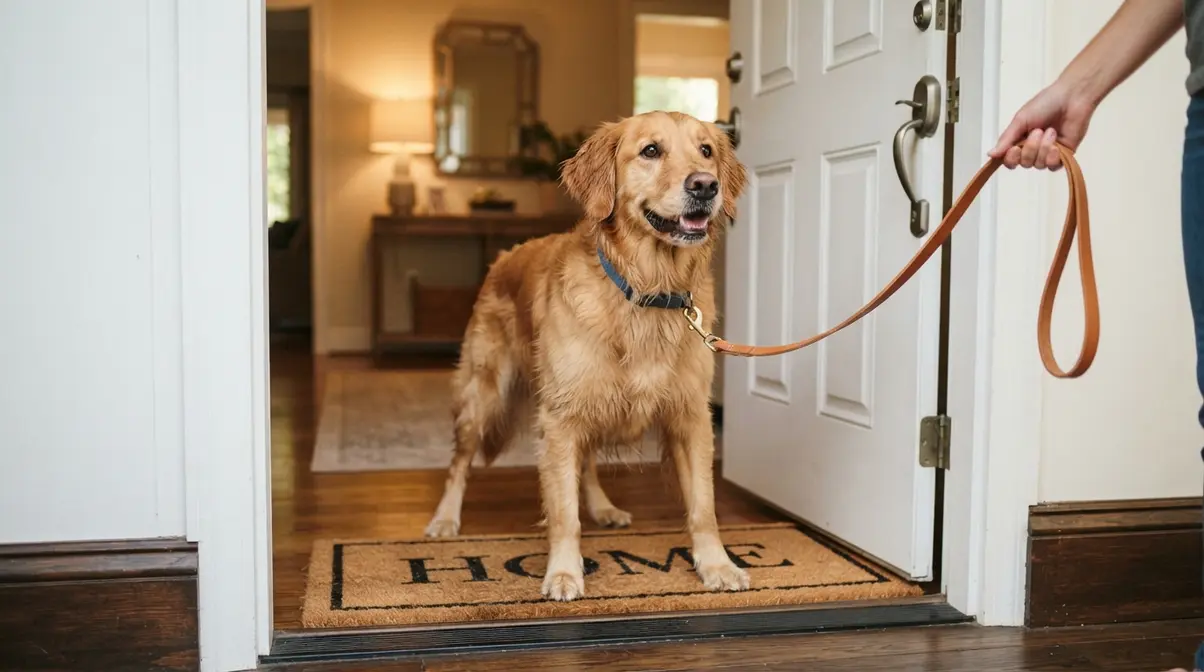
FRAPs are an energy and tension discharge mechanism: the dog’s nervous system releases built-up arousal it can’t process any other way. Think of it less like a burst of happiness and more like a pressure valve releasing.
The three most common Golden Retriever-specific triggers are:
- Post-walk excitement: Sensory overload from smells, other dogs, and passing strangers floods the nervous system. When your puppy gets home, the tension has to go somewhere.
- Post-bath stress discharge: Baths are genuinely stressful for many dogs. Discharging nervous tension after a bath is one of the most recognized FRAP triggers, according to the AKC.
- The “witching hour” before bedtime: An overtired puppy, like a toddler who missed a nap, becomes more frantic. Not less. The late afternoon or early evening is peak zoomie territory for most young Goldens.
Zoomies can follow positive stimulation (exciting play, a fun walk) or negative stimulation (a stressful bath, a chaotic environment). As Patton Vet Hospital on zoomies notes, FRAPs are a normal behavioral outlet for accumulated energy and stress. Not exclusively a sign of happiness. That distinction matters enormously for how you respond.
The post-bath zoomie is a particularly useful example. It proves that zoomies aren’t always about physical energy. They’re about emotional and nervous tension that needs an outlet. Once you internalize that reframe, the behavior stops looking random and starts looking predictable.
Why Golden Retrievers Are Especially Prone to Zoomies
Golden Retrievers are classified as a high-energy working breed, meaning their arousal thresholds are lower and their need for structured stimulation is higher than many companion breeds. The Help! My Dog Is Hyperactive article from the AKC emphasizes that what seems hyperactive may be entirely normal for a breed with this profile, and that understanding breed-specific needs is the essential first step.
Golden Retrievers were originally bred as working retrievers. That heritage means high drive, high social sensitivity, and a strong impulse to engage with everything in their environment. Unlike more independent breeds, a Golden doesn’t naturally disengage from exciting situations. At a busy dog park, most breeds will eventually self-settle in a corner. A Golden Retriever is still escalating when the others have wound down.
Their people-pleasing drive compounds the problem. Social stimulation, guests arriving, children running, other dogs playing, is one of the most powerful overstimulation triggers for this breed, more so than for dogs with lower social sensitivity.
For puppies between 3 and 12 months, there’s an additional layer: immature self-regulation. Puppies at this age literally cannot calm themselves down without help. This is not a training failure. It’s developmental. How Golden Retriever traits compare to other retrievers shows just how much breed heritage shapes these arousal patterns.
A quick safety note worth keeping in mind: safety advice for dog zoomies from Cornell’s Riney Canine Health Center is clear: keep your dog away from stairs, slippery floors, and roads during a zoomie episode. An enclosed outdoor space is ideal when possible.
Now that you understand the “why,” the next step is learning to read the early warning signs, because by the time the zoomies start, your Golden is already past their threshold.
How to Recognize an Overstimulated Golden Retriever
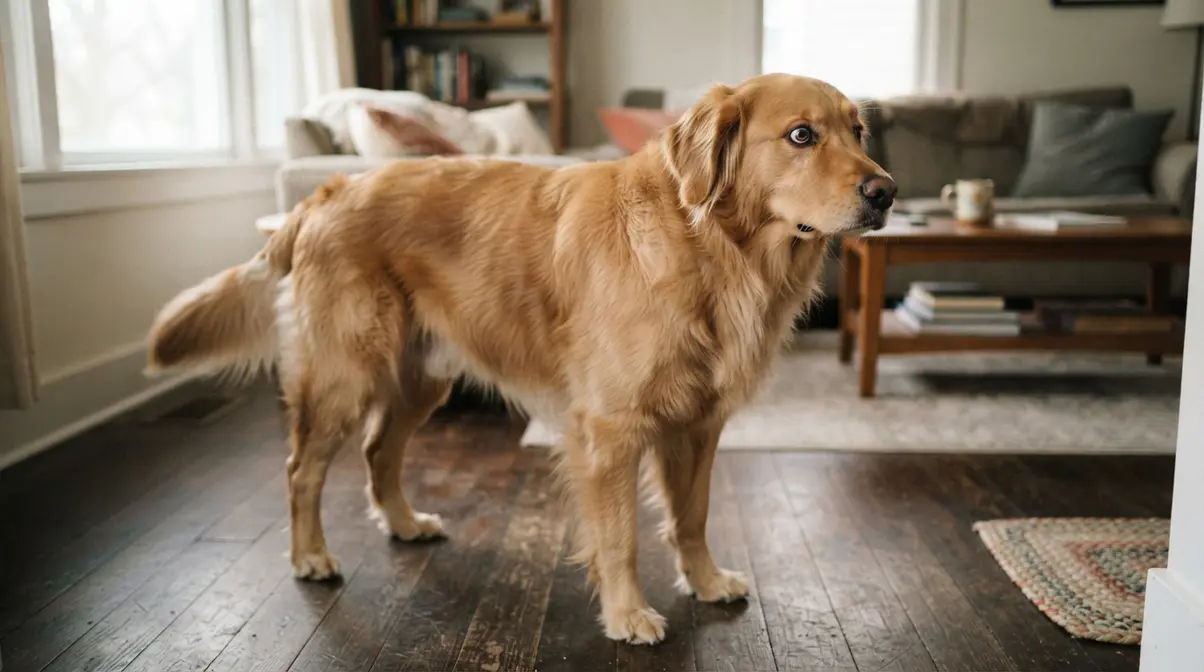
An overstimulated Golden Retriever typically shows three key signals before the zoomies erupt: an inability to make eye contact with you, rapid environmental scanning, and a sudden stiffness in their posture. Catching these early warning signals, rather than waiting for the frantic running to start, is what separates a quick calm-down from a 20-minute chaos session.
An overstimulated dog shows visible tension in the face, stiff ears, fast or direct actions, and jerky head movements, signs that often appear before the frantic zoomies begin (signs that your dog is feeling overstimulated, Continental Kennel Club, 2026). Learning to read these signals gives you a meaningful intervention window.
Physical and Early Warning Signs (Before the Zoomies Start)
The signs of an overstimulated dog appear in two waves: early warning signs you can act on, and full-threshold signs that mean the window has passed.
Early warning signs (your intervention window):
- Rapid environmental scanning, eyes moving constantly, unable to settle on one thing
- Inability to focus on your face or respond to their name
- Lip licking in a stimulating context (not after food)
- Yawning when there’s no reason to be tired
- Sudden stillness followed by a burst of movement
Physical overstimulation signs (threshold already breached):
- Dilated pupils
- Whale eye. The white of the eye becomes visible at the edge, indicating tension
- Excessive panting when the temperature doesn’t explain it
- Raised hackles along the spine (the hair standing up)
- Stiff, rigid body posture rather than loose and wiggly
According to North Royalton Animal Hospital on overstimulation, frantic uncontrolled zoomies, excessive panting, dilated pupils, and inability to settle are the key signs owners should watch for.
These early warning signs appear roughly 30–60 seconds before the zoomie erupts. That’s your window. If your Golden is on a walk and starts scanning rapidly while losing the ability to make eye contact, that’s your cue to end the walk or find a quiet spot, not to push through and hope they settle.
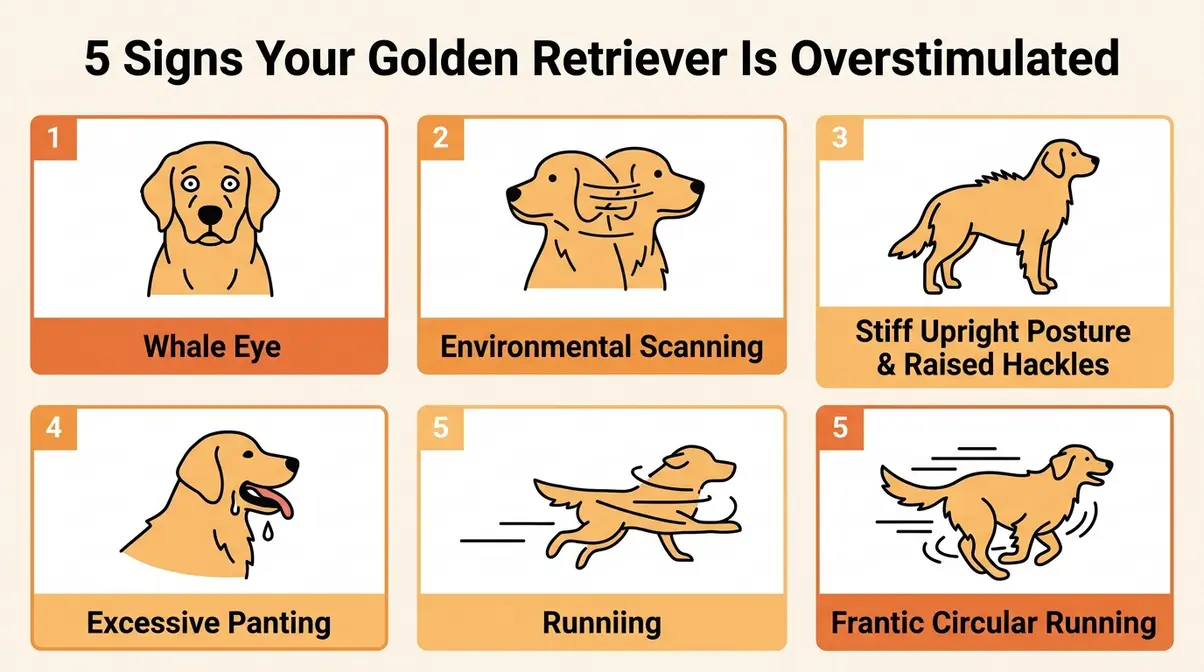
Physical signs are the body’s alarm system. But behavioral signs are often what owners notice first, especially the infamous “landshark mode.”
Behavioral Signs, From Zoomies to “Landshark Mode”
The behavioral signs of an overstimulated Golden Retriever are harder to miss, but easier to misread.
Core behavioral signs include:
- Frantic, uncontrolled zoomies that don’t stop even when you call their name
- Increased nipping and biting, what owner communities accurately call “landshark mode”
- Ignoring known commands like “sit” or “stay” (the arousal is too high to process language)
- Restless pacing and inability to lie down
- Repeated jumping on people, even when redirected
If your Golden is doing laps around the living room and biting at your ankles when you try to stop them, that’s not play. That’s a puppy who has hit their arousal ceiling.
One of the most important distinctions owners need to make is between happy zoomies and stress zoomies:
| Type | Context | Body Language | Action Needed |
|---|---|---|---|
| Happy zoomie | Post-nap, in the backyard, unprovoked | Loose, wiggly body; relaxed mouth | Let it run; ensure safe space |
| Stress zoomie | Post-chaotic walk, post-bath, late evening | Stiff body; frantic; can’t stop | Intervene with calming protocol |
Context and body language together tell the story. A loose, wiggly post-nap zoomie in the yard is likely joyful release. A stiff, frantic post-walk zoomie that won’t stop is more likely stress discharge. And that’s the one that needs active management.
These signs are the early stages of what we call the Golden Retriever Arousal Spiral, explained in full in Step 1 below.
Once you can read these signs, you’re ready to act. The goal isn’t to stop zoomies entirely. It’s to interrupt the cycle before it escalates.
Step 1: Break the Golden Retriever Arousal Spiral Before It Starts
The Golden Retriever Arousal Spiral is the self-reinforcing cycle at the heart of most zoomie episodes: overstimulation triggers frantic running, which generates more stimulation, which pushes your puppy further past their threshold, making each rotation harder to interrupt. Prevention targets this cycle at its earliest stage, and it’s far more effective than any in-the-moment technique.
The most effective way to manage golden retriever zoomies is to prevent the Arousal Spiral from starting: structured rest periods and predictable routines reduce zoomie frequency more than any in-the-moment technique.
Understanding the Golden Retriever Arousal Spiral
The Arousal Spiral moves through four distinct stages:
- Trigger: A stimulating event. A walk, guests arriving, a bath, an extended play session.
- Threshold breach: The early warning signs from the previous section appear. This is the intervention window.
- Zoomie episode: Frantic running, biting, inability to respond to commands. The spiral is now in full rotation.
- Recovery: The episode ends. But recovery takes 15–30 minutes, and during that window, your puppy is more sensitive to the next trigger than they were before.
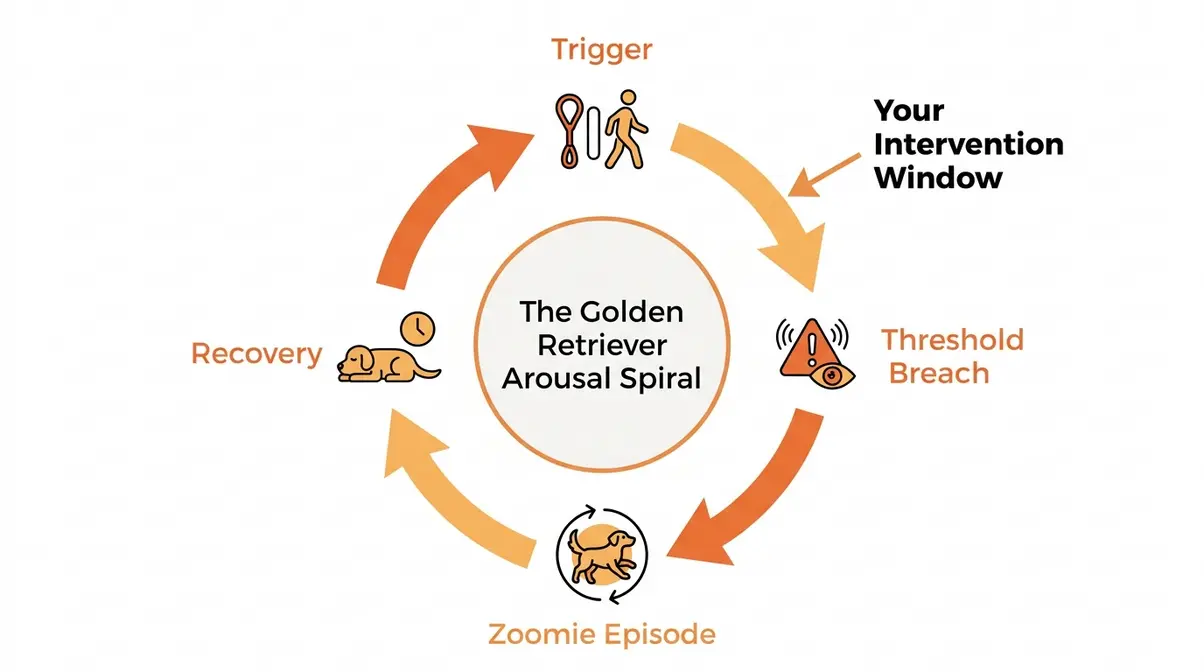
Why does the spiral self-reinforce? Because of what happens during stage 3. When an owner chases their dog, laughs, scolds, or tries to physically restrain them, the dog interprets all of it as engagement, which is stimulation. Each reaction adds fuel, extending the episode and deepening the recovery time.
The early warning signs covered in the previous section are your stage 2 indicators. That’s the window. A walk where your Golden starts scanning rapidly and losing focus is a stage 2 moment. The right move is to end the walk or redirect, not to push through and hope they settle once you’re home.
Once you understand the spiral, prevention becomes straightforward: manage the triggers and the environment before stage 2 begins.
Create a Safe, Low-Stimulation Decompression Zone
A decompression zone is a quiet, low-stimulation area: a crate, a pen, or a gated room where your puppy can recover after stimulating activities. This is not a punishment space. It’s a recovery space, and the distinction matters for how your dog learns to feel about it.
The key is to use it proactively, before the spiral starts:
- After every walk, guide your puppy to the decompression zone before they have a chance to escalate indoors.
- Before guests arrive, settle your puppy in the zone with a long-lasting chew.
- After every bath, end the session in the decompression zone rather than letting your puppy run loose.
What to put in the decompression zone:
- A lick mat smeared with frozen peanut butter or wet food
- A frozen Kong stuffed with wet food (prepared the night before)
- A long-lasting chew (bully stick, yak chew)
- A familiar blanket with your scent
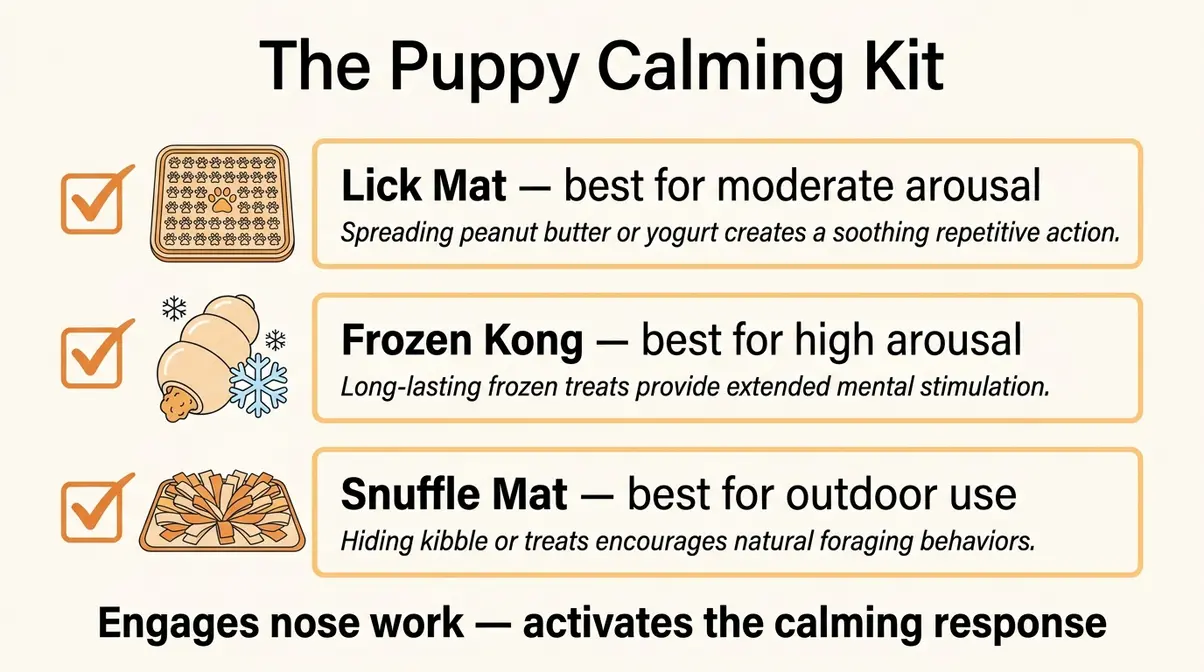
Nose work is the mechanism here. Sniffing activates the parasympathetic nervous system, the “rest and digest” response, which physiologically counteracts the arousal driving the zoomies. Sniffing tells your dog’s brain to slow down.
As safety advice for dog zoomies from Cornell’s Riney Canine Health Center notes, an enclosed, low-hazard space is ideal during and after high-arousal episodes. The decompression zone serves both purposes.
For more on preparing your home for a puppy’s energy, including how to set up safe zones throughout your space, the setup process is simpler than most owners expect.
After a 20-minute walk, guide your Golden to their decompression zone with a frozen lick mat before they have a chance to escalate indoors. Most puppies settle within a few minutes when the nose is engaged.
The decompression zone handles the aftermath. But managing the length and intensity of stimulating activities prevents the spiral from starting in the first place.
Manage Walk Length and Play Session Intensity
Short, sniff-focused walks are less arousing than long, fast-paced ones. And for puppies, they’re more appropriate. The general guideline is 5 minutes of structured exercise per month of age, twice daily. For a 3-month-old, that’s 15 minutes. For a 4-month-old, 20 minutes. Exceeding this window doesn’t tire a young puppy. It increases arousal.
A 10-minute sniff walk followed by 15 minutes of quiet crate time is more effective than a 30-minute fast walk with no recovery period. Sniffing is mentally tiring in a way that physical running isn’t. It engages the brain and lowers arousal rather than amplifying it.
Two additional rules that make a measurable difference:
- Avoid back-to-back stimulating activities. Walk → guests → play session = a guaranteed spiral. Build in 15-minute decompression gaps between stimulating events.
- Use the post-bath protocol. Bathing is a common zoomie trigger; for essential grooming for their double coat including bath protocols, the key principle is to end every bath in the decompression zone with a lick mat, before your puppy has a chance to run.
Prevention is the foundation. But even with the best routine, zoomies will still happen. Here’s how to handle them when they do.
Step 2: How to Calm Your Golden Retriever in the Moment
When your Golden Retriever is already in full zoomie mode, correction doesn’t work. Their arousal is too high to process commands. The goal is to interrupt the Arousal Spiral by removing stimulation and redirecting their nervous system toward a calming activity. These techniques work by targeting stage 3 of the spiral, preventing it from completing another full rotation.
Technique 1, Redirect to a Calming Activity
Nose work is the fastest physiological reset available to you. Sniffing activates the parasympathetic nervous system, the “rest and digest” response, which directly counteracts the sympathetic arousal driving the zoomies. It’s not a distraction; it’s a biological gear shift.
Your three primary tools, ranked by situation:
- Lick mat: Best for moderate arousal. Smear a thin layer of peanut butter or wet food across the surface. The repetitive licking motion is especially calming.
- Frozen Kong: Best for high arousal or when you need 15+ minutes of engagement. Stuff with wet food and freeze overnight so it takes longer to empty.
- Scatter feed: Best for outdoor use. Scatter a handful of kibble in the grass or on a snuffle mat. Sniffing for food pieces is highly engaging and lowers arousal quickly.
As AskAVet on calming zoomies recommends, redirecting an overstimulated puppy to a calming activity like a lick mat or long-lasting chew is more effective than attempting to physically stop the zoomie.
The exact four-step sequence:
- Don’t chase or engage with the zoomie. Stand still.
- Calmly pick up the lick mat (or frozen Kong).
- Place it in the decompression zone.
- Guide your puppy there with a low, calm voice. Don’t call excitedly.
If your Golden is doing laps at 7pm, place a frozen lick mat in their crate and open the door. Most puppies will follow the food smell and settle within 2–3 minutes.
For more ideas on using interactive toys for mental stimulation beyond the basics, puzzle feeders and snuffle mats work on the same parasympathetic mechanism as lick mats.
The redirect works when your puppy still has enough self-awareness to follow the food. But overtired puppies often can’t even do that. That’s when the enforced nap is the right tool.
Technique 2. The Enforced Nap (Why Tired Puppies Can’t Self-Settle)
Here’s the paradox that trips up almost every first-time puppy owner: an overtired Golden Retriever puppy becomes more hyperactive, not less, like a toddler who missed a nap. They can’t self-regulate sleep when overstimulated, so they need help getting there.
Purina on puppy zoomies and overtiredness confirms this directly: overtired puppies can become hyperactive rather than sleepy, and may need enforced rest to calm down.
Puppies under 6 months need about 16–18 hours of sleep per day. If your Golden is consistently getting less than this, because the day is too stimulating or rest periods aren’t built in, overstimulation and zoomies will increase in frequency and intensity.
How to implement the enforced nap:
- Guide your puppy to their crate. Use a lick mat or chew if they resist.
- Close the door.
- Cover the crate with a blanket to reduce visual stimulation.
- Leave the room. Silence is more calming than your presence at this stage.
Most puppies settle within 5–10 minutes. A 3-month-old who has been awake for 2 hours is already approaching their arousal ceiling. A 30-minute crate nap resets the clock more effectively than any other intervention.
The crate is a recovery tool, not a punishment. How you frame it, through consistent, calm use, determines how your puppy feels about it.
The lick mat and the enforced nap are your two most effective tools. But there’s a third element that most owners get wrong: what they do during the zoomie episode itself.
Technique 3. What NOT to Do During a Zoomie Episode
Chasing a dog during a zoomie episode adds stimulation and extends the episode. The most effective response is to stop moving, lower your energy, and guide them toward a calming activity (AKC hyperactivity guidance).
The four most common mistakes during zoomies:
- Don’t chase: Chasing is play to a Golden Retriever. It adds stimulation, signals engagement, and extends the episode. Stand still instead, become the least interesting thing in the room.
- Don’t scold or raise your voice: A high-pitched or sharp voice adds emotional stimulation. A low, calm voice, or silence, is more effective than any verbal correction.
- Don’t physically restrain a mid-zoomie dog: This increases frustration arousal and creates injury risk on slippery floors or near stairs. Cornell’s safety guidance is clear on this point.
- Don’t laugh or engage excitedly: Even positive attention is stimulation during a zoomie episode. Your excitement tells your dog the chaos is worth continuing.
The most effective thing you can do during a zoomie is become the least interesting thing in the room: stop moving, lower your energy, and wait.
Knowing what to do in the moment is essential. But the owners who see the biggest improvement are the ones who address the root cause: the daily routine.
Step 3: Build a Daily Routine That Prevents Overstimulation
A consistent daily routine is the single most effective long-term strategy for managing golden retriever zoomies and overstimulation. The right routine looks different at 3 months versus 9 months. Here’s what to do at each stage.
A reliable schedule keeps your Golden below the threshold where the Arousal Spiral begins. When wake windows, exercise, and rest are predictable, the nervous system has less to process, and fewer spikes to discharge.
3–6 Months, The Chaos Stage (and Why It’s Normal)
The 3–6 month window is the most intense zoomie period most owners experience. At this stage, Golden Retriever puppies have wake windows of only 1–2 hours before they need to sleep. Exceeding that window is the single most common cause of overstimulation at this age.
Activity guidelines for this stage:
- Structured exercise: 5 minutes per month of age, twice daily. For a 3-month-old, that’s 15 minutes. For a 6-month-old, 30 minutes.
- Walk type: Sniff-focused, low-stimulation walks rather than fast-paced exercise walks. Sniffing is mentally tiring and lowers arousal.
- Off-leash dog parks: Too stimulating at this stage. Save them for 6+ months when self-regulation has improved.
- Nap frequency: At least 3–4 naps per day, scheduled before arousal builds.
The “witching hour” at this age typically falls in the late afternoon or early evening. A 4-month-old who has been awake since 10am will hit their arousal ceiling by noon. A 30-minute crate nap at 11:30am prevents the 12pm chaos session. Build a mandatory nap before the witching hour window, not after it arrives.
For context on the earliest stages of puppy development, including what to expect in the first weeks before this stage, the developmental arc helps explain why the 3–6 month period is so intense.
According to the AKC’s hardest age for a golden retriever puppy training timeline, the key developmental stages from 8 weeks to 2 years include distinct high-energy phases that peak in early puppyhood, validation that what you’re experiencing is the norm, not an outlier.
The chaos of early puppyhood does ease. But the 6–12 month window brings its own challenges, including the hormonal surge the AKC calls the “Teenage Rebellion Phase.”
6–12 Months, The Teenage Rebellion Phase
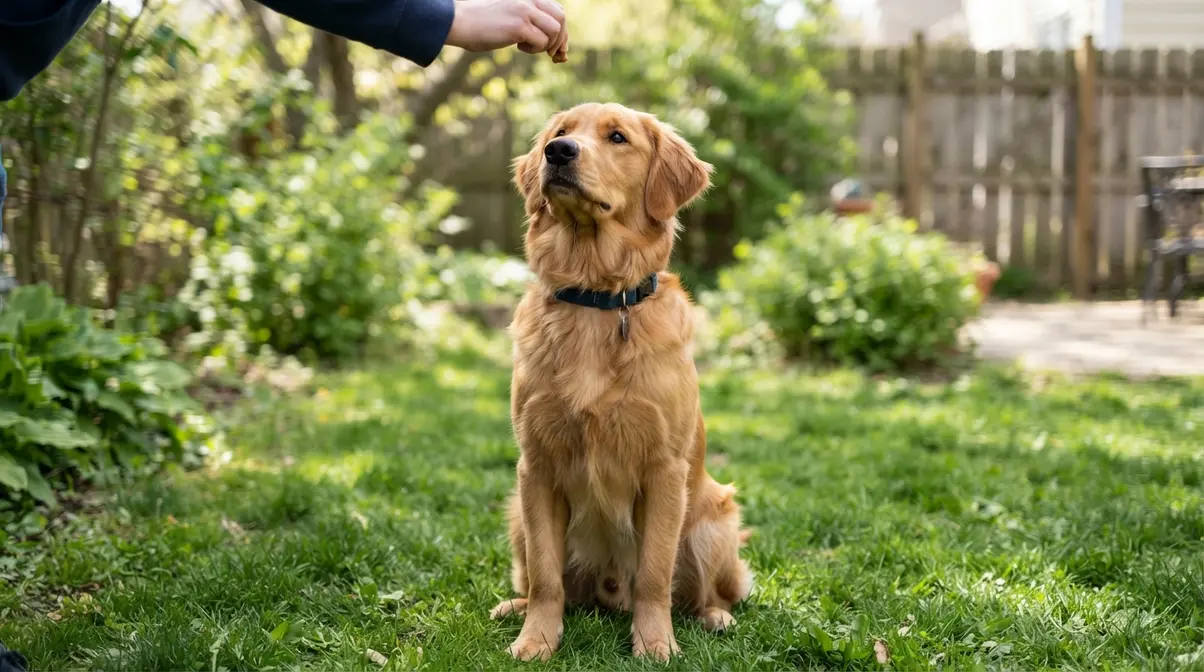
Just when owners think the worst is behind them, the 6–12 month window often brings a second zoomie peak. For many owners, the 6–12 month window represents the hardest months with a golden retriever. The puppy is bigger, faster, and more persistent, while the hormonal surge makes regression feel sudden and confusing. The AKC’s Golden Retriever Puppy Training Timeline identifies this as the “Teenage Rebellion Phase”, occurring between 6 and 18 months, when emerging hormones lead to increased energy, crankiness, and a temporary regression in trained behaviors.
The AKC identifies the “Teenage Rebellion Phase” for Golden Retrievers as occurring between 6 and 18 months, when emerging hormones can lead to increased energy, crankiness, and a temporary regression in trained behaviors.
A 9-month-old Golden who has been doing well may suddenly seem more chaotic, more reactive on walks, quicker to escalate, harder to redirect. This is hormonal, not a sign that your training has failed.
Management shifts at this stage:
- Exercise: 30–45 minutes of structured exercise, twice daily, longer than the puppy phase, but still managed.
- Mental stimulation: More important now than ever. Training sessions (10–15 minutes, twice daily), puzzle toys, and sniff walks provide the mental load that prevents arousal from building.
- Rest structure: This is where most owners make the critical mistake. They assume the puppy has “grown out of” needing naps and remove the rest structure entirely. This is the most common cause of a sudden spike in zoomies in older puppies. Maintain afternoon rest periods through the full Teenage Rebellion Phase.
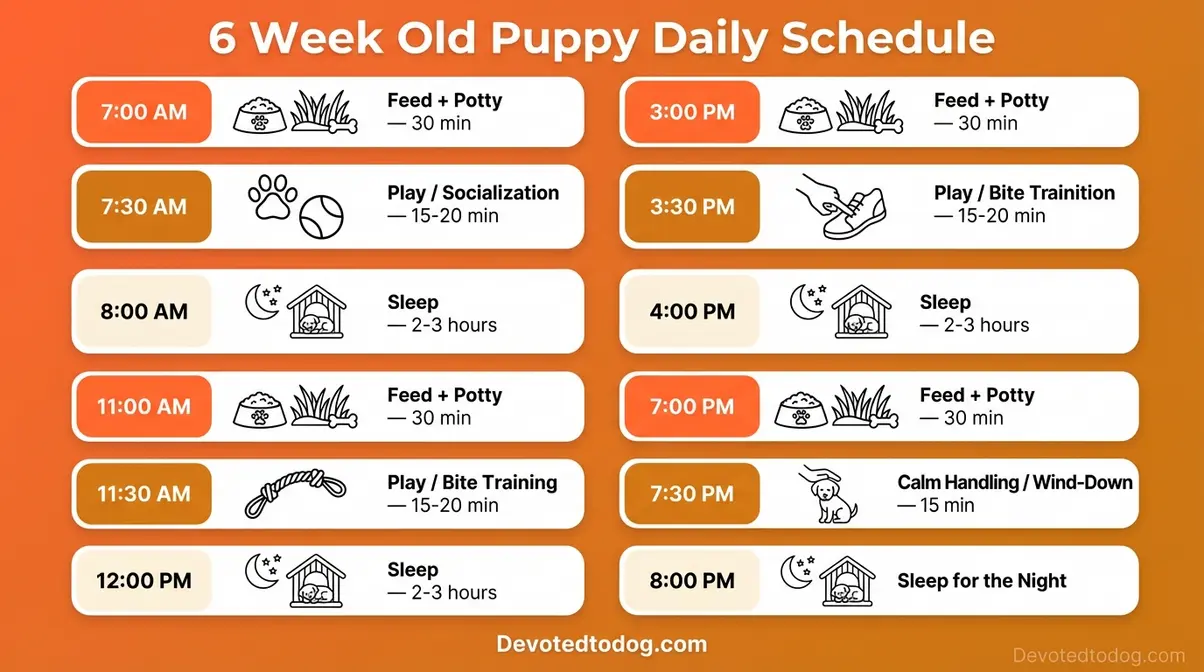
Sample Daily Schedule for a Golden Retriever Puppy
Here’s a concrete schedule framework for a 4–6 month old, the most common age when owners are searching for this guidance. Adapt the time slots to your household, but protect the structure.
| Time | Activity | Duration | Purpose |
|---|---|---|---|
| 7:00 AM | Morning sniff walk | 15–20 min | Physical outlet, low arousal |
| 7:30 AM | Breakfast | 10 min | Routine anchor |
| 8:00 AM | Crate nap | 90 min | First rest window |
| 9:30 AM | Short training session | 10 min | Mental stimulation, bonding |
| 10:00 AM | Play in yard or free time | 15 min | Moderate engagement |
| 10:30 AM | Crate nap | 90 min | Second rest window |
| 12:00 PM | Afternoon walk | 15–20 min | Physical outlet |
| 12:30 PM | Decompression zone (lick mat) | 15 min | Post-walk recovery |
| 1:00 PM | Crate nap | 90–120 min | Longest midday rest |
| 3:00 PM | Training session or puzzle toy | 10–15 min | Mental load before witching hour |
| 3:30 PM | Crate nap (pre-witching hour) | 45–60 min | Prevents late-day arousal spike |
| 5:00 PM | Evening walk | 15–20 min | Structured outlet |
| 5:30 PM | Dinner | 10 min | Routine anchor |
| 6:00 PM | Calm activity (lick mat or chew) | 20 min | Wind-down |
| 7:30 PM | Bedtime in crate | Overnight | End of day |
The core principle: never more than 2 hours of awake time without a rest period for puppies under 6 months. The schedule is a framework, adapt to your puppy’s specific signals, but protect the rest windows.
As your Golden matures, the zoomies will naturally decrease in frequency. But the timeline varies from dog to dog.
Even with the best routine, some owners make a few common mistakes that undo their progress. Here’s what to watch for.
Common Mistakes That Make Golden Retriever Overstimulation Worse
Most owners who struggle with persistent zoomies are doing several things right. But one or two common mistakes are undermining their progress. These are the most frequent ones, and they’re easier to fix than you might think.
Over-Exercising Your Puppy (More Exercise ≠ Calmer Dog)
This is one of the most common things owners do, and it makes complete sense on the surface: a tired dog is a calm dog. For adult dogs, that’s often true. For puppies, it backfires.
Golden retriever puppy over-exercise is one of the most common and least-discussed contributors to persistent zoomies. And it’s counterintuitive enough that most owners don’t recognize it as the cause. The 5-minutes-per-month-of-age rule exists for a reason. A 4-month-old Golden Retriever needs about 20 minutes of structured exercise per session, twice daily. Exceeding that window doesn’t tire the puppy. It increases arousal and can damage developing joints that aren’t yet ready for sustained impact. According to AKC puppy exercise guidelines, the developmental stages from 8 weeks to 2 years include distinct high-energy phases where appropriate exercise limits are critical to preventing overstimulation.
There’s also an exercise paradox at play. A Golden Retriever who gets too much physical exercise adapts. Their cardiovascular fitness improves, their threshold for stimulation rises, and they require more input to feel satisfied. You end up on a treadmill of escalating exercise that produces diminishing calm.
The more effective alternative is mental stimulation. A 10-minute training session, sit, stay, leave it, recall, is more cognitively tiring than a 30-minute run. Puzzle toys and sniff walks work on the same principle: they engage the brain, activate nose work, and lower arousal rather than amplifying it.
Diet plays a role too, high-sugar treats and certain food additives can spike energy. For guidance on the best food for Golden Retrievers that supports calm behavior, the composition of your puppy’s diet is worth considering alongside exercise and routine.
The other mistake that extends zoomie episodes is what owners do during them, specifically, engaging with the chaos.
Engaging With the Zoomie (and Other Escalation Traps)
Three behavioral patterns consistently extend zoomie episodes and make overstimulation worse over time.
Chasing, laughing, or scolding during zoomies all add stimulation. The dog doesn’t distinguish between positive and negative attention. All of it signals engagement, which signals that the behavior is working. Standing still and lowering your energy is genuinely more effective than any active intervention.
Removing the rest structure at 6–9 months is the most common cause of a sudden spike in zoomies in older puppies. Owners see improvement, assume the puppy has “grown out of” needing naps, and drop the afternoon rest period. Two weeks later, the chaos is back, often more intense because the puppy is bigger, faster, and more persistent. Maintain the rest structure through the full Teenage Rebellion Phase.
Inconsistency makes management noticeably harder. Allowing zoomies in the living room sometimes but redirecting them other times sends a mixed signal. Consistent redirection to the decompression zone, every time, not most of the time, teaches your puppy where the appropriate outlet is.
One final note: if zoomies are sudden-onset in an adult dog, accompanied by disorientation, or noticeably more intense than your puppy’s typical pattern, consult your veterinarian. Sudden behavioral changes can occasionally signal a medical issue, and it’s worth ruling that out.
With the three steps and the common mistakes covered, here are the answers to the questions Golden Retriever owners ask most often.
Frequently Asked Questions About Golden Retriever Zoomies and Overstimulation
What triggers zoomies in golden retrievers?
Zoomies in Golden Retrievers are triggered by a sudden release of pent-up energy or overstimulation. The most common triggers are post-walk excitement from sensory overload, post-bath stress discharge, and the “witching hour” before bedtime when overtiredness tips into hyperactivity. They can also follow any emotionally intense event, positive or negative. Keeping a simple log of when zoomies occur helps identify your dog’s specific patterns and the most reliable intervention points.
What are the signs of an overstimulated dog?
An overstimulated dog shows dilated pupils, whale eye (visible whites of the eye), excessive panting when not hot, and an inability to settle. Behavioral signs include frantic uncontrolled zoomies, increased nipping (“landshark mode”), ignoring known commands, and restless pacing. Early warning signs, rapid environmental scanning, lip licking, and inability to focus on the owner, appear before the zoomies start. Catching these early gives you a 30–60 second intervention window before the full episode erupts.
Why is my golden retriever so hyper?
Golden Retrievers are a high-energy working breed, and hyperactivity in puppies is almost always normal, not a training failure. Hyperactivity typically stems from pent-up energy, overstimulation, or overtiredness: the “missed nap” paradox where a tired puppy becomes more frantic, not less. Consistent exercise appropriate for their age, enforced nap times, and mental stimulation through training sessions and puzzle toys are the most effective management strategies. The breed’s working heritage means their need for structured stimulation is genuinely higher than many companion breeds.
Do zoomies mean a dog is happy?
Not always, zoomies can signal joy, but they’re frequently a sign of overstimulation or stress discharge. They’re a way for a dog to release built-up tension their nervous system can’t otherwise process. Context and body language together tell the story: a loose, wiggly post-nap zoomie in the backyard is likely joyful, while a stiff, frantic post-chaotic-walk zoomie is more likely stress. Both are normal; only the second needs active management with the calming protocol.
How do you calm an overstimulated golden retriever?
Calm an overstimulated Golden Retriever by removing stimulation first, then redirecting to a calming activity. Don’t chase or engage, stand still and lower your energy. Guide them to a quiet decompression zone with a lick mat or frozen Kong, which engages nose work and activates the parasympathetic calming response. If they’re too far gone to redirect, an enforced crate nap is the most effective reset. Avoid scolding, which adds emotional stimulation and extends the episode rather than ending it.
What to Change in Your Golden Retriever’s Routine Starting Today
Golden retriever zoomies and overstimulation are connected through the Arousal Spiral. A self-reinforcing cycle that’s easier to prevent than to stop once it’s in motion. For Golden Retriever owners in the 3–12 month window, the three-step protocol (break the spiral before it starts → calm in the moment → build a consistent daily routine) reduces zoomie frequency and intensity within 1–2 weeks of consistent application. The breed’s high energy and social sensitivity make structured rest periods non-negotiable, not optional.
The reason the three steps work is that they each target a different stage of the Golden Retriever Arousal Spiral. Prevention targets stage 1, managing the triggers before threshold breach. In-the-moment techniques target stage 3, interrupting the episode with nose work and enforced rest. The daily routine targets the baseline arousal level that determines how quickly the spiral starts in the first place. The “absolute chaos” your puppy creates isn’t random. It has a pattern, and patterns can be managed.
Start with one change today: set up a decompression zone with a lick mat and use it consistently after every walk for the next 7 days. Track whether the evening “witching hour” intensity decreases. Most owners notice a real difference within a week. When you’re ready for the longer view, it helps to understand when the zoomies naturally taper off as your Golden matures. For the evidence behind these techniques, the AKC hyperactivity guidance and Cornell’s Riney Canine Health Center on zoomies provide the authoritative foundation this protocol is built on.
Calming techniques in this guide are drawn from AKC training guidance, Cornell veterinary resources, and widely reported owner experience across Golden Retriever communities.