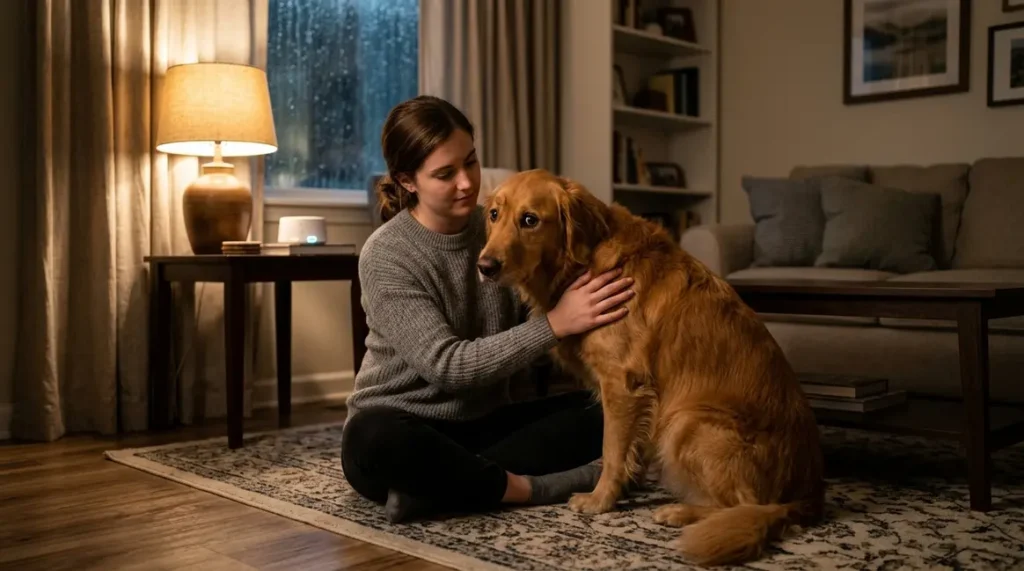
Your Golden Retriever is shaking before the first boom even hits, pressed against the wall, panting, eyes wide. You’ve tried holding them, talking to them, even sitting on the bathroom floor at midnight. And here’s the twist most owners don’t know: some of that well-meaning comfort may actually be making things worse if it signals you’re scared too.
“My dog is terrified of thunder and fireworks. Nothing I’ve tried has worked.”
That’s the experience of countless Golden Retriever owners every July. And every storm season. The helplessness is real. So is the solution. By the end of this guide, you’ll have both a same-night action plan and a multi-week program to reduce your Golden Retriever’s noise anxiety for good. The 6-step structure moves from immediate management (Steps 1–4) through long-term behavioral modification (Step 5) and veterinary options (Step 6), so you know exactly what to do tonight and what to start this week.
To calm golden retriever fireworks and thunderstorm anxiety:
1. Recognize the severity of your dog’s anxiety (mild, moderate, or severe)
2. Build a noise-proof safe space before the event
3. Apply immediate calming techniques during the event
4. Use non-prescription calming aids (pressure wraps, pheromone diffusers)
5. Start a 5-week desensitization and counter-conditioning program
6. Consult your veterinarian for prescription options if phobia is severe
This 6-step protocol covers both same-night management and long-term behavioral modification, with guidance on when to involve your vet.
Golden Retriever fireworks and thunderstorm anxiety is manageable with the right two-track approach: immediate management for tonight and behavioral modification for the long term.
- The Dual-Response Protocol: Combine an acute-event toolkit (Steps 1–4) with a structured desensitization program (Step 5) for lasting results, using one track without the other is the most common reason owners see no improvement.
- Safe space first: An interior, windowless room with white noise and familiar bedding is the single most effective immediate intervention available at zero cost.
- Medication is a last resort, not a failure: The FDA approved Sileo (dexmedetomidine oromucosal gel) specifically for canine noise aversion in 2016; Benadryl is not a reliable anti-anxiety option and can cause paradoxical agitation.
- Start desensitization early: Begin the sound-exposure program at least 4–6 weeks before peak fireworks season (July 4th) for best results.
- When to call your vet: If your dog is injuring itself, unable to eat, or showing signs of severe phobia after 6+ weeks of consistent management, veterinary intervention is warranted, not optional.
Estimated time: 30–60 minutes to set up the safe space and calming aids tonight; 5 weeks of 5–10 minutes twice daily for the full desensitization program.
What Do You Need to Know About Golden Retriever Noise Anxiety?
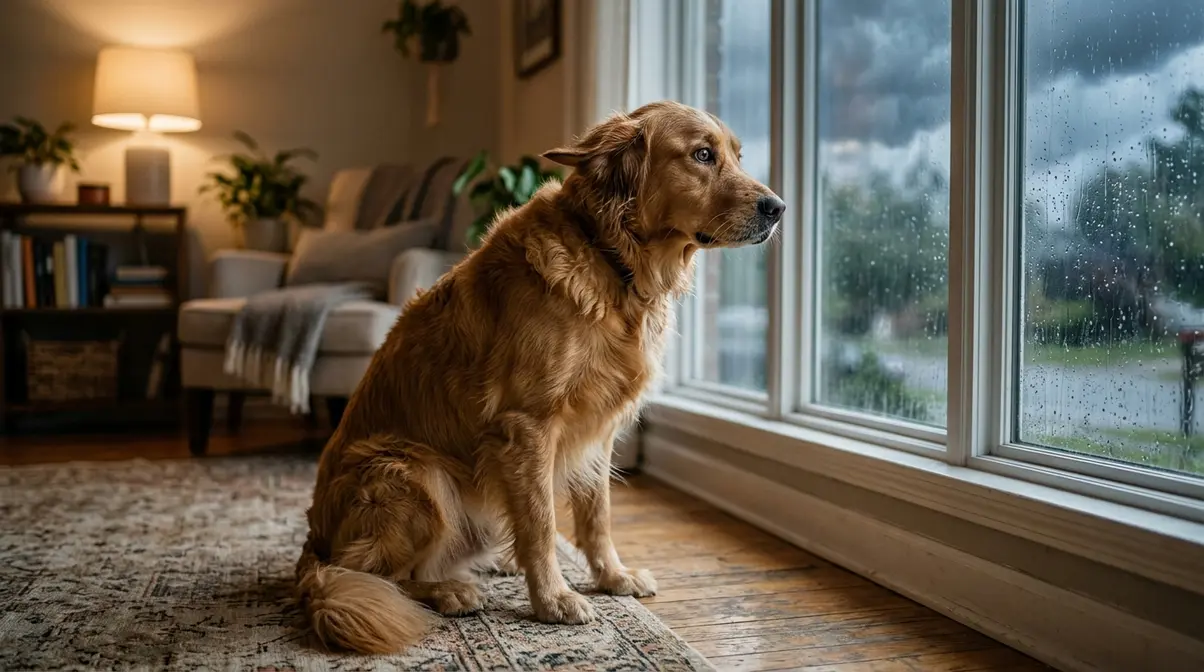
Golden Retrievers are not uniquely prone to noise phobia, but their sensitive, people-oriented temperament means they often show fear more visibly than other breeds. Noise phobia A disproportionate, escalating fear response to sounds like thunder and fireworks, affects a significant portion of the dog population. Research cited by the Cornell Riney Canine Health Center places noise-related fear among the most common behavioral concerns in companion dogs. Estimates vary across studies, but research suggests a significant proportion of dogs, potentially as many as one in three to one in two, show signs of noise anxiety at some point in their lives, making it one of the most frequently reported behavioral concerns in companion dogs.
Because noise anxiety has both an immediate trigger and a learned fear component, effective treatment requires two tracks: managing the acute event and modifying the underlying response over time. That’s the core of the Dual-Response Protocol The framework this guide is built around. Understanding why your Golden is afraid is the first step to choosing the right track.
Why Golden Retrievers Are Especially Vulnerable to Noise Anxiety
Noise anxiety in Golden Retrievers is shaped by three overlapping factors. First, Goldens are emotionally attuned to their owners in ways most breeds aren’t. They read human body language, tone of voice, and even cortisol shifts. When you tense up at the first rumble of thunder, your dog notices. That creates a feedback loop: your anxiety amplifies theirs, which amplifies yours. It’s not a training failure; it’s a feature of the breed’s emotional sensitivity.
Second, Golden Retrievers going through the adolescent “second fear period”, typically between 8 and 14 months, can suddenly develop noise phobia even if they sailed through their first July 4th without a flinch. A Golden that seemed fine at 8 months may become genuinely terrified at 14 months. This is a normal developmental window, not a sign that something went wrong in their early training. Understanding this prevents owners from blaming themselves, or giving up on behavioral modification.
Third, dogs hear sound frequencies and intensities that humans cannot perceive. Fireworks and thunder register as physically louder, more overwhelming events for your Golden than they do for you. This matters when you’re calibrating the desensitization program in Step 5. What sounds “barely audible” to you may still be too intense for your dog. For a deeper look at common Golden Retriever behavior problems, including fear-related patterns, that resource covers the behavioral landscape in more detail.
The Science Behind the Fear: Static Electricity and Barometric Pressure
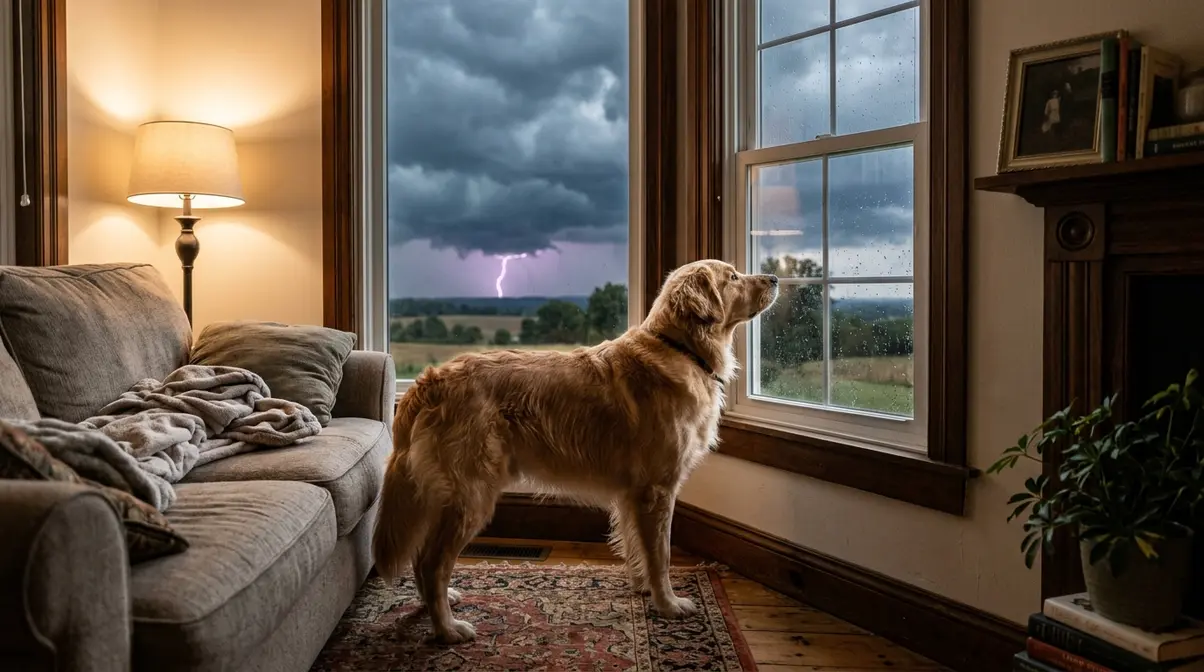
Thunderstorms are a multi-sensory event, and they begin before the thunder. Barometric pressure drops hours ahead of a storm. Static electricity builds up in your dog’s double coat as low-pressure systems move in. Low-frequency infrasound (below the range of human hearing) travels ahead of the storm front. The smell of ozone arrives before the first lightning flash. By the time the thunder booms, your dog’s nervous system has been on high alert for hours. This is why some dogs appear anxious “for no reason” on a clear afternoon, they’re reading the storm’s arrival long before you are.
Fireworks work differently. They’re sudden, unpredictable, and carry no pre-event sensory warning. There’s no barometric drop, no ozone smell, no gradual buildup, just an explosive sound from nowhere. This unpredictability is precisely why some dogs fear fireworks but not storms, and vice versa. Each triggers fear through a different mechanism.
One widespread myth worth addressing directly: dogs don’t seek out bathtubs during storms because the plumbing grounds them against static electricity. Penn Vet Behavior Medicine explicitly addresses this in their 2024 behavior brief, dogs seek tile floors and bathtubs because they feel cooler and more enclosed, not because of electrical grounding. This distinction matters for Step 2: your dog is seeking a den, not a ground wire. Design the safe space accordingly.
Understanding the root causes of their fear is the same foundation that applies to other anxiety contexts in Goldens, the physiological drivers are consistent across triggers.
With the science clear, the next step is learning to read your dog’s specific distress signals, because mild anxiety and severe phobia require different responses.
Step 1: Recognize the Signs of Noise Anxiety in Your Golden Retriever
Signs of noise anxiety in Golden Retrievers range from subtle stress signals, yawning, lip-licking, pinned ears, to severe phobia responses like destructive escape attempts and self-injury. Knowing the difference determines whether tonight’s plan is management or a call to your vet. The American Kennel Club identifies trembling, panting, and escape attempts as the most commonly reported signs of fireworks anxiety in dogs; in Golden Retrievers, these behaviors are frequently paired with intense clinginess toward their owners.
Physical Signs: What Your Dog’s Body Is Telling You
The body doesn’t lie. Your Golden’s physical responses to noise anxiety fall along a spectrum. And the combination matters as much as any single sign.
| Mild to Moderate Signs | Severe Signs |
|---|---|
| Trembling or shaking | Uncontrolled urination or defecation |
| Panting (without heat cause) | Vomiting |
| Repeated yawning | Self-injury (scratching paws until bleeding) |
| Lip-licking | Inability to settle, continuous pacing for 30+ minutes |
| Dilated pupils (the black center appears very large) | Running into walls or furniture |
| Ears pinned flat against the head | Complete physical exhaustion from sustained panic |
| Drooling | Escape attempts that cause physical harm |
The panting-plus-pacing combination is a reliable indicator of moderate-to-severe distress, not mild discomfort. A Golden that pants and paces for 30 minutes without settling is not “just a little scared”, that’s a dog in genuine distress, and an anxiety vest may be warranted alongside environmental management.
According to the American Kennel Club, recognizing these physical signals early allows owners to intervene before anxiety escalates to the severe end of the spectrum.
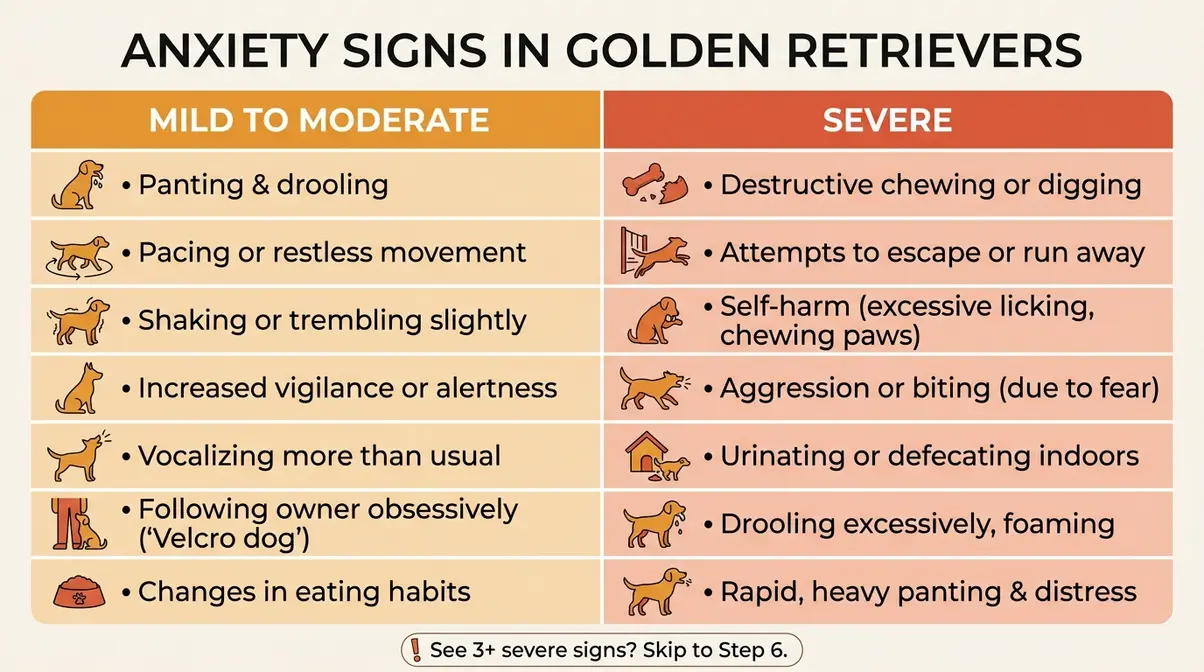
Physical signs tell you what your dog’s body is doing, behavioral signs tell you what their mind is trying to do about it.
Behavioral Signs: When Fear Becomes a Phobia
Severe phobias don’t start severe. They escalate. The behavioral signs of noise anxiety follow a predictable progression. And recognizing where your dog sits on that spectrum is what determines which track of the Dual-Response Protocol to activate.
Moderate behavioral signs include hiding under furniture or in closets, excessive clinginess, whining or barking, refusing food, and following you from room to room. These are distressing but manageable with the techniques in Steps 2 through 4.
Severe behavioral signs are a different category entirely: chewing through drywall or door frames, jumping fences, breaking through windows, complete inability to respond to their name or basic commands, or total shutdown, frozen, glassy-eyed, unresponsive. A dog that was “a little nervous” at age 1 and is now destroying door frames at age 3 has developed a true phobia. That trajectory, fear that worsens each year without intervention, is the hallmark of noise phobia rather than situational anxiety. It requires the full Dual-Response Protocol, not just a ThunderShirt.
If your dog shows three or more severe signs, skip ahead to Step 6 before attempting Steps 2 through 4.
Checkpoint: After reading this step, you should be able to place your dog in one of three categories, mild, moderate, or severe, which determines which steps of this guide to prioritize.
Once you’ve assessed your dog’s anxiety level, the most important thing you can do before the next event is prepare their environment, starting with a dedicated safe space.
Step 2: Build a Noise-Proof Safe Space Before the Event
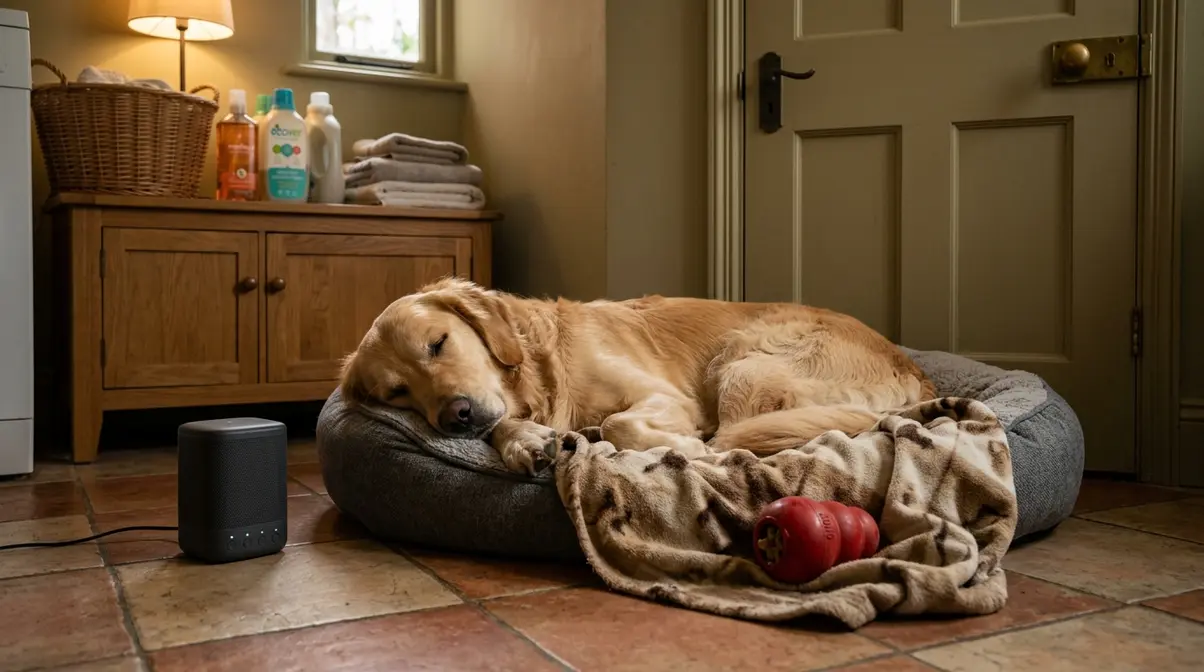
Research in veterinary behavioral medicine consistently identifies environmental management, specifically a quiet, enclosed space with sound masking, as the most accessible first-line intervention for noise-anxious dogs. The critical word is before. A safe space introduced during a panic event is just a strange room. A safe space your dog has spent three calm afternoons in, eating treats and napping, is a genuine refuge.
Choose the Right Room
The safe space begins with room selection. Interior rooms, bathrooms, walk-in closets, laundry rooms, interior hallways, reduce both sound transmission and static electricity exposure because distance from exterior walls matters. The further your dog is from windows and exterior walls, the less sound, light, and static reaches them.
- Avoid rooms with large windows or exterior walls, glass transmits both sound and the visual flash of fireworks, which can independently trigger fear even without the bang
- Avoid finished basements if they have window wells at ground level, these can still transmit flash and sound
- If your dog already has a preferred hiding spot (under a bed, in a closet), use that, don’t force a new location when they’ve already chosen their own den
- An interior bathroom with the door closed and a white noise machine running is often the single most effective room in a typical home
Introduce the room before any event, even two or three short sessions of treats and play in that space significantly increases its effectiveness. For more on setting up a safe space for your dog when they’re anxious, the same principles apply across anxiety contexts.
Once you’ve chosen the room, stock it with the right comfort items.
Stock the Safe Space with Comfort Items
What goes in the safe space matters as much as the room itself. Resist the urge to buy new, special bedding, familiar scent is more calming than novelty. Use your dog’s own bed or a blanket they sleep on regularly.
A worn piece of your clothing is one of the most underrated tools here. Research supports that owner scent has a measurable calming effect on dogs. This isn’t anecdotal. Tuck a t-shirt you wore that day into the bedding before any predicted event.
Beyond scent, include:
- Fresh water (anxiety increases panting and dehydration risk)
- A high-value, long-lasting chew. A bully stick or a frozen Kong stuffed with peanut butter and frozen overnight
- A lick mat spread with plain yogurt or peanut butter for mildly anxious dogs
One important caveat: avoid puzzle toys that require active problem-solving if your dog is already in a high-anxiety state. Using puzzle toys for mental enrichment works well for mild-to-moderate anxiety, but a dog in severe distress can’t engage with a challenge feeder. The frustration adds stress rather than relieving it. Save those for calm practice sessions.
According to the American Kennel Club, a frozen Kong is one of the most consistently recommended management tools for noise-anxious dogs precisely because licking and chewing engage the parasympathetic nervous system.
The final element of an effective safe space is sound masking, which works differently than most owners expect.
Mask the Noise with Sound
White noise machines are the most effective sound masking option because they produce consistent broadband sound that partially masks the sharp peaks of fireworks and thunder. The goal is not to drown out the noise entirely, that’s impossible at close range. But to smooth the acoustic spikes that startle an already-anxious dog.
Classical music, specifically the “Through a Dog’s Ear” recordings developed with veterinary behavioral input, has documented calming effects in shelter dogs. Regular classical music is a reasonable alternative. TV noise, by contrast, is less reliable. It contains sudden volume changes (action sequences, commercials) that can independently startle an anxious dog.
Run the white noise at a moderate volume, not maximum. For creating a calming den or safe space with a crate as the anchor, the same sound masking principles apply. The crate should already be a familiar, positive space before any event occurs.
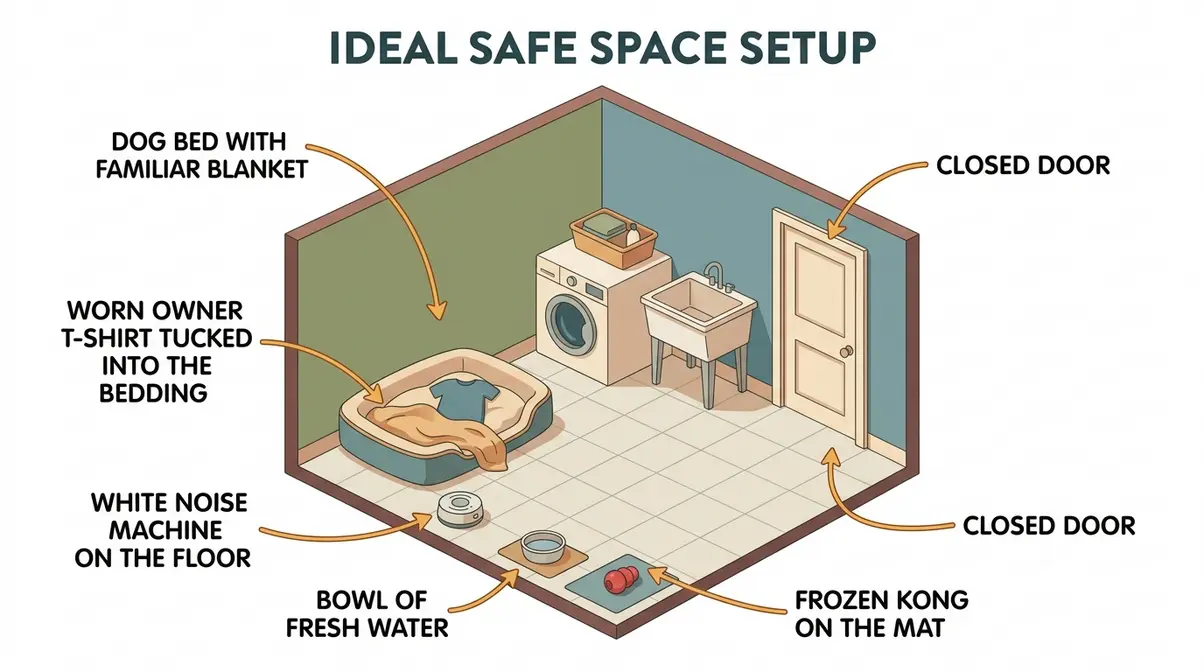
Checkpoint: Your safe space is ready when it has (1) a familiar-scented item, (2) a white noise source running, and (3) your dog has voluntarily entered it at least once before the event.
With the safe space prepared, the next step is knowing exactly what to do, and what not to do, when the event is actually happening.
Step 3: Apply Immediate Calming Techniques During the Event
One of the most persistent myths in dog anxiety management is that comforting your frightened dog will make the fear worse. According to the American Kennel Club, this is not supported by behavioral science, fear is an emotional response, not a trained behavior. You cannot accidentally teach your dog to be afraid by offering comfort. What you can accidentally do is model panic, which is a different problem entirely.
Stay Calm and Avoid Reinforcing Fear
Your dog is watching you. Dogs read human emotional states through body language, tone of voice, and physiological cues. And an anxious owner amplifies the feedback loop described in the Prerequisites section. Your goal isn’t to ignore your dog; it’s to model the emotional state you want them to move toward.
Calm, matter-of-fact interaction is the right approach. Sit near your dog, speak in a normal conversational tone, and avoid high-pitched reassurance (“It’s okay! You’re fine!”). That vocal pattern signals alarm in dogs, not safety. Sitting on the floor near your Golden while reading or watching TV is a genuinely effective technique: you’re present, you’re calm, and you’re modeling normal behavior.
If your dog is freaking out and trying to escape their hiding spot, don’t force them out. Allowing them to self-regulate in their chosen safe space is the correct response. And never punish a fear response, punishment during an anxiety episode creates a negative association with you, not with the noise.
Your calm presence is the foundation. But the environment itself also needs active management.
Manage the Environment
Environmental modifications during an event reduce the sensory load on an already-overwhelmed nervous system. Work through this checklist before the event peaks:
- Close all curtains and blinds The visual flash of fireworks can independently trigger fear even without sound; blackout curtains are ideal for July 4th preparation
- Dim or turn off lights A darker room reduces visual stimulation and reinforces the den-like quality of the safe space
- Keep your dog indoors, fireworks events are among the highest-risk periods for dog escapes; animal shelters consistently report elevated intake in the days following July 4th, making it one of the most dangerous periods of the year for unsecured dogs, according to the American Kennel Club
- Verify ID tags and microchip, confirm your dog’s microchip registration is current before any major fireworks event; a panicking 65-pound Golden can clear a fence that would normally hold them
A combination of blackout curtains, white noise, and an interior room addresses the visual, auditory, and static components of a thunderstorm simultaneously. The multi-sensory approach matches the multi-sensory nature of the trigger.
Environmental management reduces the sensory load, distraction techniques give your dog something else to focus on.
Use Distraction and Positive Engagement
Licking and chewing have documented calming effects in dogs. They engage the parasympathetic nervous system, which is the physiological opposite of the fight-or-flight state anxiety triggers. A lick mat spread with peanut butter or plain yogurt, placed in the safe space, can occupy a mildly anxious dog for 15 to 20 minutes. A frozen Kong extends that to 20 to 30 minutes.
Use your dog’s willingness to eat as a real-time anxiety gauge. A dog that accepts food during a fireworks event is not in severe distress. A dog that turns away from high-value treats, chicken, cheese, is in a state too elevated for distraction to work. At that point, move to Step 4 or Step 6.
Gentle play or basic commands (“sit,” “down”) work similarly as gauges. If your Golden can respond to a cue, their anxiety is in the manageable range. This is also the foundation of desensitization The principle of pairing a scary sound with something positive is exactly what the counter-conditioning program in Step 5 formalizes. Think of these moments as informal practice.
Checkpoint: During the event, you should be calm, the room should be darkened and sound-masked, and your dog should have access to their safe space and a food distraction. If they’re still unable to settle after 30 minutes, move to Step 4.
If distraction alone isn’t enough, the next step is adding a physical calming aid to your toolkit.
Step 4: Use Calming Aids to Reduce Acute Distress
Non-prescription calming aids work best as a complement to environmental management, not a replacement for it. Pressure wraps, pheromone diffusers, and calming supplements each target different aspects of the anxiety response. And their effectiveness varies significantly by individual dog.
Pressure Wraps and Anxiety Vests
Anxiety vests like the ThunderShirt work through deep pressure stimulation. A mechanism similar to swaddling in infants, which activates the parasympathetic nervous system and can reduce cortisol and heart rate in some dogs. Owner surveys and some peer-reviewed studies report positive responses in a substantial portion of dogs, though individual results vary, effectiveness depends on correct fit and early introduction before peak anxiety. According to VCA Animal Hospitals, pressure wraps are most effective when combined with behavioral management rather than used as a standalone intervention.
Correct fit is non-negotiable. A wrap that’s too loose provides no benefit; too tight causes discomfort and adds a new stressor. The standard is snug but with two fingers fitting underneath.
- How to fit a pressure wrap (3 steps):
- Place the wrap on your dog and fasten it so it’s snug across the chest and torso
- Test the fit, two fingers should slide under any strap without forcing
- Let your dog wear it for 10 minutes during a calm period with treats before the first event
The most important rule: introduce the wrap before the event. Putting it on a panicking dog for the first time is ineffective and stressful. Put it on your Golden 30 to 60 minutes before a predicted thunderstorm (check weather apps the night before) or 1 hour before a scheduled fireworks event.
Pressure wraps address the physical sensation of anxiety, pheromone diffusers work on the neurochemical level.
Pheromone Diffusers and Calming Supplements
Adaptil (DAP, Dog Appeasing Pheromone) diffusers release a synthetic version of the calming pheromone nursing mothers produce. The evidence for mild anxiety reduction is moderate, and there’s a critical timing consideration: plug-in diffusers need 2 to 4 weeks to reach full effect. Adaptil is not a same-night solution, it’s a background support tool that should be running in the designated safe space for several weeks before peak season.
Calming supplements occupy a spectrum of evidence quality:
- Melatonin: timing and dosing vary by weight; consult your vet before use
- L-theanine: an amino acid found in green tea; some evidence supports mild anxiety reduction in dogs; generally well-tolerated
- CBD: evidence is emerging and inconsistently regulated; quality and dosing vary widely, consult your vet before use
All supplements should be discussed with a veterinarian before use. Interactions with other medications are possible, and dosing for Golden Retrievers (typically 55 to 75 pounds) differs significantly from small breeds. According to VCA Animal Hospitals, calming aids are most effective when combined with behavioral management. They reduce the anxiety ceiling but don’t address the underlying fear response.
Checkpoint: You’ve tried a calming aid if your dog’s anxiety is mild-to-moderate. If the aid has no effect after 30 minutes, or if your dog’s anxiety is severe, proceed to Step 6.
Calming aids manage the symptoms. But the only way to address the underlying fear is through behavioral modification, which is what Step 5 covers.
Step 5: Start a Desensitization and Counter-Conditioning Program
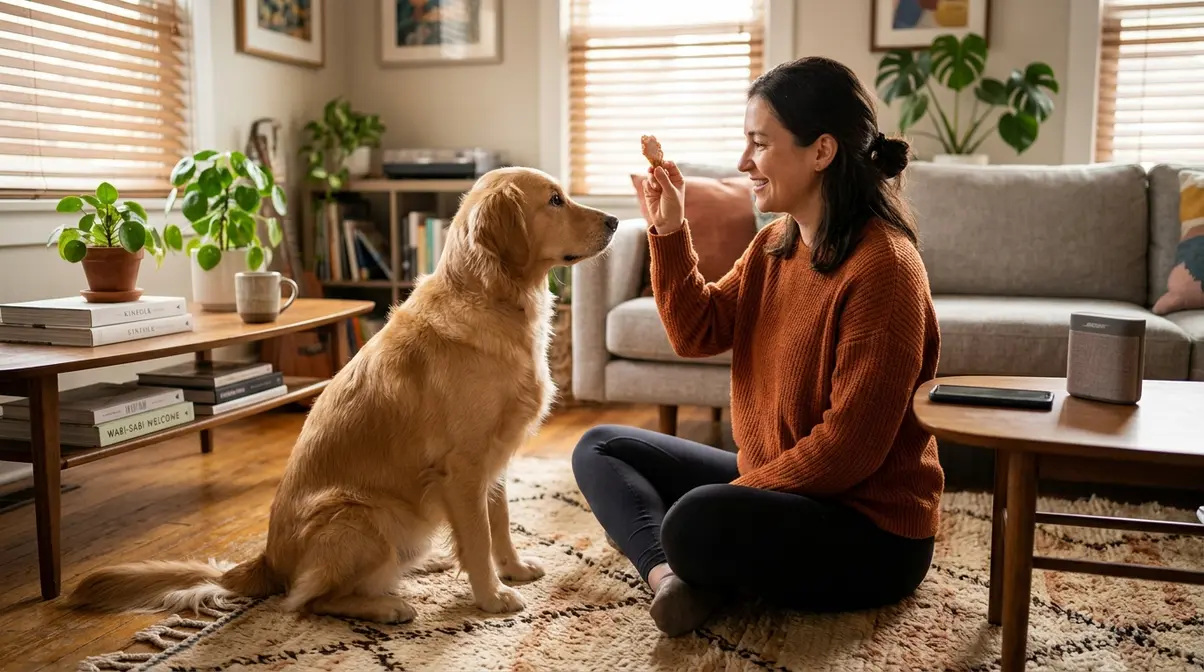
Most owners try desensitization once, see no immediate result, and give up. The reason it fails isn’t the technique, it’s the pace. Desensitization works by changing your dog’s emotional response to sound, and that takes weeks of consistent, low-pressure practice. Not a single session. Not a weekend. Weeks.
According to VCA Animal Hospitals, counter-conditioning, relaxation training, and anxiolytic medication appear to be the most effective strategies in the treatment of firework fears in dogs, with behavioral modification producing the most durable long-term results when practiced consistently over 4 to 8 weeks.
What Is Desensitization and Counter-Conditioning?
Desensitization means gradually exposing your dog to the fear trigger at a level too low to cause fear, then slowly increasing intensity over time. The dog learns, through repeated, calm experience, that the sound is not dangerous. Counter-conditioning means pairing that fear trigger with something your dog loves: high-value treats, play, praise. The emotional response shifts from “scary sound” to “treat sound.”
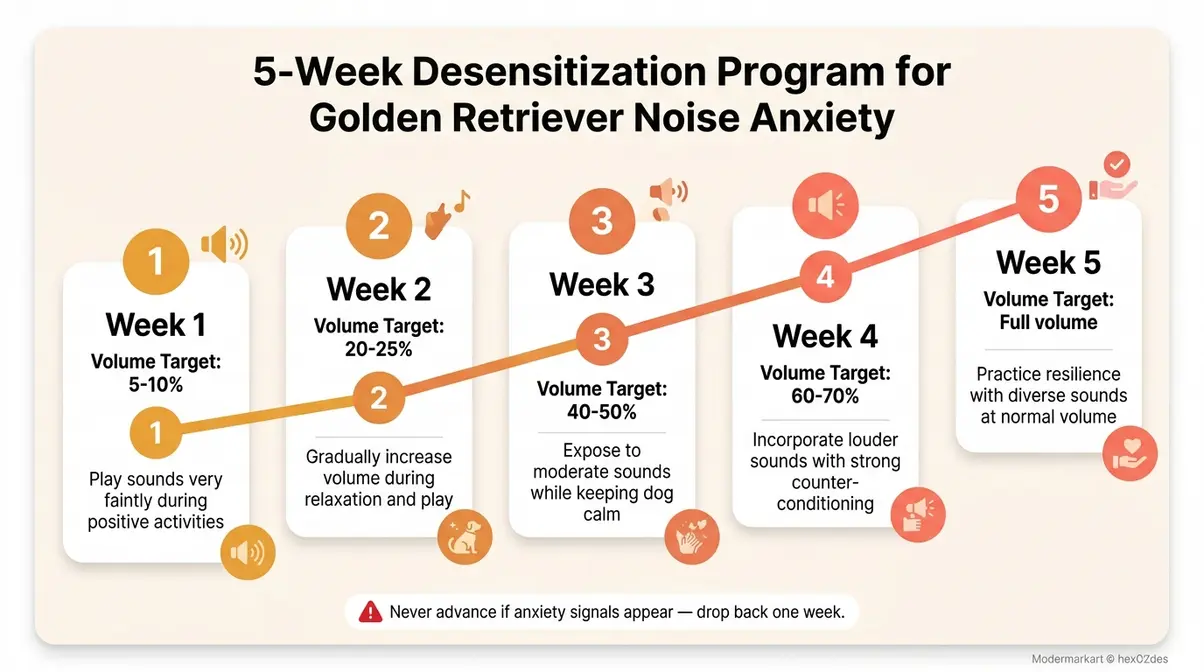
The two techniques work together. Desensitization reduces the fear threshold; counter-conditioning builds a positive association in its place. Used alone, either is less effective than the combination. A practical example: playing a fireworks recording at a very low starting volume, around 5 to 10% on a phone speaker, while feeding small pieces of chicken. The dog hears the sound and immediately receives something wonderful. Repeat 20 times per session. By Week 3, the goal is for your dog to remain calm at 50% volume. A level that would have triggered panic at the start of the program.
This is the foundation of a structured, positive reinforcement training plan The same mechanics that work for obedience training apply here, applied to an emotional response rather than a behavior.
The 5-Week Desensitization Program
Start this program at least 6 weeks before July 4th or the beginning of your local storm season. The investment is 5 to 10 minutes, twice daily, sustainable for any schedule.
Tools needed: YouTube search “fireworks sounds for dog training” or dedicated apps (Sounds Scary, iCalmDog); high-value treats (chicken, cheese, hot dog pieces, not kibble); optional clicker.
- Week 1: Play fireworks or thunder recordings at barely audible volume, 5 to 10% on a phone speaker placed across the room. Pair with high-value treats continuously throughout the 5-minute session. Stop immediately if your dog shows any anxiety signal at all.
- Week 2: If Week 1 was fully relaxed across all sessions, increase to 20 to 25% volume. Maintain the same session structure. Add a “happy cue”. An upbeat voice or a brief play invitation, during the sound to build the positive association.
- Week 3: Increase to 40 to 50% volume. Begin practicing in the designated safe space. Introduce the pressure wrap during sessions so it becomes associated with calm, rewarded practice rather than anxiety events.
- Week 4: Increase to 60 to 70% volume. Extend sessions to 10 minutes. Practice at different times of day to generalize the response across contexts.
- Week 5: Full-volume practice, or as close as your dog tolerates calmly. The target state is your Golden eating, playing, or resting while the recording plays. That’s the goal.
The cardinal rule: Never progress to the next week if your dog showed any anxiety signal at the current volume level. Regression is normal and not a failure, drop back one week and rebuild. Progress is not linear.
Checkpoint: After Week 1, your dog should be able to hear fireworks sounds at very low volume without showing any anxiety signals. If they react at the lowest possible volume, consult a veterinary behaviorist before continuing.
The program works. But only if you avoid the mistakes that cause most owners to give up.
Common Mistakes to Avoid
- Progressing too fast The most common failure mode; any anxiety signal at the current volume means the volume is too high; drop back, don’t push through
- Practicing during an actual event A real thunderstorm is not a training session; the intensity is uncontrolled and can undo weeks of progress in a single night
- Using low-value treats, kibble is insufficient for counter-conditioning; your dog needs to feel like they hit the jackpot; use chicken, cheese, or hot dog pieces cut small
- Inconsistent practice, skipping days resets progress; twice daily is the minimum effective dose; even one session daily is better than sporadic intensive sessions
If your dog is not making progress after 5 weeks of consistent practice, a certified veterinary behaviorist (DACVB) or certified applied animal behaviorist (CAAB) can design a customized protocol. This is not a last resort, it’s the appropriate next step when a general program isn’t sufficient.
For dogs with severe phobia. Those who injure themselves, cannot eat, or show no improvement with behavioral modification, veterinary intervention is the appropriate next step.
Step 6: Explore Veterinary Solutions for Severe Noise Phobia
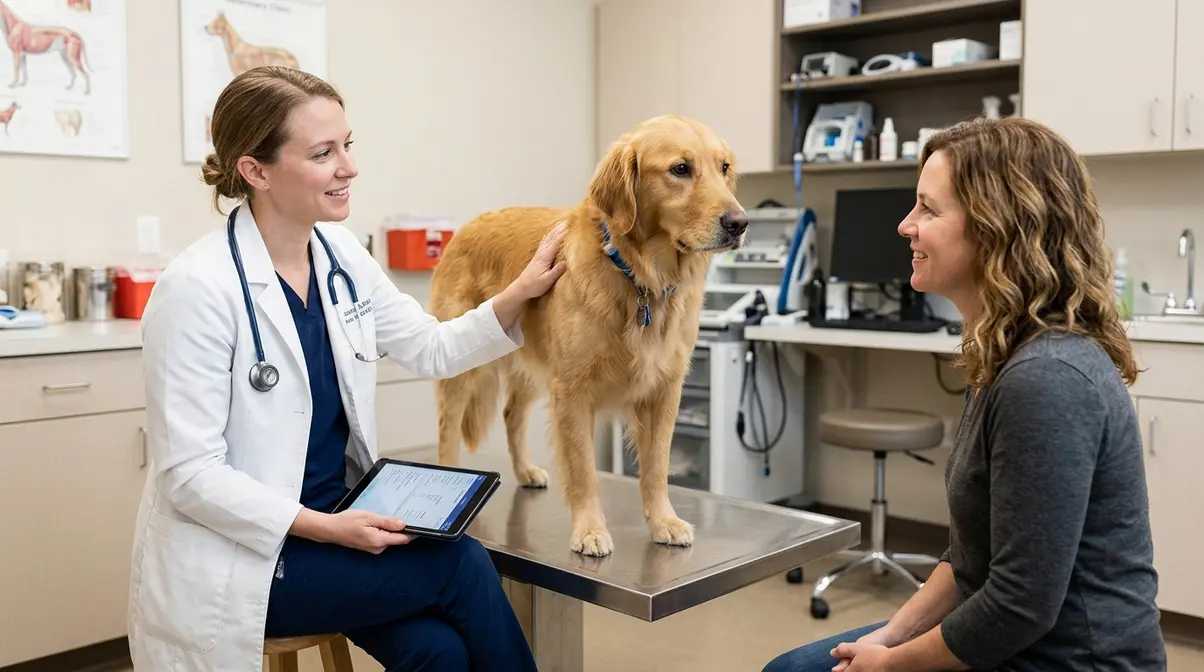
If your Golden Retriever’s noise phobia is severe, self-injury, inability to eat, or no response to behavioral modification after 6+ weeks, medication is not a failure. It’s a tool that reduces the anxiety ceiling enough to make training possible. The goal of medication is not to sedate your dog indefinitely; it’s to bring their baseline anxiety down to a level where behavioral modification can actually work.
⚠️ Medical Disclaimer: The following information is for educational purposes only and is not a substitute for professional veterinary advice. Never administer any medication, prescription or over-the-counter, to your dog without first consulting a licensed veterinarian. Dosing, safety, and appropriateness vary by individual dog.
When to Call Your Veterinarian
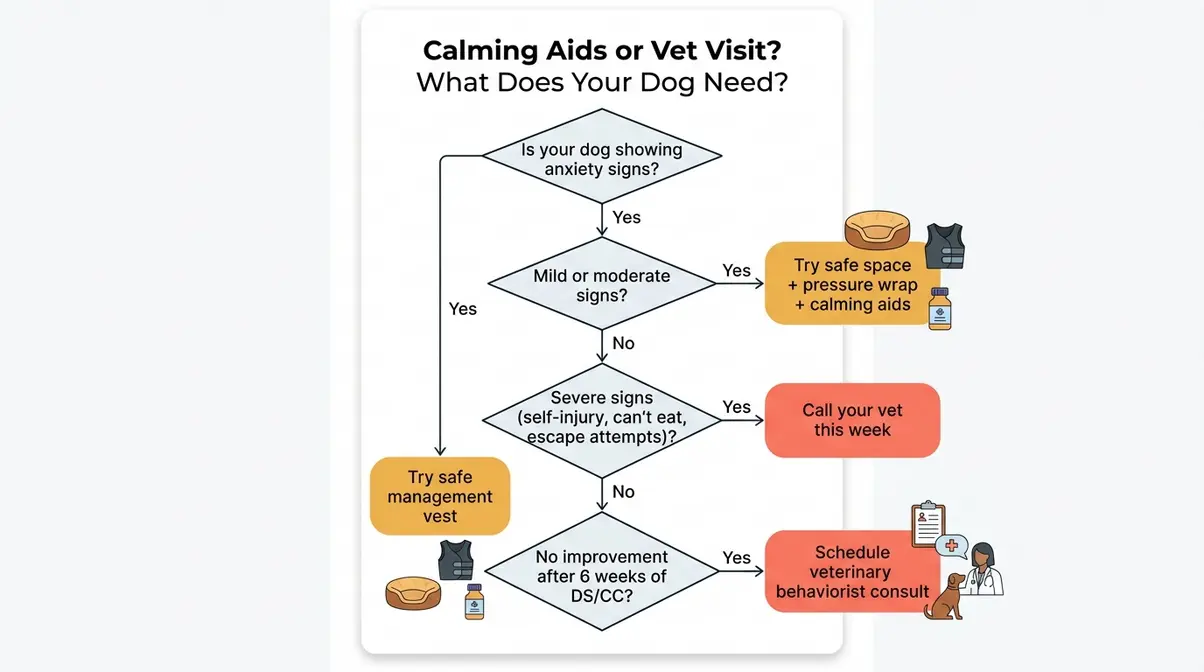
Knowing when to involve your vet is a sign of responsible ownership. Not a failure of management. Schedule a veterinary appointment if your Golden meets any one of these criteria:
- Self-injury during anxiety episodes, scratching paws until bleeding, running into walls, breaking through barriers
- Inability to eat or drink for 24+ hours after an anxiety event
- No improvement after 6+ weeks of consistent desensitization and counter-conditioning practice
- Anxiety spreading to new triggers, car rides, loud voices, vacuum cleaners; generalization is a hallmark of worsening phobia, not situational fear
- Owner safety concerns A panicking Golden Retriever weighing 55 to 75 pounds can knock over adults and children unintentionally
Schedule the appointment before the next fireworks season. Not during it. Reactive appointments mid-event are less effective than proactive planning. If you’ve navigated when to call the vet about anxiety in other contexts, the same threshold applies here: when management alone is no longer sufficient, professional support is the responsible next step.
Once you’ve decided to consult your vet, here’s what the current prescription options look like.
Prescription Medication Options
The FDA approved Sileo (dexmedetomidine oromucosal gel) in 2016 as the first drug specifically indicated for canine noise aversion, administered between the cheek and gum using a needleless syringe, according to the U.S. Food and Drug Administration. Unlike sedatives, Sileo at therapeutic doses does not cause heavy sedation. The dog remains alert but calm, which is a meaningful clinical distinction.
| Drug | Mechanism | Timing Before Event | Key Notes |
|---|---|---|---|
| Sileo (dexmedetomidine) | Alpha-2 adrenergic agonist; reduces the physiological stress response | 30–60 minutes | FDA-approved for canine noise aversion; prescription only; dog remains alert |
| Trazodone | Serotonin antagonist and reuptake inhibitor | 1–2 hours | Commonly prescribed for situational anxiety; may cause mild sedation; often combined with DS/CC |
| Alprazolam (Xanax) | Benzodiazepine; fast-acting central nervous system calming | 30–60 minutes | Used for acute, severe events; carries dependency risk with long-term use; prescription only |
The American Veterinary Medical Association covered Sileo’s oromucosal gel administration for canine noise anxiety in their 2017 JAVMA reporting. The original approval coverage; current prescribing guidance should be confirmed with your veterinarian.
Most veterinary behaviorists recommend the combination approach: medication reduces anxiety enough to make training possible; behavioral modification addresses the underlying fear response over time. The goal is to eventually reduce or eliminate medication as DS/CC takes effect, not to rely on it indefinitely.
Your veterinarian will determine the appropriate dose based on your dog’s weight, health history, and anxiety severity. Do not attempt to dose any of these medications without veterinary guidance.
Before considering any over-the-counter option, it’s worth understanding why the most commonly suggested one, Benadryl, is not recommended by veterinary professionals.
A Note on Over-the-Counter Options: Why Benadryl Is Not the Answer
Benadryl (diphenhydramine) is an antihistamine. It is not an anti-anxiety medication and does not target the neurochemical pathways involved in fear. The sedation some dogs experience is a side effect of histamine blockade. Not anxiety relief. The dog may appear calmer, but their emotional experience of fear may be unchanged; they simply lack the physical capacity to fully express it.
More importantly, Benadryl causes paradoxical agitation in some dogs, increased restlessness and anxiety rather than calm. You cannot predict which response your individual dog will have.
According to VCA Animal Hospitals, Benadryl is not among the recommended options for noise phobia management. Always consult your veterinarian before giving any human medication to your dog.
Checkpoint: After your vet consultation, you should have a written medication plan that specifies the drug, dose, timing before the event, and a follow-up appointment to assess effectiveness.
With all six steps in place, the final check is confirming that your approach is actually working.
Is Your Approach to Golden Retriever Noise Anxiety Actually Working?
If your approach is working, you should see these specific changes within 2 to 4 weeks of consistent practice (for behavioral modification) or within 1 to 2 events (for management techniques):
- ✓ Dog settles in the safe space within 10 minutes of the event starting, rather than pacing continuously
- ✓ Dog accepts food or treats during the event. A dog that can eat is not in severe anxiety
- ✓ Anxiety duration decreases, event ends and dog returns to normal behavior within 30 minutes, rather than remaining distressed for hours
- ✓ Desensitization progress: dog can hear fireworks recording at 50% volume (the Week 3 target, up from the 5–10% starting volume) without showing anxiety signals
- ✓ Severity of response decreases year-over-year with consistent DS/CC practice
If you see these signs, the approach is working. If your dog is still showing severe anxiety signals after 4+ weeks of consistent management, return to Step 6 and schedule a veterinary consultation before the next event, not during it.
Why Isn’t Your Golden Retriever Responding to Calming Techniques?
Even with the right approach, specific problems come up. Here are the five most common failure modes, with a specific cause and fix for each.
Problem 1: Dog refuses to enter the safe space during the event.
Cause: The space was introduced for the first time during the event. The dog has no positive association with it, so it’s just a strange room during a terrifying moment.
Fix: Spend 5 to 10 minutes per day for one week before any event feeding treats and playing in the safe space. One positive session is better than none; three is meaningfully better than one.
Problem 2: Pressure wrap has no effect.
Cause: Incorrect fit (too loose to provide pressure) or introduced mid-panic when the dog is already past the threshold where intervention works.
Fix: Refit the wrap, snug, with two fingers fitting underneath. Introduce it during calm periods with treats. Put it on 30 to 60 minutes before the predicted event, not after the first boom.
Problem 3: Desensitization program stalls at Week 2, dog still reacts at low volume.
Cause: Volume is still above the dog’s anxiety threshold. Some dogs have a very low threshold, and “barely audible” to you may still register as threatening to them.
Fix: Drop back to Week 1 volume. Switch to higher-value treats. If you’ve been using kibble, move to chicken. Shorten sessions to 3 minutes. Rebuild from a lower starting point.
Problem 4: Dog’s anxiety is getting worse each year despite consistent management.
Cause: Management techniques alone, safe space, calming aids, environmental modification, do not address the underlying fear response. Without behavioral modification, noise phobia typically escalates year over year.
Fix: Begin the DS/CC program in Step 5 immediately. If no improvement after 6 weeks of consistent practice, consult a veterinary behaviorist for a customized protocol.
Problem 5: Dog is calm during practice sessions but panics during real events.
Cause: Real events include additional sensory triggers. The smell of gunpowder or ozone, static electricity, the visual flash. That recordings cannot replicate. The dog has learned to be calm with the recording but hasn’t generalized that calm to the full multi-sensory experience.
Fix: Layer environmental management (Step 2) and calming aids (Step 4) on top of the DS/CC program. Consider veterinary consultation for medication support that can bridge the gap between practice calm and real-event calm.
Frequently Asked Questions
Why is my dog suddenly scared of thunder and fireworks?
Dogs can develop noise phobia at any age, even after years of calm behavior. The adolescent “second fear period”, typically 8 to 14 months, is one of the most common triggers for sudden-onset noise anxiety in previously unfazed dogs. Thunderstorms also involve a multi-sensory buildup that fireworks don’t: barometric pressure drops, static electricity in the coat, and low-frequency infrasound all arrive before the thunder itself. A dog that handled last July’s fireworks calmly may respond very differently after passing through this developmental window.
Are golden retrievers afraid of fireworks?
Many Golden Retrievers are sensitive to fireworks and thunderstorms, though individual variation is significant. Despite their famously gentle temperament, Goldens are highly attuned to their environment and their owners’ emotional states, which can amplify fear responses through the feedback loop described above. Their acute hearing means they register sound at intensities humans cannot perceive. Noise anxiety is not a breed flaw; it’s a manageable behavioral condition that responds well to the Dual-Response Protocol when applied consistently.
How do you calm dogs during thunderstorms and fireworks?
To calm a dog during fireworks or thunderstorms: (1) move them to a pre-prepared safe space in an interior room, (2) run a white noise machine to mask sound peaks, (3) offer a high-value distraction like a frozen Kong or lick mat, (4) stay calm yourself, dogs read owner anxiety and mirror it. For moderate anxiety, add a pressure wrap. For severe phobia, consult your veterinarian about prescription options like Sileo, which is FDA-approved specifically for canine noise aversion.
How to calm dog anxiety in thunderstorms?
Thunderstorm anxiety requires addressing multiple sensory triggers at once. Close curtains to block lightning flashes, run white noise to mask thunder, and ensure your dog’s safe space is in an interior room away from exterior walls, which conduct static electricity into your dog’s coat. Pheromone diffusers like Adaptil, introduced 2 weeks before storm season, can reduce baseline anxiety. For dogs with severe thunderstorm phobia, Sileo remains the only FDA-approved prescription option specifically indicated for canine noise aversion.
How to calm an anxious dog after fireworks?
After fireworks end, give your dog time to decompress, don’t force interaction or play. Offer fresh water and a light meal if they refused food during the event. Keep the environment calm for 1 to 2 hours: low lighting, quiet, familiar scents. If your dog remains in a heightened anxiety state for more than 2 hours after the event ends, or shows physical symptoms like vomiting or inability to settle, contact your veterinarian.
What is the 3-3-3 rule for dog anxiety?
The 3-3-3 rule is a framework originally developed for newly adopted dogs: expect 3 days of overwhelm, 3 weeks to learn routines, and 3 months to feel fully at home. While not specific to noise phobia, the principle translates well, behavioral modification takes weeks of consistent, low-pressure practice, not a single session. Owners who expect overnight results from desensitization programs typically give up during Week 2, right before the technique begins to compound. Consistency across the full 5-week program is what produces lasting change.
How to stop a dog from freaking out during thunderstorms?
To stop a dog from freaking out during thunderstorms: prepare the safe space before the storm arrives (check weather forecasts the evening before), put on a pressure wrap 30 to 60 minutes before predicted storms, and start the white noise machine early. During the storm, stay calm, avoid high-pitched reassurance, and let your dog self-regulate in their safe space. Long-term, a structured desensitization program started 6+ weeks before storm season produces the most durable results, management techniques reduce distress in the moment, but don’t change the underlying fear response.
Does Benadryl help dogs with fireworks anxiety?
Benadryl (diphenhydramine) is not recommended for fireworks anxiety by veterinary professionals. It is an antihistamine, not an anti-anxiety medication, and does not target the neurochemical pathways involved in fear. In some dogs, it causes paradoxical agitation, increased restlessness rather than calm. A dog that appears quieter on Benadryl may simply lack the physical capacity to fully express their distress. For safe, effective options, consult your veterinarian, prescription medications like Sileo are specifically approved for canine noise aversion and address the fear response directly.
The Bottom Line: Start Tonight, Build for Next Season
For Golden Retrievers with fireworks and thunderstorm anxiety, the most effective approach combines immediate environmental management with a structured desensitization program. The Dual-Response Protocol. The FDA approved Sileo in 2016 as the first medication specifically indicated for canine noise aversion, and veterinary behavioral research consistently identifies counter-conditioning and relaxation training as the most effective long-term strategies. The best outcomes come from starting behavioral modification at least 6 weeks before peak fireworks season, layered on top of consistent environmental management.
The reason so many owners try “everything” and find nothing works is that they’re using only one track. A ThunderShirt without a desensitization program treats the symptom; a desensitization program without environmental management asks your dog to make progress while still being overwhelmed. The Dual-Response Protocol works because both tracks reinforce each other, calmer acute events make behavioral modification easier, and behavioral modification makes acute events less severe.
Start with Step 2 tonight, set up the safe space with familiar bedding, a white noise source, and a frozen Kong. Then schedule 5 minutes tomorrow to begin Week 1 of the desensitization program. If your dog’s anxiety is severe, call your vet this week. Not next fireworks season. The tools are here; the timeline is now.