
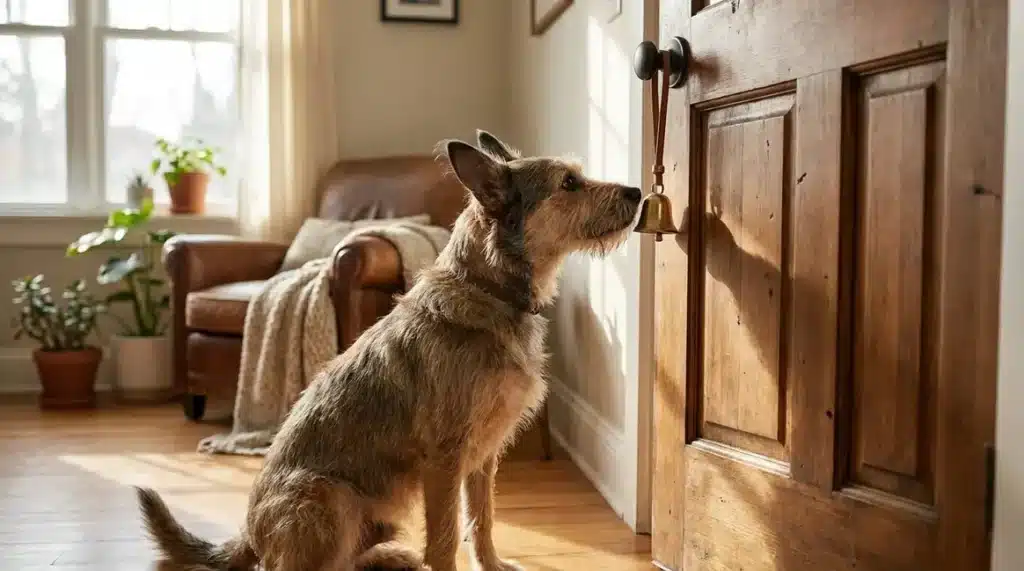
Dog owners know this frustration well: the dog stands right behind you and pees on the floor, no whining, no pacing, no warning at all. If that scenario sounds familiar, you’re not dealing with a bad dog; you’re dealing with a dog who hasn’t yet learned how to tell you what it needs. Dogs don’t instinctively know how to ask to go outside. That behavior has to be taught, step by step, using a consistent method.
Teaching a potty alert builds on early house-training. See how it fits the bigger picture in our Golden Retriever training guide by age.
The good news is that learning how to teach your dog to alert to go outside doesn’t require expensive equipment or professional training. In this guide, you’ll find three proven methods (potty bells, recordable buttons, and natural signal shaping), plus a troubleshooting section for the problems that come up most often. Whatever your dog’s personality or your living situation, one of these approaches will work.
Dogs don’t instinctively signal when they need to go outside. This behavior must be trained using a consistent method and positive reinforcement.
- Bell training is the most widely recommended starting point, according to the AKC guide.
- Recordable buttons offer a modern alternative that works well for dogs who ignore bells or live in apartments where noise is a concern.
- Natural signals (sitting by the door, a quiet bark) can be shaped into a reliable alert without any equipment at all.
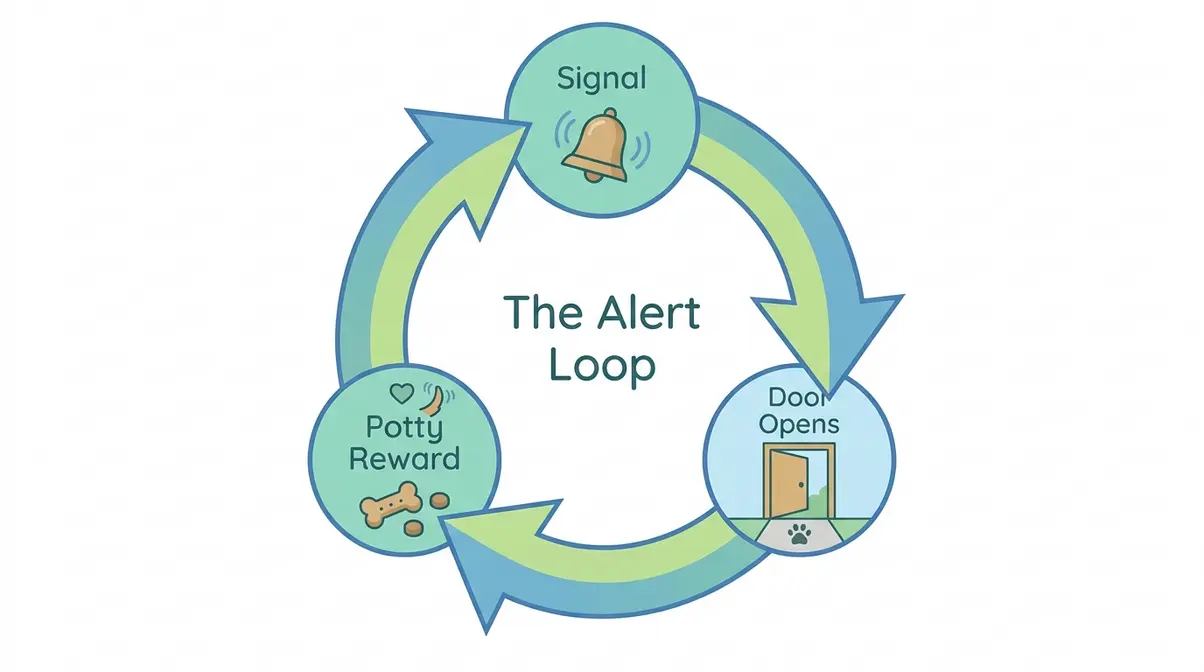
- The Alert Loop (Signal → Door Opens → Potty Reward) is the core mechanism behind every method in this guide.
- Most dogs develop a reliable alert within 2–4 weeks of consistent daily practice, based on widely reported training community benchmarks.
- Estimated time: 2–4 weeks of daily 5–10 minute training sessions.
What You Need Before Starting Alert Training
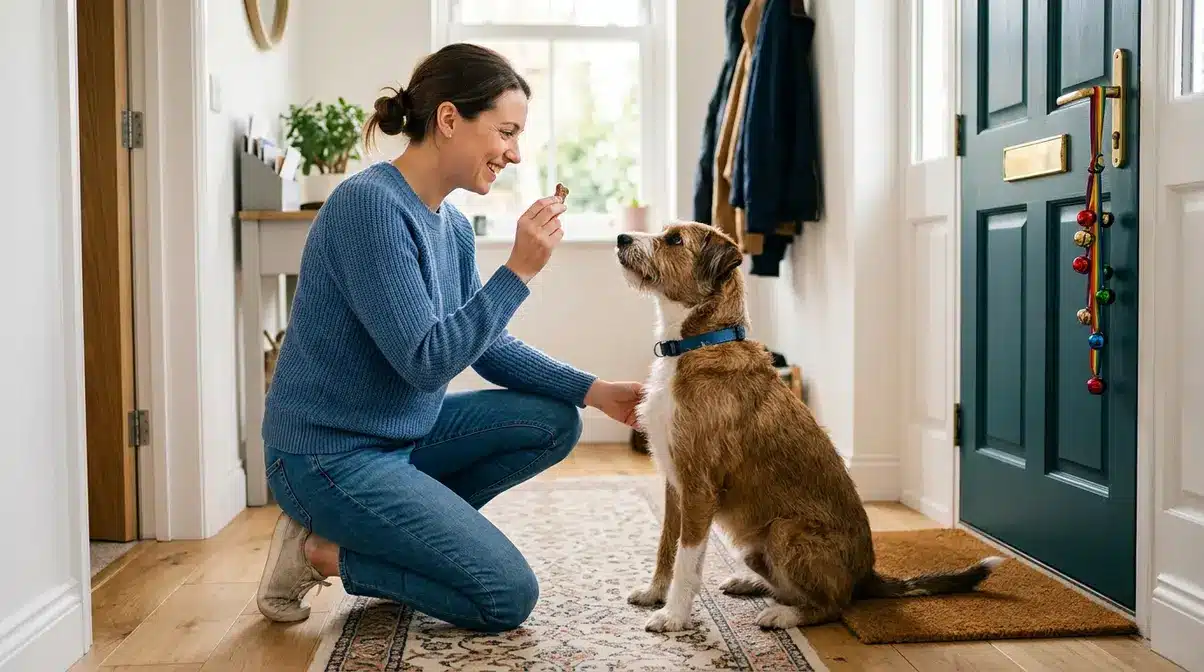
Before you can teach your dog to alert to go outside, three foundations need to be in place: (1) partial potty training progress, (2) a consistent outdoor schedule, and (3) an owner who can respond within 5 seconds of any signal. Without these foundations, the training association will not form reliably.
Your prerequisites checklist:
- Partial potty training progress: Your dog is having fewer accidents indoors and understands that outside is where elimination happens
- A consistent schedule: you’re taking them out upon waking, after meals, after play, and before bed
- 2–4 weeks of daily practice time: alert training requires short, frequent sessions, not occasional effort
- Immediate response ability: You can get to the door within 5 seconds of any signal
That last point deserves emphasis. Establishing a consistent potty schedule (taking your dog out upon waking, after meals, and before bed) is the foundation of any successful alert training program (Humane Society International). But the schedule alone isn’t enough. The door must open within 5 seconds of the signal for your dog to connect the two. If you’re in another room and miss the signal, or wait 30 seconds before responding, the association breaks down. This is the most commonly missed prerequisite, and the most common reason early training stalls.
Equipment you’ll need depends on the method: a jingle bell set ($10–20, hung on the door handle) for Method 1; a single recordable button ($5–15) for Method 2. Nothing at all for Method 3.
The three methods covered in this guide (bell training, recordable buttons, and natural signal shaping) were selected based on AKC and Humane Society guidance, aggregated training community consensus, and their applicability across different dog temperaments and living situations. This is a research-based guide. Method recommendations reflect published training authority sources rather than first-party hands-on testing.
If you’re still in the early stages of bringing a new dog home, see our guide on puppy-proofing your home before starting alert training.
Once those basics are in place, you’re ready to choose your method. Start with Method 1: it’s the most widely recommended for a reason.
Method 1: Bell Training (The Most Popular Potty Alert)
At Devoted to Dog, we structure bell training around a named three-step cycle, The Alert Loop (Signal → Door Opens → Potty Reward), which the AKC bell training guide identifies as one of the most effective approaches for teaching a dog to signal for a potty break. The mechanism is straightforward: every repetition reinforces the same three-step cycle, and over time the dog learns that the bell is their reliable line of communication.
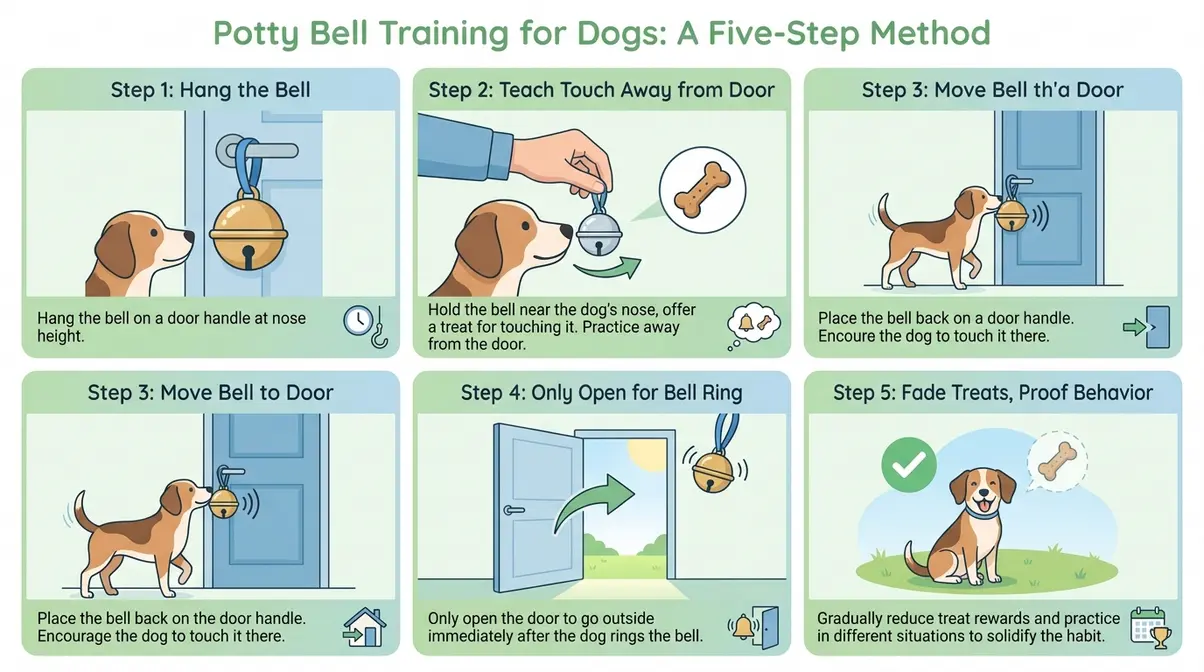
The infographic above summarizes all five steps; refer back to it as you work through each one.
Steps 1–2: Introduce the Bell
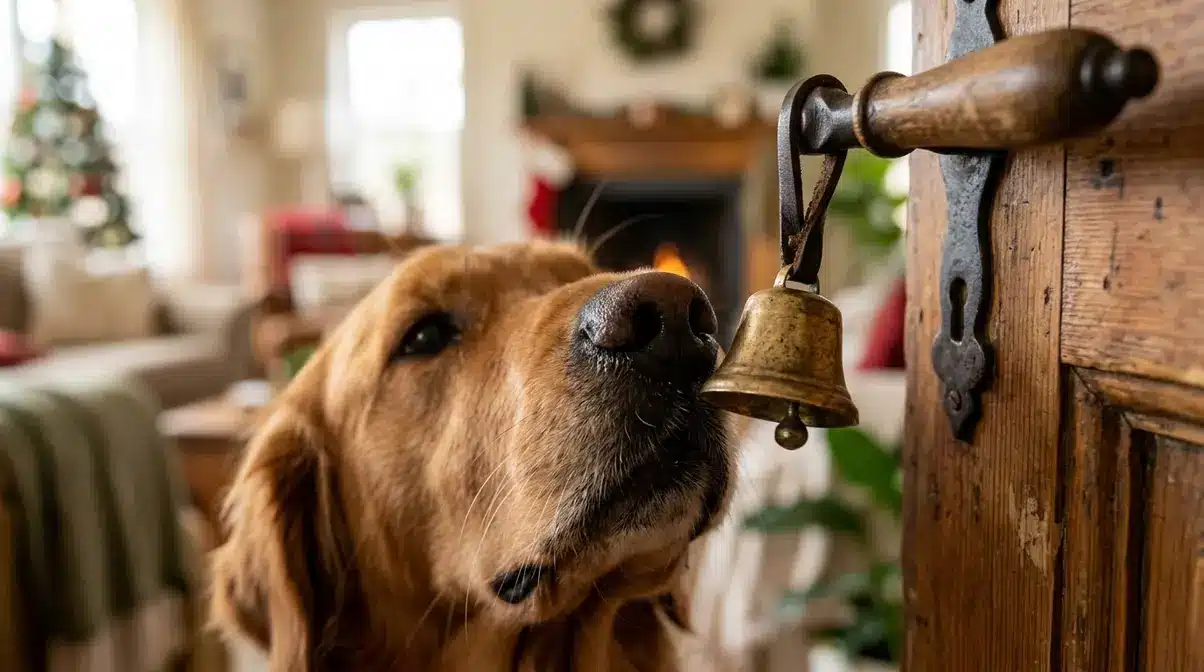
The first stage of bell training happens away from the door. Teaching the “touch” command in a low-distraction environment, before the bells are anywhere near the exit, is the step most guides skip, and it’s often the reason early training stalls.
Step 1: Choose and hang the bells. Pick a jingle bell set and hang it on the door handle you use for every potty trip. Hang it at your dog’s nose height, not paw height. A nose touch is cleaner, more reliable, and less likely to become a frantic pawing habit. Consistency of location matters more than the type of bell. A $10 set from a pet store works as well as any premium option.
Step 2: Teach “touch” away from the door. Hold the bell in your hand, away from any exit. Say “touch” in a clear, upbeat tone. The moment your dog sniffs or nudges the bell, immediately reward with a high-value treat and enthusiastic verbal praise. Repeat 5–10 times per session. If your dog is hesitant, rub a small amount of peanut butter on the bell to encourage that first contact. The goal here is simple: the dog learns that touching the bell produces something good, before any door or outdoor association is added.
The AKC bell training guide specifically recommends teaching the “touch” command as the foundation of bell training before moving to door association. And it’s easy to see why. A dog who already responds to “touch” in a calm setting will transfer that behavior to the door far more quickly.
Once your dog reliably touches the bell on command, it’s time to move the training to the door.
Steps 3–4: Link the Bell to the Door
This is where The Alert Loop takes shape. Steps 3 and 4 establish the two most critical associations in the entire training process: bell ring → door opens, and only bell ring → door opens.
Step 3: Move the bell to the door. Hang the bells on the door handle at nose height. Every single time you take your dog outside for a potty break, guide their nose or paw to the bells and say “touch.” The moment the bells ring, open the door immediately and head outside. Every trip, every time, no exceptions.
Step 4: Only open the door when the bell rings. This is the rule that makes the whole system work. Do not open the door for whining, scratching, staring, or sitting quietly. Only the bell ring earns the door. Whining might get your attention, but if it sometimes opens the door, the dog never has a reason to learn the bell. This is what teaches your dog that the bell is the signal worth using.
The timing matters just as much as the rule. The door must open within 5 seconds of the bell ring. Longer delays break the association between the action and the outcome. This is The Alert Loop working exactly as designed: Signal (bell ring) → Door Opens → Potty Reward.
The Humane Society recommends ringing the bell at the door each time you take your puppy out, so they connect the sound with going outside, reinforcing the same sequence at every opportunity.
After 1–2 weeks of consistent practice, most dogs begin ringing the bell on their own. That’s when Step 5 becomes important.
Step 5: Fade Treats and Proof the Behavior
Once your dog is ringing the bell independently before potty trips, the training shifts from building the association to making it reliable in real-world conditions.
Step 5: Fade the treat lure. Begin replacing treats with enthusiastic verbal praise and immediate door-opening. Do this gradually, reward every other ring, then every third ring, rather than stopping treats abruptly. An abrupt removal of treats often causes a temporary dip in motivation, which owners mistake for regression. A gradual fade keeps the behavior strong.
Proofing means testing the behavior in different contexts: when your dog seems distracted, when you’re in another room, when it’s late at night. A truly reliable alert holds up regardless of circumstances. If the behavior falls apart in a new context, go back to rewarding every ring in that context for a few sessions before fading again.
Timeline: Most dogs develop a consistent bell-ringing habit within 2–4 weeks of daily practice. Puppies under 4 months may take longer due to shorter attention spans and still-developing bladder awareness.
One honest note: some dogs never take to bells. They may ignore them entirely, or find the sound aversive. If after 3 weeks of consistent positive reinforcement there’s no progress, that’s not a failure; it’s useful information. Method 2 or Method 3 may simply be a better fit for that dog’s temperament.
For owners working on multiple training goals simultaneously, our guide on choosing the right training tools covers the equipment options worth considering.
If your dog isn’t responding to bells after consistent practice, or if you’d prefer a more modern approach, Method 2 offers a compelling alternative.
Method 2: Recordable Buttons (A Modern Alternative)
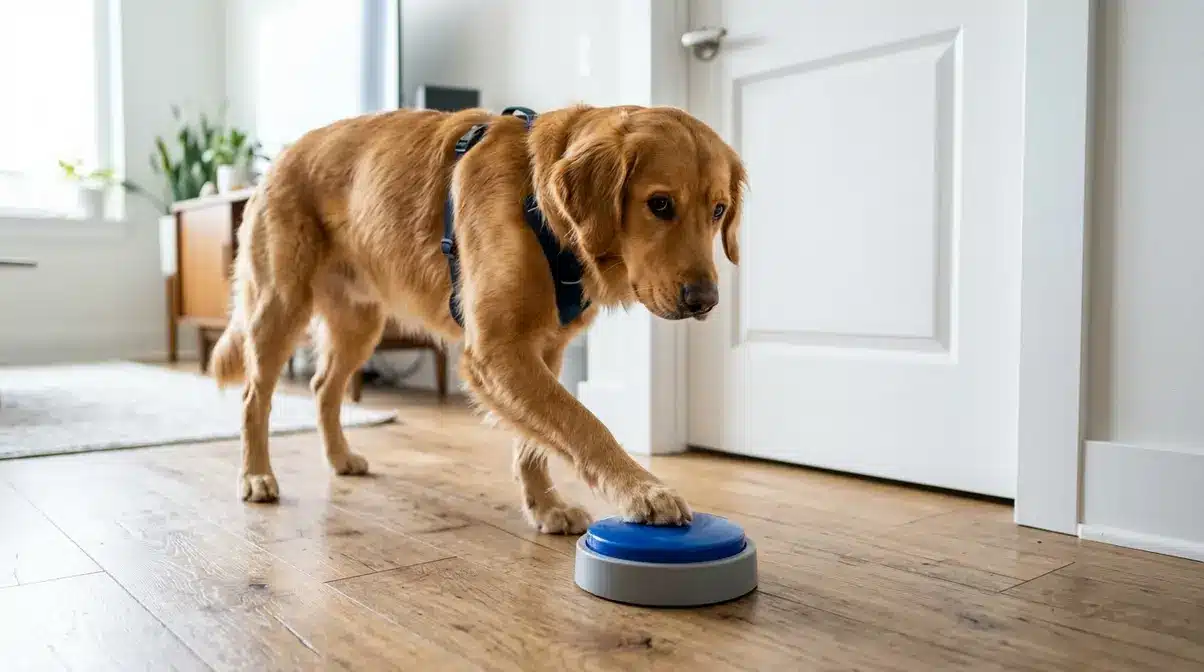
Recordable buttons are a modern alternative to potty bells that work especially well for dogs who ignore bells or owners who prefer a quieter signal. You record a word (“outside” or “potty”) and place the button near the door. The training principle is identical to bell training: The Alert Loop still applies: Signal → Door Opens → Potty Reward. The only difference is what the signal looks like.
Recordable buttons gained popularity through social media demonstrations of dogs using them to communicate with their owners. For potty training purposes, a single button is all you need, no elaborate board required.
| Feature | Potty Bells | Recordable Button |
|---|---|---|
| Cost | ~$10–20 | ~$5–15 per button |
| Noise level | Moderate jingle | Recorded word (adjustable volume) |
| Best for | Most dogs | Dogs who ignore bells; apartment living |
| Training time | 2–4 weeks | 2–4 weeks |
| Equipment needed | Bell set | 1 recordable button |
Setting Up and Introducing the Button
Teaching your dog a reliable signal to go outside is the goal of all three methods. The button simply replaces the bell as the physical trigger. Here’s how to get started.
Step 1: Record the word. Use a clear, consistent word like “outside” or “potty.” Record it in the same voice you’ll use during training. Changing the recording mid-training confuses the association, so pick one word and stick with it.
Step 2: Place the button. Position it near the door at paw height. Unlike bells, which are nudged with the nose, buttons are typically pressed with a paw. Keep it in the same location throughout training. Moving it around resets the spatial association your dog is building.
Step 3: Introduce the button. Hold the button near your dog, say “touch” or “outside,” and reward any paw or nose contact immediately with a treat and praise. Do this away from the door initially, just as with bell training. The dog needs to learn that pressing the button produces a reward before the door association is added.
Step 4: Move to the door. Once your dog is pressing the button reliably during practice sessions, place it at paw height next to the door. Every potty trip: guide your dog to press the button, then immediately open the door.
According to WebMD Pets, teaching a dog to use a specific signal, whether a bell or another device, is the most reliable way to establish potty communication. The key is that the dog has a consistent, learnable action tied to a consistent, predictable outcome.
Who this works best for: noise-sensitive dogs, dogs in apartments where bell noise is disruptive, or dogs who have already learned a “touch” command and transfer it quickly.
Once your dog is pressing the button reliably during practice sessions, move to the door association phase.
Building the Button-to-Door Association
Step 5: Only open the door for a button press. The same rule applies here as with potty bells: no door-opening for whining or scratching. The button press is the only signal that earns the door.
Fading treats follows the same gradual process as Method 1: reward every press initially, then every other press, then occasionally, replacing treats with enthusiastic praise and immediate door access.
The Alert Loop is identical: the button press is the Signal, the door opening is the immediate consequence, and the potty break reinforces the whole cycle. Recordable buttons work through the same Alert Loop as bell training. The dog learns that pressing a specific button triggers the door opening and a potty reward, creating a reliable communication system.
Apartment-specific note: For dogs in apartments without a yard, the button press can signal a leash-and-walk routine rather than a simple door opening. The mechanism is exactly the same. The dog presses the button, you clip on the leash and head out. The Alert Loop adapts to the environment without any change to the training sequence.
Both bells and buttons require equipment. Method 3 requires nothing at all, just observation and good timing.
Method 3: Shaping a Natural Alert Signal
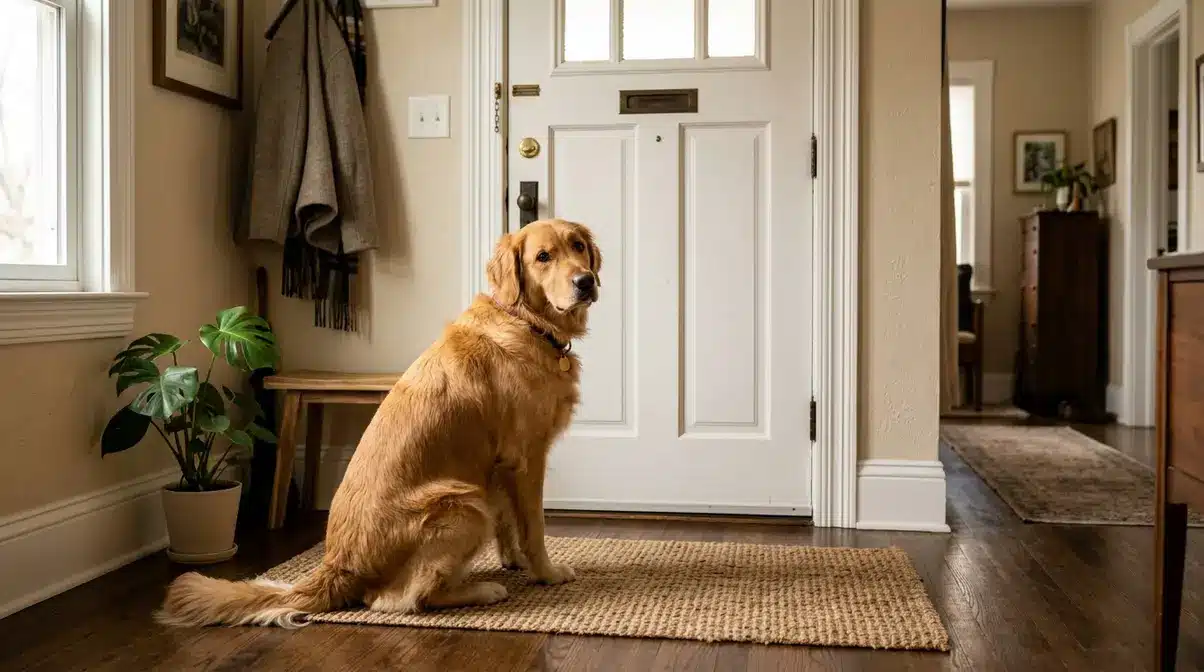
Some dogs already show a natural pre-potty signal. They sit by the door, pace near the exit, or make a quiet noise. The challenge is that owners often miss it, or the dog gives up before the owner notices and has an accident indoors. This method, called shaping (capturing a naturally occurring behavior and reinforcing it consistently), turns that existing behavior into a reliable alert. No equipment needed.
The diagram below shows The Alert Loop. The same three-step cycle applies whether the signal is a bell, a button, or a natural behavior.
Capturing and Rewarding the Sit or Bark
Step 1: Observe your dog’s pre-potty behavior. For 3–5 days, watch closely for any behavior that consistently comes before an accident or a successful outdoor trip. Common signals include sitting near the door, pacing, sniffing the floor near the exit, or a quiet whine. Even “stood right behind me” counts as a signal, just a very subtle one that hasn’t been reinforced yet.
Step 2: Reward the signal immediately. The moment you see the natural signal, say “outside!” in an upbeat tone, open the door, and take your dog out. Reward with a treat when they potty outside. Don’t wait to confirm whether they “really” need to go; always respond. Every time the signal is met with an open door, the dog’s confidence in using it grows.
Step 3: Consistency is the key. Every time the signal appears, the door opens. This is The Alert Loop in its most natural form: the dog already has the Signal. Your job is to make the Door Opens → Potty Reward part consistent enough that they start using the signal deliberately.
The Dog’s Way recommends observing a dog’s natural pre-potty behaviors and reinforcing them consistently as an effective alternative to equipment-based alert training, particularly for dogs who already show subtle signals that owners aren’t catching.
What if the dog has no obvious signal? Some dogs, especially those who’ve had repeated accidents without any response from their owner, haven’t yet developed a consistent pre-potty behavior. If that’s the case, bell training (Method 1) is a better starting point. You can always layer natural signal shaping on top later, once the dog understands the concept of alerting.
Once your dog is reliably showing the signal, the next step is making it more deliberate and consistent.
Putting the Natural Signal on Cue
Step 4: Add a verbal cue. Once your dog is consistently showing the natural signal before potty trips, add a verbal response from your end, say “outside?” or “do you need to go?” just before you open the door. Over time, your dog begins to associate their signal with your verbal acknowledgment, which reinforces the communication loop from both sides.
Step 5: Shape a clearer signal if needed. If your dog’s natural signal is very subtle (a single glance toward the door, a quiet shuffle), encourage a more obvious version. When they approach the door, wait 5–10 seconds before opening it. If they sit or make a sound during that pause, reward immediately and open the door. This gradually shapes a more visible signal without forcing a specific behavior.
Proofing works the same as with bell training: test in different contexts, at different times of day, and when you’re in another room. A dog who waits patiently by the door at 2 PM may not yet generalize that behavior to 11 PM. Proof across contexts until the signal is reliable regardless of timing.
One important limitation: natural signals are harder for owners to notice, especially at night or when you’re distracted. If reliability in low-attention moments is a concern, consider adding bells as a backup. The two methods complement each other well, and having both means the dog has two ways to get your attention.
Whichever method you choose, you’ll likely hit a snag at some point. The next section covers the most common problems, and exactly how to fix them.
Troubleshooting Alert Problems and Signal Abuse
Alert training rarely goes perfectly from day one. If your dog is ringing the bell constantly just to go outside and sniff around, or if they’ve stopped alerting after a promising start, you’re not alone. These are the two most common problems in bell and signal training, and both have clear fixes.
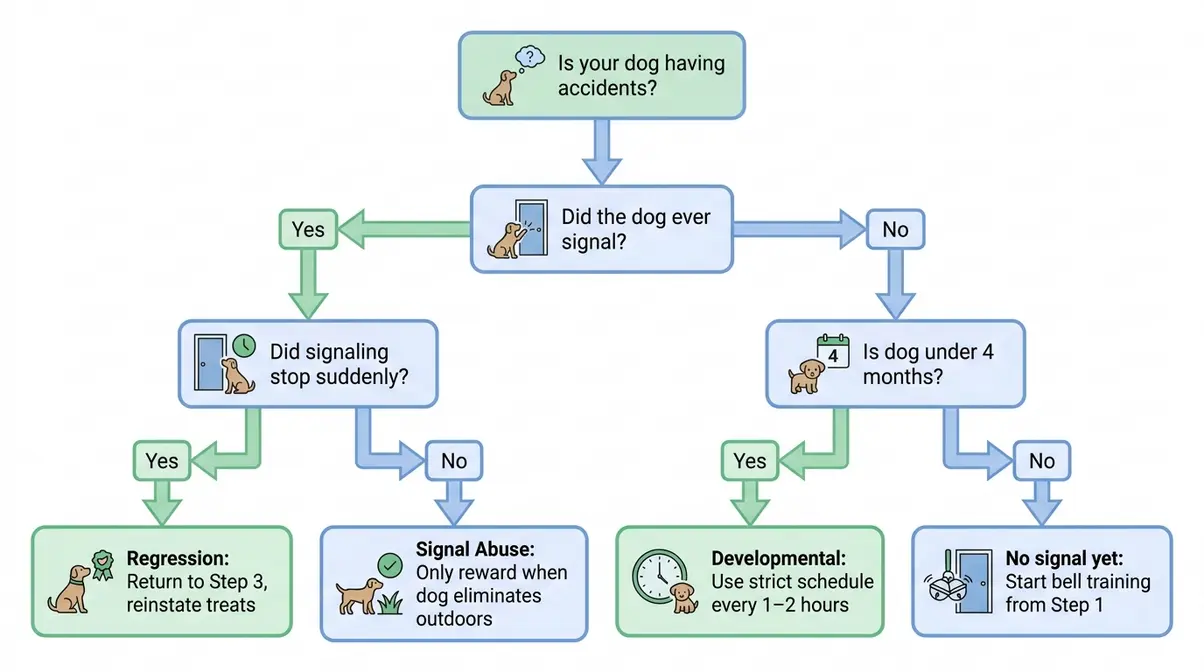
Use the flowchart above to identify which problem applies to your dog, then jump to the relevant section.
When Your Dog Rings the Bell to Play
Problem: Your dog has figured out that ringing the potty bells opens the door, and now rings them constantly to go sniff the yard, explore the patio, or just get outside for a few minutes. This is signal abuse, and it’s one of the most common bell training problems.
Cause: The dog learned that bell ring = door opens, but hasn’t yet learned that the treat reward only comes when they actually eliminate outdoors. The door-opening part of The Alert Loop is working; the Potty Reward part isn’t being applied selectively enough.
Fix: Only reward (treat plus enthusiastic praise) when your dog eliminates outdoors after ringing the bell. If they ring the bell, go outside, sniff around for 3–5 minutes, and don’t potty: come back inside calmly without a treat. No punishment, no scolding, just no reward. The distinction becomes clear to the dog quickly.
The critical rule: never stop opening the door when the bell rings. That would break The Alert Loop entirely. You’re only changing what earns the treat, not whether the door opens.
According to the IAABC Foundation, signal misuse is a frequent housetraining hang-up, and the recommended fix is adjusting the reward structure rather than removing the signal entirely.
A related problem is regression: when a dog who was alerting reliably suddenly stops.
My Dog Stopped Alerting After a Few Days
Problem: Your dog was ringing the bell or sitting by the door reliably, then the behavior dropped off or disappeared.
If your dog has stopped signaling to go outside, the fix is almost always a brief reset rather than a method change. Here’s what to look for and how to address it.
Common causes: inconsistency in your response (a few missed signals, a delayed door-opening), a change in routine or environment, or the treat reward was faded too quickly before the behavior was fully established.
Fix: Return to Step 3 (door association) for 3–5 days. Reinstate treat rewards for every bell ring or natural signal. Ensure the door opens within 5 seconds every time. Think of it as a brief reset rather than starting over; most dogs recover quickly.
Regression usually means one link in The Alert Loop broke down. Identify which one: Was the Signal happening but the door wasn’t opening fast enough? Was the Potty Reward inconsistent? Was the schedule disrupted? Repair the specific broken link rather than restarting the entire process from Step 1.
The Housetraining survival guide from the Animal Humane Society recommends returning to earlier training steps when regression occurs, rather than introducing new methods. A straightforward reset is almost always more effective than switching approaches mid-training.
Regression is normal and doesn’t mean the training has failed. Most dogs bounce back within a few days of consistent reinforcement.
If regression isn’t the issue and your puppy has never shown any signal at all, the problem may be developmental.
My Puppy Won’t Give Any Signal at All
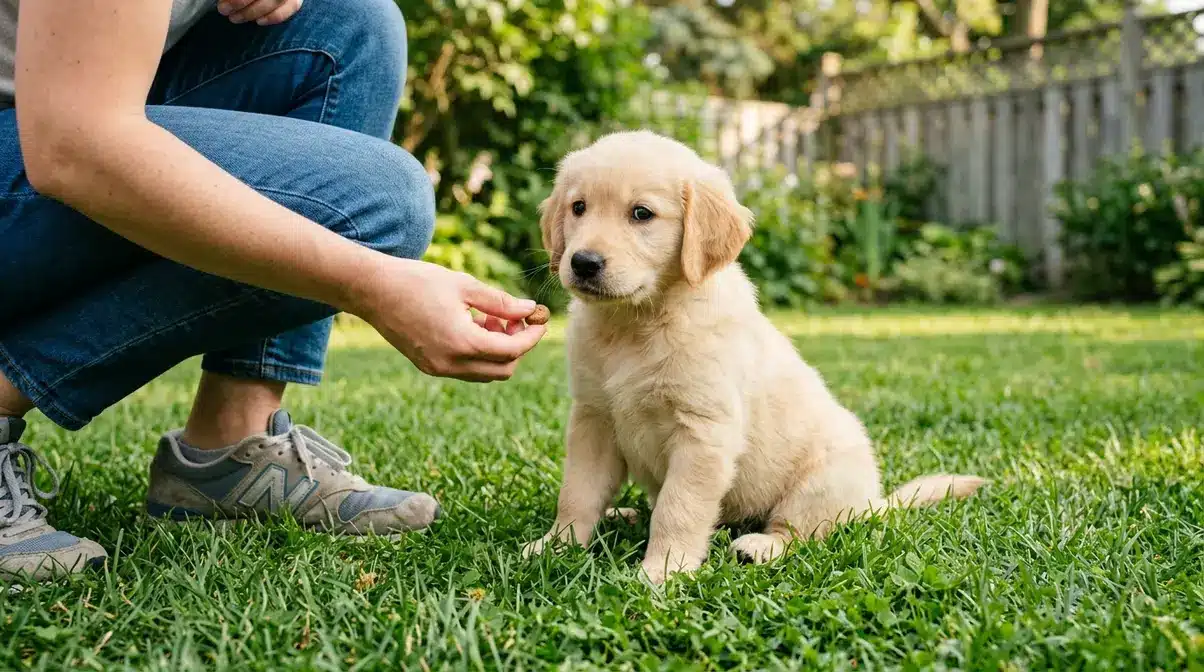
Many owners wonder why their puppy won’t tell them when he needs to go out. The answer is almost always developmental rather than behavioral.
Why this happens: Puppies under 4 months often don’t signal because they haven’t yet developed the bladder awareness to know they need to go until the last second. They’re not withholding a signal. They genuinely don’t have one to give yet. This is a developmental stage, not a training failure.
Fix: For very young puppies, focus on a strict schedule (take them out every 1–2 hours) rather than waiting for a signal that isn’t developmentally available yet. Run bell training simultaneously so the association builds as their bladder awareness develops. By the time the puppy can reliably feel the urge coming, the bell behavior is already in place.
Breed note: Some breeds consistently take longer to develop reliable signals. According to BarkBox, Dachshunds, Pugs, Pekingese, and Afghan Hounds are among the breeds that require more patience and repetition before a reliable alert emerges. The training methods are the same for these breeds; patience and consistency matter more than any specific technique.
While your puppy is still developing bladder awareness, exploring indoor dog potty solutions can help manage accidents in the meantime.
Puppies eventually develop the awareness they need. Adult and rescue dogs present a different challenge. They may have learned to suppress their signals entirely.
Training Adult and Rescue Dogs to Alert to Go Outside
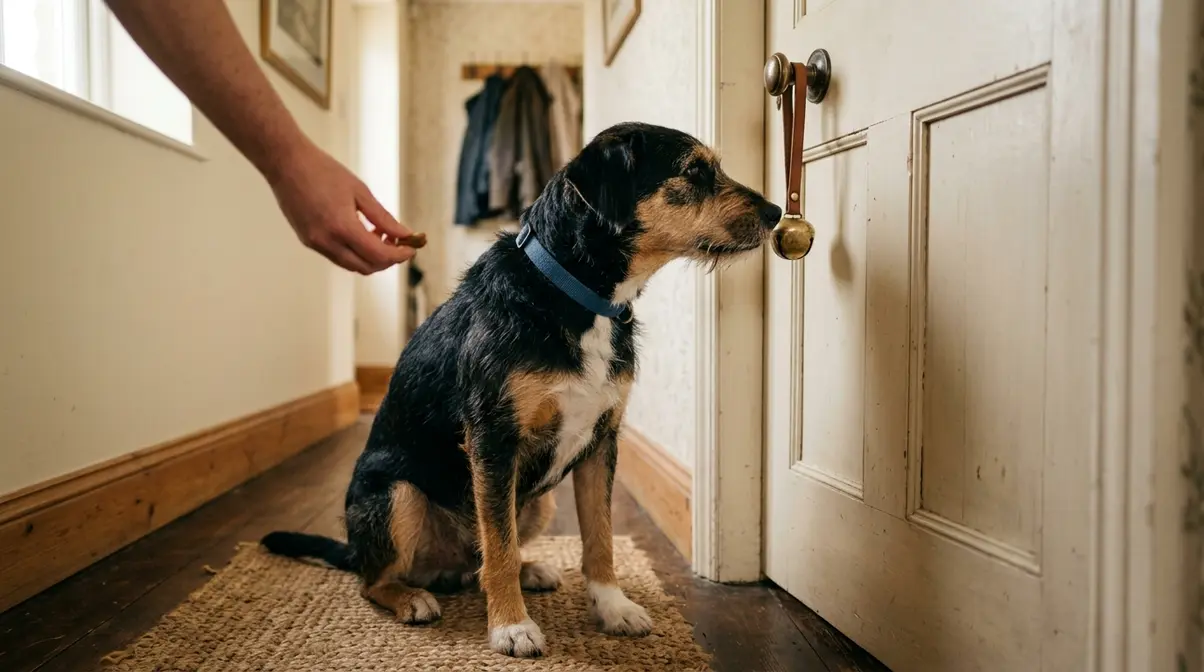
Adult dogs who don’t alert to go outside can be taught using the same methods as puppies; bell training combined with a strict schedule is the most reliable approach. Most adult dogs develop a reliable alert within 2–4 weeks once consistent repetition is established.
Adult and rescue dogs who don’t alert to go outside usually fall into one of two categories: they were never taught a signal, or they learned to suppress signals in a previous environment. The good news is that adult dogs can learn alert training just as effectively as puppies, often faster, once the routine is established and they understand the system.
Why adult dogs suppress signals is worth understanding before you start. In shelters or previous homes where signals were ignored or punished, dogs learn that alerting doesn’t produce any useful result, so they stop trying. This isn’t stubbornness; it’s learned helplessness. The fix is proving to the dog, through consistent repetition, that their signal reliably works. Every time the door opens within seconds of the signal, you’re rebuilding that trust.
The routine-first approach is the most reliable starting point. According to Humane Society International, establishing a strict schedule (taking dogs out upon waking, after meals, after play, and before bed) is the foundation of adult dog housetraining. For adult dogs who have never been taught to signal, a strict schedule combined with bell training is the most reliable approach: the routine creates predictability while the bell gives the dog a clear, learnable action to perform.
Which method works best for adult dogs: Bell training (Method 1) is generally the strongest choice for adult dogs because it provides a specific, concrete action to learn. Natural signal shaping (Method 3) is harder for dogs who have already learned to suppress their pre-potty behaviors. There may not be a visible signal to capture. Recordable buttons (Method 2) work well as an alternative if bells don’t gain traction.
Timeline: Adult dogs typically develop a reliable alert within 2–4 weeks of consistent practice, comparable to puppies, but with less regression because their bladder control is already mature. The Alert Loop works the same for adult dogs. The difference is that adults may need more repetitions before the association forms, especially if they’ve spent time in an environment where signaling was pointless.
Once your adult dog has a reliable potty alert, building on that training momentum is straightforward; our guide on mastering the basics of fetch shows how that same positive reinforcement foundation transfers to new skills.
Whether you’re training a puppy or an adult dog, the questions below come up constantly. Here are the answers.
Frequently Asked Questions
How do you potty train mature dogs who do not alert to go outside?
For adult dogs who don’t alert, start with a strict schedule: take them outside at the same times every day, first thing in the morning, after meals, after play, and before bed. Reward every successful outdoor potty trip with enthusiastic praise and a treat. Once the routine is established, introduce bell training to give the dog a specific, learnable signal. Most adult dogs develop a reliable alert within 2–4 weeks once consistent repetition is in place.
How do you train your dog to let you know when they want to go outside?
The most effective methods involve teaching a specific, learnable signal. Bell training (hanging bells on the door and rewarding the dog for touching them before each potty trip) is the most widely recommended starting point. Alternatively, you can reinforce a natural signal like sitting by the door by immediately opening the door and rewarding any outdoor elimination. Consistency is the deciding factor: whichever method you choose, the response must be immediate and reliable every time.
How do you teach your dog to alert to go outside using bells?
Hang a bell set at your dog’s nose height on the door handle. Each time you take them outside for a potty break, guide their nose or paw to the bells and say “touch.” The moment the bells ring, open the door immediately. Only open the door when the bell rings, not for whining or scratching. Most dogs learn the association within 2–4 weeks of consistent daily practice, provided the door opens within 5 seconds of every ring.
Why won’t my puppy tell me when he needs to go out?
Puppies, especially those under 4 months, often don’t signal because they haven’t yet developed the bladder awareness to know they need to go until the last second. They’re not withholding a signal. They genuinely don’t have one yet. The solution is a strict schedule (every 1–2 hours) combined with bell training, so the association builds as their bladder awareness develops naturally with age. Expecting a signal before this developmental stage is common and unrealistic.
What’s the hardest breed of dog to potty train?
Some breeds are consistently more challenging due to their independent temperament or smaller bladder capacity. Dachshunds, Pugs, Afghan Hounds, Pekingese, and Dalmatians are frequently cited as difficult breeds. Smaller breeds in general tend to need more frequent outdoor trips and more repetitions before a reliable signal develops. The training methods are the same for these breeds; patience and consistency matter more than any specific technique, and alert training timelines may run longer than the typical 2–4 weeks.
What smells encourage dogs to pee in the right spot?
Dogs are strongly drawn to the scent of their own previous eliminations, which is why they tend to return to the same spots reliably. To encourage a dog to pee in a specific outdoor area, bring them to the same spot every trip. Some owners use commercial attractant sprays, available at most pet stores, that mimic the scent signals dogs use to mark elimination areas. Consistency of location reinforces the habit and makes outdoor potty trips faster and more predictable.
Your Next Step: Pick a Method and Start Today
For most dog owners, learning how to teach your dog to alert to go outside is most straightforward when you start with bell training. It gives your dog a specific, learnable action and works through The Alert Loop: Signal → Door Opens → Potty Reward. According to WebMD Pets, teaching a dog to use a specific, consistent signal is the most reliable way to establish potty communication. And most dogs develop a reliable alert within 2–4 weeks of consistent daily practice, whether they’re a young puppy or a newly adopted adult dog.
Once The Alert Loop is established, the silent accidents that prompted this search become rare. The dog who stood behind you and peed with no warning wasn’t ignoring you. They had no reliable way to tell you what they needed. The Alert Loop solves that. When your dog knows that a specific signal reliably opens the door, they have every reason to use it. The communication gap closes, and the frustration on both sides fades with it.
Choose one method from this guide and commit to it for 14 days before switching. If you’re starting with bell training, hang the bells today and run through Steps 1 and 2 in your next training session. It takes less than 10 minutes. Once potty alert training is solid, many owners find their dogs are ready for more structured advanced training goals. Bell prices and equipment options verified as of early 2026.