- Author: Coral Drake
Your Golden Retriever bounces out the door for a winter walk, but three minutes in, she stops and lifts one paw. That small gesture is your first warning that something is wrong with her feet.
Golden Retrievers have thick, feathered fur between their toes, and in winter, that fur becomes a trap for snow, ice, and road salt. Without the right care, that buildup leads to painful clumps, raw skin, and chemical burns from de-icing products. This guide covers everything you need for complete golden retriever winter paw care: how to trim, protect, clean, and inspect your Golden’s paws so every winter walk stays safe and comfortable. You’ll find temperature thresholds, a 7-step routine, a balm versus boots comparison, and clear signs that it’s time to call the vet.
Golden retriever winter paw care requires breed-specific steps because their dense inter-pad fur traps ice, salt, and snow faster than most breeds, creating what this guide calls The Ice-Ball Trap.
- Trim inter-pad fur to the level of the pad before winter walks to prevent ice-ball formation
- Apply paw balm before each walk as a protective barrier against salt and cold
- Wipe paws immediately after every walk using a warm, damp cloth to remove de-icing chemicals
- Watch for warning signs: lifting paws, limping, or red and raw paw pads signal cold injury
- Call your vet if pads crack, bleed, or if your dog ingests road salt
Do Golden Retrievers’ Paws Get Cold in the Snow?
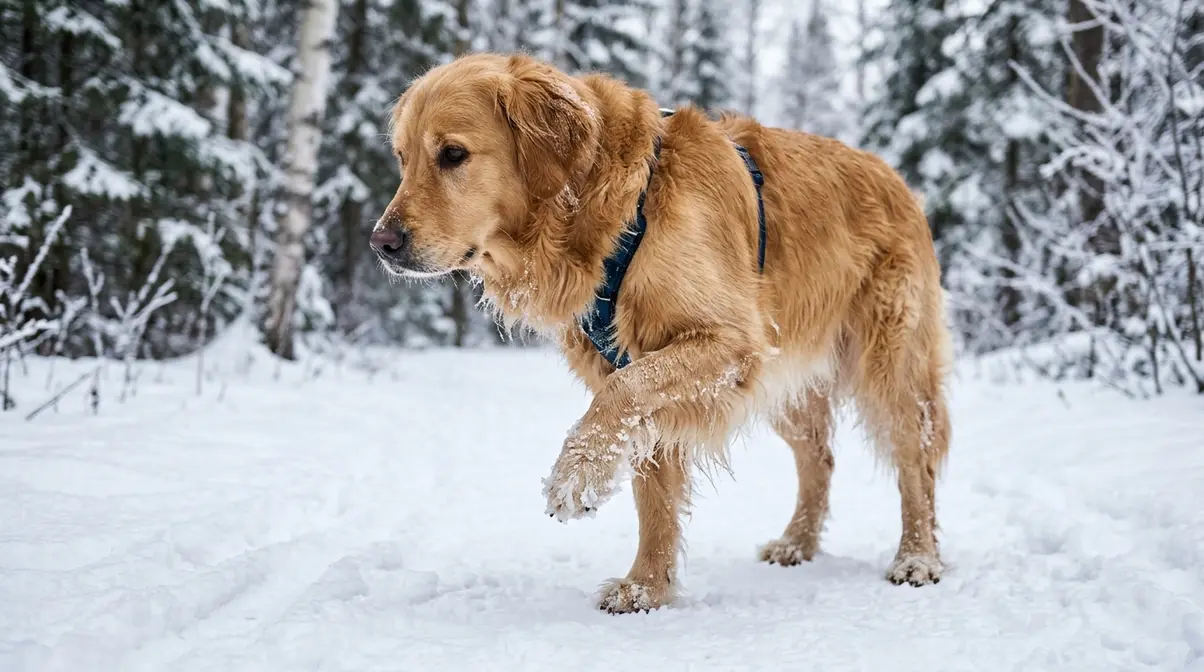
Yes, a Golden Retriever’s paws can absolutely get cold in the snow. According to Texas A&M College of Veterinary Medicine, indoor pets not acclimated to cold should not be left outside when the average daily temperature drops below 45 degrees Fahrenheit (2009). Golden Retrievers face a specific risk that most breeds do not: their thick, feathered fur between their toes collects snow and ice into dense, painful clumps far faster than short-coated breeds.
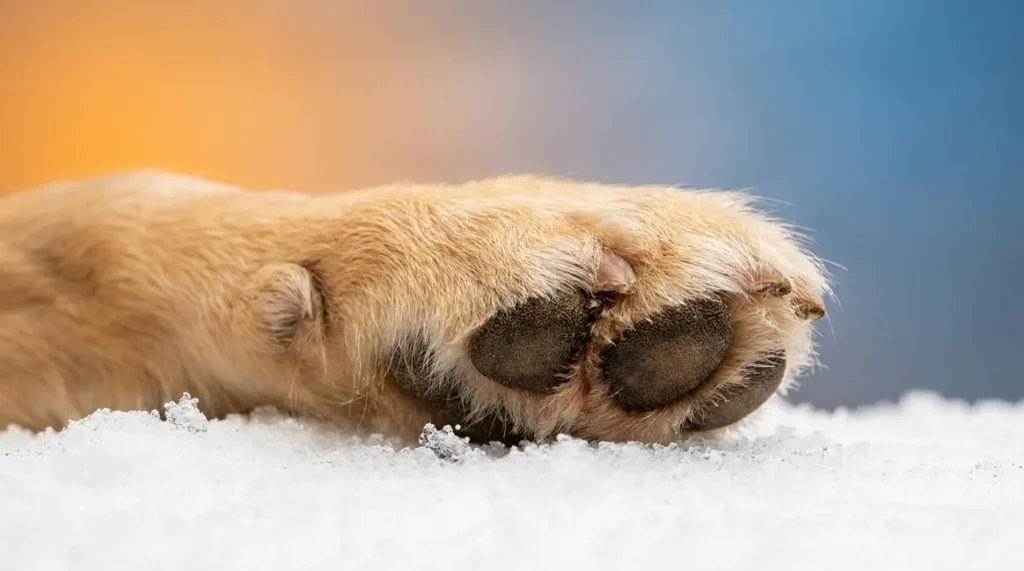
Because a Golden’s paws have lots of hair, snow and ice can accumulate in painful clumps between the toes, so pay extra attention to your dog’s feet in winter.
What Temperature Is Too Cold for Your Dog’s Paws?
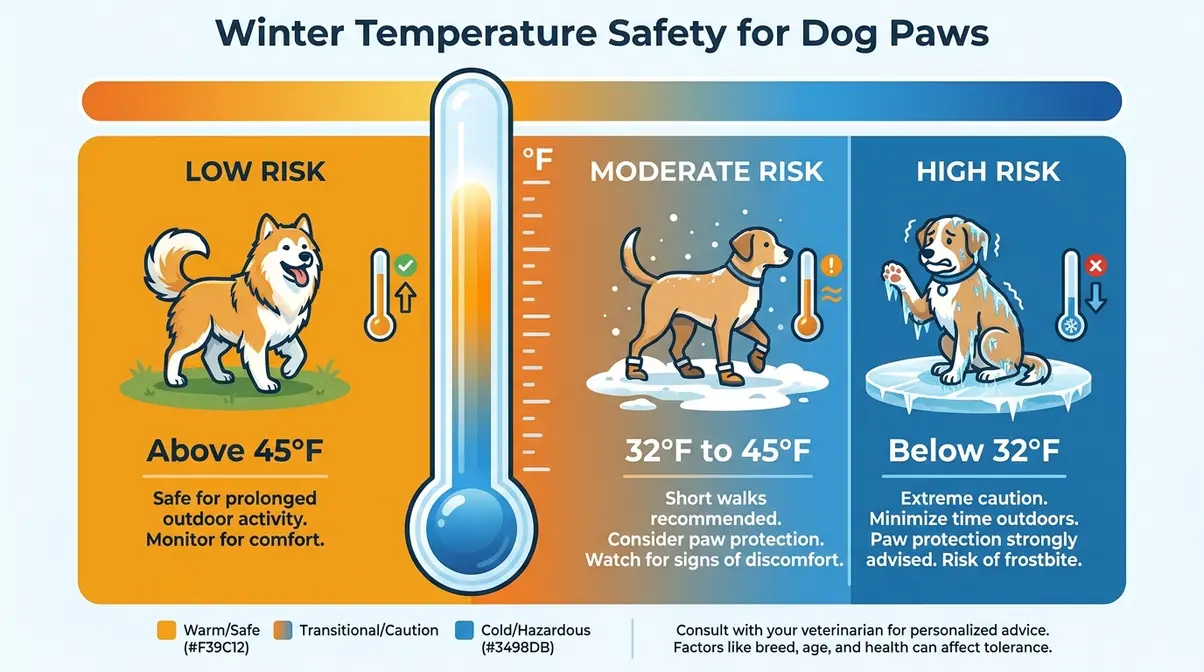
Texas A&M College of Veterinary Medicine advises that indoor dogs not acclimated to cold should avoid extended time outdoors below 45°F (2009). “Not acclimated” means a house dog who lives indoors year-round and hasn’t built up a tolerance to cold temperatures through gradual outdoor exposure. That describes most family Goldens.
At 32°F and below, the risk increases sharply. Washington State University Veterinary Teaching Hospital states that most dogs should not be exposed to freezing temperatures for more than 10 to 15 minutes without access to a warm space (2025). Wind chill makes both thresholds more dangerous. A 35°F day with a strong wind can feel like 20°F on exposed paw pads.
| Temperature | Risk Level | Recommended Action |
|---|---|---|
| Above 45°F | Low | Normal walks, monitor as usual |
| 32°F to 45°F | Moderate | Limit walk time, apply paw balm |
| Below 32°F | High | Cap walks at 10-15 minutes, use boots or balm |
Knowing the temperature limit is step one. But for Golden Retrievers, cold air is only half the problem.
The Ice-Ball Trap: Why Golden Retrievers Are Extra Vulnerable
Golden Retrievers are a heavily feathered breed with dense fur between their toes, called inter-pad fur. This is a natural breed trait, not a flaw. In winter, however, it becomes a serious liability. The Ice-Ball Trap describes the way Golden Retrievers’ thick inter-pad fur collects snow, ice, and salt into dense, painful clumps that other short-coated breeds rarely experience.
Here is exactly what happens: snow and ice pack into the fur between the toes. The clumps press against the tender skin in that area. As the dog keeps walking, the clumps grow larger and more painful. The problem compounds when road salt and chemical ice-melt products stick to the wet fur and then get licked off during grooming. ASPCApro notes that ingesting larger amounts of sodium, potassium, or magnesium chloride can lead to significant vomiting, diarrhea, dehydration, and electrolyte abnormalities (2020). Veterinary toxicology guidelines note that sodium chloride toxicity in dogs begins at approximately 1.5 grams per pound of body weight. This is why post-walk paw cleaning is not optional.
For a full picture of how winter conditions connect to broader health concerns, see the guide to common Golden Retriever health issues.
Now that you know what you’re dealing with, here are the signs that your Golden’s paws are already in trouble.
Warning Signs to Watch For
The American Veterinary Medical Association notes that sudden lameness during a walk may be caused by ice accumulation between the toes, and that cracked or bleeding paw pads are signs of cold-weather injury (2018). Watch for these specific signals:
- Lifting one or more paws while walking or stopping suddenly mid-walk
- Reluctance to continue the walk or turning back toward home
- Excessive licking of paws immediately after coming inside
- Red and raw skin visible between the toes
- Cracked or bleeding paw pads (the tough, leathery cushions on the underside of each foot)
- Visible ice buildup or swelling between the toes
If your Golden shows any of these signs, step inside and check their paws. Then take the preventive steps below so it doesn’t happen again.
Should You Trim the Hair Between Your Golden’s Paw Pads?
Yes, trimming the inter-pad hair (the fur growing between the toes and around the paw pads) is the single most effective step you can take to prevent winter paw problems. The target length is flush with the surface of the pad. Cornell University College of Veterinary Medicine recommends shortening the hair between the paw pads to prevent ice balls from forming, and applying paw balm to the pads before each walk (2021). Trimming the inter-pad fur is the most direct way to break The Ice-Ball Trap before it starts.
How to Trim Your Golden’s Inter-Pad Hair Safely
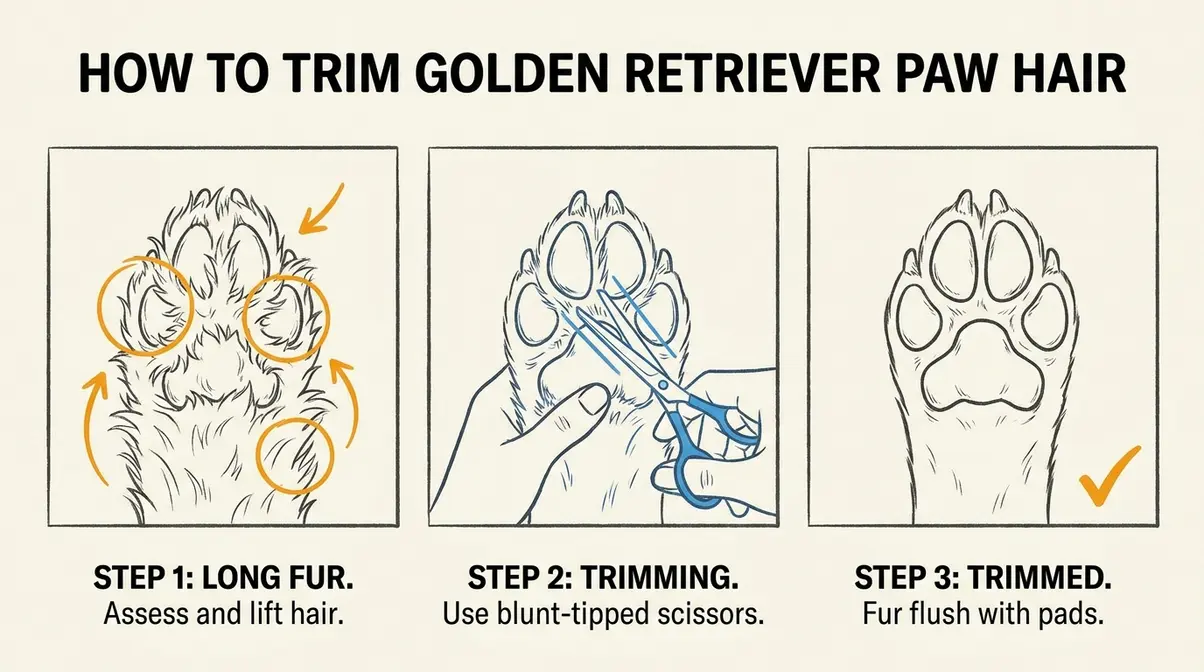
Tools you need: Blunt-tipped grooming scissors or a quiet, low-vibration clipper such as a small Wahl trimmer. Blunt tips matter because your dog may shift suddenly, and a sharp point near the pad creates a real injury risk.
- Have your Golden sit or lie on a non-slip surface, such as a rubber bath mat.
- Gently spread the toes with your fingers to expose the fur growing between the pads.
- Use blunt-tipped scissors to snip the fur until it sits flush with the surface of the pad. Do not cut below pad level.
The Ontario SPCA recommends this trimming approach specifically for long-haired dogs like Golden Retrievers to maintain proper winter grooming. If your dog is anxious or pulls away, stop. Ask a second person to hold your dog steady, or schedule a grooming appointment and ask the groomer to do it for you.
Once the fur is trimmed, the next step is keeping those pads from cracking in the cold.
Should You Moisturize Your Golden’s Paw Pads?
Yes. Cold air and rough, salted pavement dry out paw pads the same way winter air dries human hands. Cracked pads are painful and create openings for infection. Use a dog-safe paw balm, such as Musher’s Secret, or a petroleum jelly product approved for dogs. Never use human hand lotion, which can contain xylitol or other ingredients that are toxic to dogs.
Do: Apply balm after cleaning paws post-walk, when pads feel dry or rough. Don’t: Apply moisturizing balm right before a walk. Pre-walk balm application is for protection and is covered in the next section.
Now that your Golden’s paws are trimmed and moisturized, you’re ready to build a full winter routine.
How Do You Protect Golden Retriever Paws Step by Step?
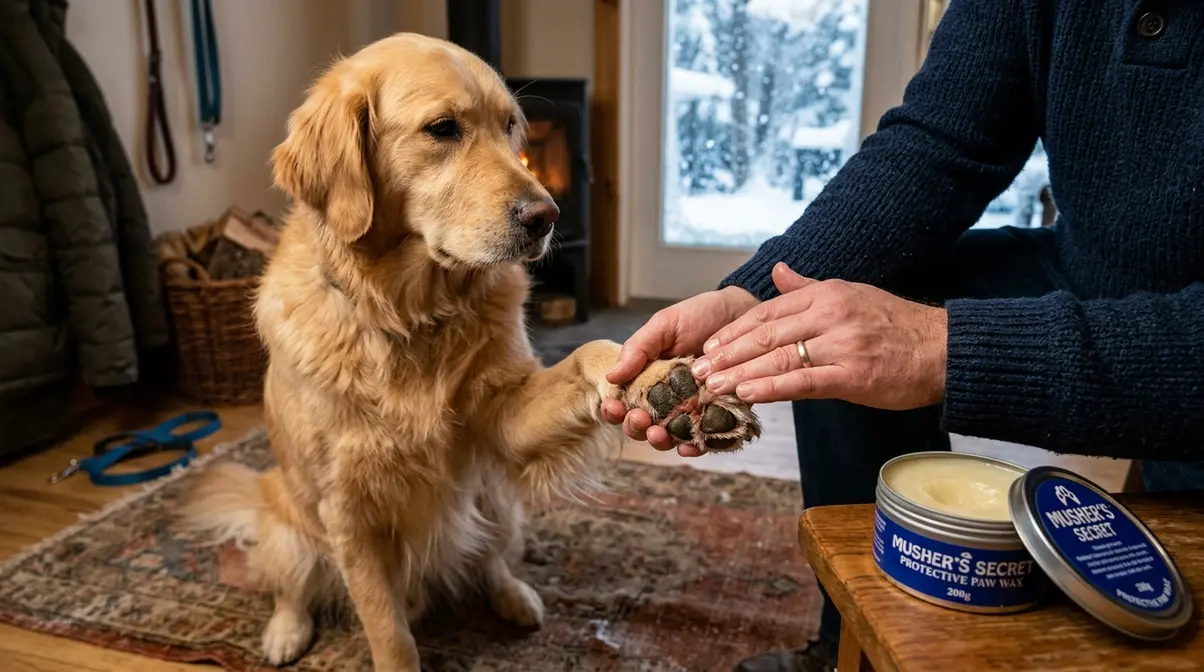
This 7-step routine covers everything you need to do before, during, and after every winter walk. Follow it consistently and your Golden’s paws will stay healthy through even the coldest months.
Step 1: Check the Temperature Before You Head Out Check the outdoor temperature and wind chill before clipping on the leash. Below 45°F, limit walk time and add protection. Below 32°F, cap walks at 10 to 15 minutes maximum. Washington State University Veterinary Teaching Hospital advises that most dogs should not be exposed to freezing temperatures for more than 10 to 15 minutes without access to a warm space (2025). Cold paw pads lose sensation quickly, so your Golden may not show discomfort until damage has already occurred.
Step 2: Check That Inter-Pad Fur Is Trimmed Before every walk during winter months, quickly check that the fur between the toes sits flush with the pad surface. Even a few days of new growth is enough to start forming The Ice-Ball Trap. This visual check takes about 30 seconds and can save your dog real pain.
Step 3: Apply Paw Balm or Fit the Boots Apply a thin layer of paw balm, such as Musher’s Secret, to each pad, or slide on properly fitted winter boots. Balm acts as a shield between the pad and salt or rough ice. Boots offer full coverage for dogs who will tolerate shoes. Paw balm and boot options are covered in detail in the next section.
Step 4: Choose Your Route Carefully Stick to grass, snow-covered paths, or cleared sidewalks when possible. Avoid heavily salted pavement or areas with visible chemical ice melt. Road salt and chemical de-icers, including sodium chloride and magnesium chloride, are the main chemical hazard for paw pads and for dogs who lick their feet after walks.
Step 5: Keep an Eye on Your Golden During the Walk Watch for the warning signs covered earlier: paw lifting, limping, or sudden stops. Golden Retrievers are eager to please and may keep walking even when uncomfortable. You need to watch for them, because they will not always tell you something hurts.
Step 6: Wipe Paws Immediately When You Return Home Before your dog walks through the house, wipe all four paws with a warm, damp cloth. Pay extra attention to the spaces between the toes. Salt and chemical residue on paws gets licked off during grooming. Even small amounts cause digestive upset, and larger amounts are toxic.
Step 7: Inspect Each Paw for Damage After wiping, gently press each pad and spread the toes. Look for redness, cracking, cuts, or any remaining ice buildup between the toes. Small cuts and cracks are easy to miss on a dark-padded breed. Catching them early prevents infection and keeps a minor issue from becoming a serious one.
What Is the Best Protection for Your Golden’s Paws in Winter?
Your Golden hates having anything on her feet. You’ve tried boots twice and she stood frozen like a statue. Does that mean she has to go without protection? Not at all. Paw balm is a genuine, effective alternative, and for many dogs it works better than boots for everyday walks. The right choice depends on your dog’s tolerance and the conditions outside.
Paw Balm and Paw Wax: The Low-Fuss Option
Paw balm is a thick, protective product applied directly to the paw pads before a walk. It acts as a shield between the pad and cold surfaces, salt, and ice. It is breathable, so paws can still sweat and function normally. Apply a thin layer to each pad before heading out.
Musher’s Secret is a widely used paw wax containing natural waxes that form a semi-permeable barrier. Similar products are available at most pet stores. The American Kennel Club notes that applying petroleum jelly helps protect raw skin on paw pads and prevents painful ice balls from forming between the pads while walking in snow (2023).
Balm does have limits. It does not protect the tops of the paws or the fur between the toes. It also wears off on longer walks. For heavy salt exposure or very low temperatures, boots offer more complete protection.
If your dog will tolerate them, boots offer the most complete protection available.
Dog Booties: Full Coverage for Serious Winters
Boots protect the entire paw, including the tops and the spaces between the toes, from salt, sharp ice, and extreme cold. They also keep paws dry, which reduces frostbite risk. For dogs who will tolerate shoes, boots are the gold standard in severe winter conditions.
Many dogs resist boots at first. This is completely normal. Use this 4-step acclimation process:
- Let your dog sniff and investigate the boots before putting them on. Let her treat them as a curiosity, not a threat.
- Put on just one boot and immediately give a high-value treat.
- Work up to all four boots indoors, then do a short 2-minute walk around the house.
- Gradually extend boot-wearing time over 3 to 5 days before attempting a full outdoor walk.
Fit matters as much as tolerance. Boots should be snug but not tight. Your dog should be able to flex their toes inside the boot. Loose boots fall off mid-walk; too-tight boots restrict circulation and create their own problems.
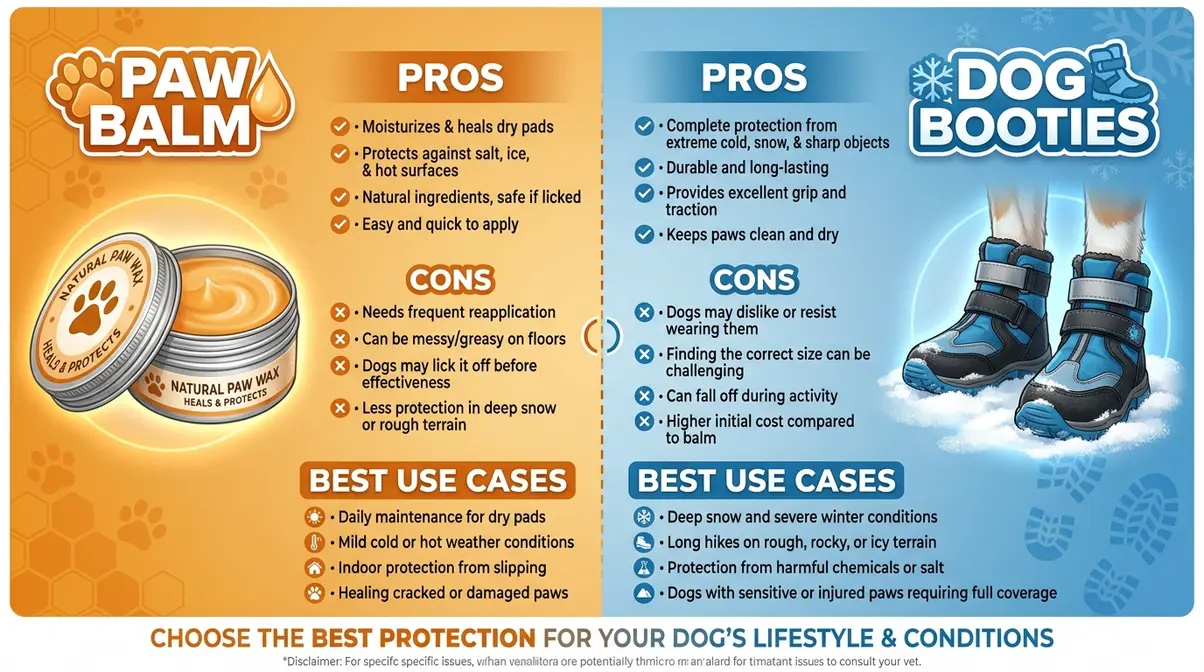
| Paw Balm / Wax | Dog Booties | |
|---|---|---|
| Best for | Moderate cold, short walks | Extreme cold, heavy salt exposure |
| Ease of use | Easy (apply in 30 seconds) | Requires acclimation |
| Coverage | Pads only | Full paw protection |
| Dog tolerance | High (most dogs accept it) | Variable (needs training) |
| Durability per walk | Wears off on long walks | Lasts entire walk |
Whether you use balm or boots, the walk is only half the routine. What you do when you get home matters just as much.
Your Post-Walk Paw Routine: 3 Simple Steps
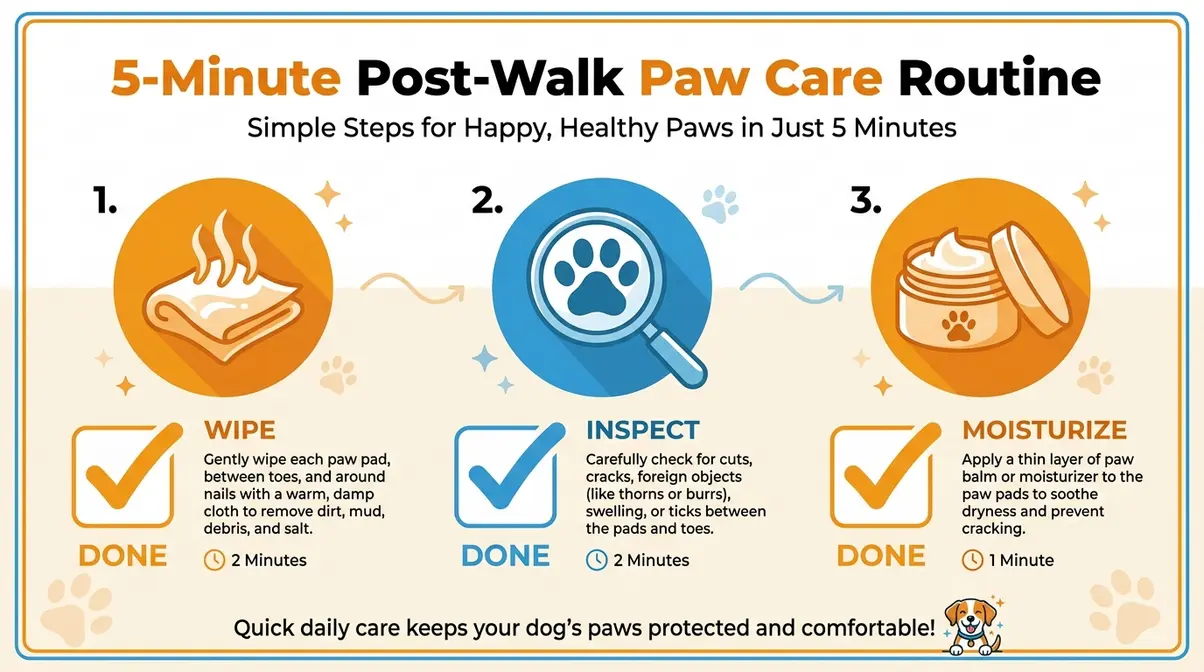
Whatever protective gear you used, every winter walk ends with the same 3-step routine. It takes under 5 minutes and prevents the most common causes of paw damage.
Step 1: Wipe with a Warm, Damp Cloth Use a warm damp cloth or pet paw wipe to clean each paw thoroughly, including between the toes and around the pads. Warm water is gentler on cold pads than cold tap water and helps melt residual ice. The University of Wisconsin School of Veterinary Medicine recommends wiping or washing your dog’s feet, legs, and belly after every outing to prevent salt irritation (2018).
Step 2: Inspect Each Paw Gently spread the toes and press each pad. Look for redness, cuts, cracks, or ice balls lodged between the toes. Check the fur at the base of each toe for salt crystals, which show up as white grit.
Step 3: Moisturize If Needed If pads feel rough, dry, or cracked, apply a small amount of dog-safe paw balm. Pads should feel supple, not leathery or stiff. This step matters most after walks on salted pavement, which dries pads faster than natural snow or ice.
Most of the time, this routine is all you need. But sometimes, paws need more than home care.
When Should You Call the Vet About Your Golden’s Paws?
Home care handles most winter paw issues, but knowing when to call your vet can prevent a manageable problem from becoming serious. Contact your vet if you notice:
- Pads that are cracking, bleeding, or have open sores that don’t close within 24 hours
- Swelling, extreme redness, or blistering, which may indicate frostbite
- Limping that doesn’t improve after 20 to 30 minutes indoors
- Signs of salt or ice melt ingestion — drooling, vomiting, lethargy, or loss of coordination — which is a medical emergency
The American Veterinary Medical Association notes that sudden lameness during a walk may result from ice accumulation between the toes, and that cracked or bleeding pads are signs of cold-weather injury requiring veterinary attention (2018).
This article is for informational purposes only and is not a substitute for professional veterinary advice. If your Golden Retriever shows signs of frostbite, salt ingestion, or paw injury, contact your veterinarian promptly.
Frequently Asked Questions
Do Golden Retrievers’ Paws Get Cold in the Snow?
Yes, a Golden Retriever’s paws can get cold in the snow, and the breed faces a specific risk from their thick inter-pad fur. While Goldens have moderate cold tolerance overall, their paw pads lack fur and are susceptible to frostbite once temperatures drop to or below 32 degrees Fahrenheit. Their feathered toes also trap snow and ice into painful clumps faster than short-coated breeds. Signs of discomfort include lifting paws, stopping mid-walk, or limping. Limit outdoor exposure below 32 degrees to 10 to 15 minutes and always wipe paws immediately after returning home.
Should You Trim the Hair Between a Dog’s Paw Pads in Winter?
Yes, trimming the hair between a Golden Retriever’s paw pads in winter is strongly recommended. Long inter-pad fur traps snow, ice, and de-icing salts, forming painful ice balls that press against the tender skin between the toes. Keeping the fur trimmed flush with the pad surface prevents this buildup. It also improves traction on icy surfaces and makes post-walk cleaning faster and more thorough. Use blunt-tipped scissors and trim to pad level, not below it.
What Is the Best Thing for a Dog’s Paws in Winter?
The best protection for dog paws in winter is either a quality paw balm such as Musher’s Secret or properly fitted dog booties, depending on your dog’s tolerance and the conditions. Paw balm acts as a breathable shield against salt and cold and works well for moderate temperatures and shorter walks. Booties offer complete coverage and are the better choice in extreme cold or heavily salted areas. Most veterinary sources recommend using one or the other before every winter walk. Results depend on consistent use and proper paw prep, including trimmed inter-pad fur.
Keep Your Golden’s Paws Healthy All Winter Long
For Golden Retriever owners, golden retriever winter paw care requires breed-specific attention because that thick, feathered inter-pad fur is both your dog’s charm and her cold-weather vulnerability. Washington State University Veterinary Teaching Hospital (2025) advises limiting freezing-temperature exposure to 10 to 15 minutes, and the steps in this guide give you a simple, repeatable routine to make every walk safe within that window. The best approach combines regular fur trimming, paw balm or boots before each walk, and a consistent post-walk cleaning routine.
The Ice-Ball Trap is a Golden Retriever-specific problem, but it is entirely preventable with the right routine. Every recommendation in this guide connects back to that one insight: remove the fur that catches ice, protect the pad from salt, and clean thoroughly before your dog can lick anything off. That cycle addresses the root cause, not just the symptoms.
Start this week by trimming your Golden’s inter-pad fur to pad level. Apply paw balm before your next walk and keep a warm cloth by the door for when you return. Bookmark the post-walk checklist so the routine becomes automatic. Coral Drake at devotedtodog.com and reviewer Brianna York, Former Vet Tech, recommend making these habits part of every walk from the first frost through the last cold snap of the season.
➤ Your Golden’s paws are worth five extra minutes before and after every winter walk. Start the routine today.
Related gear: see our guide to ramps to reduce joint strain.
Try a homemade winter paw balm recipe to protect cracked pads.