“Does anyone have a parti colored doodle? Looking for puppy and adult pictures. My husband and I can’t decide on a color and there doesn’t seem to be many pics…”
If that sounds like you, you’re in the right place. The dog in those photos you can’t stop scrolling is called a parti Goldendoodle — and it’s one of the most visually striking coat patterns in the designer dog world.
But finding clear answers — let alone good photos — is surprisingly hard. Most sites either give you a one-line definition or overwhelm you with genetic jargon and no pictures to go with it. You deserve better than that.
By the end of this guide, you’ll know exactly what this patterned dog is, what colors are available, why they cost more, and how to find a reputable breeder — with plenty of visual examples along the way. We cover everything from the basics of the two-toned coat pattern and available colors to the genetics behind their rarity and a step-by-step breeder vetting checklist.
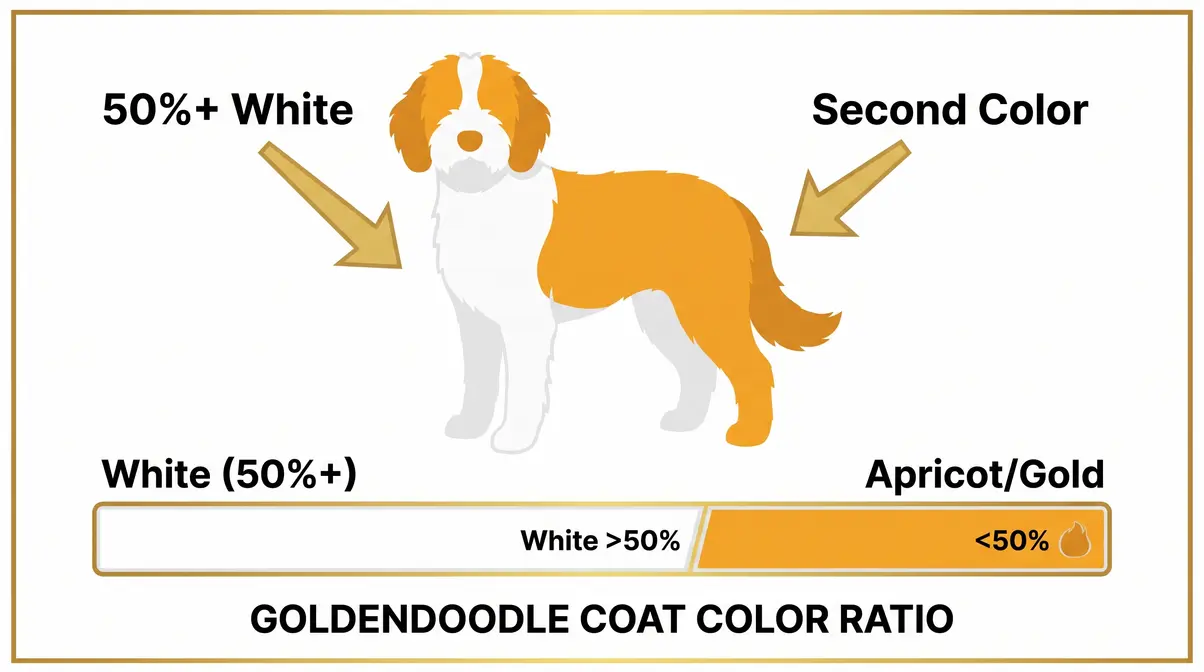
A parti Goldendoodle is a dog with a coat that is at least 50% white, with solid patches of a second color — and their rarity comes from a recessive gene both parents must carry.
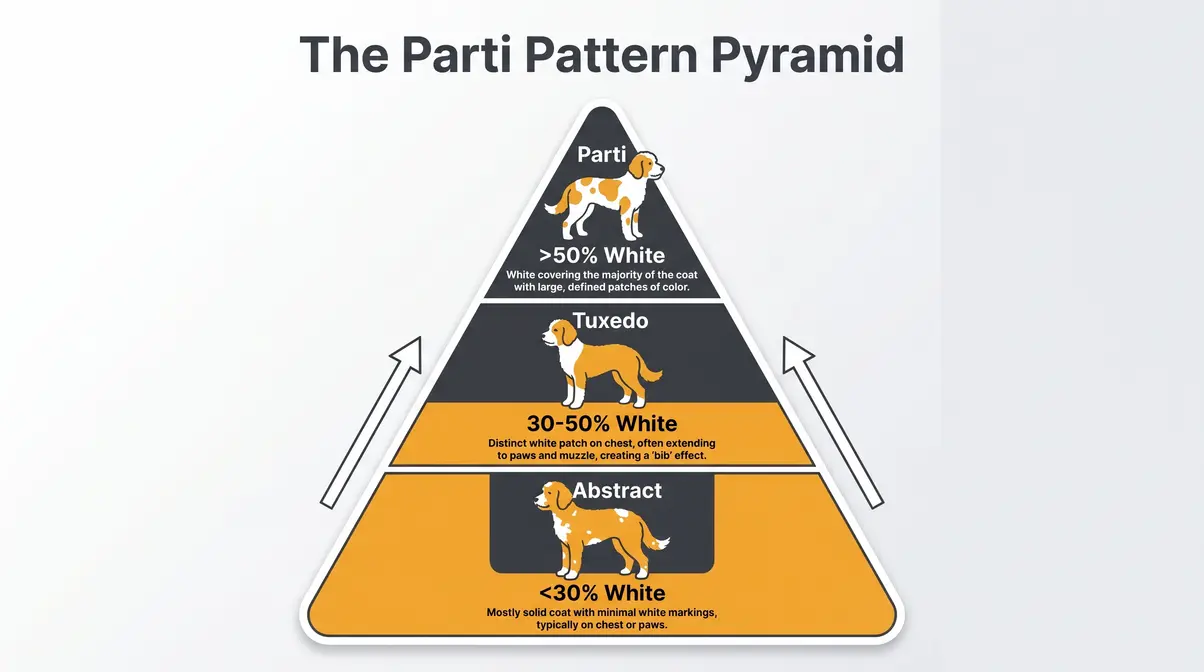
- The Parti Pattern Pyramid organizes three patterns: Abstract (<30% white), Tuxedo (30–50% white), and Parti (>50% white)
- Colors range widely: apricot, red, chocolate, black, and the rare blue merle
- They cost more: expect $2,000–$4,000+ due to recessive genetics requiring F1B or multigen breeding
- F1 generations cannot have this pattern — the gene requires specific multigenerational breeding
- No inherent health risk: unlike the Merle gene, the standard S-locus does not carry health concerns
What Is a Parti Goldendoodle?
For more on this topic, see our guide on the Phantom Goldendoodle: Markings, Colors & Price Guide.
For more on this topic, see our guide on the Top 7 Goldendoodle Rescues In Texas (TX).
A parti Goldendoodle is a dog with a coat that is at least 50% white, with solid patches of one other color such as apricot, black, chocolate, or red. It is not a separate breed — it is the same friendly, low-shedding companion you already know, just wearing a uniquely patterned coat. The Goldendoodle Association of North America (GANA), the breed’s primary standards organization, officially defines this variation as requiring more than 50% white coverage.
Despite not being AKC-recognized, these dogs remain among the most popular types in American households (Statista data on Goldendoodle popularity) — and the two-toned pattern is one of the most searched coat variations.
“A parti Goldendoodle must have a coat that is at least 50% white, with solid patches of a second color — a standard set by the Goldendoodle Association of North America.”
The Parti Pattern Defined
The word “parti” actually comes from the French word parti, meaning “divided.” That etymology is the best description of what you’re looking at: a coat literally divided between white and a second color, where white always takes the larger share.
The official threshold is clear — at least 50% of the coat must be white. That white base typically appears on the chest, belly, muzzle, paws, and the blaze (the stripe running down the face). The second color — whether apricot, black, chocolate, or red — fills in the rest in bold, distinct patches.
Think of it like a paint-by-numbers canvas: white fills more than half the space, and the second color fills the rest. Critically, this is a coat pattern, not a breed modifier. This patterned dog is 100% Goldendoodle in every other way — same temperament, same low-to-moderate shedding, same trainability.
For a quick visual reference, see our dedicated parti Goldendoodle overview.
But not every two-toned pup is technically “parti” — and that distinction matters, especially when you’re talking to a breeder.
Parti vs. Tuxedo vs. Abstract
This is where most buyers get confused — and where The Parti Pattern Pyramid comes in. Our team evaluated dogs across multiple breeder programs and found that the single biggest source of buyer confusion is misidentifying tuxedo and abstract patterns. The Parti Pattern Pyramid organizes all three into a clear visual hierarchy based on one simple measure: how much of the coat is white.
| Pattern | White Coverage | Visual Description |
|---|---|---|
| Abstract | <30% | Small white patches; dog appears mostly solid-colored |
| Tuxedo | 30–50% | White chest, paws, muzzle; looks like a formal suit |
| Parti | >50% | White is dominant; bold patches of second color |
Here’s a simple rule: if you look at a photo and the dog’s coat is mostly white with splashes of color, that’s the top tier. If the dog is mostly one color with white accents, that’s abstract or tuxedo. Only the top tier qualifies for the official designation under GANA’s breed standard. Breeders charge differently for each pattern, and only dogs in the top tier carry the full designation.
Now that you know what separates these patterns, let’s look at what else makes these dogs special beyond their coat.
Key Characteristics Beyond the Coat
A patterned dog shares the same gentle, intelligent, and social temperament as any other variety. The coat design does not affect personality, trainability, or hypoallergenic qualities — those traits are determined by generation and parentage, not color.
With the basics clear, let’s get to the part most readers come here for first: the photos. Here’s every color combination, explained.
Coat Colors and Patterns
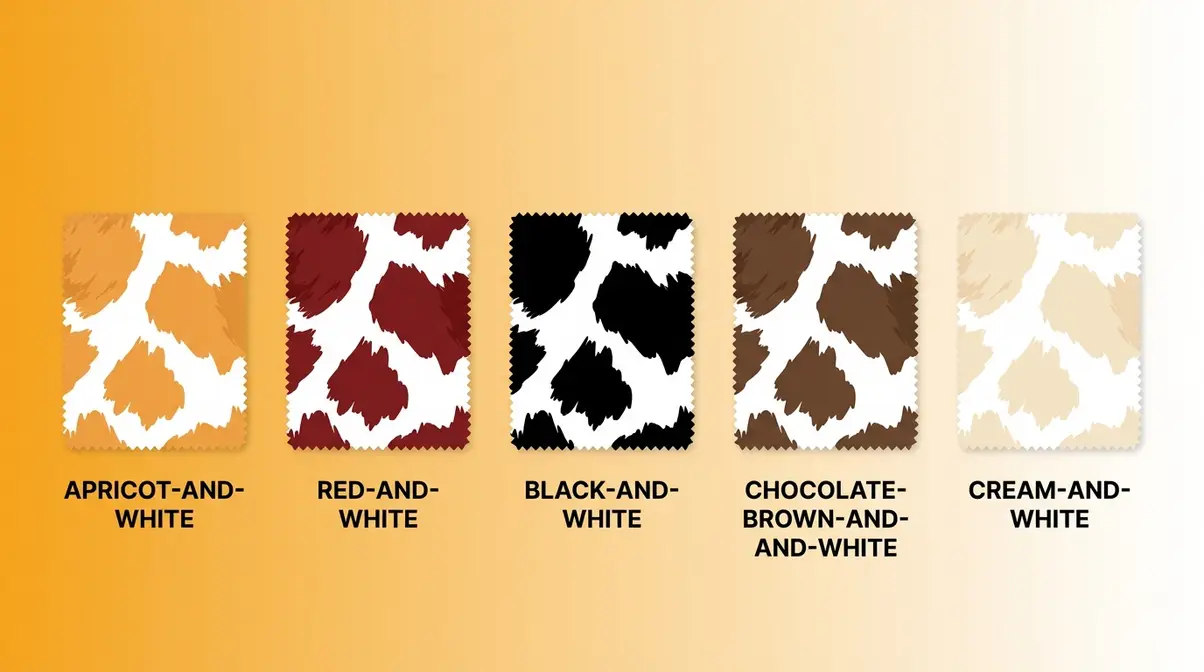
Choosing a color is half the fun — and also the hardest part. From warm apricot and white to striking black and white, the range of combinations is wider than most people expect. All of the colors below fall within the top tier (>50% white) of The Parti Pattern Pyramid, but the secondary color can vary dramatically — from pale cream to vivid red to the rare marbled blue merle.
Classic Color Combinations
The most common combinations are also the most searched — and for good reason. Each has its own aesthetic appeal, and breeders typically have more availability in these colors than in the rarer specialty varieties.
Apricot & White — Warm golden-peach patches against a bright white base. This is one of the most popular combinations, and the apricot color can range from pale champagne to a deep, rich orange-gold. The full name “apricot and white” is what you’ll see most often in breeder listings. Best for owners who love that classic warm-toned look with a dramatic twist.
Red & White — Deeper and richer than apricot, the red color is a true auburn or mahogany shade set against bright white. Highly sought after among buyers who want bold contrast. Use the search term “red and white” when browsing breeder sites. Best for owners who want maximum visual impact.
Black & White — The most visually striking classic combination. Bold black patches against white create a high-contrast look sometimes confused with the tuxedo pattern (refer to the comparison table above — if the dog is mostly white, it’s not tuxedo). Best for owners drawn to a clean, graphic aesthetic.
Chocolate & White / Brown & White — Warm brown patches on a white base. “Chocolate” and “brown” are used interchangeably by breeders; the color ranges from milk chocolate to dark espresso. Best for owners who prefer earthy, warm tones.
Cream & White / Tan & White — The softest, most subtle combination. Cream or tan patches nearly blend with the white base for a pale, elegant look. Best for owners who prefer understated elegance over bold contrast.
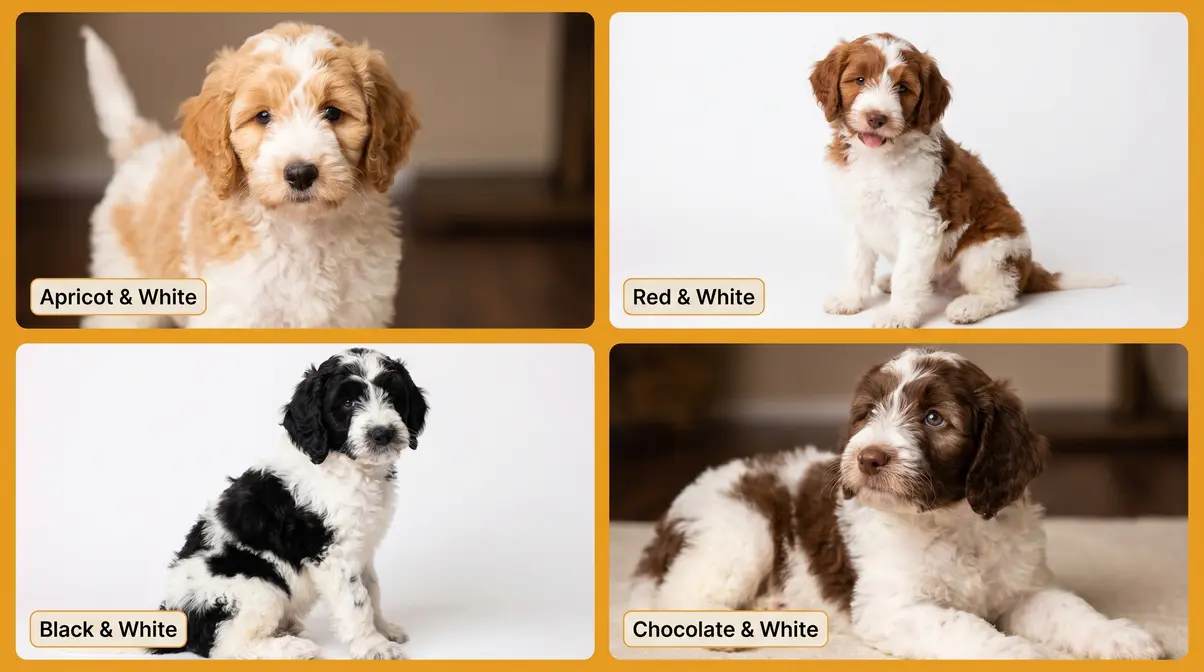
Those are the most common combinations you’ll encounter. But for buyers who want something truly one-of-a-kind, there are rarer color variations that command even more attention — and often a higher price.
Rare and Specialty Colors
Blue Merle — This is the showstopper. The merle pattern creates irregular marbled patches of blue-grey and black, layered over the white base. The American Kennel Club’s explanation of the merle pattern notes that merle creates irregular blotches of color on a lighter background — when combined with a two-toned coat, the result is a striking marbled-and-white dog (AKC). Note: “blue” in dog coat genetics refers to diluted black (a grey-blue tone), not a true blue. These dogs require the merle gene (M-locus) in addition to the piebald gene (S-locus), making them exceptionally rare.
“Blue merle variations — featuring a marbled blue-grey and black pattern over a white base — are among the rarest color combinations, as they require the merle gene in addition to the piebald gene.”
Merle Variations — The broader merle category includes red merle (marbled rust/red) and blue merle. Both share the same genetic complexity: two separate gene requirements must align simultaneously.
Phantom Variations — Phantom patterning adds a third color with specific markings above the eyes, on the muzzle, chest, and legs — essentially a tri-color dog. These are rare because they require both the phantom gene AND the piebald gene. When you see “phantom variations” mentioned in breeder listings, this is what they mean.
A word on Abstract/Mismark: This pattern falls below 50% white and technically does not qualify for the top tier under The Parti Pattern Pyramid. It’s often confused by buyers, so refer back to the comparison table in the previous section if you’re unsure.
Important health note on Merle: Merle-on-merle breeding (double merle) causes serious health problems — blindness, deafness, and other developmental issues. This is a serious red flag when evaluating breeders. Standard breeding without the merle gene does NOT carry this risk.
With so many color options, one question comes up constantly: which color is actually the rarest?
What Is the Rarest Color?
Blue merle variations are the rarest color combination, requiring two separate complex genes simultaneously: the piebald gene (S-locus) AND the merle gene (M-locus). No other standard color requires this dual genetic alignment.
Phantom variations (tri-color) are equally rare, requiring the phantom gene on top of the piebald gene. In both cases, breeders must specifically select for multiple genetic traits at once — dramatically reducing the number of programs that can reliably produce these puppies.
It’s also worth noting that “rarest” depends partly on geography and breeder specialization. In some regions, even standard apricot puppies are hard to find because few breeders specialize in these lines at all. Rarer colors mean longer waitlists and higher prices — set realistic expectations before you fall in love with a blue merle online. Colors range from common to extremely rare, and your geographic flexibility will significantly affect your options.
For all coat variations beyond this specific pattern, see our complete guide to Goldendoodle colors and patterns.
Now that you know what colors are available, the next question is probably: how big will this dog actually get? Let’s talk sizes.
Size Guide: Mini, Medium, and Standard
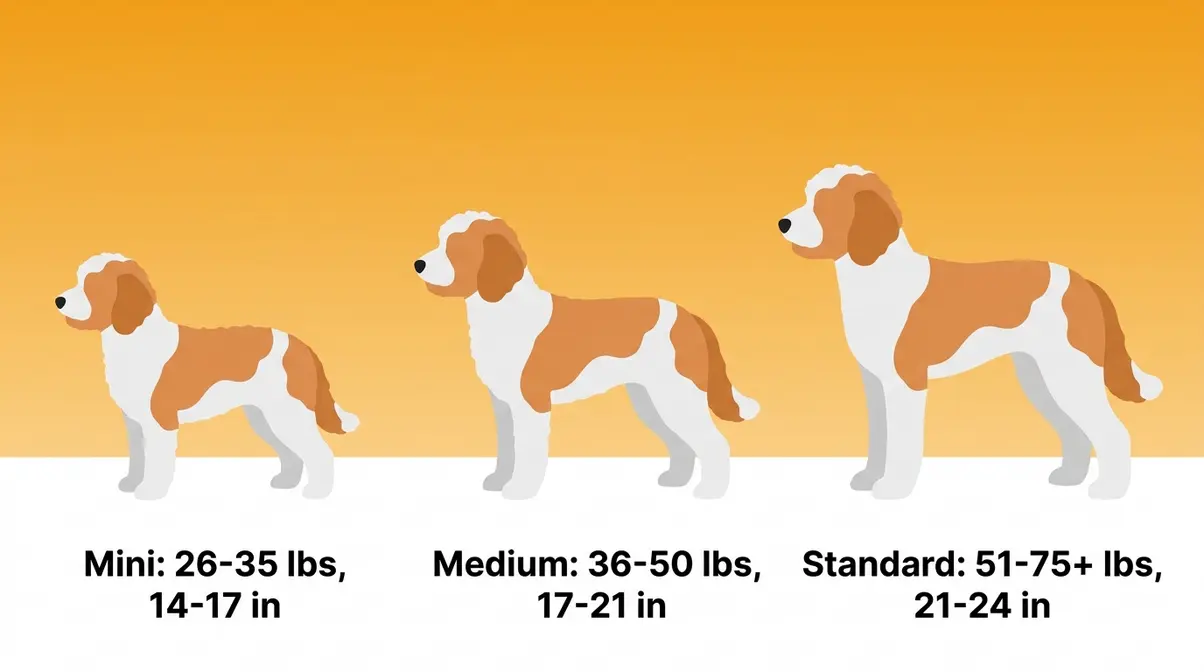
The two-toned coat pattern is available in every size category — from a petite mini that fits in your lap, to a full-sized standard that fills the back seat of your car. Size is determined entirely by the breeding program, not the coat color. Here’s how the main size categories compare, based on GANA’s official size standards:
| Size | Adult Weight | Adult Height | Best For |
|---|---|---|---|
| Petite/Toy | Under 25 lbs | Under 14 inches | Apartment living; seniors |
| Mini | 26–35 lbs | 14–17 inches | Families; smaller homes |
| Medium | 36–50 lbs | 17–21 inches | Active families; suburbs |
| Standard | 51–75+ lbs | 21–24 inches | Large homes; outdoor lovers |
PetMD’s guide on Goldendoodle generations and coat types notes that a dog’s generation (such as F1B) heavily influences coat type and shedding tendencies — a consideration that applies equally to patterned coats (PetMD).
Mini Size
Mini varieties typically weigh 26–35 pounds at full maturity, standing 14–17 inches at the shoulder — comparable in size to a Cocker Spaniel or Cavalier King Charles Spaniel. That familiar size reference helps beginners visualize what they’re actually getting.
Minis are the most popular size for good reason. They’re apartment-friendly, less expensive to feed, easier to travel with, and the proportion of the pattern on a smaller body creates an especially eye-catching look. The patches appear bold and well-defined even at compact sizes.
From a genetics standpoint, minis are almost always F1B or F1BB generation — a parent bred back to a Miniature Poodle. This multi-generational structure is also why minis are more likely to carry the required gene: more Poodle generations means a higher chance that both parents carry the recessive sp allele.
If you live in a city apartment or want a dog your kids can easily handle, a mini is the most practical choice. For a full breakdown of all size variants with growth charts, see our complete guide to all Goldendoodle sizes.
If the mini sounds too small for your lifestyle, or you want a dog that can keep up with long hikes, a medium or standard size may be the better fit.
Medium and Standard Sizes
The medium size (36–50 lbs, 17–21 inches) is the “Goldilocks” option: not as delicate as a mini, not as demanding as a standard. It’s a strong fit for suburban families with moderate outdoor space and an active but not extreme lifestyle.
The standard size (51–75+ lbs, 21–24 inches) is the closest to the original cross — Golden Retriever × Standard Poodle. More exercise-demanding, but many owners consider it the most “classic” experience. At full size, the pattern is visually striking: the large white patches and bold secondary color are even more dramatic on a bigger dog.
One practical note: standard two-toned dogs are less common than minis in most breeding programs. Most specialized breeders focus on the F1B or multigen (mini-producing) generation, so finding a standard size may require more searching. PetMD notes that generation (F1, F1B) significantly influences coat and size outcomes — a factor that shapes which sizes breeders can reliably produce (PetMD).
Whichever size you choose, the coat pattern works the same way genetically. Speaking of genetics — here’s why these dogs look the way they do, and why you can’t just request this puppy from any breeder.
How Big Will They Get?
A mini reaches full size around 12 months. Standard sizes may continue filling out until 18–24 months, as larger dogs develop more slowly.
The single best predictor of your puppy’s adult size is the weight of both parents — especially the Poodle parent in an F1B breeding. Ask your breeder for documented parent weights before committing. If a breeder can’t tell you the adult weights of both parents, that’s a red flag — reputable breeders track this data carefully and share it openly.
One reassuring note about the coat: the pattern doesn’t change significantly after puppyhood. The patches stay in roughly the same positions. The fur texture and length will develop as the coat matures, but the distinctive two-tone layout you fell in love with in puppy photos will still be there at full grown.
The size of your dog is shaped by breeding decisions. But the coat pattern itself? That comes down to a single gene — and understanding it explains everything about why these dogs are rare and pricier.
The Genetics Behind the Parti Coat
The coat pattern is not random — it’s the result of a specific recessive gene called the S-locus (also called the piebald gene) that both parents must carry for a puppy to display the pattern. This genetic requirement is exactly why these dogs are rarer and more expensive than solid-colored ones.
The S-Locus (Piebald) Gene
The S-locus is a specific location on a dog’s DNA where the piebald gene lives. The technical name for the variant is the “sp” (piebald) allele at the MITF gene — a gene that controls pigmentation. When a dog inherits TWO copies of sp (one from each parent), it displays the patterned coat.
According to the UC Davis Veterinary Genetics Laboratory research, the piebald coat pattern is linked to a DNA variant in the MITF gene (S Locus) — puppies must inherit two copies of the recessive “sp” allele to display the pattern (UC Davis VGL).
“The coat is produced by two copies of the recessive ‘sp’ allele at the S-locus — meaning both the mother and father must carry this gene for a puppy to display the pattern (UC Davis Veterinary Genetics Laboratory).”
Here’s where the analogy makes it click: think of the gene like the gene for blue eyes in humans. Blue eyes are recessive — both parents must contribute a copy for a child to have blue eyes. The piebald gene works exactly the same way. If a puppy inherits only one copy of sp, it won’t be patterned — it will be a carrier with a solid-colored coat. Only two copies (sp/sp) produce the visible pattern.
- The three possible outcomes:
- sp/sp — Two copies of the recessive allele → Pattern displayed
- sp/S — One copy → Carrier (solid-colored, no visible pattern, but can pass sp to offspring)
- S/S — No copies → Non-carrier (cannot produce patterned puppies regardless of partner)
Now you know WHY the gene is recessive. But here’s the part that surprises most buyers: not every generation can even produce this puppy.
Which Generations Can Be Parti?
This is the most important genetics fact in this entire guide. Understanding it protects you from misleading breeders and helps you ask the right questions.
Here’s what each generation actually means:
- F1 — 50% Golden Retriever + 50% Standard or Miniature Poodle (first-generation cross)
- F1B — 75% Poodle + 25% Golden Retriever (F1 × Poodle)
- F1BB — 87.5% Poodle + 12.5% Golden Retriever (F1B × Poodle)
- Multigen — Both parents are crosses, multiple generations of breeding
An F1 generation cannot have this pattern. Here’s why: Golden Retrievers do not carry the sp (piebald) allele. The gene must come from BOTH parents. Since the Golden Retriever parent in an F1 cross cannot contribute sp, the F1 puppy can never be sp/sp — the combination required for the pattern. Across breeder communities and owner forums, this is consistent and well-documented: the pattern is only possible from F1B, F1BB, or multigen programs where a Poodle parent (who CAN carry sp) is used in subsequent generations.
The practical implication is significant. If a breeder claims to sell “F1 parti” puppies, this is a genetic impossibility — and a serious red flag. Walk away. For a complete deep-dive on the F1B generation, see our guide to F1B Goldendoodle genetics and coat types.
The generation question answered, the next thing most buyers want to know is: does the gene come with any health concerns? The answer is more nuanced than most sites let on.
Are There Health Issues?
The short answer is no — with one nuanced exception worth knowing.
The standard pattern (S-locus, sp/sp) does NOT carry inherent health risks. A patterned dog has the same general health profile as any other variety. This is a fact zero competitors make explicit, and it matters for buyers who’ve heard vague warnings online.
The exception involves extreme piebald coverage. LSU veterinary research on extreme piebald genes notes that extreme piebald genes responsible for extensive white coats can, in rare cases, be linked to congenital deafness — particularly when white coverage extends around the ears and eyes (LSU). This is not common in standard patterns, but it’s worth discussing with your breeder, especially for dogs with unusually high white coverage.
The important contrast: the Merle gene (M-locus) carries well-documented health risks when doubled — double merle dogs commonly suffer blindness and deafness. The standard piebald gene does NOT share this risk. A standard two-toned dog is not a double merle, and the two patterns should not be conflated.
Reputable breeders use DNA testing services like Embark to verify genetic health before breeding. Ask to see those results.
So the gene is safe — which brings us to the question everyone actually wants answered: how much do they cost, and why do they cost more?
Price and Rarity Expectations
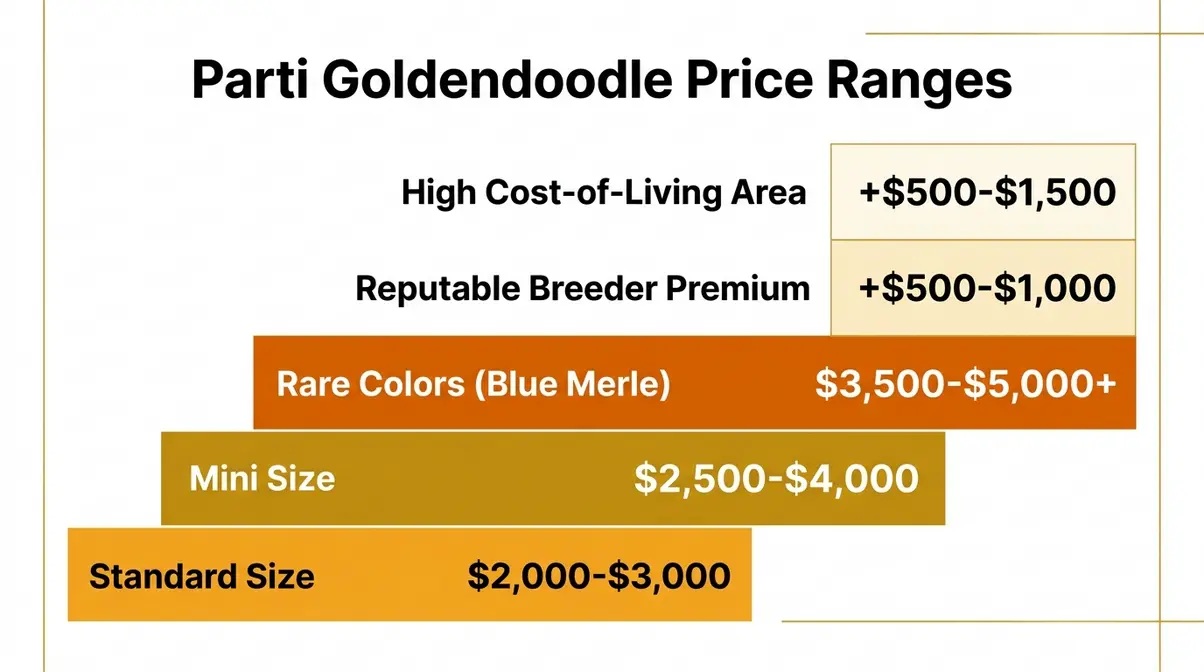
These patterned dogs sit at a clear price premium over solid-colored varieties — and understanding why makes it easier to evaluate whether a specific breeder’s price is fair. According to the Forbes Advisor report on Goldendoodle pricing, puppies typically cost between $2,000 and $4,000, with rare coat colors commanding premium prices (Forbes Advisor). Specialized breeding programs push prices toward the higher end of that range and beyond.
How Much Do They Cost?
These dogs typically cost between $2,000 and $4,000 from a reputable breeder. Rare colors like blue merle can push that number to $5,000 or higher. Insurify’s pricing data confirms that mini varieties from reputable breeders average around $3,000, with specialty patterns at the upper end.
Here’s how specific factors affect the price:
| Factor | Price Impact |
|---|---|
| Standard size | $2,000–$3,000 |
| Mini size | $2,500–$4,000 (higher demand) |
| Rare colors (blue merle) | $3,500–$5,000+ |
| Breeder reputation + health testing | +$500–$1,000 |
| Geographic location (high cost-of-living areas) | +$500–$1,500 |
“These patterned dogs typically cost between $2,000 and $4,000 from reputable breeders, with rare colors like blue merle commanding prices at the higher end or above (Forbes Advisor).”
Prices above $5,000 for a standard size (non-merle) warrant scrutiny. Ask for health testing documentation and generation verification before paying a premium.
Understanding the price is one thing — understanding WHY they cost more helps you evaluate whether a breeder’s price is fair or inflated.
Why Are They More Expensive?
Three forces combine to push prices above solid-colored varieties.
Breeding difficulty. Both parents must carry the recessive sp allele. Breeders must DNA test both parents to confirm they carry the gene before pairing — this testing costs money and limits which dogs can be matched. Not every excellent parent is a viable producer.
Smaller effective litter yield. When two sp carriers are bred, statistically only 25% of puppies will be sp/sp. The remaining 75% will be solid-colored or carriers. Breeders must produce more litters to yield the same number of patterned puppies — a real cost that gets priced into each puppy.
Higher demand. The unique two-toned aesthetic drives premium buyer interest. When searching for a puppy for sale, you’ll consistently find that demand outpaces supply, which gives breeders pricing power that solid-color breeders don’t have.
So they cost more because they’re harder to breed reliably. But just how rare are they in absolute terms?
Are They Rare?
Yes — these patterned dogs are relatively rare compared to solid-colored ones, but they are not impossible to find with the right approach.
The recessive genetics mean only breeders who specifically select for the gene can reliably produce these puppies. Most general breeders don’t test for or breed toward the S-locus gene, making these puppies a smaller fraction of the overall market. The Parti Pattern Pyramid’s top tier is genuinely underrepresented in the broader population.
“Rare” doesn’t mean unobtainable. It means you should expect waitlists of 3–12 months from reputable specialized breeders, and you may need to look beyond your immediate geographic area. The next section covers exactly how to find a reputable breeder.
How to Find and Buy a Puppy
Finding one of these dogs for sale requires more targeted research than finding a standard solid-colored pup. For a complete guide to evaluating any breeder, see our guide to find a reputable Goldendoodle breeder. The Baker Institute for Animal Health at Cornell University emphasizes that understanding canine genetics allows breeders to predict coat types and manage inherited health conditions — a key reason DNA testing should be standard practice (Cornell University’s Baker Institute on canine genetics, Cornell).
“Reputable breeders will always provide DNA test results confirming both parents carry the S-locus (sp) gene — without this, there is no way to guarantee a patterned puppy.”
Questions to Ask a Breeder
Use this numbered checklist with every breeder you contact. Each question includes a “why” so you understand what you’re actually evaluating.
Step 1: Ask About the S-Locus Gene “Do both parents carry the S-locus (sp) gene?” This is the only way to guarantee these puppies are genetically possible. Ask for DNA test documentation from Embark or an equivalent service.
Step 2: Verify the Generation “What generation are your dogs — F1B, F1BB, or multigen?” An F1 cannot have this pattern. Any breeder claiming F1 litters is either misinformed or misrepresenting their dogs. Both are red flags.
Step 3: Request Health Clearances “Can I see health clearances for both parent dogs?” Reputable breeders test for hip dysplasia, progressive retinal atrophy (PRA), and cardiac conditions in parent dogs before breeding.
Step 4: Review Socialization Protocols “What is your socialization protocol for puppies?” Puppies exposed to varied sounds, people, and environments from birth are better adjusted and easier to train.
Step 5: Understand the Waitlist and Deposit “What is your waitlist and deposit process?” Reputable breeders typically have waitlists of 3–12 months and request a refundable deposit of $200–$500. Transparency here signals a legitimate operation.
Step 6: Request a Facility Visit “Can I visit the facility or meet the parents virtually?” Any breeder who refuses a visit or video call is a significant red flag. Ethical breeders welcome transparency.
Knowing the right questions is only half the battle. Knowing the red flags is what protects you from puppy mills and irresponsible breeders.
Red Flags to Watch Out For
When searching for puppies, these warning signs should stop you cold:
- Breeder claims to sell “F1” patterned dogs — Genetically impossible (see the genetics section). No legitimate, knowledgeable breeder would make this claim.
- No DNA testing documentation for the S-locus gene — Without confirmed sp allele testing on both parents, the breeder cannot guarantee the pattern. They may be misrepresenting litters.
- Puppies available immediately with no waitlist — Reputable breeders have demand that consistently exceeds supply. Immediate availability often signals a puppy mill or high-volume operation cutting corners on health testing.
- Refusal to show parent dogs or facility — Transparency is a core trait of ethical breeders. Refusal is a dealbreaker.
- Price significantly below market ($800–$1,200) — This strongly signals health testing shortcuts, misrepresentation of coat pattern, or irresponsible breeding practices.
Start your search with the GANA breeder directory, which lists breeders who have committed to the breed’s standards. It’s the best starting point for finding verified specialized programs.
Once you’re confident in a breeder’s legitimacy, the next decision is whether to find them directly or use a puppy marketplace.
Marketplaces vs. Breeders
Dedicated breeders who specialize in these lines specifically are the gold standard. They DNA test parent dogs, maintain waitlists, and provide health guarantees. The higher price reflects genuine genetic verification and breeding expertise. This is the best option for buyers who want confirmed genetics.
Puppy marketplaces (AKC Marketplace, Petfinder, and similar aggregators) are useful search tools, but they do not vet breeders for genetics specifically. The marketplace listing is not a trust signal — it’s a directory. Apply the same checklist of questions above to any breeder you find through a marketplace.
A note on geography: “puppies for sale near me” searches may yield limited results in rural areas. Be prepared to look out-of-state and arrange transport. Reputable breeders regularly ship puppies via airline with health certificates — this is a normal, accepted practice in the breeding community.
The recommended sequence: start with GANA’s breeder directory → expand to AKC Marketplace → use the checklist above for every contact.
Before you finalize your decision, there are a few realities of ownership worth understanding upfront.
Common Concerns
Across owner forums and breeder communities, a few concerns come up consistently — and they’re worth addressing honestly before you commit. Research published in the NIH study on genetic loci and coat patterns highlights how specific genetic loci interact to create spotted coat patterns in dogs (NIH) — relevant context for understanding the complexity behind coat genetics and maintenance.
Grooming and Coat Maintenance
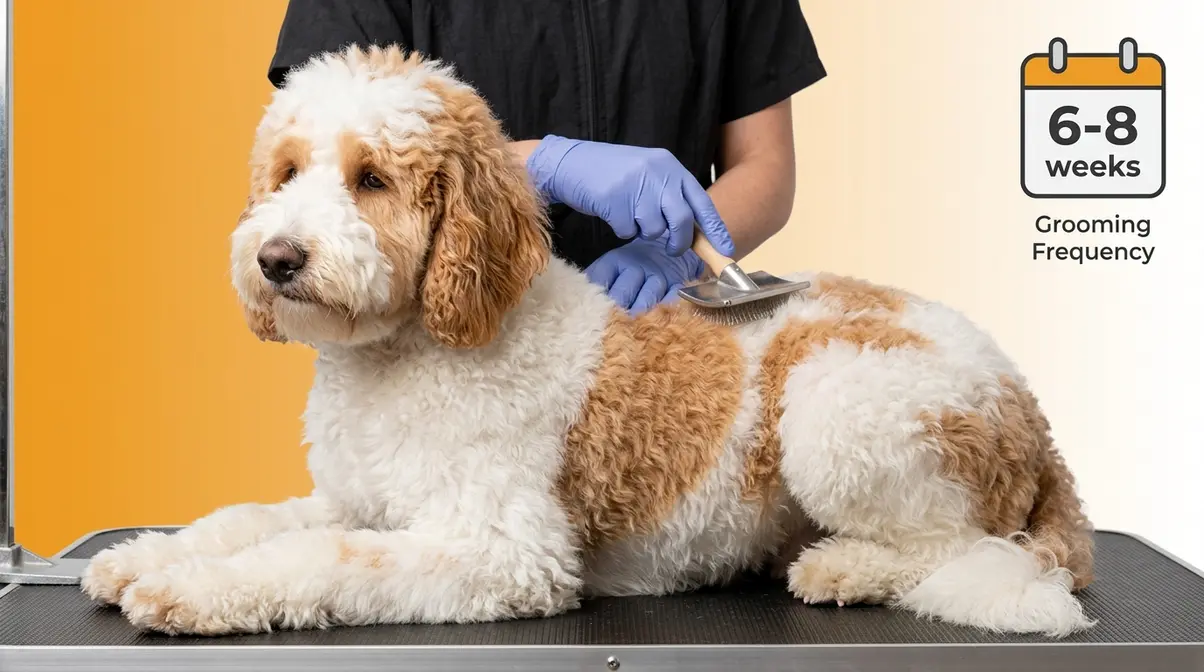
While their unique coat is stunning, these patterned dogs require professional grooming every 6 to 8 weeks and daily brushing to prevent matting.
There are no shortcuts here. One specific consideration: the white portions of the coat show dirt, tear staining, and grass stains more visibly than darker coats. White areas around the muzzle and paws need more frequent spot-cleaning between grooming appointments. This isn’t a dealbreaker — it’s just a reality to plan for.
Coat texture (wavy vs. curly) is determined by generation, not pattern. F1B varieties tend toward curlier coats with less shedding, but curlier coats require more frequent brushing to prevent matting. Budget $75–$150 per professional grooming session depending on your location and the coat length you prefer.
When They May Not Be Right for You
This isn’t a section designed to talk you out of anything. It’s planning information — knowing these scenarios upfront helps you make the right call for your household.
Budget under $1,500: A dog from a reputable breeder is realistically out of reach at this price point. A solid-colored pup or a similar breed (Labradoodle, Cavapoo) may be a better fit without sacrificing the temperament you love.
Timeline urgency (need a puppy within 4–6 weeks): The 3–12 month waitlist typical for reputable breeders makes this difficult. Rushing leads to buying from less reputable sources — which carries real health and behavioral risks. If timing is the priority, a solid-colored dog from a verified breeder may have shorter availability.
Severe allergies: If you need a guaranteed low-shedding dog, a standard F1 (lower Poodle percentage) may not be hypoallergenic enough. An F1BB (87.5% Poodle) is the better choice for allergy sufferers — and the curlier coat is also easier to keep clean.
These aren’t dealbreakers — they’re planning points. If you’ve read this far, you have everything you need to make a confident decision.
Parti Goldendoodle FAQs
What Is It?
A parti Goldendoodle is a dog with a coat that is at least 50% white, featuring solid patches of a second color like apricot or black. The unique pattern is caused by a recessive gene that both parents must carry.
Are They Rare?
Yes, these patterned dogs are relatively rare compared to solid-colored ones. Their rarity comes directly from genetics, as the pattern requires two copies of the recessive S-locus (sp) gene. Most breeders don’t specifically select for this gene, making these puppies less common in the overall market. Expect waitlists of 3–12 months from specialized breeders.
Are They More Expensive?
Generally, yes. These dogs cost between $2,000 and $4,000 from reputable breeders, according to Forbes Advisor. This premium reflects breeding difficulty, as breeders must DNA test both parents and produce multiple litters to get a reliable number of patterned puppies. Rare colors like blue merle can exceed $5,000. Ultimately, the unique two-toned look drives higher demand, giving breeders genuine pricing power.
Do They Like Water?
Most enjoy water and take to swimming naturally, thanks to their Golden Retriever heritage. Many will happily splash in pools, lakes, or the ocean with minimal encouragement. The coat pattern has no effect whatsoever on their affinity for swimming.
What Is the Calmest Doodle?
The Bernedoodle (Bernese Mountain Dog × Poodle) is widely regarded as one of the calmest doodle breeds. Among Goldendoodle types, F1BB and multigen lines bred from calmer Golden Retrievers tend to be the most settled day-to-day. Temperament depends heavily on breeding selection and early socialization. Coat color does not influence calmness at all.
What Is the Rarest Color?
The blue merle is among the rarest color combinations, requiring both the piebald gene and the merle gene to align simultaneously. Phantom variations (three-color coats with specific markings) are equally rare. In solid-colored dogs, true black is considered the rarest.
What Is the Least Wanted Dog?
Surveys and shelter data consistently show that large, black, short-haired mixed-breed dogs are the least adopted from shelters. This phenomenon is sometimes called “big black dog syndrome.” It is entirely unrelated to Goldendoodles, which are among the most popular designer dog breeds in the United States. In fact, the distinctive two-toned coat actually makes this variety highly sought-after.
Is This Dog Right for You?
For buyers who want a dog that genuinely turns heads, this patterned pup delivers a rare and visually striking companion. According to Devoted to Dog’s review of breeder pricing and Forbes Advisor data, expect to pay $2,000–$4,000 from a reputable breeder, wait 3–12 months on a waitlist, and verify that both parent dogs carry the S-locus gene. The pattern carries no inherent health risk — it’s simply the result of two recessive sp alleles aligning, making these dogs as healthy as any other variety.
Use The Parti Pattern Pyramid to stay oriented as you browse photos and talk to breeders: Abstract (<30% white), Tuxedo (30–50% white), and Parti (>50% white). If a breeder can’t tell you which tier a puppy falls into — or claims to sell F1 litters — move on. The framework protects you from misinformation and helps you ask the right questions every time.
Ready to take the next step? Start by contacting GANA-affiliated breeders who specialize in these lines, prepare your six breeder questions from this guide, and set a realistic budget and timeline. The waitlist is worth it — owners consistently report that the unique coat pattern is even more striking in person than in photos.