
“Anticipatory grief is very real. If you look up a golden retriever’s lifespan, it says 10-12 years. Bruce is 10 years old.”
If you’ve ever done that mental math, counting backwards from 10 or 12, wondering how many years you have left, you are not alone. That number is real, but it tells only part of the story.
In this guide, you’ll learn exactly what the average golden retriever life expectancy is, why cancer weighs so heavily on it, what health risks are most dangerous, and, most importantly, what you can do right now to give your Golden the longest, healthiest life possible. We cover everything from the latest genetics research at UC Davis to the signs that your dog is entering their senior years.
2026 average
all breeds, Hoffman 2013
Kent et al., 2018
UC Davis research
⚠️ Veterinary Disclaimer: This article is for informational purposes only and does not constitute veterinary medical advice. Always consult a qualified veterinarian regarding your dog’s health, diagnosis, or treatment.
Author Credentials
📝 Written by: Coral Drake
✅ Reviewed by: Brianna York, Former Veterinary Technician
📅 Last updated: 4 May 2026
ℹ️ Transparency Notice
This article covers Golden Retriever lifespan based on AKC, GRCA, UC Davis, and peer-reviewed veterinary research. All medical claims have been verified by our editorial team and reviewed for accuracy. Our goal is to help you understand realistic life expectancy and the proven factors that extend a Golden Retriever’s life.
How Long Do Golden Retrievers Live? The Real Numbers
The average golden retriever life expectancy is 10 to 12 years. That range represents a statistical average, meaning individual dogs vary considerably, from under 10 years to 14 or beyond. The average is pulled lower by the breed’s exceptionally high cancer rates, not because all Goldens age poorly. Some dogs with excellent genetics, attentive care, and good fortune live well into their teens. Understanding this distribution is the first step to becoming a more proactive owner.
But here’s what many owners don’t know: Golden Retrievers haven’t always lived this short. Something changed in the last 50 years, and understanding what changed is the first step to fighting back. That story begins in the next section, but first, let’s look at the numbers your specific dog is working with.
What Is the Average Golden Retriever Lifespan?

The average life expectancy of a golden retriever is 10 to 12 years, according to PetMD, a trusted veterinary reference site, and CodaPet, a veterinary care resource. Think of this as a statistical average, not a guarantee, it means roughly half of all Goldens live shorter lives and half live longer ones.
What makes this average feel low is its distribution. Some Golden Retrievers pass away under 11 years old, often from cancer diagnosed in middle age. Others live to 13 or 14 years with excellent care. The life expectancy of a golden retriever dog is genuinely variable, and the high end of that range is achievable with proactive management.
If your Golden is 8 years old today, they are statistically entering the second half of their expected lifespan. This is precisely the time to be most proactive, scheduling more frequent vet visits, monitoring for early cancer signs, and paying close attention to weight and mobility. For guidance on caring for a senior Golden Retriever, see our dedicated resource on what to expect in those later years.
| Golden Retriever Type / Source | Average Lifespan | Notes |
|---|---|---|
| American Golden Retriever | 10-12 years | Modern AKC standard average (UC Davis, 2025) |
| English Cream Golden Retriever | 10-12 years | Same as standard, despite marketing claims |
| Field-bred Golden Retriever | 11-13 years | Slightly longer; less inbreeding, more activity |
| Female Golden Retriever | 10-12 years | Some studies find females live slightly longer; the gap is small |
| Male Golden Retriever | 10-12 years | Any gap versus females is small |
| Goldendoodle (Golden × Poodle) | 10-15 years | Mixed breed, often longer than purebred Golden |
Within that 10-12 year range, your Golden’s sex can play a small but measurable role, here’s what the research shows.
Do Female Goldens Live Longer Than Males?
Female Golden Retrievers tend to live slightly longer than males in some studies, but the difference is modest, and individual variation, driven by genetics, weight, and care quality, is far greater than any sex-based gap.
Spay/neuter status is part of this picture. In a University of Georgia study of more than 40,000 dogs of all breeds, sterilization was associated with a 26.3% longer life expectancy in females and 13.8% in males (Hoffman et al., PLoS ONE, 2013). The full picture of spay/neuter timing, including why when you do it matters as much as whether you do it, is covered in the spaying and neutering section below.
If you have a male Golden, don’t be discouraged by this statistic. The difference is small, and the lifestyle factors covered throughout this guide matter far more than sex. A well-cared-for male Golden Retriever can absolutely outlive a female with less attentive care.
And while most Goldens live 10-12 years, a small number have broken records, and their stories offer real insight into what’s possible.
The Longest-Living Golden Retrievers on Record

The most remarkable Golden Retriever lifespan on record belongs to Augie (August), a female Golden from Oakland, Tennessee, who lived to 20 years and 11 months old, born April 24, 2000, and passing peacefully in early 2021. Augie is the oldest verified Golden Retriever ever documented, confirmed by GoldHeart Golden Retriever Rescue and reported by outlets including the Smithsonian Magazine and Good Morning America.
Her owners credited consistent veterinary care, a healthy weight throughout her life, and an active lifestyle. These are precisely the same factors this guide covers, which is not a coincidence.
Cases like Augie’s show us what’s possible when genetics, care, and good fortune align. Do not take this as a promise that your Golden will live to 20, that would be exceptional by any measure. But Augie’s story proves the breed has more genetic potential than the current 10-12 year average suggests. That gap between potential and reality has a name, and it’s the subject of the next section.
Why Don’t Golden Retrievers Live as Long as They Used To?
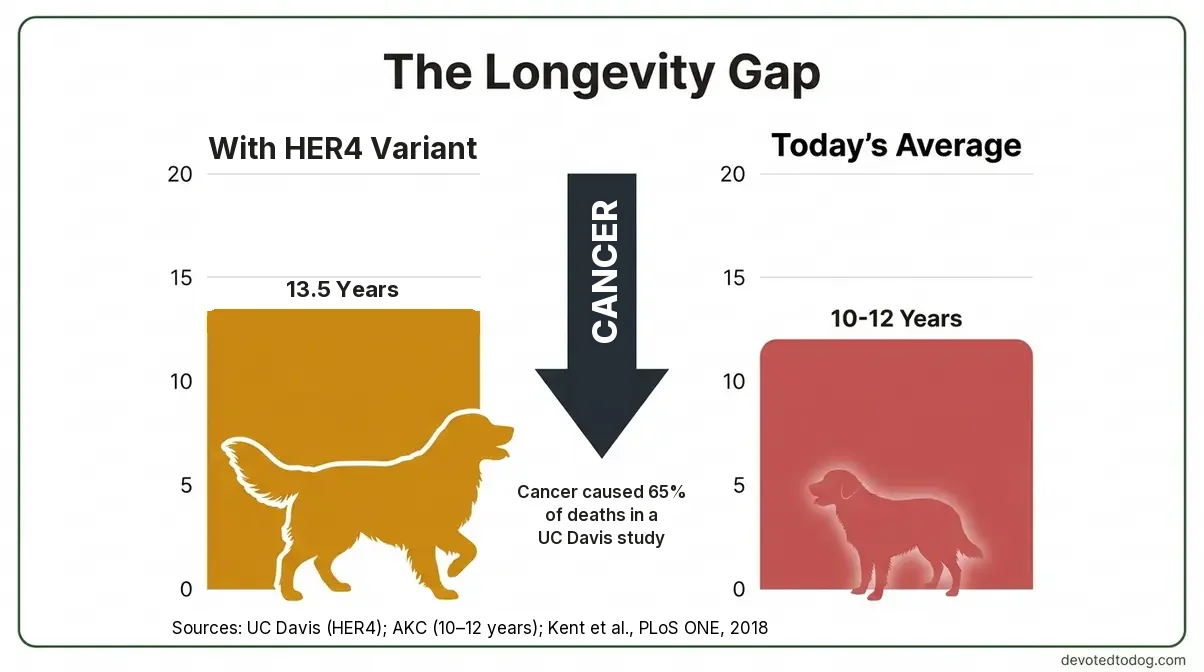
Today the average Golden Retriever lives 10 to 12 years. We call the distance between that average and the longer lives some Goldens reach The Longevity Gap. Cancer is its main driver, and researchers are still working to understand and reduce it. Understanding it is the first step to fighting back.
How Long Did Golden Retrievers Live in the 1970s?
There is no reliable published figure for how long Golden Retrievers lived in the 1970s. The often-repeated claim that the breed averaged 16 to 17 years then is not backed by any study we could find, and the web page this guide used to cite for it is no longer online. What the evidence does show is that cancer is the leading cause of death in U.S. Golden Retrievers today.
To put that in human terms: it’s as if the average human lifespan had dropped from 80 years to around 48 years within a single generation. That scale of change is not a rounding error, it is a genuine biological shift in the breed.
Whether cancer has become more common in the breed over time is hard to measure, because older data are sparse and diagnostics have improved. The breed’s high cancer burden is the reason the Morris Animal Foundation launched a long-term study of more than 3,000 Golden Retrievers.
That cancer burden prompted one of the largest and most important dog health studies in history, and what researchers found may change how we care for Golden Retrievers forever.
The Morris Animal Foundation Study: What the Data Shows
The Morris Animal Foundation, a nonprofit dedicated to advancing animal health through scientific research, launched the Golden Retriever Lifetime Study to track a comprehensive study tracking over 3,000 Golden Retrievers from puppyhood to death, identifying nutritional, environmental, and genetic risk factors for cancer (Morris Animal Foundation). As of 2026, the study has been running for over 14 years and is producing findings that are already influencing veterinary recommendations worldwide.
A necropsy study documenting a 65% cancer mortality rate among 652 Golden Retrievers at a U.S. veterinary academic hospital provides the most authoritative single data point on the breed’s cancer burden (Kent et al., PLoS ONE, 2018). Two independent lines of evidence, the Morris Foundation ongoing study and this necropsy analysis, arrive at the same conclusion: cancer is killing Golden Retrievers at an extraordinary rate.
The study is still ongoing. Early findings have already shifted thinking on environmental exposures, pesticide use, and dietary factors. Why so many Goldens die of cancer is the central question this research is designed to answer.
So what exactly is killing Golden Retrievers at such high rates? The answer is cancer, and understanding the specific types that affect this breed is critical for every owner.
What Are the Leading Causes of Death in Golden Retrievers?
Cancer caused 65% of Golden Retriever deaths in a UC Davis study (Kent et al., PLoS ONE, 2018), making it the single most important health threat owners need to understand. This cancer burden is the primary engine of The Longevity Gap. Knowing which cancers are most dangerous, and what warning signs to watch for, gives you a real advantage in protecting your dog.
Cancer: The Number One Cause of Death
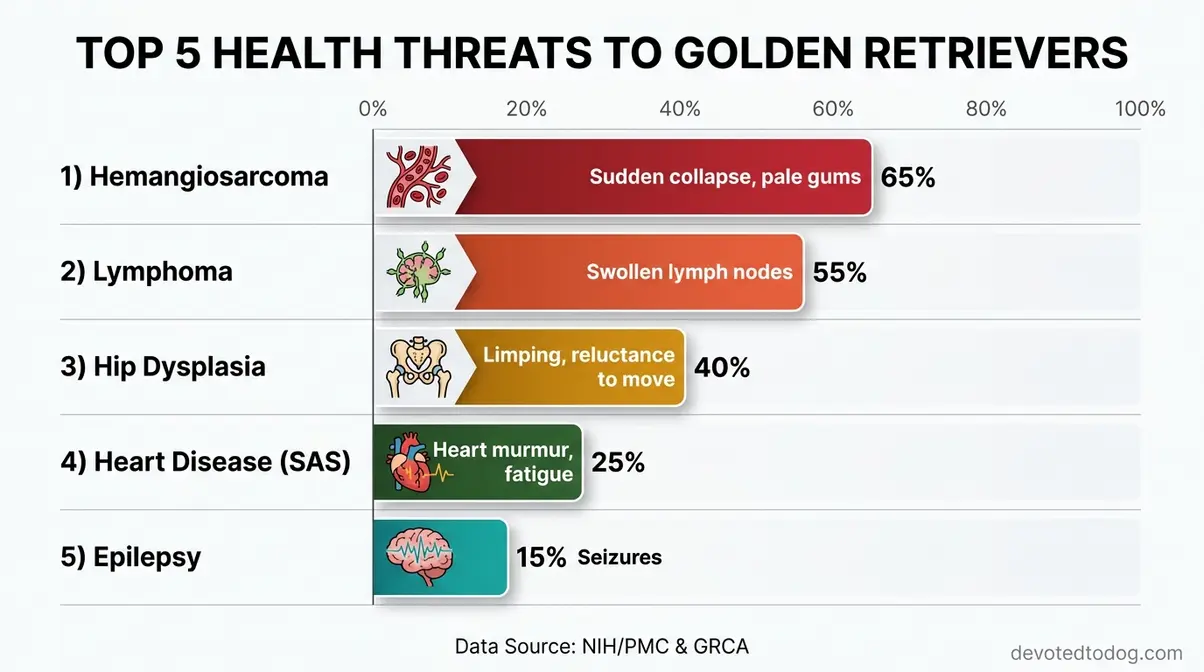
Cancer kills an estimated 60 percent of Golden Retrievers, according to the Golden Retriever Club of America (GRCA), the breed’s official U.S. organization. This estimate is consistent with the independent necropsy study documenting a 65% cancer mortality rate among 652 Golden Retrievers at a U.S. veterinary academic hospital (Kent et al., PLoS ONE, 2018). When two independent sources from different methodologies arrive at similar numbers, the finding is reliable.
The most common cancer types are hemangiosarcoma (cancer of the blood vessel walls) and lymphoma (cancer of the lymphatic system). Both are introduced here and covered in detail below. For a complete guide to recognizing early warning signs of these conditions, see our full breakdown of Golden Retriever health warning signs.
Knowing this statistic is not a reason to despair, it’s a reason to be proactive. The life expectancy of a Golden Retriever with cancer depends heavily on how early the disease is caught. Early detection dramatically changes outcomes, and the steps in this guide are designed to help you catch problems before they become crises.
Of all the cancers that affect this breed, one is particularly feared, and for good reason. It’s called hemangiosarcoma, and it earns its nickname: the silent killer.
Hemangiosarcoma, The Silent Killer Explained
Hemangiosarcoma is a cancer of the blood vessel walls, it is called the “silent killer” in Golden Retrievers because tumors can grow for months inside the spleen, heart, or liver without producing any visible symptoms. The cancer often only becomes apparent when a tumor ruptures, causing sudden, life-threatening internal bleeding and collapse. By that point, the window for intervention is extremely narrow.
This is not a rare edge case. The necropsy study documenting a 65% cancer mortality rate among Golden Retrievers identified hemangiosarcoma as one of the most common cancers in the breed (Kent et al., PLoS ONE, 2018). Hemangiosarcoma is among the most common cancers documented in Golden Retriever mortality studies, and it is a major contributor to deaths that appear sudden and unexplained.
Warning signs that owners can watch for, even if subtle, include sudden weakness or unexplained collapse, pale or white gums, a visibly distended or painful abdomen, rapid or labored breathing, and extreme fatigue that appears without obvious cause. Any of these signs in a Golden Retriever over age 8 warrant immediate veterinary attention. There is also a genetic dimension to this disease: UC Davis researchers identified the HER4 gene variant as associated with better survival outcomes, full details in the HER4 section below.
Hemangiosarcoma is not the only cancer Golden Retrievers face. Lymphoma is another serious threat, and unlike hemangiosarcoma, it does respond to treatment in many cases.
Other Serious Conditions: Lymphoma, Hip Dysplasia, and Heart Disease
Beyond hemangiosarcoma, Golden Retrievers face several other significant health conditions. Understanding all of them helps owners build a complete picture of their dog’s risk profile.
- Lymphoma (cancer of the lymphatic system): The median survival time for canine lymphoma with CHOP chemotherapy (the standard treatment protocol) is 9 to 13 months (Purdue University College of Veterinary Medicine). Golden retriever lymphoma life expectancy depends significantly on the stage at diagnosis, dogs caught early respond better. Lymphoma is often more treatable than hemangiosarcoma, and an enlarged lymph node detected at a routine exam can make a meaningful difference.
- Hip dysplasia (a malformation of the hip joint): This condition doesn’t directly shorten life but reduces quality of life and activity level, which indirectly affects overall health. It is common in large breeds and can be managed with weight control, physical therapy, and in some cases surgery.
- Subvalvular aortic stenosis (a narrowing of the heart’s aortic valve): This heart condition is more prevalent in Golden Retrievers than in many other breeds. Severe cases can cause sudden cardiac events. Annual cardiac auscultation (listening to the heart with a stethoscope) at wellness exams can detect murmurs early.
- Epilepsy: Idiopathic epilepsy (seizures with no identifiable structural cause) is also more common in Goldens than in the general dog population. It is manageable with medication in most cases.
Knowing the risks is essential, but so is understanding that not all Golden Retrievers face the same level of risk. Several specific factors can shift your dog’s odds significantly.
What Factors Affect Your Golden Retriever’s Lifespan?
Lifespan is not uniform across all Golden Retrievers. The breed’s cancer predisposition creates a baseline risk, but several variables, coat variety, spay/neuter timing, and weight, create measurable differences between individual dogs. These factors help explain why some Goldens live well past the 10-12 year average while others fall short of it. Understanding which variables apply to your specific dog is genuinely empowering.
English Cream vs. American Golden Retrievers: Is There a Difference?
English Cream Golden Retrievers, also called European Goldens or White Goldens, a variety bred primarily in the UK and Europe, are often marketed by breeders as living 12 to 15 years with lower cancer rates than their American counterparts. The reality is more nuanced than these claims suggest.
No large-scale peer-reviewed study definitively proves that English Cream Goldens live significantly longer than American Goldens. The major ongoing research, including the Morris Animal Foundation’s Golden Retriever Lifetime Study, does not separate dogs by coat color or regional breeding line. The claim that European lines have lower cancer rates appears primarily on breeder websites, not in peer-reviewed literature. Some sources suggest a slightly lower cancer incidence in European lines, but the data is not robust enough to be definitive.
The relevant biological factor, if any difference exists, is not coat color. It is the underlying genetic breeding pool. European dogs were developed with a somewhat different lineage, which may influence cancer predisposition at the population level. However, the individual dog’s genetics, care quality, weight management, and veterinary history matter far more than regional origin. If you’re choosing between an English Cream and an American Golden, do not base that decision on lifespan claims alone, ask the breeder about health testing, OFA certifications, and the cancer history of the lineage. Specifically, ask to see both parents’ clearances for hips, elbows, heart, and eyes. The results are public: you can look up each parent by registered name in the Orthopedic Foundation for Animals (OFA) database.
Whatever variety of Golden you have, two of the most impactful decisions you can make about their lifespan are the timing of spaying or neutering, and how well you manage their weight.
The Impact of Spaying and Neutering on Longevity
In a University of Georgia study of more than 40,000 dogs of all breeds, spayed females had a 26.3% longer life expectancy than intact females, and neutered males a 13.8% longer one than intact males (Hoffman et al., PLoS ONE, 2013). The study did not report Golden Retrievers separately, so these percentages cannot be turned into extra years for a Golden. In Golden Retrievers specifically, a UC Davis study found that spayed females were older at death than intact females, with no such difference in males (Kent et al., PLoS ONE, 2018).
However, timing matters significantly. For Golden Retrievers specifically, research suggests that early spaying or neutering, before 12 to 18 months, may increase the risk of certain orthopedic conditions and some cancers, including lymphoma. The veterinary recommendation has shifted toward waiting until the dog is more fully physically developed, but the optimal window varies by individual dog and health history. This is not a decision to make based on convenience alone.
The key takeaway: if your Golden has not yet been spayed or neutered, discuss timing with your veterinarian rather than defaulting to the earliest available date. For a detailed breakdown of the tradeoffs, see our guide to the spaying and neutering timeline for Golden Retrievers. If your dog has already been spayed or neutered, the timing decision is behind you, focus on the controllable factors ahead.
Beyond spaying and neutering, one of the most underrated factors in your Golden’s lifespan is something entirely within your control every single day: their weight.
How Your Dog’s Weight Affects How Long They Live
Overweight dogs live up to two and a half years shorter than dogs at an ideal body weight, according to research from the University of Liverpool (University of Liverpool, 2019). For a Golden Retriever with a 10-12 year average lifespan, losing 2.5 years to preventable obesity is an enormous cost.
Golden Retrievers are highly food-motivated and genuinely prone to weight gain. Owners often underestimate how overweight their dog is, because the excess weight accumulates gradually and the dog’s coat can obscure it. A quick at-home check: run your hands along your dog’s ribcage. You should be able to feel individual ribs without pressing hard. If you can’t, your Golden is likely carrying excess weight.
Ask your vet to formally assess your dog’s body condition score (BCS) at every annual visit. A score of 4-5 out of 9 is ideal. This single conversation, “what is my dog’s body condition score, and what should I be feeding them?”, is one of the most impactful things you can do at a routine wellness exam.
Now that you understand what threatens your Golden’s lifespan, let’s talk about what you can actually do about it, because the research is more encouraging than most owners realize.
How Can You Help Your Golden Retriever Live Longer?
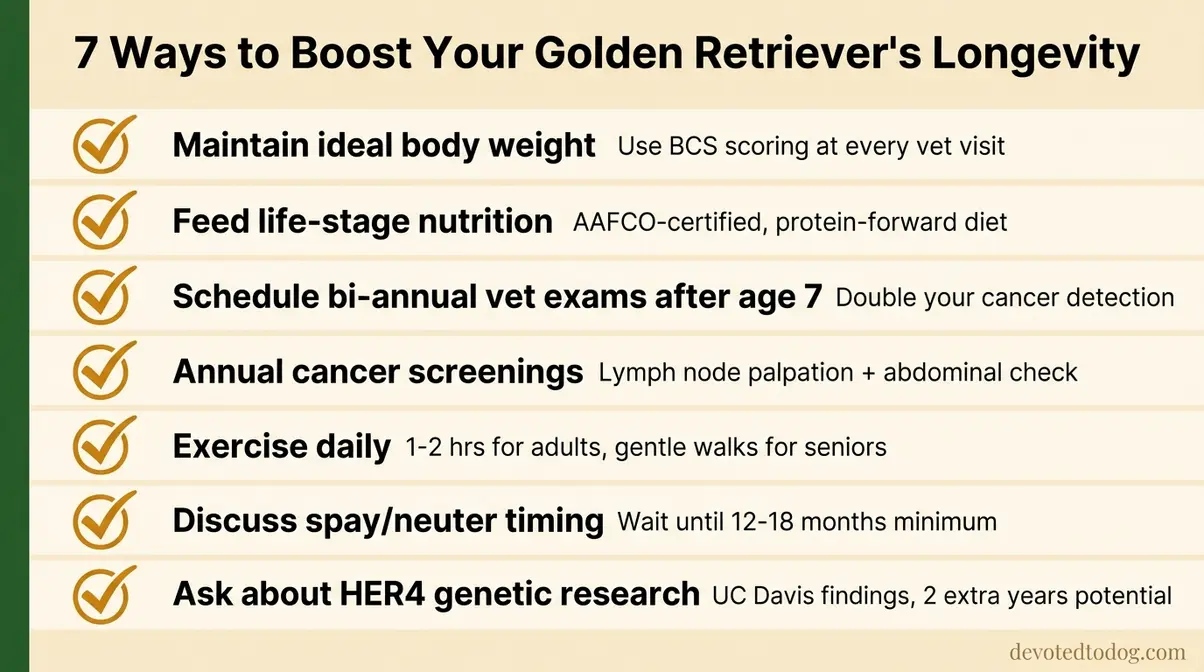
This is the section that answers the question Golden Retriever owners ask most often: “What’s your secret?” The honest answer is that no single factor extends a Golden’s life, it’s a combination of nutrition, appropriate exercise, consistent veterinary care, and staying current with emerging research. Together, these form a concrete action plan that any owner can follow, starting today.
Feed Your Golden Retriever for a Long Life
Nutrition is one of the most controllable longevity factors available to every owner. A high-quality, protein-forward diet appropriate to your dog’s life stage, puppy, adult, or senior, supports healthy organ function, muscle maintenance, and immune health. Avoiding overfeeding is equally critical. As noted earlier, the University of Liverpool research found that excess weight can shorten a dog’s life by up to 2.5 years. For a Golden, that is not a small number.
When evaluating dog food, look for products that carry an AAFCO (Association of American Feed Control Officials) nutritional adequacy statement. Avoid foods with excessive fillers, artificial preservatives, or vague ingredient listings like “meat by-products” without a named protein source. Quality matters, and it matters more as your dog ages.
Senior Golden Retrievers (age 7 and older) have specific nutritional needs that differ from adults. They generally require lower calorie density to prevent weight gain as activity levels decrease, higher levels of joint support nutrients like glucosamine and chondroitin, and sometimes higher-quality protein to maintain muscle mass. What to do right now: Ask your vet to confirm your Golden is at an ideal body weight at your next visit. If they’re overweight, request a specific daily calorie target. For personalized recommendations, explore the best dog food for Golden Retrievers by life stage.
Food fuels a long life, but exercise is what keeps the body strong enough to use it well.
Exercise: The Right Amount at Every Age
Exercise requirements for a healthy Golden Retriever change meaningfully across their lifespan, and matching activity to life stage prevents both under-conditioning and injury.
Adult Goldens (ages 2-7) need 1 to 2 hours of moderate exercise per day. This includes brisk walks, swimming (which is exceptionally easy on joints), and games of fetch, activities this breed is naturally built for and genuinely loves. Consistent daily activity at this stage builds cardiovascular health and maintains muscle mass that will matter greatly in the senior years.
Senior Goldens (age 7 and older) should remain active but at a lower intensity. Short, frequent walks are more beneficial than a single long run that strains aging joints. Swimming is particularly valuable for seniors managing hip dysplasia, as it provides full-body exercise without joint impact. Aim for two to three gentle walks daily rather than one demanding outing.
Mental stimulation deserves equal attention, especially as dogs age. Puzzle feeders, training sessions (old dogs absolutely learn new tricks), and nose work exercises maintain cognitive engagement and are associated with better mental health and quality of life in senior dogs. What to do right now: Check whether your Golden is maintaining a healthy weight despite their current exercise level. If they’re gaining weight, increase activity before reducing food. For a complete breakdown, see our guide to age-specific exercise recommendations for Golden Retrievers.
Exercise keeps the body strong. But it’s your veterinarian who can catch the threats that aren’t yet visible, and for Golden Retrievers, regular screenings can be life-saving.
Preventive Veterinary Care and Cancer Screenings
Annual veterinary wellness exams are the single most important preventive step for Golden Retrievers, particularly those over age 7. For Goldens aged 8 and older, many veterinarians now recommend bi-annual exams given the breed’s elevated cancer risk. Twice-yearly visits double the chances of catching a developing tumor at a stage where intervention is still possible.
At each exam, ask your vet specifically to palpate the lymph nodes (a quick manual check for lymphoma), assess the spleen via abdominal palpation, and note any new lumps or masses. These simple, non-invasive checks take minutes and can detect hemangiosarcoma and lymphoma at earlier stages than waiting for symptoms to appear.
You can add a simple check of your own between visits. Once a month, run your hands slowly over your Golden’s whole body, including the small lymph nodes under the jaw, in the armpits, and behind the knees. You’re not diagnosing anything; you’re learning what “normal” feels like for your dog. If you find a new lump or swelling, note the date and its rough size, and tell your vet promptly instead of waiting for the next scheduled exam.
Blood work panels, urinalysis, and chest X-rays are increasingly recommended as routine screening tools for senior Goldens, not just when something seems wrong. The earlier a cancer is found, the more treatment options are available and the better the outcome. What to do right now: Schedule your Golden’s next wellness exam if it has been more than 12 months. If your dog is over 8, request a “senior wellness panel” and ask specifically about cancer screening options. Every dog is different, your vet is the best person to design a screening schedule for your specific Golden.
While routine care can extend your Golden’s life, one of the most exciting developments in canine health research offers a glimpse of something even more powerful: the possibility of a genetic advantage.
The UC Davis HER4 Gene Discovery, A Reason for Hope
Golden Retrievers with the beneficial HER4 gene variant lived an average of 13.5 years compared to 11.6 years in dogs without it, according to UC Davis research on golden retriever longevity from UC Davis School of Veterinary Medicine, one of the top veterinary research institutions in the world. That’s nearly two extra years of life, linked to a single genetic marker. The HER4 gene variant, a specific genetic marker identified by UC Davis researchers, was discovered by comparing DNA from Golden Retrievers who lived to age 14 or older against those who died before age 12. The effect was particularly pronounced in female dogs.
What this means for owners today: genetic testing for the HER4 variant is not yet commercially available as a standard consumer test. However, the research is actively progressing, and veterinary geneticists are working to understand how this variant influences cancer resistance. Ask your vet about developments in this area, the field is moving quickly.
This research suggests Golden Retrievers have the genetic potential to live longer. The Longevity Gap is not a fixed ceiling, it is a problem that science is actively working to solve. The UC Davis HER4 findings, the Morris Animal Foundation’s ongoing 3,000-dog study, and the practical steps in this guide all point toward the same conclusion: the gap can be narrowed. What to do right now: Mention the UC Davis HER4 research to your vet at your next visit. Ask whether any genetic health screening is currently appropriate for your dog.
Even with the best care in the world, every Golden Retriever will eventually enter their senior years. Knowing what to expect, and what to watch for, is one of the most loving things you can do.
What Are the Signs of Aging and End of Life?
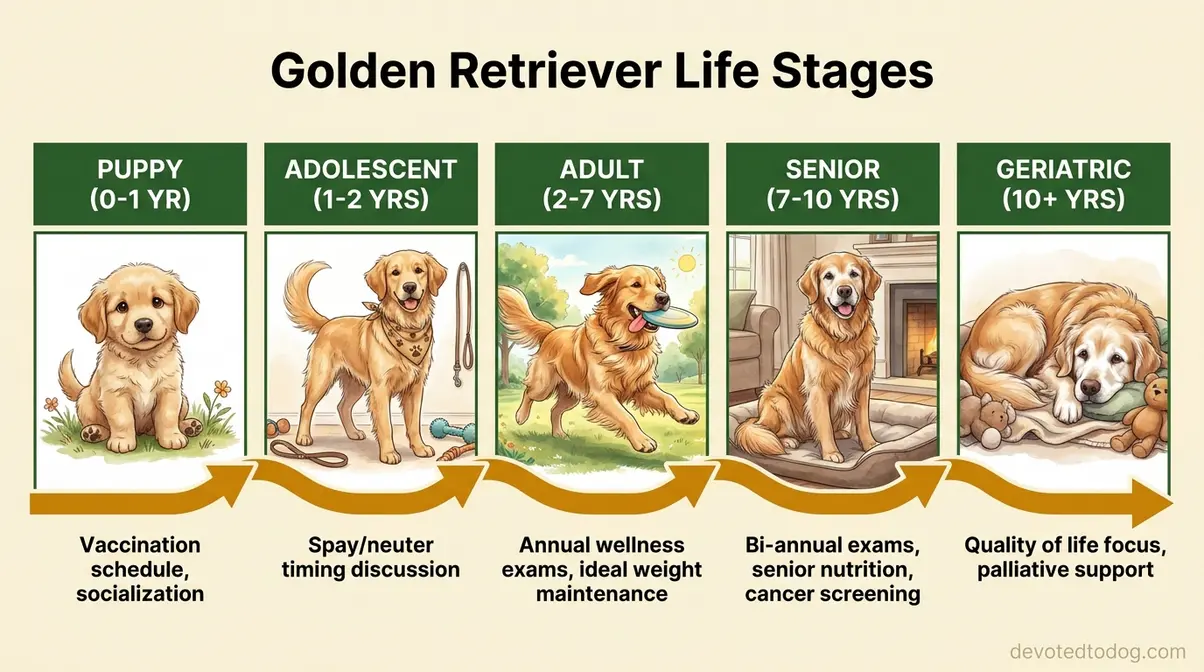
Golden Retrievers are considered senior dogs at age 7-8, meaning the second half of their expected lifespan is when proactive care matters most. This section is for owners who are watching their dog change, slowing down, sleeping more, showing the first gray hairs around the muzzle. Some of what we see in older Goldens is the direct result of The Longevity Gap, a body under more pressure from cancer risk than it was designed to face. Understanding the difference between normal aging and a health problem is one of the most practical things an owner can know.
When Is a Golden Retriever Considered a Senior?
Yes, Golden Retrievers are generally classified as senior dogs starting around age 7 to 8. As a large breed typically weighing 55 to 75 pounds, Goldens age more quickly than small dogs, who may not be considered senior until 10 to 12 years old. The biology of larger bodies simply ages faster. That’s also why the old “multiply by 7” rule doesn’t work well for Goldens. Large breeds race through their early years faster than the formula suggests, so treat it as a rough guide at best.
“Senior” does not mean “sick” or “in decline.” Many 7 and 8-year-old Goldens are still showing no signs of slowing down, highly active, mentally sharp, and thoroughly enjoying life. The senior classification simply means they have entered a life stage where proactive health monitoring becomes more important, not that something is wrong.
Starting at age 7 to 8, owners should consider shifting to bi-annual vet visits, transitioning to senior-formula food if their vet recommends it, and paying closer attention to mobility, energy levels, and weight. For a complete guide to what to expect as your Golden Retriever ages, we cover the full senior care picture in detail.
Once your Golden enters their senior years, certain changes are entirely normal, and knowing the difference between normal aging and a health problem can save a lot of unnecessary worry.
Normal Signs of Aging in Golden Retrievers
Many changes in older Golden Retrievers are entirely expected and do not require emergency attention, though they are worth mentioning at regular checkups. Normal signs of aging include:
- Graying muzzle and coat, typically begins around age 7-8 and progresses gradually
- Reduced energy and activity levels, a senior Golden may prefer two shorter walks over one long one
- Sleeping more, older dogs genuinely need more rest; this is physiologically normal
- Mild stiffness after rest, especially noticeable in the morning; often related to mild arthritis
- Slight weight changes, metabolism slows with age; monitor closely and adjust food intake accordingly
- Changes in coat texture, the coat may thin slightly or become coarser over time
Cognitive changes are also common and manageable. Occasional confusion, disorientation, changes in sleep patterns, or apparent forgetfulness may indicate Canine Cognitive Dysfunction (CCD), a condition similar to dementia in humans. CCD is not curable, but it is manageable with veterinary guidance, environmental enrichment, and in some cases medication.
The key message: these signs mean your dog is aging, not that something is acutely wrong. The goal during this phase is comfort, quality of life, and early detection of anything that goes beyond normal aging.
But some signs go beyond normal aging, and when they appear, they deserve immediate attention from your veterinarian.
Signs That Your Golden May Be Nearing the End of Life
Signs that a Golden Retriever may be nearing the end of life can appear gradually or suddenly, and they differ meaningfully from normal aging. Watch for:
- Significant weight loss despite eating normally, or complete loss of appetite
- Extreme fatigue and withdrawal, spending most of the day sleeping, losing interest in family interaction
- Loss of interest in food or water for more than 24 hours
- Difficulty breathing at rest or with minimal exertion
- Loss of bladder or bowel control without any prior incontinence history
- Inability to stand, walk, or maintain balance
- Apparent pain or distress, whimpering, reluctance to be touched, unusual posture
These signs are not always linear. Some dogs have good days and difficult days. The most useful question to ask yourself, and to discuss with your vet, is: “Is my dog experiencing more good moments than difficult ones?” Quality of life matters alongside length of life, and your veterinarian can help you assess both honestly.
If you are reading this section because you are worried about your own Golden right now, know that what you’re feeling, that anticipatory grief, is real, and it is a sign of how deeply you love your dog. You are not overreacting. Your vet is your most important partner in these conversations, and they have had them many times with owners who feel exactly as you do now. If your Golden is showing several of these signs, please speak with your veterinarian as soon as possible. They can help you assess your dog’s quality of life and discuss your options with compassion and expertise.
What Is the Life Expectancy of Golden Retriever Mixes?
Golden Retriever mixes such as the Goldador and Goldendoodle typically live 10-15 years, often benefiting from hybrid vigor that may reduce cancer risk compared to purebred Goldens. Hybrid vigor, sometimes called heterosis, is the phenomenon where mixed-breed dogs benefit from a wider genetic gene pool, which can reduce the prevalence of breed-specific conditions. It is real, but it is not a guarantee. For owners of mixed-breed Goldens, the same preventive care principles apply.
Golden Retriever + Lab Mix (Goldador): 10-12 Years
The Goldador, a cross between a Golden Retriever and a Labrador Retriever, typically lives 10 to 12 years, similar to both parent breeds. Labrador Retrievers also average 10 to 12 years, so this pairing does not produce a significant lifespan advantage from hybrid vigor. The gene pools overlap substantially in terms of health predispositions.
Both parent breeds share key health vulnerabilities: joint issues (hip and elbow dysplasia), a tendency toward obesity, and some cancer predisposition. If you have a Goldador, treat their health care exactly as you would a purebred Golden, the same cancer monitoring, weight management, and annual wellness exam schedule applies. The lab golden retriever mix life expectancy mirrors the purebred range, making proactive care just as essential.
Goldendoodles, the Golden Retriever + Poodle cross, tell a slightly different story, with some living notably longer.
Goldendoodle: 10-15 Years
Goldendoodles, a Golden Retriever and Poodle cross, typically live 10 to 15 years, a broader and somewhat longer range than purebred Goldens. The Poodle’s longer average lifespan (12 to 15 years) contributes to this extension. Some Goldendoodles, particularly those with a higher proportion of Poodle genetics, may also have a lower cancer rate than purebred Goldens, though this varies by individual lineage and is not guaranteed.
Hybrid vigor is a real but inconsistent phenomenon in this pairing. It does not promise a longer life, but it can reduce the prevalence of breed-specific genetic conditions. The lifespan of Goldendoodle mixes depends heavily on the same factors that affect any Golden-related breed: weight, diet, exercise, and consistent veterinary care. For a comprehensive breakdown, see our complete guide to Goldendoodle lifespan.
Mini Golden Retrievers: It Depends on the Mix
A “Mini Golden Retriever” is not a recognized breed. These dogs are usually Golden mixes, most often crossed with a Cocker Spaniel or a Poodle, so there is no breed-level lifespan data for them the way there is for purebred Goldens. Their life expectancy depends on the specific mix and on the health testing behind both parents. If you’re considering one, ask the breeder for the same health clearances you’d expect for a purebred Golden, and plan on the same preventive care.
How Does the Golden Retriever Lifespan Compare to Other Breeds?
As a large breed, the Golden Retriever sits in the middle of the pack. Across dog breeds, smaller bodies generally age more slowly, so many small breeds outlive Goldens, while the giant breeds usually have shorter lives. Size isn’t the whole story, though: a breed’s cancer burden and inherited conditions matter too, which is exactly why Goldens fall short of their own historical potential.
| Breed or Group | Lifespan Compared With a Golden | Notes |
|---|---|---|
| Labrador Retriever | About the same (10-12 years) | Similar size, similar joint and weight risks |
| Poodle | Usually longer (12-15 years) | Part of why Goldendoodles often outlive purebred Goldens |
| Small breeds (Chihuahua, Dachshund) | Usually longer | Smaller dogs tend to age more slowly |
| Medium working breeds (Border Collie) | Often somewhat longer | Mid-sized, active breeds tend to outlast large ones |
| Giant breeds (Bernese Mountain Dog) | Usually shorter | The largest breeds age fastest of all |
The takeaway for you: a Golden starts with a size disadvantage compared with smaller dogs, and the breed’s cancer risk adds to it. That makes the controllable factors in this guide (weight, screenings, and breeder health testing) worth even more for a Golden than for many other breeds.
When Should You Call Your Vet About Your Golden?
Honest ownership means acknowledging what you cannot control, and what you absolutely can. No guide, however thorough, can eliminate the genetic risks that come with being a Golden Retriever. Understanding those limits is not defeatist; it is the foundation of realistic, proactive care.
What You Cannot Control (and That’s Okay)
- Genetic cancer predisposition: If your Golden inherited a high cancer risk from their lineage, no diet or exercise program can eliminate that risk, only reduce it. This is not a failure on your part. The breed’s cancer burden is a documented population-level problem, not a reflection of individual care quality.
- Breed-specific predispositions: Hip dysplasia, heart conditions, and hemangiosarcoma are partially hardwired into the breed. Management can improve quality of life and catch problems early, but it cannot eliminate the predisposition entirely.
- Age: Every Golden Retriever will age. The goal is quality of life alongside length of life, and the two are not always the same thing. Some of the most meaningful years of a dog’s life happen in the final ones, when the bond between owner and dog is deepest.
When to Call Your Vet Immediately
Do not wait for a scheduled appointment if your Golden shows any of the following:
- Sudden collapse or extreme weakness, this may indicate hemangiosarcoma rupture, which is a medical emergency
- Pale or white gums, a sign of internal bleeding; check by pressing a finger against the gum and observing the color
- Rapid, labored breathing without exertion
- Distended or painful abdomen, especially if the dog is reluctant to be touched there
- Any lump that appears suddenly and grows rapidly over days or weeks
This article is not a substitute for veterinary care. If you are concerned about your Golden Retriever’s health, please contact your veterinarian promptly. Early detection saves lives.
Frequently Asked Questions
What is the leading cause of death in Golden Retrievers?
Cancer is the leading cause of death in Golden Retrievers, causing 65% of deaths in a UC Davis study of the breed (Kent et al., PLoS ONE, 2018). The most common types are hemangiosarcoma (a blood vessel cancer) and lymphoma (a cancer of the lymphatic system). Both can develop silently before causing obvious symptoms. This high cancer rate is the main reason more Goldens do not live longer. Ask your vet when to start cancer screening for your dog.
Is 14 old for a Golden Retriever?
Yes, 14 is considered a very advanced age for a Golden Retriever. With an average lifespan of 10 to 12 years, a 14-year-old Golden is well into exceptional territory. Reaching 14 typically reflects excellent genetics, consistent veterinary care, and a healthy lifestyle throughout the dog’s life. While not impossible, it is uncommon. If your Golden is approaching or has reached 14, focus on comfort, quality of life, and close veterinary monitoring.
Is 12 old for a Golden Retriever?
Yes, 12 is old for a Golden Retriever. It sits at the top of the breed’s 10 to 12 year average, so a 12-year-old Golden is a true senior. Reaching this age is something to celebrate. At this stage, most dogs do best with twice-yearly vet visits, a diet adjusted for lower activity, and extra attention to joint comfort. Quality of life, not the number on the calendar, is the measure that matters most now. For day-to-day senior care, see our guide to caring for an older Golden Retriever.
Can a Golden Retriever live to 20?
It has happened, but it is extremely rare. Augie, a Golden from Tennessee, lived to 20 years and 11 months, the oldest Golden Retriever on record. She is the exception that shows the breed’s potential, not a realistic expectation. Most Goldens live 10 to 12 years, and a dog that reaches 14 is already well beyond the average. Good genetics, a healthy weight, and consistent veterinary care give your Golden the best chance at the upper end of that range.
Is 7 considered old for a Golden Retriever?
Yes, Golden Retrievers are generally considered senior dogs around age 7 to 8. As a large breed, they age more quickly than smaller dogs. At 7, many Goldens are still active and healthy, but this is the stage to shift toward more proactive care. Owners should schedule bi-annual vet visits, monitor joint health and weight, and discuss senior wellness panels. Seven is not old, it is the beginning of the most important care phase.
What is the silent killer in Golden Retrievers?
Hemangiosarcoma, a cancer of the blood vessel walls, is widely called the “silent killer” in Golden Retrievers. This cancer can grow for months inside the spleen, heart, or liver without any visible symptoms. It often only becomes apparent when a tumor ruptures, causing sudden internal bleeding and collapse. It is one of the most common cancers in the breed and a major contributor to their shortened lifespan. Early abdominal screening by a vet is the best current detection method.
How long do indoor Golden Retrievers live?
Indoor Golden Retrievers typically live within the standard breed range of 10 to 12 years, with well-cared-for dogs often reaching the higher end of that range. Living indoors reduces exposure to environmental hazards, extreme temperatures, and infectious diseases. However, indoor living alone does not significantly extend lifespan, diet, weight management, exercise, and regular veterinary care are more impactful factors. An indoor Golden with a sedentary lifestyle and poor diet may not outlive an active, well-managed outdoor dog.
What are the signs that a Golden Retriever is nearing the end of life?
Signs that a Golden Retriever may be nearing the end of life include significant weight loss, extreme fatigue, withdrawal from family, loss of interest in food or water, difficulty breathing, and loss of bladder or bowel control. These signs can appear gradually or suddenly, depending on the underlying cause. Not all signs are present in every dog. If you observe several of these together, contact your veterinarian immediately to assess your dog’s quality of life and discuss options.
What is the main cause of death in Golden Retrievers?
Cancer is the main cause of death in Golden Retrievers, responsible for 65% of deaths in a UC Davis study of the breed (Kent et al., PLoS ONE, 2018). Hemangiosarcoma and lymphoma are the two most prevalent cancer types. This cancer rate is significantly higher than in most other dog breeds and is the main factor limiting the breed’s lifespan. Research from the Morris Animal Foundation and UC Davis is actively working to identify and reduce these cancer risks.
What is the average lifespan of a Golden Retriever?
The average life span of a Golden Retriever is 10 to 12 years, according to the American Kennel Club. This is the same answer to “how long do retrievers live” or “how long does a golden retriever live” because every Golden Retriever, English Cream, American, Canadian, field-bred, or show-bred, falls within the same 10-12 year average. Cancer, the breed’s leading cause of death, is the main reason more Goldens do not live longer. The golden retriever average lifespan and golden retriever expected lifespan answers are functionally identical.
How long do golden retrievers live, male vs female?
Female Golden Retrievers tend to live slightly longer than males in some studies. Both sexes fall within the breed’s typical 10 to 12 year range, and published studies do not give a reliable figure for the size of the gap in Golden Retrievers. Spay/neuter status appears to matter more than sex: in a UC Davis necropsy study of 652 Goldens, spayed females were older at death than intact females (Kent et al., PLoS ONE, 2018). Ask your vet about the right timing for spaying or neutering your Golden. The golden retriever life expectancy female and golden retriever lifespan female numbers track each other closely.
Do English Cream Golden Retrievers live longer?
No. The English cream golden retriever lifespan is the same as any other Golden Retriever, 10 to 12 years on average. How long do English Cream Golden Retrievers live? The same as standard goldens, despite breeder marketing that suggests cream-coated lines have lower cancer rates. Peer-reviewed US data has not confirmed any meaningful lifespan difference. If you’re considering a cream-coated Golden, expect the same age expectancy as any other type, and prioritize health-tested parents over coat color. Older golden retriever (senior) milestones, signs they may pass (golden retriever die signals), and how old golden retrievers get all apply uniformly across coat colors.
Conclusion
For Golden Retriever owners, understanding your dog’s golden retriever life expectancy means holding two truths at once: the average is 10-12 years, and that average is shaped by the breed’s high cancer burden. A necropsy study of 652 Golden Retrievers found a 65% cancer-related mortality rate (Kent et al., PLoS ONE, 2018). The best approach combines a healthy weight, life-stage-appropriate nutrition, regular cancer screenings, and an open, ongoing conversation with your veterinarian.
The Longevity Gap, the distance between today’s 10-12-year average and the longer lives some Goldens reach, is real. But it is not a fixed ceiling. The UC Davis HER4 gene research, the Morris Animal Foundation’s ongoing 3,000-dog study, and the practical steps in this guide all point toward the same conclusion: the gap can be narrowed. Science is actively working on it, and so can you.
Start with one action today: schedule your Golden’s next wellness exam if it has been more than 12 months. If your dog is over 7, request a senior wellness panel and ask your vet about cancer screening options. Loving your dog proactively, not just reactively, is the most powerful thing you can do for their lifespan.
Related reading:
Related gear: see our guide to an orthopedic bed.