

⚠️ Veterinary Disclaimer: This article is for informational purposes only and does not constitute veterinary advice. Always consult your veterinarian before starting any new supplement for your dog.
Your dog is scratching at 2am. Their coat looks dull and flat, nothing like the glossy fur in the breeder photos. On morning walks, they’re slower to jump the curb, and you’ve started to wonder whether something simple, something you could add to their bowl, might help. You’ve heard about salmon oil. You’ve seen it on shelves and in forums. But now you’re staring at a wall of identical-looking bottles with wildly different prices, and phrases like “wild Alaskan,” “pure,” and “pharmaceutical grade” blur together without meaning.
The confusion is real. Dozens of brands compete for your attention, and most of them use the same marketing language. Add legitimate safety questions about heavy metal contamination and correct dosing, and it’s easy to feel paralyzed. This guide cuts through all of it. By the end, you’ll have a ranked list of vet-reviewed picks for the best salmon oil for dogs in 2026, and a reusable 5-step framework to evaluate any brand on your own, long after this article is published.
Here’s what we cover: product reviews, a comparison table, a weight-based dosage chart, vet perspectives on benefits and risks, and answers to the most common questions owners ask.
Written by Coral Drake · Reviewed by Brianna York, Former Veterinary Technician · Last updated July 29, 2026 · Sources accessed July 2026
Wild-caught salmon oil is one of the most vet-recommended omega-3 supplements for dogs, with research showing EPA and DHA doses may support skin, coat, joint, and heart health, making it a practical daily supplement for most healthy dogs (2024 PMC review).
- Top overall pick (anchovy/sardine-based, not salmon): Nordic Naturals Omega-3 Pet, triglyceride form for superior absorption, third-party tested, consistently recommended by vet nutritionists
- Best for itchy skin: Zesty Paws Wild Alaskan Omega-3, high EPA concentration targets the anti-inflammatory pathway most relevant to skin irritation
- Best value: Paws & Pals Wild Alaskan Salmon Oil, solid combined EPA/DHA per serving at a lower price per ounce
- Framework: Use the 5-Point Purity & Potency Framework to evaluate any brand before buying: EPA/DHA levels, purity testing, sourcing, processing method, and sustainability
- Dosage: A 30-lb dog typically needs approximately 2,200 mg of combined EPA/DHA daily for therapeutic support (Colorado State University Veterinary Teaching Hospital)
Quick Verdict
Best Overall (Note: anchovy/sardine-based, not salmon): Nordic Naturals Omega-3 Pet, best for dogs whose owners want pharmaceutical-grade quality and vet nutritionist backing. This product uses anchovy and sardine rather than salmon in rTG form; it scores highest across all five framework points despite not being a pure salmon oil. Delivered in the re-esterified triglyceride (rTG) form, it absorbs more completely than standard ethyl ester alternatives, consistent with a 2024 peer-reviewed review (PubMed Central) on EPA/DHA efficacy for canine inflammatory conditions. The main limitation: it costs more per ounce than budget alternatives, and it’s formulated as a general omega-3 rather than a salmon-specific oil. Recommended for most dogs; consult your vet if your dog has a GI condition or takes blood-thinning medication.
What Is Salmon Oil for Dogs?

Salmon oil is a liquid omega-3 supplement derived exclusively from salmon, providing EPA (eicosapentaenoic acid) and DHA (docosahexaenoic acid), two fatty acids that support skin, coat, joint, and heart health in dogs. It belongs to the broader category of fish oil supplements but differs from blended fish oils, which combine multiple species like anchovy, sardine, and pollock.
EPA is an omega-3 that reduces inflammation by inhibiting the production of inflammatory compounds called prostaglandins. DHA is an omega-3 that supports brain function, eye development, and cognitive health, particularly important for puppies and aging dogs. Dogs’ bodies cannot efficiently convert plant-based ALA omega-3s (found in flaxseed, for example) into EPA and DHA at the rates needed for therapeutic effect. According to VCA Animal Hospitals, fish oil supplements containing EPA and DHA are used for numerous inflammatory diseases in dogs, including skin allergies, arthritis, kidney disease, and heart disease.
Salmon oil provides EPA and DHA, two omega-3 fatty acids that dogs cannot efficiently synthesize on their own, making supplementation a practical option for supporting skin, coat, and joint health. Dogs who benefit most include those with itchy skin, dull coats, stiff joints, or diagnosed inflammatory conditions. Because salmon comes from a single species, its fatty acid profile is more consistent than blended fish oils, which makes accurate dosing more straightforward.
How We Evaluated These Products
In preparing this guide, Coral Drake at devotedtodog.com reviewed manufacturer specifications, third-party lab reports, and veterinary literature, with content reviewed by Brianna York, Vet Tech. We evaluated more than a dozen salmon oil and omega-3 pet supplement products using five criteria, filtering every product through our 5-Point Purity & Potency Framework, detailed in the next section. Product formulations and pricing were verified as of July 2026.
Our five evaluation criteria:
- EPA/DHA Potency: Combined milligrams of EPA and DHA per serving, benchmarked against the research-cited minimum of 30 mg per kg of body weight for adult dogs’ metabolic functions (2024 peer-reviewed review (PMC))
- Purity and Third-Party Testing: NASC (National Animal Supplement Council) quality seal, IFOS (International Fish Oil Standards) certification, and publicly available lab results
- Sourcing: Wild-caught vs. farmed origin; geographic specificity (Alaskan, Pacific); sourcing documentation
- Processing Method: Triglyceride (TG) or re-esterified triglyceride (rTG) form vs. ethyl ester (EE) form, which affects how well your dog’s body absorbs the oil
- Sustainability: MSC (Marine Stewardship Council) or equivalent certification; named and traceable fishery
Sources consulted include manufacturer data, NASC certification records, and veterinary literature from PubMed Central (PMC), VCA Animal Hospitals, Colorado State University, Tufts University, and JAVMA. We also reviewed owner community consensus from forums and Reddit discussions, where real-world palatability, pump reliability, and long-term tolerability reports add a layer of practical context that manufacturer data alone cannot provide. The NASC certification verification process involves cross-referencing the NASC member directory against each product’s label claims, a step that filters out brands that display the seal without maintaining active membership. We did not conduct independent laboratory testing; all potency data reflects manufacturer-disclosed values.
Top Salmon Oils for Dogs: Our Picks
The best salmon oil for dogs combines high EPA/DHA potency, third-party purity testing, and wild-caught sourcing. After reviewing more than a dozen products against our 5-Point Framework, these five stand out: Nordic Naturals Omega-3 Pet, Zesty Paws Wild Alaskan Omega-3, Natural Dog Company Wild Alaskan Salmon Oil, Wellactin by Nutramax, and Paws & Pals Wild Alaskan Salmon Oil.
A 2024 peer-reviewed review (PMC) confirms EPA and DHA are effective for canine atopic dermatitis, osteoarthritis, cardiac disease, and cognitive disorders, making the potency and purity of your chosen supplement genuinely consequential, not just a marketing distinction.
Wild-caught salmon oil from Alaskan waters typically delivers 300-500 mg of combined EPA/DHA per teaspoon, a meaningful daily dose for a 30-50 lb dog.
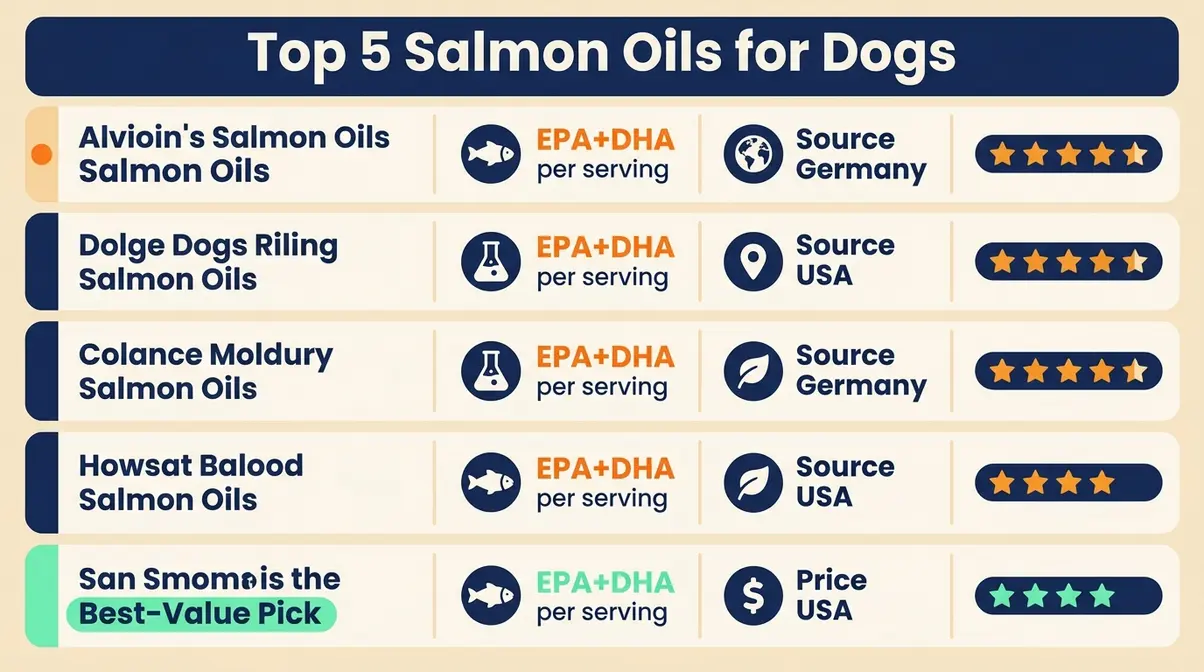
| Product | Best For | EPA+DHA/Serving | Source | Price Range |
|---|---|---|---|---|
| Nordic Naturals Omega-3 Pet | Overall / vet pick | ~790 mg per teaspoon | Wild-caught (anchovy/sardine, not salmon)* | $25-$35 |
| Zesty Paws Wild Alaskan Omega-3 | Itchy skin | ~500 mg per pump | Wild Alaskan salmon | $20-$30 |
| Natural Dog Company Wild Alaskan Salmon Oil | Sourcing transparency | ~400 mg per teaspoon | Wild Alaskan salmon | $22-$32 |
| Wellactin by Nutramax | Veterinary-grade clinical use | ~600 mg per softgel | Wild-caught | $30-$45 |
| Paws & Pals Wild Alaskan Salmon Oil | Budget value | ~300 mg per teaspoon | Wild Alaskan salmon | $12-$18 |
*Nordic Naturals Omega-3 Pet uses anchovy and sardine, not salmon; included for its superior rTG bioavailability and vet-nutritionist endorsement.
Nordic Naturals Omega-3 Pet: Best Overall
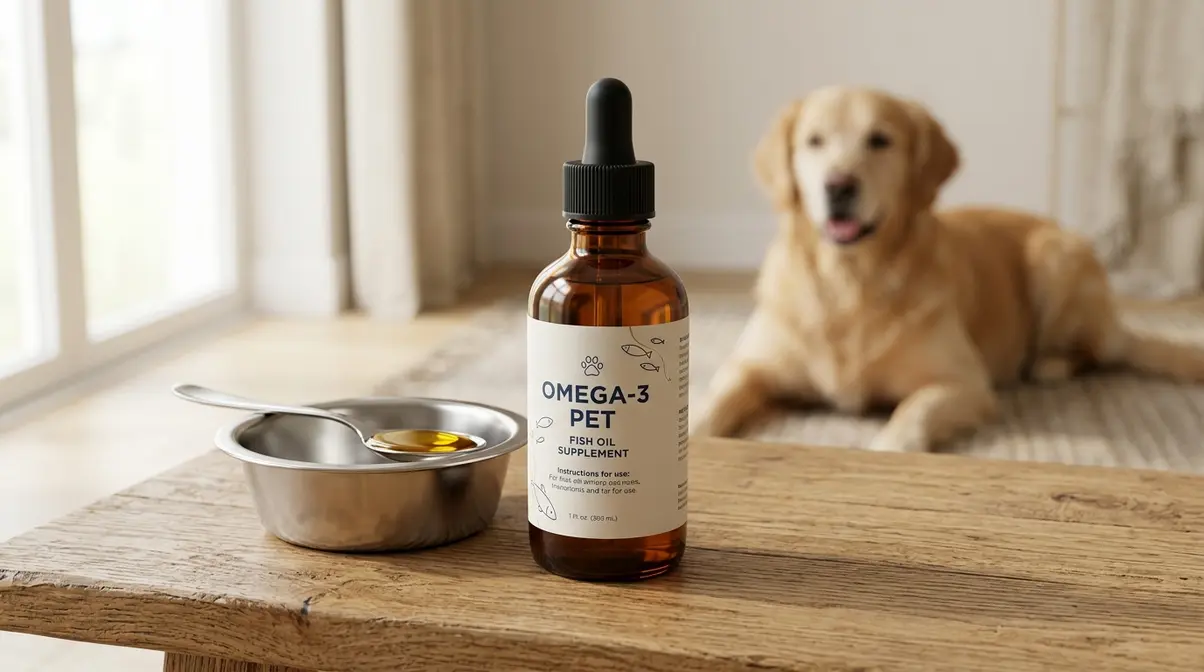
Nordic Naturals Omega-3 Pet is a pharmaceutical-grade omega-3 supplement formulated specifically for dogs, made from wild-caught fish processed into the re-esterified triglyceride (rTG) form. It is consistently named by vet nutritionists for omega-3 supplementation, owing to its pharmaceutical-grade processing and third-party testing record.
Key Specs:
- EPA + DHA per serving: approximately 790 mg per teaspoon
- Form: Re-esterified triglyceride (rTG)
- Source: Wild-caught (note: Nordic Naturals Omega-3 Pet uses anchovy and sardine rather than pure salmon; the brand’s formulation prioritizes triglyceride-form bioavailability)
- Certifications: IFOS certified; non-GMO verified
- Sizes: 8 oz and 16 oz liquid
Pros:
- Highest bioavailability of the forms reviewed: the rTG form is generally considered better absorbed than the ethyl ester (EE) form, so more of the EPA/DHA reaches your dog, though the exact difference varies by study and by dog
- IFOS third-party certified for heavy metals, PCBs, and oxidation levels
- Consistently named among the brands veterinary nutritionists recommend in clinical settings
- No artificial additives, flavors, or preservatives; clean label
Cons:
- Higher price per ounce than most budget options: roughly $3-$4 per ounce vs. under $1 for value picks
- Formulated from anchovy and sardine, not pure salmon; owners specifically seeking salmon-only oil should note this distinction
- Liquid pump can occasionally clog with cold temperatures; store at room temperature before dispensing
Real-World Usage: Nordic Naturals Omega-3 Pet is particularly well-suited for dogs with diagnosed inflammatory conditions where consistent, measurable EPA/DHA delivery matters. Because rTG form absorbs more completely, a smaller volume achieves the same therapeutic effect as a larger serving of ethyl ester oil, useful for dogs who resist large amounts of oil on their food. The clean, mild odor is better tolerated by scent-sensitive dogs than strongly fishy alternatives. For large breeds requiring higher therapeutic doses, the 16 oz size makes daily use cost-manageable. One limitation worth noting: dogs with a confirmed fish allergy to anchovy or sardine should not use this product; salmon-specific alternatives are a safer choice for those animals.
Verdict: Nordic Naturals Omega-3 Pet is the strongest all-around choice for owners who want vet-grade quality and maximum absorption. It’s a product many vet nutritionists favor for exactly this reason.
Choose if: your vet has recommended omega-3 supplementation for a specific condition (skin, joints, heart, cognition) and you want a pharmaceutical-grade product with verified third-party testing.
Skip if: your budget is under $25/month, or you specifically need a salmon-only product. Zesty Paws Wild Alaskan Omega-3 or Natural Dog Company’s oil are better fits for those requirements.
Where Nordic Naturals leads on bioavailability and clinical reputation, Zesty Paws Wild Alaskan Omega-3 takes a more targeted approach, delivering a high EPA concentration specifically suited to dogs dealing with itchy skin and allergies.
Zesty Paws Wild Alaskan Omega-3: Best for Itchy Skin
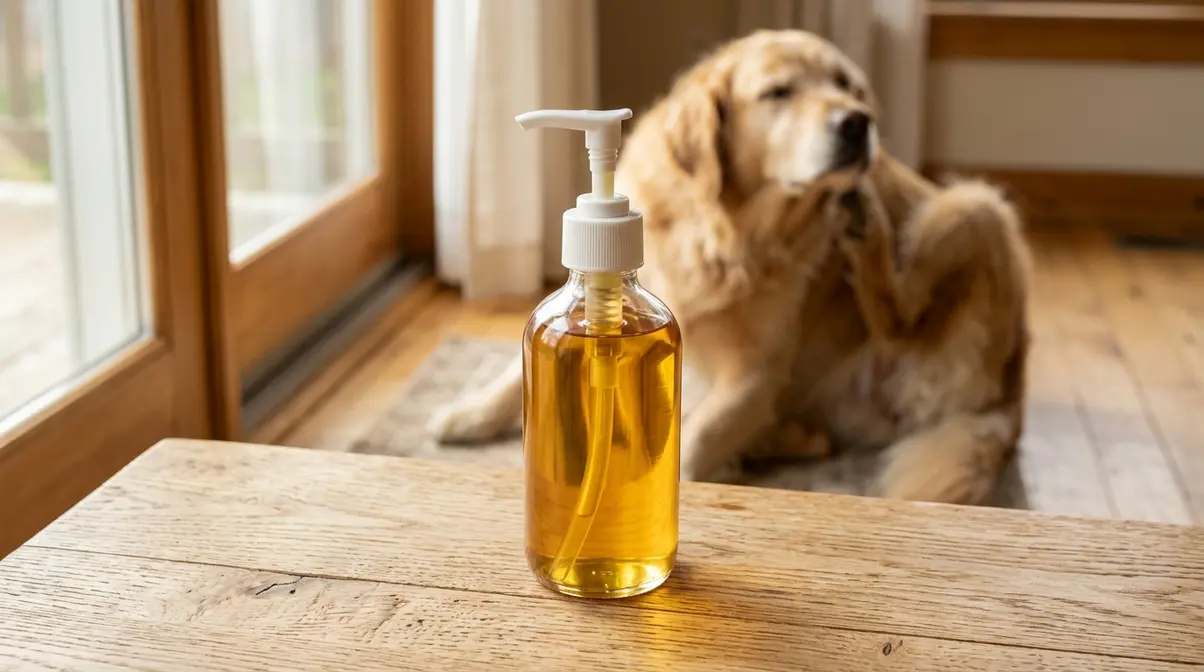
For owners searching for the best salmon oil for dogs with itchy skin, Zesty Paws Wild Alaskan Omega-3 is the most targeted option available. Sourced from wild Alaskan waters, it’s formulated to deliver a high concentration of EPA per pump, making it one of the most focused choices for dogs whose primary symptom is skin irritation, excessive scratching, or a dull, flaky coat.
Key Specs:
- EPA + DHA per serving: approximately 500 mg per pump
- Form: Natural triglyceride form
- Source: Wild Alaskan salmon
- Sizes: 8 oz and 16 oz with pump dispenser
- Certifications: NASC quality seal
Pros:
- High EPA concentration per serving targets the anti-inflammatory pathway most directly linked to skin itching. EPA reduces prostaglandin production, which is the mechanism behind chronic skin inflammation
- NASC certified, meaning the manufacturer meets quality and labeling standards for animal supplement producers
- Pump dispenser makes daily dosing consistent and mess-free; less oxidation exposure than pour-bottle designs
- Generally well-accepted by dogs; the wild Alaskan salmon flavor tends to be palatable even for picky eaters
Cons:
- EPA/DHA per serving is lower than Nordic Naturals’ rTG formulation; owners managing serious inflammatory conditions may need a higher-potency alternative
- Some users report the pump occasionally dispenses inconsistently after the bottle is half-empty
- Strong fish odor: not a problem for most dogs, but some owners find it noticeable in the food bowl
Real-World Usage: This product is a practical daily choice for dogs whose owners have noticed persistent itchy skin or a coat that lacks luster. The anti-inflammatory effect of EPA takes 3-4 weeks of consistent daily use to become visible, so patience matters. For dogs on dry kibble, adding a small amount of warm water to the bowl helps distribute the oil evenly. Dogs with environmental allergies or atopic dermatitis often respond well to this type of supplementation, though owners should rule out food allergies and other underlying causes with their vet before relying on omega-3s alone.
Verdict: Zesty Paws Wild Alaskan Omega-3 is the best-targeted pick for owners whose primary goal is reducing itchy skin and improving coat quality.
Choose if: your dog’s main symptoms are itchy skin, shedding, or a dull coat, and you want a wild Alaskan salmon source with a convenient pump dispenser.
Skip if: your vet has recommended a specific therapeutic EPA/DHA dose for a joint or cardiac condition. Nordic Naturals Omega-3 Pet or Wellactin offer higher potency per serving for those applications.
For owners who prioritize sourcing transparency above all else, Natural Dog Company Wild Alaskan Salmon Oil is the clearest choice.
Natural Dog Company Wild Alaskan Salmon Oil: Best Sourcing Transparency
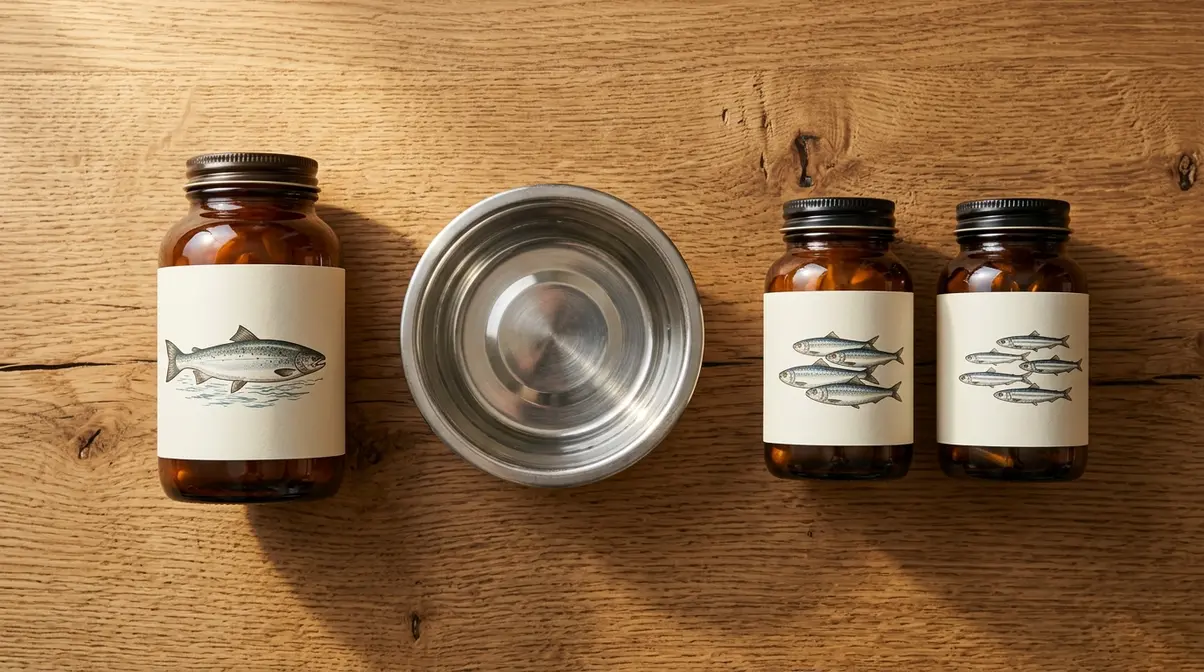
Natural Dog Company Wild Alaskan Salmon Oil is a single-ingredient liquid supplement: 100% wild Alaskan salmon oil, nothing added. It’s designed for owners who want to know exactly what’s in the bottle and where it came from, without navigating a multi-ingredient formula.
Key Specs:
- EPA + DHA per serving: approximately 400 mg per teaspoon
- Form: Natural triglyceride form
- Source: Wild-caught Alaskan salmon; MSC-certified fishery
- Sizes: 8 oz and 16 oz
- Certifications: MSC sustainability certified; no artificial additives
Pros:
- Single-ingredient formula: wild Alaskan salmon oil only, no fillers, no added vitamins, no preservatives
- MSC-certified sourcing means the fishery is independently verified for sustainable management, not just a marketing claim
- Wild Alaskan salmon naturally accumulates fewer heavy metals than farmed alternatives, owing to stricter fishery management and a cleaner oceanic environment
- Clean, transparent labeling: EPA and DHA are listed separately, making it easy to calculate your dog’s dose accurately
Cons:
- EPA/DHA per serving is lower than top-tier picks like Nordic Naturals or Wellactin; owners of larger dogs may need to use more oil per day to reach therapeutic doses
- No IFOS certification at time of review: third-party testing is limited to MSC sustainability, not heavy metal or PCB levels
- Pour bottle design (no pump) means more air exposure with each use; refrigerate promptly and use within 60 days of opening
Real-World Usage: Natural Dog Company’s oil is a strong fit for owners who want a verifiably sourced, single-ingredient product and are comfortable with a slightly lower potency-per-teaspoon tradeoff. The MSC certification is meaningful: “wild Alaskan” is a genuine quality signal, not just marketing. Alaskan waters operate under the Magnuson-Stevens Act, one of the most stringent fishery management frameworks in the world, which limits overfishing and maintains healthier fish populations with naturally higher omega-3 density. For smaller dogs (under 30 lbs), the EPA/DHA per serving is sufficient for daily maintenance dosing without needing to use large volumes.
Verdict: This is the right pick for sourcing-focused owners who want a clean, single-ingredient salmon oil from a certified sustainable fishery.
Choose if: sourcing transparency and sustainability certification matter most to you, and your dog is under 50 lbs with maintenance (rather than therapeutic) dosing goals.
Skip if: your dog needs a higher therapeutic dose for a diagnosed condition. Nordic Naturals or Wellactin deliver more EPA/DHA per serving and are better suited to clinical applications.
Nordic Naturals takes a different approach, prioritizing pharmaceutical-grade processing over sourcing geography. And for vet nutritionists recommending supplements in clinical settings, one brand consistently appears alongside it.
Nordic Naturals and Wellactin: The Vet Nutritionist Picks
In veterinary-nutrition discussions, a recurring theme is that the goal is a well-formulated omega-3 rather than “salmon oil” specifically, and the two brands most often named for that role are Wellactin and Nordic Naturals. That pattern captures why these two occupy a different tier than most over-the-counter salmon oils. It’s not just marketing. It’s the result of consistent formulation quality, transparent testing, and a track record in clinical veterinary settings.
Nordic Naturals Omega-3 Pet is covered in full above (Product #1). Its pharmaceutical-grade rTG processing is the key differentiator: re-esterified triglyceride form mimics the natural molecular structure of fish oil, which research suggests improves absorption compared to the ethyl ester form used in many cheaper supplements. Because the EE form is generally absorbed less efficiently, it can deliver a lower effective dose of EPA/DHA per milligram consumed. For dogs who need measurable therapeutic outcomes, not just general wellness support, that absorption difference matters.
Wellactin by Nutramax is a veterinary-grade omega-3 supplement available primarily through veterinary clinics and authorized online retailers. Nutramax is the same manufacturer behind Cosequin and Dasuquin, both widely recommended in veterinary practice for joint health. Wellactin delivers approximately 600 mg of EPA/DHA per softgel capsule, uses wild-caught sources, and undergoes third-party testing for purity.
- Key Specs (Wellactin):
- EPA + DHA per softgel: approximately 600 mg
- Form: Softgel capsule (can be punctured and squeezed onto food)
- Source: Wild-caught fish oil
- Available through: veterinary clinics, Chewy Vet, Amazon
- Price range: $30-$45 for a 90-count bottle
- Pros (Wellactin):
- Veterinary-grade manufacturing standards; Nutramax has a long track record in clinical veterinary nutrition
- Softgel format is convenient for precise dosing and easy to hide in a treat or pill pocket
- High EPA/DHA per capsule makes it efficient for medium-to-large dogs
- Widely trusted by veterinary professionals; often recommended alongside joint supplements
- Cons (Wellactin):
- Higher price point than most retail options; primarily sold through vet channels, which limits easy availability
- Softgel format is less convenient for very small dogs who need fractional doses
- Less marketing transparency about fishery sourcing compared to MSC-certified alternatives
Real-World Usage (Wellactin): Wellactin is most commonly encountered in clinical settings: dogs diagnosed with osteoarthritis, atopic dermatitis, or dilated cardiomyopathy whose veterinarians have prescribed a pharmaceutical-grade omega-3 as part of a structured treatment plan. For these dogs, the softgel format is a practical advantage. Puncture the capsule and squeeze the oil directly onto food, or tuck the whole capsule into a pill pocket for dogs who accept it. Medium-to-large dogs (30 lbs and up) benefit most from the high EPA/DHA per capsule, since the dose-per-softgel is efficient at their weight range without requiring multiple capsules. Very small dogs (under 15 lbs) may find the softgel format harder to dose fractionally; liquid alternatives like Zesty Paws or Natural Dog Company are more flexible for that size range. The Nutramax clinical track record is a genuine differentiator: the same company’s joint supplements (Cosequin, Dasuquin) have decades of veterinary use behind them, and Wellactin benefits from that manufacturing consistency and quality-control infrastructure.
Verdict: Wellactin is the go-to choice when your vet has specifically recommended a pharmaceutical-grade omega-3 and you want a product with a strong clinical track record.
Choose if: your vet recommends a veterinary-grade omega-3 for a diagnosed condition, or you prefer a softgel format for precise dosing.
Skip if: you’re looking for a budget-friendly daily maintenance supplement. Paws & Pals delivers solid omega-3 levels at a fraction of the cost for dogs without specific clinical needs.
For owners watching their budget, Paws & Pals Wild Alaskan Salmon Oil delivers solid omega-3 levels without the premium price tag.
Paws & Pals Wild Alaskan Salmon Oil: Best Value
Paws & Pals Wild Alaskan Salmon Oil is a straightforward, single-source salmon oil supplement at one of the lowest price-per-ounce points in the category. For owners supplementing multiple dogs, new to omega-3 supplementation, or simply working within a tight budget, it covers the basics without unnecessary extras.
Key Specs:
- EPA + DHA per serving: approximately 300 mg per teaspoon
- Form: Natural triglyceride form
- Source: Wild Alaskan salmon
- Sizes: 8 oz, 16 oz, 32 oz
- Certifications: No NASC or IFOS certification at time of review
Pros:
- Lowest price per ounce of any product reviewed: the 32 oz size brings cost down to under $0.75/oz
- Wild Alaskan sourcing at a budget price; the label specifies Alaskan origin
- Larger bottle sizes are practical for multi-dog households or large breeds requiring higher daily volumes
- Pour spout design is simple and durable
Cons:
- No third-party certification (NASC, IFOS) at time of review: this is a meaningful transparency gap; the brand has not published independent lab results for heavy metals or PCBs
- Lower EPA/DHA per serving than premium options; larger dogs or dogs with therapeutic dosing needs may require more oil per day, reducing the cost advantage
- Pour bottle design increases oxidation exposure compared to pump alternatives; use within 60 days of opening and refrigerate promptly
Real-World Usage: Paws & Pals is a reasonable starting point for owners who want to try omega-3 supplementation before committing to a premium product. The lower EPA/DHA per teaspoon is workable for small-to-medium dogs on maintenance doses, and the wild Alaskan sourcing claim is a genuine quality signal. The research-cited minimum of 30 mg EPA/DHA per kg of body weight provides a useful benchmark here: at approximately 300 mg per teaspoon, this product meets maintenance needs for dogs under 20 lbs without requiring large daily volumes. The absence of third-party certification is the honest trade-off at this price point: you’re trusting the manufacturer’s claim rather than an independent verification. If your dog responds well and you decide to continue long-term, upgrading to a NASC- or IFOS-certified product is worth considering.
Verdict: Paws & Pals is the right choice for budget-conscious owners or those new to supplementation who want to test omega-3 response before investing in a premium product.
Choose if: you’re managing multiple dogs, working within a tight budget, or want to try omega-3 supplementation at low cost before committing to a premium brand.
Skip if: your dog has a diagnosed inflammatory condition requiring therapeutic dosing, or you need third-party certification for peace of mind. Nordic Naturals or Zesty Paws are more appropriate for those situations.
Knowing which product to buy is only half the equation. The other half is knowing how to evaluate any new product that enters the market, which is exactly where the 5-Point Framework comes in.
The 5-Point Purity & Potency Framework
Not all salmon oils are created equal. The 5-Point Purity & Potency Framework gives you a structured way to evaluate any product, whether you’re comparing brands online or reading a label in a pet store. The five points are: (1) EPA/DHA Levels, (2) Purity and Third-Party Testing, (3) Sourcing, (4) Processing Method, and (5) Sustainability.
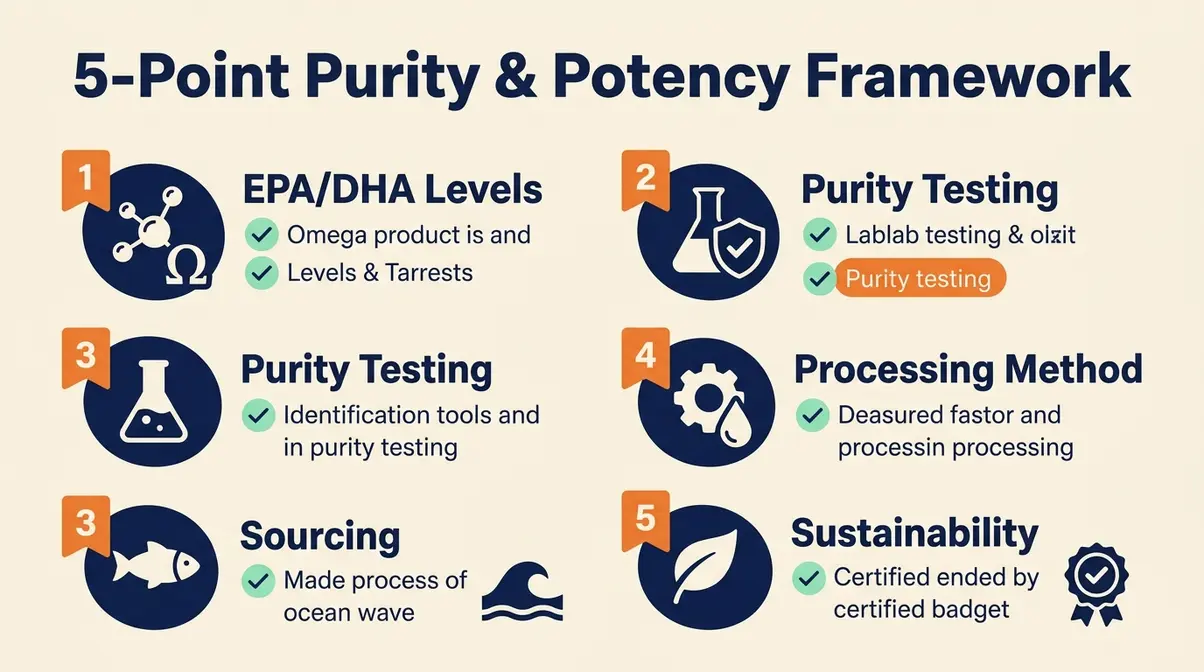
Most competitor guides focus on product lists without providing a structured evaluation method. This framework gives you a reusable quality filter you can apply to any brand, now or in the future. Think of it as a tool that outlasts any single product recommendation.
Point 1: EPA/DHA Levels, The Potency Check
The first thing to check on any salmon oil label is the combined EPA and DHA content per serving, not just “total omega-3s,” which can include less bioavailable forms like ALA. A 2024 peer-reviewed review (PMC) establishes that a minimum of 30 mg of EPA and DHA per kg of body weight is needed for adult dogs’ metabolic functions, with doses up to 370 mg/kg used to impact specific health outcomes.
- Your potency checklist:
- Does the label list EPA and DHA separately, in milligrams? If it only says “omega-3s total,” that’s a transparency concern.
- Is the combined EPA/DHA dose sufficient for your dog’s weight? Use the dosage chart in the next section to calculate.
- Is the serving size realistic to administer daily? A tablespoon per serving is harder to sustain than a teaspoon.
Potency means nothing if the oil is contaminated, which is where purity testing comes in.
Point 2: Purity and Third-Party Testing
The FDA has previously issued recalls for omega-3 supplements for dogs due to elevated Vitamin A levels, making third-party testing verification a non-negotiable quality check. Brand reputation alone isn’t sufficient; independent verification is the only way to confirm what’s actually in the bottle.
Look for two key certifications:
- NASC Quality Seal: The National Animal Supplement Council audits manufacturers for quality control, adverse event reporting, and accurate labeling. A NASC seal means the company has passed an independent facility audit.
- IFOS Certification: The International Fish Oil Standards program independently tests for heavy metals, PCBs, dioxins, and oxidation levels. IFOS-certified products publish their test results publicly.
- Your purity checklist:
- Does the brand display a NASC or IFOS seal on the label or website?
- Are third-party lab results publicly available, not just claimed?
- Is the brand registered with the FDA as a facility that manufactures animal supplements?
Even a certified product can disappoint if the salmon itself comes from a low-quality source.
Point 3: Sourcing, Wild-Caught vs. Farmed
When evaluating wild Alaskan salmon oil for dogs, sourcing is one of the most meaningful quality signals on the label, and here’s why it matters beyond marketing. Wild-caught Alaskan salmon feed on natural prey in cold, deep Pacific waters. This diet produces higher omega-3 density than farmed salmon, which are typically fed processed pellets with a higher omega-6 content. Alaskan fisheries operate under the Magnuson-Stevens Fishery Conservation and Management Act, one of the strictest fishery management frameworks globally, which limits overfishing and maintains healthier fish populations.
Farmed salmon also carry a higher risk of antibiotic residues and environmental contaminants from crowded aquaculture conditions, though this varies by producer and country of origin.
- Your sourcing checklist:
- Does the label specify “wild-caught”? “Natural” does not mean wild-caught.
- Is the geographic source named: Alaskan, Pacific Northwest? A vague “ocean-caught” claim is less meaningful.
- Does the brand provide sourcing documentation or name its supplier fishery?
How the oil is processed after harvest affects how well your dog actually absorbs it.
Point 4: Processing Method, Triglyceride vs. Ethyl Ester
This is the point most buyers overlook, and it’s one of the most consequential for actual efficacy. Fish oil is processed into one of three forms:
- Triglyceride (TG) form: The natural molecular form of fish oil. Your dog’s digestive system recognizes and absorbs it efficiently.
- Ethyl ester (EE) form: A cheaper manufacturing process that creates a synthetic form with lower bioavailability. Because EE is generally absorbed less efficiently than TG or rTG, it can deliver a meaningfully lower dose of EPA/DHA per milligram consumed.
- Re-esterified triglyceride (rTG) form: Processed back from EE to a TG-like structure. High bioavailability, often used by premium brands like Nordic Naturals. Triglyceride form means the oil is closer to its natural state, which your dog’s body absorbs more easily.
- Your processing checklist:
- Does the label specify TG or rTG form? If it doesn’t say, it’s likely ethyl ester.
- If EE form is used, is the dose adjusted upward to compensate for lower absorption?
- Does the brand explain its processing method anywhere on its website?
The final point connects your dog’s health to the health of the ocean.
Point 5: Sustainability Certifications
Sustainability certifications are a quality signal as much as an environmental one. Overfished populations produce smaller, less omega-3-rich fish, meaning poorly managed fisheries can undermine the very potency you’re paying for. The Marine Stewardship Council sets science-based standards for stock health, ecosystem impact, and fishery management, providing an independently verified benchmark that goes beyond marketing claims.
- MSC (Marine Stewardship Council): The gold standard for independently verified sustainable fisheries. An MSC blue fish label means the fishery has been audited against science-based standards for stock health, ecosystem impact, and management.
- Friend of the Sea: Another recognized sustainability standard, particularly common in European markets.
- Your sustainability checklist:
- Does the brand carry MSC certification or an equivalent independently verified standard?
- Does the brand publish a sustainability report or name its fishery?
- Is the fishery named and traceable, not just a geographic region?
What Vets Say: Benefits, Risks, and Safety
Salmon oil is a safe and effective omega-3 supplement for most dogs, supported by a growing body of veterinary research. A 2024 peer-reviewed review (PMC) confirms EPA and DHA are effective for canine atopic dermatitis, osteoarthritis, cardiac disease, and cognitive disorders. According to VCA Animal Hospitals, fish oil supplements containing EPA and DHA are used for numerous inflammatory diseases in dogs, including skin allergies, arthritis, kidney disease, and heart disease. Salmon oil is among the best vet-recommended omega-3 supplements for dogs, with evidence spanning four main health areas. This section, reviewed by Brianna York, Vet Tech, covers what the evidence actually shows, where the risks lie, and when to call your vet before starting.
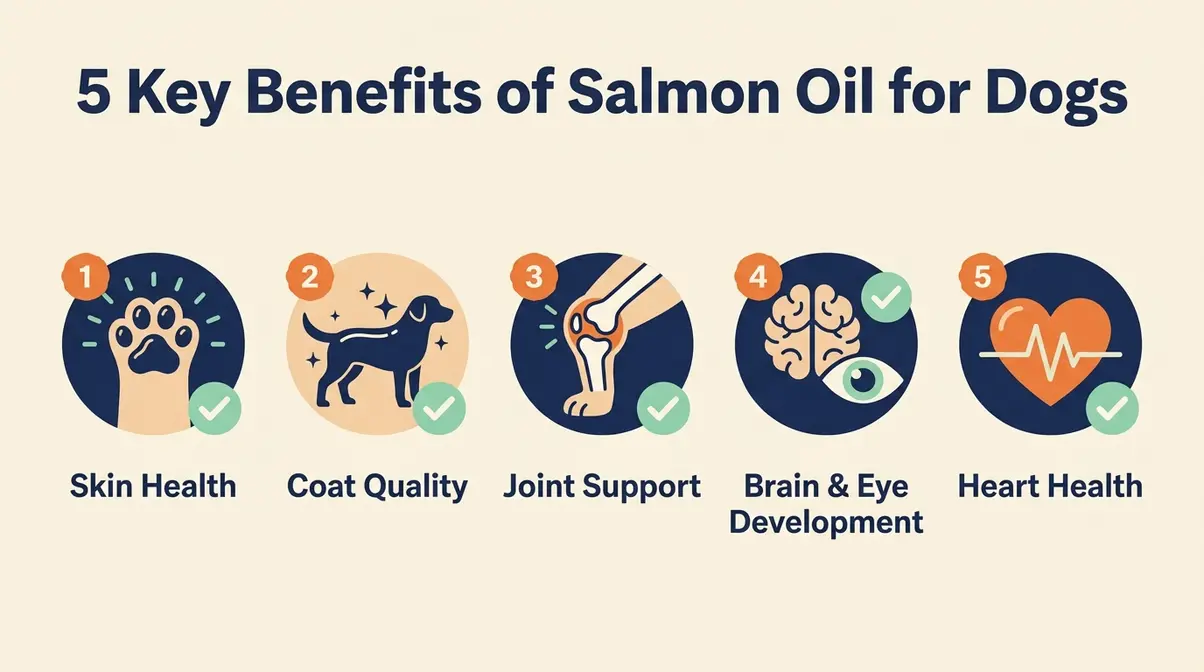
Proven Benefits of Salmon Oil for Dogs

The evidence for omega-3 supplementation in dogs spans four main health areas, and the research base is substantial. For owners interested in skin conditions and other common health problems in dogs, omega-3 supplementation is often among the first nutritional interventions veterinary professionals discuss.
Skin and coat health is the most well-documented benefit. According to the Veterinary Information Network, after a couple of months of supplementation, omega-3s can substantially reduce itching by infiltrating a dog’s cell membranes and altering the inflammatory response at the cellular level. This is why improvement takes weeks rather than days: the mechanism requires structural changes in cell membranes throughout the body.
Joint health is supported by EPA’s role in reducing prostaglandin production. Prostaglandins are inflammatory compounds that contribute to the pain and swelling of osteoarthritis. Research suggests consistent omega-3 supplementation may reduce reliance on NSAIDs for dogs with mild-to-moderate joint disease, though this should always be discussed with a veterinarian.
Heart health is another validated application. The therapeutic use of fish oils for cardiac conditions in dogs is confirmed by JAVMA (2011), with DHA playing a specific role in supporting myocardial function in dogs with dilated cardiomyopathy.
Brain and eye development relies on DHA. Puppies benefit from DHA during early neurological development, and senior dogs with early signs of cognitive dysfunction syndrome may see some benefit from consistent DHA supplementation, though evidence here is more preliminary.
For dogs dealing with joint stiffness alongside skin issues, other vet-recommended supplements for joint health may work alongside omega-3s as part of a broader nutritional plan.
The benefits are well-documented, but salmon oil isn’t right for every dog, and the risks deserve equal attention.
Side Effects and Safety Concerns
Side effects from salmon oil are almost always dose-related rather than inherent to the supplement itself. At correct weight-based doses, most healthy dogs tolerate daily omega-3 supplementation well.
- Common side effects (typically from overdosing):
- Digestive upset: vomiting, loose stools, or diarrhea, usually the first sign that the dose is too high
- Bad breath: the fishy odor can transfer to a dog’s breath, particularly at higher doses
- Weight gain: salmon oil is calorie-dense; large daily volumes add meaningful calories, particularly for dogs prone to obesity
- Oily coat: excessive supplementation can make a coat look greasy rather than glossy
- Less common effects:
- Changes in coat color (rare, typically at very high doses over extended periods)
- Increased bleeding time: omega-3s have mild anticoagulant properties, which becomes clinically relevant for dogs on NSAIDs, aspirin, or warfarin
Tufts University veterinary nutritionists note omega-3 supplementation may not be appropriate for every pet, especially those with gastrointestinal or bleeding disorders (Tufts, 2018). The key principle: more is not better. Exceeding the recommended dose doesn’t accelerate benefits; it increases the risk of the side effects listed above.
Always consult your veterinarian before starting salmon oil, especially if your dog has an existing health condition or takes any medication.
When to Consult Your Vet First
Three scenarios where a vet conversation is mandatory before starting any omega-3 supplement:
- Your dog takes blood-thinning medication (aspirin, warfarin, clopidogrel, or NSAIDs like Rimadyl). Omega-3s have mild anticoagulant effects that can compound these medications’ action, increasing bleeding risk. Even a low daily dose of omega-3s can meaningfully extend clotting time when combined with anticoagulant drugs, so your vet needs to weigh in on timing and dosing before you start.
- Your dog has a diagnosed GI condition, inflammatory bowel disease, exocrine pancreatic insufficiency, or chronic vomiting. Supplemental fats may worsen symptoms in these cases.
- Your dog is scheduled for surgery within two weeks. Most veterinary surgeons recommend stopping omega-3 supplements before procedures due to the mild anticoagulant effect.
A quick call to your vet takes five minutes and removes all uncertainty. This section was reviewed by Brianna York, Vet Tech, for clinical accuracy.
Salmon Oil for Dogs with Itchy Skin and Allergies
For dogs with itchy skin, salmon oil’s anti-inflammatory properties make it one of the most targeted nutritional interventions available. The mechanism is specific: EPA reduces the production of prostaglandins and leukotrienes, inflammatory compounds that drive the itch-scratch cycle in dogs with atopic dermatitis and environmental allergies. This isn’t a vague “supports skin health” claim; it’s a documented pathway backed by veterinary literature.
In practice, the best salmon oil for dogs with itchy skin is one with the highest EPA concentration per serving. EPA is the specific fatty acid responsible for the anti-inflammatory effect, while DHA plays a secondary role in skin barrier function. Products like Zesty Paws Wild Alaskan Omega-3 Blend, which leads on EPA per pump, are specifically suited to this application.
The timeline matters. According to the Veterinary Information Network, omega-3s can substantially reduce itching after a couple of months of consistent supplementation, as fatty acids gradually infiltrate cell membranes throughout the body. Owners who stop after two weeks because they don’t see immediate results are quitting before the mechanism has time to work. Expect the first visible changes, reduced scratching, less shedding, a shinier coat, around the 3-4 week mark, with fuller effects at 6-8 weeks.
That said, salmon oil addresses the inflammatory response to allergens; it does not eliminate the allergens themselves. Dogs with food allergies, flea allergy dermatitis, or environmental triggers still need those root causes identified and managed. Salmon oil works best as part of a broader allergy management plan. What stops itching immediately in dogs is typically a veterinary-prescribed antihistamine or corticosteroid for acute flares; omega-3s are a long-term management tool, not an emergency remedy.
For a complete guide to managing your dog’s allergies, including triggers, symptoms, and treatment options beyond supplements, see our comprehensive guide to managing dog allergies.
How Much Salmon Oil to Give Your Dog
Yes, it is safe to give your dog salmon oil every day. Daily supplementation maintains stable omega-3 levels in the bloodstream, which is more effective than intermittent dosing. Follow weight-based dosing guidelines and see the chart below for your dog’s size.
According to Colorado State University’s Veterinary Teaching Hospital, a 30-pound dog may require approximately 2,200 mg of combined EPA/DHA daily for osteoarthritis support, a dose that varies significantly by health goal and body weight. Maintenance doses (for general skin and coat support in healthy dogs) are lower than therapeutic doses used for specific conditions. This fish oil for dogs dosage chart breaks down the recommended EPA/DHA intake by body weight, sourced from Colorado State University and peer-reviewed literature, so you can find the right starting point for your dog’s size.
For owners managing dogs with complex health histories, understanding the full spectrum of health risks can inform how aggressively to pursue therapeutic dosing, and when a vet conversation about omega-3 levels is worth having sooner rather than later.
Salmon Oil Dosage Chart by Dog Weight
The chart below uses the research-cited minimum of 30 mg EPA/DHA per kg of body weight as the maintenance baseline (2024 PMC review), and the Colorado State University Veterinary Teaching Hospital dosing guidelines as the therapeutic reference. Always confirm therapeutic doses with your veterinarian; the ranges below are general starting points.
| Dog Weight | Maintenance Dose (EPA+DHA/day) | Therapeutic Dose (EPA+DHA/day) | Approx. Salmon Oil Volume* |
|---|---|---|---|
| 10 lbs (4.5 kg) | ~135 mg | ~500-750 mg | ¼-½ tsp |
| 20 lbs (9 kg) | ~270 mg | ~1,000-1,500 mg | ½-1 tsp |
| 30 lbs (13.6 kg) | ~410 mg | ~1,500-2,200 mg | 1-1½ tsp |
| 50 lbs (22.7 kg) | ~680 mg | ~2,500-3,500 mg | 1½-2 tsp |
| 75 lbs (34 kg) | ~1,020 mg | ~3,500-5,000 mg | 2-3 tsp |
| 100 lbs (45.4 kg) | ~1,360 mg | ~4,500-6,500 mg | 2½-4 tsp |
*Volume estimate assumes approximately 300-400 mg EPA/DHA per teaspoon; verify against your specific product label. Therapeutic doses are for conditions like osteoarthritis, skin disease, or cardiac support; always confirm with your vet before exceeding maintenance levels.
Sources: Colorado State University Veterinary Teaching Hospital (Canine fish oil dosing chart); 2024 peer-reviewed review (PMC).
How to Introduce Salmon Oil to Your Dog’s Diet
Start with half the recommended maintenance dose for the first one to two weeks. This gradual introduction gives your dog’s digestive system time to adjust to supplemental fats and reduces the risk of GI upset during the transition period.
- Practical tips:
- Mix the oil directly into your dog’s food. Wet food distributes it most evenly; if you feed dry kibble, add a tablespoon of warm water to help the oil coat the kibble rather than pooling at the bottom of the bowl.
- Administer at the same time each day. Routine helps with compliance and ensures consistent omega-3 levels.
- If you notice vomiting or loose stools in the first week, reduce to a quarter dose and increase more slowly over three to four weeks.
- Daily dosing is significantly more effective than every-other-day or intermittent supplementation for maintaining therapeutic omega-3 levels.
Storage and Freshness
Rancid salmon oil loses its potency and can cause digestive upset, so storage matters as much as the product you buy.
- Refrigerate after opening. Cold temperatures slow oxidation, which degrades EPA and DHA.
- Check for rancidity before each use: rancid oil smells strongly sour or “off,” not just fishy, but unpleasantly sharp. A fresh product smells like clean fish, not spoiled fish.
- Use within the manufacturer’s recommended window, typically 60-90 days after opening. Write the opening date on the bottle with a permanent marker so you don’t lose track.
- Pump bottles reduce oxidation compared to pour bottles because less air enters the container with each use.
Salmon Oil vs. Fish Oil: Key Differences
Salmon oil is a type of fish oil, so the question isn’t really “salmon vs. fish oil” but “single-source salmon oil vs. blended fish oil.” Both provide EPA and DHA; the differences lie in source consistency, flavor palatability, cost, and what you’re optimizing for. The AKC fish oil guidance confirms that omega-3 fatty acids support skin, coat, joint, and heart health regardless of the specific fish source.
Salmon oil is a single-source fish oil with a consistent EPA/DHA profile, while blended fish oils combine multiple species, making salmon oil easier to dose accurately but often more expensive per milligram of omega-3.
For owners asking what the best fish oil for dogs is, whether salmon, blended, or krill, the answer depends on your dog’s specific health needs and your budget. Choosing the best omega-3 for dogs ultimately comes down to those same factors: health goals, cost, and any allergy considerations. Each source has genuine advantages, and the comparison table below makes those trade-offs clear.
Salmon Oil vs. Fish Oil vs. Krill Oil: Comparison Table
| Feature | Salmon Oil | Blended Fish Oil | Krill Oil |
|---|---|---|---|
| EPA/DHA per serving | Moderate-high (300-800 mg/tsp) | Moderate-high (varies by blend) | Lower per volume; phospholipid-bound |
| Source | Single species (salmon) | Multiple species (anchovy, sardine, pollock) | Euphausia superba (Antarctic krill) |
| Palatability for dogs | High, salmon flavor well-accepted | Variable, some blends have stronger odor | Mild; generally well-tolerated |
| Price per dose | Moderate-high | Lower-moderate | Highest per mg of EPA/DHA |
| Third-party testing | Varies by brand | Varies; IFOS common in premium blends | Varies; phospholipid form adds complexity |
| Sustainability | MSC available | MSC available; anchovy/sardine fisheries well-managed | Antarctic krill fishing is regulated; CCAMLR oversight |
| Unique advantage | Consistent profile; familiar flavor | Cost-effective; flexible EPA/DHA ratios | Astaxanthin antioxidant; phospholipid absorption |
Which Should You Choose?
The right omega-3 source depends on your dog’s needs, your budget, and any allergy considerations.
Choose if: you want a single-source product with a predictable fatty acid profile; your dog is a picky eater (salmon flavor is broadly accepted); or you want straightforward dosing without managing a multi-species blend.
Choose if: cost is your primary concern and your dog doesn’t have a specific fish species allergy; or your vet recommends a specific EPA-to-DHA ratio that a blended formulation achieves more efficiently. Blended fish oils like Nordic Naturals Omega-3 Pet use anchovy and sardine because those species offer very high omega-3 yields, one reason vet nutritionists reach for them even in a “salmon oil” conversation.
Choose if: your dog has a confirmed allergy to salmon or finfish specifically (krill is a crustacean, not a fish); or you want the added antioxidant benefit of astaxanthin, which is naturally present in krill oil and may provide additional anti-inflammatory support.
The short version: salmon oil is the easiest single-source option to dose and the most reliably palatable, blended fish oil is usually the better value per milligram of omega-3, and krill oil adds astaxanthin at a higher price. Match the source to your dog’s needs and budget.
Risks and When to Skip Salmon Oil
Salmon oil is safe for most dogs, but “most” isn’t “all.” Here are the situations where you should skip it or consult your vet first.
Salmon oil is generally safe for most healthy dogs when dosed correctly, but it is not appropriate for dogs with bleeding disorders, GI conditions, or those scheduled for surgery (Tufts University, 2018). Tufts University veterinary nutritionists confirm that omega-3 supplementation may not be appropriate for every pet with gastrointestinal or bleeding disorders.
Common Pitfalls to Avoid
Overdosing is the most common mistake. More isn’t better with omega-3s: excess supplementation causes GI upset, increases bleeding time, and adds unnecessary calories without accelerating the anti-inflammatory benefits. Stick to weight-based dosing and resist the temptation to increase the dose when you don’t see immediate results.
Skipping third-party testing verification is the second pitfall. The FDA has previously issued recalls for omega-3 supplements for dogs due to elevated Vitamin A levels, a real-world example of why brand reputation alone isn’t sufficient protection. Before buying, check for a NASC seal, IFOS certification, or publicly available lab results.
Expecting immediate results leads many owners to stop too early. The omega-3 integration process requires 3-4 weeks of consistent daily supplementation before visible improvements appear. Owners who quit after two weeks because they see no change are stopping before the mechanism has had time to work.
When to Choose Alternatives
Skip salmon oil if your dog has a confirmed fish or salmon allergy. The alternative: krill oil (a crustacean, not a fish) provides EPA and DHA without the allergenic proteins found in finfish. Plant-based ALA supplements are also available, though dogs convert ALA to EPA/DHA inefficiently; discuss with your vet.
Skip salmon oil if your dog is on blood-thinning medication. Aspirin, warfarin, and NSAIDs already affect clotting; adding omega-3s’ mild anticoagulant effect requires veterinary guidance on timing and dosing. Your vet may still recommend omega-3s, but the combination needs monitoring.
Skip salmon oil if your dog has severe GI disease. Supplemental fats can worsen symptoms in dogs with inflammatory bowel disease or exocrine pancreatic insufficiency. Vet consultation is mandatory before starting any fat-based supplement in these cases.
Frequently Asked Questions
Do vets recommend salmon oil for dogs?
Yes, many veterinarians recommend salmon oil as an omega-3 supplement for dogs. EPA and DHA, the key fatty acids in salmon oil, support skin and coat health, joint function, and heart health. The correct dose depends on your dog’s weight and health condition. Always confirm with your vet before starting, especially if your dog has an existing health condition or takes medication.
What oil is best for dogs with itchy skin?
Salmon oil is one of the most effective options for dogs with itchy skin. Its high concentration of EPA, an omega-3 that reduces inflammation, can soothe skin irritation and improve coat quality over time. Results typically take 3-4 weeks of daily supplementation to become noticeable. For persistent or severe itching, consult your vet to rule out underlying allergies or skin conditions.
How often should I give my dog salmon oil?
Daily supplementation is the standard recommendation for salmon oil for dogs. Consistent daily use maintains stable omega-3 levels in the bloodstream, which is more effective than intermittent dosing. Follow the weight-based dosage on the product label or your vet’s guidance. Most owners see the best results when they mix the oil into their dog’s food at the same time each day.
What’s better, fish oil or salmon oil for dogs?
Salmon oil is a type of fish oil. The real comparison is single-source salmon oil vs. blended fish oils (anchovy, sardine, pollock). Both provide EPA and DHA. Salmon oil offers a consistent fatty acid profile and is generally palatable for dogs. Blended fish oils can be more cost-effective per milligram of omega-3. The best choice depends on your dog’s needs, your budget, and the product’s purity testing credentials.
What are the side effects of salmon oil for dogs?
Side effects of salmon oil for dogs are typically dose-related. Too much can cause digestive upset (vomiting, diarrhea), bad breath, weight gain, and an oily coat. In rare cases, high doses may increase bleeding time, relevant for dogs on blood-thinning medications. Start with half the recommended amount and increase gradually to minimize GI upset. These effects are uncommon at correct weight-based doses.
How long does it take for salmon oil to kick in for dogs?
Most dogs show noticeable improvements from salmon oil within 3-4 weeks of consistent daily supplementation. Skin and coat changes are often the first visible signs: reduced scratching, less shedding, and a shinier coat. Joint mobility improvements may take 6-8 weeks. Your dog’s size, age, and overall health affect the timeline. Consistent daily dosing, not occasional supplementation, is what drives results.
Final Verdict
For most dogs, the best salmon oil combines wild-caught sourcing, third-party purity testing, and sufficient EPA/DHA per serving for your dog’s weight. Research confirms that EPA and DHA support skin, coat, joint, and heart health in dogs (2024 peer-reviewed review, PMC). The best approach: use the 5-Point Purity & Potency Framework to evaluate any product, confirm dosing with your vet, and give it at least 3-4 weeks of consistent daily use to work.
The 5-Point Purity & Potency Framework is the core contribution of this guide, because the overwhelm of options is manageable once you know what to look for. Potency, purity, sourcing, processing, and sustainability aren’t marketing concepts; they’re the five levers that separate a supplement that actually works from one that just looks good on a shelf. Nordic Naturals Omega-3 Pet scores highest across all five points, which is why many vet nutritionists favor it.
Start by checking your current or shortlisted product against the five framework points above. If it passes all five, try it for 30 days at the correct weight-based dose and watch for the early signs: reduced scratching, a shinier coat, more willingness to move on walks. If your dog has a health condition, especially GI issues, a bleeding disorder, or a current medication, take five minutes to call your vet before you start. That call is the most valuable step in this entire guide.
Prices and product formulations verified as of July 2026.
➤ The best salmon oil for your dog is the one that passes all five purity and potency checks, wild-caught, third-party tested, and dosed correctly for your dog’s weight.