

Written by Coral Drake · Last updated July 2026
⚠️ Medical Disclaimer: This article is for informational purposes only and does not constitute veterinary medical advice. Always consult a licensed veterinarian for diagnosis, treatment decisions, and health management plans specific to your dog.
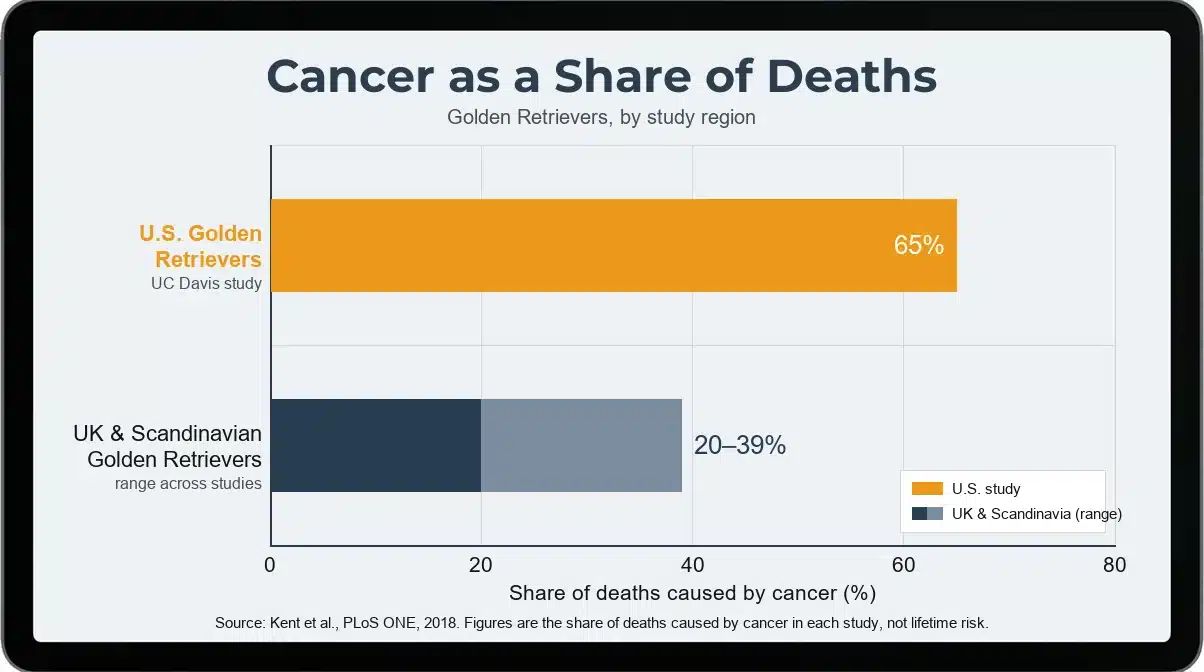
If this sounds familiar, you’re not imagining the pattern. In a UC Davis study of 652 Golden Retrievers, 65% died of cancer (Kent et al., PLoS ONE, 2018), one of the highest rates of any breed. That’s not bad luck. That’s a breed-level crisis.
In this guide, you’ll learn the average age Golden Retrievers get cancer, which four cancers to watch for, why this breed carries such an extraordinary genetic burden, and — most importantly — what you can do right now to improve your dog’s odds. We cover onset statistics, genetic causes, early warning signs, and a step-by-step prevention plan you can bring to your vet tomorrow.
Golden Retrievers have one of the highest cancer death rates of any dog breed — 65% died of cancer in a UC Davis study (Kent et al., 2018), and in a large multi-breed study the median age at cancer diagnosis was 8.8 years (Rafalko et al., PLoS ONE, 2023). “The Golden Window” is our name for the years before and around that typical diagnosis age, when to plan screening with your vet.
- Onset age: In the Golden Retriever Lifetime Study, hemangiosarcoma rose steeply after age 6; in a multi-breed study the median age at cancer diagnosis was 8.0 years for purebred dogs and 8.8 years overall
- The 4 cancers: Hemangiosarcoma (most lethal), lymphoma (most treatable), osteosarcoma, mast cell tumors
- Biggest controllable factor: Spay/neuter timing: UC Davis suggests neutering males no earlier than 12 months and leaving females intact (Hart et al., 2024)
- Plan screening early: Ask your vet when to start checks such as abdominal ultrasound and blood panels, before symptoms appear
- “The Golden Window”: Plan screening with your vet before the typical diagnosis age, not after symptoms appear
At What Age Do Goldens Get Cancer?
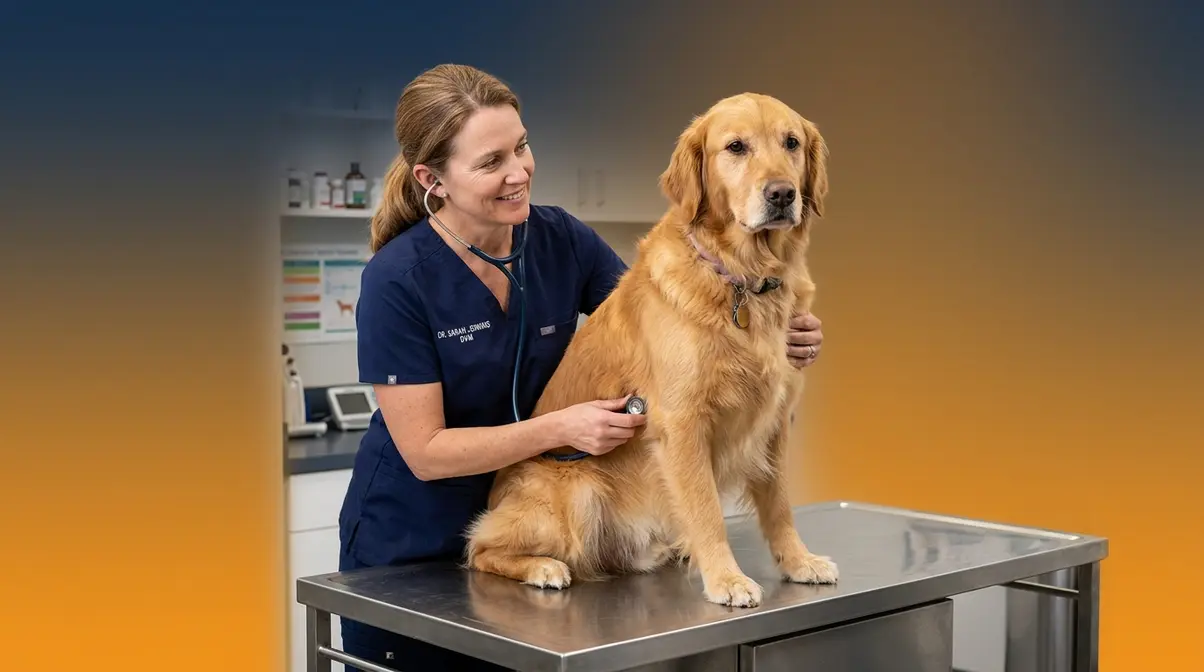
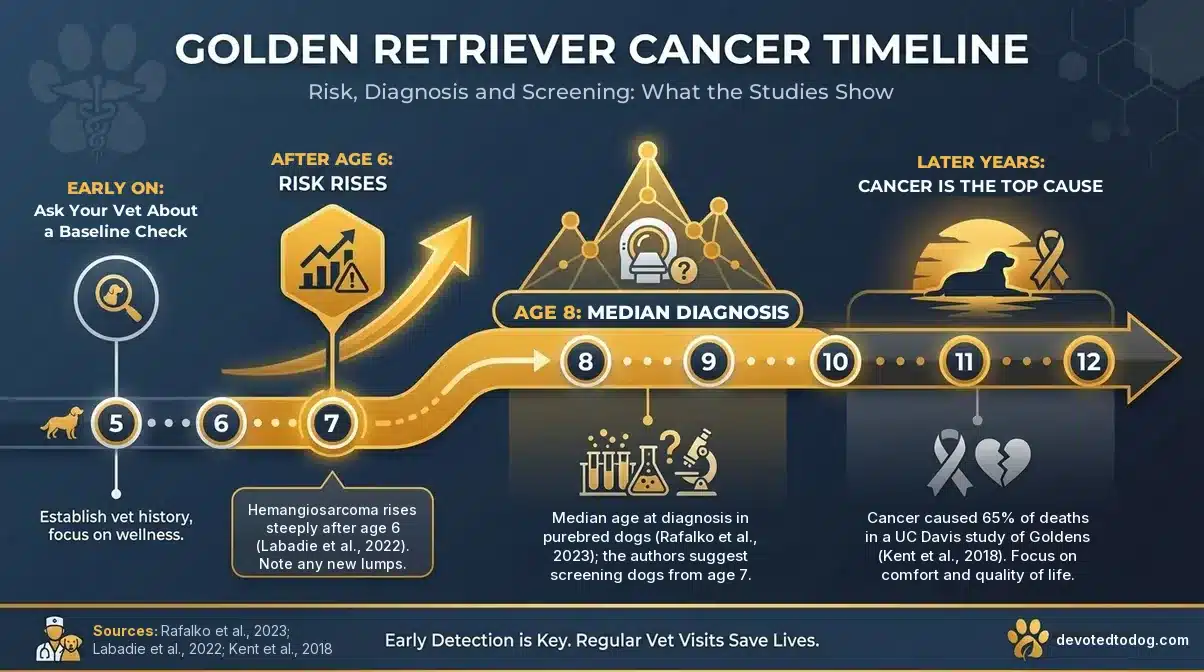
The average age Golden Retrievers get cancer — meaning when diagnoses are most common — falls in middle and older age. In a study of 3,452 dogs with cancer, in which Golden Retrievers were the largest breed group, the median age at diagnosis was 8.0 years for purebred dogs and 8.8 years overall (Rafalko et al., PLoS ONE, 2023). The authors suggest starting annual cancer screening about two years before the median age at diagnosis, which points to age 7 for dogs in general. Ask your vet when screening should start for your dog.
Average Age of Onset Data
There are three distinct age milestones every Golden Retriever owner should understand — and confusing them leads to either false reassurance or unnecessary panic.
Hemangiosarcoma rises steeply after age 6. In the Golden Retriever Lifetime Study, hemangiosarcoma incidence grew steeply after age 6 (Labadie et al., PLoS ONE, 2022). The median age at diagnosis was 8.0–8.8 years in a large multi-breed study. In that study of 3,452 dogs, the median age of canine cancer diagnosis was 8.0 years for purebred dogs and 8.8 years overall, and the authors suggested starting cancer screening for dogs in general at age 7 (Rafalko et al., PLoS ONE, 2023). Age at diagnosis is not age at death — the age dogs die from cancer comes later than the age they are diagnosed. Conflating these numbers leads owners to believe they have more time than they do.
We call the years before and around the typical age at diagnosis “The Golden Window” — the time to agree a screening plan with your vet, before symptoms appear. This framework gives worried owners something concrete to act on, rather than a vague sense of dread.
The Morris Animal Foundation’s Golden Retriever Lifetime Study, the largest of its kind, has tracked more than 3,000 Golden Retrievers since 2012. Separately, a UC Davis study found that 65% of Goldens examined after death had died of cancer (Kent et al., PLoS ONE, 2018), one of the highest rates of any breed. If your Golden is 4 years old right now, this is a good time to ask your vet about a prevention and screening baseline.
In a large multi-breed study, the median age at cancer diagnosis was 8.0 years in purebred dogs and 8.8 years overall, and in the Golden Retriever Lifetime Study hemangiosarcoma rose steeply after age 6 — so ask your vet about screening before symptoms appear (Rafalko et al., PLoS ONE, 2023); (Labadie et al., PLoS ONE, 2022).
For a full picture of how cancer affects the breed’s lifespan, see our Golden Retriever life expectancy and what affects it guide.
Why Cancer Risk Climbs After Age 6
The age-6 inflection point isn’t arbitrary. It reflects the gradual accumulation of genetic mutations over time. Think of DNA damage like rust on a car — it builds gradually, but at a certain point the structure starts to fail. In Golden Retrievers, the structure was already compromised from the start.
Understanding why do Golden Retrievers get cancer so frequently requires looking at what happens at the cellular level over those first six years. Golden Retriever Lifetime Study data on hemangiosarcoma shows hemangiosarcoma incidence grows steeply after age 6, becoming the most common cancer in the study cohort around age 8 (Labadie et al., PLoS ONE, 2022). Why it climbs at that age is not yet fully understood.
It’s also worth distinguishing between early-onset cases — those appearing before age 6, which are less common but often more aggressive — and typical-onset cases occurring between ages 6 and 10, which represent the majority. A 5-year-old Golden with a sudden unexplained lump should still be seen immediately. Early-onset cancers are rare, but they do occur. Do not wait for age 6 to begin paying attention.
Before we get into the specific cancers, it helps to understand why this breed carries such a heavy genetic burden — and what that means for your dog’s risk.
Golden Retriever Lifespan Changes
Today the typical Golden Retriever life expectancy is around 10–12 years (PetMD). Claims that Goldens once routinely lived longer are often repeated, but historical lifespan statistics for the breed are sparse and inconsistent, so no reliable figure for an earlier era exists. What is clear, however, is that cancer is the primary driver of early death in the breed today.
Many veterinarians consider a Golden Retriever “senior” at about age 8, close to the median age at cancer diagnosis in dogs (Rafalko et al., PLoS ONE, 2023). Cancer caused 65% of deaths in a UC Davis study of 652 Golden Retrievers (Kent et al., PLoS ONE, 2018); across all dogs, cancer is thought to cause about one in four deaths (Labadie et al., PLoS ONE, 2022). Cancer doesn’t just shorten individual lives; it has reshaped the breed’s entire lifespan trajectory.
For more on how cancer affects the breed’s average lifespan, our Golden Retriever life expectancy and what affects it guide covers the full picture.
Cancer doesn’t appear out of nowhere. For Golden Retrievers, the roots go back generations — to decisions made in breeding programs long before your dog was born.
Why Goldens Get Cancer at High Rates

The main cause of cancer in Golden Retrievers is a strong inherited predisposition, although the specific genes involved are still being studied. When owners ask about the average age golden retrievers get cancer, they often wonder if it’s purely genetic. Research from UC Davis School of Veterinary Medicine has identified specific gene variants, including the HER4 gene (a variant associated with longer lifespan in Golden Retrievers), that are directly associated with lifespan and cancer susceptibility. This means your dog’s cancer risk was partly determined before they were born — but it also means there are specific, science-backed interventions that can make a real difference.
Genetic Bottleneck Explained
Why do Golden Retrievers get cancer at rates that dwarf other breeds? The answer begins in 19th-century Scotland. Today’s Golden Retrievers descend from a small number of dogs, and researchers suspect inherited risk factors explain part of the breed’s cancer burden, but the specific genes are still being studied.
No single DNA-repair defect has been confirmed as the cause of the breed’s high cancer rate.
There is hopeful news, however. UC Davis research on Golden Retriever longevity discovered that Goldens with a specific variant of the HER4 gene (also known as ERBB4) live an average of 13.5 years — nearly 2 years longer than those without it (UC Davis, 2023). Researchers compared DNA from dogs alive at 14 years against those that died before age 12, and the HER4 variant emerged as a clear longevity signal. For a full overview of how genetic factors drive the breed’s most common health issues, see our guide to genetic predisposition to cancer in Golden Retrievers.
Why cancer becomes more common with age is still being studied; in Golden Retrievers, inherited risk factors are part of the picture.
But genetics aren’t the only factor. One of the most significant — and controllable — contributors to cancer risk in Golden Retrievers is the timing of spay or neuter surgery.
Neutering Timing and Cancer Risk
The research here is striking and specific. Neutering effects on cancer risk in females found that neutering female Goldens at any point beyond 6 months elevated the risk of one or more cancers to three to four times the level of non-neutered females (UC Davis, 2014; Hart et al., PLoS ONE, 2014).
“In female Golden Retrievers, neutering at any point beyond 6 months elevated the risk of one or more cancers to three to four times the level of non-neutered females” (UC Davis, 2014).
For male Goldens, the UC Davis Hart team suggests neutering no earlier than 12 months of age (Hart et al., Frontiers in Veterinary Science, 2024). Intact males showed significantly lower rates of joint disorders and certain cancers compared to those neutered before 12 months. Sex hormones play a role in musculoskeletal development and immune function. Removing them too early — before the body’s growth plates close — appears to disrupt processes that normally suppress cancer development.
This doesn’t mean never neuter — it means the timing matters enormously. Always consult your veterinarian before making decisions about spay/neuter timing, as the right approach depends on your dog’s individual health history and circumstances.
Beyond genetics and surgery timing, environmental factors add one more layer to a complex risk picture.
Environmental Risk Factors
Environmental exposures may compound an already-elevated genetic risk. Research suggests that pesticide and herbicide exposure (particularly lawn chemicals), secondhand tobacco smoke, and prolonged contact with industrial pollutants are worth minimizing for Golden Retrievers. These factors don’t create the cancer risk from scratch — but they may accelerate it in a breed already predisposed.
Obesity is an established cancer risk factor in dogs, and Golden Retrievers are prone to weight gain throughout life. Keeping your dog lean may help reduce overall cancer risk by lowering systemic inflammation, which is a known driver of tumor development. The chart below puts the Golden Retriever’s cancer rate in broader context.
Now that you understand the “why,” let’s look at the specific cancers you need to know — because each one has different warning signs, different timelines, and very different prognoses.
4 Most Common Cancers in Goldens
Golden Retrievers face four cancers far more often than other breeds — and each one behaves differently enough that knowing which you’re dealing with dramatically changes your options. In an AKC Canine Health Foundation article, researcher Jaime Modiano says hemangiosarcoma is responsible for the death of one in five Golden Retrievers in the U.S. (AKC Canine Health Foundation, 2025). Here’s what every Golden owner needs to know about each type.
Hemangiosarcoma: Silent Killer
Hemangiosarcoma (a cancer of the blood vessel walls) most often develops in the spleen or heart. It grows silently — no pain, no obvious symptoms — until it ruptures and causes sudden, catastrophic internal bleeding. This is why it earns the label “silent killer” in Golden Retrievers.
The AKC Canine Health Foundation article quotes Dr. Modiano directly: hemangiosarcoma is “responsible for the death of one in five Golden Retrievers in the U.S.” Even with surgery and chemotherapy, survival after diagnosis is usually measured in months. The aggressive cancer commonly affecting dogs over six is one of the most devastating canine cancers, occurring more commonly in dogs older than 6 years, particularly in Golden Retrievers (University of Minnesota, 2023).
Hemangiosarcoma — often called the silent killer — is responsible for the death of one in five Golden Retrievers in the United States and advances rapidly with few early warning signs (Jaime Modiano, AKC Canine Health Foundation, 2025).
The warning signs are emergency signals — if you see any of them, go to a vet immediately: sudden collapse, pale or white gums, distended abdomen, extreme lethargy, or rapid breathing. These indicate potential internal bleeding from a ruptured tumor.
Lymphoma, by contrast, is the cancer where early detection makes the biggest difference — and the treatment options are significantly more promising.
Lymphoma: Most Treatable
Lymphoma (cancer of the lymph nodes and immune system) was the most common cancer in dogs under age 6 in the Golden Retriever Lifetime Study (Labadie et al., PLoS ONE, 2022). It’s also the most treatable. Standard multi-drug CHOP chemotherapy (cyclophosphamide, doxorubicin, vincristine, and prednisone) leads to remission in 80–90% of dogs with multicentric high-grade lymphoma (University of Wisconsin Veterinary Care, chemotherapy protocols).
The first sign is usually swollen lymph nodes — firm, painless lumps under the jaw, behind the knees, or in the armpits. Feel these areas during your monthly at-home check. They should feel like small, soft bumps; lymphoma nodes feel harder and more prominent.
Treatment reality deserves an honest look. A full CHOP protocol runs 19–25 weeks with approximately 16 treatments. Total costs typically range from $3,500–$10,000, with a national average around $5,254 for canine lymphoma therapy (CareCredit, 2026). In high-cost-of-living areas, some oncologists estimate $7,000–$12,000. Ask your vet or a veterinary oncologist how long remission usually lasts for your dog’s type of lymphoma.
Unlike hemangiosarcoma, lymphoma is rarely a sudden crisis. You usually have time to get a diagnosis and make a considered treatment plan with your veterinary oncologist.
The remaining two cancers — osteosarcoma and mast cell tumors — affect different parts of the body but carry their own critical warning signs.
Osteosarcoma & Mast Cell Tumors
Osteosarcoma (bone cancer) typically affects the long bones of the legs. The key symptom is persistent lameness or limping in one leg that doesn’t improve after 2–3 days of rest. Without amputation and chemotherapy, the prognosis is poor; ask a veterinary oncologist what treatment can offer your dog.
Mast cell tumors are a cancer of the skin and connective tissue — appearing as a lump or mass anywhere on the skin or beneath it. The critical point every Golden owner must internalize: show any new lump to your vet. Mast cell tumors can look identical to harmless fatty lumps (lipomas), so your vet may recommend a needle aspirate or biopsy to tell the difference. The genetic predisposition to hemangiosarcoma in Golden Retrievers is well-documented at Cornell University College of Veterinary Medicine, which also confirms the breed’s elevated risk across multiple cancer types (Cornell, 2024).
| Cancer Type | Lethality | Treatability | First Warning Sign |
|---|---|---|---|
| Hemangiosarcoma | Very High | Low | Sudden collapse, pale gums |
| Lymphoma | Moderate | High | Swollen lymph nodes |
| Osteosarcoma | High | Moderate | Persistent limping |
| Mast Cell Tumors | Variable | Moderate–High | New lump on skin |
Treatment Options and Costs
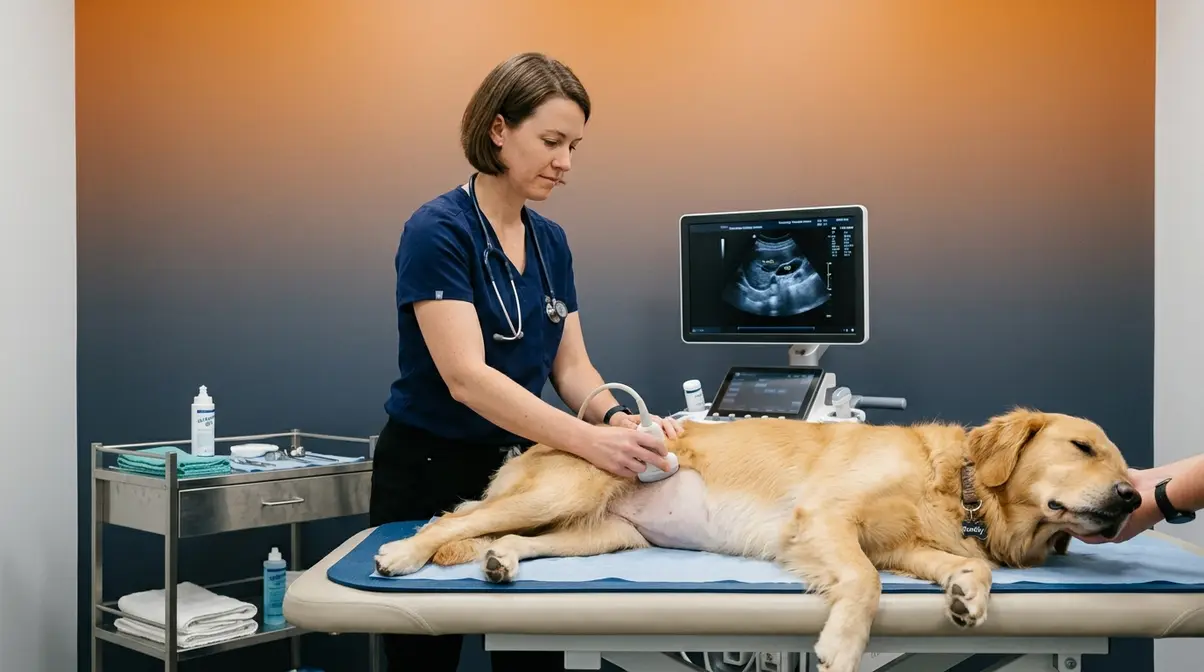
Diagnosis itself requires several tools. A complete blood count (CBC) and chemistry panel detect systemic abnormalities. An abdominal ultrasound (an imaging test that scans organs for tumors) is the single most important screening tool for hemangiosarcoma and lymphoma — it can find splenic masses before rupture. A fine-needle aspirate (FNA) collects cells from a lump without surgery. A biopsy provides definitive diagnosis and cancer grade.
- Diagnosis: $300–$800 for imaging and bloodwork
- Lymphoma CHOP chemotherapy: $3,500–$10,000 for a full protocol
- Splenic hemangiosarcoma surgery: $2,000–$5,000
The cost of not catching it early is often higher — both financially and emotionally. A ruptured splenic hemangiosarcoma requiring emergency surgery plus intensive care can easily exceed $5,000 with a far worse prognosis than a planned procedure.
With the four cancers in mind, let’s build your detection system — starting with the warning signs every owner must know.
Warning Signs and Screening Plan

The most important warning signs that your Golden Retriever may have cancer include new lumps, unexplained lameness, persistent lethargy, pale gums, a swollen abdomen, unexplained weight loss, and difficulty breathing. Many of these signs overlap across cancer types — but some are specific enough to point toward a particular diagnosis. Knowing these signs — and when to start looking for them — is the core of what we call The Golden Window strategy.
7 Early Warning Signs
The checklist below summarizes the 7 signs at a glance — save it to your phone for reference.
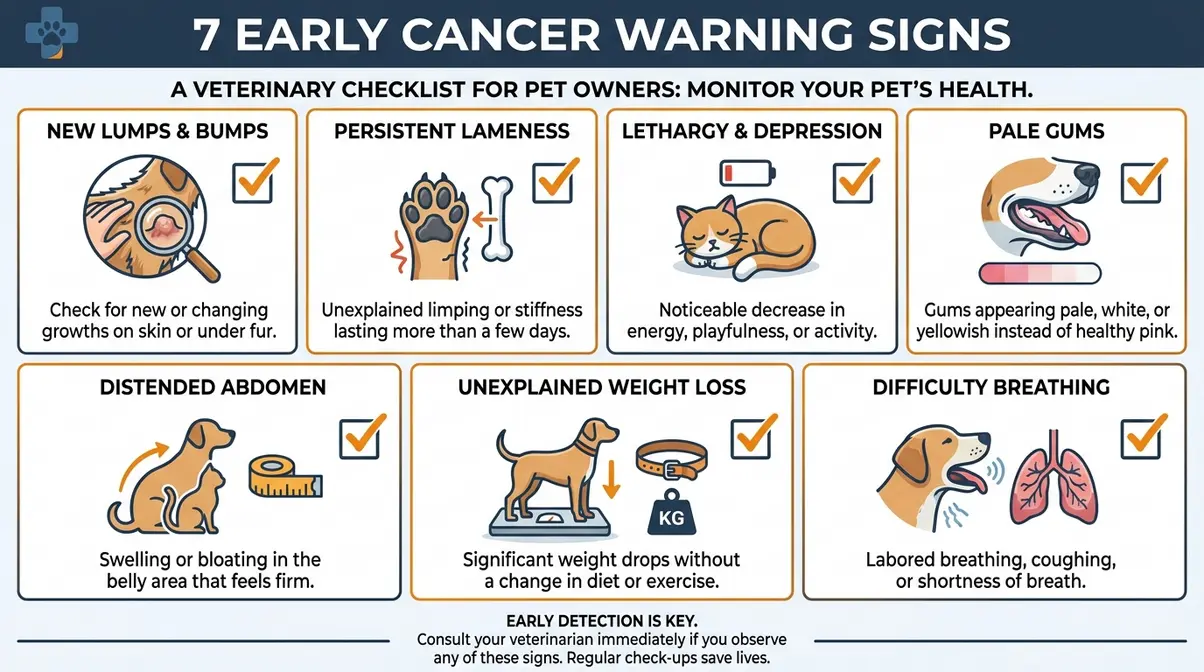
- New or changing lumps — Any new mass, or a lump that grows, changes shape, or becomes painful. Signals: mast cell tumors, lymphoma.
- Persistent lameness — Limping in one leg that doesn’t improve after 2–3 days of rest. Signals: osteosarcoma.
- Unexplained lethargy — Your dog is significantly less active than usual for 2+ days with no obvious cause. Signals: hemangiosarcoma, lymphoma.
- Pale or white gums — Healthy gums are pink. White or very pale gums indicate internal bleeding. Emergency — go to a vet immediately. Signals: hemangiosarcoma rupture.
- Distended abdomen — Swollen or bloated belly, especially if the dog seems uncomfortable. Signals: splenic hemangiosarcoma.
- Unexplained weight loss — Loss of more than 10% body weight without a diet change. Signals: lymphoma, osteosarcoma.
- Difficulty breathing — Labored breathing, coughing, or exercise intolerance. Signals: cardiac hemangiosarcoma, lymphoma.
Ask your vet whether and when to add abdominal ultrasounds to your Golden’s check-ups; “The Golden Window” is our reminder to have that conversation early.
For senior-specific symptoms and care guidance, see our complete guide to recognizing cancer symptoms in senior Golden Retrievers.
Knowing the warning signs is step one. Step two is building a proactive screening calendar — so you’re looking for these signs at the right time, with the right tools.
Questions to Ask Your Vet by Life Stage
Bring these questions to your vet. The right schedule for your dog depends on their individual health history, so they are conversation starters, not a screening schedule. For reference, in a large multi-breed study the median age at cancer diagnosis was 8.0 years in purebred dogs, and the authors suggested starting cancer screening for dogs in general at age 7 (Rafalko et al., PLoS ONE, 2023).
Young adult
- “What should a cancer-monitoring baseline include for my dog, and when should we set it up?”
- “How do I check my dog at home for new lumps or swollen lymph nodes, and how often?”
- “Given the UC Davis guideline for Golden Retrievers, which spay/neuter option fits my dog?”
Middle age
- “Should my dog’s check-ups become more frequent, and from when?”
- “Would abdominal ultrasound or blood tests add anything for my dog, and how often?”
- “What do you think of cancer screening blood tests such as the Nu.Q Vet Cancer Test for my dog?”
Senior years
- “Which screening tests still make sense for my dog now, and how often?”
- “Should we see a board-certified veterinary oncologist for a baseline assessment?”
- “How should we use a quality-of-life scale if my dog becomes ill (see the final section)?”
Screening catches cancer earlier. Prevention strategies — some of them surprising — can reduce the risk before it starts.
Prevention Strategies to Reduce Risk

While no strategy eliminates the genetic risk entirely, proactive steps can meaningfully improve your Golden Retriever’s cancer odds. The question of how to keep your Golden Retriever from getting cancer is best answered through three overlapping strategies: optimizing spay/neuter timing, managing weight and diet, and building a consistent screening schedule.
Spay/Neuter Timing Recommendations
For male Golden Retrievers, the UC Davis Hart team suggests neutering no earlier than 12 months. For females, the decision is more complex — spaying at any age raised cancer risk in the UC Davis data, and the published guideline is to leave females intact (Hart et al., Frontiers in Veterinary Science, 2024), so have the timing conversation with your vet before 6 months of age, not after.
Why does timing matter so much mechanically? Sex hormones play a role in musculoskeletal development and immune function. Removing them too early — before the body’s growth plates close — appears to disrupt processes that normally suppress cancer development. This is why the UC Davis finding is so consequential for this breed specifically.
Neutering male Golden Retrievers no earlier than 12 months is the UC Davis Hart team’s suggested guideline (Hart et al., 2024) — one of the most actionable decisions an owner can discuss with their vet.
This is a significant health decision. Always discuss the specific timing for your dog with a veterinarian who knows their individual health history. (Hart et al., 2014 and 2024, cited above.)
Beyond surgery timing, daily lifestyle choices — especially what you feed your dog and how you manage their weight — have a meaningful impact on cancer risk.
Diet, Weight, and Supplements
Keeping your Golden lean throughout life is one of the most evidence-backed things you can do. Obesity increases systemic inflammation, which is a known driver of cancer development in dogs. A practical check: you should be able to feel your dog’s ribs without pressing hard — but not see them.
For supplements, evidence quality varies significantly. Here’s an honest breakdown:
- Omega-3 fatty acids (fish oil) — Strong evidence: Anti-inflammatory compounds found in fish oil may slow tumor growth and reduce systemic inflammation. Discuss appropriate dosing with your veterinarian based on your dog’s weight.
- *Yunzhi mushroom (also called Turkey Tail mushroom, Trametes versicolor) — Emerging evidence: In a 2012 University of Pennsylvania pilot study of 15 dogs with splenic hemangiosarcoma treated after splenectomy (5 per dose group), the highest-dose group of the mushroom compound PSP had a median survival of 199 days, longer than the 86 days previously reported after surgery alone; differences between dose groups were not statistically significant (Brown & Reetz, Evidence-Based Complementary and Alternative Medicine*, 2012). Research is ongoing.
- Turmeric/Curcumin — Mixed evidence: Anti-inflammatory properties are well-established in laboratory studies, but bioavailability in dogs is poor without a fat source. Do not use without specific veterinary guidance.
⚠️ YMYL — Mandatory: Always tell your veterinarian about any supplements your dog is taking. Some supplements interact with chemotherapy drugs and can reduce treatment effectiveness. This conversation must happen before starting any supplement regimen if your dog is undergoing cancer treatment.
For food recommendations that support long-term health, see our guide to nutritional strategies for Golden Retriever health.
All of these prevention strategies work best when they’re part of a regular screening schedule — not reactive responses to symptoms.
Proactive Vet Screening Schedule
The key is starting before symptoms appear. Ask your vet to set a schedule for wellness exams and screening tests, including whether and when to add abdominal ultrasound. Write this schedule down and put it in your calendar today — don’t rely on remembering it at the next appointment.
Every year inside The Golden Window is a year where early detection is still possible. Talk to your vet at your next appointment about setting up a cancer-monitoring baseline for your Golden. Your veterinarian can tailor this schedule to your dog’s individual age, health history, and risk factors.
Even with the best prevention plan, it’s important to be honest about what we can and cannot control — and to prepare for the possibility that cancer may still arrive.
What Prevention Cannot Change
Across Golden Retriever owner communities, the consistent concern is this: even the most diligent, proactive owners lose their dogs to cancer. No prevention strategy eliminates the genetic risk. With cancer behind 65% of deaths in a UC Davis study of Goldens, even the most careful owner may face a cancer diagnosis in their dog’s lifetime.
Limits of What We Can Control
Here is an honest admission that matters for your expectations. We initially believed that diet changes alone could meaningfully reduce cancer risk in Goldens. The research is more nuanced — diet and weight management reduce systemic inflammation, which may lower risk, but there is no dietary protocol proven to prevent cancer in this breed. Prevention is about improving the odds and catching cancer earlier — not guaranteeing it won’t happen.
Science also doesn’t yet have complete answers about why some Goldens with favorable genetics still develop cancer young, or why some with poor genetic profiles live to 14. The Morris Animal Foundation’s Lifetime Study is still generating data that will clarify these questions over the coming years.
Prevention reduces risk. Screening catches cancer earlier. Neither is a guarantee. If your dog has been diagnosed with cancer, the most important step is consulting a board-certified veterinary oncologist as soon as possible — not searching for supplements online.
If your Golden does receive a cancer diagnosis, one of the most compassionate tools available is a structured quality-of-life assessment.
End-of-Life Quality Scoring
The HHHHHMM Quality of Life Scale, developed by veterinary oncologist Dr. Alice Villalobos, gives owners a structured framework for one of the hardest decisions they’ll ever face. Each letter represents a criterion scored 1–10:
- Hurt — Is pain adequately managed?
- Hunger — Is the dog eating adequately?
- Hydration — Is the dog drinking and not dehydrated?
- Hygiene — Can the dog be kept clean, free of sores?
- Happiness — Does the dog show mental engagement and interest in life?
- Mobility — Can the dog move without distress or assistance?
- More good days than bad — When you look at the week as a whole, is the balance positive?
Score each criterion 1–10. A total score below 35 suggests quality of life is significantly compromised, and a conversation with your vet about next steps is warranted (Villalobos, Journal of Veterinary Oncology, 2006).
This scale doesn’t make the decision for you — but it gives you a framework for the hardest conversation, grounded in your dog’s daily experience rather than your grief. Use it as a conversation tool with your veterinarian or a veterinary oncologist, never as a substitute for professional guidance.
Frequently Asked Questions
When do Goldens usually get cancer?
Most cancers in dogs are diagnosed in middle and older age: in a large multi-breed study the median age at diagnosis was 8.0 years for purebred dogs and 8.8 years overall (Rafalko et al., PLoS ONE, 2023). When determining the average age golden retrievers get cancer, Golden Retriever Lifetime Study data show hemangiosarcoma rising steeply after age 6 (Labadie et al., PLoS ONE, 2022), so ask your vet when to start screening such as abdominal ultrasounds and blood panels. A UC Davis study of 652 Goldens found that 65% died of cancer (Kent et al., PLoS ONE, 2018). Early-onset cases before age 6 are less common but do occur, particularly with lymphoma.
What causes cancer in Goldens?
The primary cause of cancer in Golden Retrievers is a strong genetic predisposition; the specific genes involved are still being studied. Environmental factors — including pesticide exposure and secondhand smoke — may compound the genetic risk. Neutering timing also plays a documented role: female Goldens spayed after 6 months had three to four times the cancer rate of intact females in UC Davis research (Hart et al., PLoS ONE, 2014).
How to tell if your Golden has cancer?
The key signs that your Golden Retriever may have cancer include new or changing lumps, unexplained lameness, persistent lethargy, pale or white gums, a distended abdomen, unexplained weight loss, and difficulty breathing. Pale gums and a swollen abdomen are emergency signs — they can indicate internal bleeding from a ruptured hemangiosarcoma and require immediate veterinary attention. Swollen lymph nodes under the jaw, behind the knees, or in the armpits are often the first sign of lymphoma. If you notice any of these signs, contact your veterinarian immediately — do not wait to see if they resolve on their own.
How to prevent cancer in Goldens?
While you cannot eliminate the genetic risk, proactive steps can meaningfully improve your Golden Retriever’s cancer odds: maintain a lean body weight, ask your vet when to start abdominal ultrasound screening, and discuss spay/neuter timing with your vet. Some supplements, such as omega-3 fatty acids and Yunzhi (Turkey Tail) mushroom extract, are being studied, but the evidence is limited, so always consult your vet before starting any supplement. Minimizing exposure to pesticides, herbicides, and secondhand smoke may reduce environmental cancer triggers. A good first step is asking your vet about a cancer-screening baseline before your dog turns 5.
What is the silent killer in Goldens?
Hemangiosarcoma is the “silent killer” in Golden Retrievers — a cancer of the blood vessel walls that most often develops in the spleen or heart with virtually no early warning signs. It progresses rapidly and often causes no noticeable symptoms until the tumor ruptures, causing sudden, catastrophic internal bleeding that can be fatal within hours. In an AKC Canine Health Foundation article, researcher Jaime Modiano says hemangiosarcoma is responsible for the death of one in five Golden Retrievers in the U.S. (AKC Canine Health Foundation, 2025). Abdominal ultrasound can sometimes find splenic tumors before they rupture; ask your vet whether and when to include it in your dog’s check-ups.
Conclusion
For owners wondering about the average age golden retrievers get cancer, diagnosis is most common in middle and older age — and cancer caused 65% of deaths in a UC Davis study of the breed (Kent et al., PLoS ONE, 2018). The Golden Window — the years before and around the typical age at diagnosis — is the time to plan screening with your vet. Asking your vet about a screening plan, such as abdominal ultrasound and a CBC blood panel, before any symptoms appear is a practical first step. Hemangiosarcoma, lymphoma, osteosarcoma, and mast cell tumors each have distinct warning signs and timelines — knowing them gives you a real advantage.
If you grew up with a Golden like the one in that opening quote — or if you’re watching your own dog enter their senior years — The Golden Window framework gives you something to do with that fear. It turns helplessness into a schedule. The genetic burden is real, and it cannot be fully overcome. But catching cancer earlier can give you and your vet more options.
At your dog’s next wellness appointment, ask your vet specifically: “Can we set up a cancer-monitoring baseline, including an abdominal ultrasound?” That single conversation is where The Golden Window strategy begins. Don’t wait for a symptom to prompt it — by then, the window may have narrowed.
➤ The most useful thing you can do for your Golden Retriever right now is ask your vet when to set up a cancer-screening baseline — because The Golden Window doesn’t stay open forever.