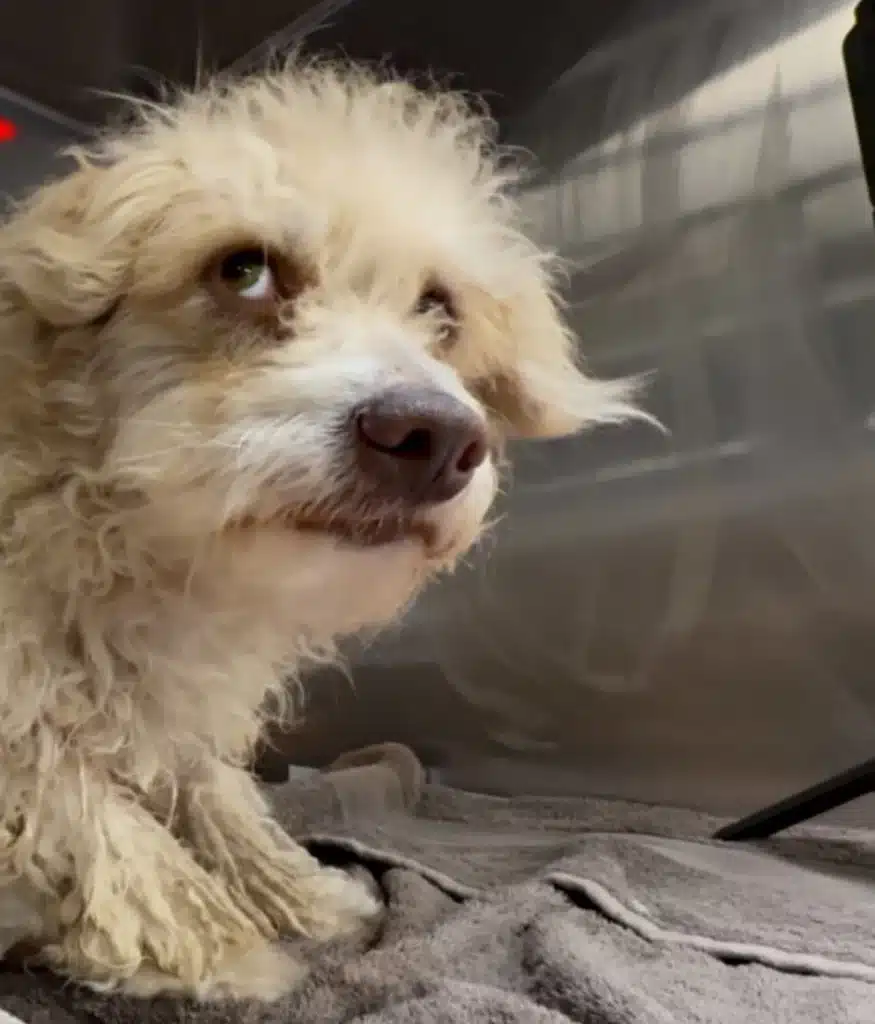
The shelter file on Milo read like a warning sign. He lunged. He bit. Every note from every intake staffer said the same thing: aggressive dog, approach with caution.
No one had stopped to ask why.
A Reputation He Didn’t Earn
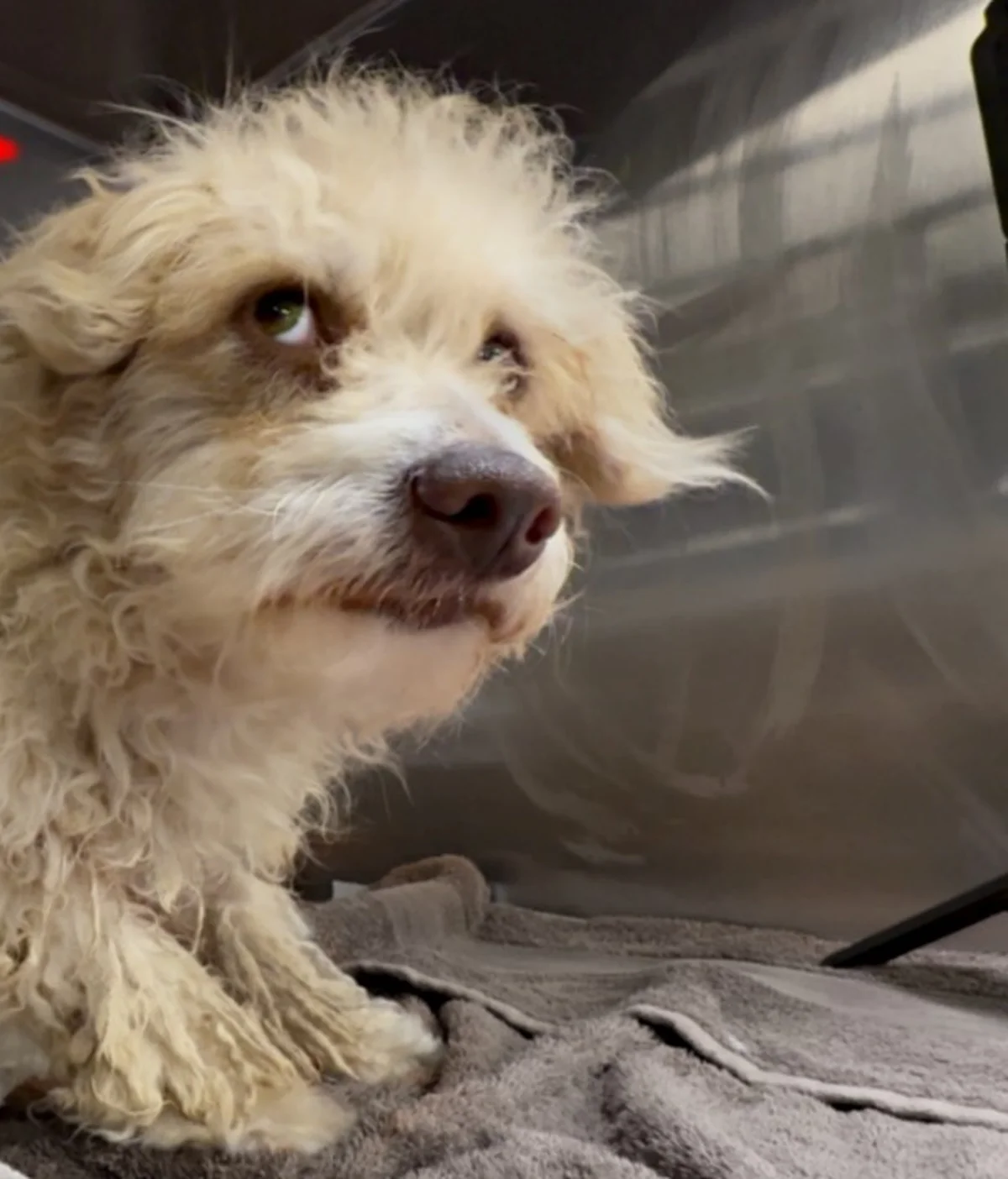
The first time staff reached into Milo’s kennel, he snapped. It happened fast — a lunge, a warning, a pulled-back hand. The notes got updated. New volunteers heard the warning before they ever walked past his door.
The word aggressive followed Milo through every day at that shelter. It shaped how people looked at him, how long they lingered, whether they stopped at all.
But a few of his caretakers started noticing something that didn’t line up. Milo wasn’t cold or calculating. He was afraid. There’s a difference — and it matters.
The Pain No One Could See
Beneath Milo’s matted coat, something had been wrong for a long time.
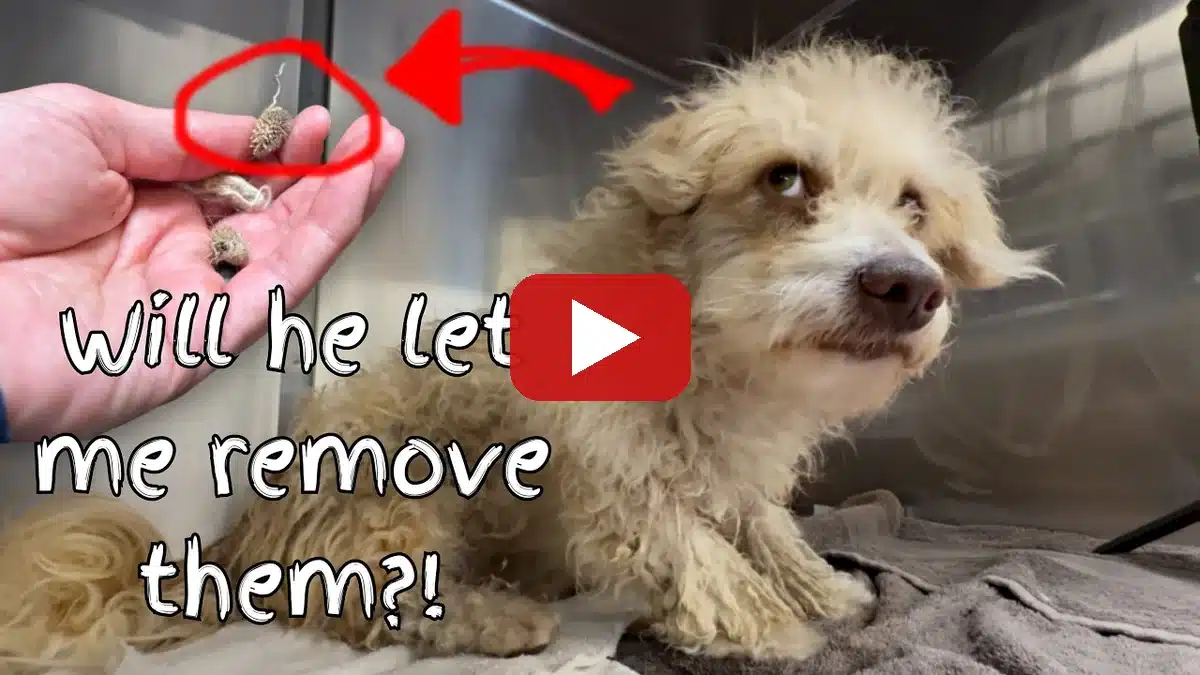
Dozens of sharp burrs had worked their way deep into his fur — around his paws, under his arms, against the skin of his neck and belly.
In all the places that hurt most, the places no one would think to look, the debris had made a home.
Every step pulled the mats tighter. Every time a hand reached toward him, the coat shifted, the burrs pressed in, and pain shot through his body. He wasn’t attacking. He was trying to make it stop.
Someone Finally Asked
One rescue worker decided to look past the file.
Milo’s behavior didn’t fit the pattern of a genuinely dangerous dog. His “aggression” only triggered when someone got close — when something was about to hurt. He didn’t stalk. He didn’t escalate unprovoked. He flinched, then snapped, which is a very different thing.
The team made a decision: before they gave up on Milo, they were going to find out what was hiding underneath all that fur. They called in a groomer.
Mel Came in Ready
Mel had worked with matted dogs before. But walking into Milo’s space, she could see immediately that this wasn’t a standard appointment.
His coat was dense and knotted — weeks or months of neglect compressed into something that barely looked like fur anymore.
Given his history, the team chose gentle sedation, not because he was dangerous, but because they wanted him comfortable. Maybe for the first time in a very long while.
As Mel began to work through the mats, the full picture started coming into focus.
What He’d Been Carrying
Burr after burr came free from Milo’s coat.
The mats around his paws had pulled the skin so taut that the tissue beneath was raw. The clumps under his arms had essentially fused into the fur.
Every piece Mel removed represented another source of pain that Milo had been absorbing in silence — while people handed him a label he didn’t deserve.
Dogs experiencing chronic pain often respond to touch with growling, snapping, or biting — not from aggression, but from anticipation of more hurt.
The body’s instinct is to protect itself. That’s what Milo had been doing. Not threatening anyone. Just trying to survive being reached for.
A Dog No One Had Met Yet
When the sedation cleared and Milo lifted his head, the room felt different.
He looked around. He noticed the other dogs nearby. His tail began to move — tentatively at first, then with a little more conviction. A caregiver reached toward him, and he didn’t pull back. He leaned in.
“Without the constant pain weighing him down,” the rescue team observed, “he began showing a completely different side of his personality.”
The dog in that kennel file — the one who scared everyone — hadn’t been Milo at all. He’d been a dog in agony. This was Milo.
Sharon Said Yes
With his real self finally visible, it didn’t take long.
Sharon came to meet him. Whatever she saw in those eyes — or maybe the way his tail moved when she walked through the door — she knew. She said yes. She brought him home.
She describes him now as “an extremely sweet little pup,” which would have been hard to believe six weeks earlier.
He has a soft bed that he returns to every night. Car rides are still a work in progress, but he keeps getting a little braver — because Sharon keeps showing up with patience instead of pressure.
He Never Needed a Second Chance
Milo didn’t fail anyone. The system failed him.
He needed one person to look past the word on his file and ask a simpler question: what is this dog actually feeling right now? Mel asked that question with her hands. Sharon answered it with a home.
Every shelter has a dog like Milo — labeled and left. Some of them are waiting for someone to look a little closer.
For weeks, every hand that reached for him came back with a warning.
Then Mel found one burr.
Then another. Then dozens.
Story: iHeartDogs.com · Video: YouTube — consider supporting your local animal shelter.
More stories you’ll love
- Satchi Was on the Euthanasia List. A Volunteer Kept Showing Up for 8 Months — Then Everything Changed.
- Nigel Barked Every Single Day at the Shelter. Turns Out, He Had a Very Good Reason.
Written by Coral Drake · Reviewed by Brianna York, Former Veterinary Technician. We’re dog people, not a vet clinic — for health questions, ask your vet.