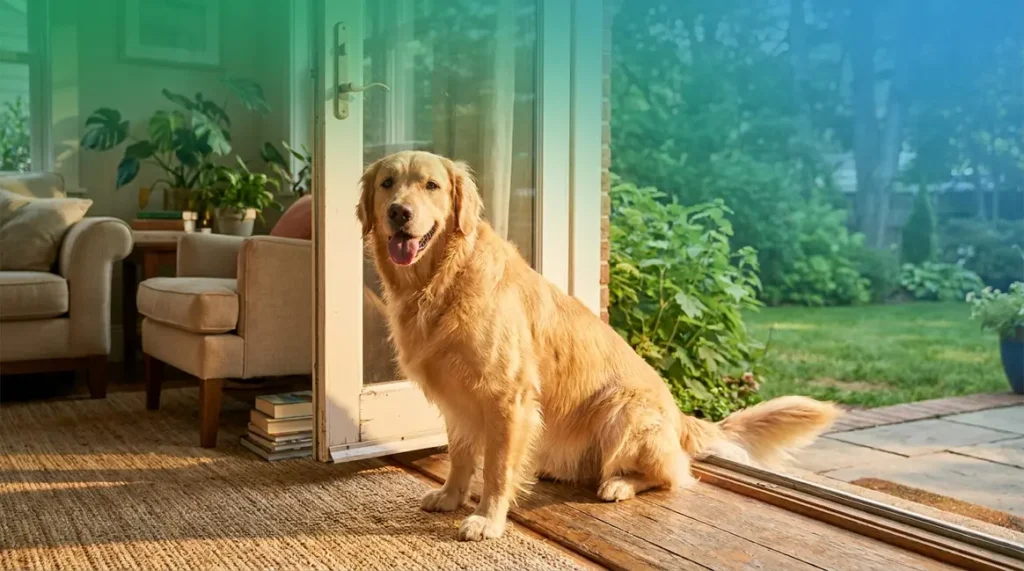
Key TakeawaysGolden Retrievers are not suited to live as full-time outside dogs – their deep need for human companionship makes isolation a genuine welfare risk, not just an inconvenience.
- The core question: If you are wondering, “can golden retrievers be outside dogs,” the answer is no – they are indoor family members.
- The short answer: No, Golden Retrievers should not live outdoors permanently
- Temperature limits: Limit outdoor time below 45°F and above 85°F
- The 3-Hour Outdoor Window: A healthy adult Golden can enjoy up to 3 hours of supervised outdoor time in mild weather before behavioral and physical risks escalate
- Social wiring: Goldens were bred for close human work – isolation triggers separation anxiety and destructive behaviors
- Safe outdoor time is possible: With the right routine, your Golden can enjoy a fenced yard, walks, and play without becoming an “outside dog”
Are Golden Retrievers Outside Dogs?
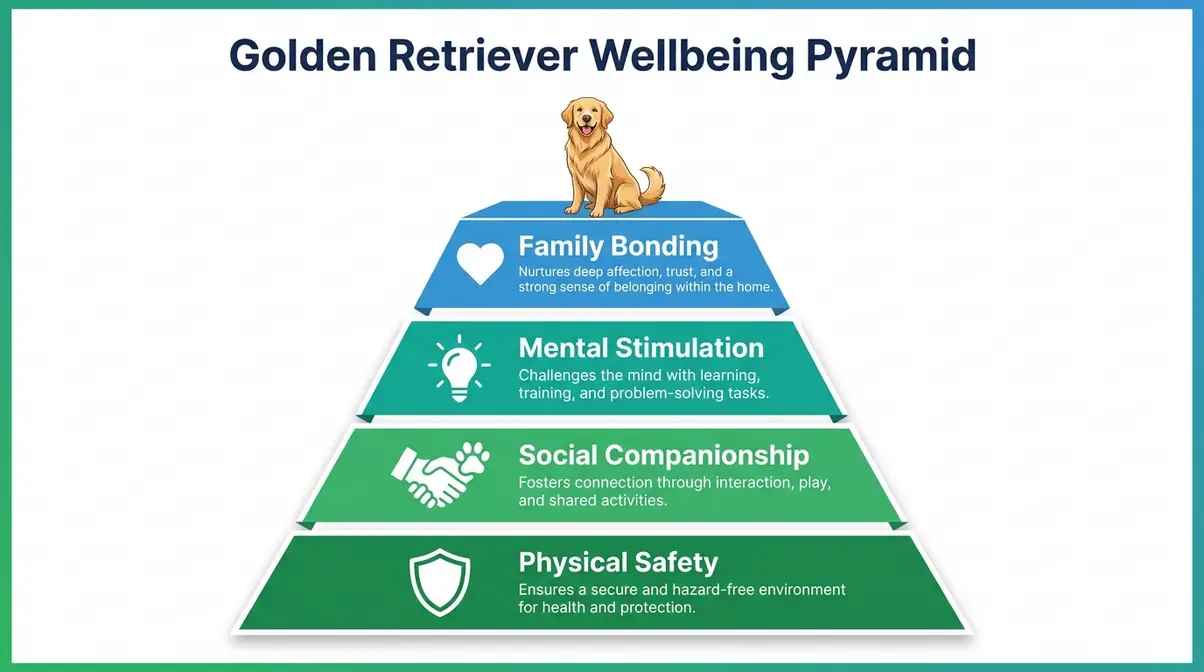
Golden Retrievers are not outside dogs in the full-time sense. When people ask, “can golden retrievers be outside dogs,” they often underestimate the breed’s deep need for human connection. They are outdoor-activity dogs, which is a meaningful distinction. They love hiking, fetch, swimming, and yard play. What they cannot do is live outside, separated from their people, and remain emotionally or physically healthy. The breed was developed in Scotland in the mid-1800s as a close-working gun dog. Hunters needed a retriever who would work alongside them all day in the field, then come home with the family at night. Solitary outdoor living was never part of the design. The Golden Retriever’s gentle temperament and close bond with people are not coincidental traits. They are the result of generations of selective breeding for human proximity and cooperation. Golden Retrievers are not outside dogs – they are family members who happen to thrive in outdoor activities. This brings us to the practical framework this article is built around: The 3-Hour Outdoor Window. For a healthy adult Golden in mild weather (50 to 75°F), supervised outdoor time of up to 3 hours is generally safe and beneficial. Beyond that window, both behavioral stress and physical risk begin to increase. This is a practical guideline, not a hard medical limit, and it assumes you are present or checking in regularly. Daily walks, yard play, and fetch sessions are essential for your Golden’s physical and mental health. This guide is not anti-outdoor. The problem is outdoor living, not outdoor visiting. The reason Goldens struggle as outside dogs has everything to do with how their brains are wired, and that is what the next section covers.Can Golden Retrievers Live Outside?
Golden Retrievers cannot live outside full-time – they are an indoor breed that requires daily human companionship to stay emotionally healthy. They were developed as close-working companions and are highly susceptible to separation anxiety, depression, and destructive behaviors when isolated from their family for long periods. A Golden left outside full-time will typically develop excessive barking, destructive digging, or stress-related skin problems within weeks. Supervised outdoor time in a fenced yard is healthy and encouraged – permanent outdoor living is not.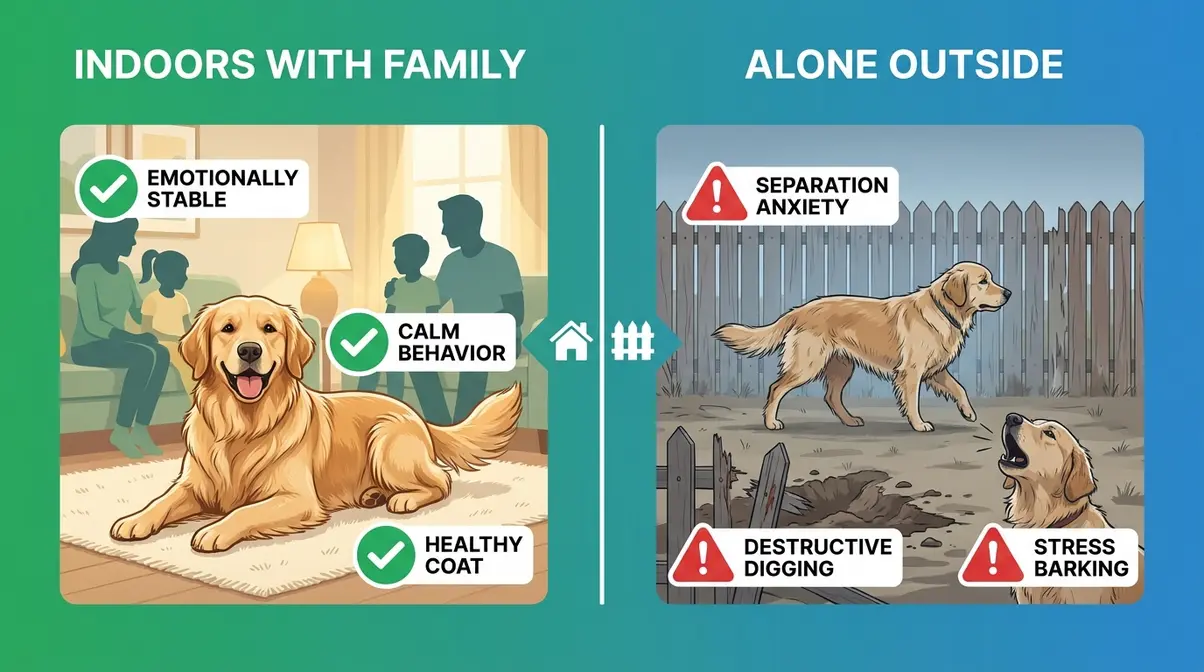
Why Your Golden Retriever Belongs Indoors
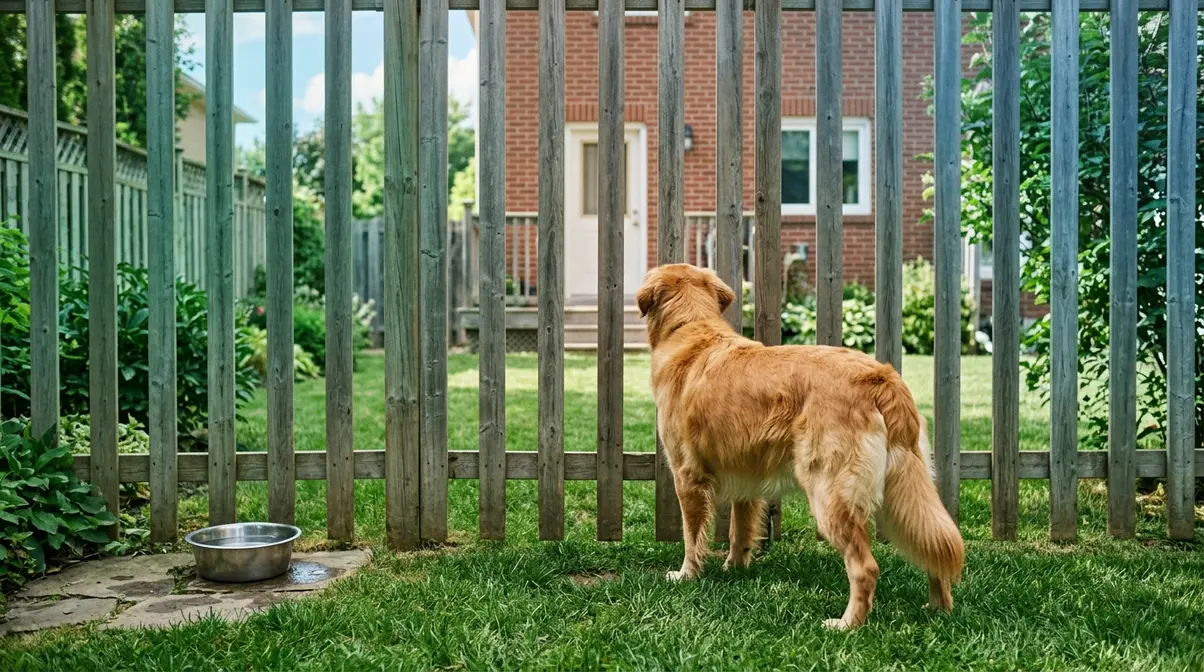
“Goldens are so social and people orientated that they don’t do well if isolated from their family.”That observation, shared widely across Golden Retriever owner communities, is not sentiment. It is a breed-level behavioral reality backed by research.
The Separation Anxiety Risk
As a golden retriever outside dog scenario, leaving your Golden alone in the yard carries a specific psychological risk that most people underestimate. Separation anxiety, a stress disorder triggered when dogs are separated from the people they are bonded to, is not the same as “missing you a little.” It is a genuine anxiety response with physical symptoms, including trembling, panting, drooling, and attempts to escape. Golden Retrievers are disproportionately affected because they were bred for constant human proximity. Cornell University research on canine anxious behavior shows that dogs with anxious behavior prefer to remain in the same room as their owners and become highly stressed when isolated (Cornell University College of Veterinary Medicine). For a Golden, a fenced yard while the family is at work is not “fresh air.” It is 8 hours of waiting in a state of stress. Beyond the 3-Hour Outdoor Window, the risk of these anxiety responses increases significantly. If you have already noticed signs of stress in your Golden, our guide to Golden Retriever separation anxiety signs and fixes can help. Separation anxiety is the emotional side of the problem. But isolation outside also triggers specific behavioral problems that can be hard to reverse.Behavioral Problems from Isolation
When a golden retriever outside situation goes on too long, the behavioral fallout is predictable. These are not “bad dog” problems. They are welfare signals, and they mean your Golden’s needs are not being met. Common behaviors caused by outdoor isolation include:- Excessive barking – the dog is calling for its family
- Destructive digging – a displacement behavior driven by anxiety
- Fence-running or pacing – frustration from being trapped and separated
- Hot spots and skin problems – stress-licking leads to raw, infected patches of skin
- Depression and lethargy – reduced appetite, disinterest in play, social withdrawal
How Cold Is Too Cold for Your Golden Retriever?
Temperature Safety Guide
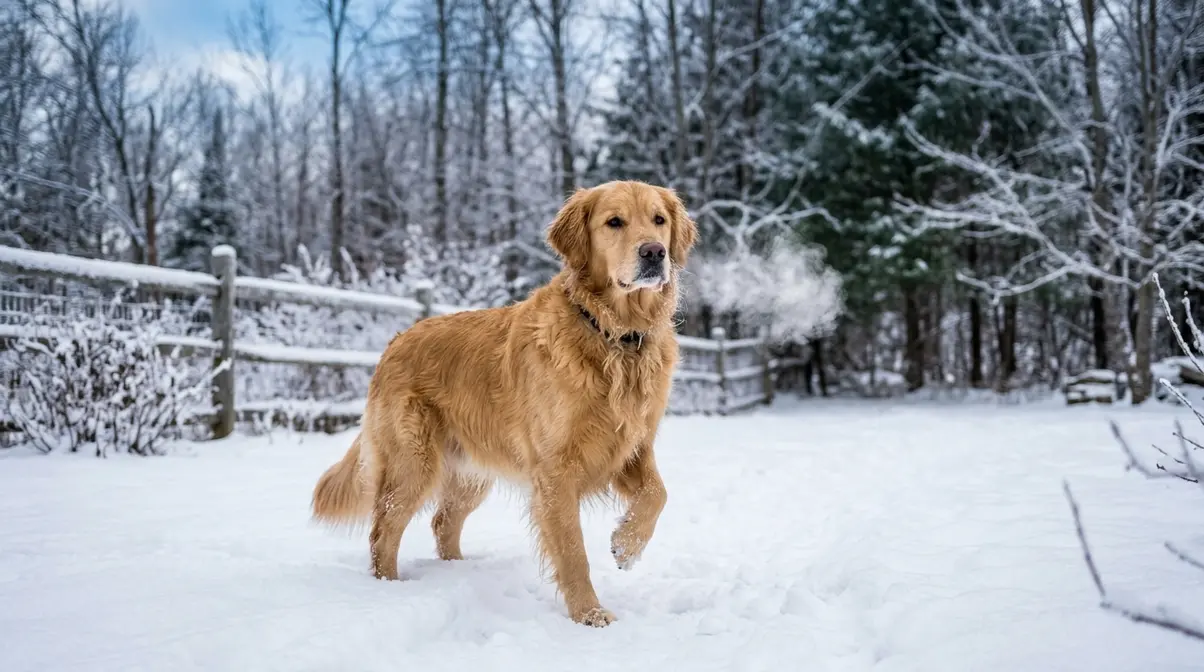
Understanding your Golden Retriever’s double coat and how it regulates temperature helps you set realistic expectations for outdoor sessions. Your Golden’s double coat, a two-layer fur system with a dense, water-resistant outer layer and an insulating undercoat, provides real protection in moderate cold. However, it is not a substitute for shelter or time limits. Use this table as your quick reference before heading outside:| Temperature | Zone | What to Do |
|---|---|---|
| Below 20°F (-7°C) | Danger | Limit to 5-10 minutes maximum; serious risk of frostbite and hypothermia |
| 20-32°F (-7 to 0°C) | Caution | Limit to 20-30 minutes; watch closely for shivering or lifting paws |
| 32-45°F (0 to 7°C) | Moderate | 30-60 minutes with active monitoring; watch for signs of discomfort |
| 45-75°F (7 to 24°C) | Safe | Normal supervised outdoor time; ensure fresh water is available |
| 75-85°F (24 to 29°C) | Warm | Limit to 30-45 minutes midday; provide shade and water |
| Above 85°F (29°C) | Heat Risk | Morning and evening only; risk of overheating (see hot weather section below) |
Warning Signs Your Golden Is Too Cold
- Shivering or trembling – the body’s attempt to generate heat
- Lifting paws off the ground – paw pads are highly sensitive to cold and ice
- Slowing down or stopping – a sign the body is conserving energy
- Whining or pushing to go back inside – your dog is telling you directly
- Hunching the body and tucking the tail – a classic cold-stress posture
Can Golden Retrievers Handle Hot Weather Outside?
Your Golden can enjoy outdoor time in warm weather, but heat is a serious risk above 85°F. Here is the paradox that catches many owners off guard: the same double coat that helps in winter traps heat in summer. The insulating undercoat works both ways. On humid days above 75°F, panting, your dog’s primary cooling mechanism, becomes less effective. Moisture does not evaporate as quickly from their tongue and airways when the air is already saturated. This is why a 78°F humid afternoon can be more dangerous than a dry 68°F day. Humidity compounds heat risk in ways the thermometer alone does not show. Watch for these signs of overheating: excessive panting that does not slow down, thick drooling, bright red gums, stumbling, or sudden disorientation. These are emergencies. Move your Golden to shade, offer cool (not ice cold) water, and contact your veterinarian. Above 85°F, a Golden Retriever’s double coat becomes a heat trap – limiting outdoor time to early morning and evening is not optional, it is necessary. Practical rules for hot weather outdoor time: take your Golden out before 9am or after 6pm during summer months; always provide fresh water; never leave them in a parked car even for a minute; and watch for hot spots, areas of skin irritation caused by heat and moisture, especially in skin folds and under the ears. The AKC temperature guidelines for outdoor dogs advise limiting outings when temperatures rise above 90°F to ensure the dog’s safety (AKC). Now that you know the temperature limits, here is how to build a safe outdoor routine that keeps your Golden happy without putting them at risk.Safe Outdoor Time for Your Golden
Your Golden needs outdoor time every day. The goal is not to keep them inside forever. It is to build a routine where outdoor time is supervised, safe, and enriching. The 3-Hour Outdoor Window is your practical guide: plan sessions within that limit, check the temperature table first, and always bring your Golden back inside with you.Outdoor Setup Comparison
When planning outdoor time, the type of setup matters for your dog’s safety:| Setup Option | Type | Key Spec | Best For | Price Range |
|---|---|---|---|---|
| Fenced Yard | Enclosure | High Safety | Off-leash play | High |
| Tie-Out Cable | Tether | Low Safety | Quick bathroom breaks | Low |
| Dog Run | Kennel | Medium Safety | Short supervised stays | Medium |
| GPS Collar | Wearable | Tracking Only | Unfenced acreage | High |
How Long Can They Be Outside?
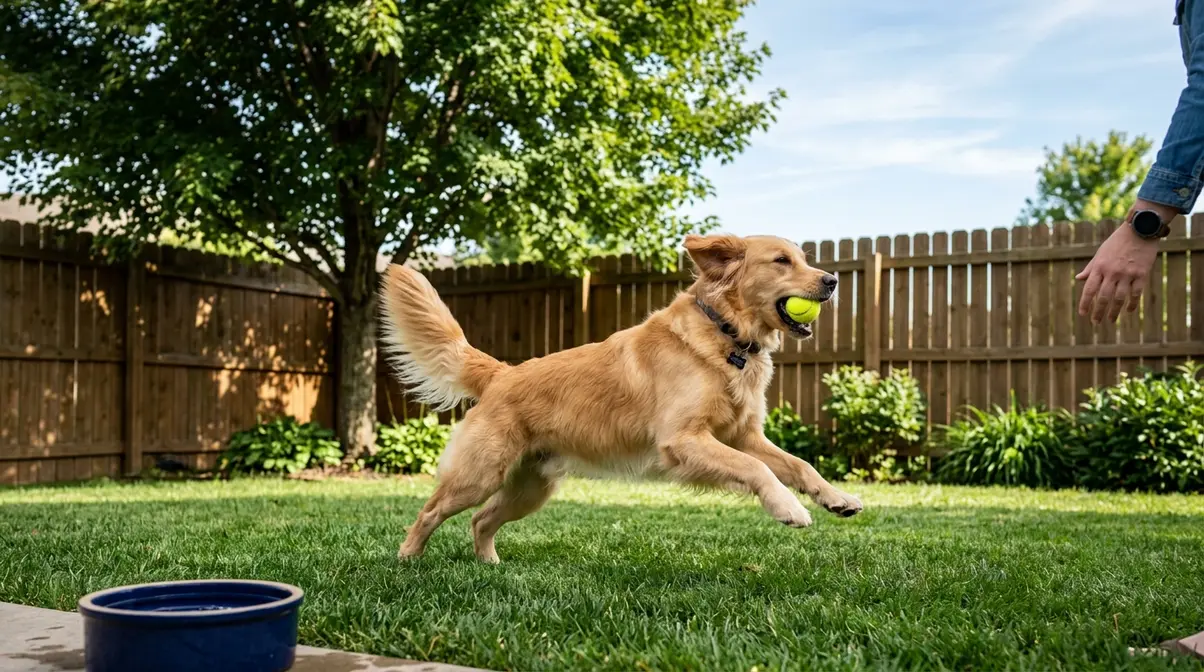
A healthy adult Golden Retriever can enjoy 2 to 3 hours of supervised outdoor time in mild weather (50 to 75°F) before behavioral and physical risks begin to increase. This is not a hard medical limit – it is a practical guideline based on the breed’s social and thermoregulation needs, and it assumes you are present or checking on them regularly. Leaving a Golden alone outside for a full workday (8 or more hours) is not recommended under any weather conditions, as prolonged isolation causes measurable stress in this breed. For overnight outdoor time, the answer is clear: Golden Retrievers should sleep indoors with their family. Here is your safe outdoor checklist:- Secure your fenced in area. Your fence should be at least 5 to 6 feet high, free of gaps, and latched securely. A fenced yard is a great tool for off-leash play, just do not leave your Golden alone out there for hours at a stretch.
- Always provide fresh water. Use a bowl that cannot tip over, and refill it every time your Golden heads outside. Panting in warm weather causes rapid dehydration.
- Create shade and shelter. A shaded area is essential above 70°F. A doghouse does not regulate temperature the way your home does, and it should not be treated as a substitute for indoor shelter.
- Check for toxic plants. UC Davis warnings on toxic garden plants highlight that a surprisingly large number of common garden and household plants are toxic to pets, posing a silent threat to dogs left unsupervised in yards (UC Davis School of Veterinary Medicine). Common culprits include azaleas, rhododendrons, and sago palms. Walk your yard before letting your Golden roam freely.
- Respect the time limit. The 3-Hour Outdoor Window is a guideline, not a permission slip for 3 hours alone. Supervised time with you is always safer than unsupervised solo time.