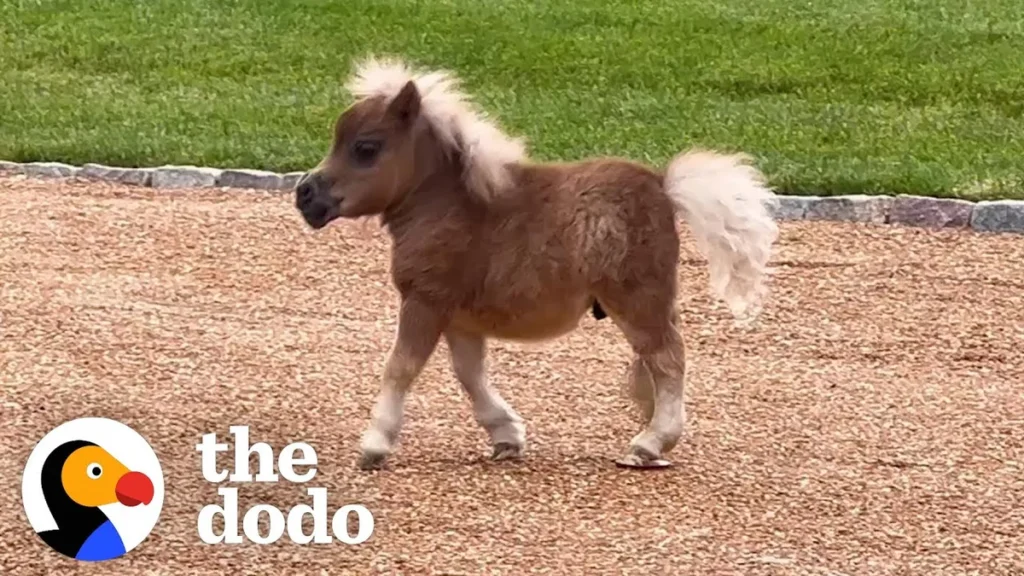
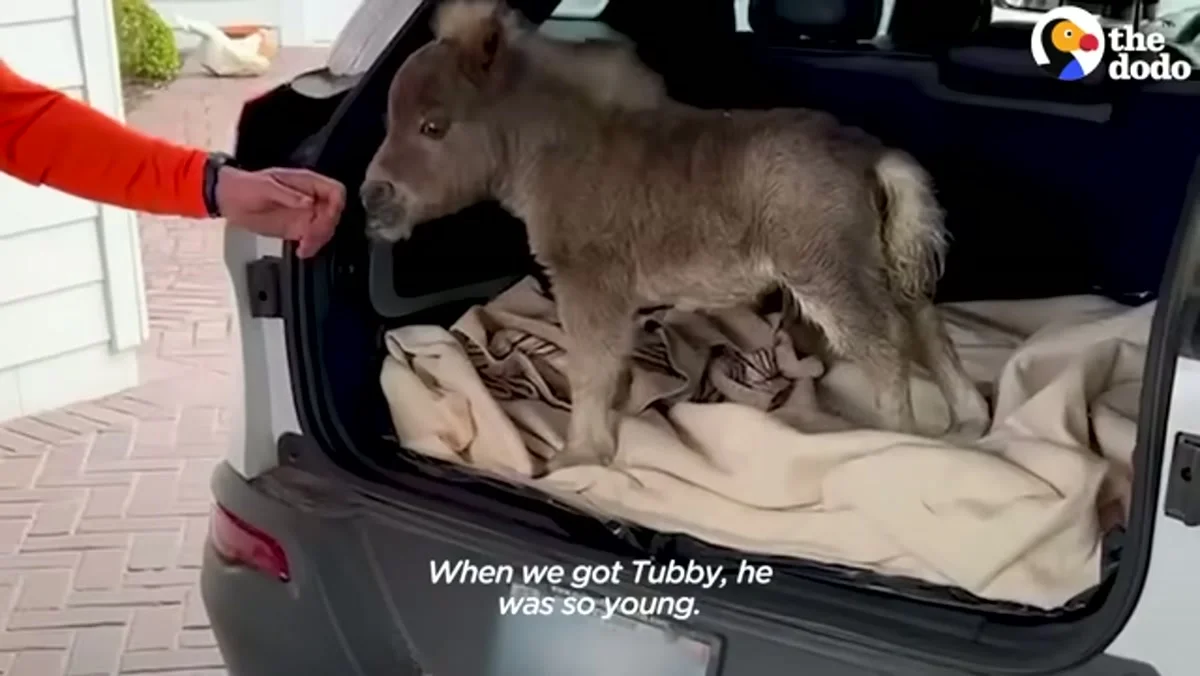
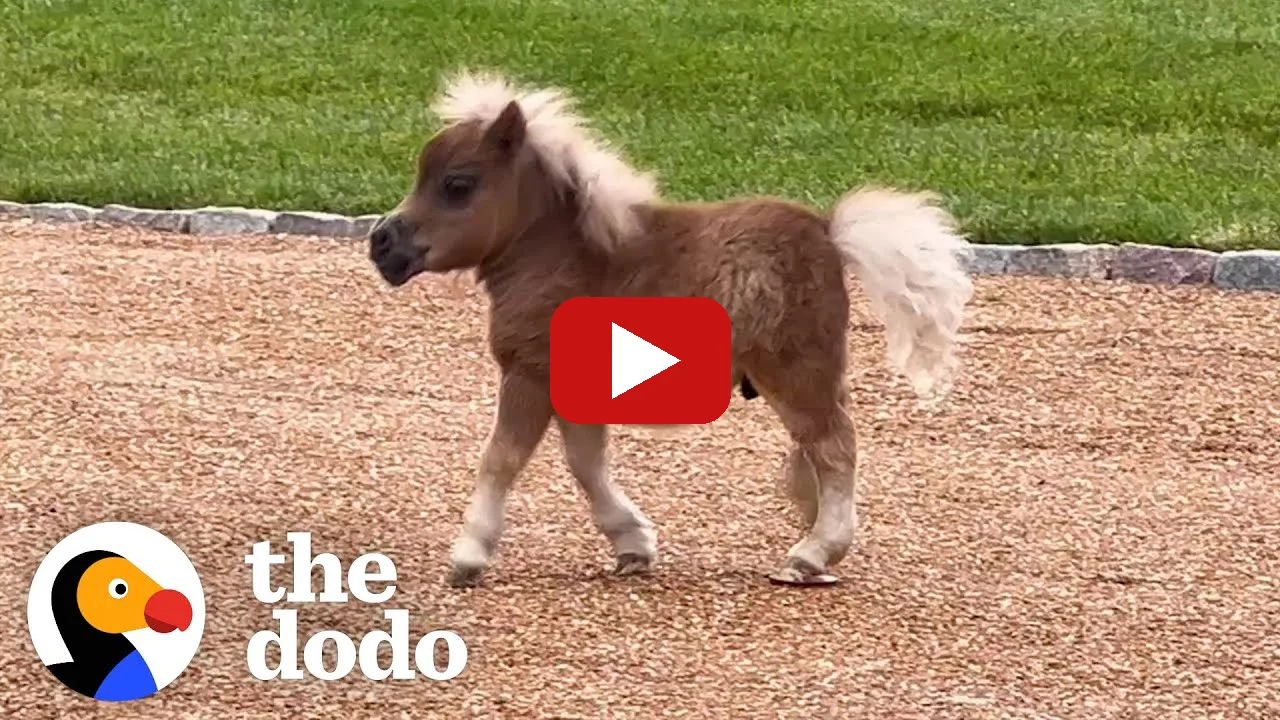
Tubby arrived at R&R Ranch Minis as a tiny foal — so small that Stacy brought him home in the back of an SUV, tucked into blankets like a very unusual road-trip passenger.
He was born with dwarfism and a prominent underbite. He was also, from day one, shorter than the Golden Retrievers he’d be living with.
His family found this delightful.
The Wrong Size For The Job
In most households, the horse is the large one. The one with hooves that sound like thunder coming down the hall.
Tubby was not that horse. He stood shorter than the Goldens he lived alongside — compact, expressive, and apparently unbothered by the math. If you squinted just right, he might have passed for an unusually confident dog.
What He Lacked In Height, He Found In Personality
His family nicknamed him “Tub-a-love” and “Tubs-a-million.” Both names fit.
Tubby had a habit of investigating the world with his mouth — grabbing shirts, hands, and anything else within reach. It earned him a second nickname: “land shark.” The Golden Retrievers accepted this with the grace of older siblings who had long since given up on logic.
His favorite target? Kissing the goldens. Directly. Repeatedly.
He Didn’t Start Out This Way
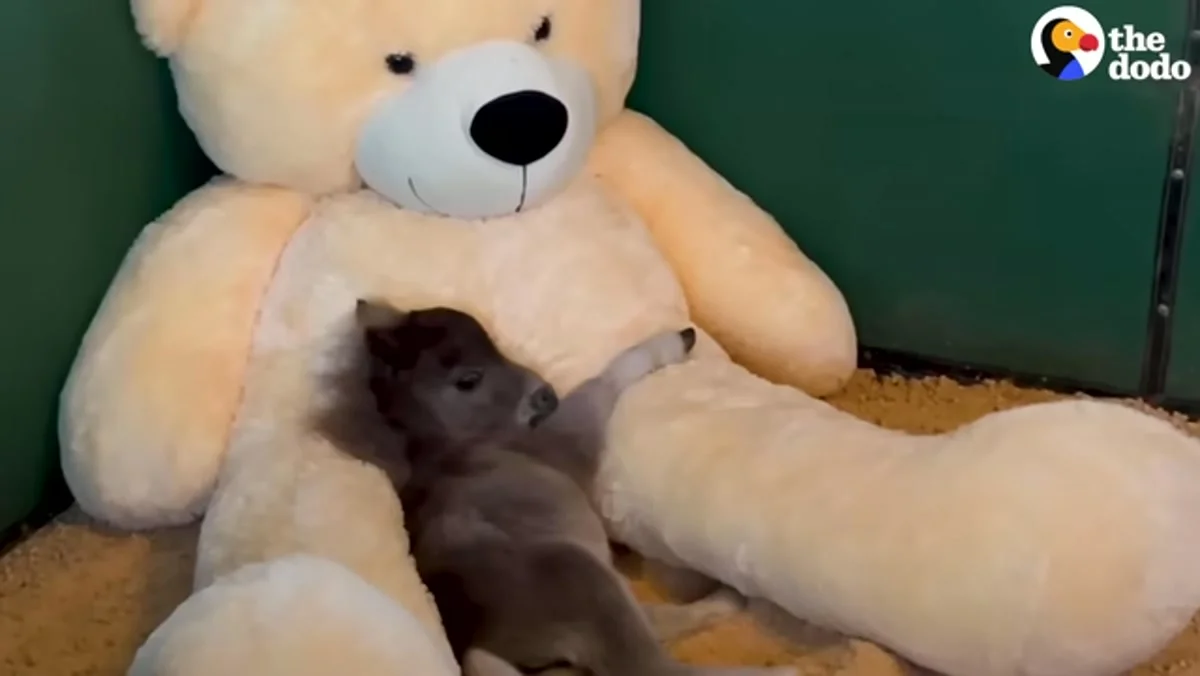
When Tubby first arrived, he was still. Not peaceful-still — the worrying kind.
Stacy placed a giant teddy bear in his stall to keep him company during quarantine. A small gesture, but she called it “a game changer.” Within about a week, the foal who had barely moved was bouncing. The transformation was, by all accounts, complete.
“He started to not feel so alone,” Stacy said.
A Note On Special Needs Miniature Horses
Stacy is clear-eyed about what Tubby’s life means long-term: “He will always be a special needs horse.” Miniature horses with dwarfism often have associated characteristics — compressed skeletal structure, facial asymmetry, and an underbite like Tubby’s — that require attentive care throughout their lives. What they also tend to have, handlers note, is an outsize capacity for forming close bonds with the animals around them. Tubby’s ease with the Goldens is a pattern that owners of special-needs minis often describe.
The Smallest One Runs The Show
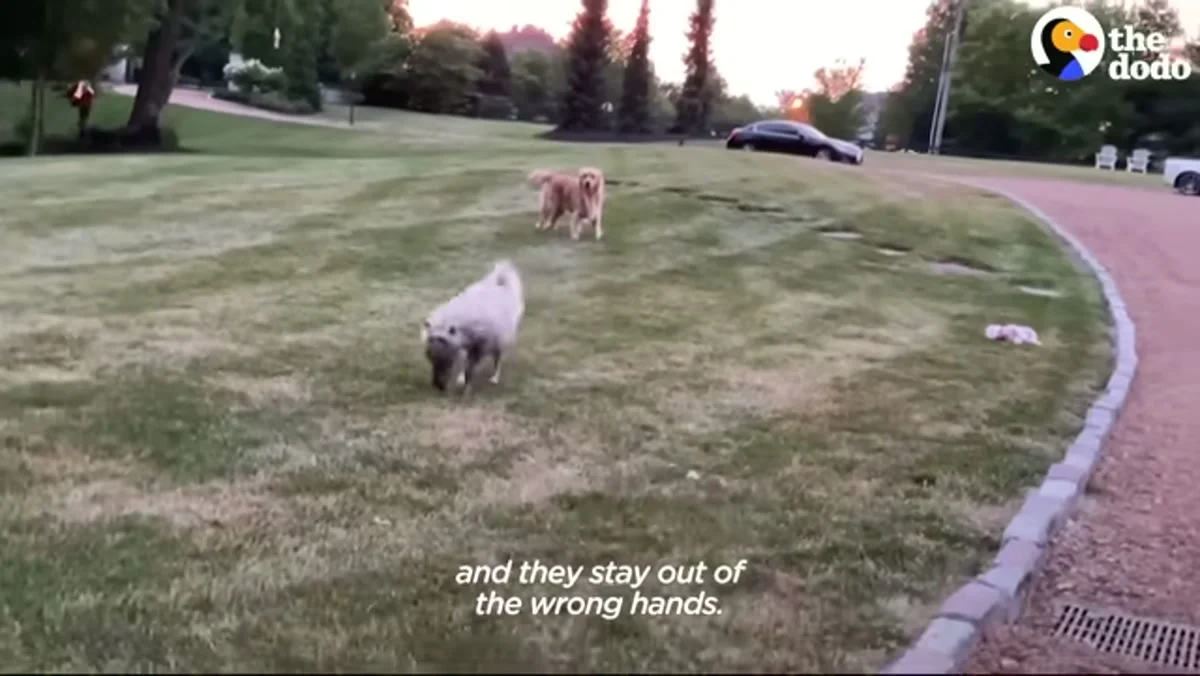
For Tubby, none of the numbers seemed to matter.
Not the height gap. Not the species boundary. Not the underbite that gave him a look of permanent mild outrage.
He wanted to be near his Golden Retrievers — and near them he stayed.
Does your Golden have an unlikely best friend? Tell us in the comments — we’d love to hear about the odd couples in your house.
Inter-species households can work beautifully — and Goldens, with their easy temperament, are often well-suited for them. A few things that tend to help:
Getting Started With A Multi-Species Home
- Start with neutral ground. First meetings work best somewhere neither animal considers their own territory — no competition, no edge.
- Let the smaller animal set the pace. If one party hesitates, slow down. Brief, calm exposures over several days beat one long introduction.
- Watch your Golden’s body language. A loose posture and tail at mid-height means relaxed. Stiffness or fixation is a reason to pause. Our Golden Retriever behavior guides cover what to look for.
- Celebrate coexistence before friendship. Both animals ignoring each other peacefully? That’s already a win.
Reviewed by our panel of dog professionals — we’re dog people, not a vet clinic. For specific concerns, your vet or a certified trainer is the right call.
Explore more in our Golden Retriever section and behaviors guides.
▶ Watch The Full Video
Story and footage: The Dodo (YouTube) · Family: Stacy at R&R Ranch Minis (@randrranchminis on Instagram, TikTok, Facebook, and YouTube) — consider following their work.