
How often should you walk a dog? Most healthy adult dogs do well with a few walks a day, plus bathroom breaks in between, but the right amount depends on your dog’s age, breed, and health, so ask your vet. Puppies need shorter, more frequent outings, high-energy breeds need more, and seniors usually do better with short, gentle ones. For breed-specific needs, see our Golden Retriever guide and our dog exercise guide. A sturdy leash makes daily walks easier; see our best dog leashes and long lines.
This article is general information, not veterinary advice. For your own dog’s age, breed, or health, talk to your veterinarian.
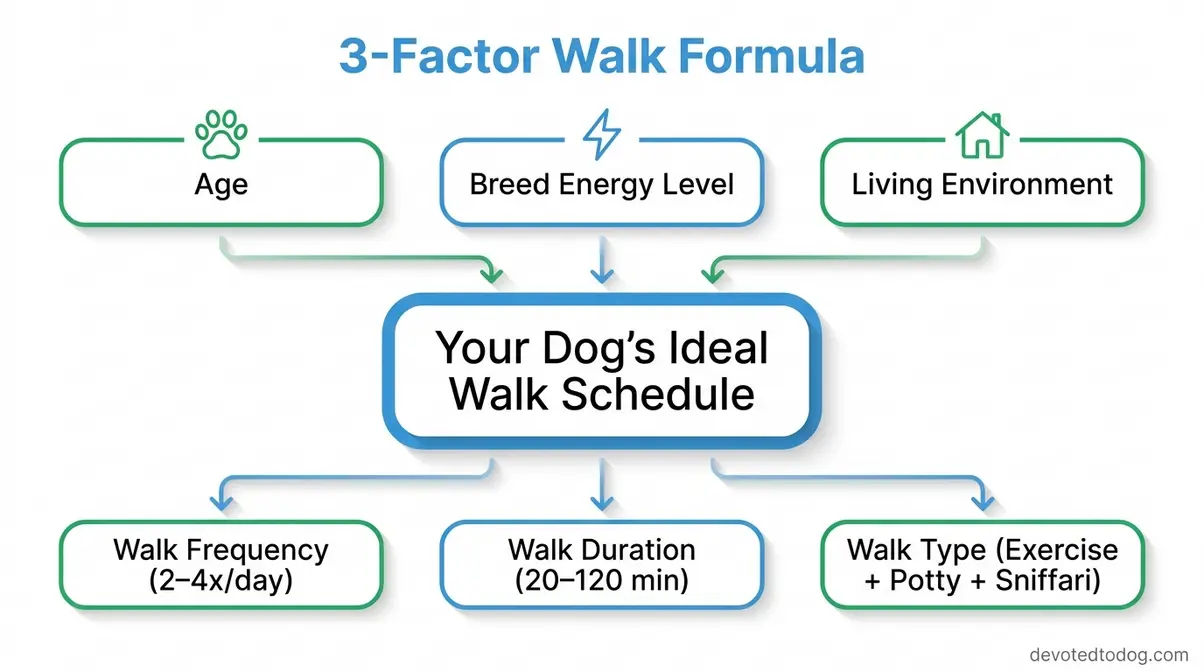
Most guides will tell you to walk your dog twice a day. But if you have a 12-week-old Rottweiler, a 9-year-old Labrador, or a Border Collie who’s eaten your couch cushions, you already know that answer isn’t enough. Getting it wrong in either direction carries real costs. Under-walk your dog and you risk anxiety, destructive behavior, and weight gain. Over-walk a puppy before their growth plates close, and you risk permanent joint damage. The stakes are higher than most generic advice acknowledges.“There are so many different opinions out there for different breeds — how long and often should my dog ideally be walked?” — a new puppy owner on a dog forumThat confusion is completely valid. In this guide, you’ll get a walking schedule tailored to your dog’s age, breed, and living situation — so you can stop guessing and start walking with confidence. We’ll cover the research-backed baseline, how to adjust for your specific dog, potty break schedules, behavioral signals to watch for, and a simple 3-Factor Walk Formula you can apply today.
- Puppies need short, frequent walks (5 minutes per month of age, twice daily, as a conservative guideline)
- High-energy breeds (Border Collies, Huskies) need noticeably more daily exercise than calmer breeds
- Senior dogs benefit more from shorter, frequent strolls than one long walk
- The 3-Factor Walk Formula — Age + Breed Energy + Environment — is the key to personalizing your dog’s routine
- A dog left without a walk or a potty break for most of a day risks anxiety and destructive behavior
The Recommended Baseline for Dog Walking
Walk Frequency by the Numbers
How Long Should Each Walk Be?
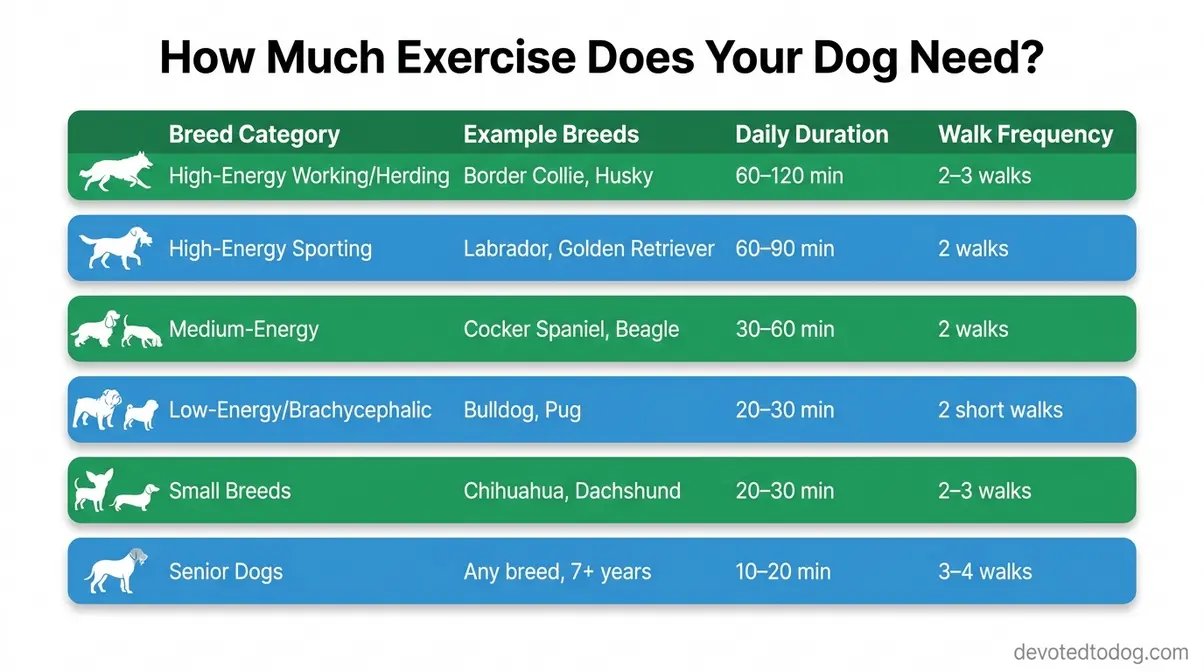
How often you walk matters — but so does how long each outing lasts. Duration requirements vary significantly by size and energy level:- High-energy working/herding breeds (Border Collie, Husky, Australian Shepherd): the most exercise of any group, usually across several outings
- High-energy sporting breeds (Labrador, Golden Retriever, Weimaraner): plenty of daily exercise, usually in 2 walks
- Medium-energy breeds (Cocker Spaniel, Poodle, Beagle): moderate daily exercise, usually in 2 walks
- Low-energy/brachycephalic breeds (Bulldog, Pug, Shih Tzu): short, slow daily walks, usually 2
- Small breeds (Chihuahua, Dachshund, Maltese): short walks, 2–3 a day
One Long Walk vs. Multiple Short Walks
Most owners default to whatever fits their schedule — but the structure of your walks actually matters for your dog’s wellbeing.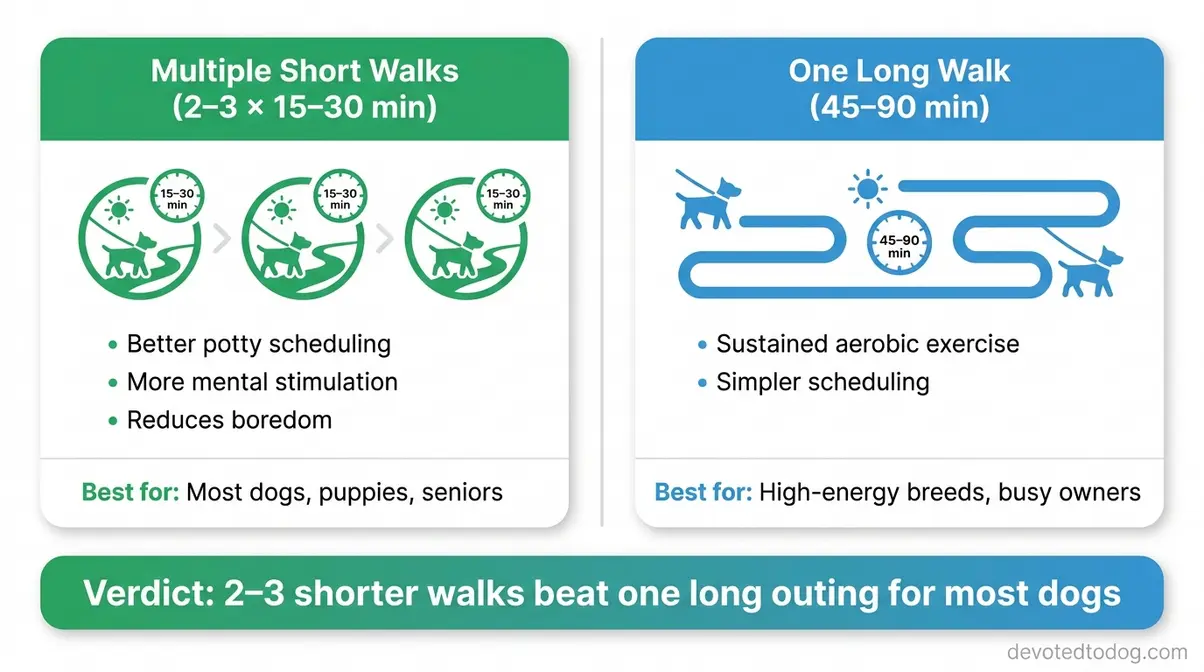
| Approach | Best For | Pros | Cons |
|---|---|---|---|
| Multiple short walks (2–3 a day) | Most dogs, puppies, seniors, joint issues | Better potty scheduling, more mental stimulation, reduces boredom | Requires more time in your day |
| One long walk | High-energy breeds, busy owners | Sustained aerobic exercise, simpler scheduling | Less mental variety, harder on joints for seniors |
Tailoring Walk Frequency by Age, Breed, and Size
“There are so many different opinions out there for different breeds — how long and often should my dog ideally be walked?”That question deserves a real answer — not a generic one. The right walking schedule for your dog depends on three factors: age, breed energy level, and living environment — what we call the 3-Factor Walk Formula. A 12-week-old puppy needs short, frequent outings; a 3-year-old Border Collie, one of the highest-energy working breeds, needs sustained daily exercise; a 10-year-old Labrador needs gentle, joint-friendly strolls. Here’s exactly how to calibrate each. Walking frequency varies significantly among dog breeds, and many dogs currently fail to receive their recommended amount of daily exercise (published in 2017).
Puppies: The 5-Minute Rule Explained
Puppy walking requires more caution than most owners realize. The widely cited 5-Minute Rule — 5 minutes of walking per month of age, up to twice per day — is used as a conservative practical guideline by many vets and trainers to prevent developmental joint damage, though it’s worth noting it lacks formal scientific validation (AKC, 2026). The underlying concern is real: puppy growth plates stay open well into the first year or longer (it varies by breed size; ask your vet), and excessive high-impact exercise during this window can cause lasting joint damage. The AKC notes that veterinary researchers reference the guideline as a reasonable starting point for controlled leash walks. Here’s a practical age-based schedule to follow: Step 1: 8 Weeks Old Walk for 5–10 minutes, twice per day. Step 2: 12 Weeks Old Walk for 15 minutes, twice per day. Step 3: 16 Weeks Old Walk for 20 minutes, twice per day. Step 4: 6 Months Old Walk for 30 minutes, twice per day. Research also confirms that walking needs vary significantly by breed, and many dogs fail to receive recommended daily exercise — a problem that often starts in puppyhood (PubMed breed activity study, published in 2017). Take the forum question above as a real example: a 14-week-old Rottweiler should be getting about 15-minute walks, twice daily — not 45-minute hikes. Puppies also need potty breaks every 1–2 hours, separate from their exercise walks; full potty scheduling is covered in the next section.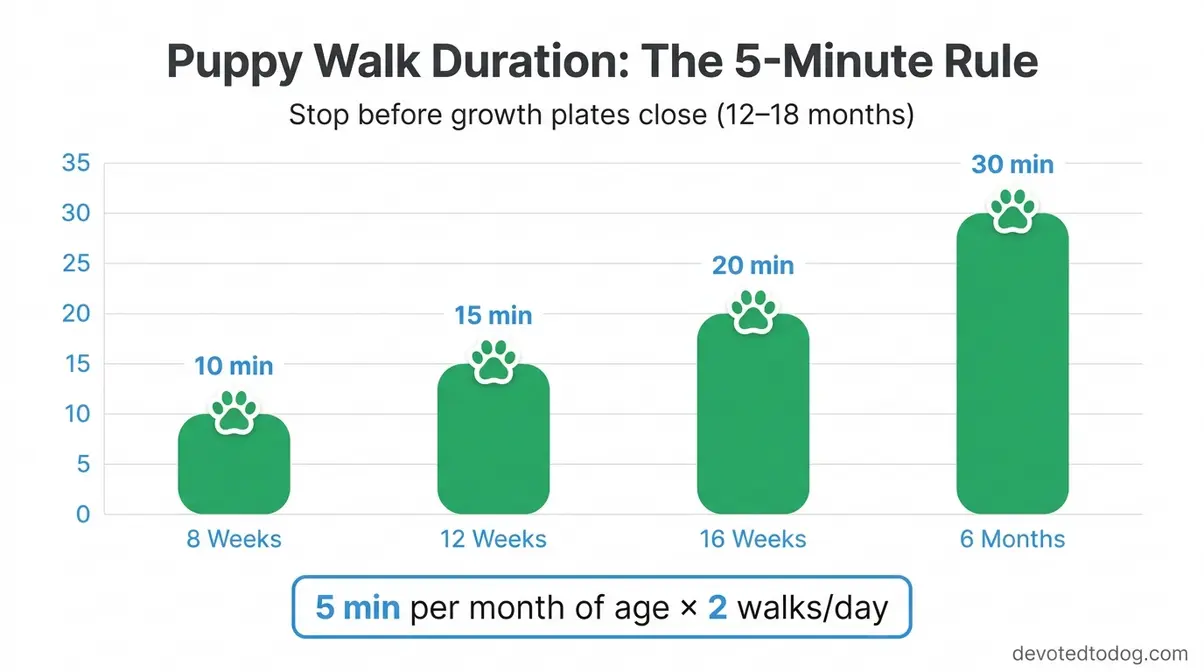
Adult Dogs: A Consistent Routine
For adult dogs, the baseline is a couple of walks per day. For high-energy breeds, that climbs noticeably. For low-energy breeds, two shorter walks are often sufficient. Here’s the reassuring part: consistency matters more than perfection. Dogs on predictable schedules — same times each day — tend to show lower stress behaviors than dogs walked randomly, even when total duration is similar. The ASPCA and RSPCA both emphasize that routine is foundational to canine wellbeing. A dog who knows when their walk is coming is a calmer, more settled dog.- A 3-year-old Golden Retriever thrives on a couple of good walks plus an off-leash play session
- A 4-year-old Basset Hound, a scent hound with moderate exercise needs, is content with two shorter walks
Is 2 Walks a Day Enough for a Dog?
For most adult dogs, two walks a day is a reasonable starting point. The right answer depends on your dog’s breed energy level, age, and access to outdoor space between walks. High-energy breeds like Border Collies and Huskies typically need more, across multiple outings. Watch your dog’s behavior: if they’re restless, destructive, or gaining weight, two walks may not be enough for their specific needs. As your dog enters their senior years — earlier in large breeds than in small ones; ask your vet when your dog counts as a senior — the formula shifts again, and the changes are often more significant than owners expect.Senior Dogs: Smarter Enrichment
Senior dogs still need daily walks. What changes is the priority: shift from duration to frequency and gentleness. Several shorter walks are usually better for senior dogs than one long march that strains aging joints. According to the Cornell University College of Veterinary Medicine, when long walks are no longer feasible due to arthritis or mobility issues, food puzzles, nose work, and indoor enrichment can substitute for the mental stimulation component of walks. In other words, how long to walk a senior dog is less important than how thoughtfully you structure their daily enrichment.- Watch for these warning signs during senior dog walks:
- Lagging behind or stopping frequently
- Limping or favoring one leg
- Excessive panting that doesn’t resolve quickly
- Reluctance to start the walk at all
Breed Energy Levels and Duration
No two breeds have the same exercise requirements, yet most walking guides treat them identically. Here’s the breed-specific breakdown that competitors don’t provide:| Breed Category | Example Breeds | Daily Walk Duration | Walk Frequency | Special Notes |
|---|---|---|---|---|
| High-Energy Working/Herding | Border Collie, Siberian Husky, Australian Shepherd | Most exercise | 2–3 walks | Mental enrichment equally critical |
| High-Energy Sporting | Labrador, Golden Retriever, Weimaraner | Plenty | 2 walks | Off-leash play sessions recommended |
| Medium-Energy | Cocker Spaniel, Poodle, Beagle | Moderate | 2 walks | Nose-led walks highly effective |
| Low-Energy/Brachycephalic | Bulldog, Pug, Shih Tzu | Short | 2 short walks | Avoid heat; keep pace slow |
| Small Breeds | Chihuahua, Dachshund, Maltese | Short | 2–3 short walks | Same mental needs as large breeds |
| Senior/Mobility-Limited | Any breed, senior years | Short per walk | Several walks | Soft surfaces; watch for fatigue |
Potty Breaks and Health Considerations
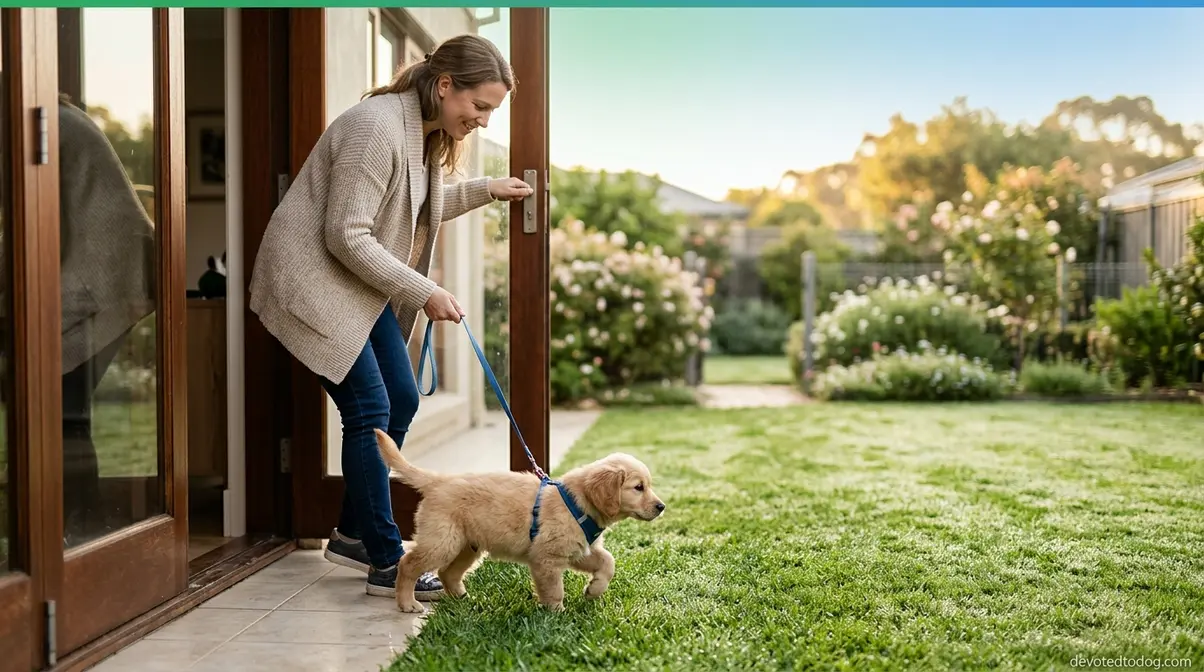
Potty Break Schedules by Age
Exercise walks and potty breaks serve different purposes. A dog needs regular exercise walks and potty breaks in between — especially puppies, who physically cannot hold it for long. Here’s the age-based schedule:- Puppies under 12 weeks: every 1 hour
- Puppies 12–16 weeks: every 2 hours
- Puppies 4–6 months: every 3–4 hours
- Adult dogs: every 4–6 hours (8-hour maximum)
- Senior dogs: every 2–4 hours
How Long Can a Dog Go Without a Walk?
Most adult dogs can physically go up to 8 hours without a potty break, but this is the maximum, not the target. For overall wellbeing, no dog should regularly go more than 8 hours without going outside. Puppies need a break every 1–2 hours; senior dogs every 2–4 hours as bladder control decreases with age. Holding urine for extended periods increases the risk of urinary tract infections and causes unnecessary discomfort for your dog. Potty schedules are one thing; health conditions are another. If your dog has arthritis, obesity, or a heart condition, the standard walk rules require a different approach.Adjusting for Health Conditions
The Texas A&M School of Veterinary Medicine is clear: overweight or sedentary dogs should not be taken on long walks immediately. The recommended approach is a gradual exercise program — begin with 5–10 minute walks and add 5 minutes every 1–2 weeks until reaching the target duration. Rushing this process risks injury and discourages the dog from wanting to walk at all (Texas A&M VMC, 2026). Here’s how to modify walks for specific conditions: Arthritis: Shorter, more frequent walks on soft surfaces. Schedule morning walks after the dog has been awake and moving for a while, since cold, stiff joints need a warm-up (ask your vet what suits your dog). Avoid stairs and steep hills. Underwater treadmill therapy, when vet-prescribed, can maintain fitness without joint impact. Heart disease: Consult a vet before any exercise. Dogs with cardiac conditions may need limits on exercise, so follow your vet’s plan. Watch for coughing, excessive panting, or sudden weakness — these are signals to stop immediately and call your vet. Post-surgery recovery: Follow your veterinarian’s specific leash-walking protocol exactly. Do not substitute the vet’s prescription with general advice from any article, including this one. Always consult your veterinarian before modifying your dog’s exercise routine due to a health condition. This section provides general guidance only. Even with the perfect schedule in place, your dog will tell you when something needs to change — if you know what signals to look for.Reading Your Dog’s Behavioral Signals
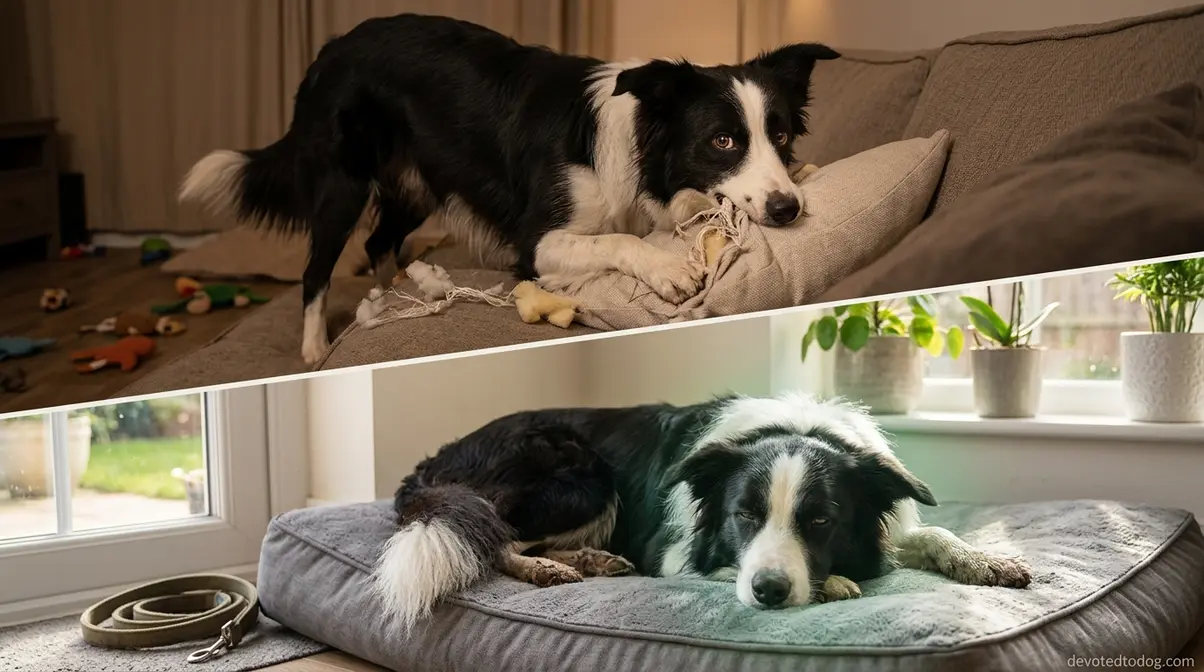
Signs Your Dog Needs More Walks
These behaviors are your dog’s clearest communication that their walking routine isn’t meeting their needs:- Destructive chewing or digging, especially when left alone
- Excessive barking or whining without an obvious trigger
- Hyperactivity or “zoomies” inside the house — particularly in the evening
- Jumping on people excessively — unburned energy seeking an outlet
- Pulling hard on the leash before the walk even begins
- Weight gain without any change in diet
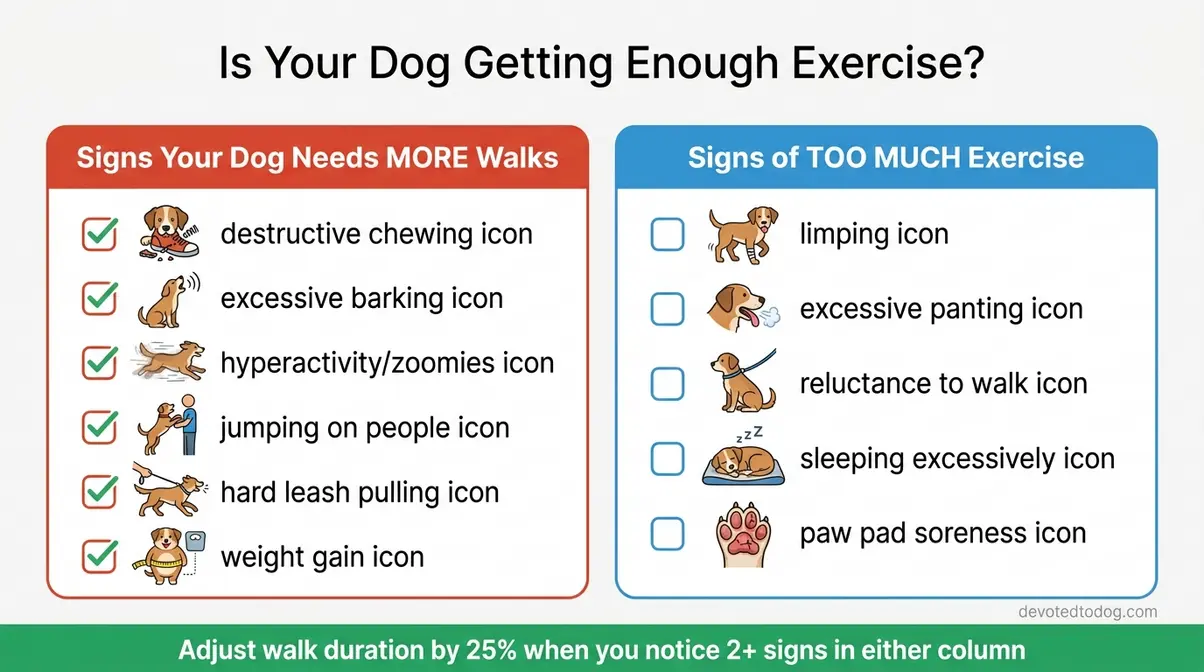
Signs of Too Much Exercise
Over-exercise often goes unrecognized because owners assume more is always better. Watch for:- Limping or favoring a leg during or after walks
- Excessive panting that doesn’t resolve within 10 minutes of rest
- Reluctance to start a walk — lying down, refusing to move
- Sleeping excessively the day after a long or intense outing
- Paw pad soreness or cracking after walks on hard surfaces
Mental vs. Physical Exercise Ratio
Physical exercise and mental stimulation are not interchangeable — but both are essential. Texas A&M University confirms that daily walks provide both mental and physical stimulation to pets, making walk quality as important as walk quantity (Texas A&M, 2026). Enter the sniffari — a slow, dog-led walk where your dog sets the pace and follows their nose. A short sniffari can be as mentally tiring as a longer brisk walk for a high-drive breed. For Border Collies and Australian Shepherds especially, mental exhaustion is often the missing piece when physical exercise alone doesn’t resolve destructive behavior. Aim for at least one sniffari walk per day alongside your brisk exercise walks. Put away the agenda, let the leash go slack, and let your dog lead. The difference in their post-walk calm is usually noticeable within a week. Now that you have a complete picture of your dog’s walking needs, let’s address a few related care routines that owners often ask about in the same breath.Feeding, Bathing, and Full Care
Walking is the cornerstone of your dog’s daily routine — but it’s one piece of a larger care picture. These high-volume questions come up alongside walking questions constantly, so here are the vet-aligned answers.How Often Should You Feed Your Dog?
Most adult dogs should be fed twice daily — morning and evening. Puppies under 6 months need three meals per day to support their rapid growth and maintain stable blood sugar. Senior dogs generally continue on the twice-daily schedule unless a veterinarian recommends otherwise for a specific health condition. One practical timing note: ask your vet how to time meals around walks. Large, deep-chested breeds can be at risk of bloat (gastric dilatation-volvulus), a life-threatening emergency that your vet can explain. For example: a Golden Retriever puppy at 12 weeks needs 3 meals per day; that same dog as a healthy adult does well on 2 meals daily. For a complete golden retriever puppy feeding guide and schedules with portion guidance by age and weight, see our dedicated resource. Bathing is another routine where owners often wonder about the right frequency.How Often Should You Bathe Your Dog?
Most dogs need a bath every 4–6 weeks. For most dogs, a bath every 4–6 weeks is sufficient — more frequent bathing strips natural skin oils and can cause irritation. Dogs with skin conditions, heavy outdoor activity, or dense double coats (Golden Retrievers, Huskies) may need bathing every 3–4 weeks. An indoor Chihuahua with minimal outdoor exposure can often go 6–8 weeks between baths. Between baths, dog wipes and waterless shampoos effectively manage odor without drying out the coat. For breed-specific guidance on products and frequency, our guide on how often to bathe a golden retriever covers coat type considerations in detail. And what about the days when getting outside isn’t an option?Walk Alternatives for Bad Weather
Texas A&M University notes that alternatives to walking are especially important during extreme summer heat, when outdoor exercise poses risks to dogs — particularly brachycephalic breeds (Texas A&M, 2026). On those days, these indoor options genuinely substitute for physical and mental stimulation:- Puzzle feeders — interactive toys that require dogs to solve a problem to access food; a short session tires many dogs more than a short walk
- Sniff mats — hide kibble or treats in a textured mat for nose-work enrichment
- Training sessions — 10 minutes of focused obedience or trick training counts as meaningful mental exercise
- Indoor fetch or tug-of-war — for dogs with adequate indoor space
- Playdates — social interaction with a familiar dog provides both physical and emotional stimulation
Precautions and Walk Limitations
General walking guidelines serve most dogs well most of the time. But there are specific situations where following generic advice can cause real harm — and where this article’s guidance reaches its limits.Common Walking Schedule Pitfalls
Pitfall 1 — Skipping walks because a dog “has a yard.” Yards provide space, not exercise. Without a structured walk, most dogs simply lie in the yard or pace. The result: boredom, weight gain, and escalating behavioral issues. Treat yard time as a bonus, not a substitute — your dog still needs structured walks. Pitfall 2 — Walking puppies too far, too early. Puppy growth plates stay open well into the first year or longer. Excessive running or sustained long walks before closure can cause permanent joint damage. Follow the conservative 5-minute-per-month guideline for leash walks, and prioritize natural-pace play over brisk marching. Pitfall 3 — Assuming small dogs need fewer walks. Small dogs have the same mental stimulation requirements as large dogs. Skipping walks because a dog is small frequently causes behavioral issues that owners mistakenly attribute to “stubbornness.” Adjust walk duration, not frequency. Pitfall 4 — Walking dogs in extreme heat without precautions. Hot pavement can burn paw pads quickly. Brachycephalic breeds can experience heat stroke at temperatures that seem mild to their owners. Walk in early morning or evening; test pavement with the back of your hand before your dog walks on it.When to Consult Your Veterinarian
This guide provides evidence-based general guidance — but there are three scenarios where you need a veterinarian, not an article:- Your dog has been diagnosed with any joint condition, including arthritis, hip dysplasia, or luxating patella
- Your dog is recovering from surgery, illness, or a significant injury
- Your dog shows persistent reluctance to walk, unexplained limping, or behavioral changes that don’t improve after one week of adjusted walking
Frequently Asked Questions About Dog Walking
Do Dogs Get Sad Without Walks?
Dogs don’t experience sadness exactly as humans do, but they absolutely experience boredom, frustration, and anxiety without regular walks. These emotions manifest as destructive chewing, excessive barking, hyperactivity, and restlessness. A consistently under-walked dog will show clear behavioral signs of distress, even if they can’t tell you they’re unhappy.How Often Should I Walk My Dog to Pee?
Puppy potty frequency depends on age: under 12 weeks, every 1 hour; 12–16 weeks, every 2 hours; 4–6 months, every 3–4 hours (AKC, 2026). Adult dogs generally need a potty break every 4–6 hours, with an 8-hour maximum in a pinch. Senior dogs often need every 2–4 hours as bladder control decreases with age. If your adult dog needs to go more frequently than every 4 hours without an obvious reason, consult your vet, as it may indicate a urinary health issue.How Long to Walk Your Dog Daily?
Most dogs do best with a few walks a day, but it depends on age, breed, and health, so ask your vet. High-energy breeds (Border Collies, Huskies) need more, while low-energy breeds (Bulldogs, Pugs) are satisfied with shorter outings. Puppies can follow the conservative guideline of 5 minutes per month of age, twice daily (AKC, 2026). Senior dogs benefit more from several shorter walks than one long outing that strains aging joints.Your Dog’s Ideal Walking Routine
For most dogs, the right walking schedule is a few walks a day — but the exact answer depends on your dog’s age, breed energy level, and living environment. The 3-Factor Walk Formula (Age + Breed Energy + Environment) gives you a personalized starting point that no generic guideline can match. Studies cited above found many owners walk their dogs only a few times a week, so planning your schedule helps. The value of the 3-Factor Walk Formula lies in its flexibility. It isn’t a rigid prescription — it’s a responsive framework designed to evolve as your dog ages, recovers from illness, or shifts energy levels with the seasons. Your dog’s behavior is the real-time signal that tells you when to adjust. A dog who’s calm, settled, and behaviorally stable after their current routine is telling you the formula is working. One who’s restless, destructive, or gaining weight is telling you it needs recalibration. Start by identifying your dog’s breed energy category from the Duration Table above, then build your baseline schedule using the age-specific guidelines. If your dog has a health condition, consult your veterinarian before changing their current routine. For a deeper dive into your specific breed’s needs, explore our guide on understanding your dog’s daily exercise needs — it’s the natural next step toward a routine your dog will thrive on.Alliyah Strange is a CPDT-KA certified dog trainer and behaviorist. She reviews DevotedToDog training and behavior articles for accuracy and alignment with current positive-reinforcement, force-free training standards.

I have a Shih Tzu and she is up in age and very small so all she needs is a quick walk around the neighborhood and she is fine though somedays she can be very active.
The content is great! I love the addition of photos. If it was just words, it would be too much to take in. Great job!
A lot of people around the neighborhood have dogs, this is always good to know even if I don’t have one
Loved this guide! It explains what is needed, yet goes into the cautions so they don’t get over tired, touches on the weather as an aspect. Love the way you are addressing the special needs of dogs with joint and hip problems
Very useful content. Thanks.
The amount of great information here is outstanding! Great guide to look back on.
Haha I love the doggy shoes, great idea to protect their paws
Very comprehensive and useful guide.
Great information. Several years ago, after a visit to the vet, I was told it was exercising my older, overweight arthritic dogs too much. I was told he needed to lose weight but walking him 4 miles a day was apparently too much. I wish I had this information back then.
This is a great post for us dog owners. I like how in depth you go on posts and love all the pictures.