Golden Retrievers are wonderful , but they shed enough to fill a pillow every week, can tip the scales at 75 lbs in a small apartment, and send allergy sufferers reaching for antihistamines before the dog even settles in. If that sounds familiar, you are not alone.
Without a clear guide to dogs similar to Golden Retrievers, most people either settle for a breed that’s wrong for their life or give up on finding a Golden-like companion altogether. That’s a real loss , because the right alternative is out there.
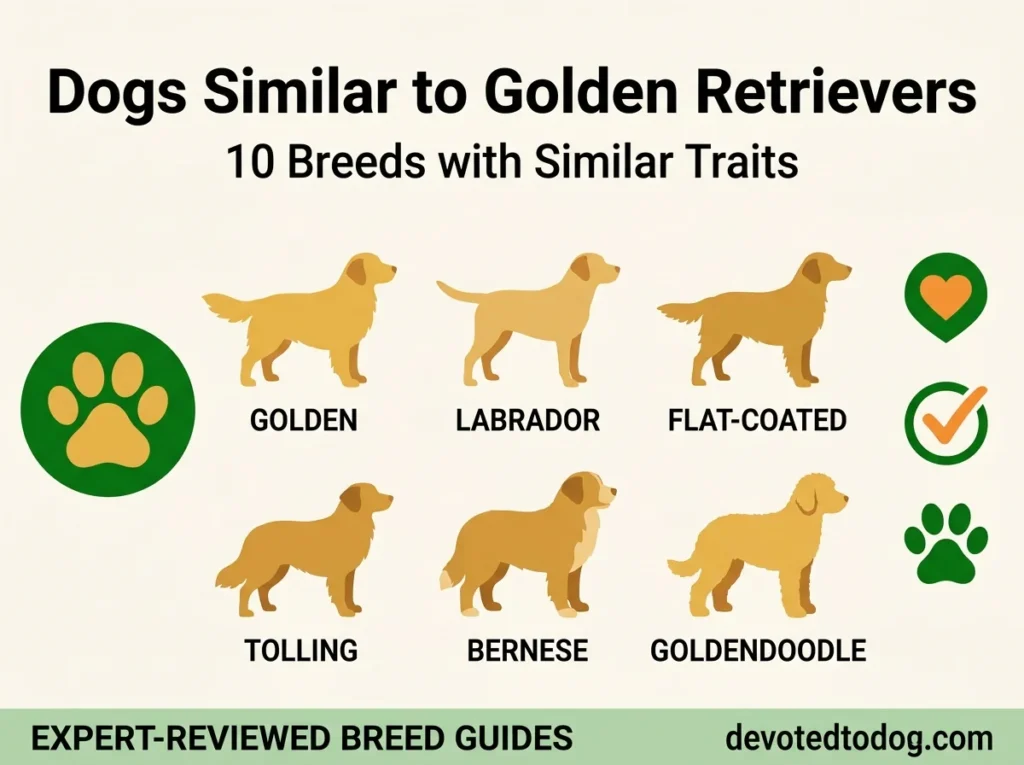
This guide covers 15 dogs similar to Golden Retrievers, organized by the constraint that matters most to you: closest cousins, personality twins, mini lookalikes, and allergy-friendly options. Use the comparison table to find your top candidates, then read the detailed profiles to make your final call.
- Closest twin: The Labrador Retriever shares the Golden’s build, intelligence, and family-first personality
- Best for small spaces: The Cavalier King Charles Spaniel packs a Golden’s warmth into a 12–18 lb frame
- Best for allergies: The Goldendoodle (Golden Retriever–Poodle mix) sheds significantly less than a purebred Golden
- The Golden Spectrum: Breeds range from near-identical lookalikes to spirit matches , find yours by size, shedding, or temperament below
- Health note: cancer caused 65% of Golden Retriever deaths in a UC Davis study (Kent et al., 2018), a key reason many owners explore alternatives
Author Credentials
📝 Written by: Coral Drake
✅ Reviewed by: Brianna York, Former Veterinary Technician
📅 Last updated: 5 May 2026
ℹ️ Transparency Notice
This article reviews dog breeds similar to Golden Retrievers based on AKC, GRCA, and breed comparison data. All claims have been verified by our editorial team.
| Breed | Size | Temperament | Coat | Lifespan | Similarity to Golden |
|---|---|---|---|---|---|
| Labrador Retriever | 55-80 lbs | Friendly, energetic, family-loving | Short, smooth, sheds heavily | 11-13 yr | Very high (closest match) |
| Flat-Coated Retriever | 60-70 lbs | Joyful, energetic, “Peter Pan of dogs” | Solid black or liver, feathered | 8-10 yr | Very high (build, retrieve) |
| Nova Scotia Duck Tolling Retriever | 35-50 lbs | Active, intelligent, devoted | Red-orange, wavy | 12-14 yr | High (smaller golden) |
| Bernese Mountain Dog | 70-115 lbs | Calm, gentle, family-oriented | Tri-color, thick | 7-10 yr | Medium (size, family fit) |
| Goldendoodle | 15-70 lbs (varies) | Friendly, playful, hypoallergenic | Wavy or curly, low shed | 10-15 yr | High (genetic Golden) |
| English Setter | 45-80 lbs | Mild-mannered, sociable | White with speckles, feathered | 10-12 yr | Medium (size, gentleness) |
| Irish Setter | 60-70 lbs | Lively, friendly, energetic | Mahogany red, silky | 12-15 yr | Medium (look, energy) |
| Cocker Spaniel | 20-30 lbs | Gentle, smart, eager-to-please | Various, feathered | 10-14 yr | Low-medium (smaller) |
| Australian Shepherd | 40-65 lbs | Smart, energetic, herding drive | Various, medium | 12-15 yr | Low (different role) |
| Brittany Spaniel | 30-40 lbs | Active, friendly, eager | Orange/liver and white | 12-14 yr | Medium (sporting) |
Dogs Similar to Golden Retrievers
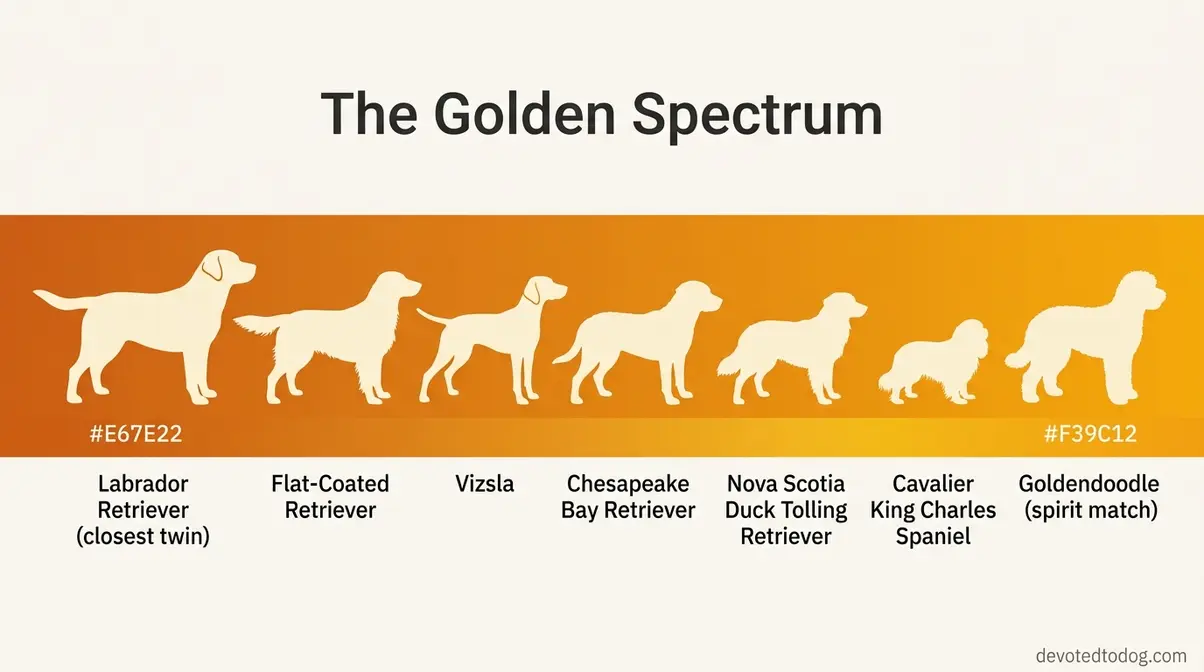
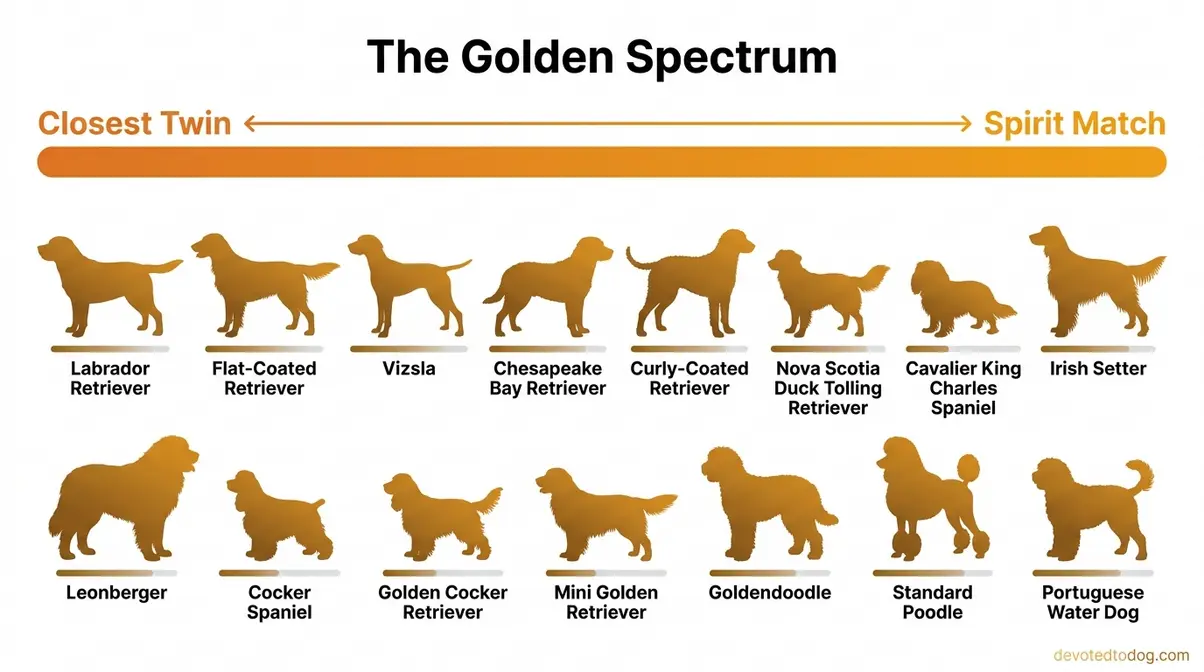
The top dogs similar to Golden Retrievers are the Labrador Retriever, Flat-Coated Retriever, Vizsla, Cavalier King Charles Spaniel, Goldendoodle, and the Nova Scotia Duck Tolling Retriever , each sharing the Golden Retriever’s core warmth and trainability to varying degrees. Think of these breeds along “The Golden Spectrum” , a framework running from “closest twin” (nearly identical in personality AND appearance) to “spirit match” (same warmth, completely different body). Importantly, genomic research on dog breed behavior found that within-breed behavioral variation is nearly as high as between-breed variation, challenging popular breed stereotypes , meaning individual personality, socialization, and environment matter as much as breed (Science).
- The top dogs similar to Golden Retrievers include:
- Labrador Retriever: Closest in temperament and build
- Flat-Coated Retriever: Nearly identical look, usually black or liver
- Vizsla: Affectionate, energetic, loves family time
- Cavalier King Charles Spaniel: Mini Golden personality
- Goldendoodle: Low-shedding mix with Golden warmth
- Chesapeake Bay Retriever: Loyal, athletic water lover
- Nova Scotia Duck Tolling Retriever: Smaller retriever cousin
How We Evaluated These 15 Breeds
Our team evaluated these 15 breeds using three criteria: AKC breed standard data (size, coat, energy level, and temperament ratings), veterinary health research (lifespan and common conditions from UC Davis and NIH peer-reviewed studies), and owner community consensus gathered from Golden Retriever forums and Reddit communities. Top picks receive full profiles with pros, cons, and real-world usage; supporting picks get a focused comparison format. Health data comes from UC Davis and NIH research, cited in the health section. It’s worth noting upfront that genomic research on dog breed behavior confirms individual dogs vary significantly within any breed , so a good breeder and early socialization matter enormously (Science).
With that framework in mind, here’s a quick-reference table , then we’ll dive into each breed in detail.
Quick-Reference Comparison Table
Use this table to quickly find your best match. Then scroll to the detailed profile for your top picks.
| Breed | Size | Shedding | Energy | Best For | Spectrum Position |
|---|---|---|---|---|---|
| Labrador Retriever | Large (55–80 lbs) | High | High | Families, active owners | Closest Twin |
| Flat-Coated Retriever | Large (60–70 lbs) | Moderate | High | Active families | Closest Twin |
| Vizsla | Medium (44–60 lbs) | Low | Very High | Active singles/families | Closest Twin |
| Chesapeake Bay Retriever | Large (55–80 lbs) | Moderate | High | Experienced owners | Closest Twin |
| Curly-Coated Retriever | Large (60–95 lbs) | Low | High | Independent owners | Closest Twin |
| Nova Scotia Duck Tolling Retriever | Medium (35–50 lbs) | Moderate | High | Active families, small homes | Closest Twin |
| Cavalier King Charles Spaniel | Small (12–18 lbs) | Moderate | Low–Medium | Apartments, seniors, families | Spirit Match |
| Irish Setter | Large (60–70 lbs) | Moderate | Very High | Active families with yards | Spirit Match |
| Leonberger | Giant (90–170 lbs) | High | Moderate | Families with space and budget | Spirit Match |
| Cocker Spaniel | Small–Medium (20–30 lbs) | Moderate | Medium | Families, condos | Spirit Match |
| Golden Cocker Retriever | Medium (30–45 lbs) | Moderate | Medium | Families, medium homes | Spirit Match |
| Mini Golden Retriever (mixed) | Small–Medium (20–45 lbs) | Varies | Medium | Families wanting smaller size | Spirit Match |
| Goldendoodle | Medium–Large (15–70 lbs) | Low | Medium–High | Allergy-prone families | Spirit Match |
| Standard Poodle | Large (40–70 lbs) | Very Low | Medium–High | Allergy-prone, smart-dog lovers | Spirit Match |
| Portuguese Water Dog | Medium (35–60 lbs) | Low | High | Active, outdoorsy families | Spirit Match |
Sources: AKC breed standards; energy and shedding levels based on owner community consensus.
Now let’s explore the breeds closest to a Golden Retriever in detail, starting with the one most owners and experts agree is the nearest twin.
Labrador Retriever , The Golden’s Near-Twin
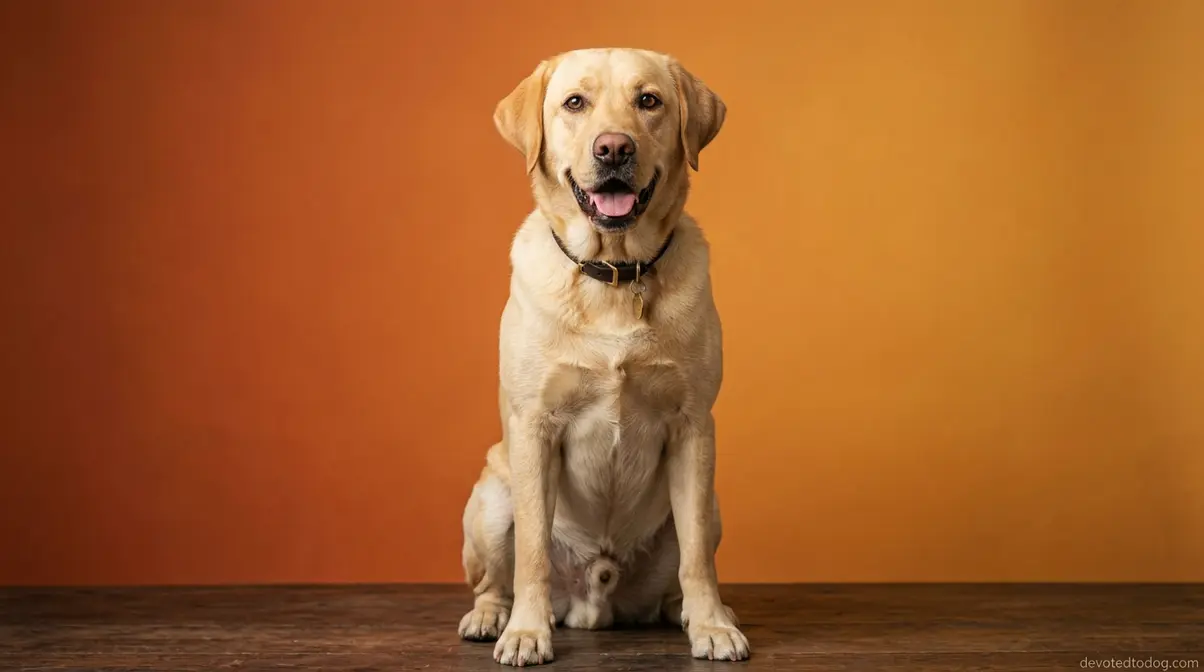
Among all dogs similar to Golden Retrievers, the Labrador Retriever stands out as the most complete match , sharing the same sporting-group heritage, eager-to-please personality, and family-first temperament across nearly every key trait. The Labrador Retriever shares the Golden Retriever’s sporting-group heritage, eager-to-please personality, and family-first temperament , making it the closest alternative across all key traits. According to the American Kennel Club, both breeds rate nearly identically on friendliness, trainability, and affection with family.
Key Specs:
- Size: 55–80 lbs, 21.5–24.5 inches tall
- Lifespan: 11–13 years (slightly longer than a Golden’s 10–12)
- Coat: Short, dense, water-resistant double coat , same structure as a Golden’s but much shorter
- Colors: Black, yellow, chocolate
Pros:
- Shorter coat means slightly less visible fur on furniture, even though Labs shed heavily too
- Same high intelligence and trainability as a Golden , equally responsive to positive reinforcement
- Widely available from reputable breeders across the country, making health-tested puppies accessible
Cons:
- Still a heavy shedder , don’t expect a fur-free sofa
- Same exercise needs as a Golden (at least 1 hour of vigorous activity daily)
- Prone to obesity if overfed , food motivation is a double-edged sword
Real-World Usage: Labrador Retrievers are the most popular service dog breed in the United States, which tells you everything about their trainability and temperament. If you’re drawn to Golden Retrievers because they’re easy to train, calm with children, and gentle with visitors , a Lab delivers that identical experience. The main behavioral difference is that Labs can be slightly more boisterous and food-motivated than Goldens, which makes them easy to train but also means you’ll want to manage mealtimes carefully. Labs thrive in active families, with older children, and in homes with yards , though they can adapt to apartment life if given sufficient daily exercise.
Verdict: The Labrador Retriever is the single best alternative for anyone who loves the Golden’s personality and isn’t bothered by shedding or size.
Choose if: You want the closest possible match to a Golden Retriever’s temperament and trainability in a slightly easier-to-groom package.
Skip if: Shedding or size is your primary concern , a Goldendoodle or Cavalier King Charles Spaniel will serve you better.
For a full side-by-side breakdown, compare Golden Retrievers and Labrador Retrievers in depth.
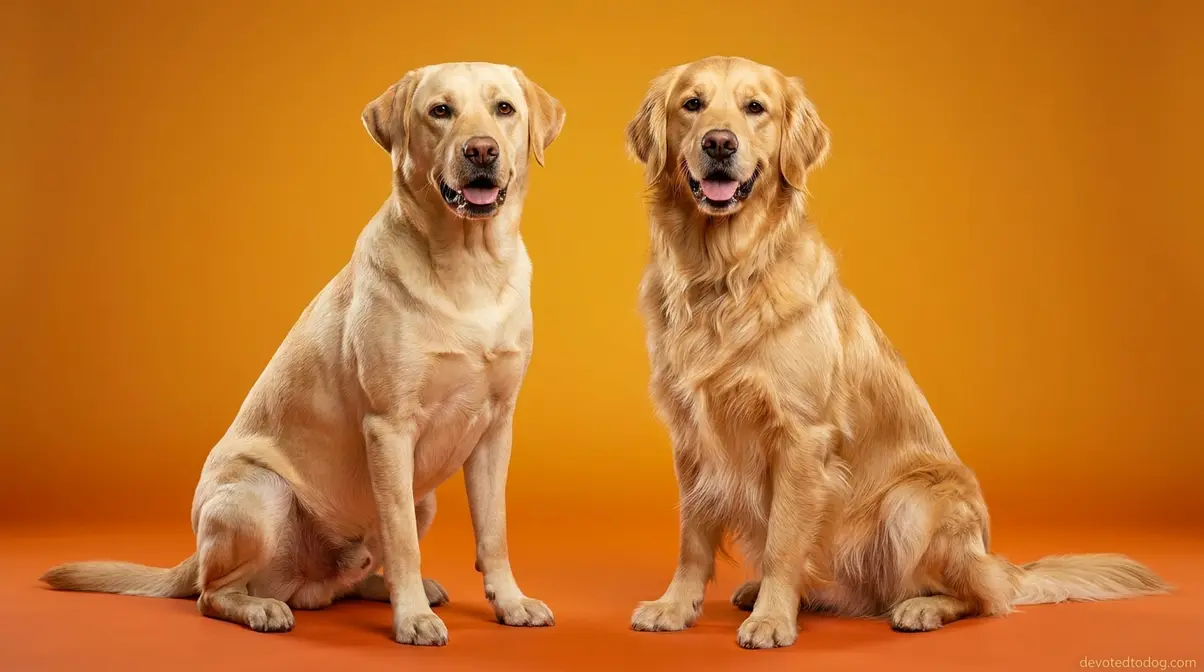
Where the Labrador Retriever is the closest match in personality, the Flat-Coated Retriever takes it a step further , sharing the Golden’s actual coat texture and joyful demeanor, just in a different color.
Flat-Coated Retriever , The Joyful Black Shadow
The Flat-Coated Retriever is the breed most often mistaken for a Golden Retriever at a distance , sharing a similar size, build, and long, flat-lying coat. The key difference? This breed comes in black or liver (reddish-brown) rather than gold.
Key Specs: 60–70 lbs | 22–24.5 inches | Lifespan: 8–10 years | Coat: Long, flat-lying, glossy
Best for: Active families who want an identical personality and similar coat texture to a Golden, and don’t mind the color difference.
Not for: Families prioritizing longevity , the Flat-Coated Retriever’s average lifespan of 8–10 years is notably shorter than a Golden’s 10–12 years, and the breed has higher rates of certain cancers.
The AKC describes the Flat-Coated Retriever’s temperament as “optimistic” and “good-humored” , essentially the Golden’s personality in a darker coat. These dogs are equally energetic, family-friendly, and eager to please. Finding a reputable breeder requires more research than with Labs or Goldens, as the breed is less common. The shorter lifespan is important for families to weigh upfront.
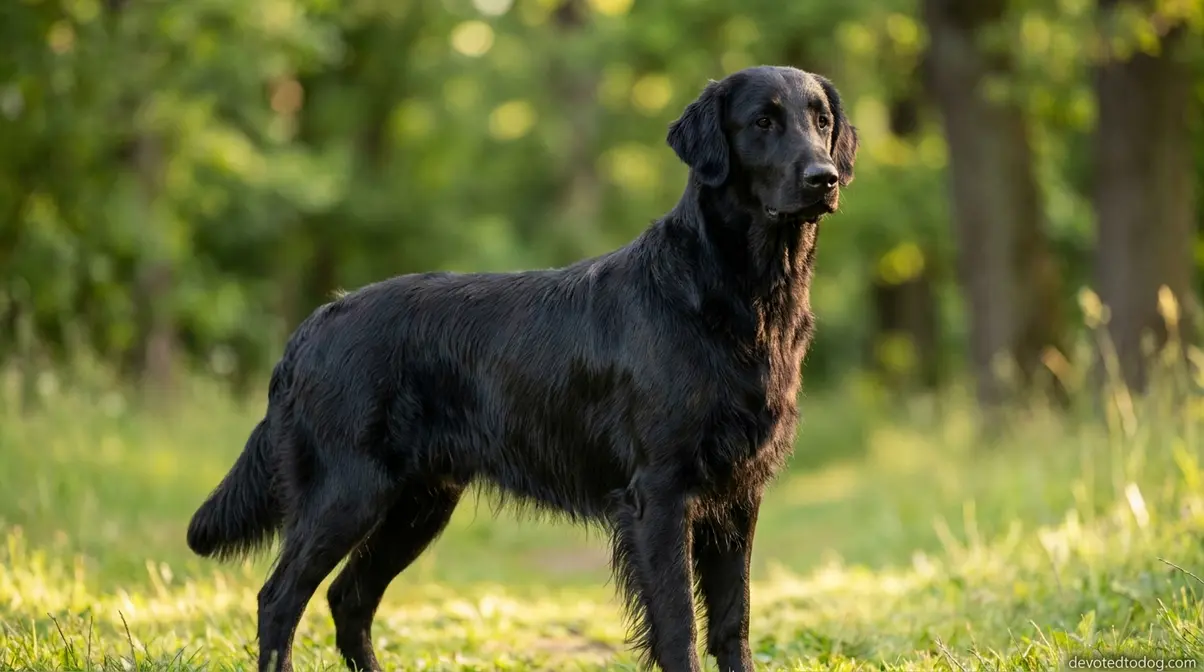
If you want the Golden’s affection and trainability but in a leaner, more athletic frame , the Vizsla offers something the retriever family can’t: a low-shedding coat.
Vizsla , The Velcro Dog with a Golden Heart
The Vizsla is a Hungarian hunting dog (a dog originally bred for tracking and retrieving game in Hungary) often called the “velcro dog” for how intensely it bonds with its family. For active owners who want a Golden-like companion with less fur on the furniture and a longer lifespan, it’s a compelling trade-off.
Key Specs: 44–60 lbs | 21–24 inches | Lifespan: 12–14 years | Coat: Short, smooth, rust-gold , minimal shedding
Best for: Active families or individuals who run, hike, or cycle regularly and want a devoted companion with a longer lifespan and less shedding than a Golden.
Not for: Apartment dwellers or low-activity households , Vizslas need 1–2 hours of vigorous exercise daily and dislike being alone for long stretches.
The rust-gold color gives Vizslas a visual warmth similar to a Golden’s coat, and their temperament , gentle, affectionate, and highly trainable , mirrors the Golden’s people-first personality. However, Vizslas are NOT a lower-energy alternative. They are a hunting breed that needs serious daily exercise. If a Golden Retriever’s energy level is already a concern, a Vizsla is not a downgrade in that department. But for active families, the longer lifespan (12–14 years vs. the Golden’s 10–12) and dramatically lower shedding make it a genuinely attractive option.
The Labrador, Flat-Coated Retriever, and Vizsla are the closest cousins on the Golden Spectrum. But the retriever family has three more members worth knowing , especially if you want a dog with the same sporting-group heritage.
Other Retriever Cousins
Three additional AKC-recognized retriever breeds round out the “closest twin” end of the Golden Spectrum. Each has a distinct personality profile that suits specific owner types.
Chesapeake Bay Retriever (55–80 lbs): The Chesapeake Bay Retriever has a wavy, oily, water-resistant coat with moderate shedding. Temperament-wise, this breed is more independent and protective than a Golden , loyal to its family but reserved with strangers. This means it requires an experienced dog owner who can provide clear structure and consistent training. It’s not the warm-with-everyone Golden personality, but it’s a serious, loyal working retriever.
Curly-Coated Retriever (60–95 lbs): The Curly-Coated Retriever has tight, water-resistant curls that shed less than a Golden’s double coat , a practical advantage. Temperament: confident, independent, and intelligent. Less eager-to-please than a Golden, more self-sufficient. Excellent for active owners who want a retriever that can think independently rather than constantly seeking approval.
Nova Scotia Duck Tolling Retriever , “The Toller” (35–50 lbs): The Nova Scotia Duck Tolling Retriever, nicknamed the “Toller,” is the smallest retriever breed , roughly two-thirds the size of a standard Golden Retriever. Its medium-length, reddish, water-repellent coat makes it visually the most Golden-like of the three. Temperament: alert, energetic, and affectionate with family. As the size chart below shows, the Toller is a natural fit for active families who want a smaller, Golden-like retriever in a more apartment-manageable frame.
For Golden Retriever mixes like the Goldendoodle, see our detailed breakdown of differences between Golden Retrievers and Goldendoodles. Additionally, Arizona State University research on dog temperament found that within-breed behavioral variation is nearly as high as between-breed variation , meaning individual Chesapeake Bay Retrievers vary as much in personality as the breed differs from Goldens (Arizona State University).
The retriever family covers the “closest twin” end of the Golden Spectrum. But what if you care more about personality than appearance? The next group of breeds matches the Golden’s heart , even if they look nothing like one.
Best Temperament Matches
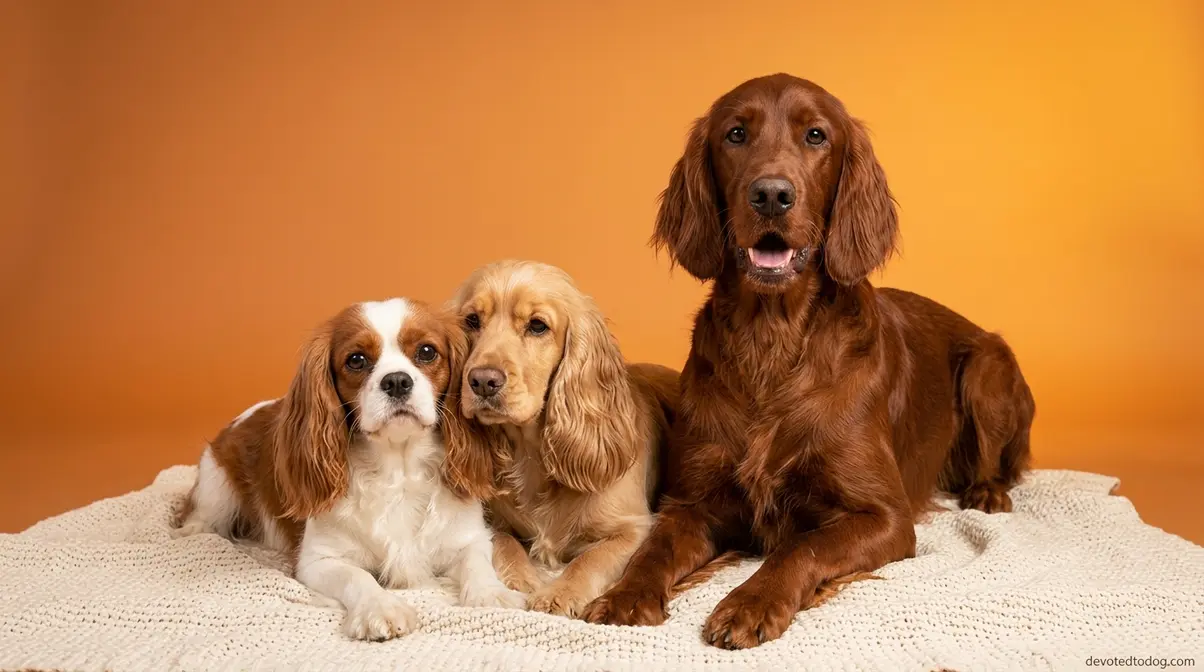
Dogs with a similar temperament to a Golden Retriever share three core traits: they are gentle with children, eager to please, and friendly with strangers rather than suspicious or aloof. Several breeds match these traits strongly even without matching the Golden’s appearance or size. Arizona State University research on dog temperament found that breed ancestry is not strongly predictive of a dog’s temperament and behavior , meaning a well-socialized Cavalier or Irish Setter from a reputable breeder can be just as “Golden-like” as a Labrador (Arizona State University).
A study of over 2,000 dogs found that breed ancestry is not a strong predictor of individual temperament , meaning a Cavalier King Charles Spaniel raised with the same care as a Golden can be just as gentle and trainable (Arizona State University).
These breeds sit at the “Spirit Match” end of the Golden Spectrum: same warmth, radically different body.
Cavalier King Charles Spaniel , The Mini Golden

The Cavalier King Charles Spaniel is a toy breed (a dog category for breeds typically under 20 lbs) often described by owners as a “mini Golden” in temperament , and for good reason. For families who want dogs with similar temperament to Golden Retrievers but in a fraction of the size, the Cavalier is the most consistent recommendation across owner communities.
Key Specs:
- Size: 12–18 lbs, 12–13 inches tall , roughly one-quarter the weight of a Golden Retriever
- Lifespan: 12–15 years (longer than a Golden’s 10–12 years)
- Coat: Silky, medium-length, feathered , requires regular brushing but sheds less overall than a Golden
- Colors: Blenheim (chestnut and white), tricolor, ruby, black and tan
Pros:
- Small enough for apartment living, with low-to-moderate exercise needs
- Exceptionally gentle with children and non-aggressive with strangers , truly Golden-like in social warmth
- Longer lifespan than Goldens, and less exercise-intensive for busy families or seniors
Cons:
- Prone to Mitral Valve Disease (a heart condition , consult your veterinarian about regular cardiac check-ups, as this is common in the breed)
- Can develop separation anxiety if left alone for long periods
- Not a jogging partner , their exercise tolerance is far lower than a Golden’s
Real-World Usage:
Cavaliers excel in quiet households, apartments, and homes with seniors or young children. Their low prey drive makes them excellent companions for multi-pet homes, and their small size means a daily walk around the block often satisfies their exercise needs. While they love to cuddle on the sofa, they are still spaniels at heart and enjoy gentle playtime in a fenced yard.
Across Golden Retriever owner communities, the consistent feedback captures it perfectly:
“I swear Cavaliers are just like mini goldens in temperament. This is my golden and my friends Cavalier – just soooo similar in personality.” , Golden Retriever owner, via community forum
Verdict: The Cavalier King Charles Spaniel delivers the classic Golden personality , affectionate, gentle, and family-oriented , in a 12–18 lb frame that works for apartments, seniors, and families with young children.
Choose if: You want the Golden’s warm, gentle temperament in a small, apartment-friendly dog with a longer lifespan.
Skip if: You want an active jogging companion , an Irish Setter or Vizsla will match your energy far better.
Where the Cavalier matches the Golden’s gentle soul in a tiny package, the Irish Setter matches its exuberant energy and affection in a similarly athletic frame.
Irish Setter , The Golden’s Energetic Cousin
The Irish Setter is an elegant sporting breed (a dog group developed for hunting alongside humans) known for its playful, affectionate nature , and for retaining puppy-like energy well into adulthood, which Golden Retriever owners will find immediately familiar.
Key Specs: 60–70 lbs | 25–27 inches | Lifespan: 12–15 years | Coat: Long, silky, deep mahogany red , sheds moderately
Best for: Active families with a yard, an outdoor lifestyle, and experience managing high-energy dogs.
Not for: First-time dog owners or apartment dwellers , Irish Setters need at least 1.5–2 hours of vigorous daily exercise and are not suited to small spaces.
Temperamentally, Irish Setters are playful, outgoing, and affectionate with every member of the family. They are clowns in the best sense , a quality that Golden owners immediately recognize. They are highly trainable but can be slightly stubborn compared to a Golden’s more consistent eagerness to please. Their long coat also requires regular grooming to prevent matting (tangling of fur that can cause skin irritation). For active families who want a Golden’s warmth with a more dramatic appearance and a longer lifespan, the Irish Setter is a compelling option.
For families who want the Golden’s gentleness but in a dramatically different size , either much larger or more compact , the Leonberger and Cocker Spaniel round out this personality-first category.
Leonberger and Cocker Spaniel , Gentle Giants and Compact Charmers
Two more personality matches sit at opposite ends of the size spectrum , one dramatically larger than a Golden, one significantly smaller.
Leonberger (90–170 lbs): The Leonberger is a giant breed from Germany that combines the gentleness of a Golden with the size of a small lion. Its long, golden-to-reddish-brown coat and lion-like mane give it a visual resemblance to a Golden, just dramatically scaled up. Temperament: gentle, patient, affectionate, and excellent with children , often described as a “gentle giant” with the same people-first orientation as a Golden. Important caveats: their giant size means higher food costs, larger living space requirements, and a shorter lifespan of 8–9 years. Best for families with both the space and the budget for a large dog. Think of it this way: Leonberger = “I want a Golden but bigger.”
Cocker Spaniel (20–30 lbs): The Cocker Spaniel is the smallest member of the sporting group , a dog category that also includes Golden Retrievers. Size: 20–30 lbs, lifespan 10–14 years. Its long, silky, wavy coat sheds moderately and requires regular grooming. Temperament: gentle, cheerful, and eager to please , the AKC describes them as “merry,” which perfectly captures the Golden’s characteristic joy in a compact form. Good with children and other pets, manageable in condos or townhomes with park access. Think of it this way: Cocker Spaniel = “I want a Golden but smaller and with less exercise.”
Personality matters , but for many readers, the real constraint is size. If you live in an apartment or simply want a dog you can pick up, the next section is for you.
Small Dogs Similar to Golden Retrievers
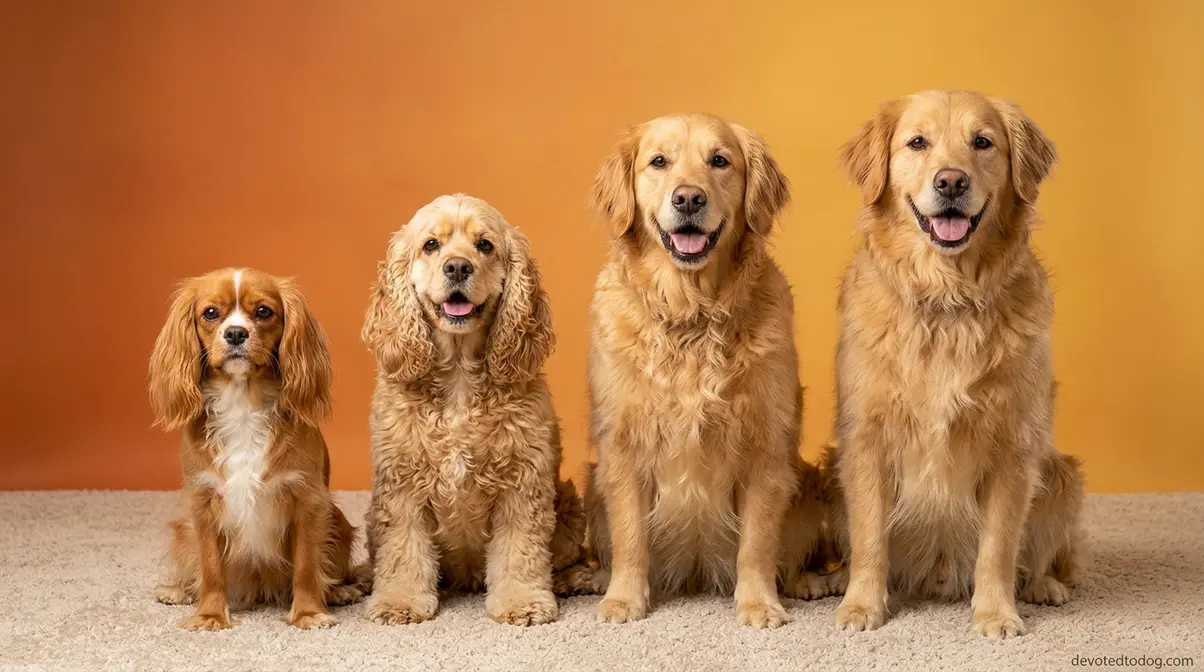
Small dogs similar to Golden Retrievers share three defining traits: a gentle, affectionate temperament with family and strangers, a willingness to please and learn, and compatibility with children and other pets. No small dog perfectly replicates the full Golden experience , the closest options are either mixes or breeds with similar personality origins (companion and sporting group dogs). Small dogs similar to Golden Retrievers , like the Cavalier King Charles Spaniel and Golden Cocker Retriever , typically weigh 12–45 lbs while sharing the Golden’s affectionate, family-first temperament.
It’s also important to note upfront: “Mini Golden Retriever” is a marketing term for a mixed breed, not an official AKC-recognized breed , so expectations need to be set accordingly before you start shopping.
- The best small dogs that come closest to delivering a Golden Retriever experience in a compact frame include:
- Cavalier King Charles Spaniel (12–18 lbs): Best for apartments and seniors
- Golden Cocker Retriever (30–45 lbs): Best for families wanting the Golden look in a smaller body
- Cocker Spaniel (20–30 lbs): Best for condos with park access
- Mini Golden Retriever (20–45 lbs, mixed breed): Variable traits , choose carefully
Small dogs at this end of the Golden Spectrum sit firmly in “Spirit Match” territory: same warmth, a fraction of the size.
What Makes a Small Dog “Golden-Like”?
Three criteria determine whether a small dog earns its place on the Golden Spectrum. First, a gentle, affectionate temperament , the dog should be friendly with strangers, not suspicious or territorial. Second, trainability and a willingness to please , not all small dogs are eager learners, but Golden-like ones are. Third, compatibility with children and other pets , the Golden’s ability to coexist peacefully with everyone in the household is a defining trait.
No small dog perfectly replicates this combination, but the breeds below come closest. A “mixed breed” is a dog with parents of two different breeds; a “purebred” has parents of the same recognized breed with predictable traits. Mixed breeds like the Golden Cocker Retriever can be wonderful , but because traits aren’t fully standardized, the individual dog matters more than the breed name. Always meet the parents and ask for health certificates.
With those criteria in mind, here are the best small dogs that come closest to delivering a Golden Retriever’s experience in a compact frame.
Golden Cocker Retriever , The Pint-Sized Package

The Golden Cocker Retriever is a Golden Retriever–Cocker Spaniel cross that delivers many of the Golden’s best qualities in a more apartment-manageable size. For anyone searching for small dogs similar to Golden Retrievers, this hybrid is one of the most visually convincing options available.
Key Specs: 30–45 lbs | 14–18 inches | Coat: Wavy, medium-length, golden to cream | Shedding: Moderate (less than a purebred Golden) | Energy: Medium
Best for: Families in medium-sized homes or apartments who want the Golden look and feel with a more manageable size and slightly lower exercise needs (30–60 minutes daily, versus the Golden’s 1+ hour requirement).
Not for: Families wanting fully predictable traits , because it’s a mixed breed, some individuals lean more Golden, others more Cocker Spaniel.
The Golden Cocker Retriever inherits the Golden’s friendliness and the Cocker Spaniel’s playful, gentle nature , generally excellent with children and other pets, and highly trainable. Because traits aren’t fully standardized in mixed breeds, the most important step is finding a reputable breeder who health-tests parent dogs. Avoid puppy mills (commercial breeding operations that prioritize profit over animal welfare) and pet stores, which often source from these operations.
For a detailed look at the miniature concept, learn about Miniature Golden Retrievers and how they compare to the standard breed.
The Golden Cocker Retriever is a hybrid with Golden traits in a smaller body. But what about the “Mini Golden Retriever” you’ve seen advertised online? Here’s the honest answer.
Mini Golden Retriever , Is It Real?
The “Mini Golden Retriever” is NOT an AKC-recognized breed. It is a marketing term applied to mixed breeds , most commonly a Golden Retriever crossed with a Cocker Spaniel, Miniature Poodle, or both. Because there is no breed standard, size, coat, and temperament vary significantly between individual dogs.
Typical size range: 20–45 lbs, depending on the cross. Coat: varies , can be wavy like a Golden, curly like a Poodle, or silky like a Cocker. The “Golden” appearance is not guaranteed, and neither is the temperament. This is genuinely important information that many breeders gloss over.
The appeal is real , a smaller, potentially lower-shedding dog with a Golden’s temperament is a legitimate desire. However, “Mini Golden Retriever” is sometimes used by unethical breeders to sell mixed-breed puppies at purebred prices. Always ask for health tests on both parent dogs, request veterinary records, and visit the breeding facility in person before committing. The AKC’s breeder referral service is a reliable starting point for finding responsible breeders.
If you want a Mini Golden Retriever, the most predictable options are a Golden Cocker Retriever or a Miniature Goldendoodle from a health-tested breeder. These hybrids have the most consistent “mini Golden” traits available.
Other Small Contenders for Small Spaces
Two breeds covered earlier deserve a second look specifically in the context of small-space living.
The Cavalier King Charles Spaniel (12–18 lbs) remains the single best option for apartment dwellers on the Golden Spectrum. Its low-to-moderate exercise needs, quiet temperament, and easy adaptability to small spaces make it uniquely suited to urban living. Refer to the full profile above for complete details.
The Cocker Spaniel (20–30 lbs) is a step up in size and energy , still apartment-manageable with regular park visits, and slightly more active than a Cavalier. Good for families in condos or townhomes with access to outdoor space.
One practical benefit worth highlighting for families thinking long-term: smaller breeds generally live longer than larger breeds. The Cavalier averages 12–15 years, the Cocker Spaniel 10–14 years , both outlasting the Golden’s average of 10–12 years. That extra time together is a meaningful consideration.
Size and space are one set of constraints. For many families, the bigger concern is allergies , and that’s where the next category of Golden-like dogs becomes essential.
Hypoallergenic Dogs Similar to Golden Retrievers
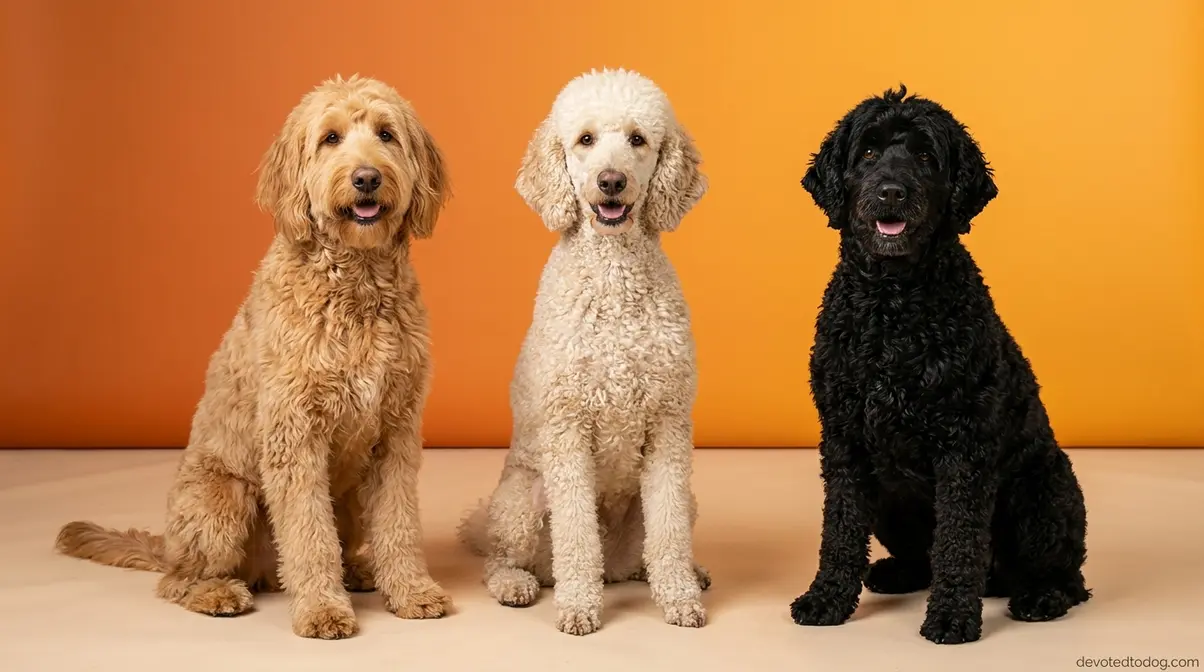
Hypoallergenic dogs similar to Golden Retrievers , like the Goldendoodle, Standard Poodle, and Portuguese Water Dog , offer a meaningful reduction in allergen exposure compared to a purebred Golden, while preserving the friendly, trainable temperament that makes Goldens so beloved. No dog breed is truly hypoallergenic , allergens arise from a dog’s saliva and dander, not their hair , but low-shedding breeds like the Goldendoodle and Standard Poodle can significantly reduce allergen exposure in the home (Rush University System for Health).
These breeds sit at the “Spirit Match” end of the Golden Spectrum: same warmth, different coat biology.
What “Hypoallergenic” Actually Means for Dog Owners
“Hypoallergenic” means “less likely to cause an allergic reaction” , it does NOT mean “allergy-free.” No dog breed is completely allergen-free because the primary allergen, Can f 1 (the specific protein responsible for most dog allergies), comes from a dog’s saliva, skin cells (dander), and urine , not their fur. This distinction matters enormously when choosing a breed.
A NIH study on dog allergen levels found that so-called hypoallergenic dogs had higher Can f 1 allergen levels in their hair and coat samples than control breeds (National Institutes of Health). This counterintuitive finding means “low-shedding” is a more accurate term than “hypoallergenic.” Furthermore, Rush University on dog allergies confirms there is no scientific evidence that a truly hypoallergenic dog exists, as problematic allergens arise from saliva and skin rather than hair.
The practical implication: low-shedding breeds reduce airborne allergens in your home because there’s less fur carrying allergen particles around. This can meaningfully reduce allergy symptoms for many people , but it’s not a guarantee. Consult an allergist before committing to a specific breed. For a full breakdown of Golden Retriever allergen levels, read our guide on the hypoallergenic qualities of Golden Retrievers.
With that clarity established, here are the three low-shedding breeds that come closest to delivering a Golden Retriever’s personality with significantly less allergen spread.
Goldendoodle , The Fan-Favorite Low-Shedding Option
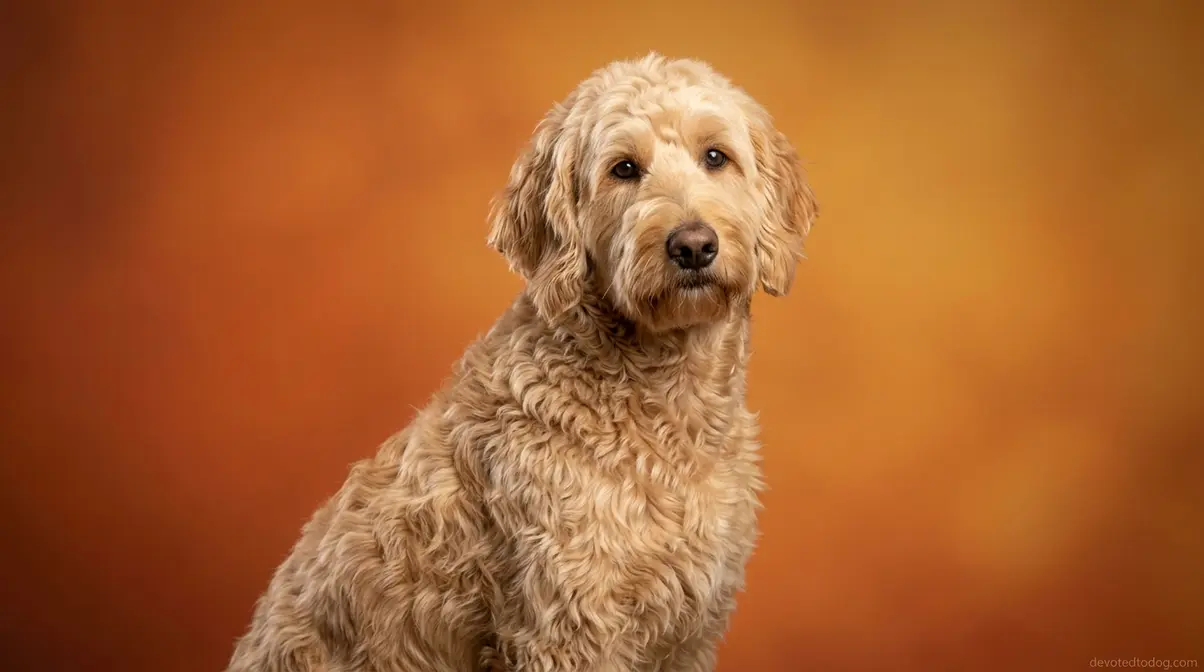
The Goldendoodle is a Golden Retriever–Poodle mix known for its low-shedding coat and Golden-like temperament. It is one of the most popular family dogs in the United States , and for good reason. It delivers the Golden experience with a coat that’s significantly easier to manage for allergy-prone households.
Key Specs:
- What it is: Golden Retriever × Poodle mix (not AKC-recognized , a hybrid breed)
- Size: Mini Goldendoodles: 15–35 lbs; Standard Goldendoodles: 40–70 lbs
- Coat: Wavy to curly, low-shedding (inherits Poodle’s coat type)
- Lifespan: 10–15 years
Pros:
- Low-shedding coat significantly reduces airborne fur and allergen spread compared to a purebred Golden
- Combines the Golden’s friendly, affectionate nature with the Poodle’s intelligence , highly trainable
- Size options from mini to standard, making it adaptable to different living situations
Cons:
- Not AKC-recognized, meaning trait variability between individuals can be significant
- Higher grooming cost , professional grooming every 6–8 weeks is required to prevent matting, plus regular brushing at home
- Can be expensive from reputable breeders ($2,000–$4,000+), and some individuals may still trigger allergies
Real-World Usage: The Goldendoodle works best for families who want the Golden personality with a more manageable coat. However, low-shedding does NOT mean low-maintenance , the curly or wavy coat requires consistent grooming attention. Factor professional grooming costs into your total cost of ownership before committing. Ohio State University Veterinary Medicine confirms that all dogs produce allergens, and the level varies between individual dogs rather than by specific breed , so spending time with a specific Goldendoodle before adopting is always wise.
Verdict: The Goldendoodle is the best first choice for allergy-prone families who want a Golden’s warmth in a lower-shedding package.
Choose if: Allergies are your primary concern and you want a friendly, trainable dog with size flexibility from mini to standard.
Skip if: You want fully predictable purebred traits or want to avoid high grooming costs , the Standard Poodle offers more predictability at a similar grooming commitment.
For a complete breed guide, read our full resource on Goldendoodle breed and their hypoallergenic coats.
The Goldendoodle is the most popular low-shedding Golden alternative , but if you want a purebred dog with even more predictable traits and a longer history of health testing, the Standard Poodle is the smarter choice.
Standard Poodle , The Smartest Low-Shedder
The Standard Poodle is consistently ranked #2 in dog intelligence by Stanley Coren’s research (behind only the Border Collie) , and it pairs that intelligence with an affectionate, family-friendly temperament that closely mirrors the Golden Retriever’s.
Key Specs: 40–70 lbs | Over 15 inches tall | Lifespan: 10–18 years | Coat: Tight, curly, very low-shedding
Best for: Allergy-prone families who want a purebred dog with predictable traits, high trainability, and a longer lifespan than a Golden Retriever.
Not for: Owners who want to skip regular professional grooming , Standard Poodles require professional grooming every 6–8 weeks, just like Goldendoodles.
The “fancy haircut” stereotype is misleading. Standard Poodles are athletic, energetic working dogs at heart , they score very similarly to Golden Retrievers on family-friendliness, and their AKC-recognized status means health testing is more standardized and predictable than for hybrid mixes. The significantly longer potential lifespan (up to 18 years) is a meaningful advantage for families thinking long-term.
The Standard Poodle is the gold standard for low-shedding intelligence. For families who also want an athletic, water-loving companion, the Portuguese Water Dog adds a working-dog dimension to the mix.
Portuguese Water Dog , The Athletic Alternative
The Portuguese Water Dog is an athletic working breed (originally bred as a fishing companion in Portugal) with a curly, low-shedding coat that makes it one of the better allergy-friendly Golden alternatives.
Key Specs: 35–60 lbs | 17–23 inches | Lifespan: 11–13 years | Coat: Wavy or curly, low-shedding, water-resistant | Colors: Black, white, or brown
Best for: Active families who want a low-shedding, medium-sized dog with working-dog energy and a love of outdoor activity.
Not for: Owners seeking a low-energy companion , Portuguese Water Dogs are energetic and need daily vigorous activity.
Temperamentally, the Portuguese Water Dog is energetic, affectionate, highly trainable, and excellent with families. Slightly more independent than a Golden but equally loyal. Grooming requires regular brushing and professional sessions every 6–8 weeks. Less common than Poodles or Goldendoodles, so finding a reputable breeder requires more research and potentially longer wait times.
Low-shedding breeds solve the allergy problem. But before you commit to any Golden alternative, there’s an important health conversation to have , one that affects Golden Retrievers specifically and may influence your decision.
Golden Retriever Health: What You Need to Know
Golden Retriever health is a legitimate factor in why many families explore alternatives , and understanding the key concerns helps you make a more informed decision about any breed you choose.
Leading Cause of Death
Cancer is the leading cause of death in Golden Retrievers. A UC Davis study of 652 Golden Retrievers found that 65% died of cancer, a high rate relative to many breeds (Kent et al., PLoS ONE, 2018). The two most common types are hemangiosarcoma (cancer of the blood vessel walls) and lymphoma (cancer of the lymphatic system, which helps fight infection). Cancer is the leading cause of death for Golden Retrievers, with the breed facing significantly higher cancer rates than most other dogs. These cancers often develop with few visible symptoms until advanced stages. Regular veterinary check-ups, including imaging for older dogs, are critical for early detection. Responsible breeding practices that screen for cancer-associated genetic markers can help reduce risk.
Additionally, Colorado State University dog cancer study confirms that cancer is the leading cause of death in dogs over the age of two , and Golden Retrievers are disproportionately affected compared to other breeds (Colorado State University). Other common health concerns include hip dysplasia (a joint condition where the hip socket doesn’t form properly), heart conditions, and skin allergies.
If you own or are considering a Golden Retriever, discuss cancer screening options with your veterinarian , early detection significantly improves outcomes. For a complete guide to Golden Retriever health warning signs, see our common health issues in Golden Retrievers guide.
What is the Silent Killer?
Hemangiosarcoma is often called the “silent killer” in Golden Retrievers. It is a cancer of the blood vessel walls that typically develops on the spleen, liver, or heart , organs where tumors can grow undetected for months. Because it rarely causes obvious symptoms until it ruptures, many dogs show no warning signs before a sudden, life-threatening emergency. Golden Retrievers are disproportionately affected compared to other breeds. If you have a senior Golden, ask your vet whether screening such as an abdominal ultrasound makes sense for your dog.
Why Health Matters
Some alternative breeds have notably longer average lifespans , the Vizsla (12–14 years) and Standard Poodle (up to 18 years) meaningfully outlive the Golden’s average of 10–12 years. Choosing a breed with lower cancer predisposition and a longer lifespan is a legitimate, health-motivated reason to explore alternatives. It’s not a betrayal of love for Goldens , it’s informed decision-making.
Regardless of which breed you choose, always request health certificates for both parent dogs from any breeder. A reputable breeder will provide OFA (Orthopedic Foundation for Animals) hip and elbow certifications and cardiac clearances as standard practice. A NIH genetic studies on Golden Retriever longevity found a significant association between the ERBB4 gene variant and lifespan in Golden Retrievers , ask breeders specifically about health testing for this marker if you’re committed to the breed (National Institutes of Health).
Understanding Golden Retriever health risks is one reason many families explore alternatives. Before you pick one, it’s worth knowing the common mistakes people make when choosing an alternative breed.
Common Pitfalls When Choosing a Golden Alternative
Choosing the right Golden Retriever alternative requires honest self-assessment , not just enthusiasm for a breed’s appearance or reputation. Across owner communities, three specific mistakes come up repeatedly when people choose a breed that ultimately doesn’t fit their life.
3 Mistakes People Make When Picking an Alternative Breed
Pitfall 1 , Choosing by appearance, not lifestyle: Many people pick a Flat-Coated Retriever or Vizsla because they look Golden-like, then discover the exercise needs are identical to , or greater than , a Golden’s. Match the breed to your actual activity level, not your ideal one. Be honest: how many hours a day will you realistically exercise a dog?
Pitfall 2 , Assuming “hypoallergenic” means allergy-free: As the NIH research shows, low-shedding breeds still produce allergens. If allergies are a serious health concern, spend time with the specific breed , and ideally the specific individual dog , before committing. Allergen production varies significantly between individual dogs within the same breed.
Pitfall 3 , Underestimating the cost of mixed breeds: Goldendoodles and Golden Cocker Retrievers from reputable breeders can cost $2,000–$4,000+, plus ongoing professional grooming costs of $60–$120 per session every 6–8 weeks. Factor the total cost of ownership , not just the purchase price , into your decision before falling in love with a breed.
And finally , after exploring 15 alternatives , it’s worth acknowledging when a Golden Retriever itself is still the right answer.
When a Golden Retriever Is Still the Right Choice
If you have a large home with a yard, no significant allergies, and an active lifestyle , a purebred Golden Retriever from a health-tested breeder is still one of the best family dogs in the world. The alternatives in this guide exist for specific constraints; if those constraints don’t apply to you, the original may genuinely be your best choice.
For families committed to the breed, choosing a reputable breeder who health-tests for cancer-associated genetic markers can help extend lifespan and reduce health risks. Specifically, NIH genetic studies on Golden Retriever longevity found a significant association between the ERBB4 gene variant and lifespan in Golden Retrievers , ask breeders about health testing for this marker (National Institutes of Health). A good breeder will welcome these questions.
What dog breeds look most like Golden Retrievers?
The dog breeds that look most like Golden Retrievers are: Labrador Retriever (very similar build, often confused), Flat-Coated Retriever (same build but solid black or liver coat), Nova Scotia Duck Tolling Retriever (smaller, red-orange coat), and Goldendoodle (genetic Golden + Poodle hybrid). All four share the friendly, retriever temperament and similar working heritage. The Labrador is the closest match in build and family fit; the Flat-Coated Retriever is closest in face, head shape, and retrieve drive.
What dog breed is similar to a Golden Retriever but smaller?
Three smaller breeds with similar Golden Retriever temperament and looks: Nova Scotia Duck Tolling Retriever (35-50 lbs, smaller golden-red retriever), Cocker Spaniel (20-30 lbs, gentle and feathered), and Brittany Spaniel (30-40 lbs, active and friendly). For a small dog with golden coloring, Cavalier King Charles Spaniel or Mini Goldendoodle (15-35 lbs) are popular choices. None are exact replicas, but they share the friendly, eager-to-please disposition that makes Goldens beloved.
What dog breeds have similar traits to Golden Retrievers?
Golden retriever like breeds share three core traits: friendly disposition, retrieving instinct, and eagerness to please. Best matches include the Labrador Retriever (#1 most similar), Flat-Coated Retriever, Bernese Mountain Dog (calm family dog), English Setter (gentle hunting companion), and Goldendoodle (genetic kin). Dogs that look like golden retrievers but with different temperaments (e.g., Australian Shepherd) share appearance but not behavior. For families wanting a Golden alternative, prioritize temperament over coat color.
Frequently Asked Questions
What dog is most similar to Golden Retrievers?
The Labrador Retriever is widely considered the most similar dog to a Golden Retriever. Labs share the Golden’s friendly, outgoing temperament, high intelligence, and eager-to-please nature , making them equally excellent family companions. The primary physical difference is the Lab’s shorter, denser coat, which sheds similarly but requires less brushing. Labs come in black, yellow, and chocolate, versus the Golden’s golden tones. Labs typically weigh 55–80 lbs and Goldens 55–75 lbs, and Labs live about 11–13 years versus 10–12 for Goldens, according to AKC breed standards.
What’s the other dog that looks like a golden retriever?
The Flat-Coated Retriever is the breed most often mistaken for a Golden Retriever in appearance, as it has a similar size, build, and long, flowing coat , but typically comes in black or liver (reddish-brown) rather than gold. The Nova Scotia Duck Tolling Retriever is another visual lookalike, though smaller at 35–50 lbs, and both share the Golden’s joyful, family-oriented personality. The Flat-Coated Retriever’s lifespan averages 8–10 years, which is slightly shorter than a Golden’s.
What dog is closest to a golden retriever?
In terms of personality in a smaller package, the Cavalier King Charles Spaniel is often considered the closest small dog to a Golden Retriever; overall, the Labrador Retriever is the closest match. Cavaliers are exceptionally affectionate, gentle with children, non-aggressive with strangers, and surprisingly easy to train , delivering the classic “Golden personality” in a 12–18 lb frame. They live 12–15 years, slightly longer than most Goldens. Golden Retriever owners who have spent time with Cavaliers frequently describe them as “mini Goldens in temperament.”
Breed characteristics and availability verified as of January 2026.
For families who love the Golden Retriever’s warmth but face real constraints , size, shedding, or allergies , these 15 dogs similar to Golden Retrievers deliver that same spirit in different packages. The Labrador Retriever remains the closest twin across all key traits. For small-space living, the Cavalier King Charles Spaniel is the standout choice. For allergy-prone households, the Goldendoodle and Standard Poodle offer the best balance of Golden personality and reduced shedding. Across all 15 breeds, UC Davis research reminds us that the Golden’s high cancer death rate (65% of deaths in a UC Davis study) is a genuine health motivation for exploring alternatives , not a reason for guilt.
The Golden Spectrum runs from “closest twin” (Labrador Retriever, Flat-Coated Retriever) to “spirit match” (Cavalier King Charles Spaniel, Goldendoodle) , and the right breed depends entirely on your specific life circumstances, not a universal ranking. No single breed is objectively best; the Devoted to Dog team designed this framework so you can identify your own best match based on the constraints that actually matter to you.
Start by identifying your single biggest constraint , size, shedding, or energy level , and use the comparison table above to find your top three candidates. Then visit a local breed meet-up or reputable breeder to spend time with the breed before committing. Meeting the dog in person, not just researching online, is the step that makes all the difference.
Readers comparing options often find our piece on When Do Golden Retrievers Calm Down? Age-by-Age Guide (2026) helpful for additional context.
Readers comparing options often find our piece on Are Golden Retrievers Protective? 2026 Guard Dog Guide helpful for additional context.