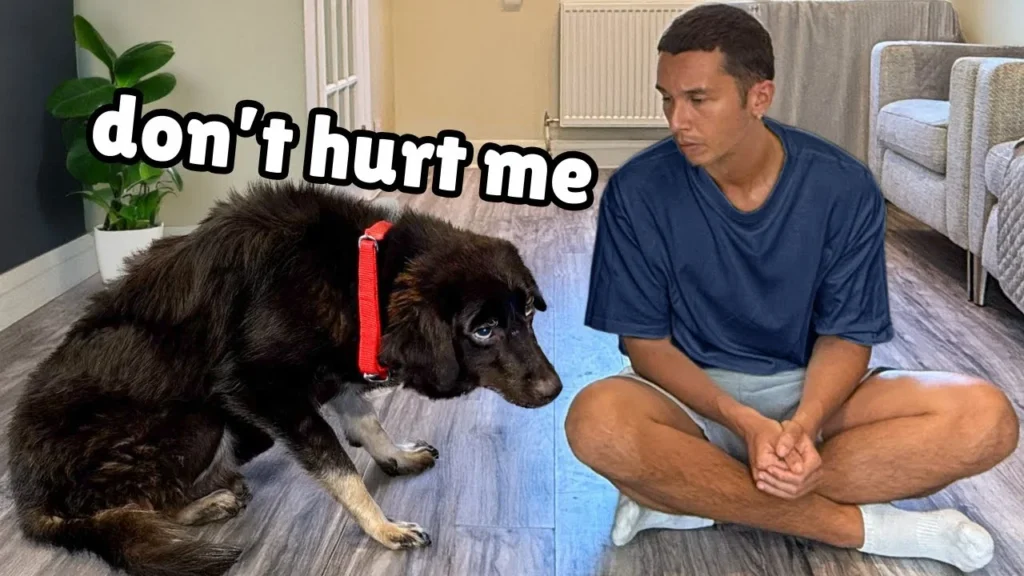
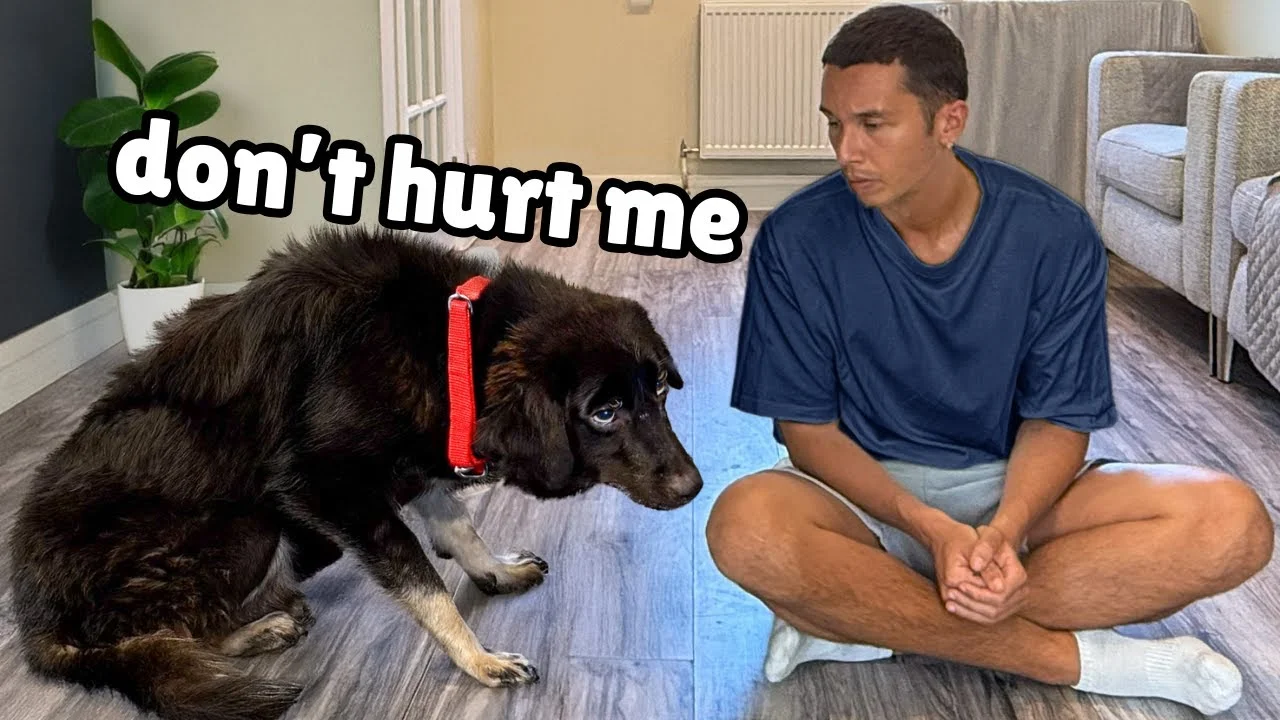
She came in completely shut down.
Not aggressive. Not reactive. Just — gone. The most terrified, completely withdrawn dog that Jeremy and Ella of The Golden Kobe Family had ever brought through their door.
Before This One, There Was A Record
The Golden Kobe Family has fostered dog after dog in the grip of real trauma. Dogs so shut down they couldn’t walk through a door.
Each time, Jeremy and Ella thought they’d seen it all.
Then this rescue arrived. And she reset what “broken” meant to them.
What Shutdown Actually Looks Like
When a dog reaches a state rescuers call behavioral shutdown, it’s different from simple shyness. A shut-down dog has essentially gone offline — no curiosity, no reaction, no eye contact.
Animal behaviorists describe this as the nervous system’s protective response to prolonged fear or neglect. The dog has learned that engagement leads to pain, so the system stops engaging entirely. It isn’t stubbornness. It’s survival.
Jeremy and Ella had seen it before. Never quite like this.
Two Already Waiting Inside
Inside the house, Kobe and Moki were already there. Nothing pushy. Just presence.
Kobe, the golden retriever, reads the room. Finds the lowest-pressure corner. Exists nearby without asking for anything in return.
Moki, the Doberman, adds his own quiet weight — proof that this space is safe.
No Timeline. No Pressure.
From the start, Jeremy and Ella made the call that would matter most.
No deadline. No schedule. “We kept her for as long as she needed,” they said.
For a dog in this state, pressure is exactly the wrong medicine. Time — real, unhurried, expectation-free time — is the only thing that works. She stayed until she was ready.
The Days Between Fear And Trust
She didn’t recover in a weekend. It rarely goes that way.
But somewhere in the slow, unglamorous passing of ordinary days, something began to shift. She started to notice things again. A noise from the kitchen. Kobe crossing the room. The temperature of a hand nearby.
Not trust yet. Just awareness. The first reluctant step back from gone.
When Something Small Changed Everything
There’s always a moment. A tail that moves when it hadn’t before. An ear that turns toward a sound instead of pressing flat.
Something small that tells the room: she’s in there. She’s starting to come back.
That moment came for her, too. And once it did, it didn’t stop.
What 3.8 Million People Saw
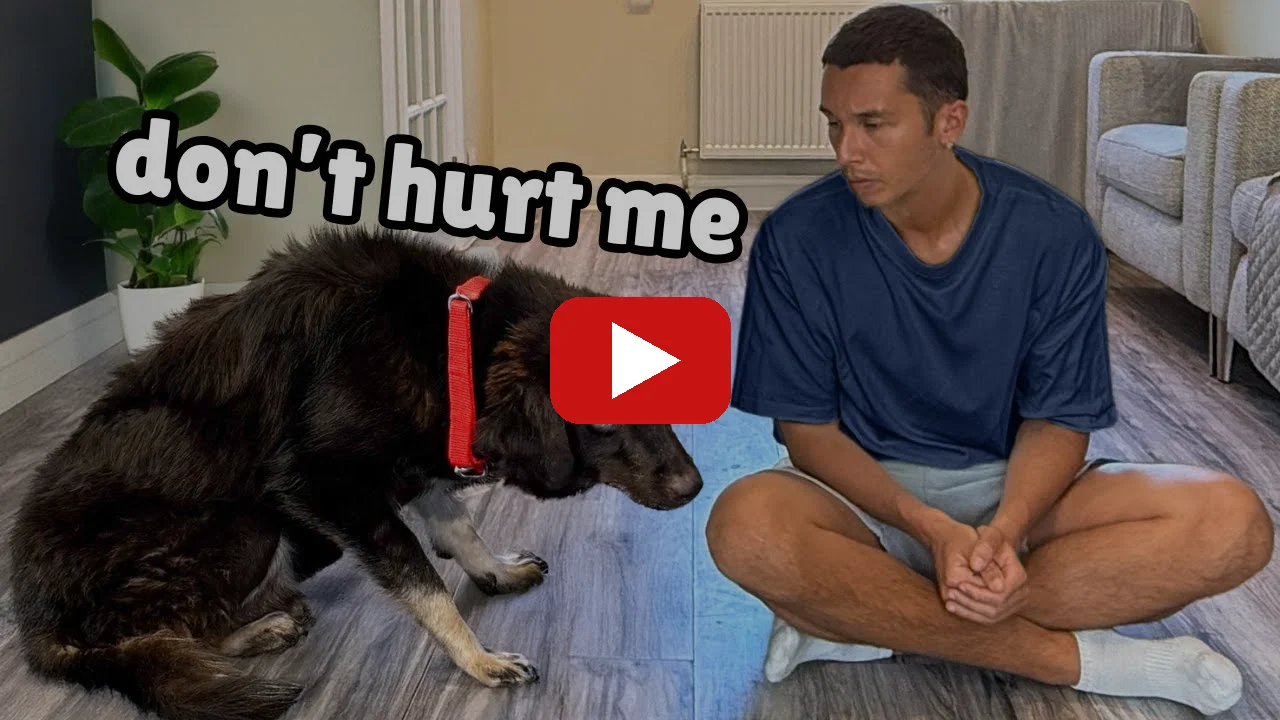
By the time her full transformation played out on camera, it was unmistakable. The dog who had arrived too shut down to respond to anything was, by any measure, unrecognizable.
Three point eight million people watched it happen. That’s not a coincidence. That’s recognition — the deeply human response to watching something broken piece itself back together.
She Doesn’t Know She’s Famous
She’s not thinking about the views. She’s not carrying the weight of what she came through.
She’s just a dog who, for as long as she needed, had a golden retriever and a Doberman and two people in London who refused to rush her.
For a long time, she was too afraid to exist.
Now she isn’t.
Story and footage: The Golden Kobe Family (YouTube / Apple TV). Consider following their work or supporting their GoFundMe to help fund future rescues.
Welcoming A Shut-Down Rescue Dog?
The most withdrawn dogs are often the ones with the most capacity to change. A few things that consistently help shut-down rescues settle:
- Let them set every pace. Don’t force greetings, handling, or eye contact. Time without pressure is the fastest path forward. → More on reading dog behavior and body language
- Calm resident dogs are powerful co-therapists. A settled dog like Kobe acts as a living “this is safe” signal for a terrified newcomer. → Our guide to introducing dogs at home
- Expect at least four weeks before you see their real personality. Two weeks is the decompression floor — the “real” dog often doesn’t emerge for a month. → Adoption guides and what to expect
- Severe anxiety is worth a vet conversation. Behavioral shutdown at this level can sometimes be helped with short-term medication — enough to give the dog a foothold to start learning. Ask your vet, not us; we’re dog people, not a vet clinic.