
You are finding golden fur on every couch cushion, your car seat, and somehow your morning coffee. The problem is not the shedding itself: it is that most grooming advice skips the three steps that actually slow it down.
Without the right routine, your Golden’s double coat is at constant risk of painful matting. Those mats can hide skin infections your vet will catch six months too late. These are the golden retriever grooming tips that change that pattern.
By the end of this guide, you will have a step-by-step grooming routine that keeps the coat healthy and doubles as a quick health check at every session. You will learn the right tools, the correct brushing technique, how to handle baths and trims safely, and what to look for on your Golden’s skin and ears.
Golden Retrievers need brushing 2-3 times per week and a professional groom every 8-10 weeks to prevent painful matting and manage their double coat’s heavy shedding seasons.
- Never shave a Golden’s coat: their double coat regulates body temperature in both heat and cold
- Use the right tools: a slicker brush and undercoat rake are non-negotiable for this breed
- Grooming is health screening: use every session to check skin, ears, paws, and for lumps (The Grooming Health Check)
- Start early: puppies introduced to grooming before 12 weeks tolerate it far better as adults
What Your Golden’s Double Coat Actually Needs
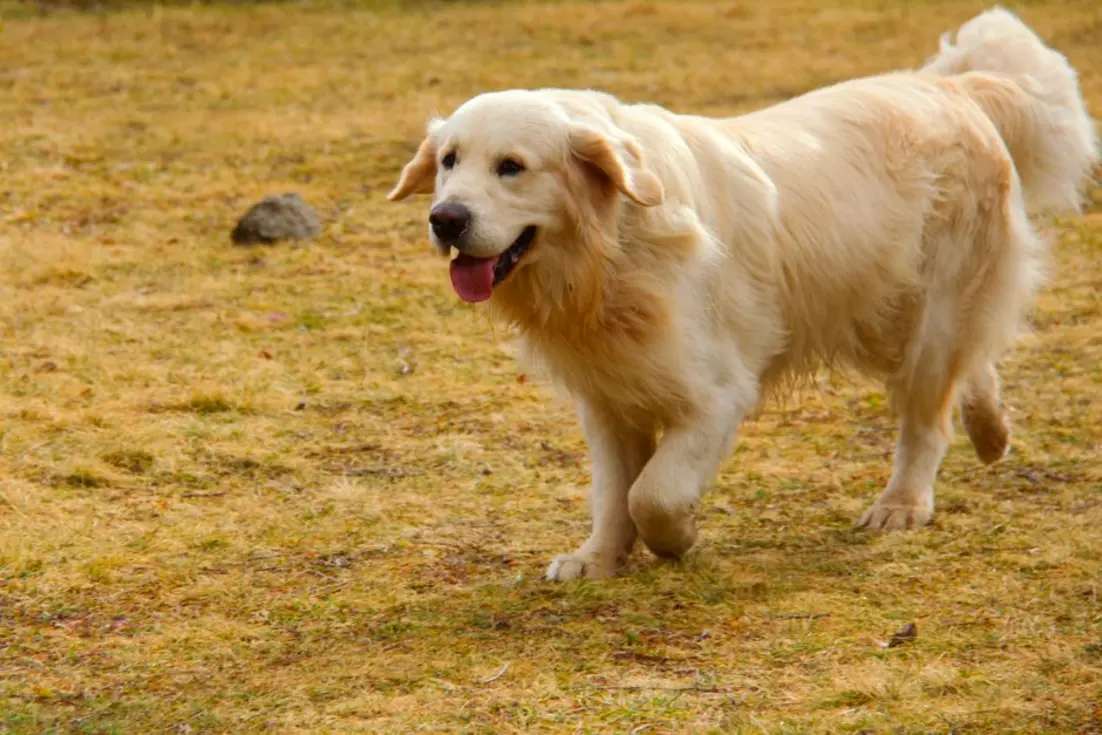
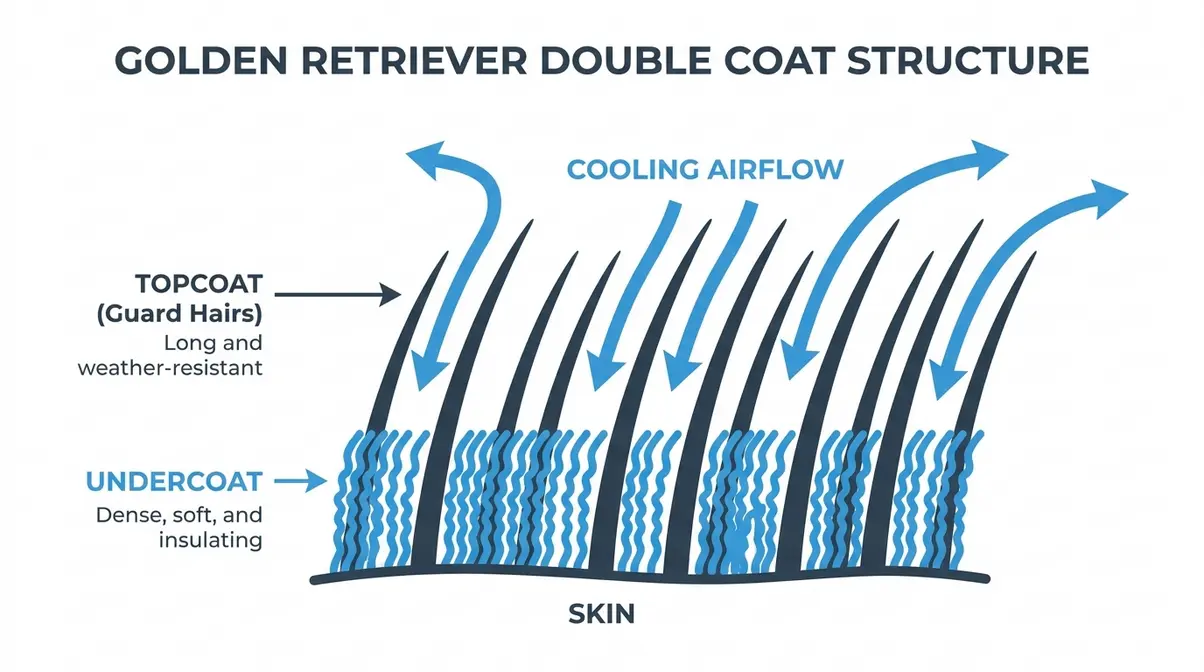
A Golden Retriever has a double coat, meaning two distinct layers of fur that work together. The undercoat (a dense, soft layer beneath the visible topcoat) provides insulation. The topcoat (longer, water-resistant guard hairs) protects against sun, rain, and debris. Both layers are essential. Neither should ever be removed.
Think of it like a raincoat worn over a fleece jacket. Remove the fleece and your dog loses warmth. Remove the raincoat and they lose weather protection. Remove both and you have permanently changed the way the coat functions.
Grooming your Golden is not just coat maintenance. It is also your best early warning system for health issues. More on that shortly.
The Two Layers and What They Do
The undercoat does more than keep your Golden warm in winter. It also traps cool air close to the skin during summer, which is why shaving does not help a hot dog. It makes things worse. The topcoat’s guard hairs grow back slowly and unevenly after shaving, sometimes leaving patches that never fully recover.
The feathering (the longer decorative fur on your Golden’s legs, chest, and tail) is part of the topcoat. It needs regular trimming with thinning shears to stay tidy, but it should never be shaved off. As part of your golden retriever grooming routine, understanding these two layers helps you choose the right tool for every task.
AAHA grooming frequency recommendations support daily brushing for long-haired breeds like Golden Retrievers to prevent matting, which can cause pain and skin infections (AAHA, 2023).
Why You Should Never Shave Your Golden
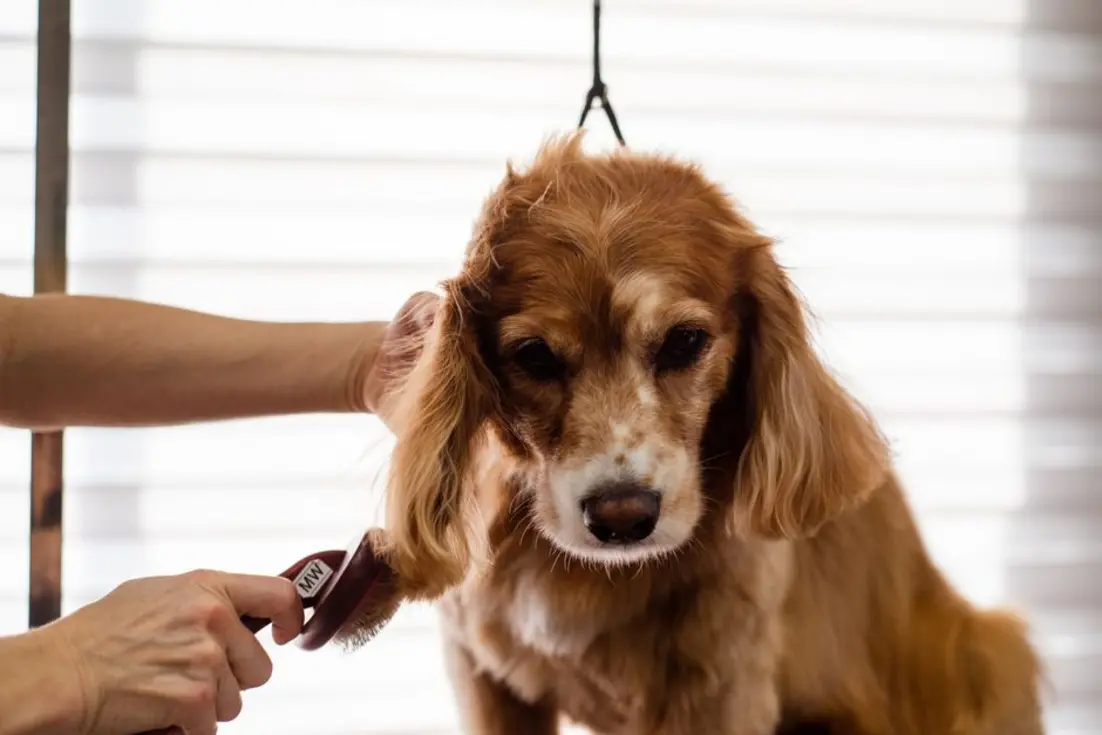
Shaving a Golden does not reduce shedding. It redistributes it as short, sharp bristles that are harder to vacuum and can irritate skin. It can also cause a condition called post-clipping alopecia, sometimes called “coat funk,” where the coat grows back patchy, coarse, or not at all in some areas.
The GRCA and AKC both advise against shaving. Groomers who offer “summer shaves” for Goldens are not following breed-standard practice.
A Golden Retriever’s double coat should never be shaved: removing it can permanently damage hair follicles and eliminate the breed’s natural ability to regulate body temperature (VCA Animal Hospitals).
If a vet recommends shaving for a medical procedure, that is the only exception.
Your Essential Golden Retriever Grooming Toolkit
Before you start any grooming session, you need the right tools in hand. Using the wrong brush on a double coat causes pain, coat damage, and a dog that dreads grooming. Each item below is chosen specifically for the Golden’s coat type.
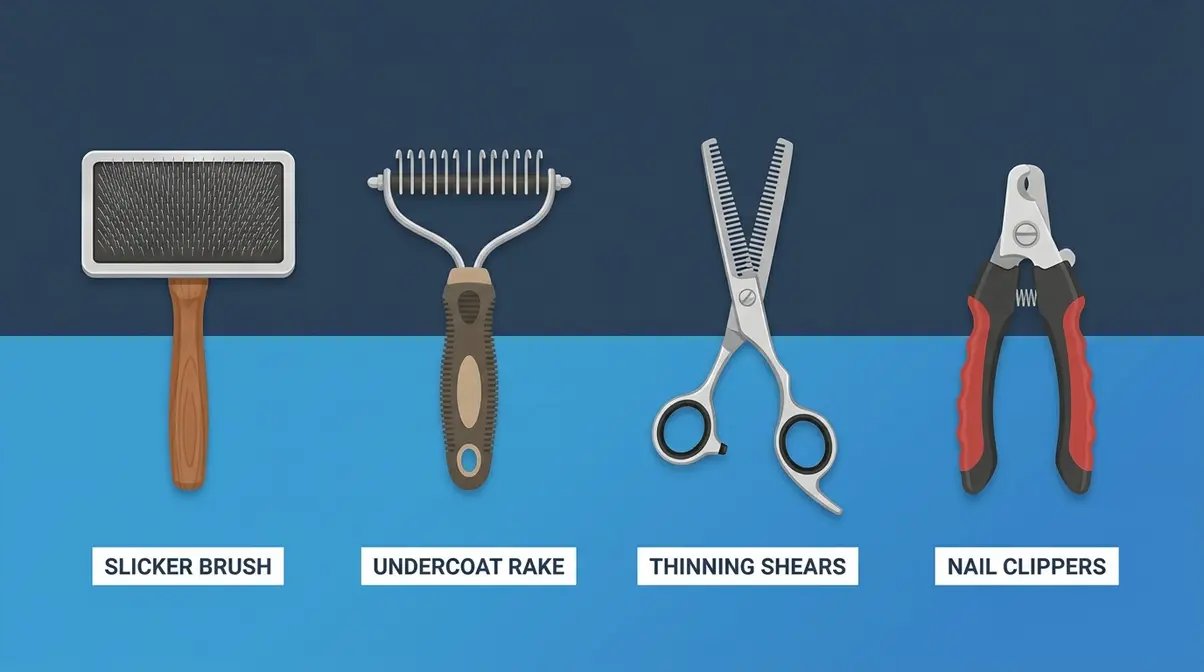
- Slicker brush (a paddle-shaped tool with fine wire bristles): removes tangles and loose fur from the topcoat; your go-to brush for regular sessions
- Undercoat rake (a wide-toothed comb designed to reach the dense fur beneath the topcoat): pulls out dead undercoat during shedding season without damaging the guard hairs above
- Thinning shears (scissors with one serrated blade that blend and shape the feathering without hard lines): the correct tool for trimming legs, chest, and tail
- Nail clippers or grinder: for monthly nail maintenance
- Dog-safe shampoo and conditioner: formulated for double-coated or long-haired breeds, not human shampoo
- Cotton balls and vet-approved ear cleaner: for weekly ear checks
- Styptic powder (a clotting agent that stops bleeding if you accidentally cut the quick): keep this nearby during nail trims
If you are unsure about nail trimming or trimming near the ears, consult a professional groomer before attempting it at home.
How to Brush Your Golden the Right Way
How often should you brush a Golden Retriever? The answer is at least 2-3 times per week, every week, with daily brushing during spring and fall shedding seasons. Consistent brushing prevents the painful matting that hides beneath the outer coat and keeps loose fur off your furniture.
Each brushing session is also the first step of The Grooming Health Check. You are running your hands over the entire coat and feeling for anything unusual.
How Often Should Goldens Go to the Groomer?
Most Golden Retrievers benefit from a professional grooming appointment every 8-10 weeks. Professional sessions handle the thorough bathing, drying, and trimming that is difficult to replicate at home, especially for the feathering on the legs and tail. Between professional visits, brushing 2-3 times per week at home keeps the coat manageable and prevents painful matting from building up. During heavy shedding seasons in spring and fall, some owners increase professional visits to every 6 weeks. Dogs with thicker coats or those that spend a lot of time outdoors may need more frequent appointments.
How Often to Brush and Which Tool to Use
During regular weeks with no heavy shedding, use your slicker brush for 2-3 sessions per week. Each session takes about 10-15 minutes. Focus on the areas most prone to matting:
- Behind the ears
- Under the collar
- In the armpits, where the front legs meet the chest
- Around the base of the tail
- Between the rear legs
During shedding seasons in spring and fall, add the undercoat rake to your routine. Use it after the slicker brush, not instead of it. The undercoat rake pulls loose dead fur from the bottom layer without disturbing the topcoat above. Skipping golden retriever grooming supplies like the undercoat rake during shedding season leads to dense mats forming beneath the topcoat that are invisible until they become severe.
Brushing Step by Step
Follow these steps for a complete, coat-safe brushing session:
- Mist the coat lightly with water or a detangling spray (a water-based conditioner you mist onto a mat before working it loose). Brushing a completely dry, dirty coat causes breakage and static.
- Start at the neck and work toward the tail in sections. Work a 3-4 inch section at a time, brushing in the direction of hair growth. Do not attack the whole coat at once.
- Use the slicker brush in short, gentle strokes. If you hit resistance, stop. Do not pull through a mat.
- For a mat, use your fingers first. Work them into the mat gently, then use a wide-tooth comb from the ends toward the root, not root to tip. Apply detangling spray if needed. If a mat is too tight to work out in five minutes, take your dog to a groomer rather than risk tearing the skin.
- Finish with the undercoat rake during shedding season, using light, sweeping strokes to lift loose dead fur from the bottom layer.
Golden Retrievers should be brushed at least 2-3 times per week, with daily brushing recommended during spring and fall shedding seasons, to prevent painful matting (AKC).
Bathing, Trimming, and Ear Care

How often should you bathe a Golden Retriever? Bathe your Golden every 6-8 weeks unless they are visibly dirty or smell. This frequency keeps the coat clean without stripping the natural oils that protect the skin and give the topcoat its healthy sheen.
Bath Time: How Often and How To
Over-bathing is one of the most common golden retriever grooming tips mistakes. Bathing too frequently strips natural oils from the coat and skin, causing dry, itchy skin and a dull topcoat. Use the “sniff test” as your guide: if your Golden smells clean, skip the bath.
When it is time to bathe:
- Use a dog-safe shampoo formulated for double-coated or long-haired breeds. Human shampoo has the wrong pH for dogs and can irritate the skin.
- Avoid shampoos with artificial fragrances. Goldens can be sensitive to them.
- Rinse thoroughly. Shampoo residue left near the skin causes itching and hot spots (moist, raw patches of irritated skin). Rinse until the water runs completely clear.
Trimming Paw Pads and Feathering
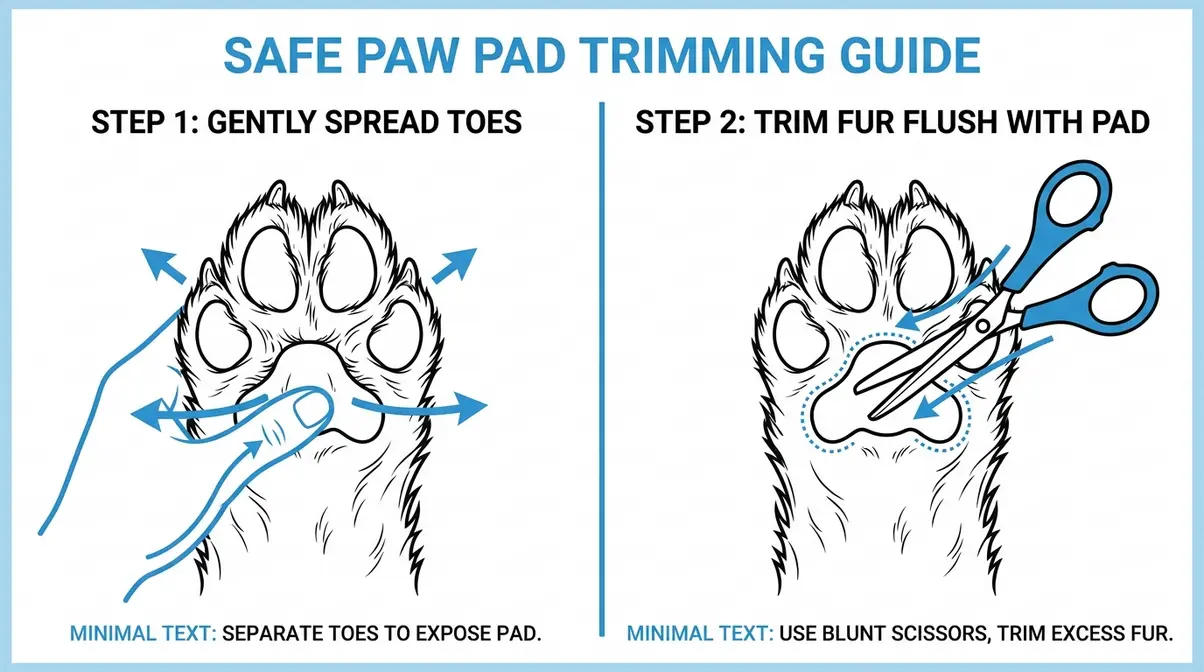
Trimmed golden retriever paw pads are safer and more comfortable than overgrown ones. Follow these steps:
- Hold the paw gently and spread the toes.
- Use blunt-tip scissors to trim the fur flush with the paw pad. Overgrown paw fur causes slipping on hardwood floors and collects ice, salt, and debris between walks.
- For feathering on the legs, chest, and tail, use thinning shears rather than clippers. Thinning shears blend and shape the fur without creating hard lines.
If you cannot clearly see the line between the fur and the paw pad, take your dog to a groomer for the first trim and ask them to walk you through the technique.
Ear Cleaning and Nail Trims
Ears: Check your Golden’s ears every week. Lift the ear flap and look inside. Healthy ears are pink and smell neutral. Warning signs include dark discharge, a strong or yeasty odor, redness, or your Golden shaking their head repeatedly after the check. Use a cotton ball and a vet-approved ear cleaner to gently wipe the visible inner ear. Never insert anything into the ear canal. Goldens are prone to ear infections because their floppy ears trap moisture.
Nails: Trim nails every 3-4 weeks. Use the “click test” as your cue: if you hear the nails clicking on hard floors, they are overdue. Keep styptic powder nearby in case you nick the quick (the blood vessel running through the center of each nail). Apply it directly to the tip to stop bleeding.
MSPCA-Angell notes that regular nail trims every 3-4 weeks are essential. Long nails can force a dog’s toes into an unnatural position, leading to pain, arthritis, and difficulty walking (MSPCA-Angell).
Regular nail trims every 3-4 weeks are essential for Golden Retrievers: nails that are too long can force the toes into an unnatural position, causing pain and long-term joint damage (MSPCA-Angell).
If you are not confident trimming nails at home, a groomer or vet tech can do it quickly and safely.
Turn Every Grooming Session into a Health Check
Every time you brush your Golden Retriever, your hands travel over the entire body. That is not just grooming: it is a health scan. The Grooming Health Check is a 5-point routine you build into every session, turning a coat maintenance habit into an early warning system.
Most grooming guides treat your Golden’s coat as a cosmetic project. What they miss is that your hands are already doing a health exam every time you brush. Grooming is a critical first step in monitoring for skin issues such as parasites, lesions, lumps, or changes in skin color, which can be early indicators of dermatological problems (Cornell University vet guide, Cornell University College of Veterinary Medicine).
Five Things to Check During Grooming
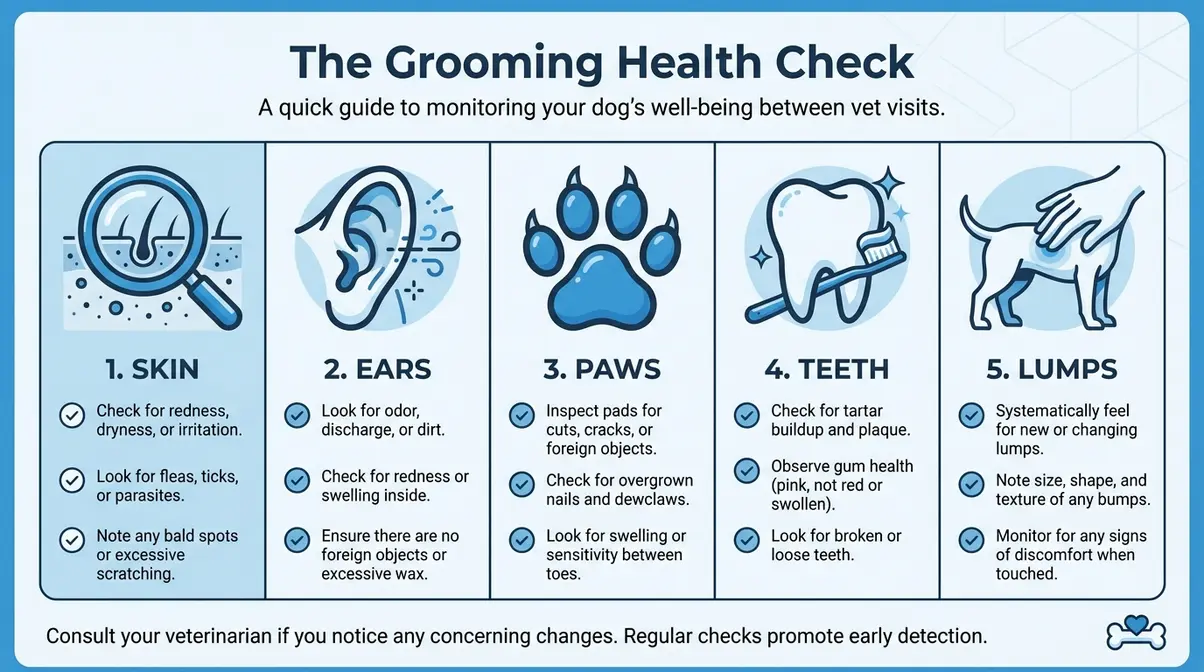
Work through these five checkpoints during every grooming session:
- Skin: Part the fur and look at the skin directly. Healthy skin is pale pink or light, smooth, and odor-free. Warning signs include redness, flaking, hot spots, or an unusual smell. Any persistent skin change is worth a call to your vet.
- Ears: Lift the ear flap and look inside. Healthy ears look pink and smell neutral. A problem ear looks red or has a dark, waxy discharge with an unpleasant odor. Repeated head shaking after you check is also a warning sign.
- Paws and Nails: Check between the toes for cracking, swelling, or foreign objects such as grass seeds or gravel. Check nail length with the click test. Check the paw pads for cuts or dryness.
- Mouth and Teeth: Lift the lip and look at the gum line. Healthy gums are pink and moist. Pale or white gums are an urgent sign and require an immediate vet visit. Brown tartar buildup and breath beyond normal dog breath are also worth addressing.
- Lumps and Lymph Nodes: Run your hands firmly along the neck, under the jaw (where the lymph nodes are located), behind the knees, and along the belly. The lymph nodes are small glands under the jaw, behind the knees, and in the armpits that can swell when the body is fighting illness. Note any new lump, bump, or swelling. Golden Retrievers have elevated cancer rates compared to most breeds, including hemangiosarcoma (an aggressive cancer of the blood vessels that is common in the breed). Any new lump should be checked by a vet promptly.
Vet Tech Brianna York notes that owners who incorporate this 5-point check into every brushing session are far more likely to catch early-stage skin issues and lumps before they become serious problems.
Safe Golden Retriever Grooming Styles
Goldens can look neat and tidy without any damage to the coat. The key is knowing which styles work with the double coat rather than against it.
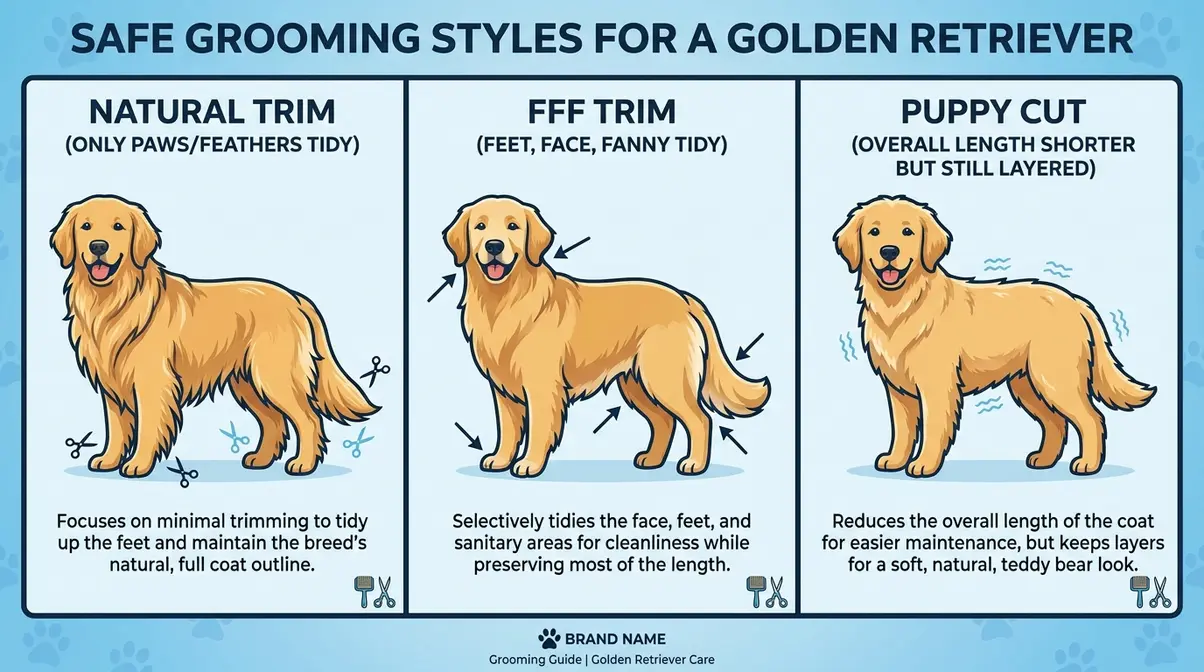
The Natural Trim is the most common at-home style. You trim the feathering on the legs, chest, and tail with thinning shears, and trim the paw pad fur flush with the pad. Everything else stays at its natural length. This style is manageable at home and keeps the coat looking clean between professional appointments.
The FFF Trim is a groomer’s shorthand for trimming the Feet, Face, and Fanny, the three areas most likely to look untidy between professional appointments. If you ask for a tidy-up at the groomer, this is usually what they do. You can learn the feet portion at home once you are comfortable with thinning shears.
The Puppy Cut shortens the overall coat length for a softer, rounder look. This style requires a professional groomer. Done correctly, it still preserves both coat layers. What it does not do is remove the undercoat, which is why it is safe when performed by a groomer who understands the breed.
Never request a full body shave, razor cut, or any style that removes the undercoat. These are damaging regardless of the season.
Common Grooming Mistakes to Avoid

Even well-meaning owners make these errors. Knowing them in advance saves your dog from unnecessary discomfort.
- Brushing a dry, matted coat: If you try to brush through a mat without misting first, the bristles catch and pull, causing pain and coat breakage. Always mist with water or detangling spray before you start.
- Over-bathing: Bathing more than once every 4-6 weeks strips the natural oils that protect the skin. The result is dry, itchy skin and a dull, brittle topcoat. When in doubt, use the sniff test.
- Cutting nails too short: If you nick the quick, your dog will pull away and may resist nail trims in the future. Stay calm, apply styptic powder directly to the tip, and hold gentle pressure for 30 seconds. Do not pull the paw away sharply.
- Skipping the undercoat rake during shedding season: The slicker brush handles the topcoat but cannot reach the dense undercoat below. Skipping the rake during spring and fall means loose dead fur compacts into mats beneath the surface, invisible until they become severe.
Frequently Asked Questions
What is the proper way to groom a Golden Retriever?
The proper way to groom a Golden Retriever is to brush the coat 2-3 times per week with a slicker brush, bathe every 6-8 weeks with a dog-safe shampoo, and trim paw pads and ear fur monthly. Use an undercoat rake during spring and fall shedding seasons to remove loose dead fur from the bottom layer. Always work in sections and mist the coat before brushing to prevent breakage. Never shave the double coat, as shaving can permanently damage the hair follicles and remove the insulation that keeps your Golden comfortable in both heat and cold. For tasks you are unsure about, such as nail trims or ear cleaning, a professional groomer can show you the correct technique. Following these golden retriever grooming tips consistently makes a visible difference within just a few weeks.
How often should Goldens go to the groomer?
Most Golden Retrievers benefit from a professional grooming appointment every 8-10 weeks. Between appointments, brushing 2-3 times per week keeps the coat manageable and prevents painful matting. Dogs with thicker coats or those that spend a lot of time outdoors may need more frequent professional visits.
What is the silent killer in Golden Retrievers?
The “silent killer” in Golden Retrievers is hemangiosarcoma, an aggressive cancer of the blood vessels that develops with few visible symptoms until it reaches an advanced stage. It is one of the leading causes of death in the breed, and because internal tumors often go undetected, many dogs show no warning signs until a tumor ruptures. Regular veterinary check-ups and using grooming sessions to feel for unusual lumps can support earlier detection. If you notice sudden lethargy, pale gums, or a distended abdomen, contact your vet immediately.
What are the hardest months with a Golden Retriever?
The hardest period with a Golden Retriever is typically between 8 and 18 months, during adolescence, when the dog tests boundaries, has peak energy levels, and may resist training. This phase usually begins around 5-6 months and can last until the dog is 2-3 years old. Consistent, positive-reinforcement training during this window makes a significant difference in long-term behavior. From a grooming perspective, adolescence is also when the adult double coat fully develops, which means shedding increases noticeably and the brushing routine becomes more important. Starting grooming habits early, before the adult coat comes in, makes the adolescent phase much easier to manage.
Your Next Steps for a Healthier Golden Coat
For Golden Retriever owners, a consistent grooming routine is the single best investment in your dog’s comfort and health. Brushing 2-3 times per week with a slicker brush and undercoat rake prevents painful matting, reduces shedding, and gives you a regular opportunity to run The Grooming Health Check: a 5-point scan for skin issues, ear problems, overgrown nails, and unusual lumps. These golden retriever grooming tips work together as a system, not a checklist of isolated tasks.
The Grooming Health Check is the part most guides skip entirely. Coral Drake developed this approach over multiple grooming sessions, and Vet Tech Brianna York reviewed and validated it as a practical habit for owners who want to catch problems early rather than discover them at a vet visit months later. Owners who treat grooming as both coat care and health screening are giving their dogs a genuine advantage.
Start this week with a 15-minute brushing session using the 5-checkpoint scan above. If you are unsure about nail trims or ear cleaning, book one professional grooming appointment and ask the groomer to walk you through their technique.
➤ Build the brushing habit first: 15 minutes, twice a week, with a slicker brush and the 5-checkpoint health scan, and your Golden’s coat and health will both reflect it.
Related gear: see our guide to the best deshedding brush.