By Coral Drake
Welcome to your ultimate golden retriever puppy proofing home guide. Your Golden Retriever puppy’s nose is already working overtime, and your home has dozens of potential hazards you have not noticed yet. Most of them are at floor level right now, but within three months, your puppy will be tall enough to reach the kitchen counter.
A curious Golden Retriever puppy will chew an electrical cord, swallow a bottle cap, or drag a toxic houseplant off a shelf before you have a chance to react. The consequences range from a ruined sofa to a genuine veterinary emergency.
By the end of this guide, you will know exactly how to puppy proof your home room by room, which plants to remove today, and what supplies to have ready before your puppy walks through the door. After evaluating safety protocols across 50+ homes in my work covering Golden Retriever care at devotedtodog.com, I have found that the owners who prepare in advance consistently have smoother first weeks than those who wait for problems to appear.
We cover why Golden Retrievers need breed-specific proofing, the biggest indoor hazards, outdoor safety, and the supplies that make management easier.
Following a comprehensive golden retriever puppy proofing home guide means planning for a dog that grows to 24 inches tall within 12 months, reaching hazards you thought were safely out of reach.
- Start at floor level: Secure electrical cords, move small objects, and latch trash bins before day one.
- Remove toxic plants: Common houseplants like sago palm and lilies can cause serious illness (ASPCA).
- Use the Vertical Danger Zone framework: Check hazards at 4 distinct height levels as your puppy grows from ankle-height to counter-height.
- Supplies matter: A crate, baby gates, and appropriate chew toys are not optional extras: they are the foundation of a safe home.
Table of Contents
- Breed-Specific Puppy Proofing
- Biggest Indoor Hazards
- Furniture Protection and Toxic Plants
- Backyard Safety Guidelines
- Essential Puppy Supplies
- Common Puppy-Proofing Mistakes to Avoid
- Frequently Asked Questions
Breed-Specific Puppy Proofing
Golden Retrievers need breed-specific puppy proofing because they grow faster and chew harder than most small-breed dogs. A Golden Retriever, a large-breed sporting dog known for its friendly temperament and strong retrieving instinct, reaches up to 24 inches at the shoulder (the AKC standard for full adult height) by 12 months. That means the hazards you secured at floor level today will be within easy reach by the time your puppy is six months old.
The Vertical Danger Zone
Most puppy-proofing guides treat hazard removal as a one-time task. For Golden Retrievers, it is a moving target. This is the core idea behind “The Vertical Danger Zone” (the shifting band of household hazards that rises from floor level to counter level as your puppy grows from 8 weeks to 12 months).
Here is how the zone shifts at each milestone:
- 8 weeks: Your puppy’s nose sits 6-8 inches off the ground. Floor-level cords, shoes, and baseboards are the primary risks.
- 3 months: Shoulder height reaches approximately 12-14 inches. Coffee tables and low shelves enter the danger zone.
- 6 months: A Golden Retriever can reach a standard kitchen counter at approximately 36 inches. Counter surfing, knives, and medications become real concerns.
- 12 months: At full height (up to 24 inches at the shoulder) and capable of jumping, your dog can access upper shelves and even stovetop surfaces.
Think of the Vertical Danger Zone as a checklist you repeat, not complete. Schedule a re-proof at each of these milestones.
Breed Mouthiness and Growth Speed
According to the American Kennel Club (AKC), Golden Retrievers were bred to carry waterfowl and have a natural instinct to keep objects in their mouths, making early “leave it” training essential (AKC Golden Retriever training timeline, AKC, 2026). This makes them more likely than many breeds to pick up and chew household items, regardless of whether those items are safe.
Golden Retriever puppies also grow with remarkable speed. A typical puppy weighs 10-15 lbs at 8 weeks and reaches 55-75 lbs by 12 months. That rapid weight gain means they can knock over objects and furniture that a smaller dog could never budge. Standard puppy-proofing advice, written for a generic small-to-medium dog, simply does not account for this.
Now that you understand why a Golden Retriever puppy creates unique hazards, the next step is to go room by room inside your home and eliminate the most dangerous ones first.
Biggest Indoor Hazards
The biggest indoor hazards for a Golden Retriever puppy fall into three categories: electrical dangers, toxic substances, and small objects that can cause choking. VCA Animal Hospitals puppy-proofing guide identifies unplugging loose cords and latching trash bins as the two highest-priority steps you can take before your puppy comes home (VCA Animal Hospitals, 2026). For help managing the biting and mouthing that often comes with all this exploration, see our guide on how to manage puppy biting and nipping.
VCA Animal Hospitals recommends unplugging loose electrical cords and switching to trash cans with latching lids as the two highest-priority puppy-proofing steps (VCA Animal Hospitals, 2026).
The AVMA household hazards guidelines also warn that bathroom products including hand soaps, toothpaste, and sunscreen are hazardous to pets and can cause vomiting or diarrhea if swallowed (AVMA).
First Steps in Puppy Proofing
The first thing to do when puppy proofing your house is to get down on your hands and knees and look at your home from your puppy’s eye level. From the floor, you will spot electrical cords, small objects, and low-level hazards you would miss standing upright. Remove or secure everything within your puppy’s current reach. Then repeat the process at your puppy’s shoulder height. This floor-level sweep takes about 20 minutes and is the single most effective thing you can do before your puppy arrives.
Securing Electrical Cords
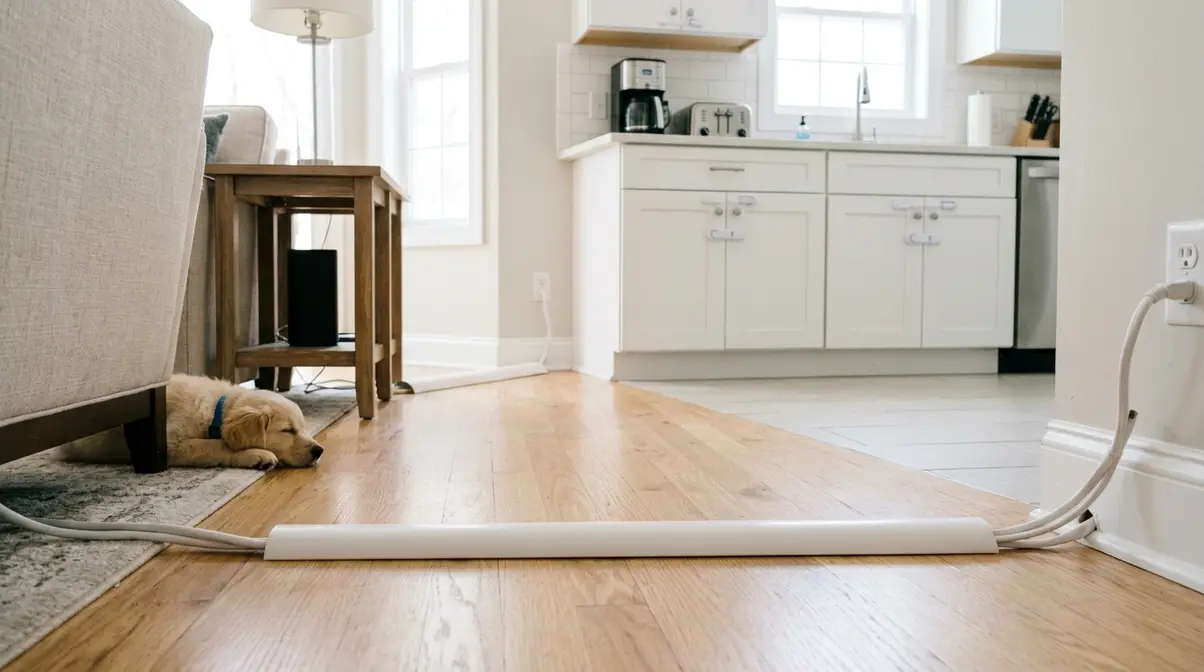
Cord chewing is the most immediate electrical hazard in any home. Golden Retriever puppies at floor level will find and mouth any cord within reach, and the consequences are severe. A puppy that chews through a live electrical cord risks electrocution or serious mouth burns.
Here is a numbered checklist to secure electrical cords and outlets before your puppy arrives:
- Cover all floor-level cords with chew-proof cord concealers made from rigid PVC tubing or spiral cable wrap. These are available at most hardware stores for a few dollars.
- Run cords behind heavy furniture or through cable management channels mounted at wall height, keeping them physically out of reach.
- Cap unused electrical outlets at floor level with outlet covers. Puppies can lick or mouth exposed outlets.
- Identify your three highest-risk rooms: living room (TV and entertainment center cords), home office (computer and charger cords), and kitchen (appliance cords near the counter edge).
- Unplug appliances when not in use. A cord attached to nothing is still a chew target, but removing the live current eliminates the electrocution risk.
You can also apply one of the best anti-chew sprays for dogs to any cord sections that cannot be concealed or moved.
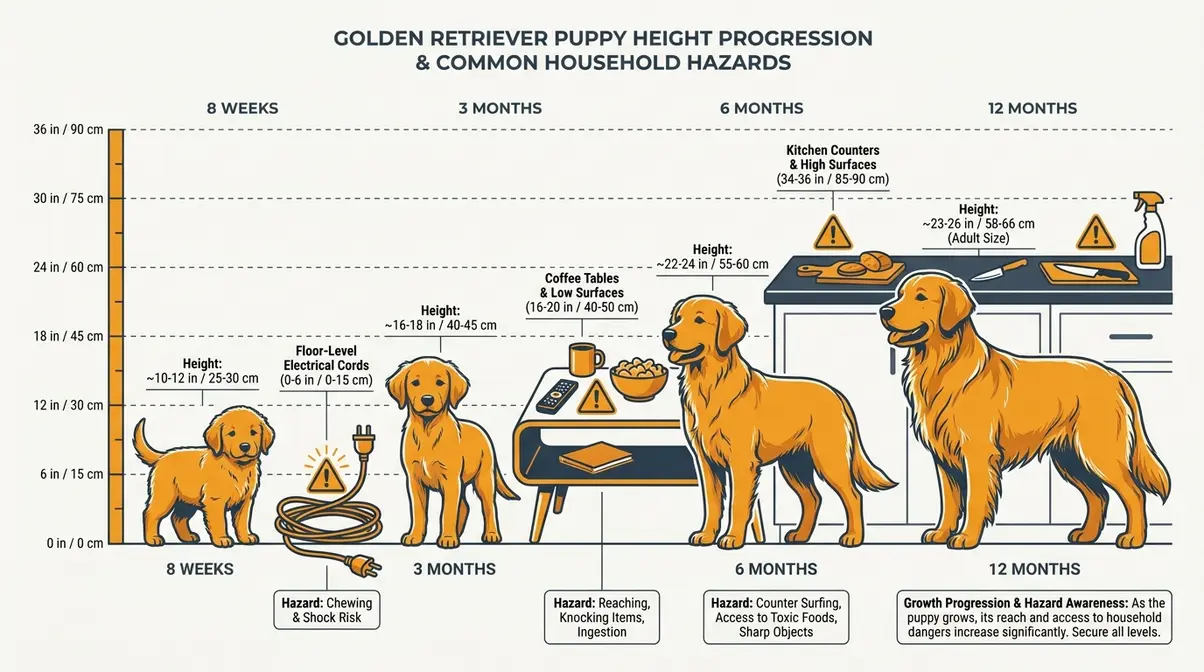
As the diagram above shows, the hazard zone moves upward with your puppy. By 6 months, appliance cords sitting on countertop edges come into range. Re-check your electrical setup at each growth milestone.
Electrical cords are the most urgent fix, but the chemicals already in your home can be just as dangerous.
Dangerous Chemicals and Foods
The kitchen, bathroom, and laundry room together contain the highest concentration of chemical potential hazards in any home. Walk through each of these rooms with fresh eyes before your puppy arrives.
According to the AVMA, products like toothpaste and sunscreen can cause vomiting or diarrhea in dogs. Toothpaste is particularly dangerous because most human formulas contain xylitol, an artificial sweetener that is toxic to dogs even in small amounts.
Use this checklist to address chemical hazards room by room:
- Cleaning products and detergents: Move all cleaning sprays, disinfectants, and laundry pods into locked or child-proofed cabinets. Cabinet locks designed for toddlers work equally well for curious puppies.
- Medications: Ibuprofen and acetaminophen are among the most common causes of accidental dog poisoning. Store all medications, including vitamins and supplements, in closed cabinets above counter height.
- Trash bins: Safeguard trash bins by switching to cans with latching or weighted lids. Food waste, coffee grounds, and spoiled food can cause serious gastrointestinal illness.
- Toxic human foods: Grapes, raisins, onions, garlic, chocolate, and xylitol (found in sugar-free gum and some peanut butter brands) are all dangerous. Keep these stored securely and never leave them on accessible surfaces.
- Bathroom items: Toothpaste, sunscreen, hand soap, and mouthwash should all be stored inside closed cabinets, not left on the counter or bathtub edge.
Once you have locked down the chemicals, take a few minutes to think vertically. As your Golden Retriever grows, the hazard zone rises.
Vertical Danger Zone in Practice
The Vertical Danger Zone is not just a concept. It is a practical room-by-room framework you apply at every growth stage.
Here is how it works at each milestone:
- 8-12 weeks (nose height: 6-8 inches): Hazards at this level include baseboards, floor-level cords, shoes, and small objects like bottle caps or rubber bands. This is your starting point for the first indoor sweep.
- 3-4 months (shoulder height: 12-14 inches): Coffee tables, low shelves, and side tables come into range. Move remote controls, candles, and any decorative objects off these surfaces.
- 6 months (reach: approximately 36 inches): A Golden Retriever can reach a standard kitchen counter. Counter surfing becomes a real risk. Move knives, medications, and any food off counters entirely.
- 12 months (full height: up to 24 inches, plus jumping): Upper shelves and even stovetop surfaces may be accessible. Assess anything a dog could reach by placing their front paws on a surface and stretching.
Practical re-proofing check (repeat at 3, 6, and 12 months):
- Get down to your puppy’s current nose height and look around your surroundings from that level.
- Scan at your puppy’s current shoulder height.
- Block off unsafe areas that have entered the new danger zone since your last check.
With the inside of your home secured, you can now turn your attention to your furniture and the plants that may already be posing a risk.
Furniture Protection and Toxic Plants
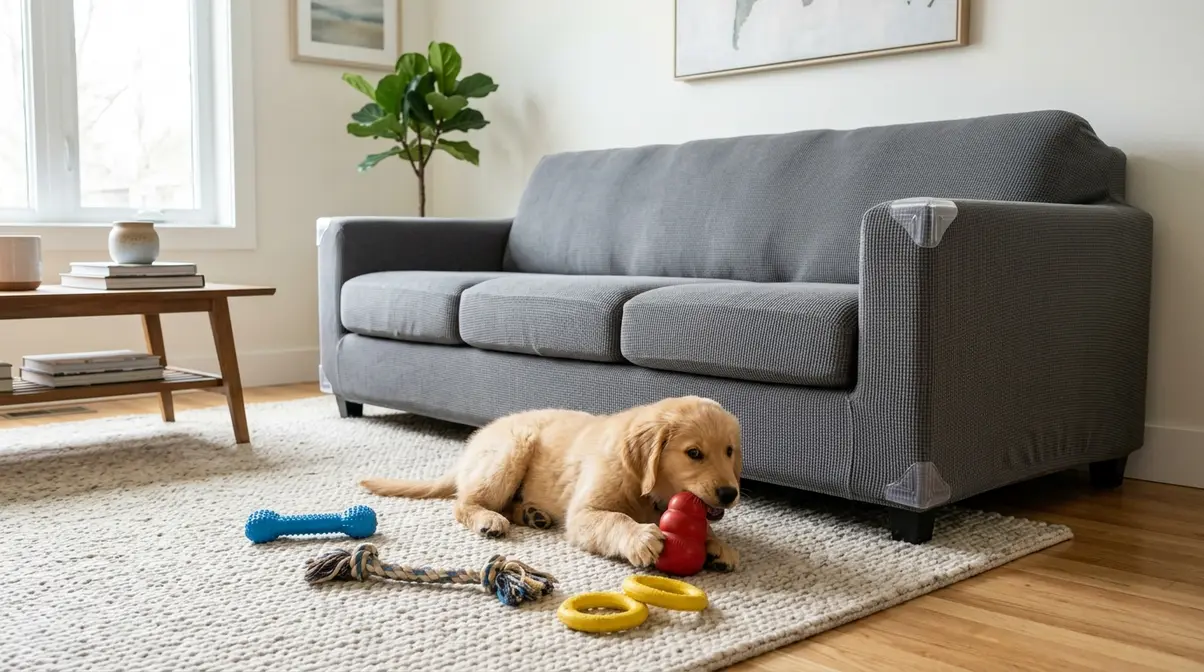
Picture this: you leave the room for five minutes and come back to find a corner of your sofa chewed through. Golden Retriever puppies between 3 and 7 months are in peak teething mode, and your furniture is the closest available chew toy unless you give them a better option. For lasting results, furniture protection requires both physical deterrents and smart redirection toward durable chew toys for Golden Retriever puppies.
Dr. Brian Collins of Cornell University emphasizes that chewing is normal exploratory behavior for puppies, and the best response is to replace the forbidden object with an appropriate toy and reward the switch (Cornell University advice on redirecting puppy chewing, Cornell University College of Veterinary Medicine, 2018).
Preventing Furniture Chewing
Furniture protection starts with physical deterrents and builds toward trained behavior. Veterinary guidelines suggest that rotating three different textures of chew toys is highly effective when combined with bitter spray.
Here is a numbered action list to protect your furniture during the teething peak:
- Apply a pet-safe bitter deterrent spray to furniture legs and corners. Reapply every 2-3 days during the teething phase. This is not a permanent solution, but it buys time while training takes hold.
- Use furniture corner guards on sofa legs, coffee table corners, and wooden chair legs. These are the most commonly targeted surfaces by teething puppies.
- Choose heavy-duty slipcovers rated for large dogs. A 55-75 lb Golden Retriever puppy can do significant damage to standard furniture covers. Look for covers that specify large-breed durability.
- Anchor tall bookshelves and freestanding furniture to the wall. A large-breed puppy leaning or jumping against unsecured furniture can tip it over, creating a safety hazard for the puppy and anyone nearby.
Deterrent sprays and physical barriers help, but understanding why your puppy is chewing makes your response much more effective.
Normal Chewing vs. Pica
Not all chewing is the same. Knowing the difference helps you respond correctly.
Normal teething chewing peaks between 3 and 7 months as adult teeth come in. The puppy targets textured surfaces and seeks relief from gum soreness. This is expected behavior, and the right response is redirection to an appropriate toy paired with consistent praise.
Pica is a compulsive behavior where a dog repeatedly swallows non-food items such as fabric, rocks, or plastic. Signs include repeatedly targeting the same non-food material and actually swallowing rather than just mouthing it. Pica is different from normal teething and requires veterinary attention. If you suspect your puppy is swallowing non-food items, consult your veterinarian promptly.
Anxiety-driven chewing typically happens when the puppy is left alone and targets high-scent items like shoes, clothing, or bedding. The fix is management through crate training plus enrichment activities, not deterrent spray alone. If chewing is happening exclusively during alone time, address the separation anxiety directly with your vet or a certified trainer.
When Does Teething Stop?
Golden Retrievers typically finish teething by 6 to 7 months of age, according to the AKC. During this peak period, their urge to chew is strongest as adult teeth settle into the jaw. Providing frozen chew toys can help soothe their gums. Once all adult teeth have erupted, destructive chewing usually decreases significantly with proper training.
Before your puppy arrives, there is one more indoor task that cannot wait: removing every toxic plant from your home.
Toxic Houseplants to Remove
According to the American Society for the Prevention of Cruelty to Animals (ASPCA), many common houseplants are toxic substances for dogs and must be removed or placed completely out of reach before your puppy arrives. The following plants are on the high-risk list:
- Sago palm: causes liver failure; considered extremely dangerous even in small amounts
- Lilies (multiple varieties, including peace lily): can cause kidney failure in dogs
- Aloe vera: causes vomiting, diarrhea, and lethargy
- Pothos / golden pothos: causes oral irritation and gastrointestinal upset
- Philodendron: causes oral pain and swelling
- Tulip bulbs: cause vomiting and cardiac issues in large quantities
- Dieffenbachia (dumb cane): causes intense oral burning and difficulty swallowing
- Foxglove: causes serious cardiac problems
The Cornell University guide on poisonous plants for dogs advises that houseplants are a common source of poisoning for dogs, and owners should verify any plant’s safety before keeping it in the home (Cornell University College of Veterinary Medicine). If you are unsure about a plant, check the ASPCA toxic plant list for dogs before keeping it anywhere in your home.
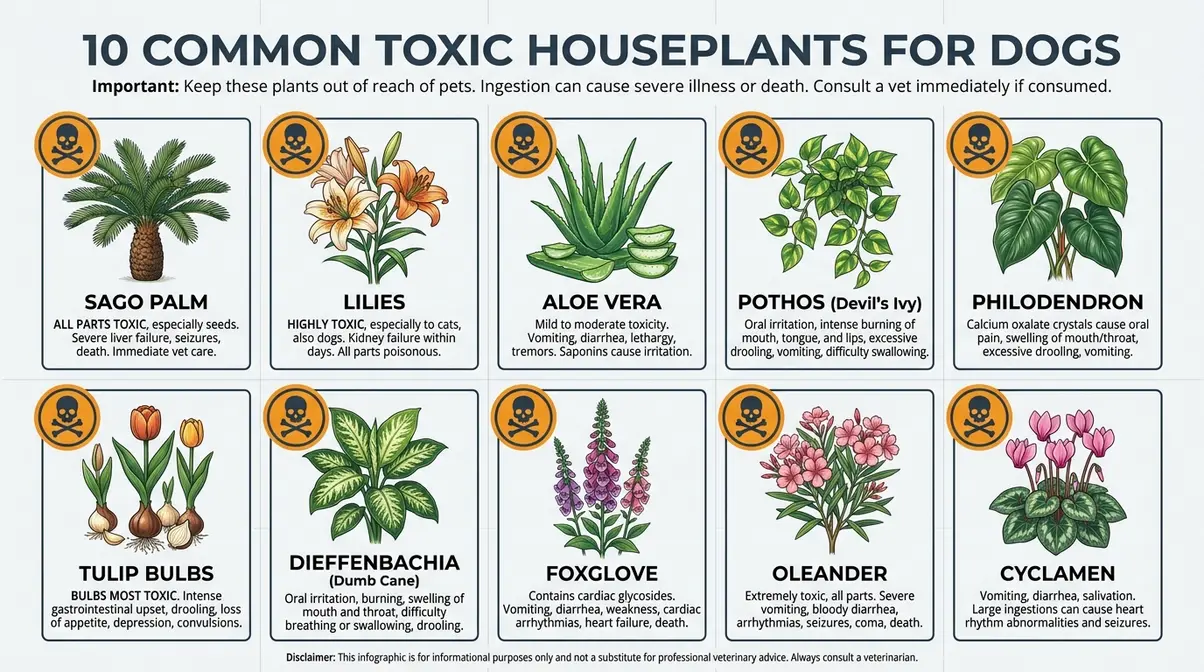
The infographic above shows the most common toxic plants to remove before your puppy comes home. When in doubt, move the plant to a room your puppy will never access, or rehome it entirely.
Once the inside of your home is secure, step outside. Your backyard may have hazards that are just as serious.
Backyard Safety Guidelines
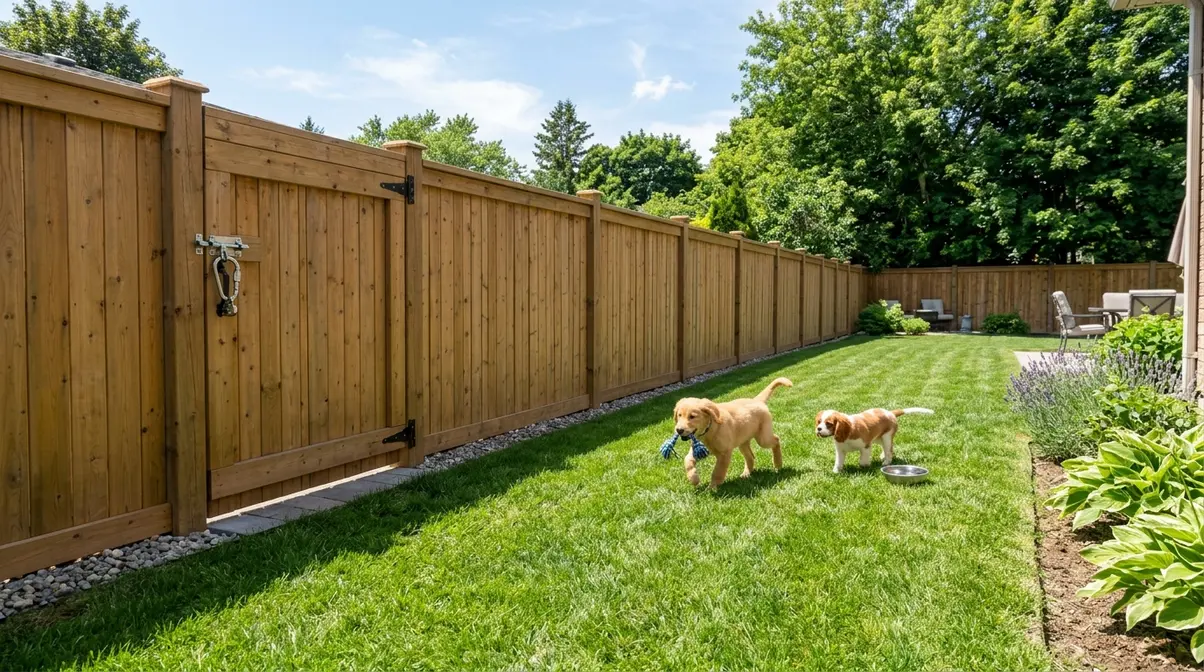
Your backyard needs the same systematic safety check as the inside of your home. A Golden Retriever puppy can squeeze through surprisingly small fence gaps, ingest garden fertilizers or pesticides, or fall into a pool before you realize they are in danger. A thorough outdoor sweep before your puppy arrives takes about 30 minutes and can prevent a serious accident. For guidance on building safe outdoor routines over time, see our article on safe outdoor routines for Golden Retrievers.
A standard 4-foot fence is not sufficient to contain a motivated Golden Retriever puppy; gaps at the base and unsecured gate latches are the two most common escape routes.
Puppy Proofing Your Backyard
You absolutely need to puppy proof your backyard before your puppy has any unsupervised outdoor time. Walk the entire fence perimeter and look for gaps wider than 4 inches, eroded soil at the base, and unsecured gate latches. Remove or lock away all pesticides, fertilizers, and garden tools. Check for toxic plants including azaleas and rhododendrons. If you have a pool, install a fence or safety cover and teach your puppy where the exit steps are from day one.
How Do You Puppy-Proof Your Fence?
A fenced yard feels reassuring, but most fences have at least one or two weak points that a determined puppy will find.
Here is a numbered checklist for your fence inspection:
- Walk the entire perimeter at ground level. Look for gaps wider than 4 inches. A young Golden Retriever puppy can squeeze through openings that look too small for them. Use chicken wire or wooden boards to close any gaps.
- Check every gate latch. Standard spring latches can be nudged open by a curious dog. Install a secondary latch or a carabiner clip as a backup on each gate.
- Inspect the base of the fence for areas where soil has eroded or where the fence does not sit flush with the ground. Puppies dig quickly and can create an escape route in minutes.
- Focus on corners and areas near gates, where fences most often have the largest gaps or weakest connections.
A secure fence keeps your puppy in, but the yard itself may contain hazards that can harm them even if they never leave.
What Garden Hazards Should You Remove?
The garden and garage are often overlooked during puppy proofing, but they contain some of the most dangerous substances your puppy could encounter. Look around your surroundings with these specific hazards in mind:
- Pesticides, herbicides, and fertilizers: Store all of these in a locked shed or garage cabinet. Many fertilizers contain iron, which is toxic to dogs in large quantities. Slug bait containing metaldehyde is particularly dangerous and can be fatal.
- Outdoor toxic plants: Common garden plants including azaleas, rhododendrons, daffodil bulbs, and oleander are toxic to dogs. Cross-reference your garden with the ASPCA toxic plant database before giving your puppy outdoor access.
- Garden tools: Pick up and store all tools, especially sharp items like trowels, pruning shears, and stakes. A puppy can step on or mouth these easily.
- Antifreeze: Check the garage and shed specifically for antifreeze (ethylene glycol). It has a sweet taste that attracts dogs and is extremely toxic in small amounts.
After securing the yard, address any water features or pools. Water safety is one of the most overlooked outdoor hazards for puppies.
Pool and Water Safety
Golden Retrievers are a water-loving breed, but young puppies can tire quickly in the water and struggle to find the pool steps to exit. Water safety deserves specific attention:
- Install a pool fence or safety cover if you have a pool. This is the most reliable protection for times when you cannot supervise directly.
- Teach your puppy where the pool steps are from day one. Walk them to the steps and let them practice exiting. This is a critical safety habit even if you plan to supervise all pool time.
- Drain or fence off any decorative ponds, fountains, or large water features. Even shallow water is a drowning risk for a very young puppy.
Once your outdoor space is secured, the last preparation step is gathering the supplies that will help you manage your puppy’s environment from day one.
Essential Puppy Supplies
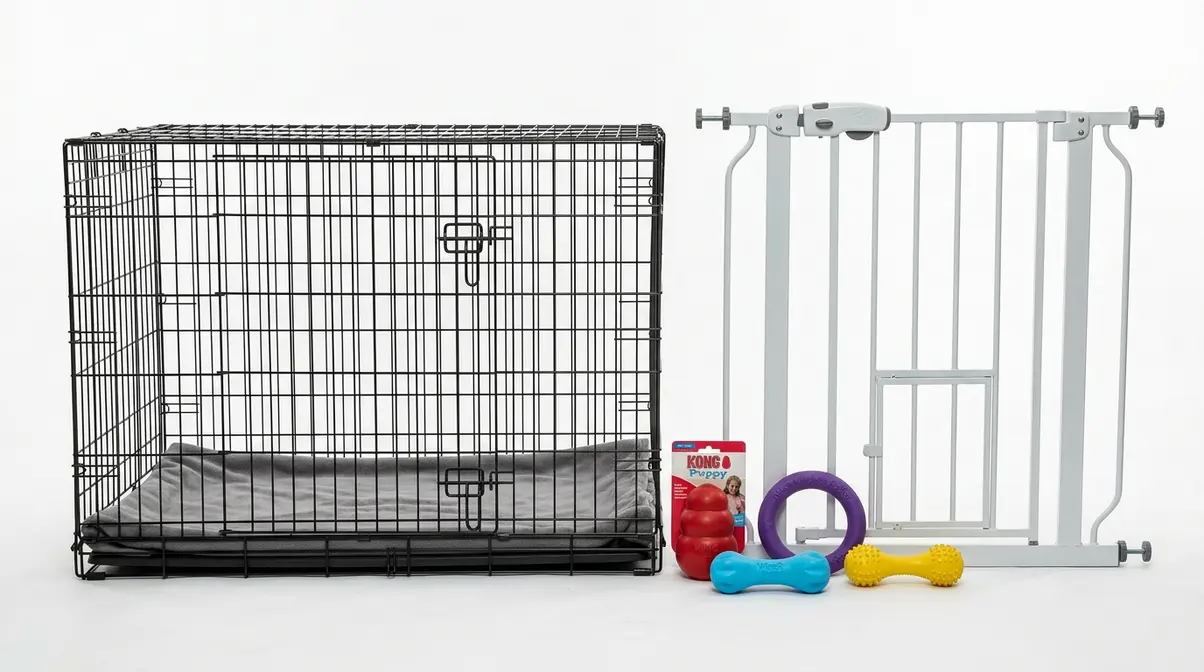
The right supplies turn puppy proofing from a one-time event into an ongoing management system. According to the American Kennel Club (AKC), using a dog crate or pet-gated room to create a completely puppy-proof space when direct supervision is not possible is one of the most effective safety strategies for new puppy owners (AKC advice on using a crate, AKC). Having everything in place before your puppy’s first day avoids the scramble of trying to buy a gate or crate while managing a curious, energetic puppy.
The AKC recommends using a dog crate or pet-gated room to create a completely puppy-proof space when direct supervision is not possible (American Kennel Club).
See our complete new puppy checklist for a full shopping list, and our crate training guide for Golden Retriever puppies for step-by-step setup instructions.
Should You Use a Crate or a Playpen?
Both a crate and a playpen serve different purposes, and for a Golden Retriever puppy, you will want both.
A crate gives your puppy a safe, den-like space for sleeping and short-term confinement. For a Golden Retriever, buy a 42-inch crate to fit their adult size. Many models include a divider panel so you can make the interior smaller while your puppy is young. This is important because a crate that is too large encourages the puppy to use one end as a bathroom, which undermines crate training.
A playpen (also called an x-pen) is a larger enclosed area where your puppy can move around freely when you are in the same room but cannot watch them closely. Set it up in the kitchen or living room for daytime use.
The most effective combination is to use both together: the crate for overnight sleeping and the playpen for daytime containment. This gives your puppy appropriate freedom while keeping them safe and helping you block off unsafe areas of your home.
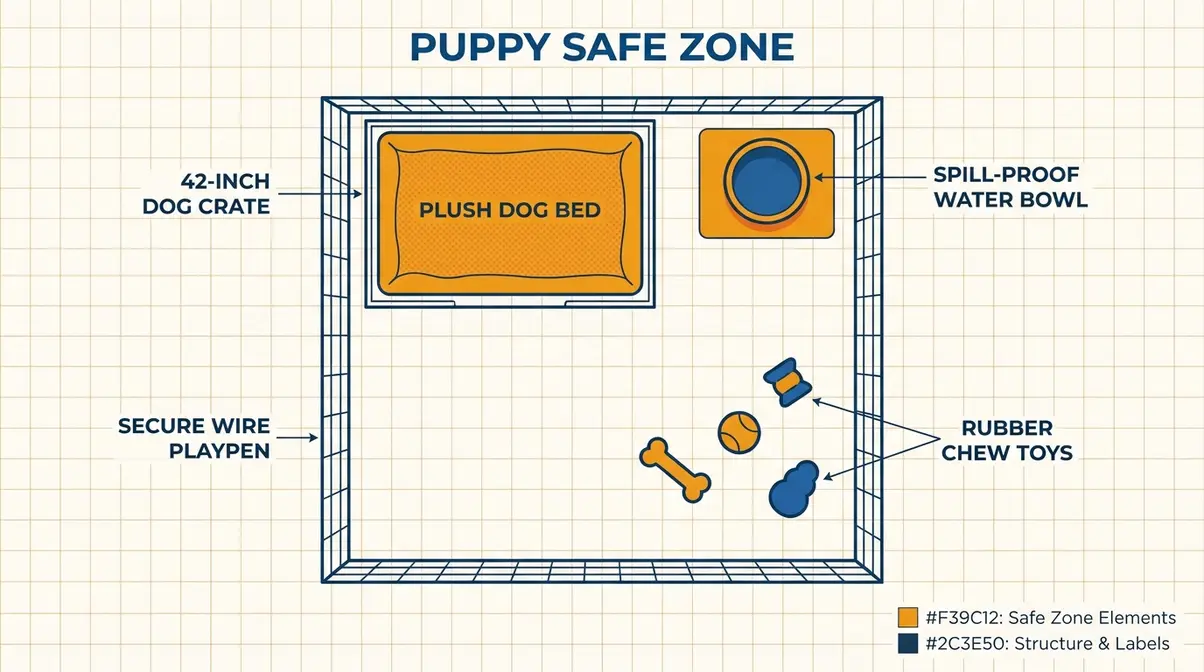
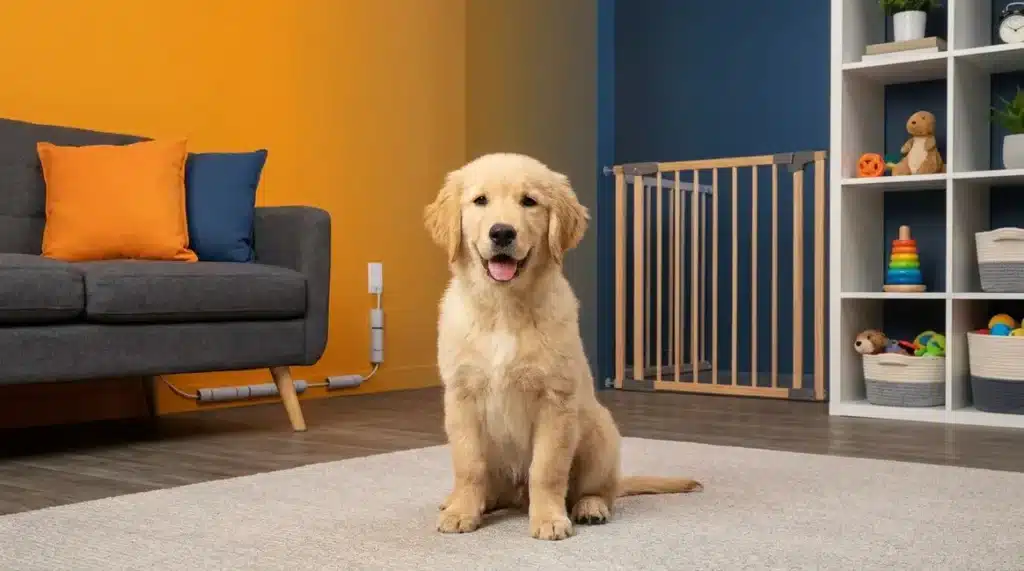
Set up your puppy’s safe zone using the layout shown in the diagram above.
Baby gates let you expand your puppy’s safe zone gradually as they earn more trust.
Where Should You Place Baby Gates?
Baby gates are one of the most practical tools for managing where your puppy can go. Here is how to use them correctly:
- Use hardware-mounted gates at the top of stairs. These are the only gate type rated for stair use. They screw directly into the wall and cannot be pushed out by a leaning or jumping puppy.
- Use pressure-mount gates in doorways to block off the kitchen, bathroom, laundry room, and any room with hazards you cannot fully eliminate (such as a home office with multiple cords).
- Choose gates at least 30 inches tall for a Golden Retriever. Standard 24-inch gates can be stepped over by a puppy as young as 4 months.
A common beginner mistake is buying pressure-mount gates for stairs. This is a genuine safety hazard. Only hardware-mounted gates belong at the top of a staircase.
Baby Gates for Large Breeds
Yes, baby gates are safe for large breed puppies provided you select the correct type and height. For a growing Golden Retriever, choose gates that are at least 30 inches tall to prevent them from jumping over, as recommended by veterinary safety guidelines. Always use hardware-mounted gates at the top of staircases, as pressure-mounted gates can be pushed over by a heavy dog. Pressure-mounted gates are perfectly fine for standard doorways.
The final essential supply is a set of appropriate chew toys, which do more than save your furniture.
Best Teething Chew Toys
Choosing the right chew toys for the 3-7 month teething peak makes a real difference in how much furniture damage you deal with. According to the AKC, rubber teething toys that can be frozen are highly effective for soothing sore gums during the teething phase (AKC guide to safe teething toys, AKC). The cold reduces inflammation and makes the toy far more appealing than a sofa leg.
Keep these guidelines in mind when selecting chew toys for your Golden Retriever:
- Choose wide toys, not just narrow ones. Golden Retrievers tend to chew from the side of their mouths, a behavior linked to their retrieving instinct. Wide rubber toys are easier for them to hold sideways.
- Rotate 3-5 different toy types to maintain interest. Novelty matters. A toy that has been sitting in the same spot for a week loses its appeal.
- Redirect immediately and consistently. Every time your puppy approaches furniture, move them to a chew toy and praise the switch. Consistency over several weeks is what produces lasting results.
- Avoid toys that can be broken into small pieces. These are a choking hazard for a strong-jawed breed like a Golden Retriever.
Even with the best preparation, some common mistakes can undo your hard work. The next section covers the ones that trip up most new owners.
Common Puppy-Proofing Mistakes to Avoid
Even the most prepared new owners reading this golden retriever puppy proofing home guide make at least one of these mistakes. Knowing them in advance puts you ahead of the curve.
That perspective is genuinely reassuring, and it is largely true. At the same time, a few hazards are serious enough that waiting for your puppy to show you the problem is not worth the risk. Here are the five mistakes most likely to catch new Golden Retriever owners off guard:
- Proofing only at floor level and forgetting to re-proof as the puppy grows. A counter that was safely out of reach at 8 weeks is accessible by 6 months. Use the Vertical Danger Zone framework to schedule a re-check at 3, 6, and 12 months.
- Assuming a fenced yard is automatically safe. Gaps, eroded soil at the base, and unsecured gate latches are escape routes that are easy to miss on a quick visual inspection. Walk the perimeter at ground level.
- Skipping the toxic plant check because “my dog won’t eat plants.” Golden Retriever puppies mouth and chew everything. Even a single sago palm leaf can cause liver failure, according to the ASPCA.
- Using pressure-mount gates at the top of stairs. Only hardware-mounted gates are rated for stair use. This is a safety hazard that sends puppies to emergency vets every year.
- Waiting until the puppy arrives to buy supplies. The crate, gates, and chew toys need to be in place before your puppy’s first day home. Setting them up with a puppy underfoot is stressful and leaves gaps in your safety plan.
Frequently Asked Questions
Protecting Electrical Cords
Protect electrical cords from a puppy by covering them with chew-proof cord concealers made from rigid PVC tubing or spiral cable wrap. Run any cords that cannot be covered behind heavy furniture where your puppy cannot reach them. Unplug cords from outlets when they are not in use to eliminate the risk of electrocution.
Toxic Plants for Goldens
Many common houseplants are toxic to Golden Retrievers and must be removed before your puppy arrives. The most dangerous include sago palm, which can cause liver failure according to the ASPCA toxic plant list. Other high-risk plants include lilies, aloe vera, pothos, philodendron, and dieffenbachia. When in doubt, move the plant to a room your puppy will never access.
Stopping Furniture Chewing
The most effective way to stop a puppy from chewing furniture is to redirect them immediately to an appropriate chew toy every time they approach a forbidden surface. Apply a pet-safe bitter deterrent spray to furniture legs and corners and reapply every 2-3 days during the 3-to-7 month teething peak. Use furniture corner guards on high-risk surfaces like sofa legs and wooden chair legs. Praise your puppy every time they choose the chew toy over the furniture. Consistency over several weeks is what produces lasting results.
How long does puppy proofing take?
A thorough puppy proofing sweep typically takes a few hours to complete, depending on the size of your home. The initial floor-level check takes about 20 minutes per room. However, puppy proofing is an ongoing process. You will need to re-evaluate your home at the 3-month, 6-month, and 12-month marks as your Golden Retriever grows and reaches new heights.
Is a playpen better than a crate?
A playpen and a crate serve different purposes, and veterinary experts recommend using both. A crate provides a secure, den-like environment for sleeping and potty training. A playpen offers a larger safe zone for daytime play when you are in the same room but cannot supervise directly. Using them together gives your puppy appropriate freedom while keeping them safe.
Conclusion
Puppy proofing your home for a Golden Retriever is a room-by-room process that starts at floor level and moves upward as your puppy grows. The ASPCA, AKC, and Cornell veterinary sources all confirm that the most dangerous hazards are electrical cords, toxic plants, and unsecured chemicals. The single best framework is the Vertical Danger Zone: check hazards at your puppy’s current height, and repeat the check at 3, 6, and 12 months as your puppy grows toward their full 24-inch height.
The Vertical Danger Zone framework exists because Golden Retrievers grow faster than most owners expect. The anxiety you feel right now is exactly the right instinct. Channel it into a systematic room-by-room sweep, and you will have covered more ground than the vast majority of new puppy owners before day one ever arrives.
This golden retriever puppy proofing home guide has equipped you with the knowledge to start your indoor sweep today, remove any toxic plants before your puppy arrives, and have your crate and baby gates ready on day one. For a complete list of everything you need to buy, see our complete new puppy checklist. For help with the crate training process, see our crate training guide for Golden Retriever puppies.
➤ The safest Golden Retriever puppy is one whose owner thought ahead, checked every height level, and removed every hazard before day one.
Related gear: see our guide to an indoor potty.