Your Golden has been scratching more than usual, and you’re starting to wonder if bath time is the culprit. You’re not imagining it, and you’re not alone.
That confusion is completely normal for first-time Golden owners, and the good news is that the answer is simpler than most guides make it. The problem is rarely bathing too little. It is almost always bathing too often, or not drying thoroughly enough afterward.
By the end of this guide, you’ll know the right golden retriever bath frequency for your dog’s lifestyle, how to avoid the mistakes that cause dry skin and lingering odor, and what to do when a full bath isn’t necessary. We cover frequency, troubleshooting smell, the bathing process, puppy care, and no-bath alternatives.
Most Golden Retrievers need a bath every 6 to 8 weeks to protect their natural coat oils and keep skin healthy. Bathing more often strips those oils and leads to dry, itchy skin.
- The Lifestyle Bath Window: Active swimmers may need baths every 4 weeks; indoor dogs can go 8-10 weeks.
- Puppies need less: Wait until 8 weeks of age and bathe only when visibly dirty.
- Smell after a bath? Incomplete drying is almost always the cause.
- Brush more, bathe less: Regular brushing reduces the need for full baths between cycles.
How Often Should You Bathe Your Golden Retriever?
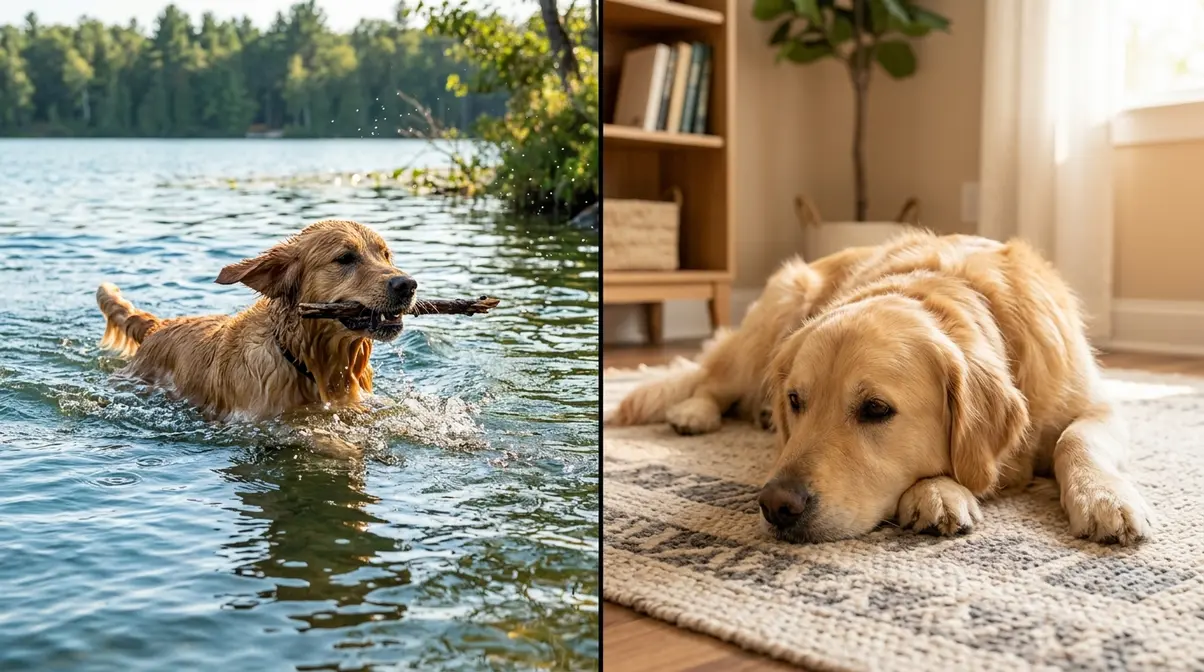
Golden Retrievers need a bath every 6 to 8 weeks under normal conditions. According to Texas A&M College of Veterinary Medicine, dogs without dermatological issues need a bath only a couple of times a year or when visibly dirty; those with skin problems may need medicated shampoos more frequently (published in 2017). For a Golden specifically, that general guidance translates to roughly every 6 to 8 weeks because of their active lifestyles and dense double coat.
As Coral Drake, writer at devotedtodog.com, explains, the most common mistake new Golden owners make is defaulting to a rigid calendar schedule rather than reading their dog’s coat and lifestyle. Most veterinarians and professional groomers agree on the 6 to 8 week baseline, and that is a solid starting point. From there, The Lifestyle Bath Window helps you personalize it.
For the right shampoo to use on that schedule, see our guide to the best shampoo for Golden Retrievers.
What Makes the Golden’s Coat Different
Golden Retrievers have a double coat: two layers of fur that work together to regulate body temperature and repel water. The outer layer is water-resistant and protects against dirt and debris. The inner layer is a soft, dense undercoat that insulates the dog in both cold and warm weather.
Beneath that coat, sebaceous glands (oil-producing glands in the skin) keep the coat waterproof and the skin healthy. When you bathe your Golden too often, you strip those natural protective oils away. Without them, the skin becomes dry and itchy, which is exactly the problem many first-time Golden owners notice when they start bathing on a weekly or biweekly schedule.
Golden Retrievers were originally bred as water-retrieving dogs, so their coat is specifically designed to stay healthy with moderate washing. That history is why the coat is so effective at repelling water and why over-bathing disrupts a system that is built to be largely self-maintaining.
Knowing why the coat needs its oil protection is step one. Now let’s figure out the right schedule for your specific dog.
The Lifestyle Bath Window Schedule
The golden retriever bath frequency question gets a lot clearer when you stop thinking in fixed weeks and start thinking about how your dog actually lives. The Lifestyle Bath Window is a simple three-tier framework that matches your bathing schedule to your Golden’s activity level.
Virginia Tech veterinary experts note that healthy dogs typically do well with baths every 4 to 12 weeks, depending on lifestyle and coat condition. The Lifestyle Bath Window collapses that wide range into three clear tiers:
| Lifestyle Tier | Description | Recommended Frequency |
|---|---|---|
| Indoor / Low-Activity | Mostly house dog, short daily walks | Every 8-10 weeks |
| Active / Outdoor | Regular hikes, off-leash play, muddy adventures | Every 6-8 weeks |
| Regular Swimmer | Weekly lake, pool, or ocean access | Every 4 weeks |
During shedding seasons (spring and fall), move toward the shorter end of your tier. Loose undercoat traps dirt and moisture faster, which means the coat gets dirty more quickly than usual.
The most underrated tool for extending your window is regular brushing. Brushing 2 to 3 times per week removes loose fur and surface dirt between baths, which keeps the coat fresher for longer. Brush more, bathe less.
For example: if your Golden swims in the lake every Saturday, aim for a full bath every four weeks. If she spends most of her time indoors with occasional backyard play, every eight to ten weeks is fine.
Now that you know the right schedule, let’s look at the signs that tell you a bath is needed before the window closes.
Signs Your Golden Needs a Bath Sooner
Some situations call for a bath ahead of schedule. Here are the clearest signals to watch for:
- Visible dirt or mud worked into the coat (not just surface-level paw mud)
- A smelly or noticeably greasy feel to the fur when you run your hand through it
- Rolling in something foul at the park or in the yard
- Coming home from a dog park with an unfamiliar, persistent odor
- A vet-diagnosed skin flare-up requiring a medicated shampoo
Not every dirty moment calls for a full bath. If only your Golden’s paws are muddy after a walk, a quick paw rinse is enough. If she rolled in something at the park, that is a full-bath situation.
How many times should a Golden Retriever take a bath in a year? For most dogs, that works out to roughly 6 to 9 baths annually, depending on which tier of The Lifestyle Bath Window they fall into.
Knowing when to bathe is only half the puzzle. The next section tackles the question that trips up nearly every Golden owner: why does your dog still smell after a bath?
Why Your Golden Smells After a Bath
The most common reason a Golden still smells after a bath is that the undercoat never fully dried. Virginia Tech veterinary experts warn that prolonged damp fur creates conditions for yeast growth, which produces a musty, mildew-like odor. This is almost never a shampoo problem. It is a drying problem.
Cornell University College of Veterinary Medicine also notes that certain odor-causing compounds in a dog’s fur are not water-soluble, which is why a dog may continue to smell even after being bathed with regular soap. Choosing the right formula matters. For vet-tech-reviewed shampoo picks for Golden Retrievers, see our shampoo guide.
If your Golden is in the swimmer tier of The Lifestyle Bath Window and still smells after a bath, the drying step is almost certainly the issue.
Why does my Golden stink after a bath?
The dense undercoat can stay damp for 8 or more hours after a towel dry. That trapped moisture is the root cause of most post-bath odor in Goldens. Here are the three most common causes, in order of frequency:
- Incomplete drying: The undercoat is still damp hours after the bath. The surface feels dry to the touch, but moisture near the skin feeds mildew and yeast growth.
- Yeast or bacterial skin infection: This produces a distinct “corn chip” or musty odor that persists regardless of how often you bathe. No amount of shampoo will fix an active infection.
- Ear moisture: Golden Retrievers have floppy ears that trap moisture after a bath. According to Cornell University College of Veterinary Medicine, dogs with drop ears are particularly prone to ear infections when the ear canal stays warm and moist after swimming or bathing.
For each cause, here is the fix:
- Incomplete drying: Use a high-velocity pet dryer or a human blow dryer on low heat, working section by section down to the skin.
- Skin infection: Consult your vet. This will not resolve with shampoo alone.
- Ear moisture: Gently dry the ear flap with a towel after every bath. Do not insert anything into the ear canal.
Smell is one problem. But some Golden owners notice a different issue after bathing: their dog becomes itchy, scratchy, and uncomfortable. Here is what that usually means.
Itching and Dry Skin Warning Signs
Post-bath itching is usually caused by one of two things. Either the shampoo stripped the coat’s natural protective oils (from over-bathing or a harsh formula), or the dog has a developing skin condition that bathing is irritating, such as dry skin, allergies, or early dermatitis.
The most common culprits for oil stripping are dish soap and human shampoo. Washington State University Veterinary Teaching Hospital is direct on this point: using dish soap or human shampoo will strip natural oils from a dog’s fur and can irritate their skin (in a 2021 publication). These products have the wrong pH for a dog’s skin, and they should never be used on a Golden.
Signs that itching is more than a shampoo problem and warrants a vet visit include redness, flaking, hair loss, hot spots (raw, moist patches of skin), or itching that was present before the bath.
If your Golden has been “a lot more itchy” since you started bathing more frequently, that is a clear signal the schedule needs to change. The Lifestyle Bath Window is a good place to start. A coat that looks dull and weak is often telling you the same thing.
Now that you know the most common bathing problems and their causes, let’s walk through the actual process of bathing and drying a Golden Retriever correctly.
How to Bathe and Dry a Golden Retriever
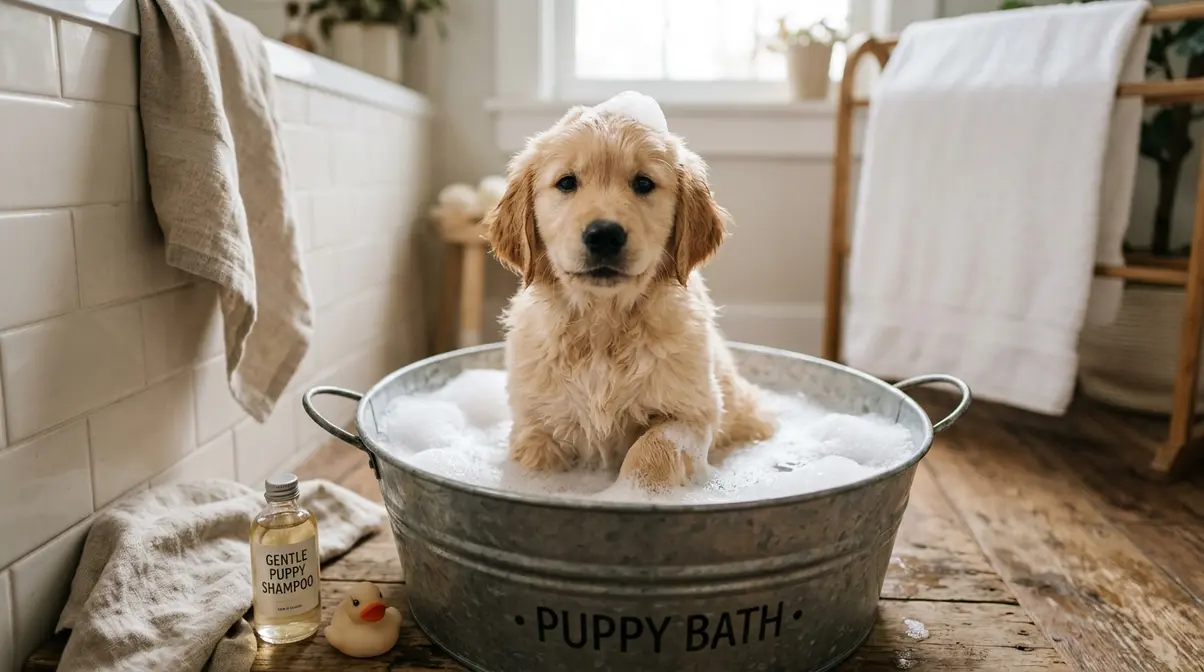
Bathing a Golden Retriever correctly takes about 5 steps, and the drying step matters more than any other. According to the University of Florida Small Animal Hospital, thoroughly rinsing the coat to avoid residue buildup or irritation is essential for dogs with healthy or compromised skin alike (in a 2015 guide). Skip the drying step, and you undo most of the work the bath was supposed to do.
Whichever tier of The Lifestyle Bath Window your Golden falls into, the bathing process itself is the same. Before you start, grab your dog-specific shampoo and the best brush for your Golden’s coat for the pre-bath brushing step.
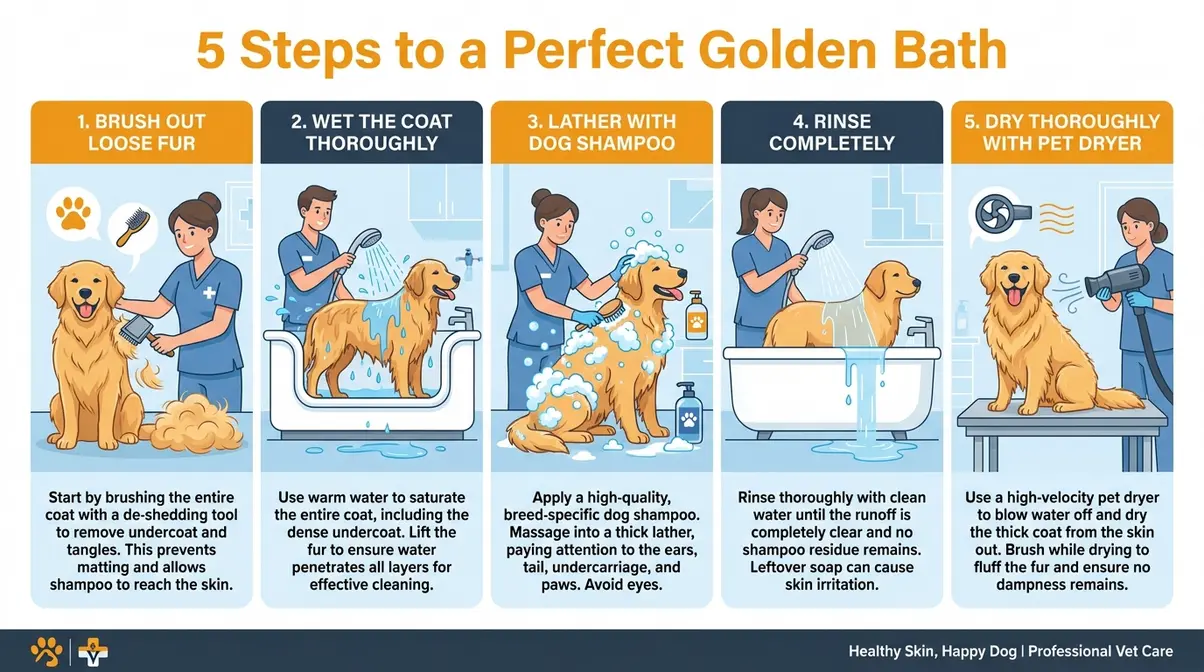
Step-by-Step: Bathing Your Golden
Use this numbered sequence every time. Each step has a brief reason behind it, because understanding the “why” makes it easier to do it right.
- Brush first.
- Remove loose undercoat and any mats before the bath. A tangled wet coat dries much slower and makes shampoo harder to distribute evenly.
- Wet the coat thoroughly.
- The double coat is water-repellent, so you need to saturate it fully before shampoo can work. Use lukewarm water, not hot. Take your time on this step.
- Shampoo with a dog-specific formula.
- As the Washington State University Veterinary Teaching Hospital notes, dog-specific shampoo is non-negotiable. Human shampoo and dish soap have the wrong pH for a dog’s skin. Work from the neck to the tail, avoiding the eyes and ears.
- Rinse completely.
- Shampoo residue left in the coat causes itching and makes the coat look dull and weak. Rinse until the water runs clear, then rinse once more to be sure.
- Dry thoroughly.
- This step is so important it gets its own section below.
The most important step is drying. Here is how to do it correctly.
How to Dry a Golden Retriever Thoroughly
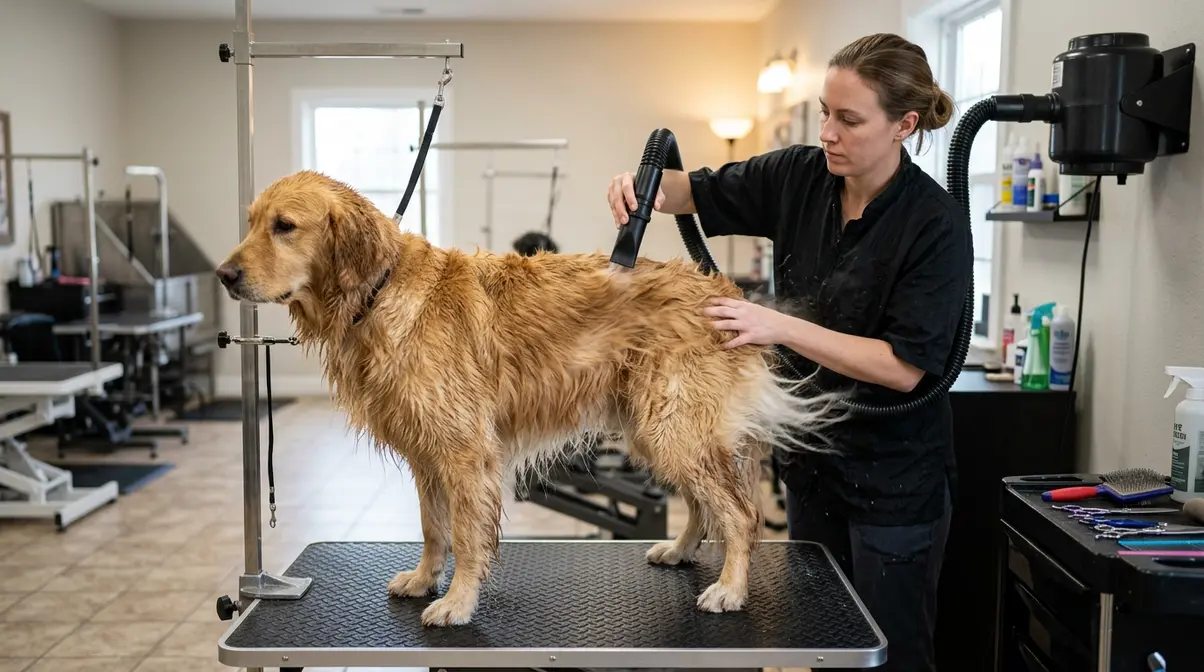
Most Golden owners underestimate how long it takes to dry a double coat properly. A towel dry alone leaves the undercoat damp for 4 to 8 hours, which is exactly the condition Virginia Tech veterinary experts warned creates yeast and odor. Here are three drying methods, ranked by effectiveness:
- High-velocity pet dryer (most effective).
- This is a pet-specific dryer that moves high volumes of air at low heat, blowing water out of the undercoat rather than just evaporating surface moisture. Models are available for under $50. Dry section by section, starting at the undercoat near the skin and working outward.
- Human blow dryer on low heat (acceptable).
- This works, but takes longer. Keep the dryer moving constantly to avoid concentrating heat on one spot. Use the lowest heat setting available.
- Air drying alone (least recommended for Goldens).
- The undercoat can stay damp for 4 to 8 hours in normal indoor conditions. This creates ideal conditions for yeast and odor. Air drying is only acceptable in warm, sunny outdoor conditions with good airflow.
The goal is dry to the skin, not just dry on the surface. Run your fingers through the coat after you think you are finished. If you feel dampness near the skin, keep drying.
Every few weeks, a full bath isn’t always necessary. Here’s how to keep your Golden clean and fresh between bath days.
How Often to Bathe a Golden Puppy
Golden Retriever puppies can have their first bath after 8 weeks of age. Before that, their skin is too sensitive and their body temperature regulation is not yet mature enough for a full bath. Puppy bath frequency is much simpler than the adult schedule: bathe only when visibly dirty, roughly once a month at most.
The Lifestyle Bath Window applies to adult Goldens. Puppies follow a simpler rule: bathe only when necessary.
Before you bring your puppy home, a new puppy checklist can help you gather everything you need for their first grooming sessions.
When to Give a Puppy’s First Bath
The safe age for a first bath is 8 weeks. Before that point, puppies cannot regulate their body temperature well enough to handle getting wet and cold, and their skin is more sensitive than an adult dog’s.
For the first few baths, keep the water warm (room temperature), keep the session short (under 10 minutes), and make it positive with treats and a calm voice. The goal is building a positive association with bath time, not just getting the puppy clean.
According to Cornell University College of Veterinary Medicine, Golden Retrievers with drop ears are particularly prone to ear infections when the ear canal stays warm and moist. This applies to puppies too, so careful post-bath ear drying is important from the very first bath.
If your 10-week-old puppy just rolled in something at the park, a quick, gentle bath is fine. If they just smell like a puppy, a warm damp towel wipe-down is usually enough.
So how often should a puppy actually be bathed? Much less often than you might think.
How often to wash a Golden puppy?
The golden retriever puppy bath frequency rule is simple: bathe only when visibly dirty, or roughly once a month at most. A puppy’s developing skin produces oils at a different rate than adult skin, and over-bathing disrupts that process before it is fully established.
For product selection, use a shampoo labeled “for puppies” or “gentle/tearless formula.” Puppy shampoos are formulated with a gentler pH that suits sensitive developing skin. Never use human shampoo, dish soap, or an adult dog shampoo with strong fragrances or medicated ingredients on a puppy under 12 weeks unless your vet specifically directs it.
Here is a quick comparison to keep the schedules straight:
| Life Stage | Bathing Rule | Frequency |
|---|---|---|
| Puppy (under 6 months) | Bathe only when visibly dirty | Once a month at most |
| Puppy (6-12 months) | Begin transitioning to adult schedule | Every 6-8 weeks |
| Adult Golden | Follow The Lifestyle Bath Window | Every 4-10 weeks (by tier) |
Most healthy Golden Retriever puppies don’t need much bathing at all. A quick wipe-down between baths is usually enough to keep them fresh.
What if a full bath isn’t practical right now? The next section covers the best no-bath options for keeping your Golden fresh between wash days.
When Should You Skip the Full Bath?
Not every dirty moment requires a full bath, and recognizing that is one of the most practical things a Golden owner can learn. All three tiers of The Lifestyle Bath Window work better when you use no-bath alternatives between scheduled baths. These shortcuts reduce the temptation to over-bathe and keep your dog comfortable between wash days.
No-Bath Alternatives That Actually Work
Colorado State University notes that dog owners can use dry bathing techniques or limit full baths with gentle shampoo to once a month or every other week, depending on the dog’s needs (in a 2021 article). Here are four alternatives that work well for Goldens:
- Waterless shampoo: A rinse-free foam or spray that absorbs oil and odor from the coat. Apply, work it in, and brush it out. Good for spot-freshening between scheduled baths.
- Pet wipes: Pre-moistened grooming wipes for paws, belly, and face. Not a full clean, but effective for post-walk freshening when only the surface areas are dirty.
- Targeted rinse: Rinse only the muddy or smelly area (paws, belly, tail) with plain water or diluted dog shampoo, without committing to a full bath cycle.
- Dry brushing: Brushing out loose fur and surface dirt 2 to 3 times a week is the most underrated tool for extending the time between baths. It also keeps the coat from matting, which traps dirt and odor.
Most bathing decisions are straightforward. But there are times when the answer isn’t more shampoo. It’s a call to your vet.
When to Call Your Vet Instead
Some situations go beyond what a bath can fix:
- Persistent odor that does not resolve with correct bathing and thorough drying (possible yeast or bacterial skin infection)
- Itching, redness, or hair loss that appeared or worsened after bathing (possible allergic reaction or contact dermatitis)
- Any previously diagnosed skin condition: always ask your vet before changing the bathing schedule for a dog with a known skin condition
According to Cornell University College of Veterinary Medicine, excessive bathing can mechanically worsen fragile or compromised skin conditions in dogs.
This guide provides general grooming information for healthy Golden Retrievers. If your dog has a diagnosed skin condition, allergies, or any health concern related to bathing, consult your veterinarian before changing their grooming routine.
Frequently Asked Questions
What is the best shampoo for a Golden?
The best shampoo for a Golden Retriever is a dog-specific formula with a balanced pH. Avoid human shampoos and dish soaps, as they strip the coat’s natural oils. Look for oatmeal or aloe-based formulas if your dog has sensitive skin. Always ensure you rinse thoroughly.
Do Goldens need dog conditioner?
While not strictly necessary, a dog-specific conditioner can help detangle a Golden Retriever’s dense double coat. It also restores moisture to the skin after shampooing. If you use one, rinse it out completely to prevent residue buildup.
Can I bathe my Golden every week?
Bathing a Golden Retriever every week is not recommended for most dogs. Frequent washing strips the natural protective oils from their double coat, which leads to dry, itchy skin and a dull, weakened coat. The right schedule depends on your dog’s lifestyle. According to Texas A&M College of Veterinary Medicine, dogs with healthy skin only need baths every 6 to 10 weeks. Swimmers or very active outdoor dogs may need a bath every 4 weeks, but weekly bathing causes more harm than good.
What if you bathe a Golden too much?
Over-bathing a Golden Retriever removes the natural protective oils that keep their skin healthy and their coat water-repellent. Without those oils, the skin becomes dry and irritated, shedding increases, and the coat starts to look dull and feel brittle. In some cases, stripping the skin’s protective barrier raises the risk of bacterial or yeast infections. Stick to the bathing schedule that fits your dog’s lifestyle.
Keep Your Golden’s Coat Healthy for the Long Run
For most Golden Retrievers, the right golden retriever bath frequency depends on lifestyle rather than a single fixed number. Indoor dogs do well every 8 to 10 weeks. Active outdoor dogs need a bath every 6 to 8 weeks. Regular swimmers should be bathed every 4 weeks. In every case, thorough drying matters more than the shampoo you choose, and most veterinarians and professional groomers agree that the 6 to 8 week baseline is the right starting point for a healthy adult Golden (Golden Meadows Retrievers, published in 2020).
If you started reading this guide worried you were bathing your Golden too often or not often enough, The Lifestyle Bath Window gives you a clear, personalized answer based on how your dog actually lives. The framework reviewed by Brianna York, Vet Tech, replaces the unhelpful “every 4 to 8 weeks” range with three tiers you can actually act on. Remember: brush more, bathe less. That single habit extends every tier of the window and keeps your Golden’s coat in better shape between baths.
Start by identifying which tier your Golden falls into. Then check that your current shampoo is dog-specific and pH-appropriate. If your Golden has been itchy or smelly after baths, the drying step is the first thing to fix. Work section by section down to the skin, and don’t stop until the undercoat feels dry to the touch.
➤ Match your Golden’s bath schedule to their lifestyle, dry them thoroughly every time, and their coat will stay healthy, shiny, and itch-free.
Related gear: see our guide to a gentle dog shampoo.